

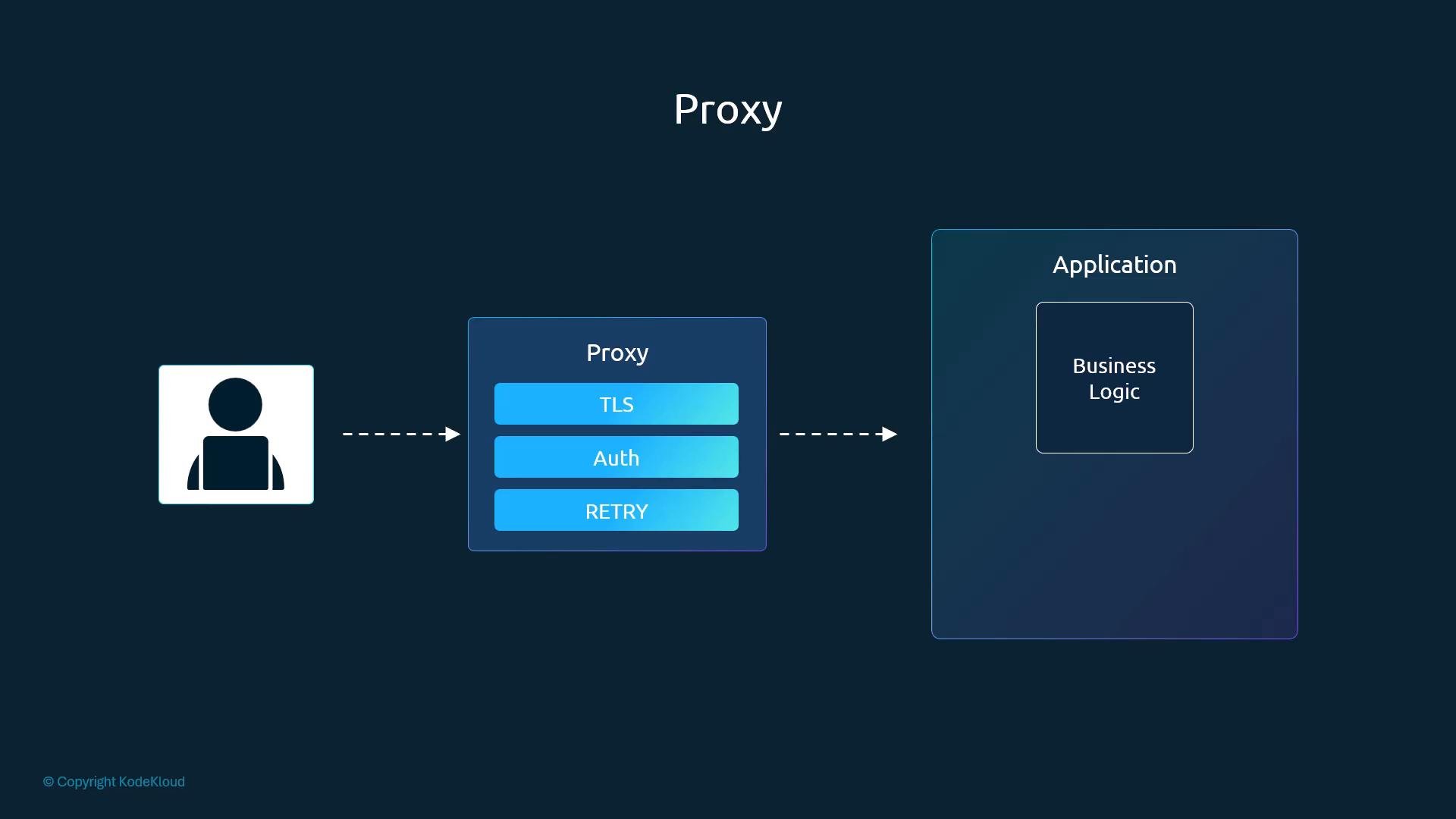
- A user sends a request to the proxy.
- The proxy applies TLS/mTLS, authentication, retries, and other policies.
- The proxy forwards the request to the application.
Envoy graduated into the cloud-native ecosystem and is part of the CNCF. Because of its performance and extensibility, many service meshes use Envoy as the data plane and control it through a control plane using xDS.
Why use Envoy?
- Centralizes networking and security concerns outside application code.
- Provides production-grade observability (metrics, traces, logs) out of the box.
- Supports modern protocols (HTTP/2, gRPC) and advanced L7 routing features.
- Is highly extensible via filters and dynamic configuration.
- Inbound: Apply mTLS, routing rules, and health checks before delivering traffic to the app.
- Outbound: Perform retries, circuit-breaking, and route requests to other services.
- Observability: Emit metrics and traces for platform telemetry pipelines.
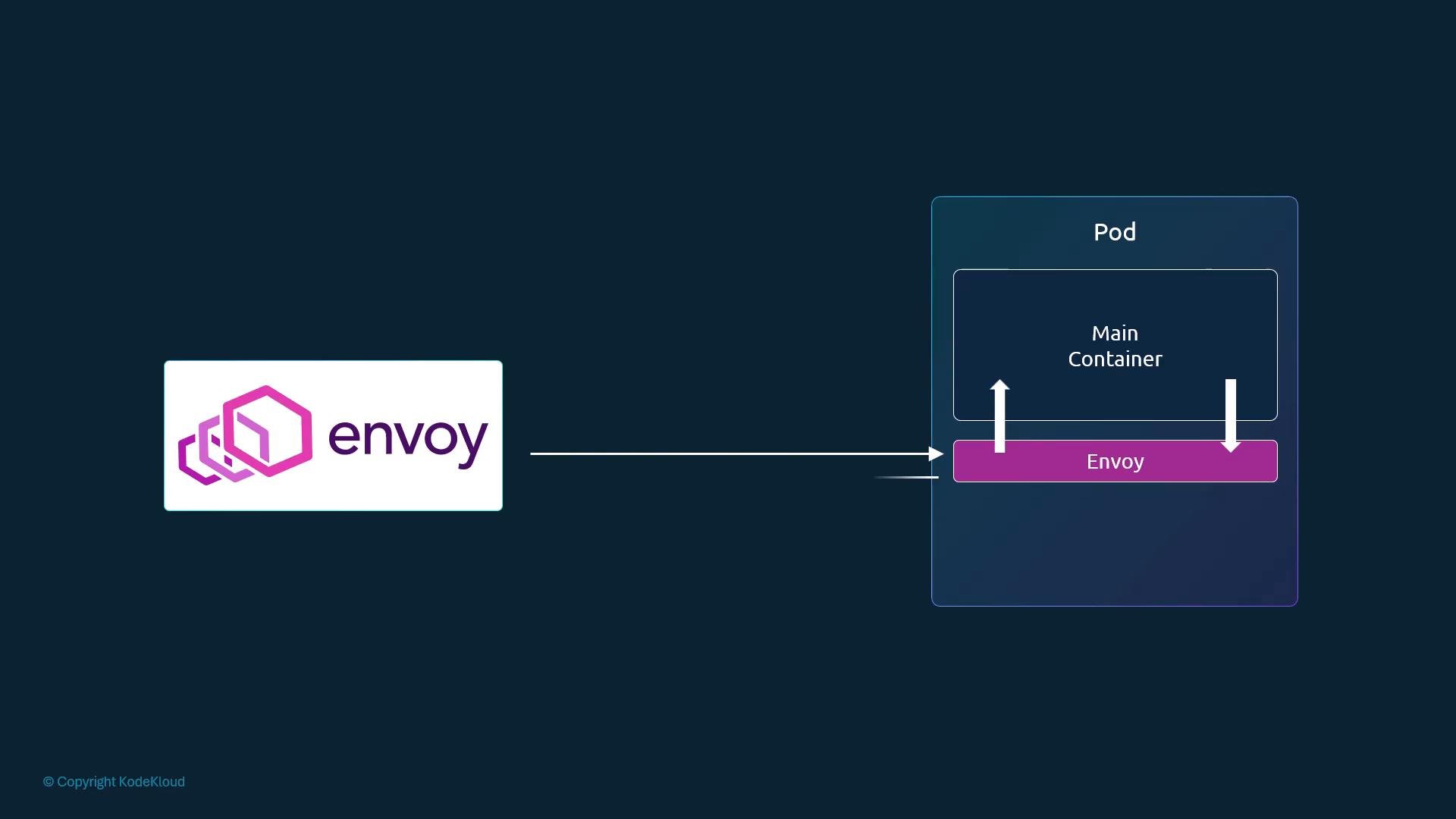
Deploying Envoy as a sidecar enables platform teams to centralize networking, security, and observability concerns while letting application developers focus on business logic. Most service meshes use Envoy as their data plane and control it via a control plane using the xDS APIs.
- Envoy Proxy — Official Site
- Envoy xDS Protocol Documentation
- gRPC — Official Site
- Cloud Native Computing Foundation (CNCF)