

Manual Provisioning vs. Automation
Before adopting automation, service provisioning relied heavily on manual processes—often called “click ops.” This involved navigating through cloud interfaces (like AWS) to set up resources, which was not only time-consuming but also prone to errors. The lack of repeatability and tracking in these manual processes can lead to configuration mistakes, scaling difficulties, and even outages.Automation leverages scripts and tools such as Bash, CloudFormation, Terraform, and Pulumi to ensure that infrastructure is provisioned consistently and reliably.
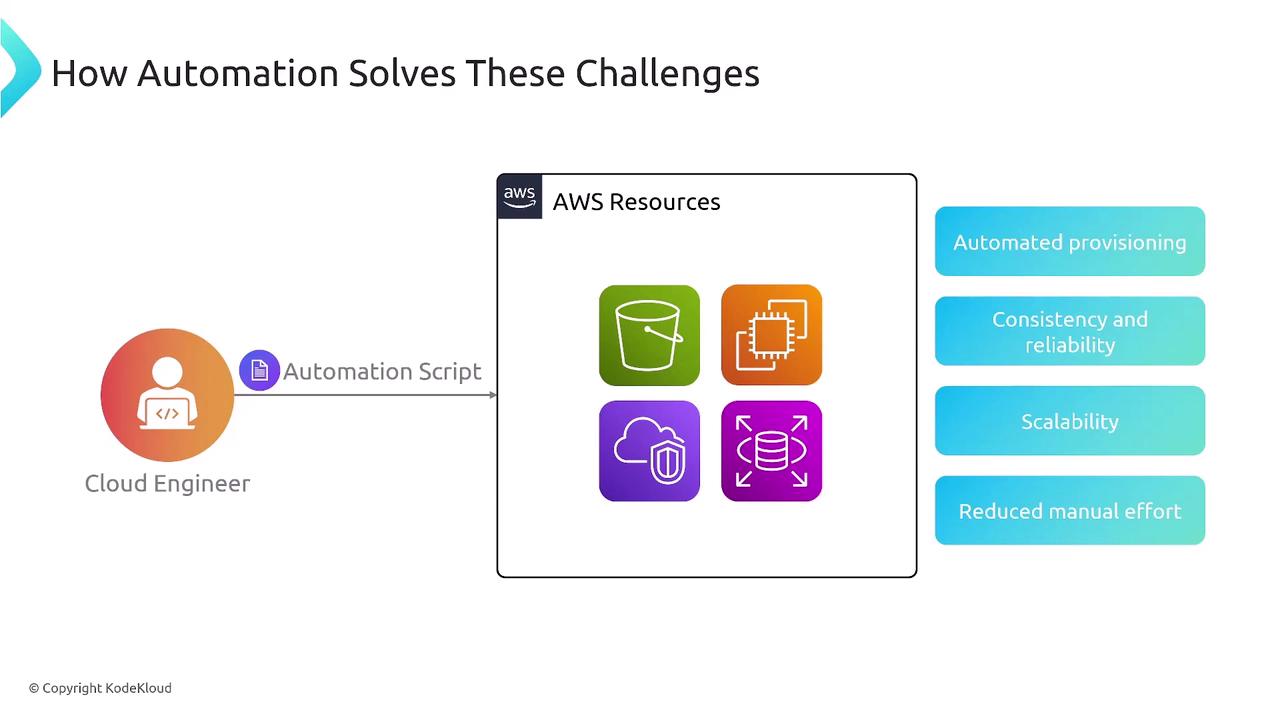
Infrastructure as Code (IaC)
Infrastructure as Code takes automation further by introducing version control into provisioning templates. Whether using Bash scripts, Terraform files, or other IaC tools, version control lets you track and manage changes over time. This is invaluable for troubleshooting or rolling back configurations since every change is documented. IaC enhances consistency, efficiency, and speed by enabling rapid and repeatable infrastructure setups. It also plays a significant role in disaster recovery by allowing the entire infrastructure to be recreated reliably from stored templates.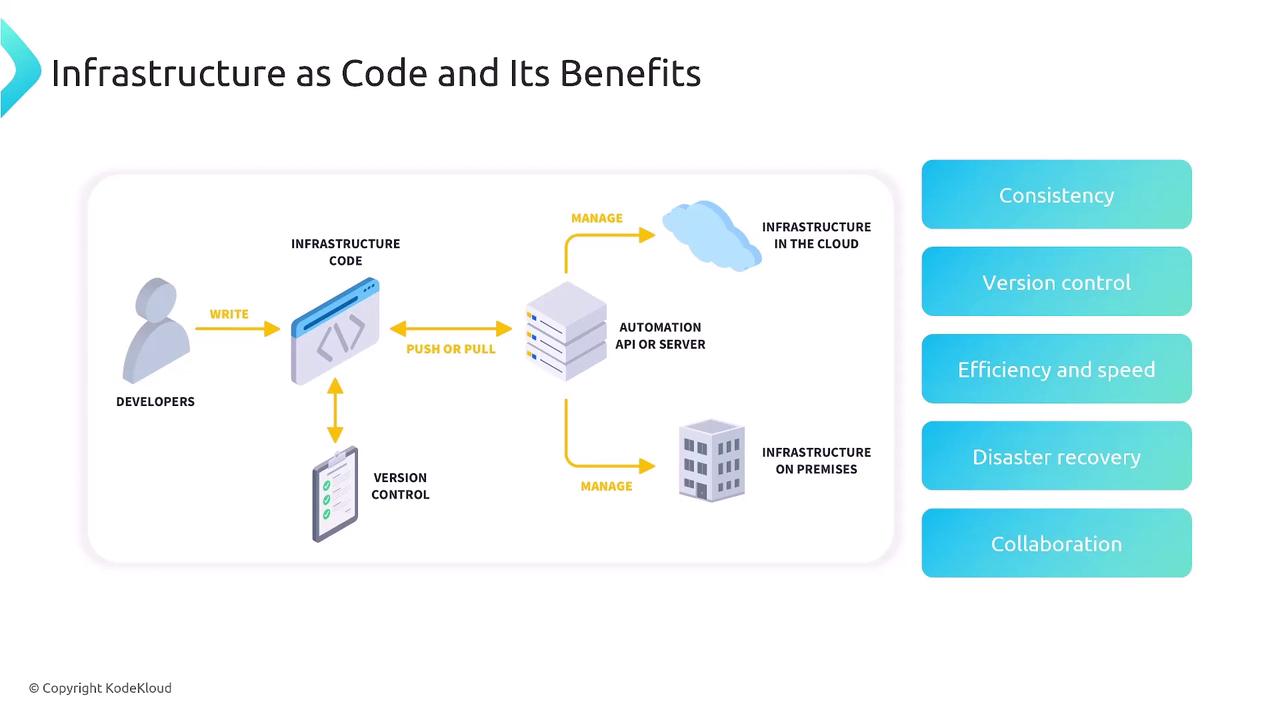
Types of Automation in Cloud Environments
Automation in the cloud covers various areas, each designed to streamline operations and enhance productivity. Below is an overview of the main categories: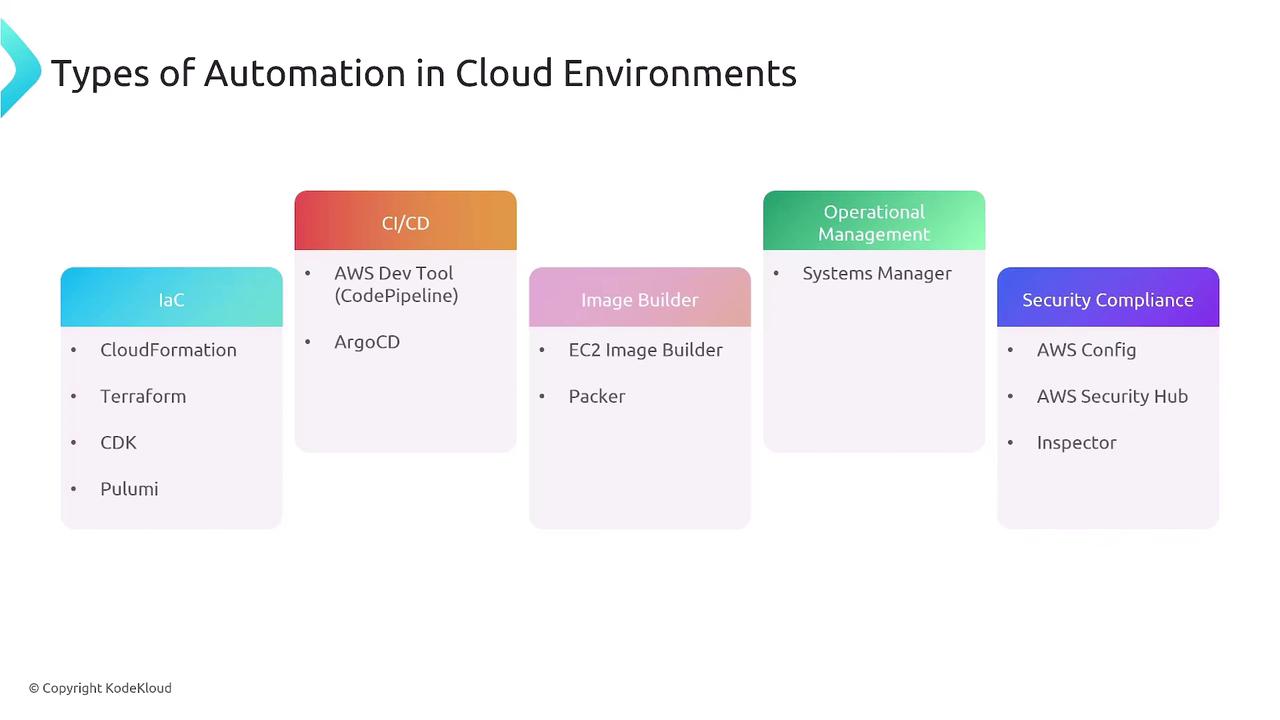
Incorporating automation and Infrastructure as Code into your provisioning processes is key to achieving consistent deployments, robust disaster recovery, and efficient scaling—all while reducing manual risks and errors.