It’s 2025, and AI is everywhere — but every AI model and intelligent application still runs on cloud infrastructure. That infrastructure needs skilled cloud operations engineers to deploy, manage, and optimize it. Behind every ChatGPT query and every machine learning pipeline, complex cloud services must be provisioned, monitored, and maintained — that’s where you come in. Welcome to the AWS Certified CloudOps Engineer Associate certification course. This training prepares you for the certification and builds practical skills for real AWS environments, covering both traditional workloads and modern AI applications. Every module includes hands-on labs and interactive challenges so you won’t just pass the exam — you’ll think and operate like a cloud engineer. Example: create an S3 bucket for centralized logging
When creating an S3 bucket, the bucket name must be globally unique. The example includes <randomtext> to indicate you should replace it with a unique suffix.
What you’ll master (at a glance)
  • Monitoring, alerting, and automated remediation
  • High availability, scaling, and disaster recovery
  • Infrastructure-as-code and CI/CD for infrastructure
  • Security, least-privilege access, and compliance automation
  • VPC design, hybrid connectivity, and CDN optimization
Here’s what you’ll master in each domain. Domain 1 — Monitoring and Performance
You will learn CloudWatch, CloudTrail, and Amazon Managed Service for Prometheus. Build dashboards, create alarms, and automate remediation using EventBridge and Systems Manager. You will also optimize performance and cost for EC2, EBS, S3, and RDS.
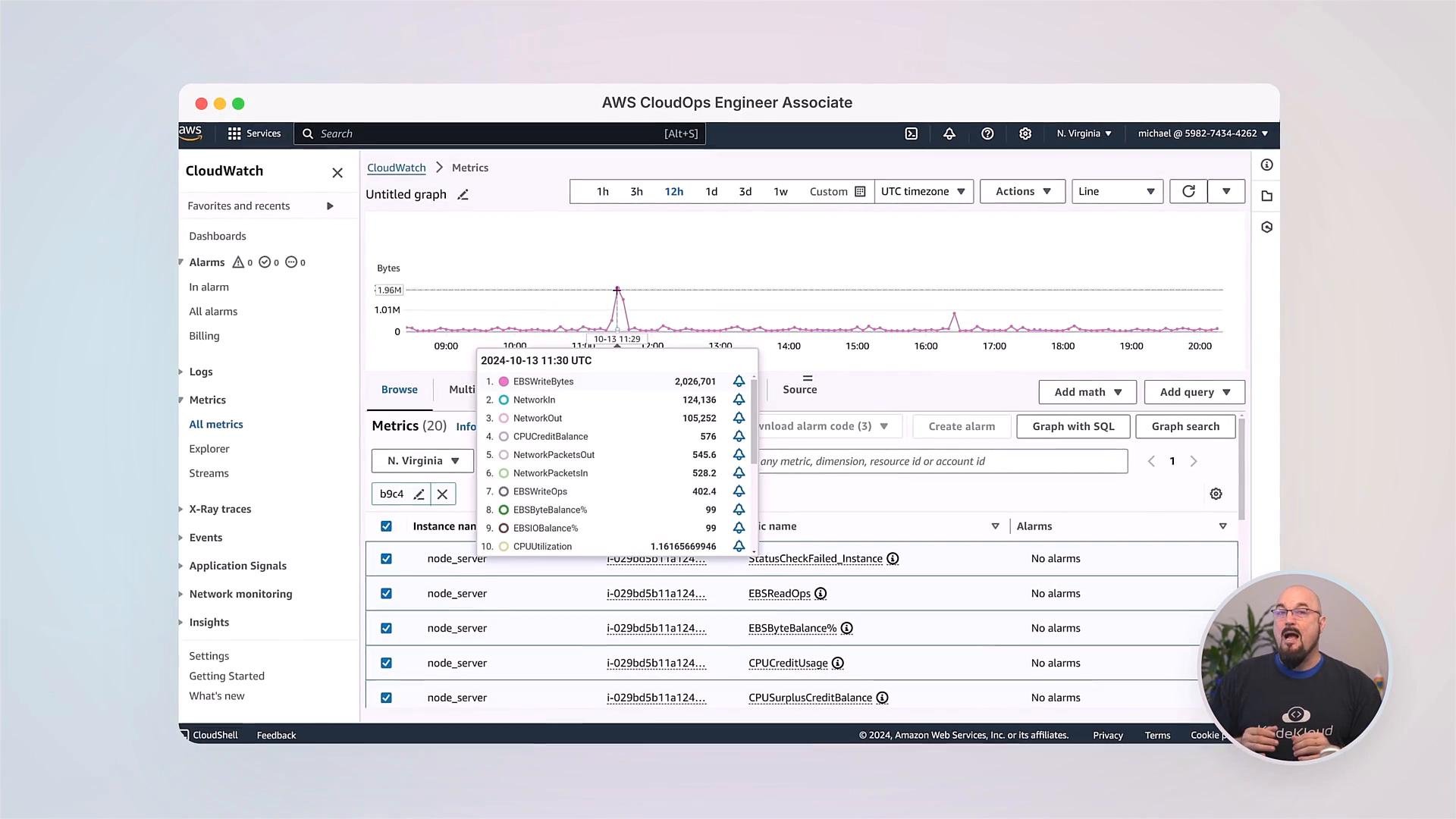
A screenshot of the AWS CloudWatch metrics dashboard showing a time-series graph and a list of instance metrics (EBS, network, CPU) with a popup details box. A small circular video inset of a presenter appears in the bottom-right.
Domain 2 — Reliability and Business Continuity
Design and configure Auto Scaling across Availability Zones, implement caching strategies to reduce latency, orchestrate database failovers, and implement disaster recovery (DR) procedures that are validated under realistic failure scenarios.
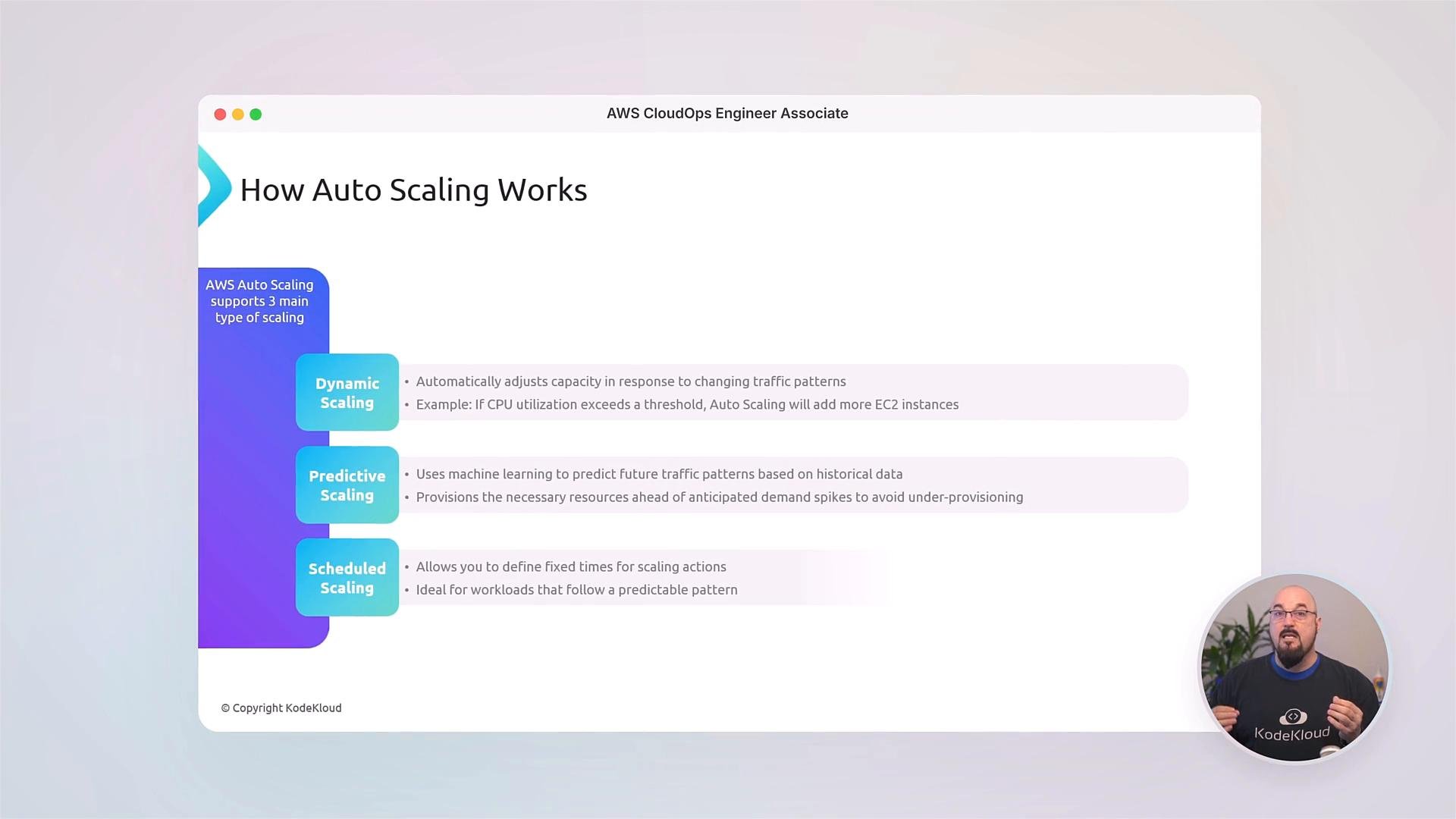
A presentation slide titled "How Auto Scaling Works" that outlines three AWS Auto Scaling types—Dynamic, Predictive, and Scheduled—with brief descriptions. A small circular video overlay of a presenter appears in the bottom-right corner.
Domain 3 — Deployment and Automation
Master infrastructure as code with CloudFormation and get hands-on exposure to the AWS CDK. Automate machine image pipelines (AMI/EC2 image build pipelines), and deploy at scale across regions using StackSets.
Domain 4 — Security and Compliance
Implement least-privilege IAM policies, troubleshoot permissions with IAM Access Analyzer, ensure encryption across services, enable threat detection with GuardDuty, and maintain a multi-account compliance posture using AWS Organizations and centralized tooling.
Domain 5 — Networking and Content Delivery
Design and configure complex VPCs, implement VPC endpoints, optimize CloudFront distributions for global delivery, and troubleshoot connectivity using VPC Flow Logs. Explore hybrid connectivity patterns (Direct Connect, VPN) and resolver-based endpoint architectures.
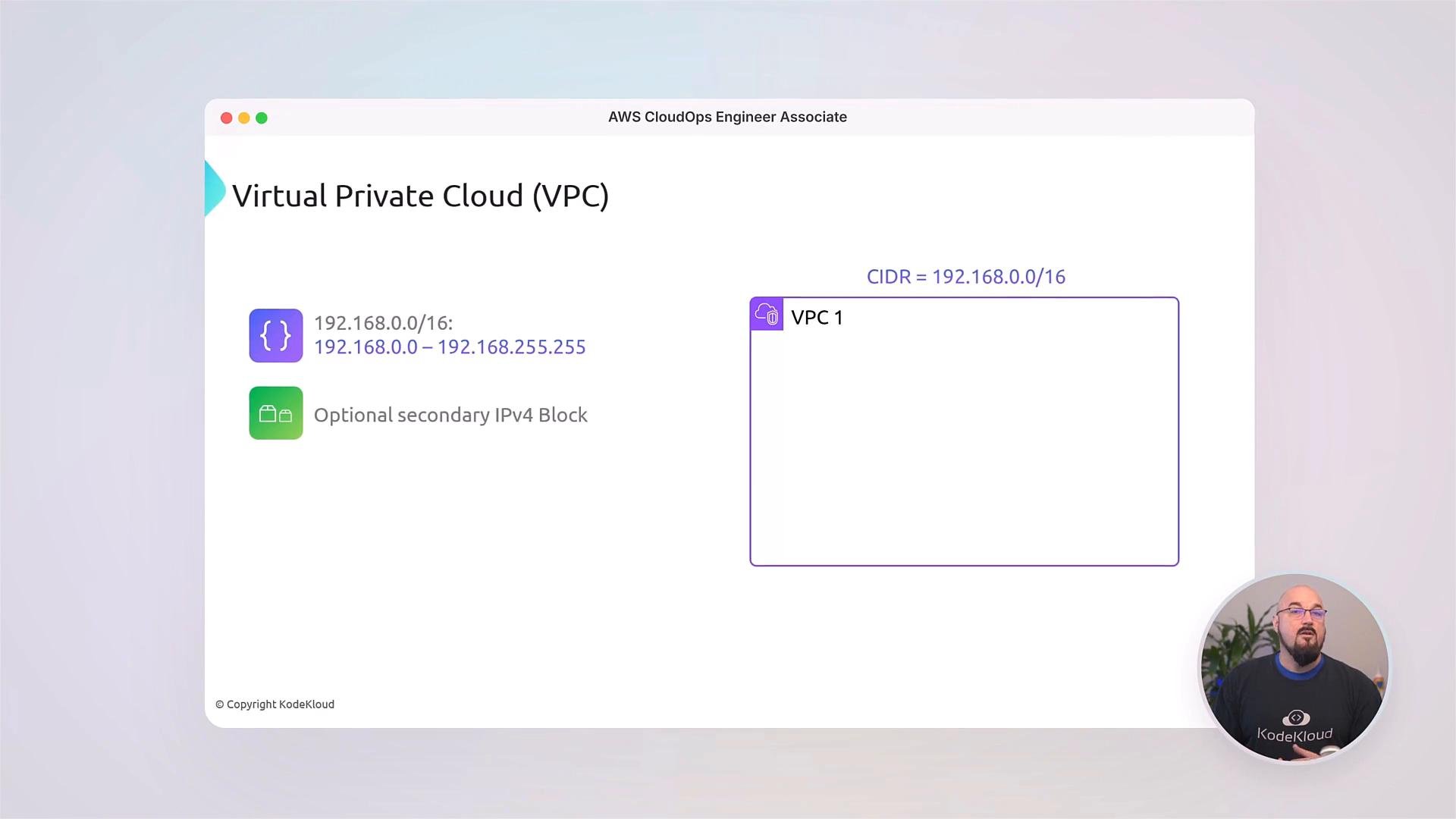
A slide titled "Virtual Private Cloud (VPC)" showing a VPC diagram with CIDR 192.168.0.0/16 and address range 192.168.0.0–192.168.255.255, plus an optional secondary IPv4 block icon. A small circular video of the presenter appears in the bottom-right corner.
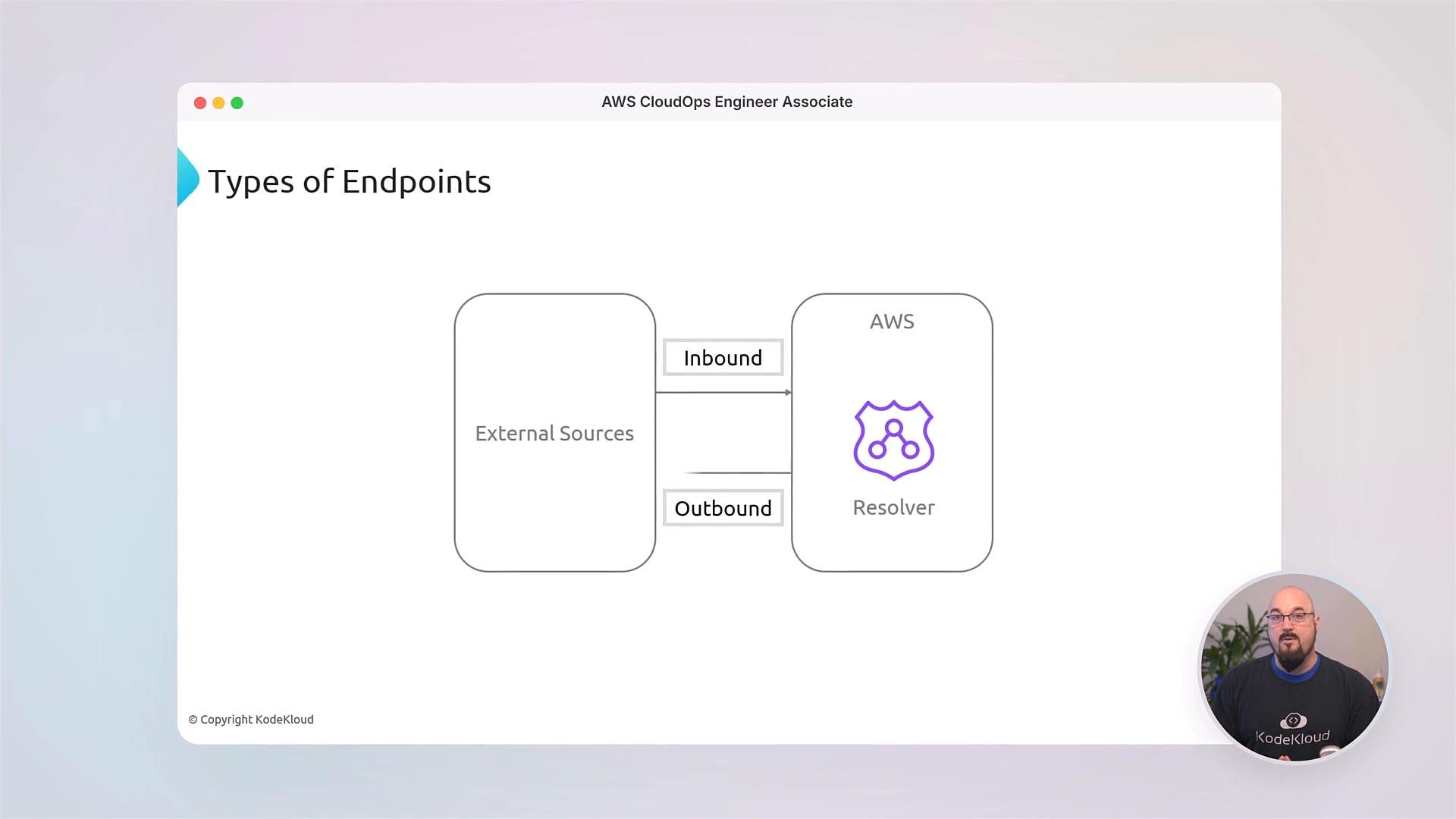
A presentation slide titled "Types of Endpoints" showing a diagram where "External Sources" connect via Inbound and Outbound arrows to an "AWS Resolver." A small circular video of the presenter appears over the bottom-right corner.
Domain summary table Hands-on labs, assessments, and community support
  • Real-world labs: deploy, monitor, and failover full workloads.
  • Interactive challenges: simulated incidents and remediation exercises.
  • Practice exams: mirror the actual test format and difficulty.
  • Community: join thousands in the KodeKloud community to ask questions and share solutions.
Tip: Focus on end-to-end scenarios that combine monitoring, automation, and security — those are common in exam questions and real-world CloudOps roles.
Why CloudOps matters in 2025 Cloud operations is no longer just “keeping the lights on.” It’s enabling the AI revolution by ensuring infrastructure is scalable, secure, observable, and cost-efficient. Organizations need cloud ops engineers who understand both infrastructure and intelligent applications — infrastructure that can scale with model training, data pipelines, and inference workloads. Are you ready to earn your AWS Certified CloudOps Engineer Associate certification? Enroll, practice with hands-on labs, and join the community to accelerate your learning. Links and References

Watch Video