

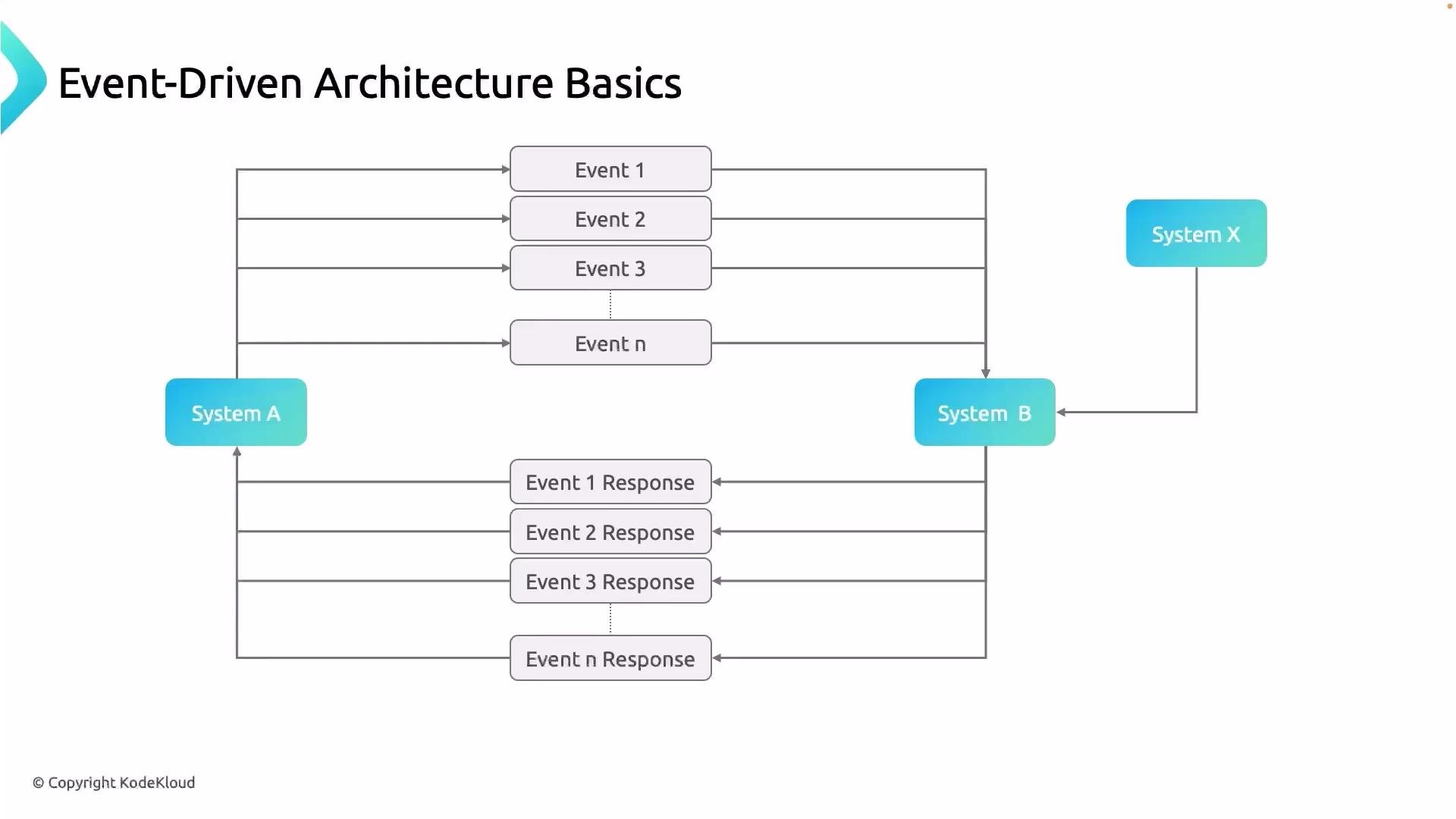
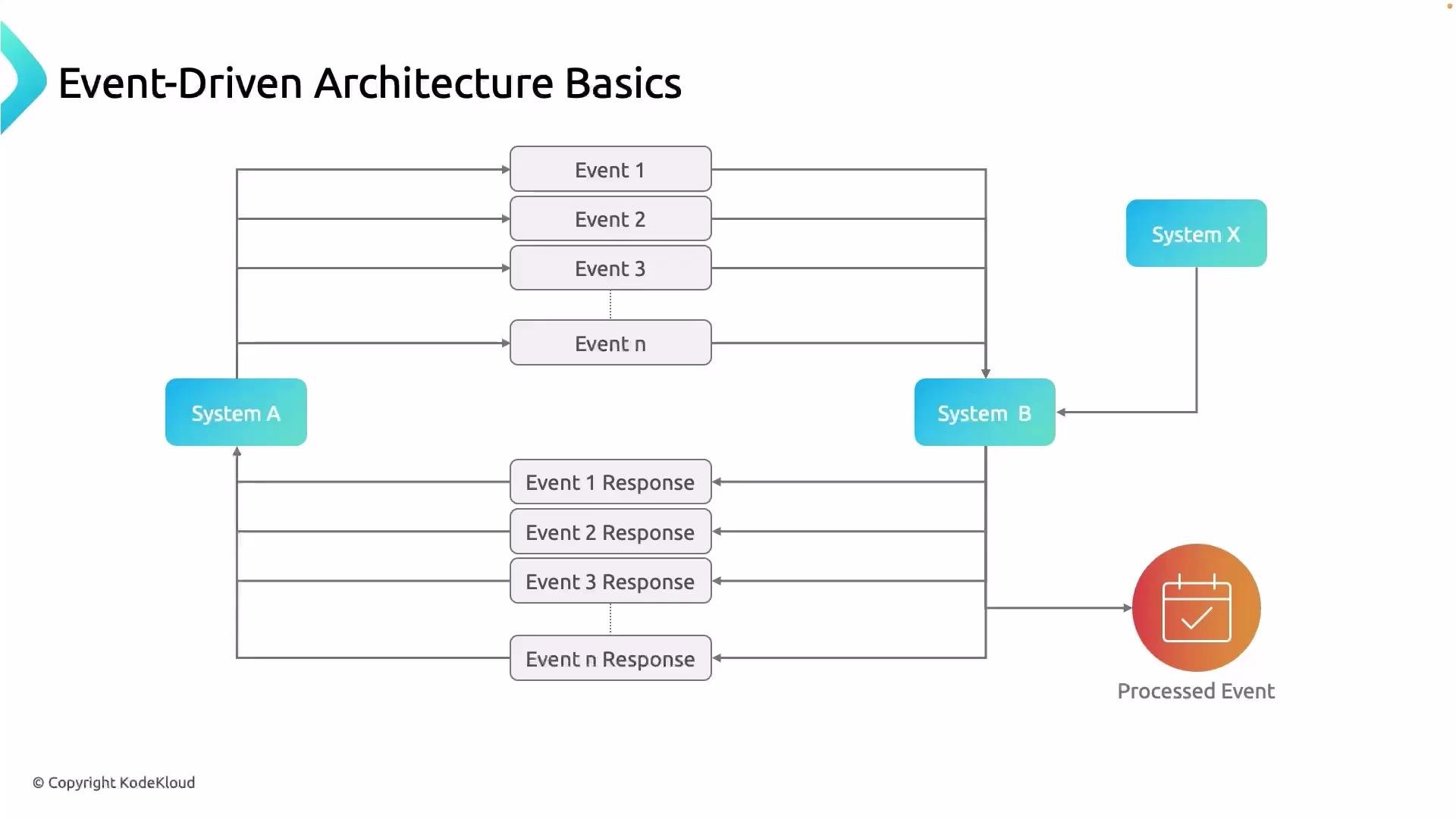
- System A emits an event. A producer can be a microservice, an IoT device, a mobile app, or any application component.
- System B consumes and processes that event, potentially producing output that System X will later consume.
- After processing, System B may acknowledge the event, notify System A, or persist the result.
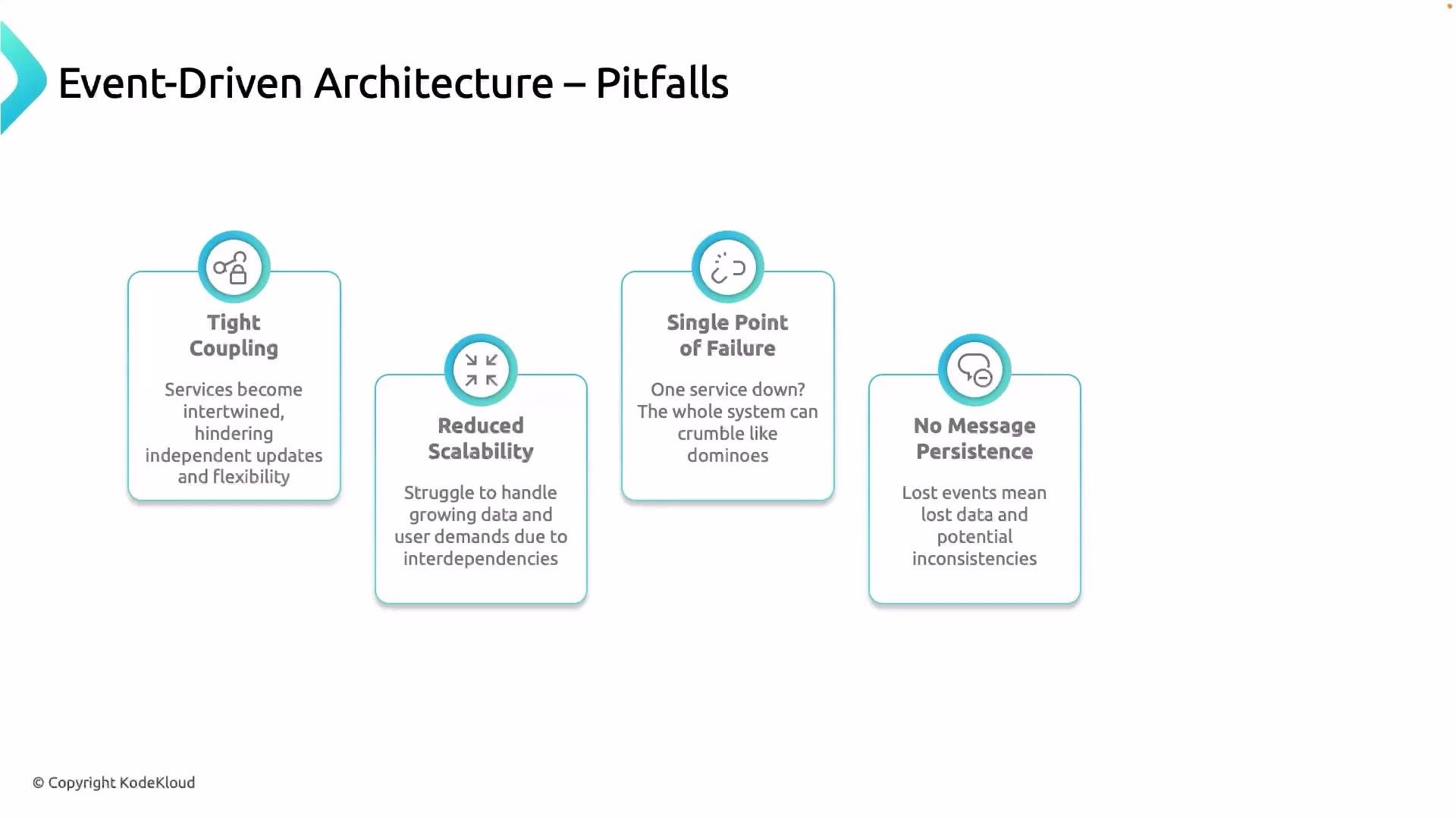
- High concurrency increases load and exposes transient failures.
- Synchronous point-to-point integrations create tight coupling and deployment friction.
- Lack of durable storage for events can lead to data loss and inconsistent state.
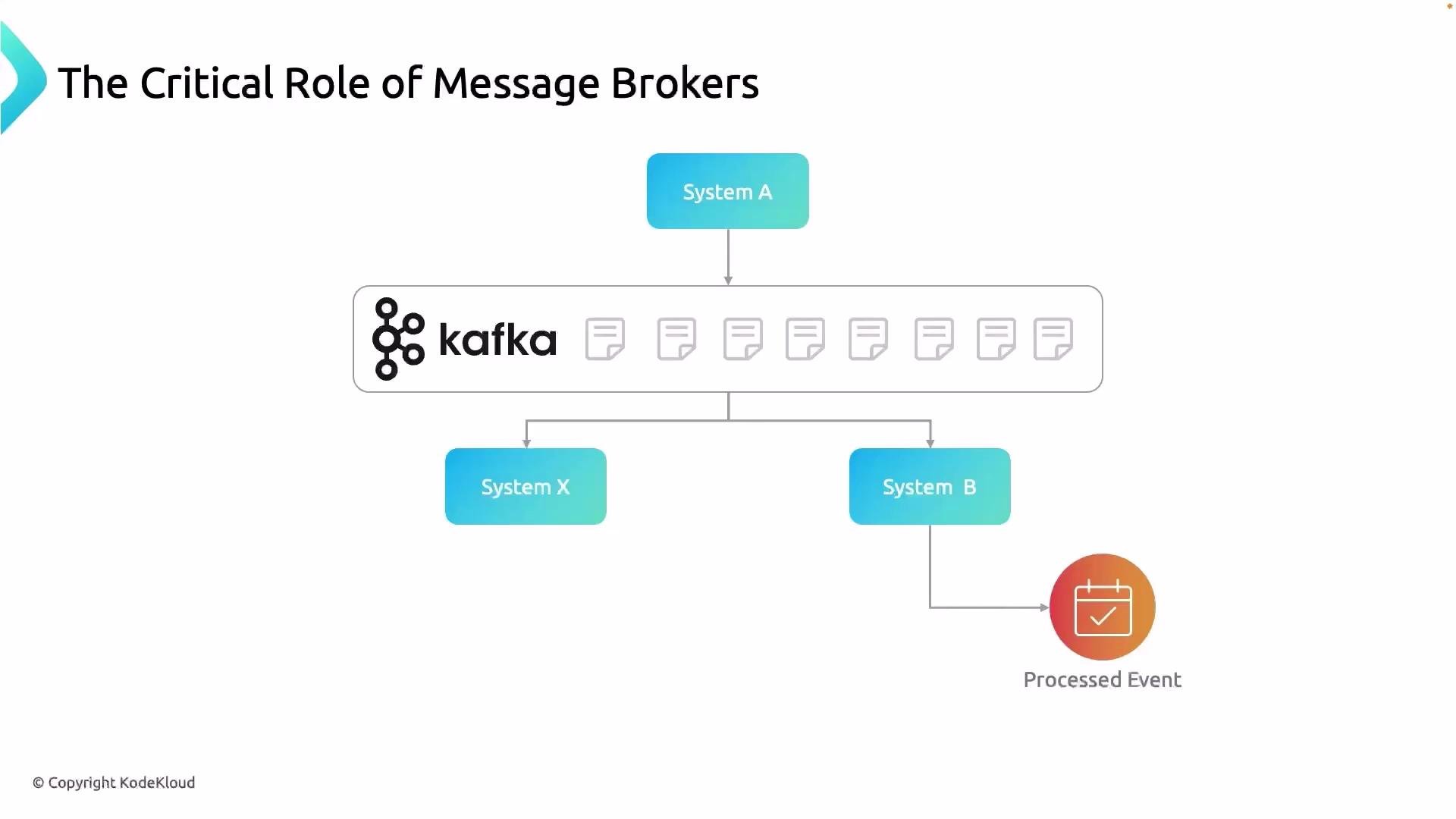
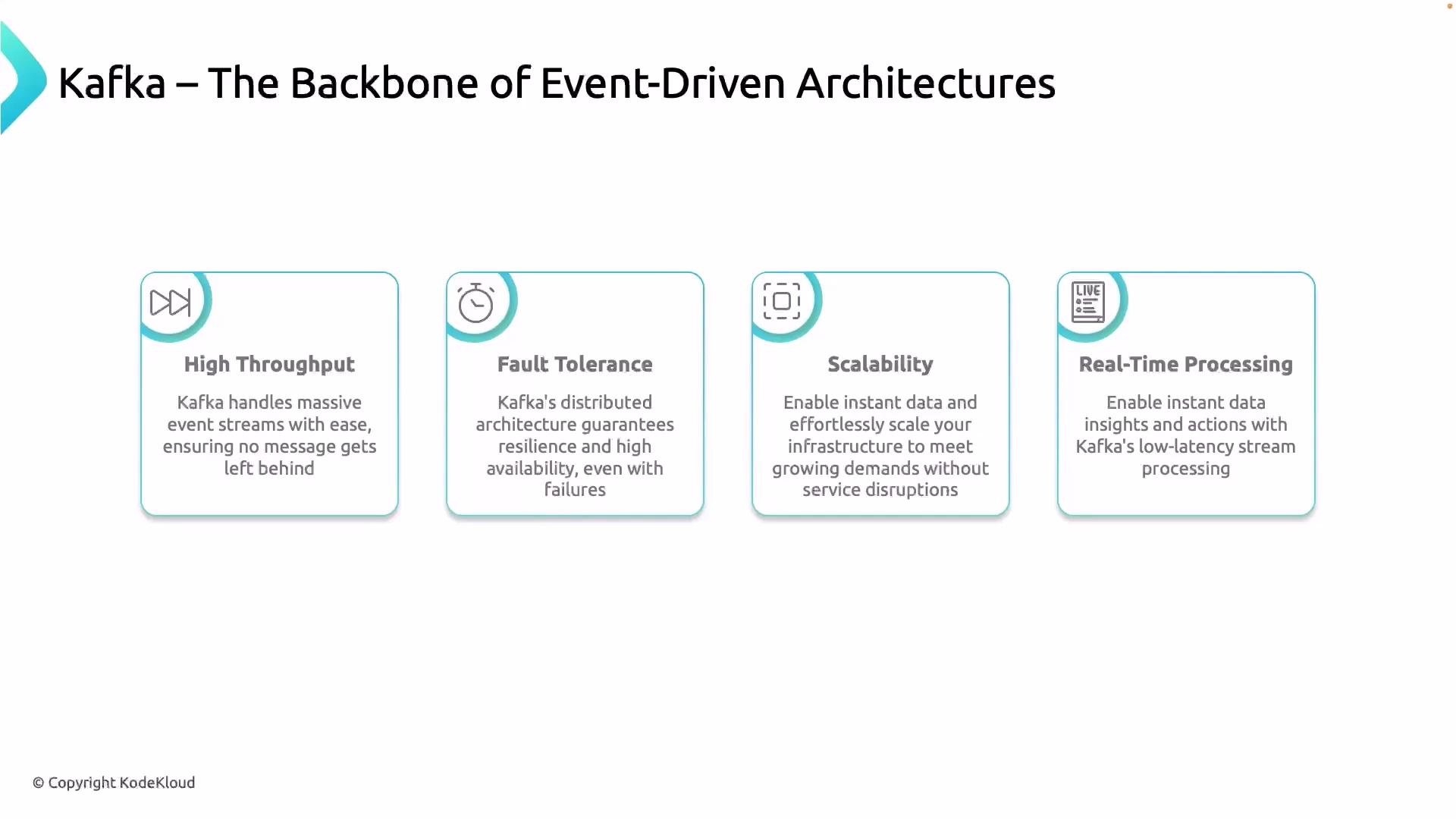
Kafka addresses many of these pitfalls by providing a durable event log that decouples producers and consumers, supports high throughput, enables replay, and offers built-in fault tolerance and scalability.
- Producers (System A) write events to Kafka topics and return immediately after the event is durably stored; producers do not need to manage downstream state.
- Multiple independent consumers (System B, System X, etc.) can read the same events at their own pace, maintain offsets, and reprocess when needed.
- Consumers scale independently; Kafka partitions and consumer groups enable parallel consumption without changing producers.
- Persistence, replication, and retention policies allow replay, auditing, and backfills for analytics and error recovery.
- Model events as facts: use immutable, append-only events for reliable replay and auditability.
- Choose partition keys that balance throughput and ordering requirements.
- Tune retention and compaction policies based on recovery and storage needs.
- Use consumer groups to scale processing while preserving partition-level ordering when required.
Design choices (partitioning, retention, ordering guarantees) directly affect scalability and correctness. Test failure scenarios and recovery flows to ensure your pipeline meets SLAs.
- Apache Kafka Documentation
- Event-Driven Architecture Overview (Martin Fowler)
- Kafka: The Definitive Guide (Confluent)