

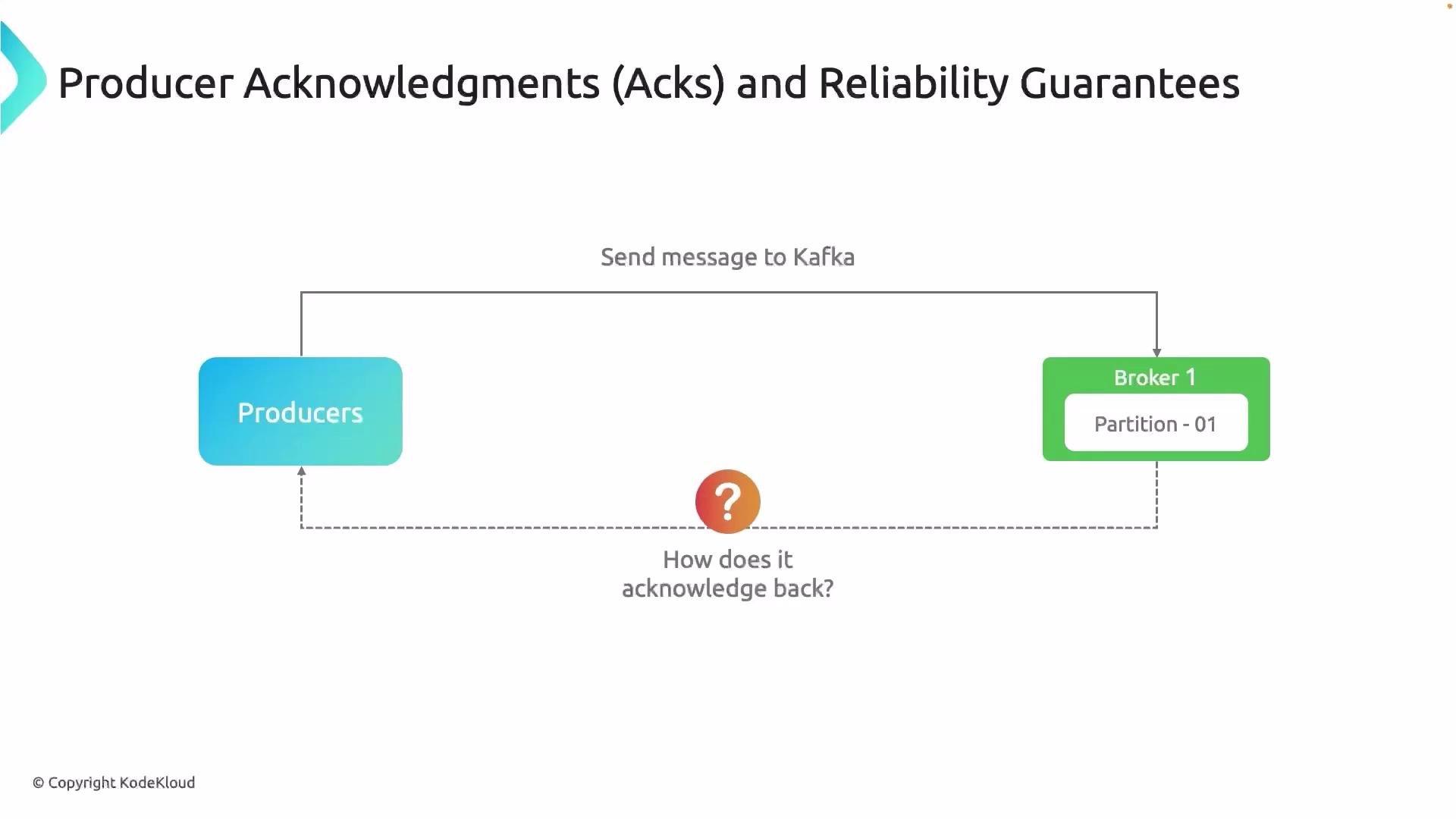
acks setting. The chosen level affects latency, throughput, and the risk of data loss.
-
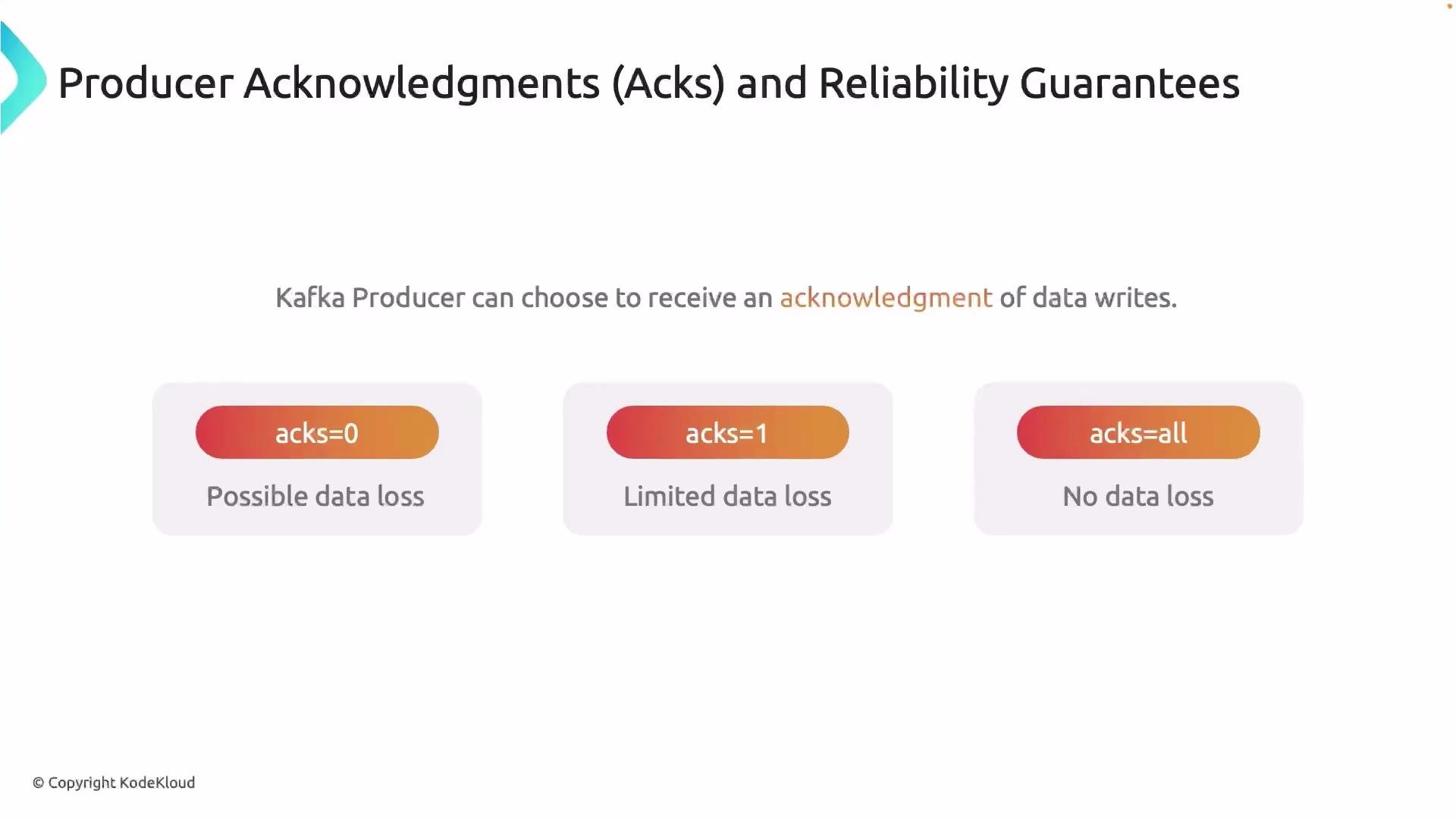
acks=0
The producer does not wait for any acknowledgment from the broker. The send is fire-and-forget. This yields the highest throughput and lowest latency, but messages can be lost if the broker fails before persisting them. -
acks=1
The producer waits for an acknowledgment from the partition leader only. This guarantees the leader has accepted and appended the record to its local log, but it does not guarantee replication to followers. If the leader fails before followers replicate the message, data loss is possible. -
acks=all (equivalently
acks=-1)
The producer waits until all in-sync replicas (ISRs) have acknowledged the write. This provides the strongest durability guarantee (assuming the ISR is correctly configured) but increases latency.
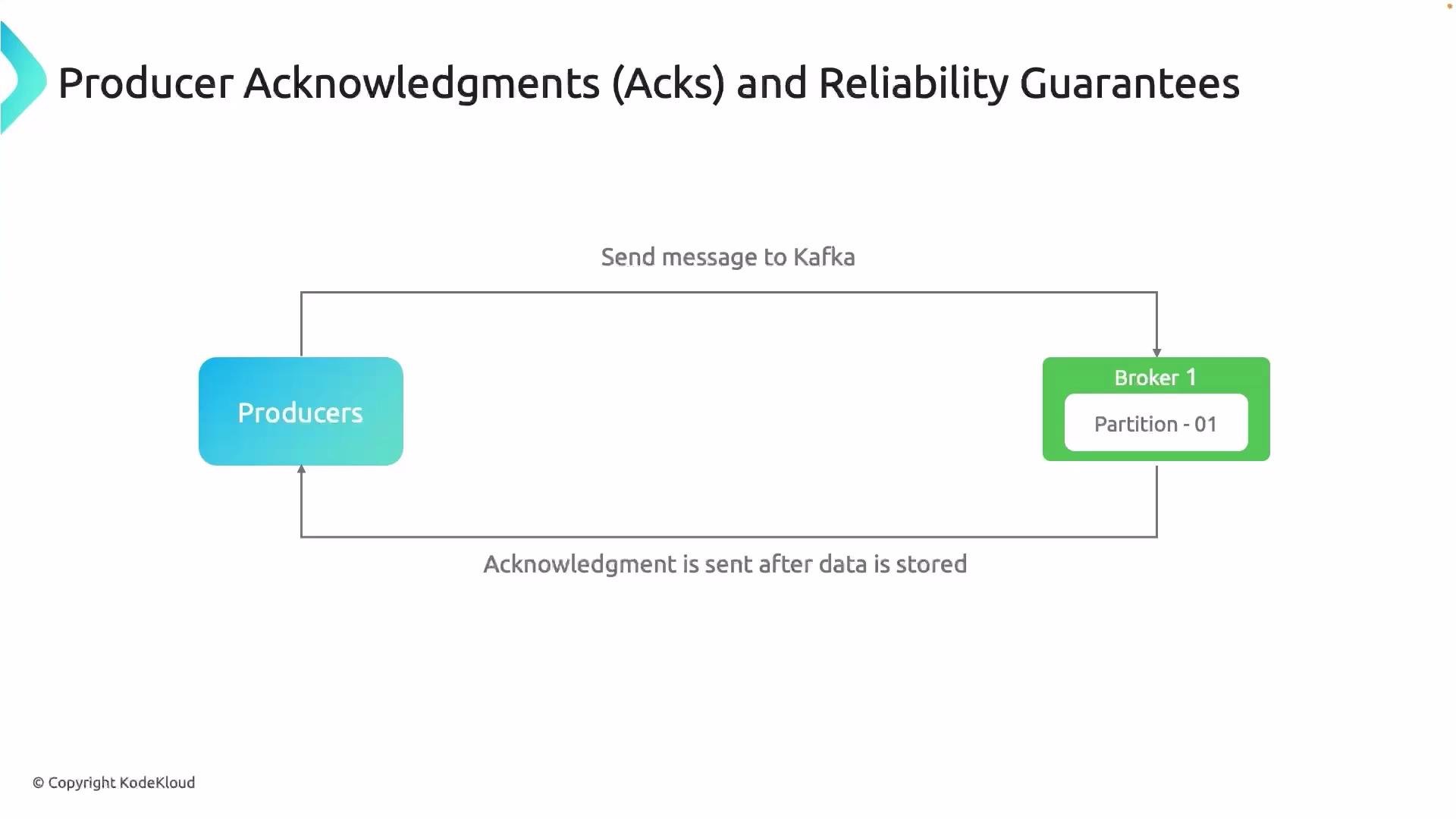
- acks=1 (leader acknowledgment)
- Flow: producer sends the record to the partition leader → leader appends to its local log → leader returns acknowledgment to the producer.
- Implication: producer does not wait for followers to replicate; replication success is unknown to the producer.
- Risk: if the leader fails after acknowledging the write and before followers have replicated it, the record can be lost.
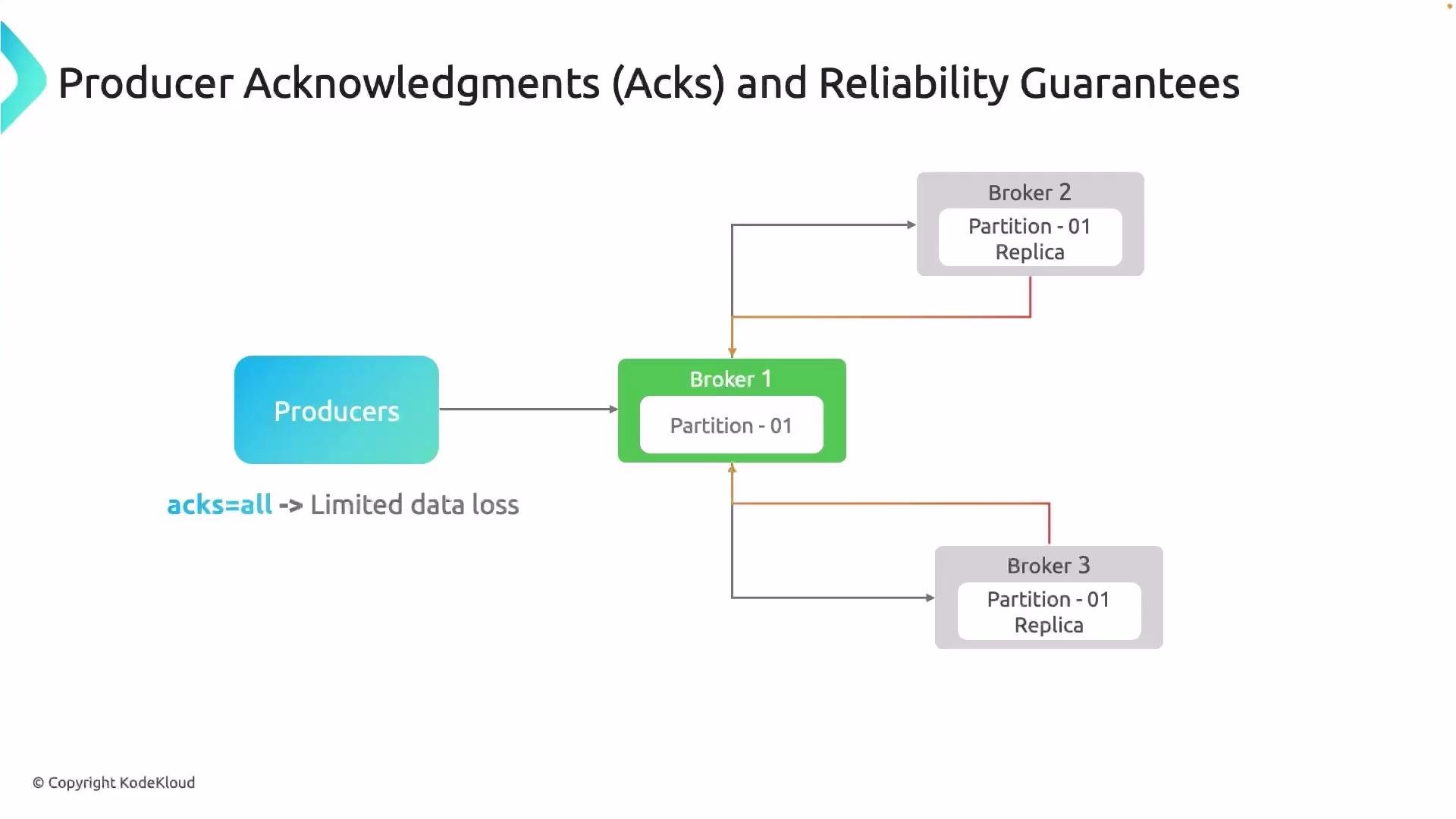
- acks=all /
acks=-1(all in-sync replicas)
- Flow: producer sends to leader → leader writes locally and waits until all in-sync replicas have persisted the record → producer receives acknowledgment only then.
- Implication: strong durability guarantee so long as your replication and ISR configuration are correct.
- Important knobs: replica count and
min.insync.replicas— together they define how many brokers must have a copy before a write is considered successful.
- Java (Producer properties)
- Console producer (shell)
- Confluent Python (confluent_kafka)
Guidance and best practices
- Use
acks=0when minimal latency and maximum throughput are primary, and occasional loss is acceptable (e.g., non-critical telemetry). - Use
acks=1for a compromise: good latency with reasonable durability, but accept the risk of leader-only writes. - Use
acks=allfor the strongest durability. Also ensure:- You have an appropriate replication factor (≥ 3 is common for production).
min.insync.replicasis configured to prevent writes when too few replicas are available.
Choosing the right
acks value is a trade-off: higher durability (e.g., acks=all) increases latency, while lower acknowledgment levels improve throughput but increase the risk of data loss. Tune acks together with replication settings and min.insync.replicas to meet your availability and durability requirements.acks controls when the producer considers a send successful. Pick the value that aligns with your application’s tolerance for latency and data loss, and always consider replication and broker-level settings to enforce the durability you need.
That covers producer acknowledgments and reliability guarantees in Kafka. See you in the next lesson.