

Consul Agent Deployment
The Consul agent is a lightweight, long-running daemon that enables service discovery, health checking, and key/value storage on any host. Thanks to its platform-agnostic design, you can run the agent in various environments:
Running consistent agent binaries across your infrastructure provides a unified control plane for service registration and health monitoring.
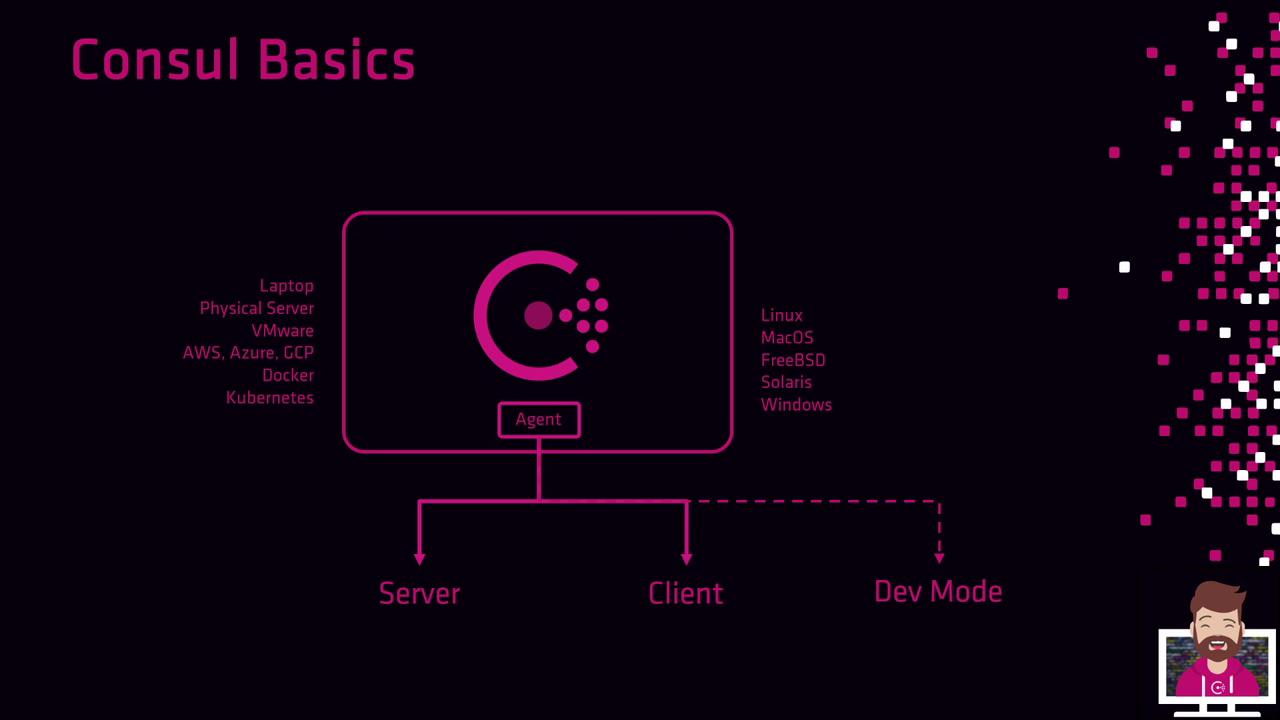
Agent Operational Modes
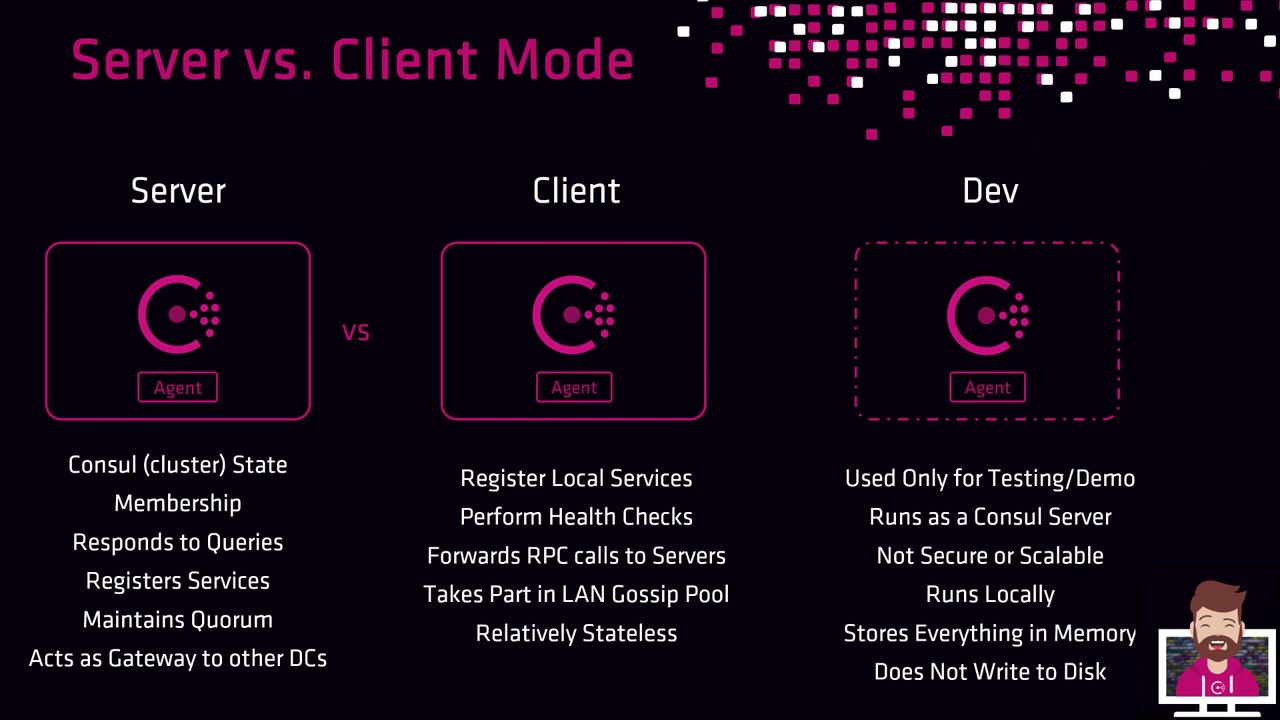
A single Consul binary supports three modes—server, client, and dev—configured via JSON files or CLI flags at startup.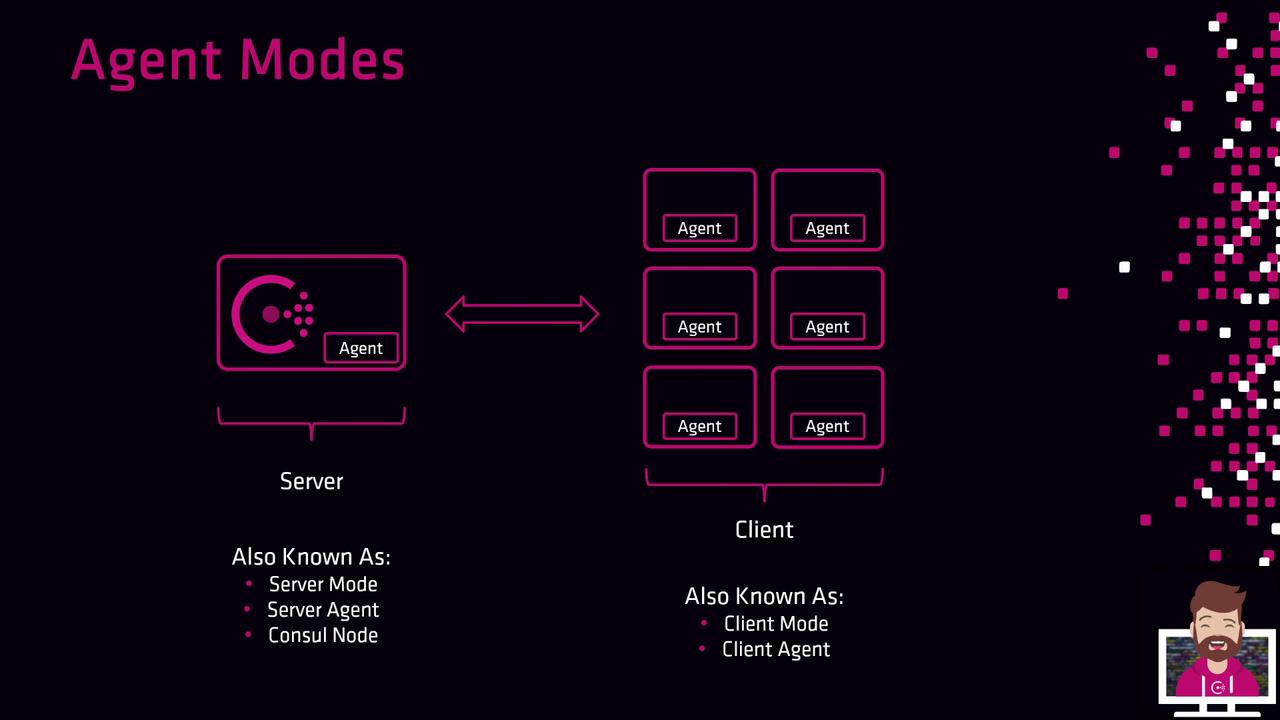
Server Mode
Consul servers form the cluster’s control plane. Their key responsibilities include:- Cluster state & membership: Track all nodes and maintain a consistent cluster view.
- Service registry: Store service entries and respond to DNS/HTTP API queries.
- Quorum management: Elect a leader and provide high availability via Raft consensus.
- Data center gateway: Forward queries between DCs in multi-DC deployments.
Client Mode
Client agents run alongside application services (e.g., web servers, databases) and handle:- Service registration: Register local services with the server cluster.
- Health checks: Execute and report checks, influencing traffic routing.
- API forwarding: Relay DNS/RPC requests to servers.
- LAN gossip: Participate in local failure detection and membership updates.
- Stateless operation: Join or leave the cluster without persistent state.
Dev Mode
Dev mode is intended for local testing and demonstrations—never production.Dev mode uses a single in-memory server without TLS or disk persistence. All data is lost on shutdown.
Consul Data Centers
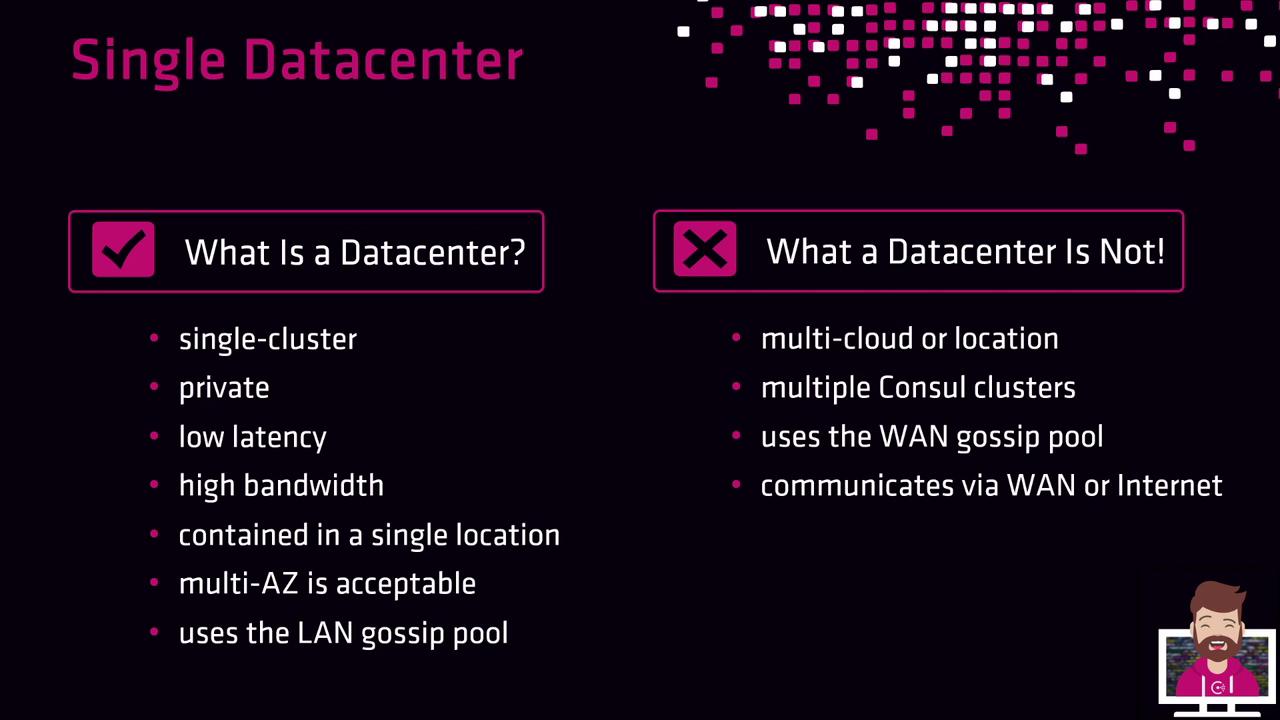
A data center in Consul represents a logical cluster co-located in one physical region or network. All members within a DC use the LAN gossip pool for low-latency communication.Single Data Center
Key traits:- One cluster in a single region
- Private network (no public internet)
- LAN gossip only
- Low-latency, high-bandwidth communication
Multi-Data Center
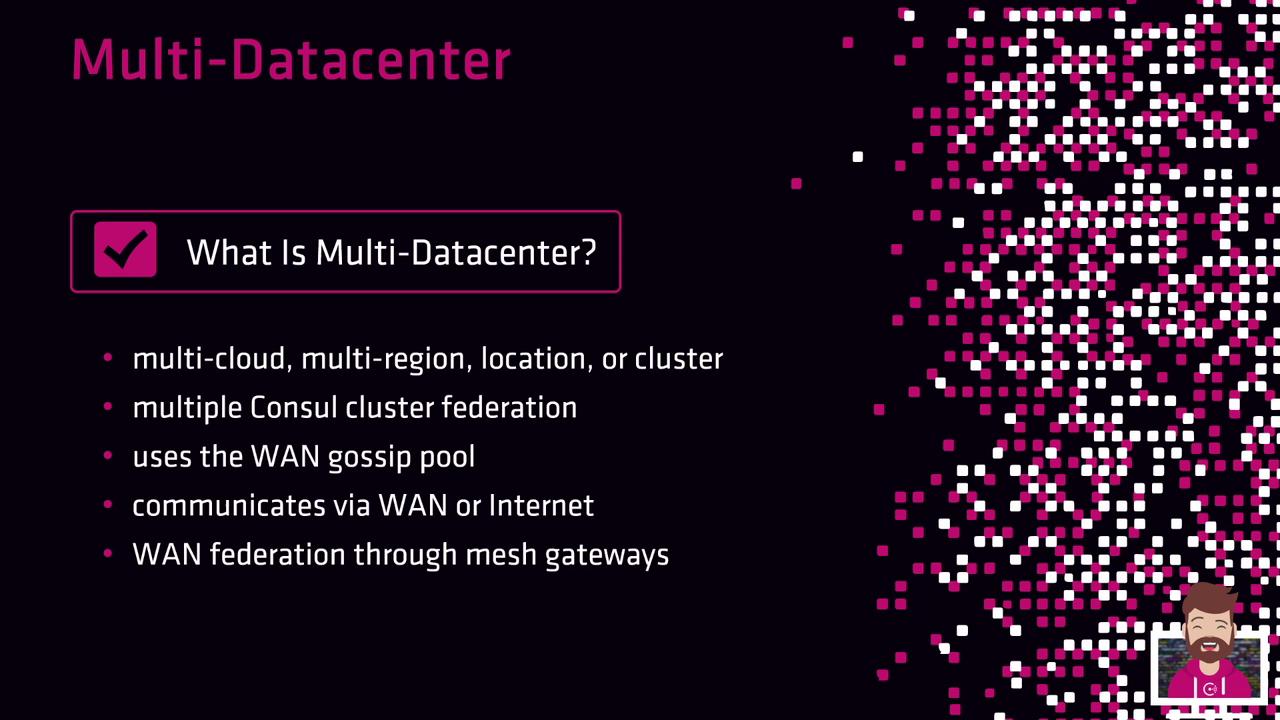
Federated Consul DCs allow cross-DC service discovery and failover. Each DC remains an independent cluster, communicating over WAN gossip or mesh gateways:- Multi-cloud / multi-region deployments
- Physical DCs in different locations
- Multiple clusters within one site
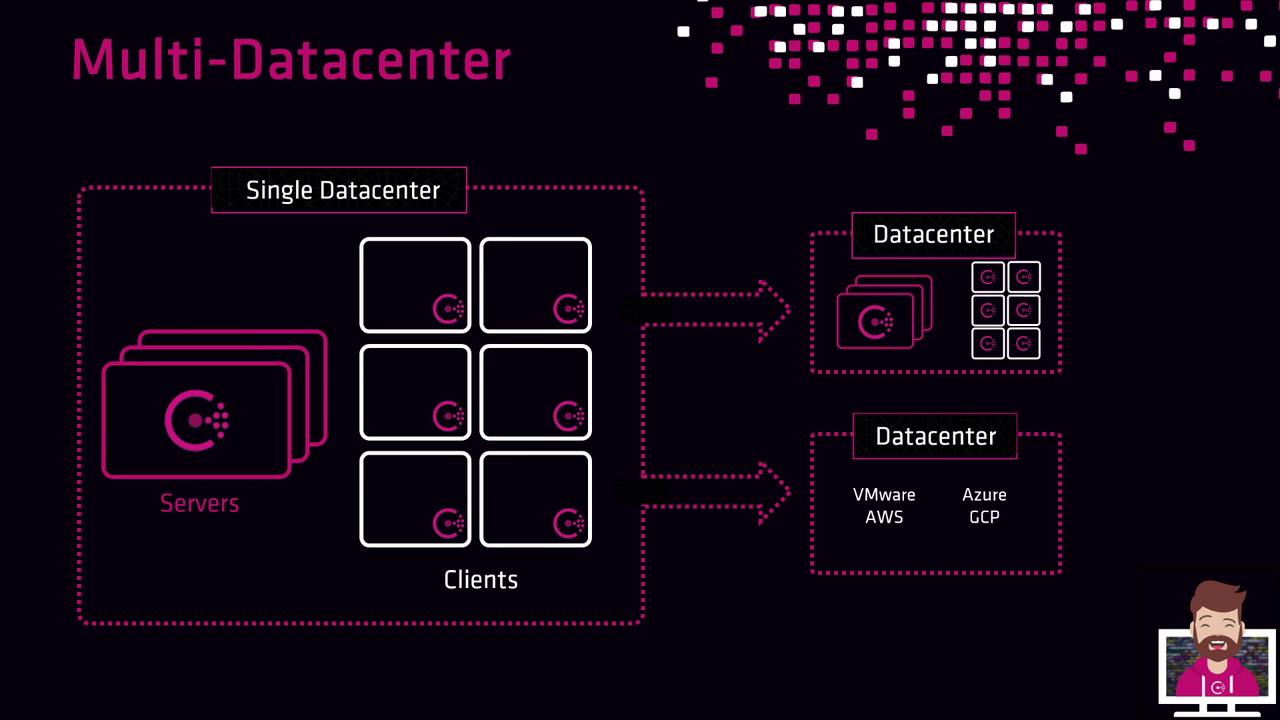
- On-prem primary DC with a cloud-based failover DC
- Federated clusters across AWS, GCP, and Azure
Key Protocols
Consul’s distributed architecture relies on two core protocols: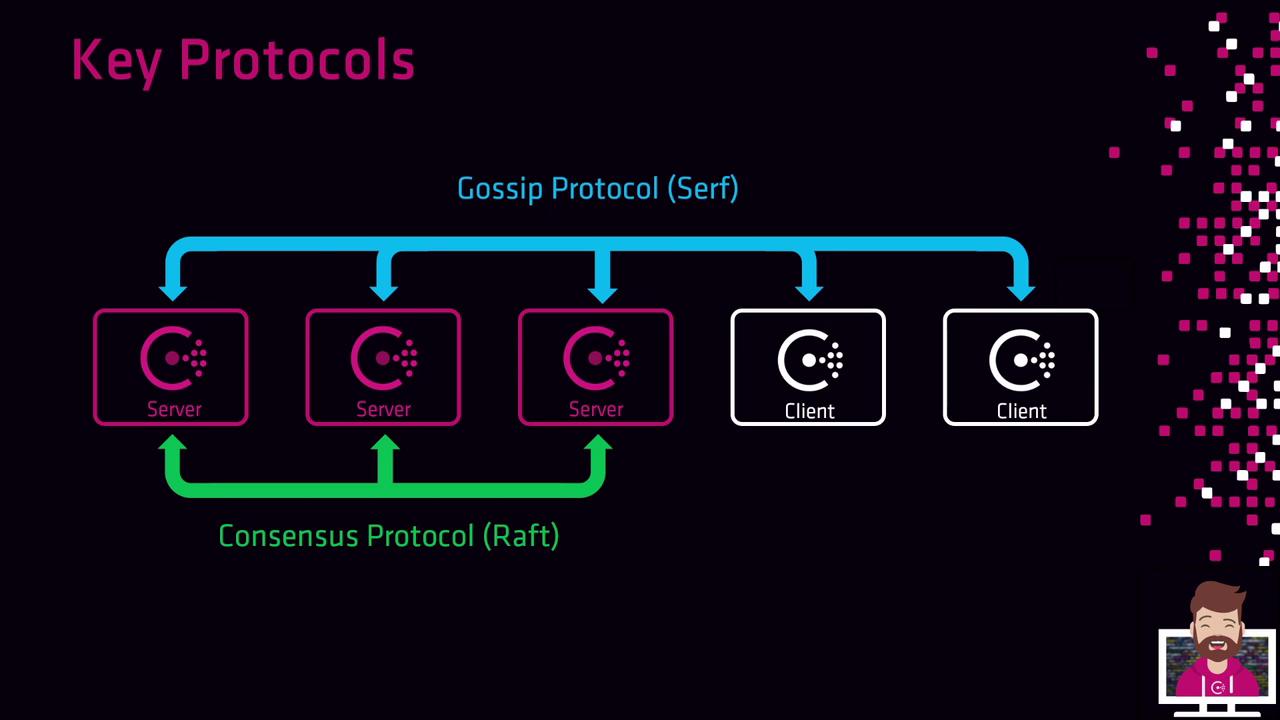
Understanding these components is critical for designing, deploying, and managing a resilient Consul architecture optimized for service discovery and health monitoring.