

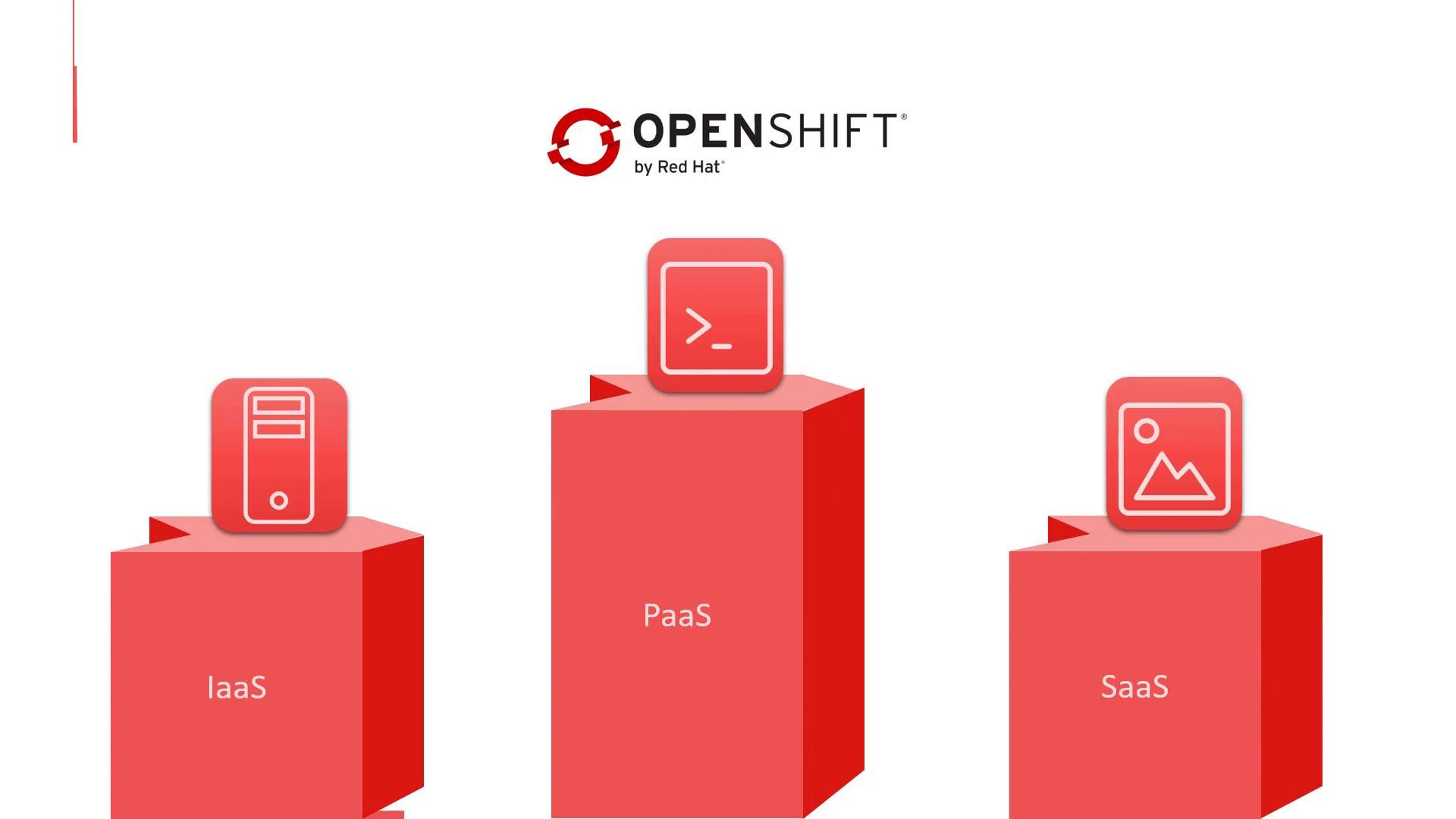
OpenShift editions and distributions
OpenShift is available in multiple distributions and delivery models. Choosing the right edition depends on whether you want a community project, a managed service, or an on-premises enterprise solution.
Throughout this course we’ll primarily use OpenShift Origin (OKD) to explain architecture, developer flows, and operational patterns.
Underlying platform: containers + orchestration
OpenShift is built on container and orchestration technologies. Historically, this stack has featured Docker (or other OCI-compatible images) for packaging, and Kubernetes for scheduling and orchestration. OpenShift layers additional APIs, automation, and developer/operator tooling on top of Kubernetes.
- Docker / OCI images: package applications and their dependencies into portable images that run consistently across environments. This course assumes a basic knowledge of container images and how they are built.
- Kubernetes: provides primitives for scheduling, self-healing, rolling updates, service discovery, and horizontal scaling across a cluster.
- OpenShift: extends Kubernetes with opinionated workflows, platform services, and integrations aimed at developer productivity and operational consistency.
What OpenShift adds (high-level)
OpenShift builds on Kubernetes and adds features focused on developer workflows, security, and platform operations:- Developer integrations: built-in support for source control, automated builds, and CI/CD workflows.
- Container image registry: an integrated registry to manage and promote application images.
- Opinionated build & deployment pipelines: S2I (Source-to-Image), buildconfigs, and image streams to standardize builds and promotions.
- Software-defined networking: integrated CNI networking, routes, and service mesh options.
- API-driven automation: rich REST APIs and CLI tools for scripting and automation.
- Role- and project-based access control: fine-grained RBAC and project/namespace isolation for teams.
Who should take this course (prerequisites)
If you already know Docker and Kubernetes, you can skip straight to the OpenShift architecture and workflows. If you’re new to containers or orchestration, these preparatory courses provide hands-on foundations:If you’re unsure which path to take: start with Docker, then Kubernetes, and finally return to the OpenShift lessons for platform-specific workflows, CI/CD, and operational practices.