

Monitoring
Imagine you are responsible for a web application running on an EC2 instance and must uphold a 100% SLA with uninterrupted uptime. To achieve this, you need to continuously monitor various factors such as infrastructure health, application performance, network latency, storage, and internet connectivity. These variables are typically tracked using metrics like CPU usage, memory consumption, network capacity, and disk performance. Metrics are essential for setting up alerts and visualizing performance trends over time. This proactive approach allows you to detect issues early and ensures smooth operational continuity. The diagram below elucidates how a web application on Amazon EC2 is monitored through comprehensive metrics collection—from infrastructure health to application performance and network latency—with these metrics linking directly to alerts and a visualization dashboard.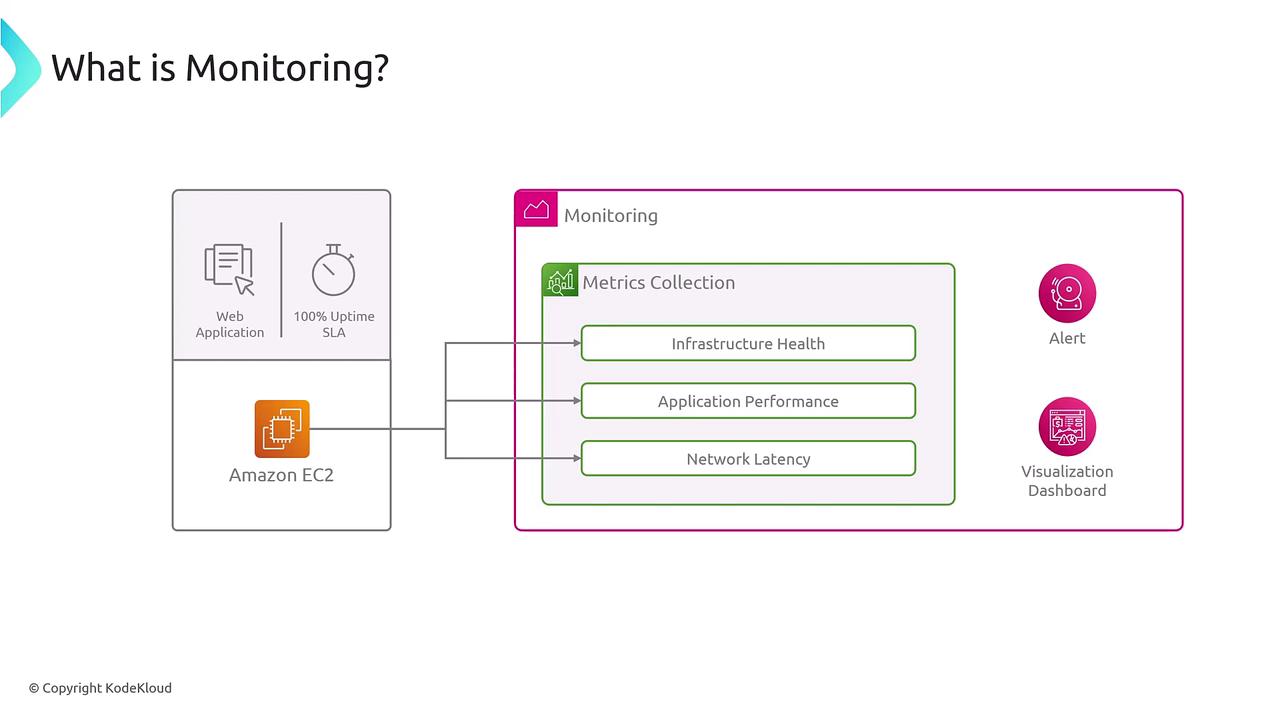
Logging
Logging acts as a detailed diary for your application, capturing extensive events and state changes from various sources. Log files gather critical information from applications, servers, databases, and network devices—data that is invaluable for troubleshooting, pinpointing bugs, and analyzing system behavior. When used alongside metrics, logs provide deep insights into system operations and help recognize underlying patterns and trends over time. The diagram below demonstrates how logs consolidate input from multiple sources, supporting effective troubleshooting and in-depth analysis to maintain optimal system performance.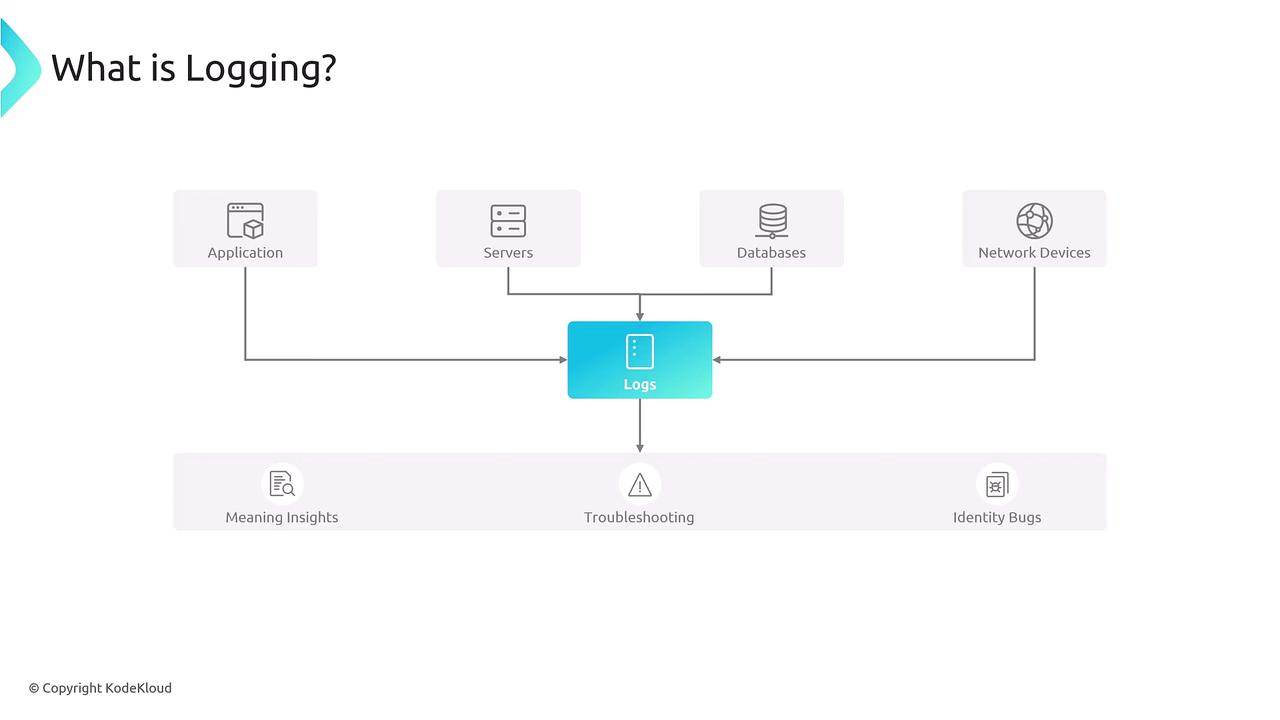
The Combined Value of Monitoring and Logging
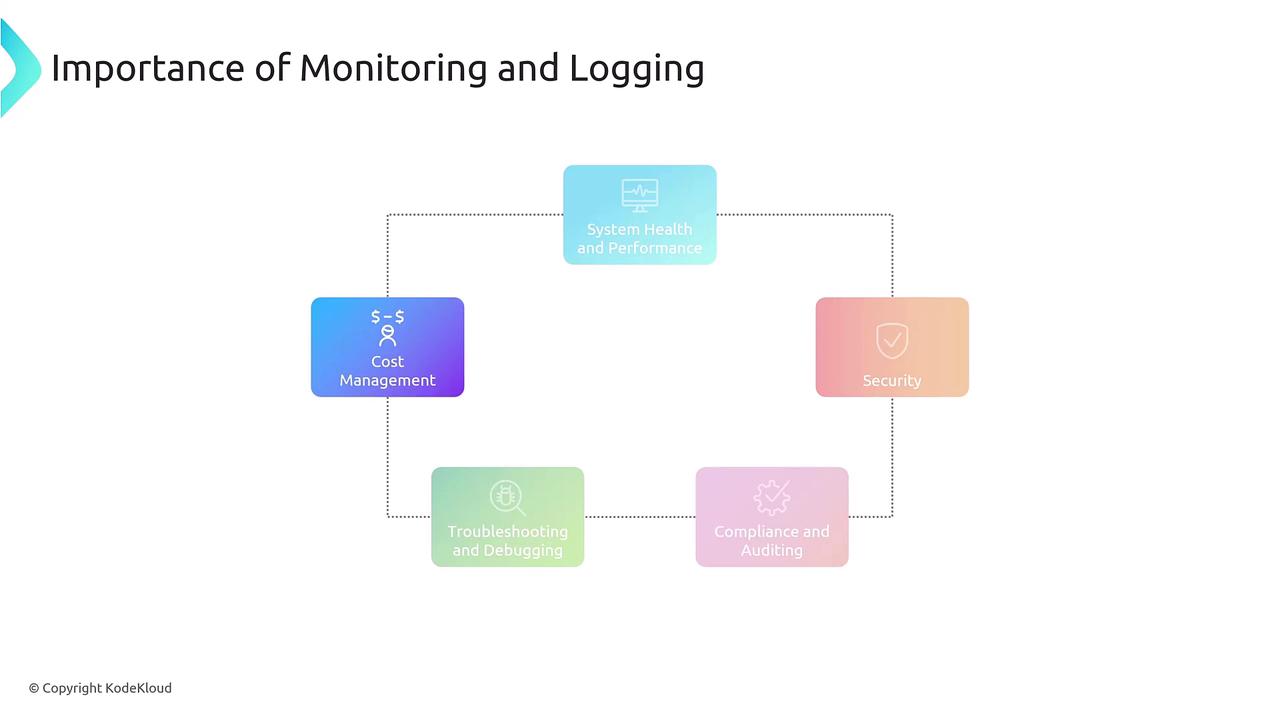
Monitoring and logging are essential, complementary practices in any cloud operation. Together, they establish the groundwork for a robust observability strategy. When integrated with tracing, these techniques form the pillars of modern observability. Key benefits of implementing effective monitoring and logging include:- Ensuring consistent system health and performance.
- Enhancing security through proactive alerts and detailed post-incident analysis.
- Supporting compliance and auditing as core components of governance.
- Facilitating rapid troubleshooting and debugging to resolve production issues swiftly.
- Optimizing cost management by delivering maximum operational value while reducing overhead expenses.
By comprehensively monitoring metrics and maintaining detailed logs, you can ensure reliable application performance and operational efficiency for your cloud infrastructure.