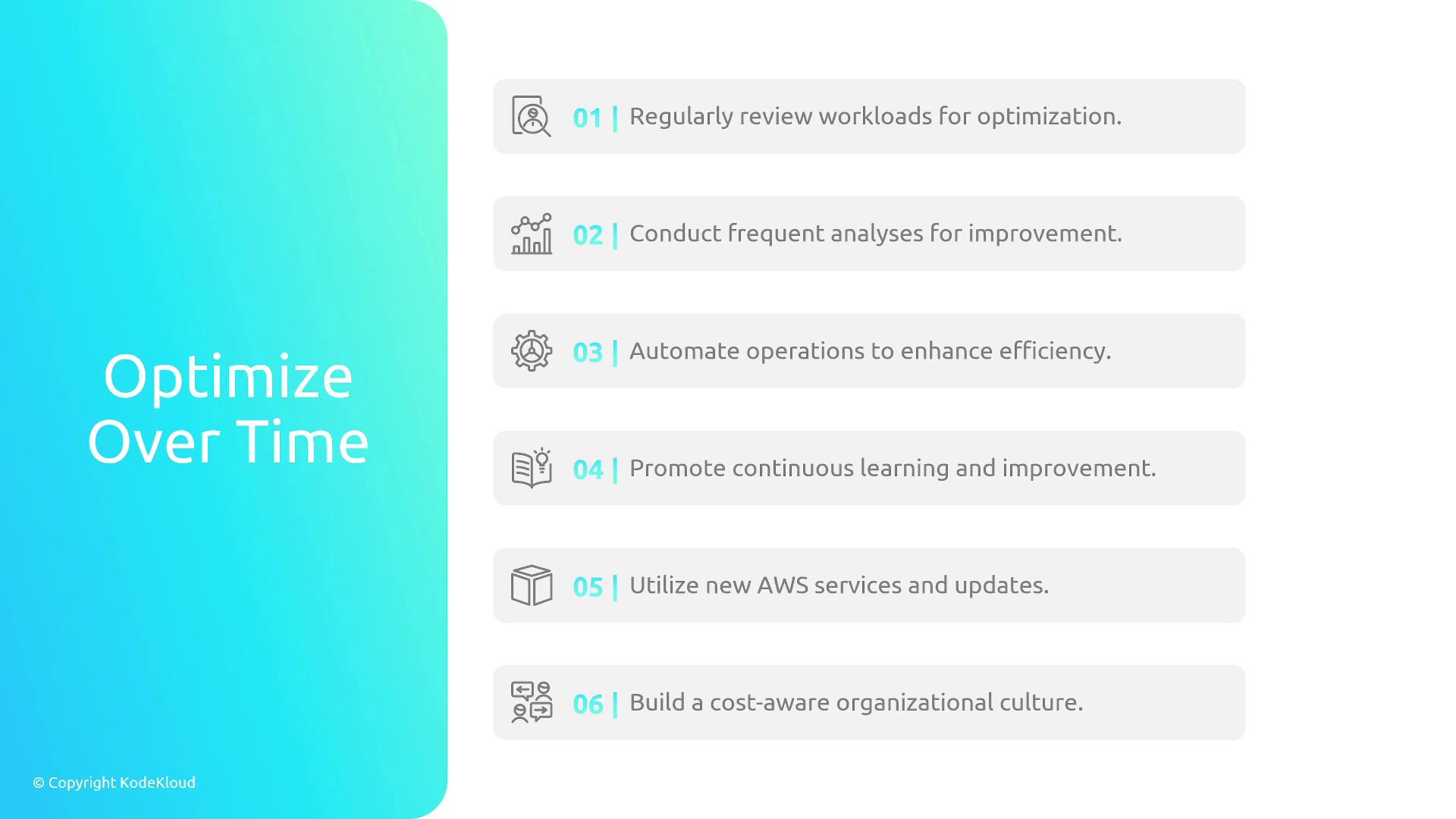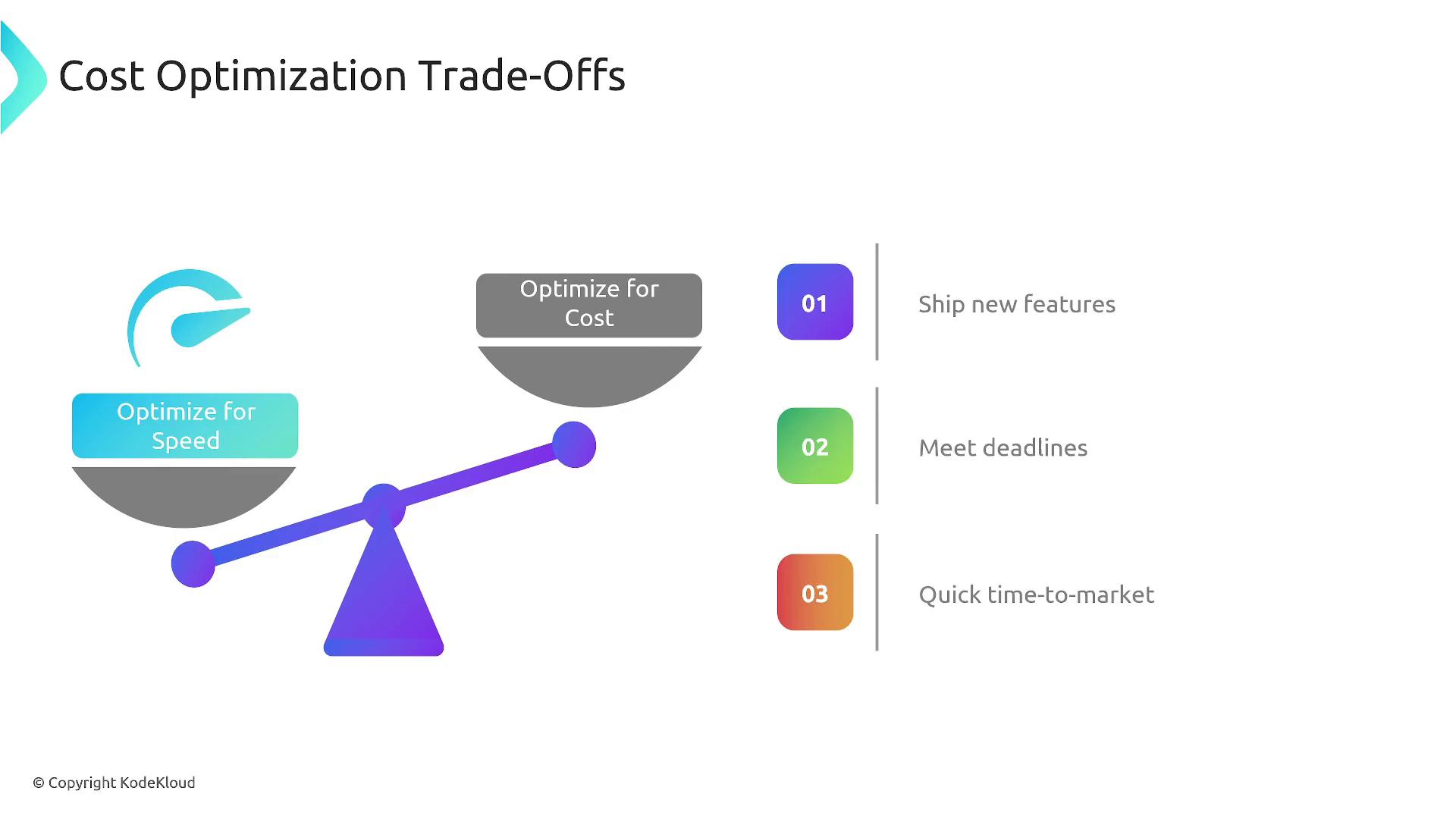
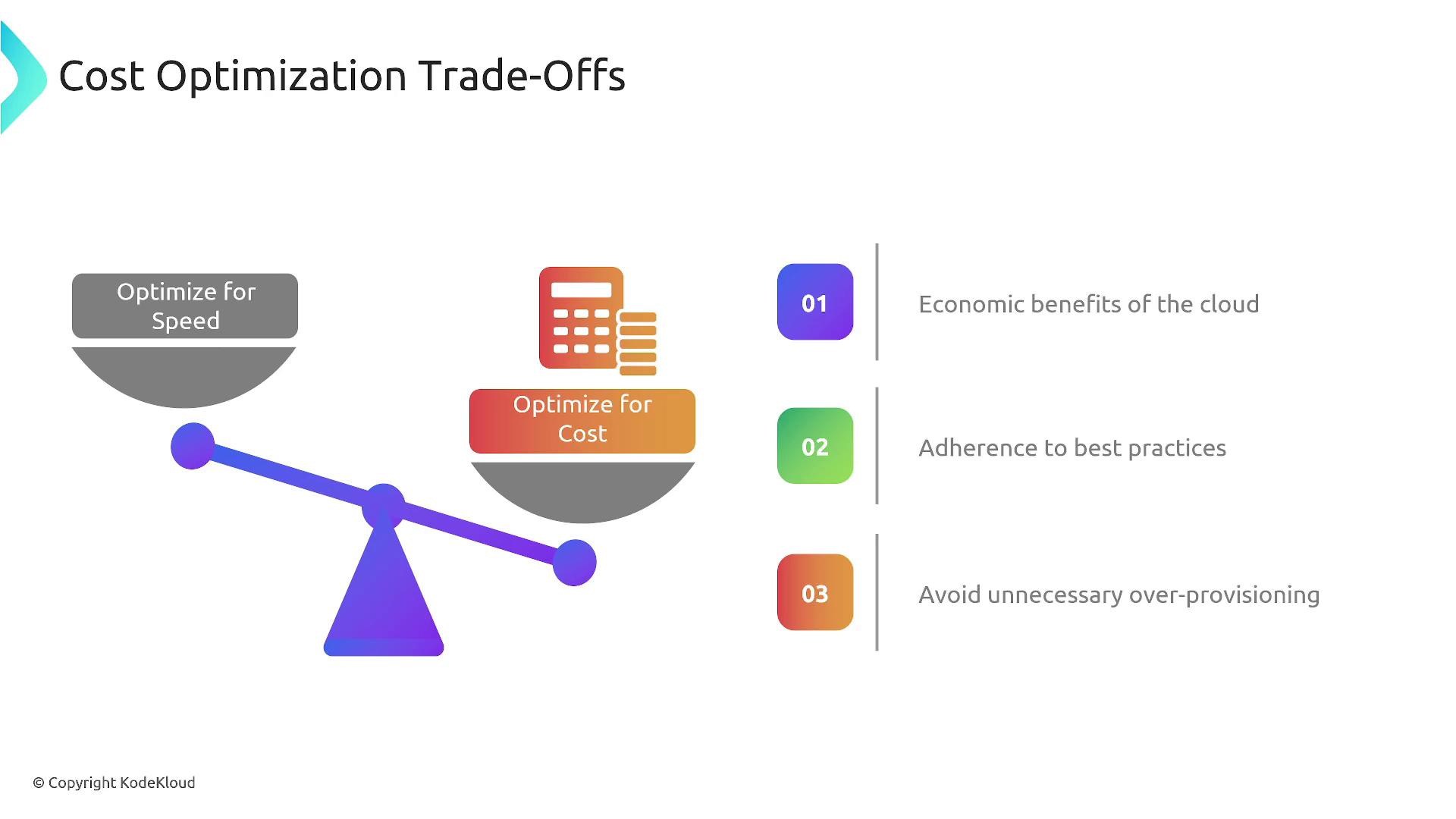
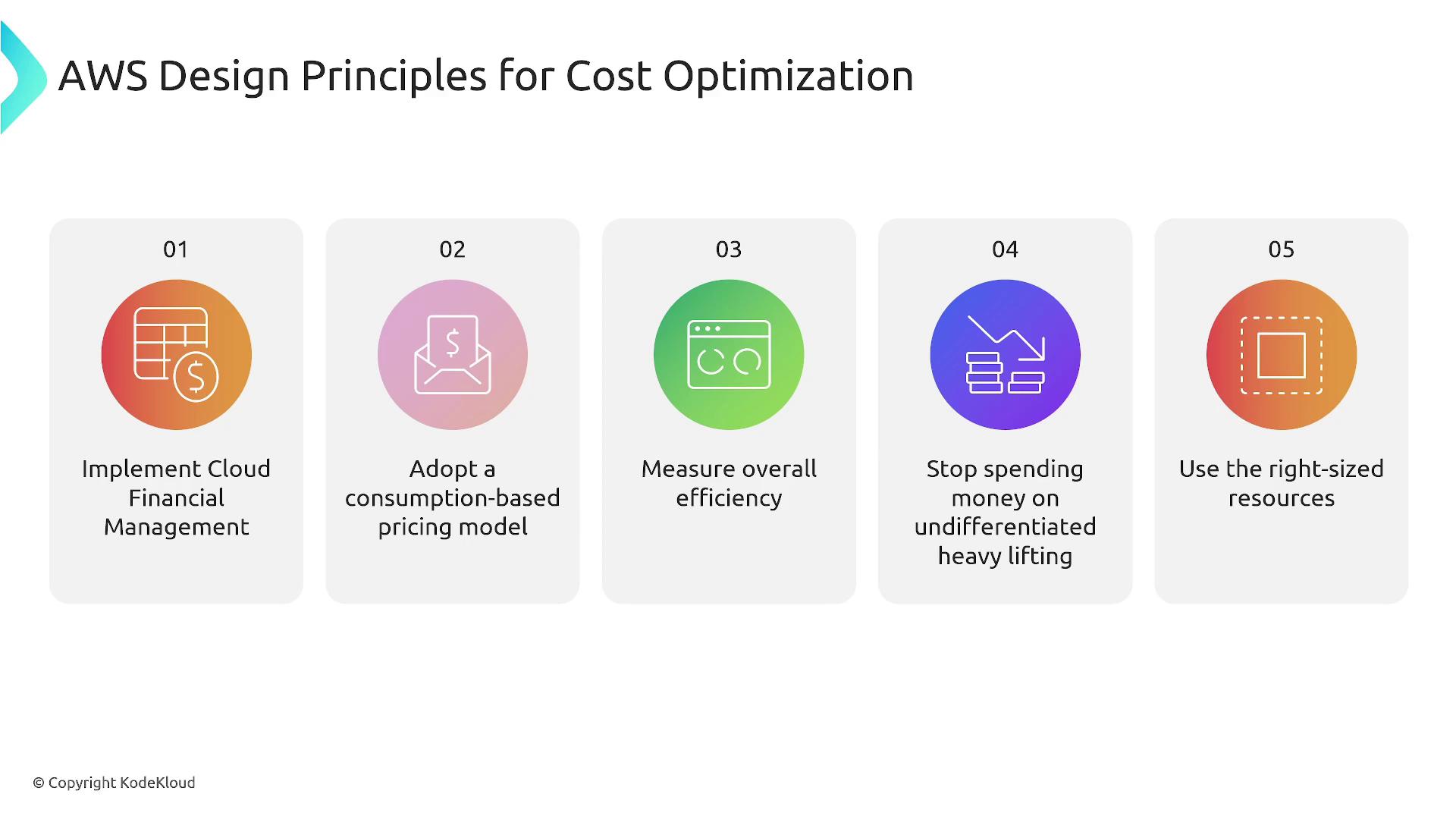
- Always monitor your cloud expenses to ensure you are utilizing resources effectively.
- Leverage consumption-based pricing models offered by AWS, which allow scaling resources up or down according to fluctuating demand.
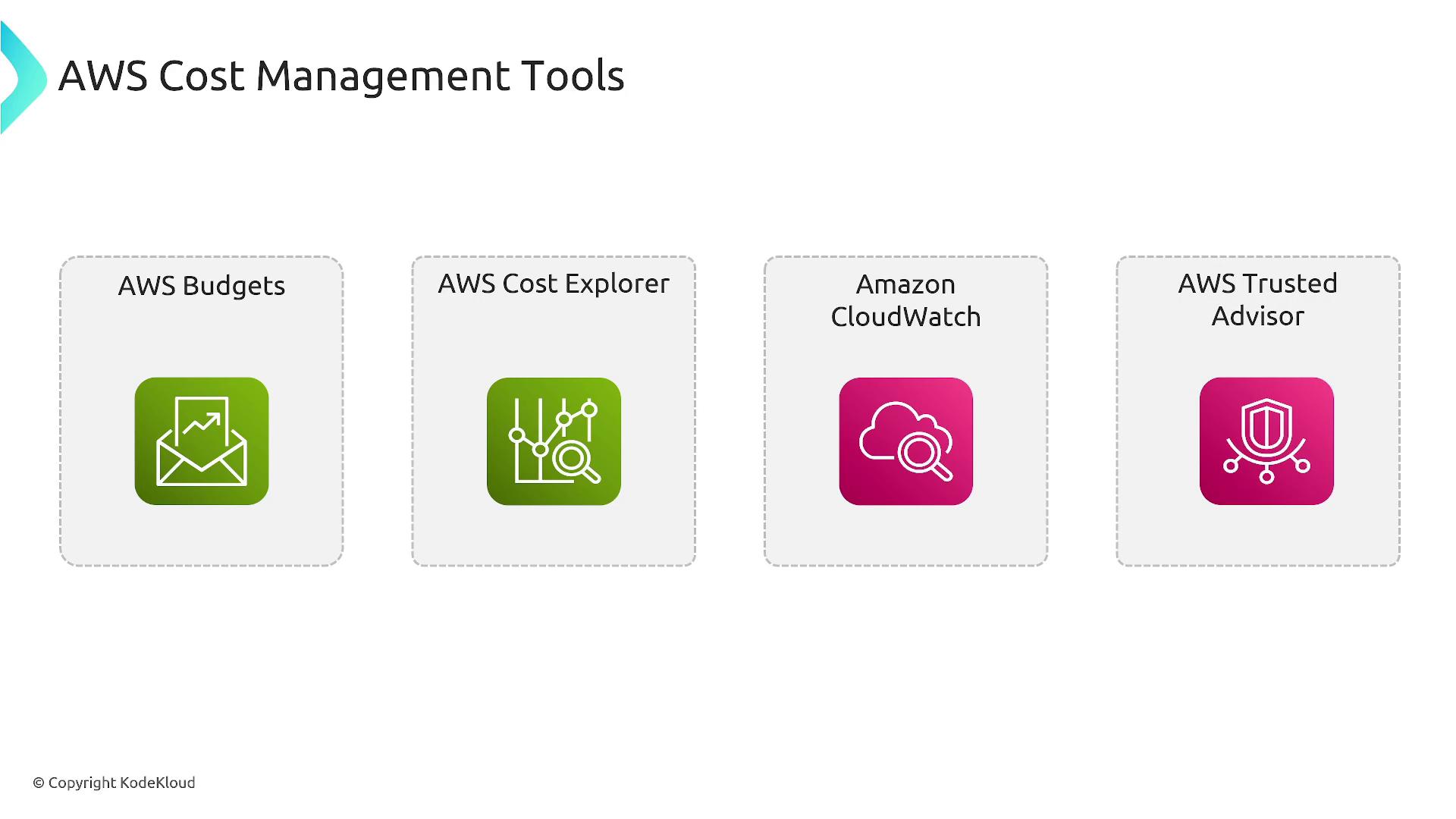
AWS Cost Management Tools
AWS offers a suite of tools to effectively manage and optimize costs. Familiarizing yourself with these can be beneficial for both certifications and practical implementation:- AWS Budgets: Enables you to configure alerts and automate actions when spending crosses pre-defined thresholds.
- AWS Cost Explorer: Provides detailed analysis of your historical spending and usage while offering forecasts for future expenditures.
- Amazon CloudWatch: Monitors your resource usage, including instances with burstable CPU performance, and triggers alerts based on cost-related metrics.
- AWS Trusted Advisor: Delivers recommendations to improve security, performance, and cost efficiency. (Note: Full access to Trusted Advisor is available only with Business, Enterprise, or Enterprise On-Ramp support plans.)
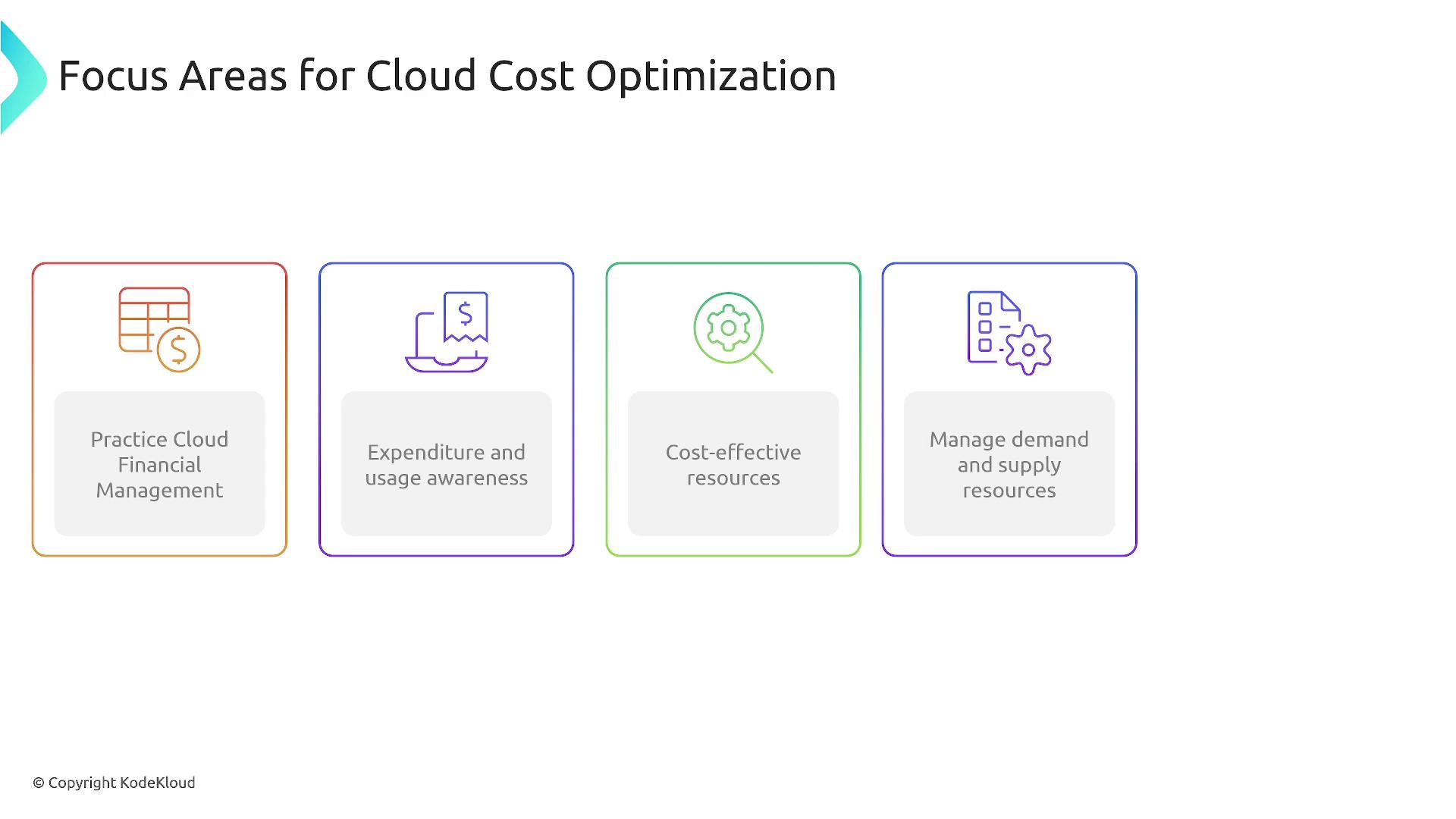
Focus Areas for Cloud Cost Optimization
To optimize cloud costs effectively, focus on several key areas:- Cloud Financial Management: Develop a strong financial governance model to oversee and control expenses.
- Expenditure and Usage Awareness: Gain visibility into resource usage and identify non-essential or redundant services.
- Cost-Effective Resource Utilization: Match resources with current demand—such as scheduling power cycles during off-peak hours—to avoid paying for idle capacity.
- Managing Demand and Supply: Scale resources in line with workload patterns, expanding during high-demand periods and contracting when usage decreases.
Implementing Cloud Financial Management
A critical component of cost optimization is proper resource tagging. Assigning clear ownership through tagging links each resource to financial attributions, projects, billing codes, and organizational units. Enforcing tagging policies bridges the gap between finance and technology teams by establishing clear accountability. In addition, developing precise budgets and forecasting dashboards is crucial. Automating reporting, notifications, and budget enforcement ensures proactive decision-making before costs spiral out of control.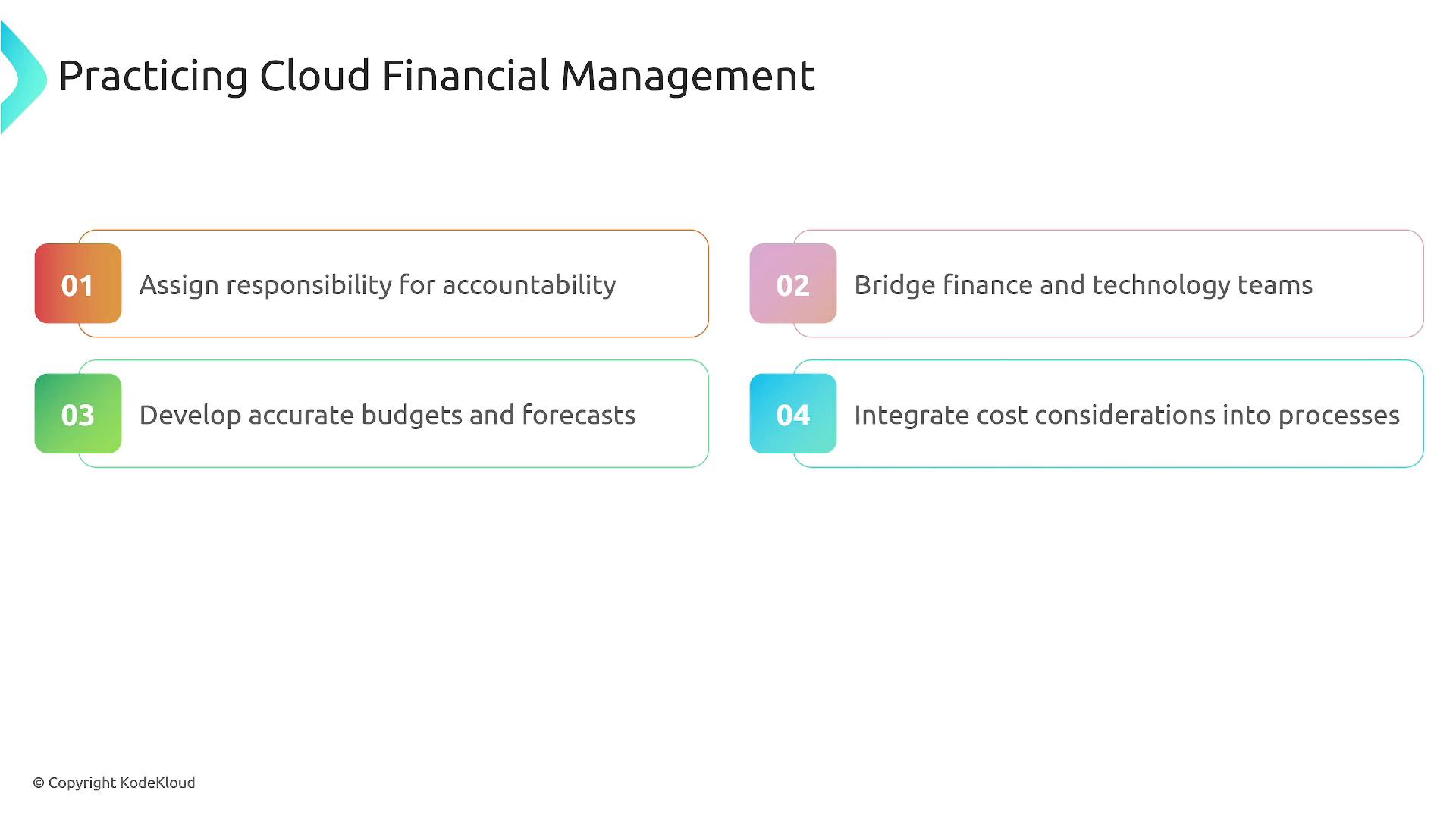
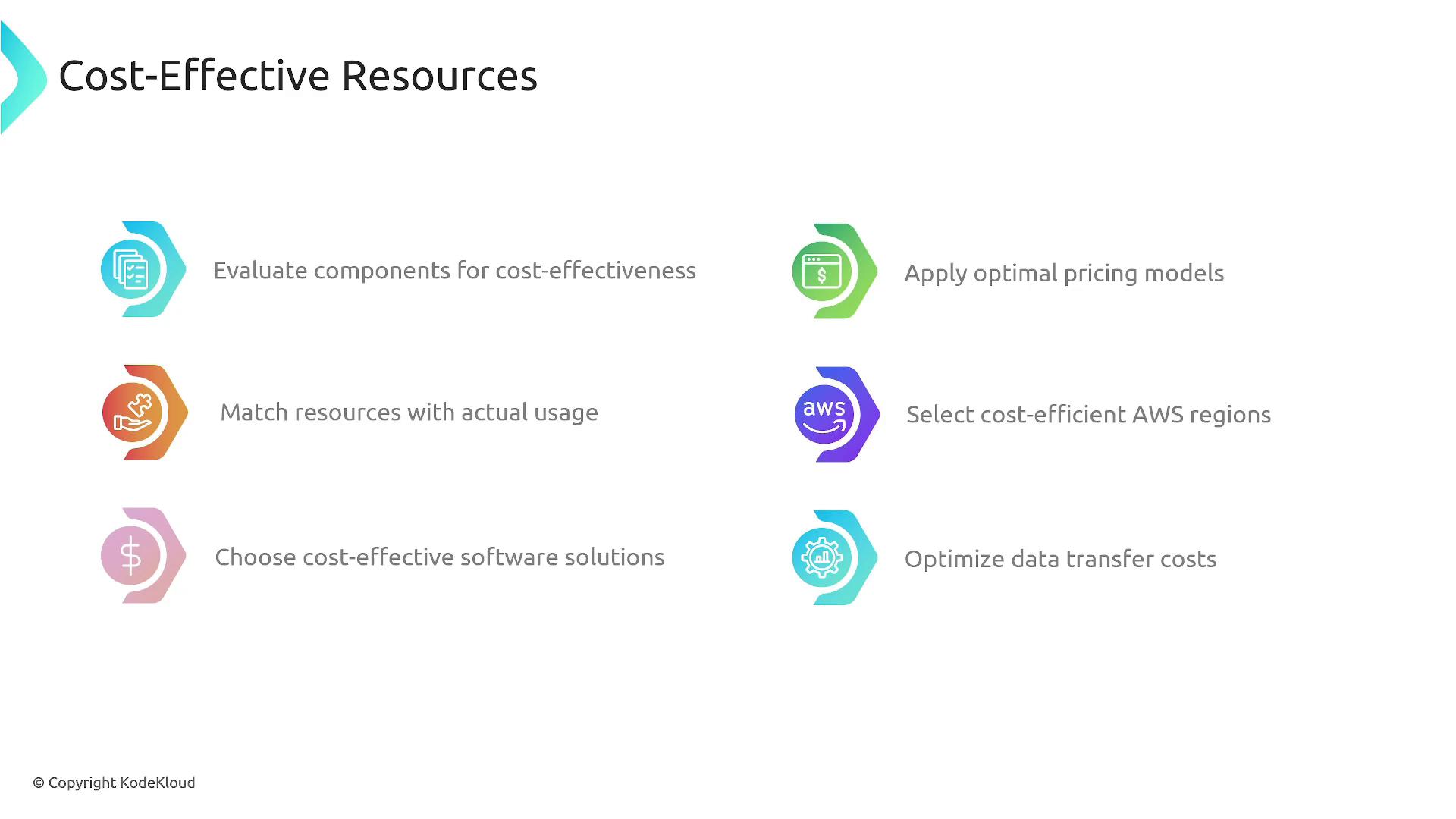
Managing Demand and Supply
Understanding and analyzing workload patterns is key to aligning resource supply with demand. Whether through auto scaling or on-demand adjustments, it is essential to continuously monitor workloads and automate responses to changes. Regular evaluations, along with staying informed about new AWS service releases, will drive ongoing efficiency improvements.