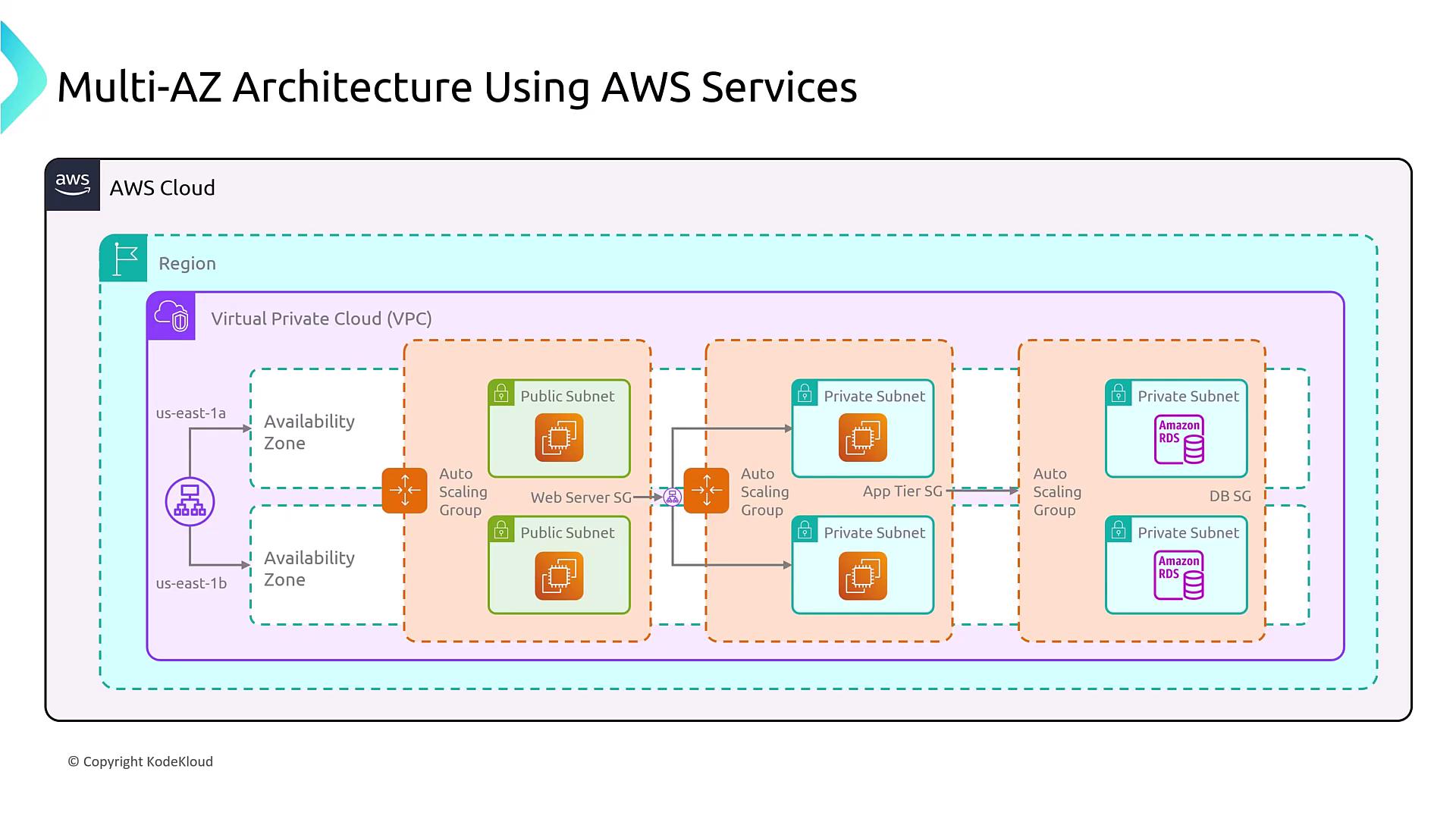
Understanding AWS Availability Zones
An AWS Availability Zone is more than just a single data center—it is a cluster of data centers with independent power, cooling, and internet connectivity. Each AZ operates independently within a region, ensuring robust availability. For example, regions such as Mumbai, Frankfurt, or Virginia typically offer at least three Availability Zones, although some regions might have two, four, or even six AZs.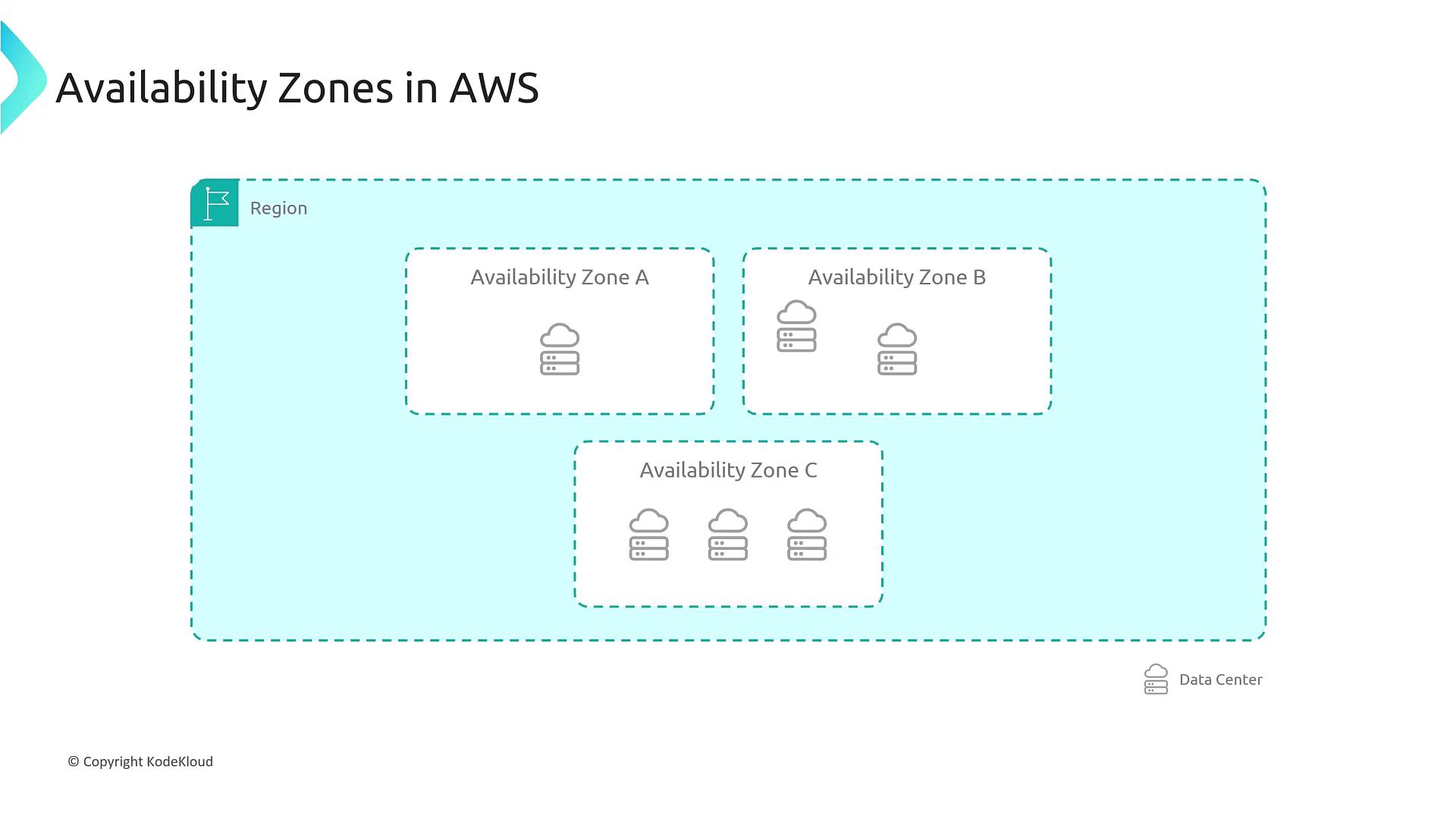
Single-AZ vs. Multi-AZ Deployments
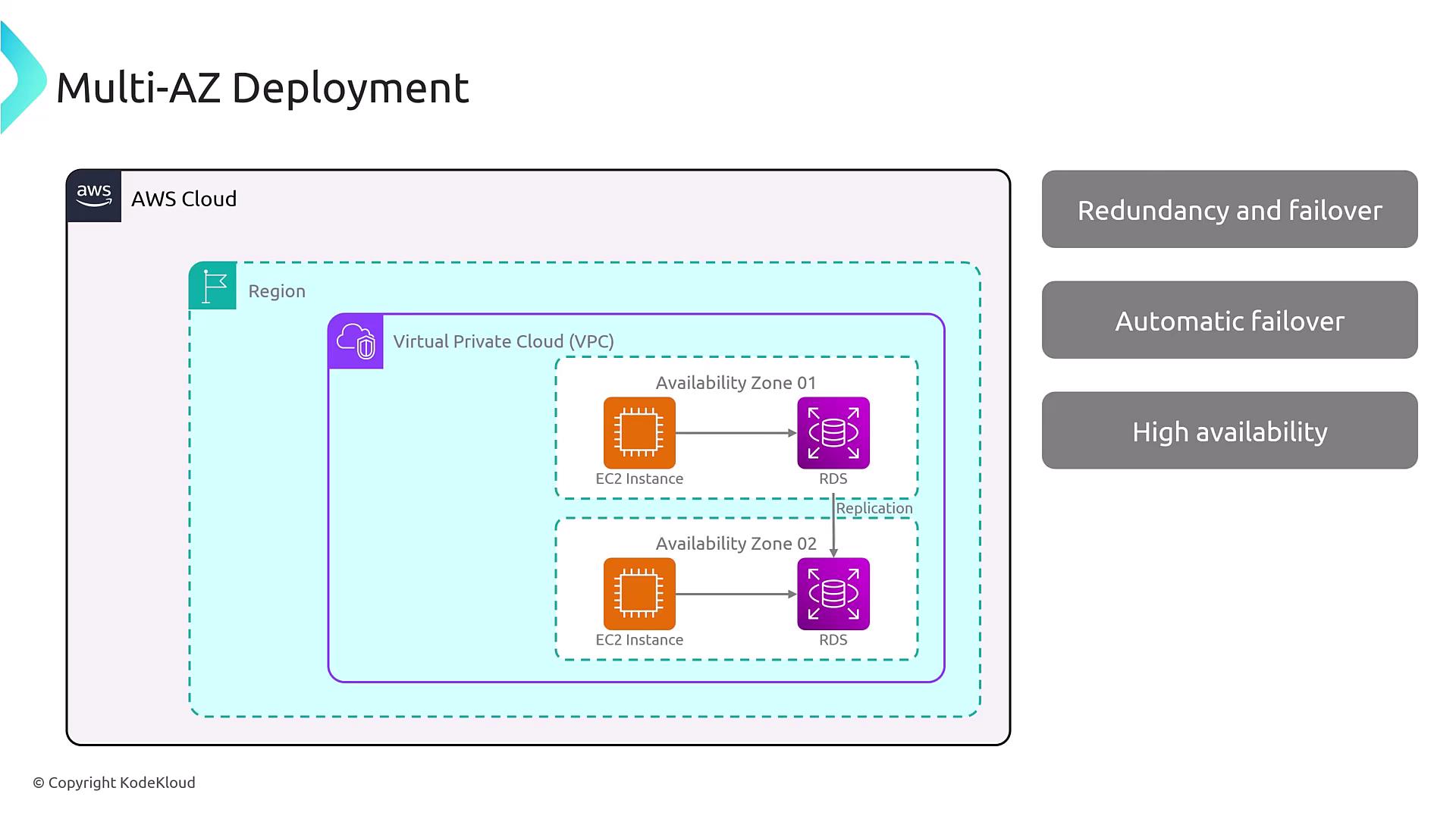
In a single-AZ deployment, all components run within one Availability Zone. While this design is cost-effective, it presents lower availability and redundancy. AWS best practices consider single-AZ deployments an anti-pattern because failure in the single AZ can lead to complete service disruption.Deploying critical applications in a single AZ can result in significant downtime if that zone fails.
Key Considerations
-
Availability and Fault Tolerance:
Multi-AZ deployments significantly boost availability and fault tolerance by distributing critical services across different zones. -
Cost and Complexity:
While multi-AZ setups provide superior resilience, they require higher costs and more sophisticated configurations. There is also a potential for increased latency due to multi-phase commit processes, typically measured in microseconds or, at worst, milliseconds. -
Critical Infrastructure:
For production environments and mission-critical applications, AWS best practices generally mandate the use of multi-AZ deployments.
Extending the Multi-AZ Architecture
In a comprehensive multi-AZ architecture, multiple subnets and instance tiers are configured. For instance, web servers, application servers, and database servers might each operate in separate tiers, managed by Auto Scaling groups and fronted by load balancers. This design supports automatic scaling, health checks, and efficient failover. Moreover, incorporating a secondary region with Global Accelerator can enhance disaster recovery, though true disaster recovery typically necessitates a second region.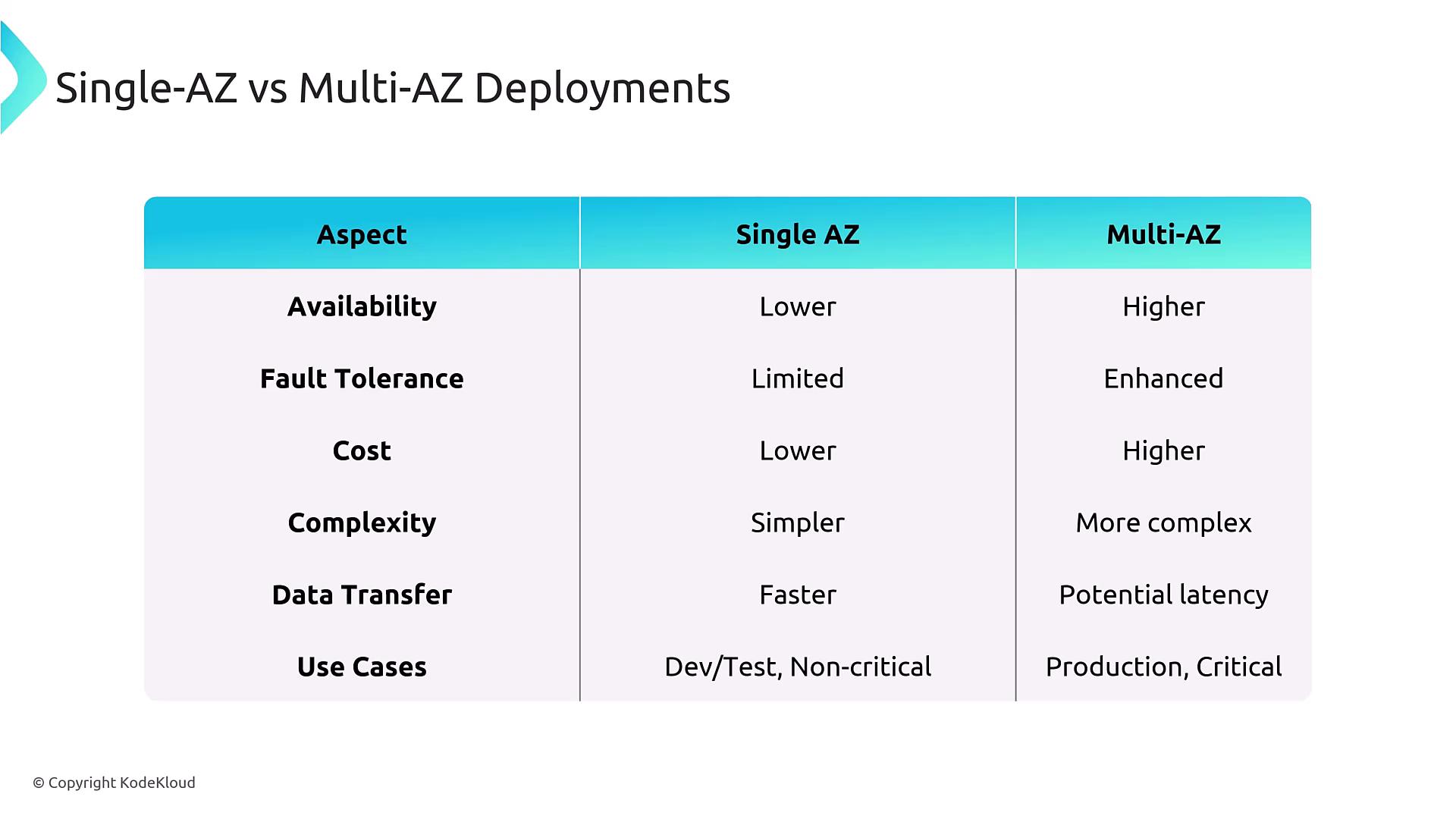
Adding layers such as Auto Scaling, load balancing, and additional security groups (e.g., App Tier security group acting as a firewall) further fortifies the infrastructure.
Final Thoughts
Understanding the differences between single-AZ and multi-AZ deployments is vital, especially for AWS certification exams. While single-AZ deployments may be acceptable for non-critical applications, production systems demand multi-AZ setups to achieve high availability and fault tolerance. Utilizing Auto Scaling groups and load balancers across AZs further enhances system reliability. For ultimate resilience, consider extending your architecture across multiple regions for disaster recovery.