

When to Use Spot Instances
EC2 Spot Instances are a cost-effective choice for fault-tolerant and flexible applications. They excel in environments that support:- Stateless workloads that can scale horizontally with automated scaling.
- Supplemental worker nodes for container orchestration services such as Amazon Elastic Container Service (AWS ECS) or AWS EKS.
- Long-running data processing tasks where interruptions can be seamlessly managed by integrating on-demand instances to pick up any incomplete work.
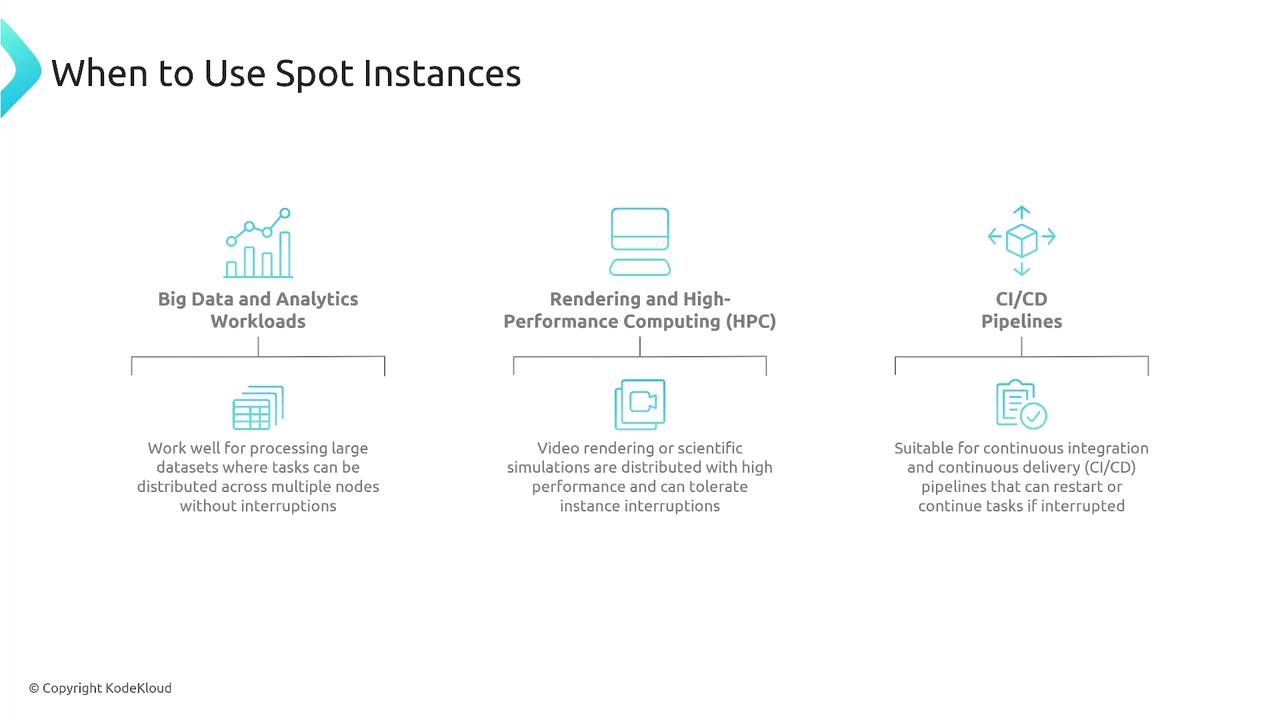
Spot Instances work best when used for short-lived, interruptible tasks that can resume from checkpoints or be re-run without significant impact.
When Not to Use Spot Instances
EC2 Spot Instances are not suitable for workloads that cannot tolerate interruptions. This includes:- Stateful applications such as databases or applications with highly coupled architectures.
- Workloads where even minor interruptions could lead to data synchronization issues, such as using Spot Instances as read replicas.
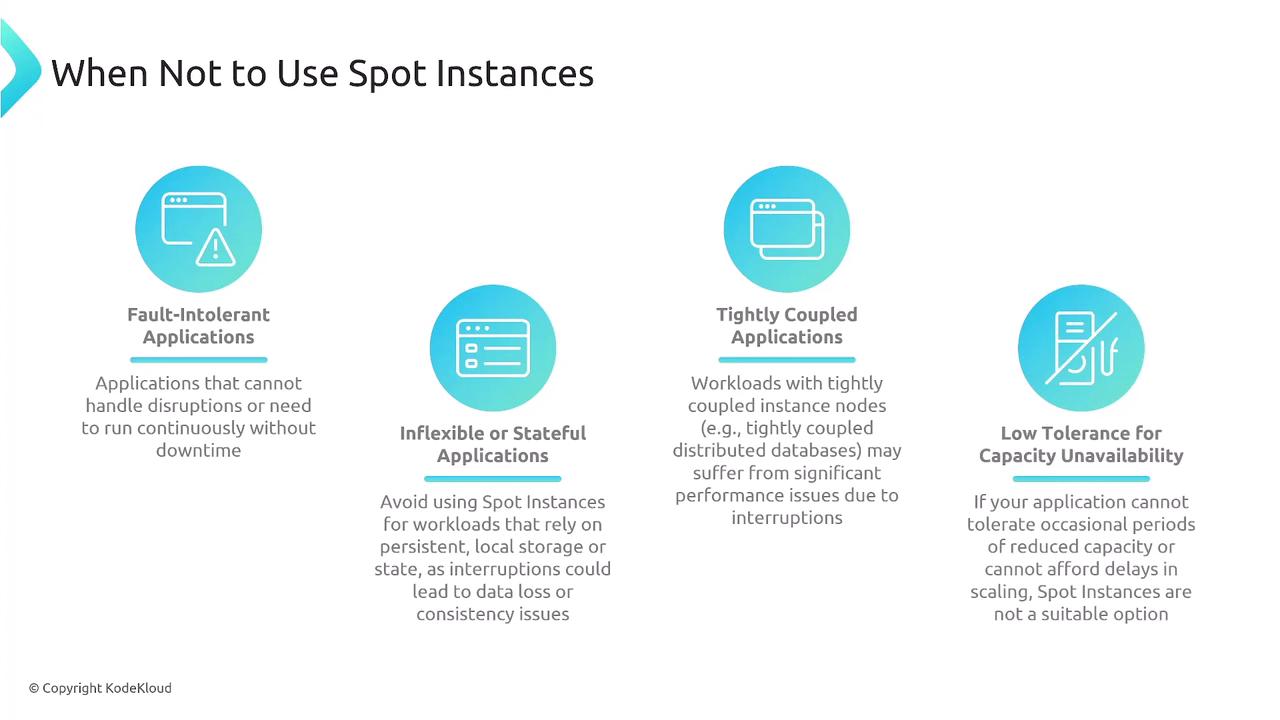
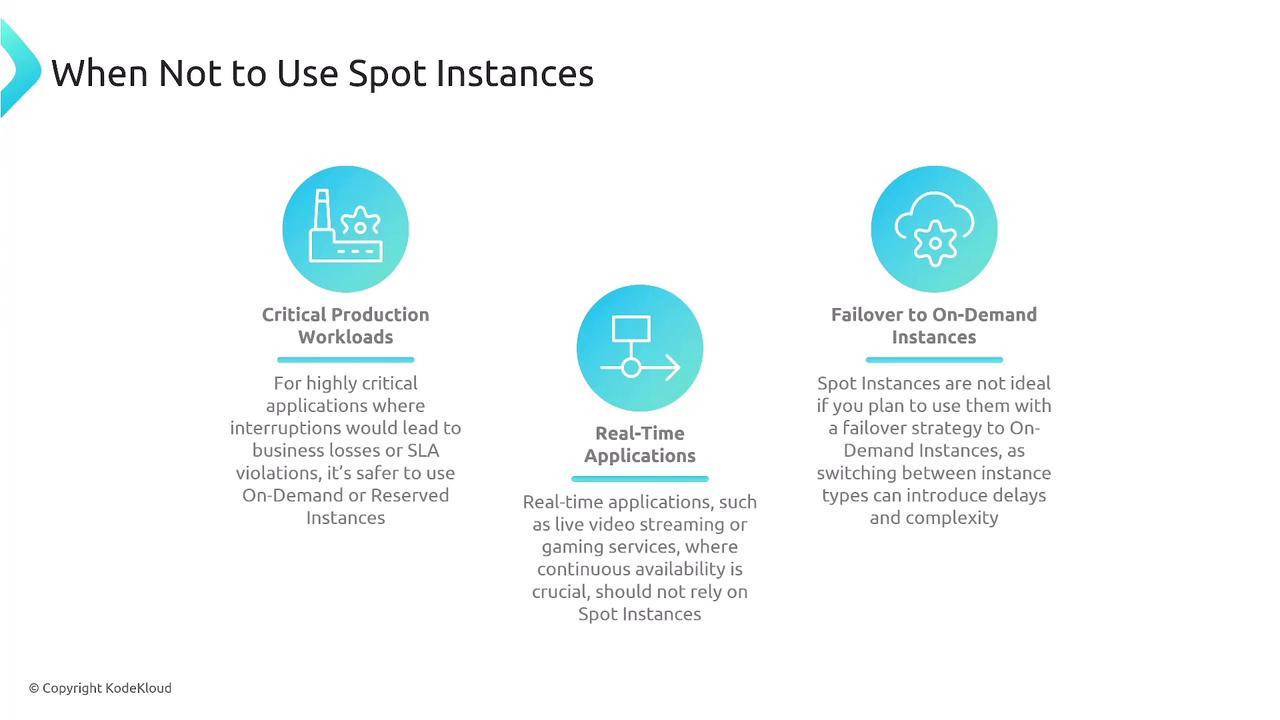
Avoid basing your core infrastructure for critical systems on Spot Instances, as their interruptible nature can lead to unexpected downtimes.
Best Use Cases for Spot Instances
Spot Instances shine in scenarios requiring resilience and scalability, especially for:- Large-Scale Data Processing: Workloads such as Hadoop, MapReduce jobs, data lakes, or data mining can benefit from checkpointing mechanisms. If a node is interrupted, another node can resume from the last saved checkpoint, ensuring minimal data loss or downtime.
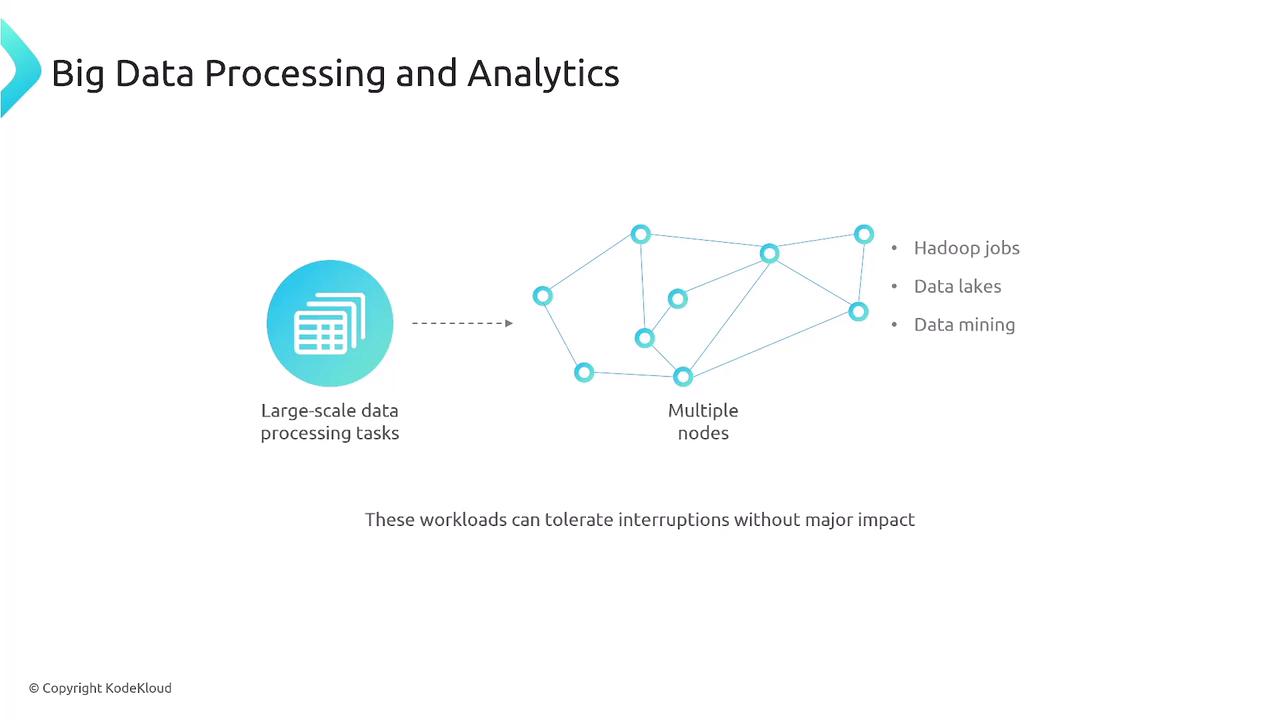
- Batch Processing: Batch jobs often include iterative steps with checkpoints that allow them to restart and resume easily.
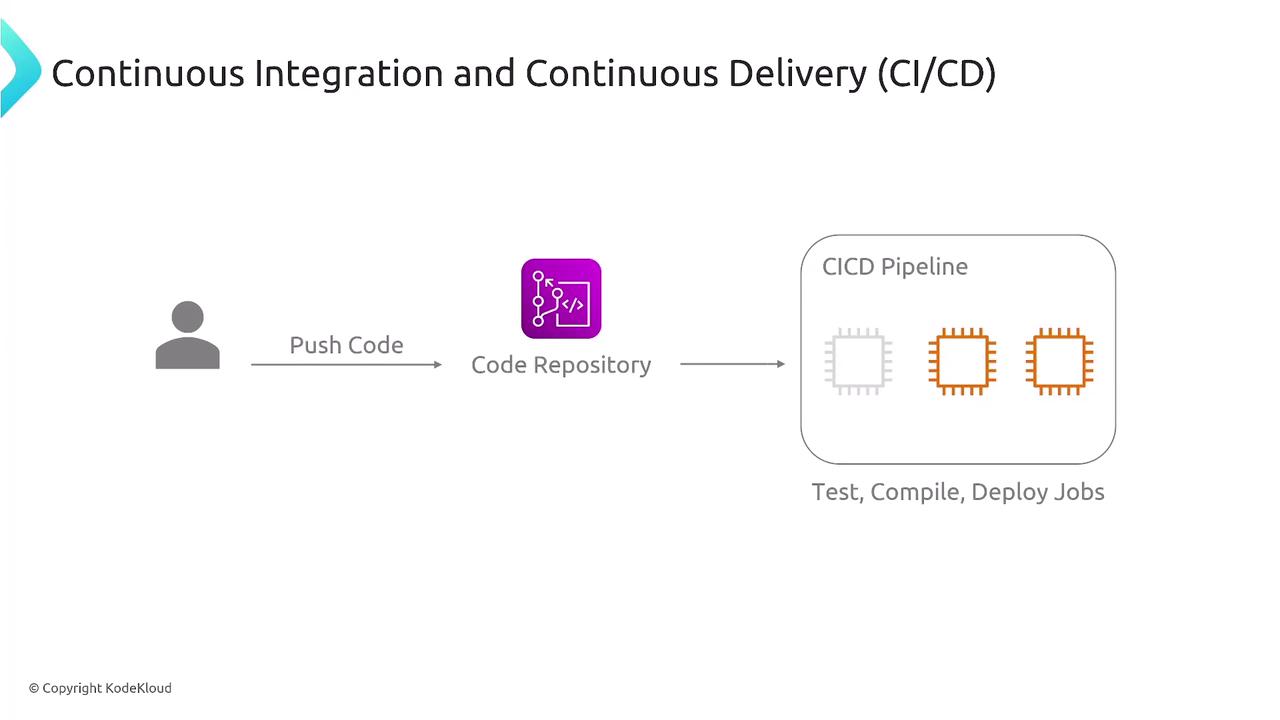
- Short-Lived CI/CD Tasks: While not recommended as the backbone of a CI/CD pipeline, Spot Instances are ideal for quickly running tests, compiling code, and deploying applications within a 15–30 minute window.
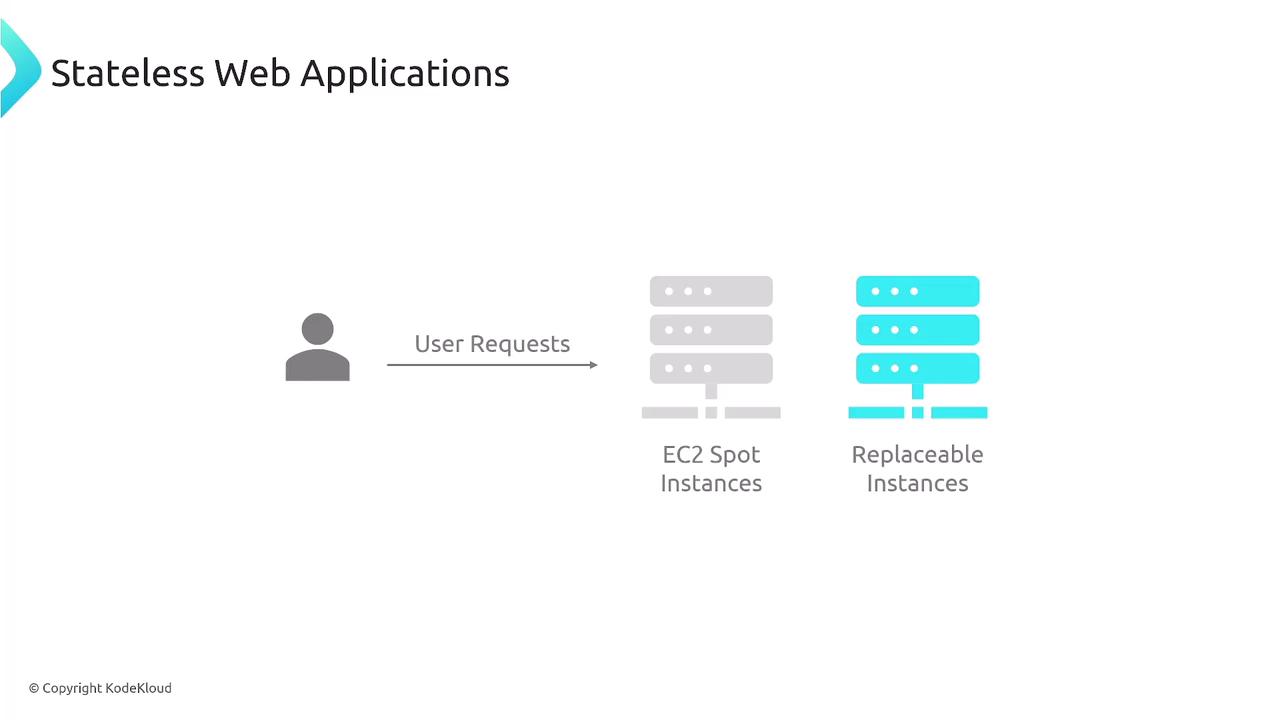
- Containerized Applications: A combination of on-demand and Spot Instances creates a flexible environment for stateless web servers, which can automatically scale based on traffic load.
Best Practices for Using Spot Instances
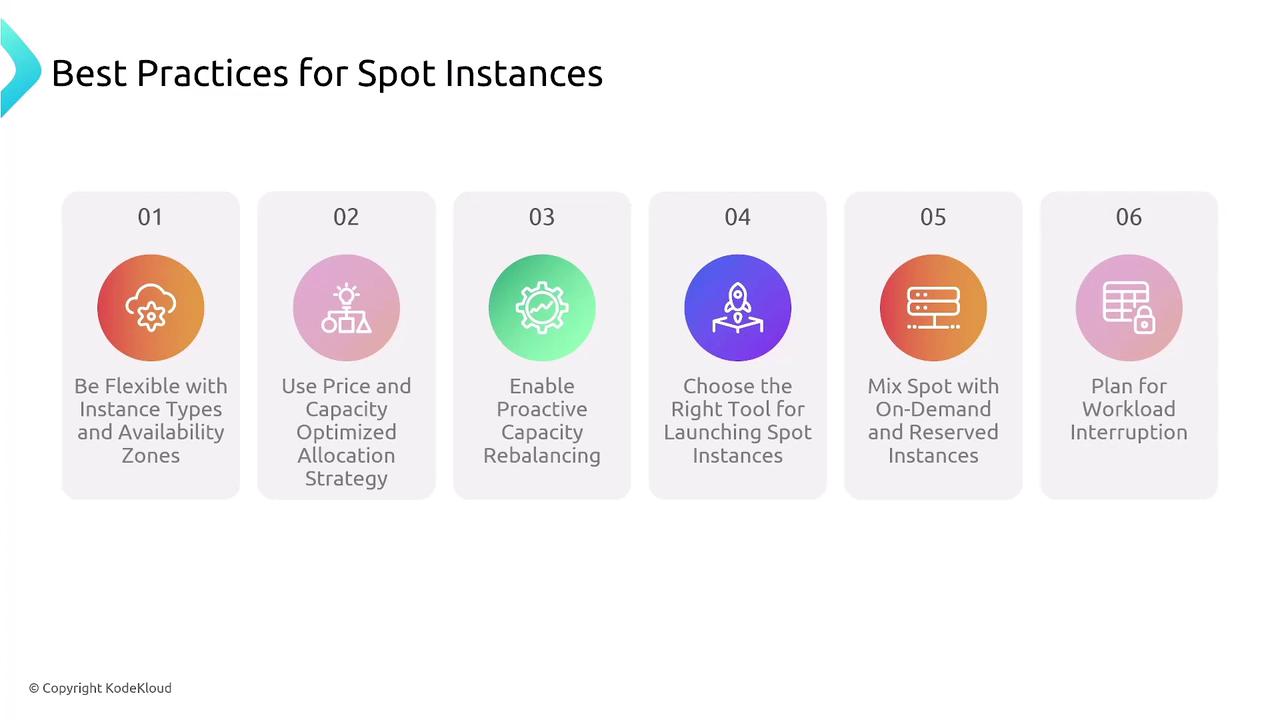
Adopt the following practices to maximize the benefits of using Spot Instances:| Best Practice | Description |
|---|---|
| Flexibility | Use a variety of instance types and distribute across multiple Availability Zones to avoid resource constraints. |
| Pricing & Capacity Optimization | Implement proactive capacity rebalancing and pricing strategies to ensure continuity if specific instance types become scarce. |
| Proper Tooling | Ensure you have the appropriate provisioning and configuration tools in place to efficiently manage Spot Instances. |
| Mixed Instances Strategy | Combine Spot Instances with on-demand and reserved instances as part of your overall strategy to balance cost and performance. |
| Interruptible Workloads | Reserve Spot Instances for workloads that can tolerate interruptions, such as batch processing and non-critical CI/CD tasks. |
Conclusion
EC2 Spot Instances offer a powerful and cost-effective resource when used appropriately. They are best suited for:- Fault-tolerant and stateless workloads
- Large-scale data processing and batch jobs
- Short-lived CI/CD tasks
- Scalable containerized web applications