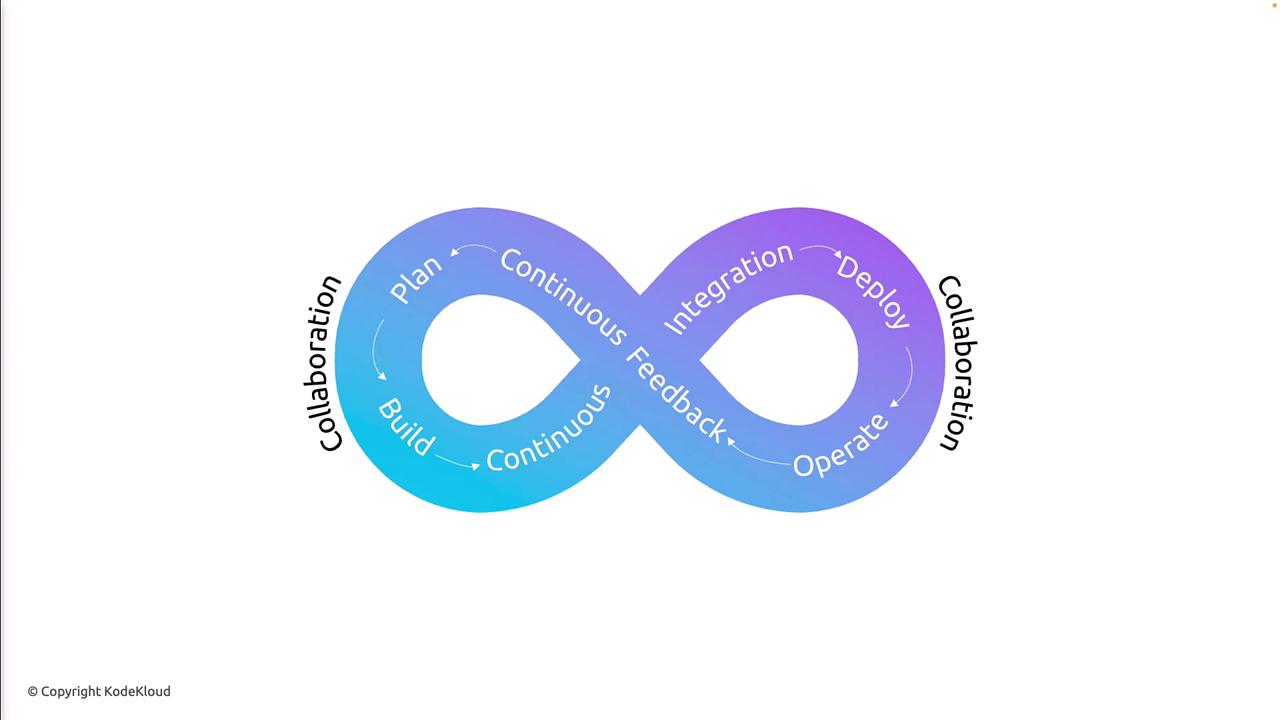
This guide explores the importance of DevOps, core frameworks, and best practices for enhancing software delivery through collaboration and automation.
DevOps has transformed software delivery by fostering collaboration between Development (Dev) and Operations (Ops) teams. In this guide, you’ll learn why DevOps is essential, explore core frameworks like the Infinity Loop and OODA Loop, and discover best practices for accelerating cycle time and validated learning.
DevOps isn’t just about merging two teams—it’s a cultural shift powered by automation, continuous feedback, and shared responsibility. Organizations that embrace DevOps can:
Benefit
Description
Faster Time-to-Market
Deliver new features and updates more quickly through automated pipelines.
Improved Collaboration
Break down silos between Dev, Ops, QA, and business stakeholders.
Higher Quality & Reliability
Implement continuous integration and testing to catch issues early.
Greater Agility
Respond to customer feedback and market changes with shorter release cycles.
Enhanced Performance Monitoring
Leverage real-time insights to optimize system health and user experience.
DevOps success relies on aligning people, processes, and tools around shared goals—speed, quality, and continuous improvement.
Deliver incremental value and gather feedback faster.
Automate Build, Test, and Deploy
Eliminate manual steps and speed up releases.
Enhance Telemetry and Monitoring
Gain real-time insights to detect issues immediately.
Deploy Frequently
Increase opportunities for validated learning.
Neglecting security and compliance in fast-moving pipelines can introduce vulnerabilities. Integrate automated security scans and audits into every stage.