

What Is Pipeline Concurrency?
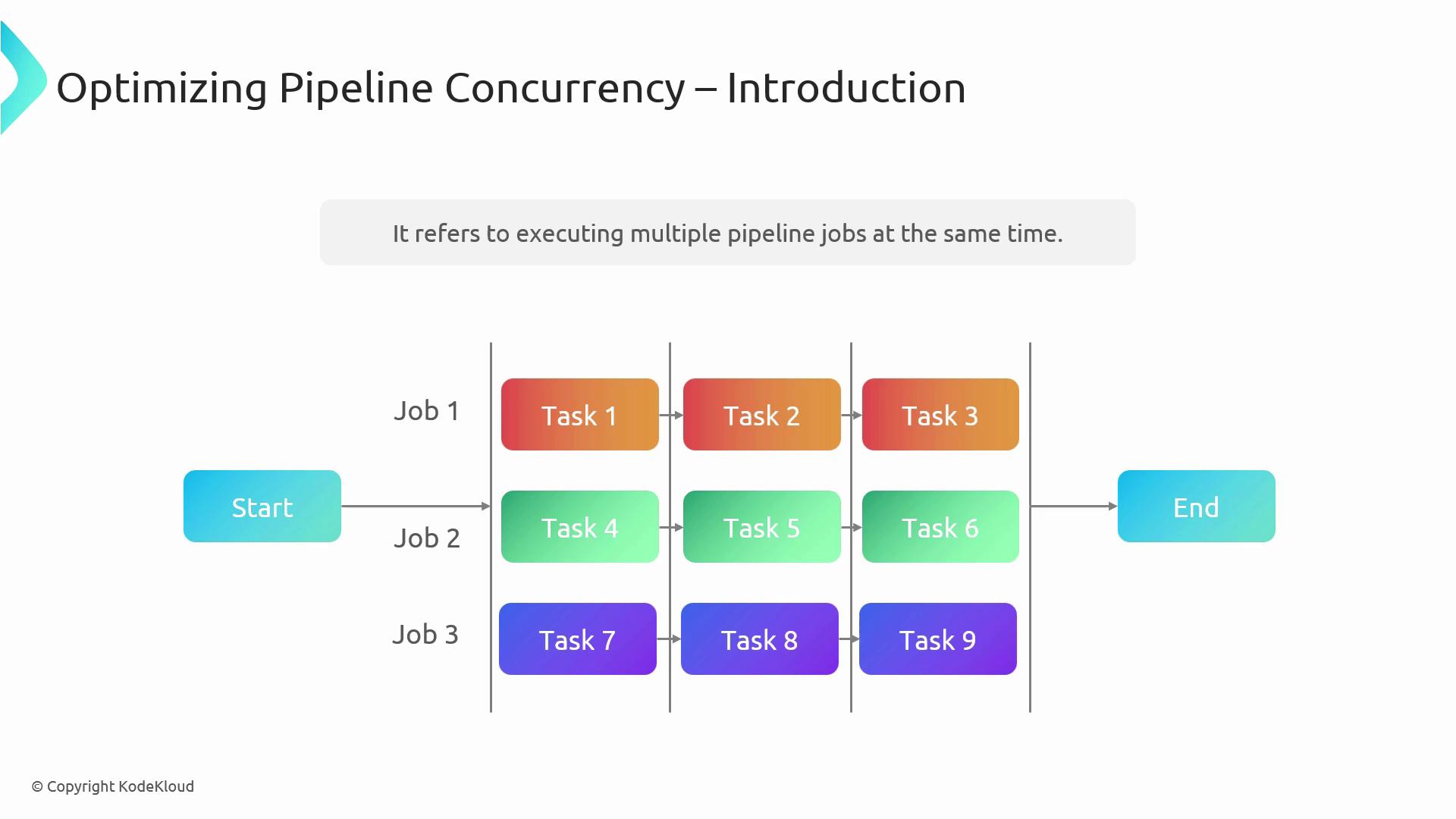
Concurrency refers to executing several pipeline jobs in parallel. By splitting work into independent jobs, you can leverage multiple agents simultaneously and finish your pipeline in a fraction of the time.Parallel jobs consume more agents, so ensure your agent pool has enough capacity before increasing concurrency.
Key Benefits of Optimized Concurrency
| Benefit | Description |
|---|---|
| Improved Performance | Parallel execution reduces overall pipeline runtime. |
| Cost Efficiency | Better utilization of agents lowers idle time and infrastructure costs. |
1. Parallel Jobs
Azure Pipelines allows you to define multiple jobs within a single pipeline. When you have enough agents available, these jobs run at the same time, shortening feedback loops and speeding up delivery.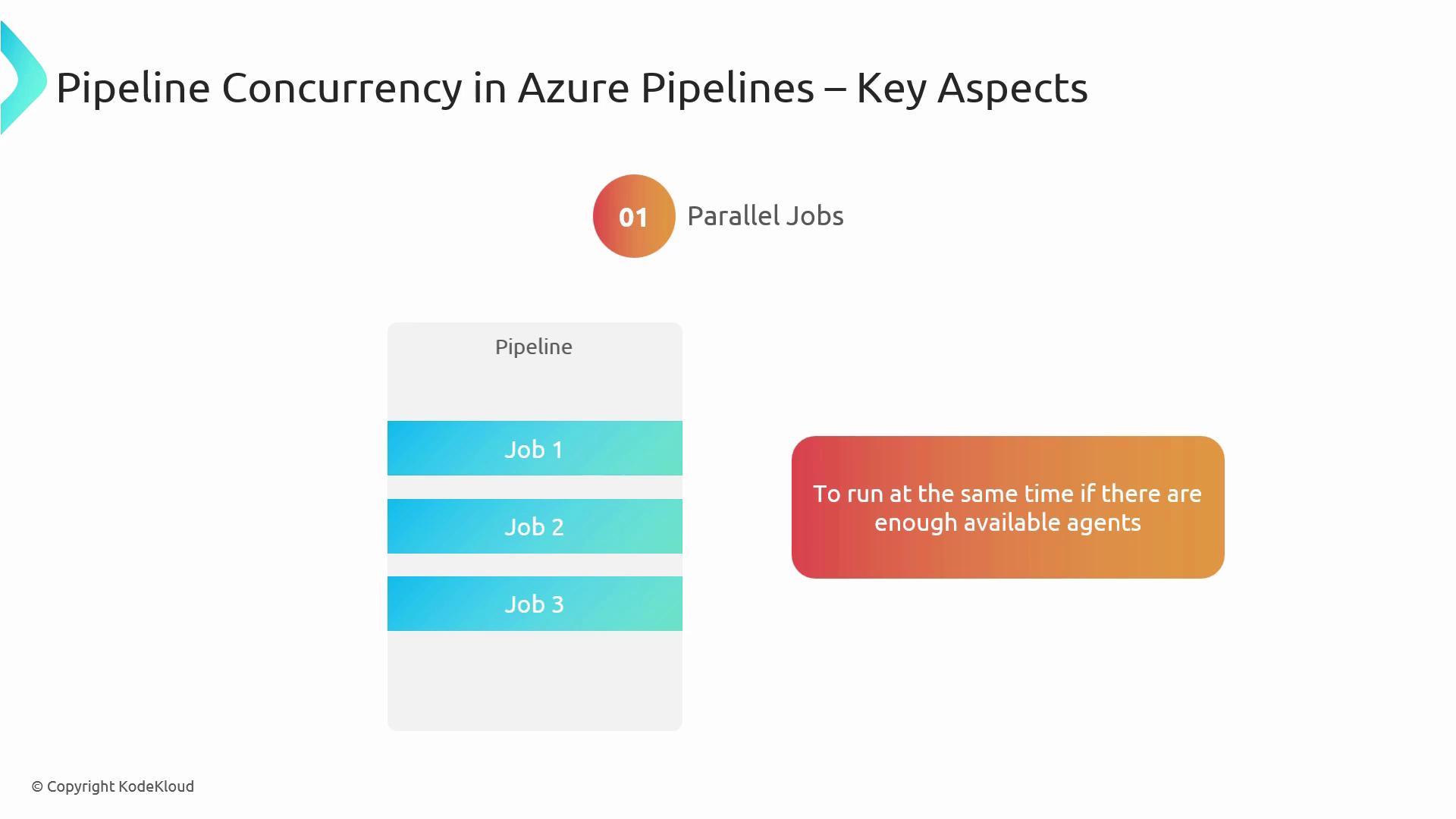
If your organization shares a limited number of parallel jobs, monitor usage in Project settings > Pipelines > Parallel jobs to avoid queuing delays.
2. Agent Pools
Agents are the workers that execute your pipeline jobs. You group them into pools so pipelines can pick an available machine. Right-sizing your agent pool—choosing the right number and types of agents—ensures you maintain the concurrency level you need without wasting resources.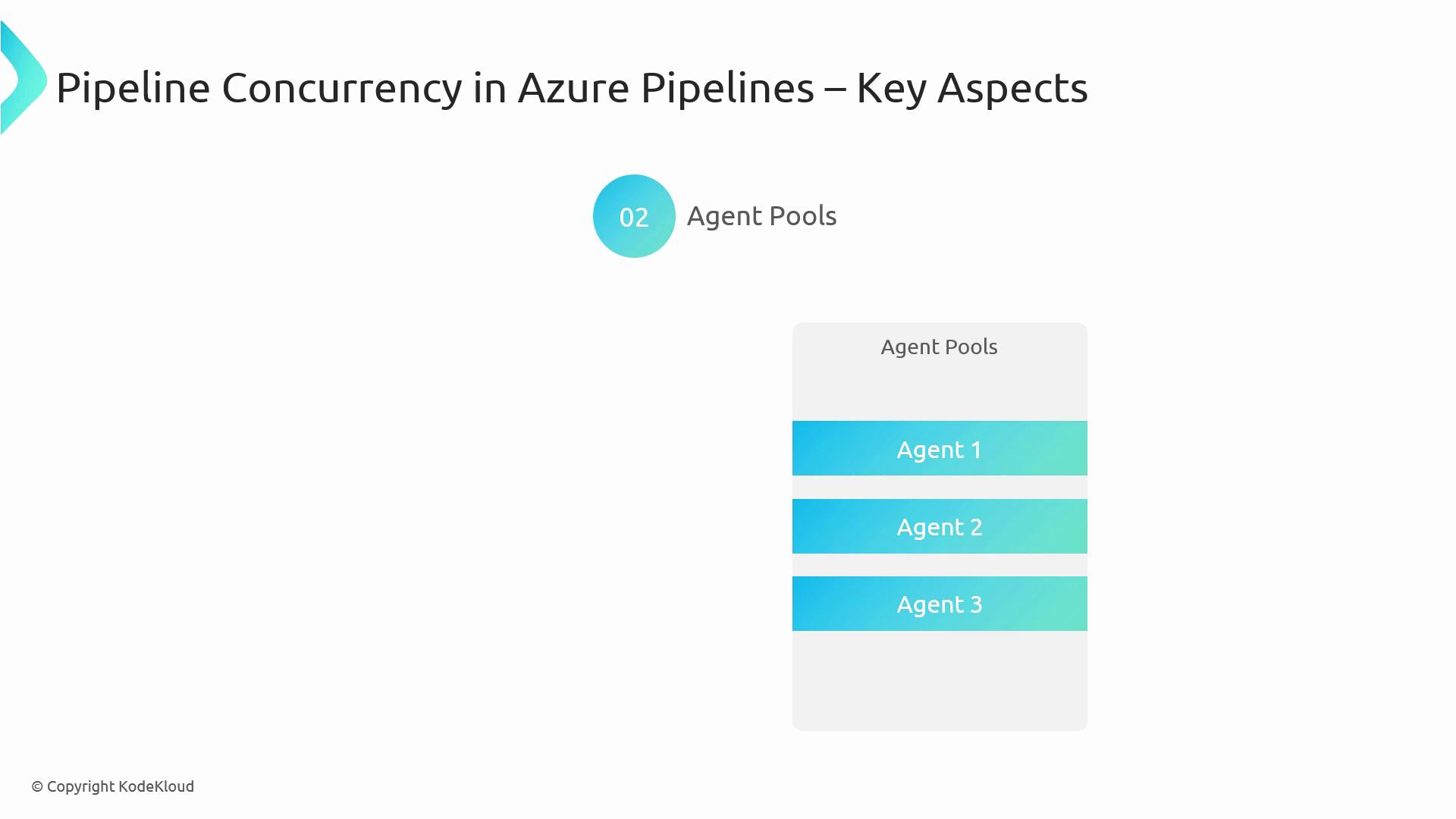
References
- Parallel jobs and agent pools in Azure Pipelines
- AZ-400: Designing and Implementing Microsoft DevOps Solutions
- Azure DevOps Documentation