

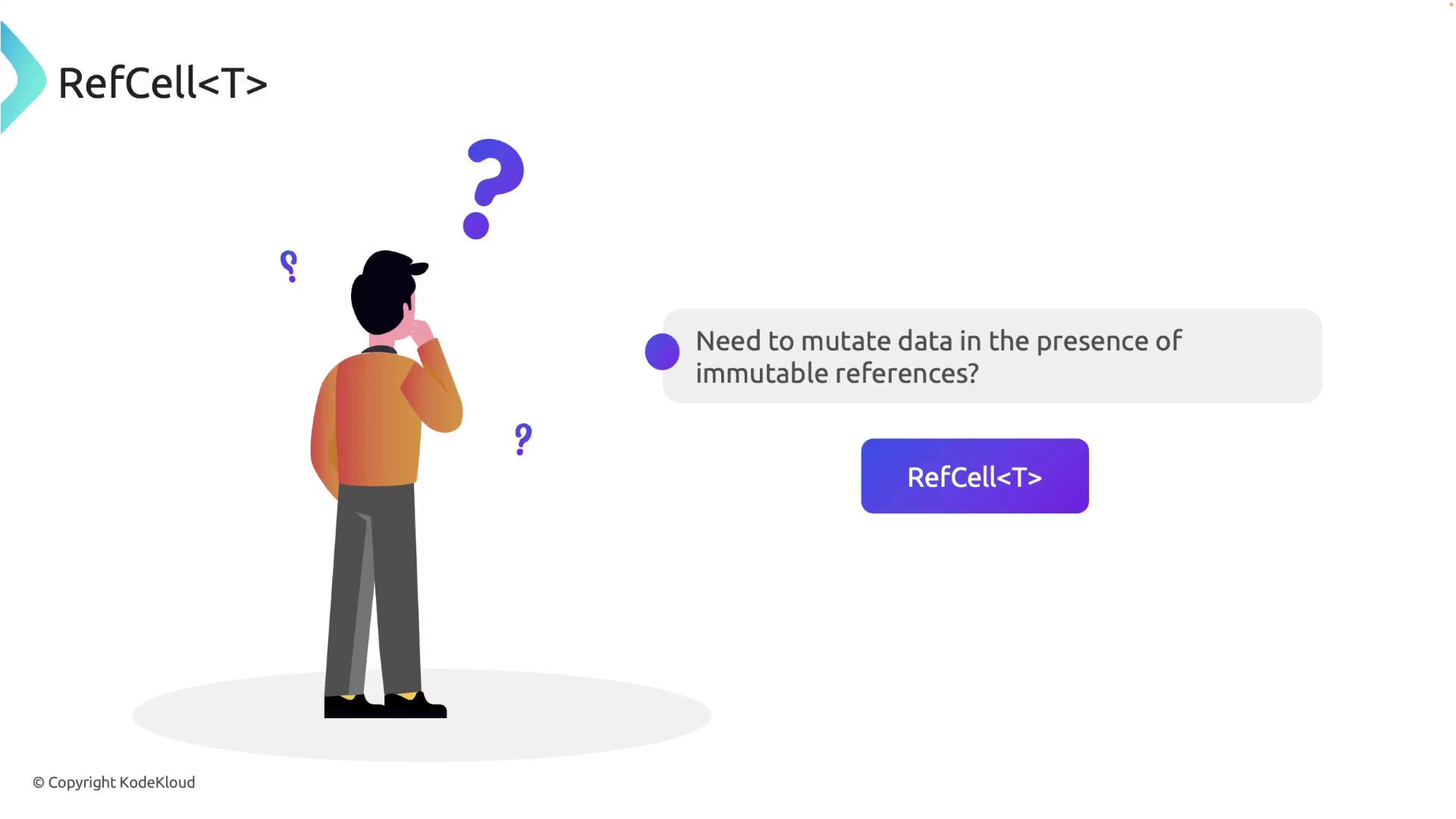
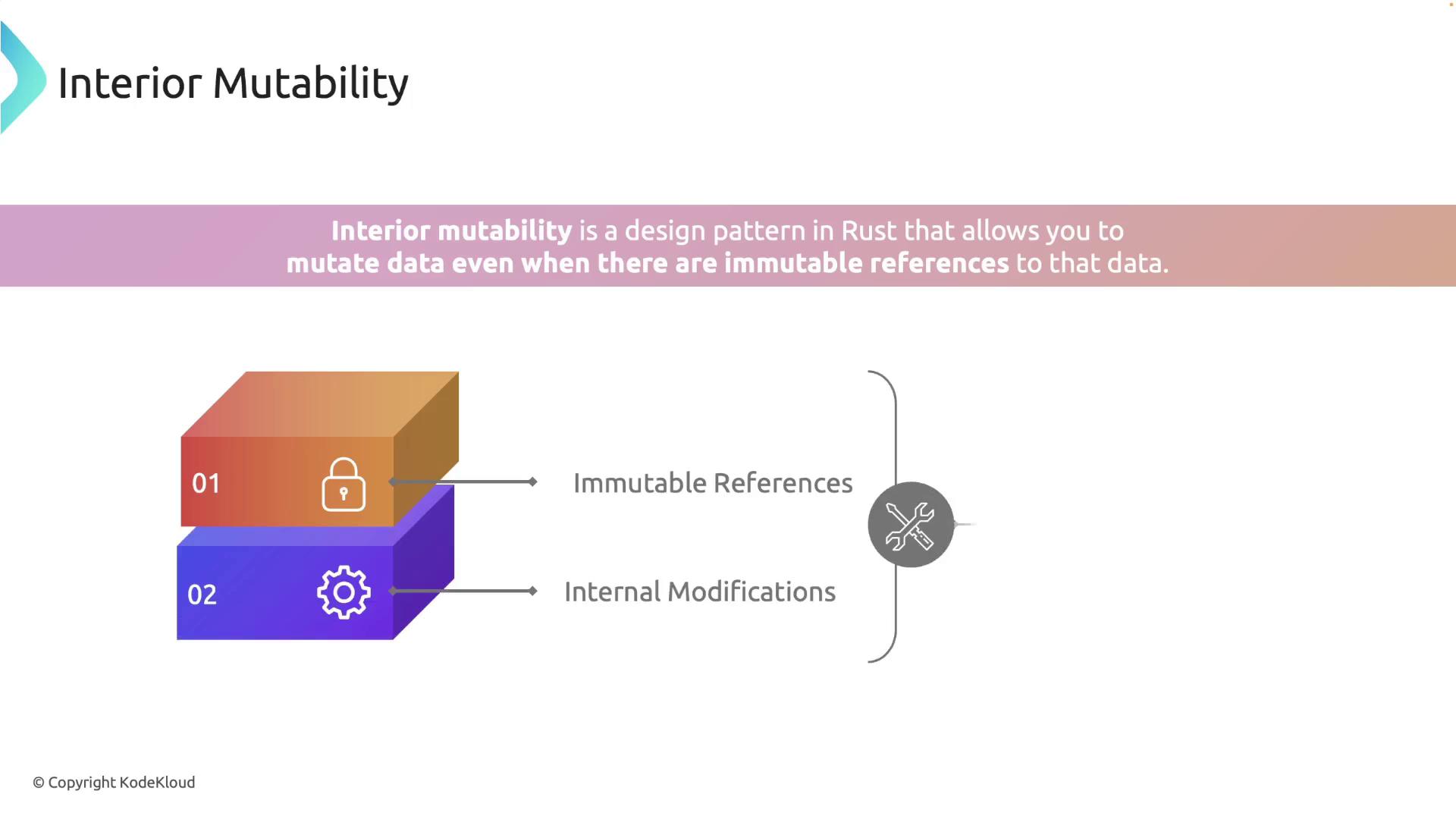
Interior mutability is especially beneficial when you want to maintain an API that seems immutable externally while still allowing internal state changes. This approach is ideal for scenarios where a value needs dynamic updates despite numerous immutable references.
Understanding RefCell
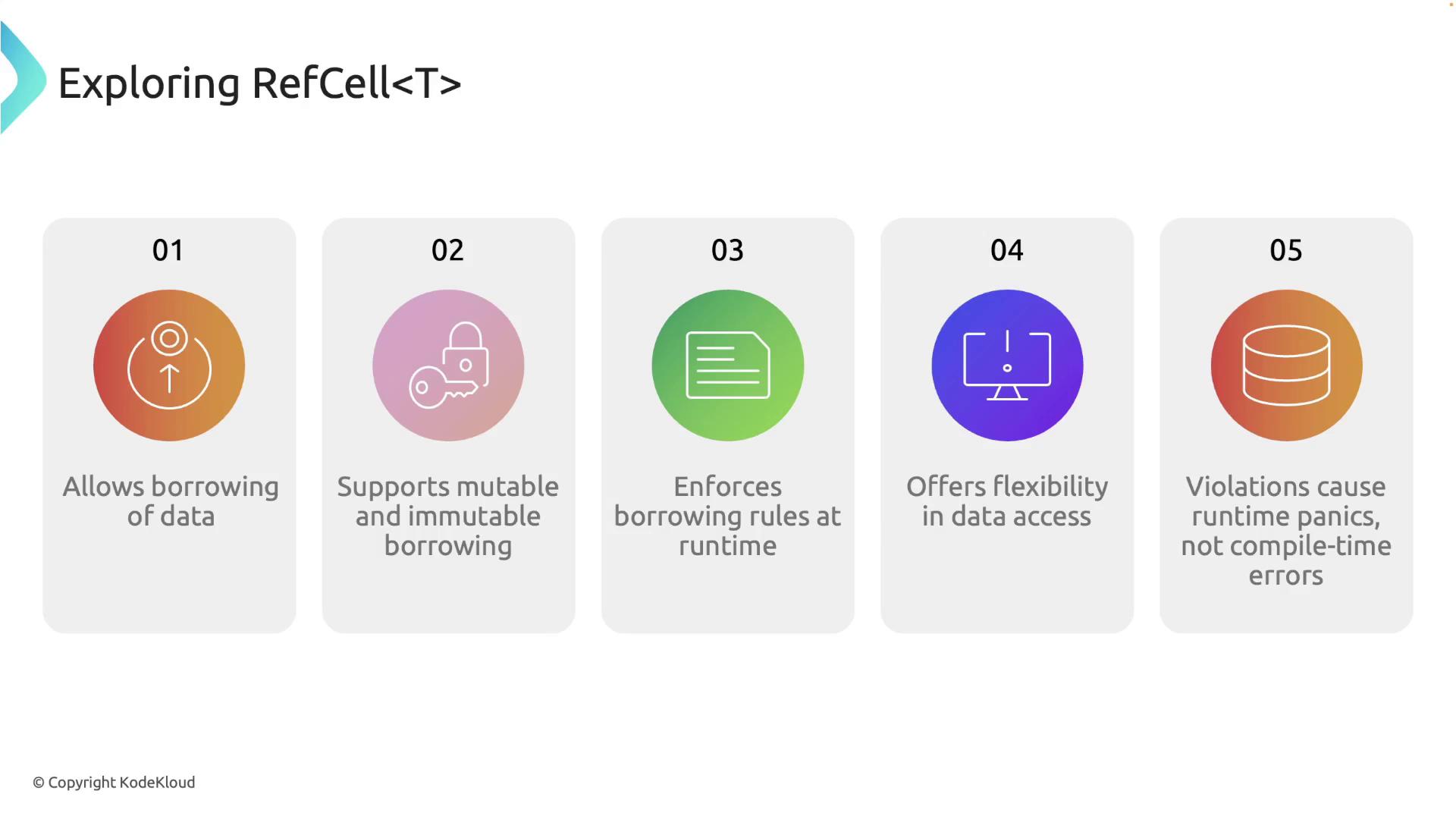
RefCell is a smart pointer that encapsulates data and provides methods for both mutable and immutable borrowing—namely, theborrow_mut and borrow methods. Unlike standard references that enforce borrowing rules during compile time, RefCell performs these checks at runtime. Consequently, if two parts of your code attempt conflicting borrows simultaneously, the program panics at runtime.
A Practical Example with ConfigManager
Imagine a system with various components that share access to a central configuration object. This configuration might include details like the database URL, maximum connections, or timeout values. Although multiple parts of the program might only need to read the configuration, there are times when it must be updated dynamically. With RefCell, you can update parts of the configuration without requiring the entire configuration object to be mutable. Below is an example implementation that demonstrates how RefCell allows interior mutability through aConfigManager struct.
ConfigManager struct uses RefCell to wrap its fields, allowing internal state modifications via the borrow_mut method—despite the instance being immutable. This design is particularly useful when exposing an immutable interface while still permitting internal adjustments.
Combining Rc and RefCell for Shared Mutable Data
In single-threaded scenarios, it is common to combine RefCell with Rc (Reference Counted pointer) to allow multiple parts of your program to share ownership of mutable data. While Rc<T> facilitates multiple owners, it normally guarantees only immutable access. By combining it with RefCell<T>, you can safely enable shared mutable state. Consider the following example, which demonstrates how Rc and RefCell work together:borrow_mut, and Module B, along with the original reference, reads the updated value using borrow.
Summary
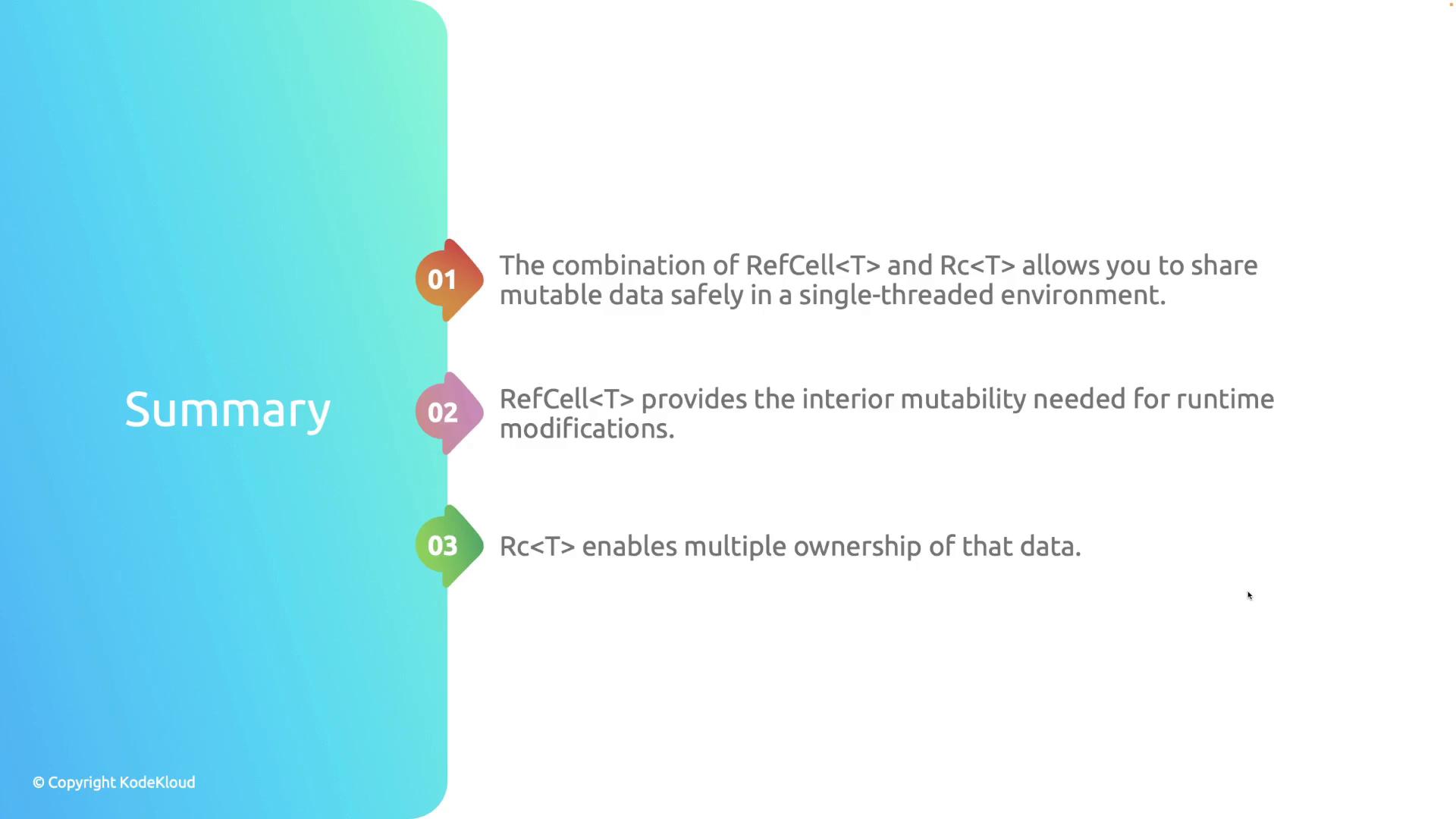
RefCell and interior mutability offer the power to perform runtime borrowing checks and manage dynamic data modifications while maintaining immutable interfaces. This approach is particularly effective when used alongside Rc to enable safe and shared mutable state in single-threaded environments. Whether for dynamic configuration management or other scenarios requiring shared mutable state, mastering RefCell and its combination with Rc is invaluable. Next, we will delve into managing reference cycles using weak smart pointers to prevent memory leaks in complex systems with shared ownership. For more information, visit the Rust Documentation and explore related topics.To expand your understanding of Rust’s memory safety features, check out additional guides on smart pointers and ownership.