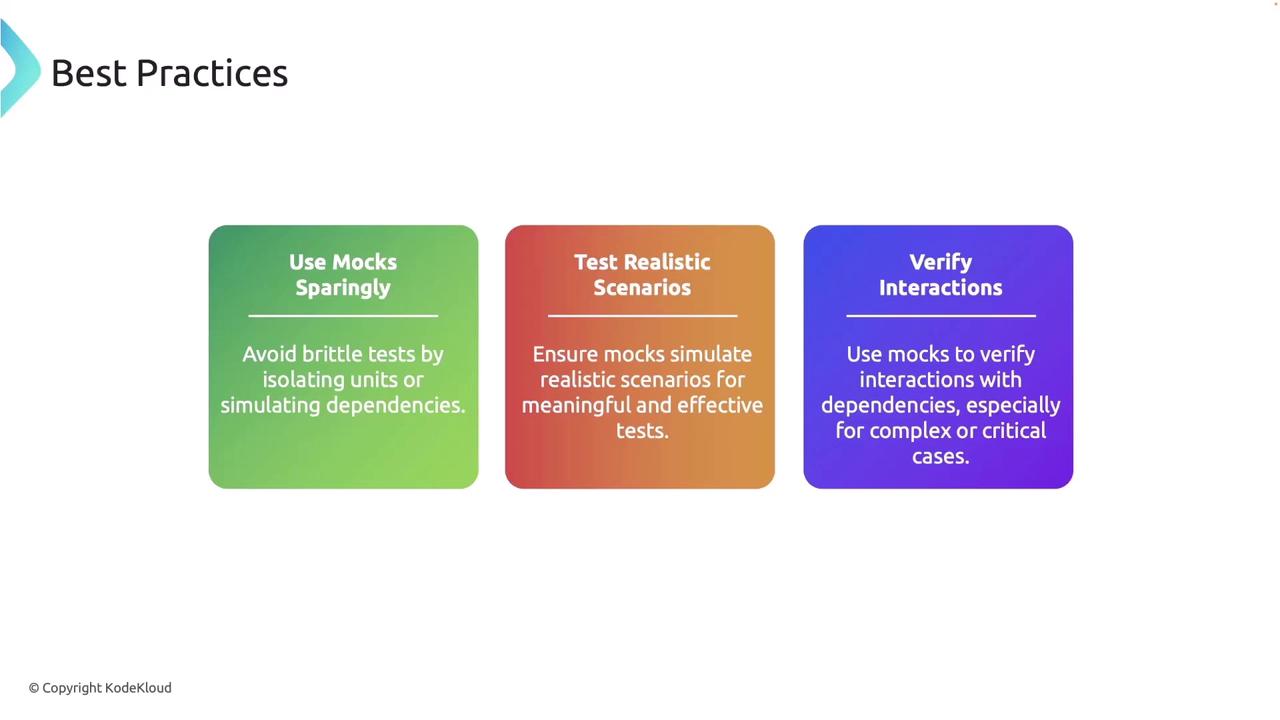
- Isolating the unit under test by replacing its dependencies with mocks.
- Controlling the test environment to ensure repeatability.
- Verifying interactions between components to confirm expected behaviors.
When to Use Mocks
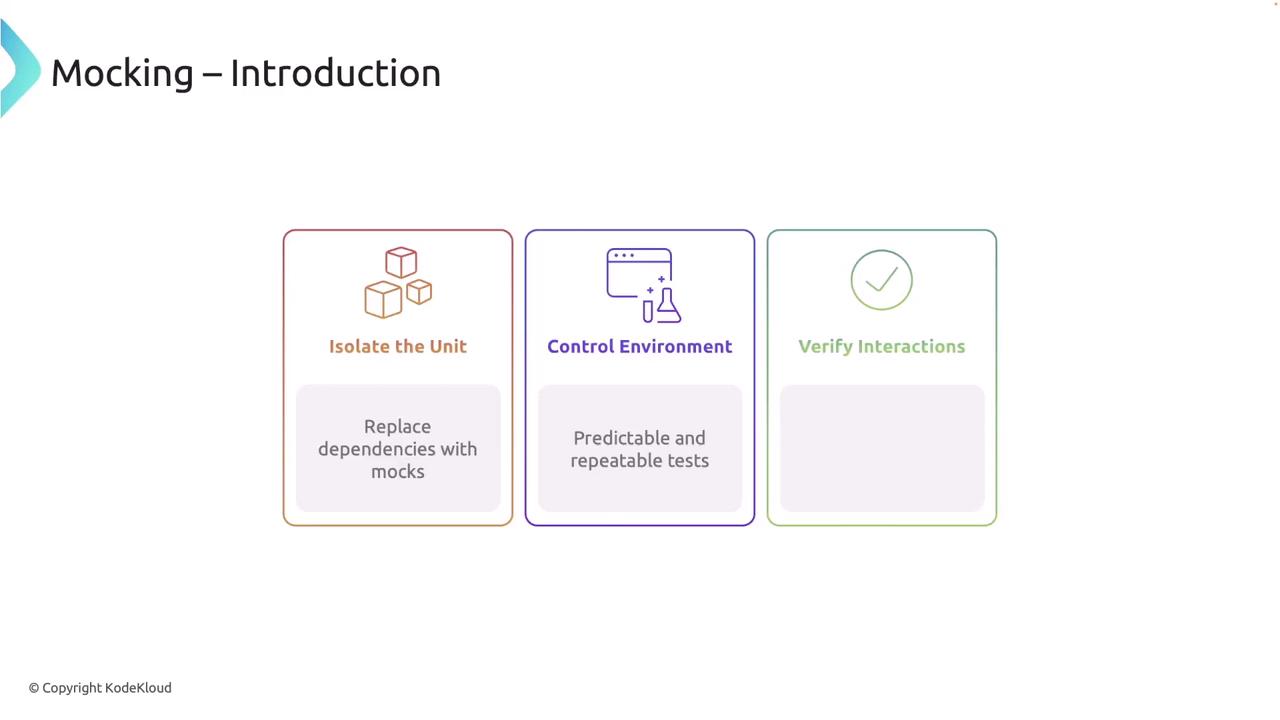
Mocks are ideal in scenarios where:- The real object is unavailable or slow (e.g., a database or an external API).
- Unpredictable behavior of the real object could lead to flaky tests.
- You need to simulate error conditions that are difficult to reproduce with the actual dependency.
Why Use mockall?
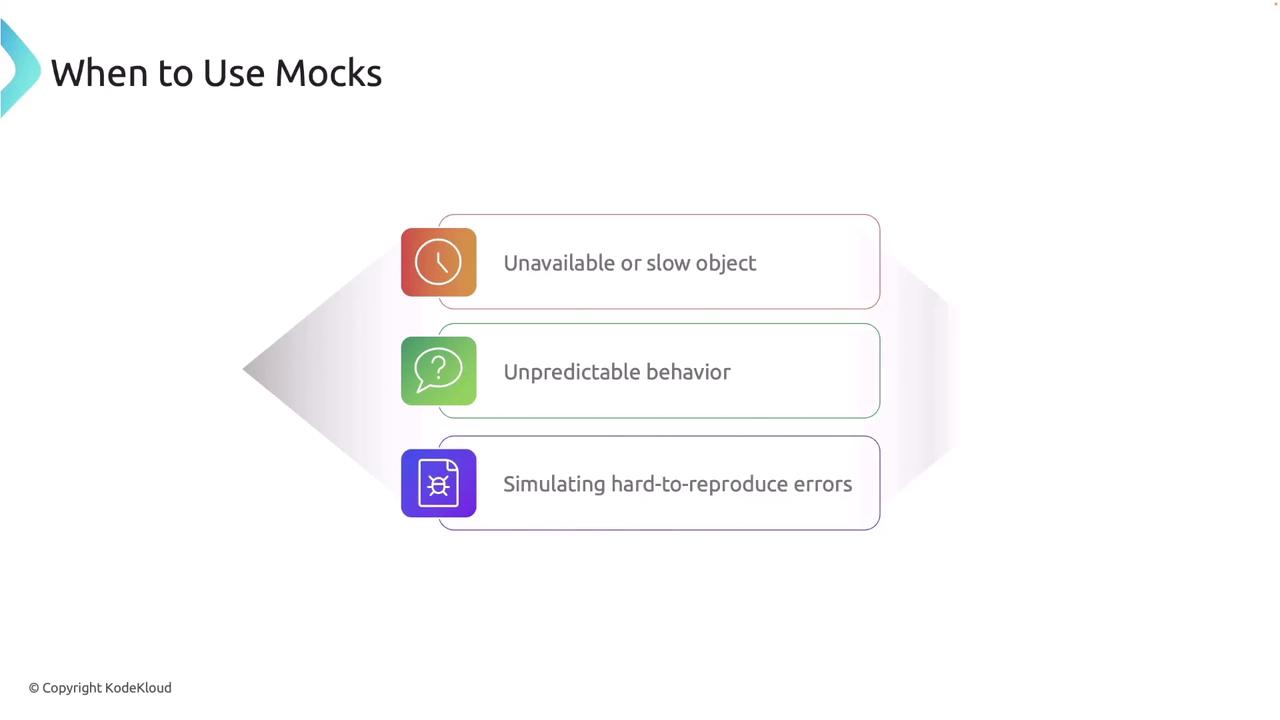
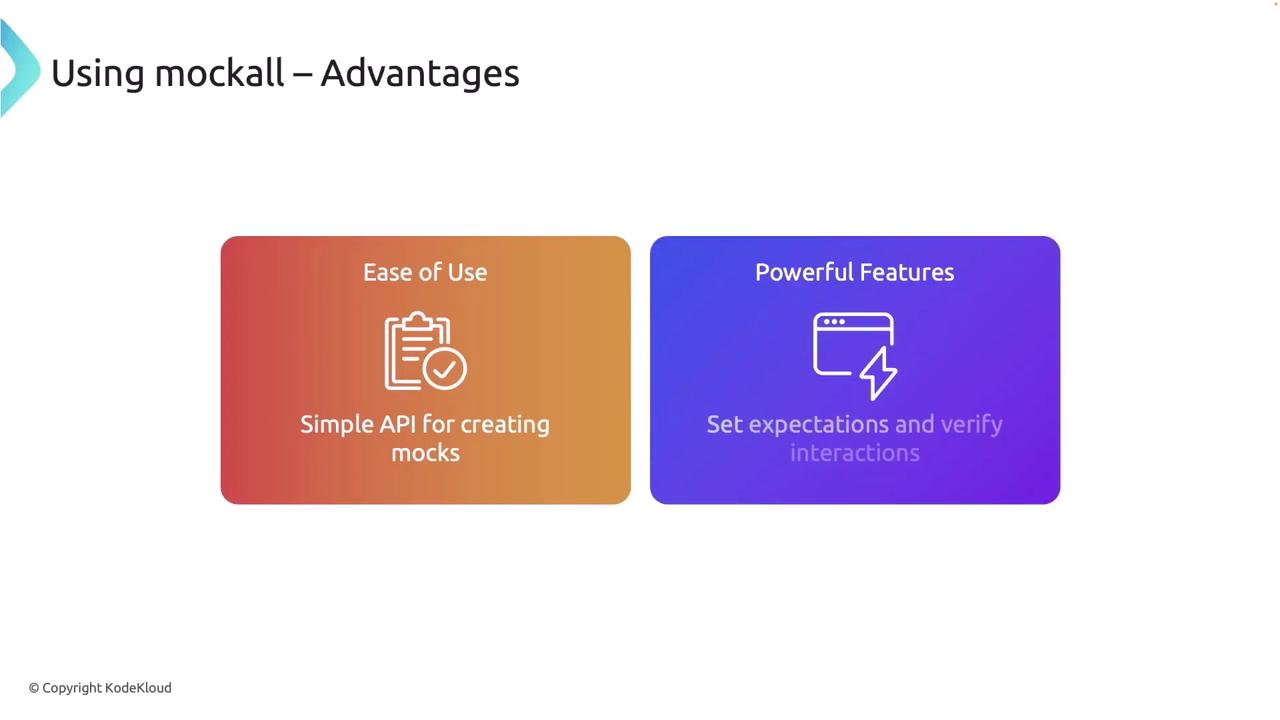
Themockall crate offers a simple yet powerful API for creating mocks, setting expectations, and verifying method calls. Its advantages include:
- A straightforward API that simplifies mock creation.
- Support for returning specific values and simulating errors.
- Robust interaction verification to ensure your components communicate as expected.
Setting Up the Project
Begin by creating a library crate namedrust-mock and opening it in VS Code. Suppose you are building a service that interacts with an external API, but during unit testing you want to avoid actual API calls. Instead, you’ll implement a mock.
Basic Function Example
Consider a simple function along with its test:Defining the Trait and Real Implementation
Below is an example of theApiClient trait. We provide both a real implementation and later a mock for testing:
Creating a Service that Uses the Trait
Next, define a genericDataService that depends on any type implementing the ApiClient trait. This service processes the data regardless of whether it comes from the real client or a mock instance:
Adding a Basic Mock Implementation
For unit testing, create a simple mock implementation without external libraries:Enhancing Mocks with mockall
For more advanced mocking capabilities, incorporate themockall crate. Begin by adding it to your Cargo.toml:
ApiClient trait:
Using mockall in Tests
The following test demonstrates how to use the generatedMockApiClient to simulate the behavior of the ApiClient trait. The expectation here is that calling fetch_data on the mock will return “Mocked data”:
Best Practices for Mocking
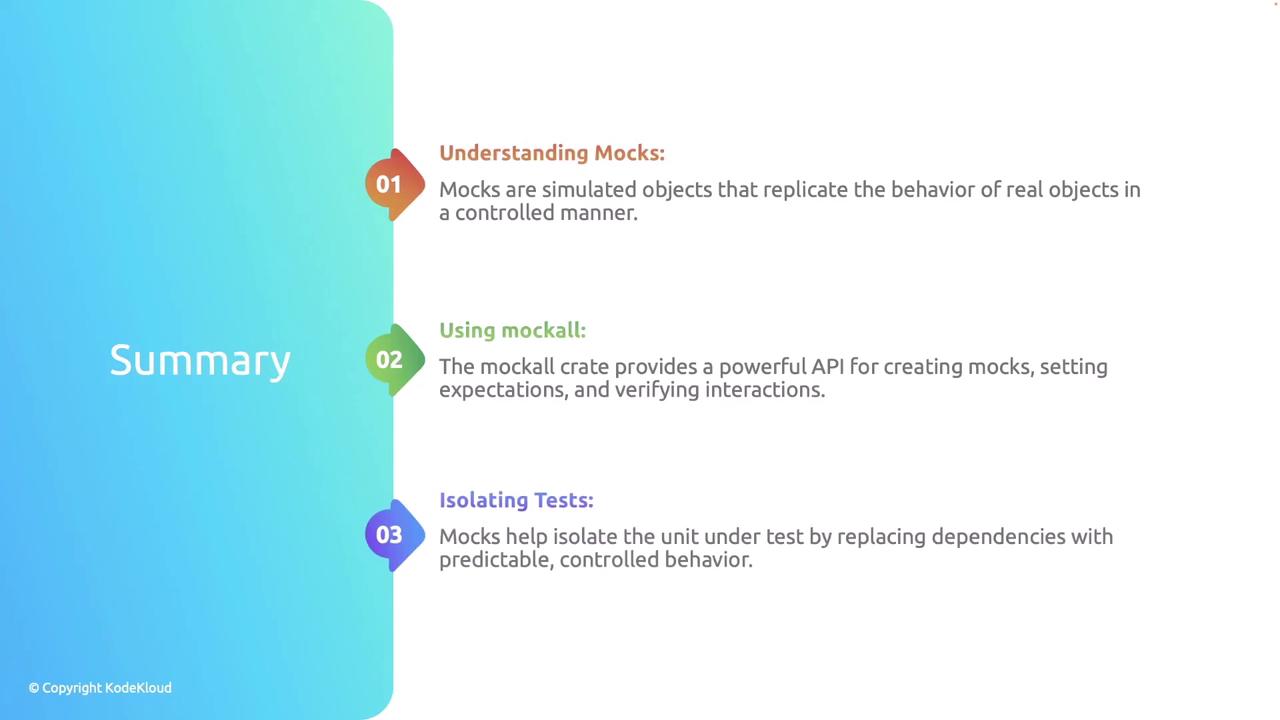
Mocking is a powerful tool for isolating units under test. Here are some best practices:- Use mocks judiciously.
Use mocks judiciously to avoid creating tests that depend too heavily on implementation details.
- Simulate realistic scenarios to maintain meaningful tests.
- Utilize mocks to verify that your code interacts correctly with its dependencies, especially in complex interaction scenarios.