Basic Syntax of Lifetimes
Lifetimes are denoted using an apostrophe followed by a name (commonly a single letter like'a). Consider the following example with two string slices. The function returns the longer slice using a lifetime annotation to indicate that both input references and the returned reference share the same lifetime:
'a ensures that x, y, and the returned reference remain valid for the same period. Without these explicit annotations, Rust’s compiler is unable to verify the returned reference’s validity, leading to a compile-time error.
For example, the function below will produce an error:
The error highlights that the return type must explicitly tie the lifetimes of the input parameters to the returned reference to maintain memory safety.
Preventing Dangling References
One common programming pitfall is creating dangling references—pointers to data that no longer exists. Rust’s ownership, borrowing rules, and lifetime annotations work together to prevent this issue. Consider the following function that incorrectly attempts to return a reference to a local variable:s is deallocated when the function exits, and returning &s will create a dangling reference. Rust’s compiler detects this issue:
Lifetime Elision
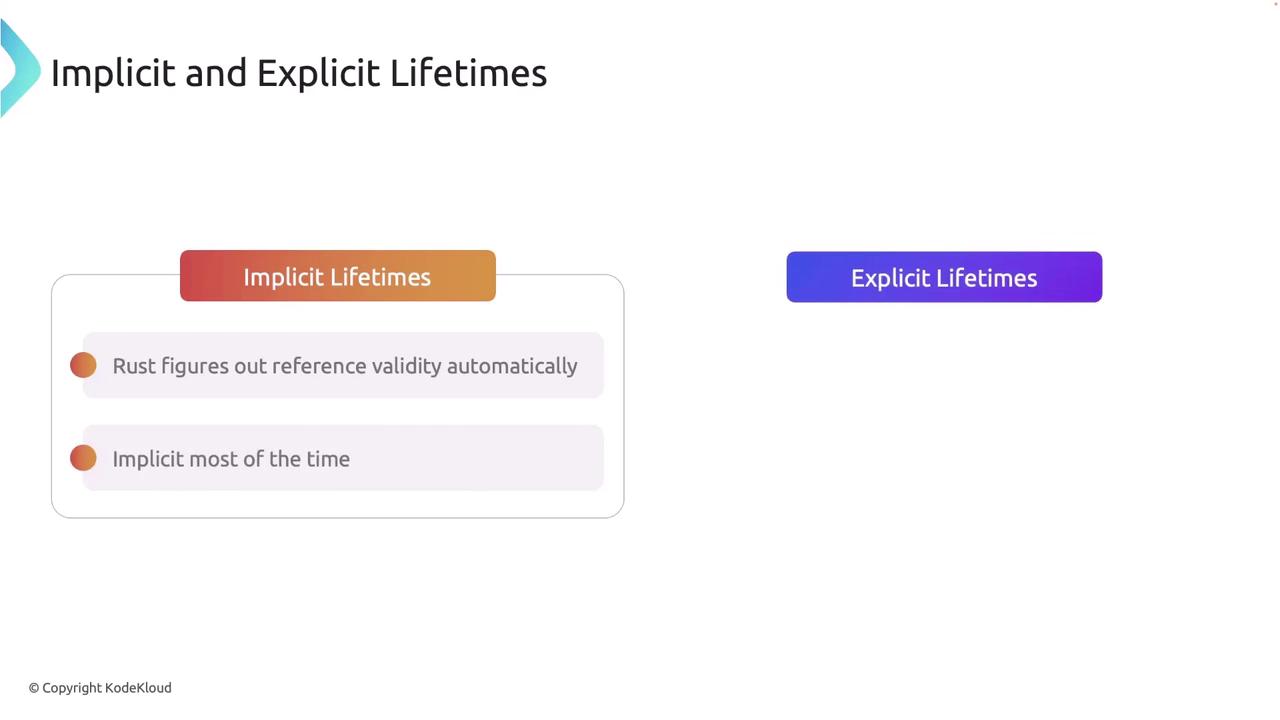
Lifetime elision is a convenient feature in Rust that allows the compiler to infer lifetimes in simple functions, reducing the need for explicit annotations. For example, consider a function that returns the first word from a string slice:s, ensuring memory safety while keeping the code concise.
The Static Lifetime
Rust provides a special lifetime,'static, which signifies that a reference is valid for the entire duration of the program. For example, string literals have a static lifetime because they are embedded directly in the program binary and remain valid throughout program execution:
Summary
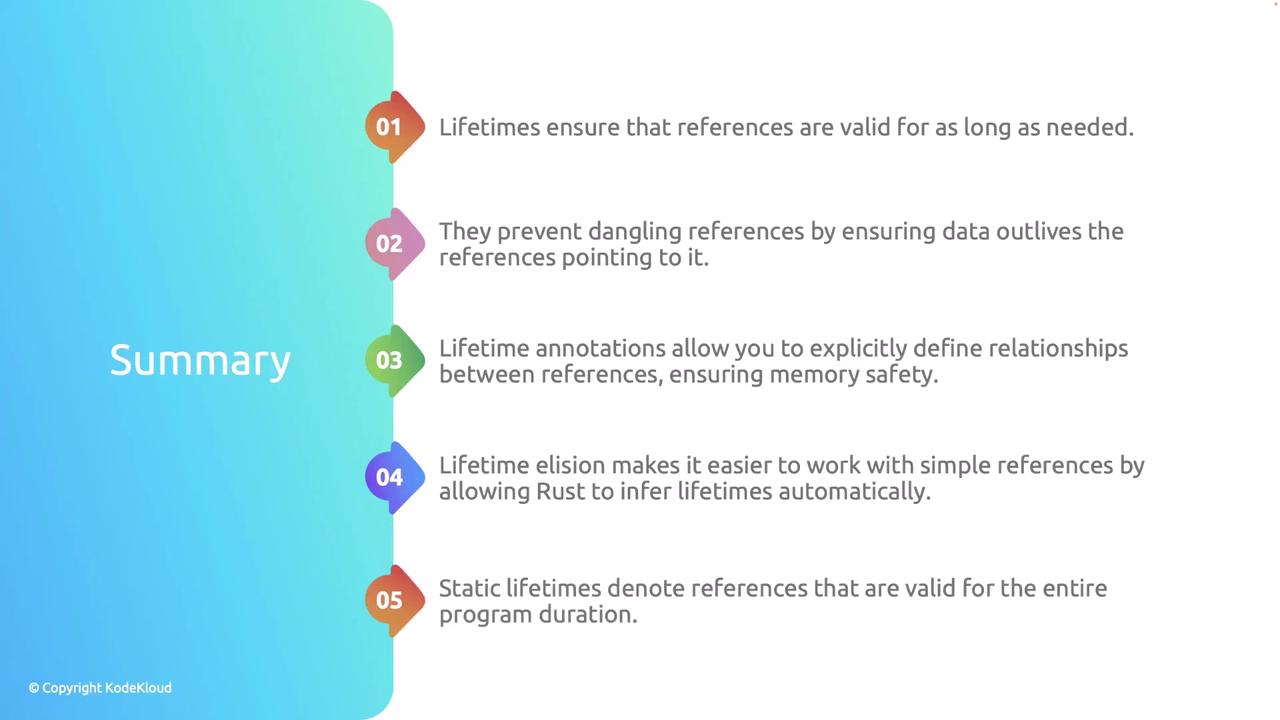
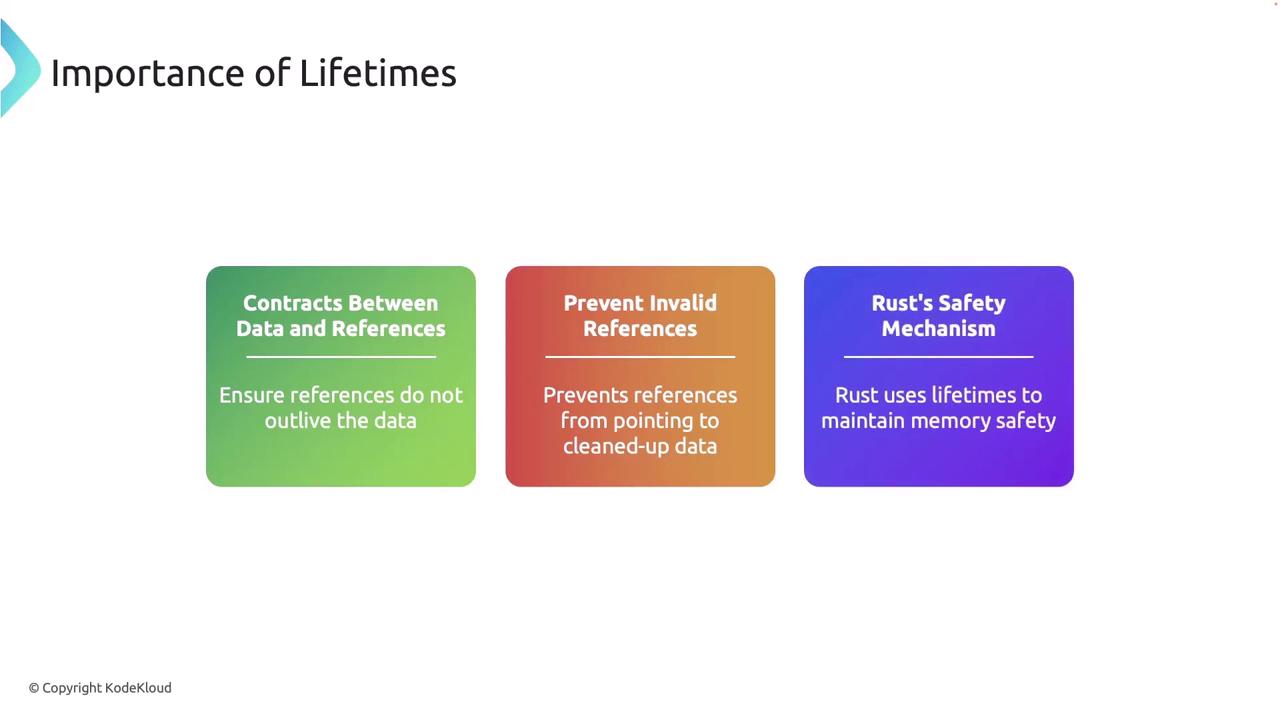
Lifetimes in Rust are vital to ensuring that references remain valid, thereby preventing common memory issues like dangling references. Key points include:- Lifetimes serve as contracts between data and its references, ensuring references do not outlive the data they point to.
- Explicit lifetime annotations help clarify relationships between multiple references in functions.
- Lifetime elision allows Rust to infer lifetimes in simple cases, keeping code less verbose.
- The
'staticlifetime is used for data that is valid for the entire program duration such as string literals and global constants.