

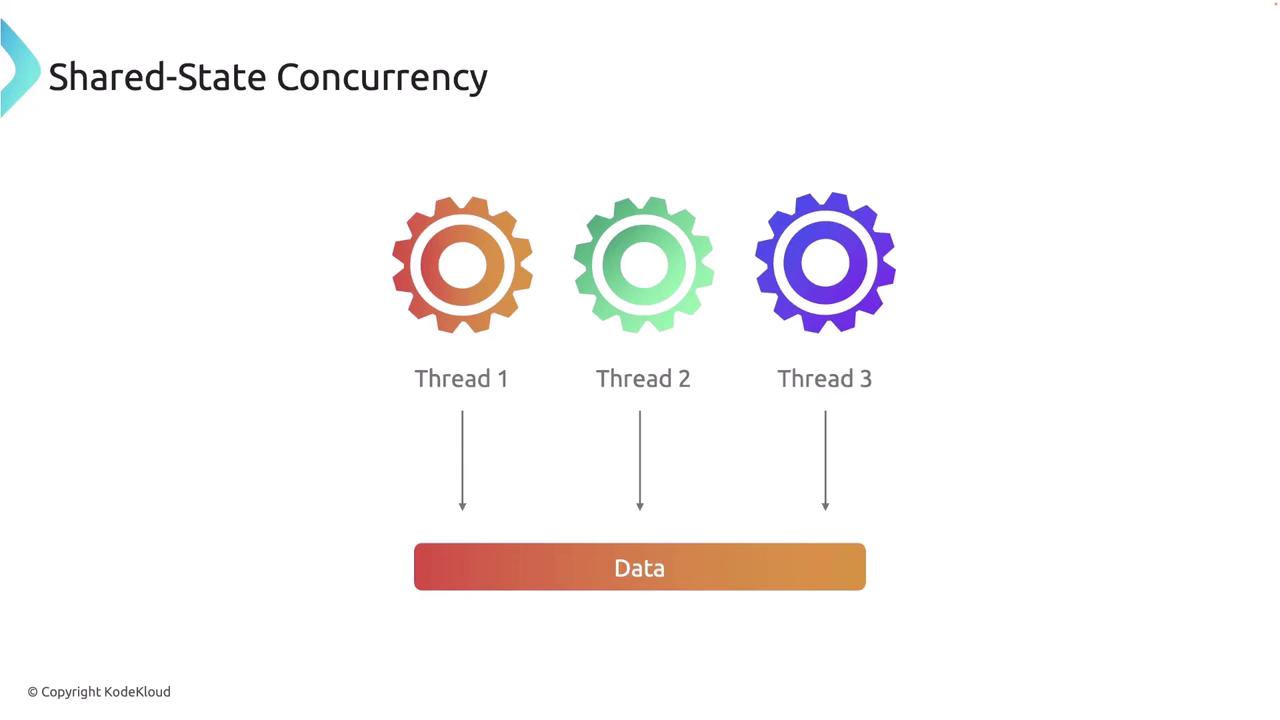
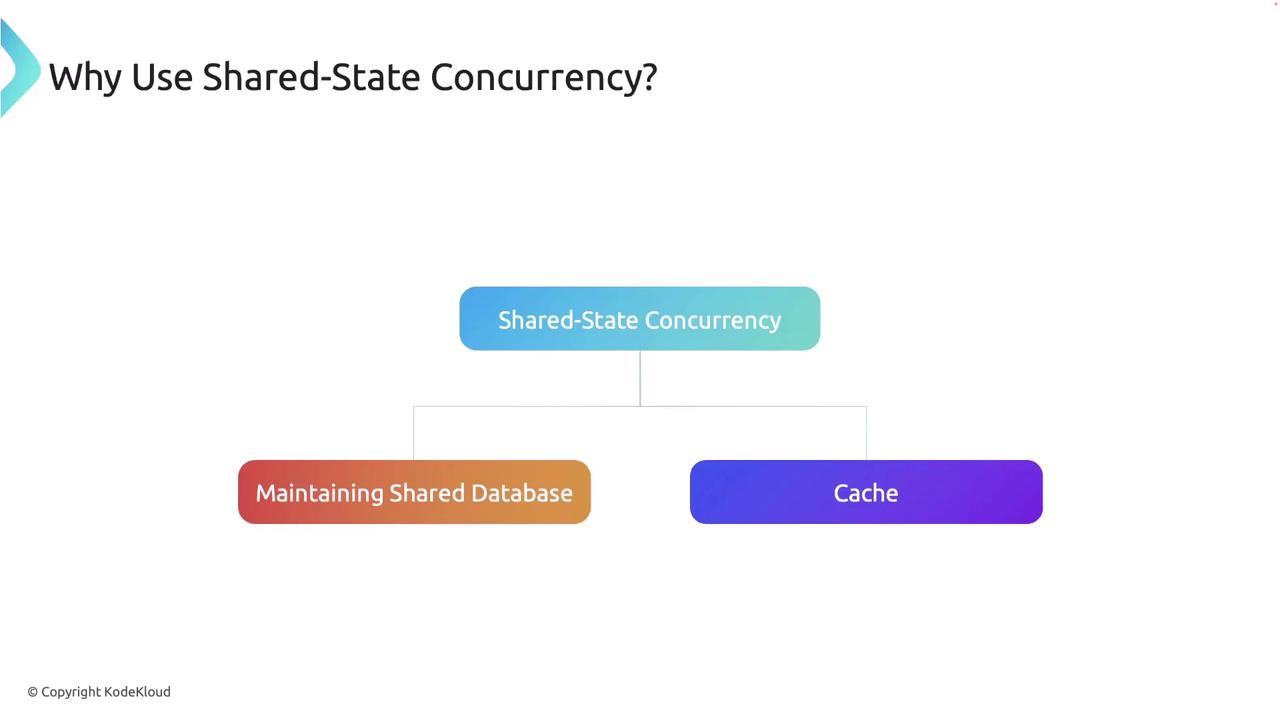
What Is a Mutex?
A Mutex (short for mutual exclusion) is a synchronization primitive designed to ensure that only one thread accesses the protected data at any moment. Think of a Mutex as a lock on a resource—only the thread that holds the lock can access or modify the resource. This mechanism prevents multiple threads from interfering with each other.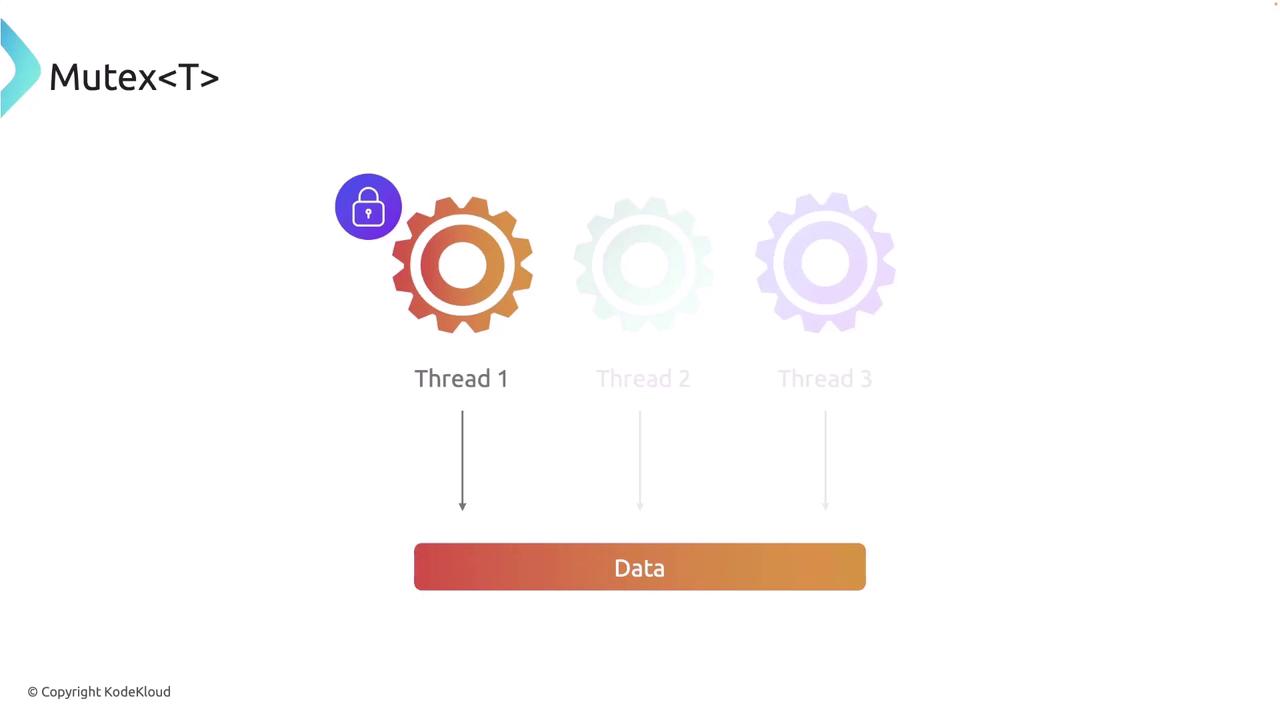
Atomic Reference Counting with Arc
Rust’s standard reference counting type, Rc<T>, works well in single-threaded contexts but falls short when multiple threads are involved because it does not perform atomic operations. Without atomic operations, concurrent modification of the reference count can lead to race conditions or undefined behavior. This is where Arc<T> (Atomic Reference Counting) becomes indispensable. Arc<T> allows multiple threads to safely share ownership of the same data by managing an atomic reference count. It functions similarly to Rc<T> but is designed for concurrent use, ensuring that data is only dropped when the last thread has finished using it. Atomic operations guarantee that updates to the reference count occur without interruption, protecting it from corruption.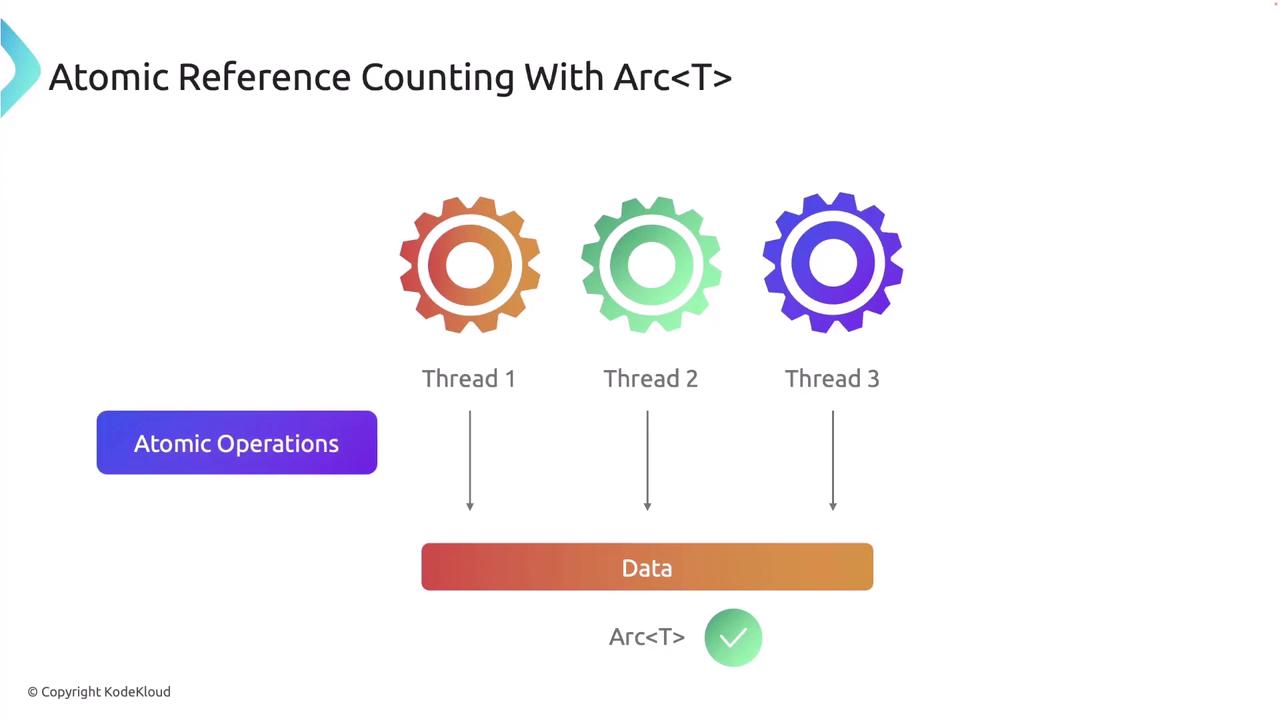
Simple Data Sharing Example Without Threads
Before diving into multithreading, consider a basic example of data sharing without threads. Here, immutability guarantees safety because the data cannot be modified, and types such as integers automatically implement the Copy trait.Sharing Immutable Data Between Threads
Immutable data, like an integer, can be effortlessly shared between threads because each thread receives its own copy courtesy of the Copy trait. The following example spawns multiple threads that work with their own copy of the shared data:move keyword results in a compile-time error because the threads would then attempt to borrow data from the main thread. The error highlights that the spawned threads require a static lifetime for captured data:
To resolve this, use the
move keyword to transfer ownership or copy the data into each thread.Sharing Mutable Data Between Threads
Single-Threaded Mutable Data Example
For comparison, consider a single-threaded scenario where a mutable vector is modified successfully:Ownership Issues in Multi-Threaded Context
Sharing mutable data across threads without proper synchronization causes ownership issues. For example, the following code will not compile because themove keyword transfers ownership of data to the first thread, leaving it inaccessible to others:
Cloning Data for Each Thread
Sharing Immutable Data Safely with Arc
To share immutable data among threads without cloning the entire structure, use Arc. Note that Arc only provides immutable access:Sharing Mutable Data with Mutex and Arc
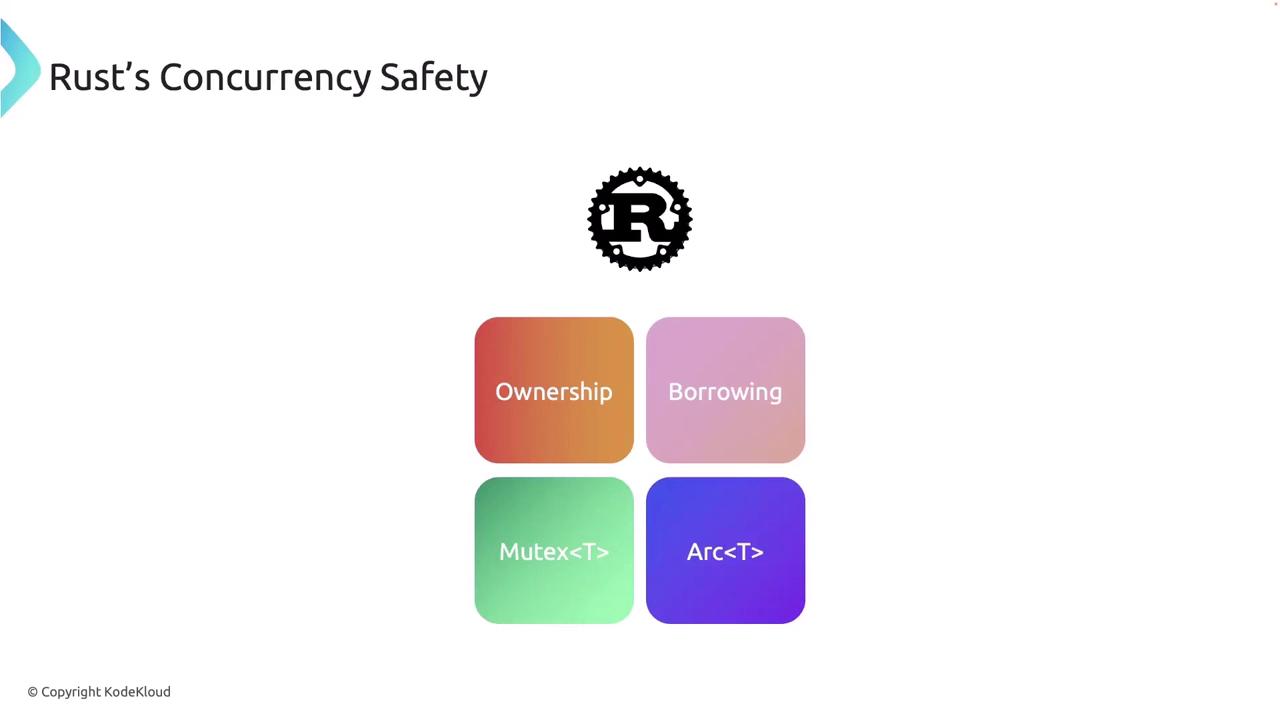
To safely modify shared data across multiple threads, wrap the data in a Mutex and then further wrap the Mutex in an Arc. This approach guarantees that only one thread can access the data at a time:Using Mutex with Arc is a common pattern in Rust for safely sharing mutable state between threads.
Handling a Poisoned Mutex
A Mutex becomes poisoned when a thread panics while holding its lock. Subsequent attempts to acquire the lock will then return an error. The following example illustrates how to handle a poisoned Mutex: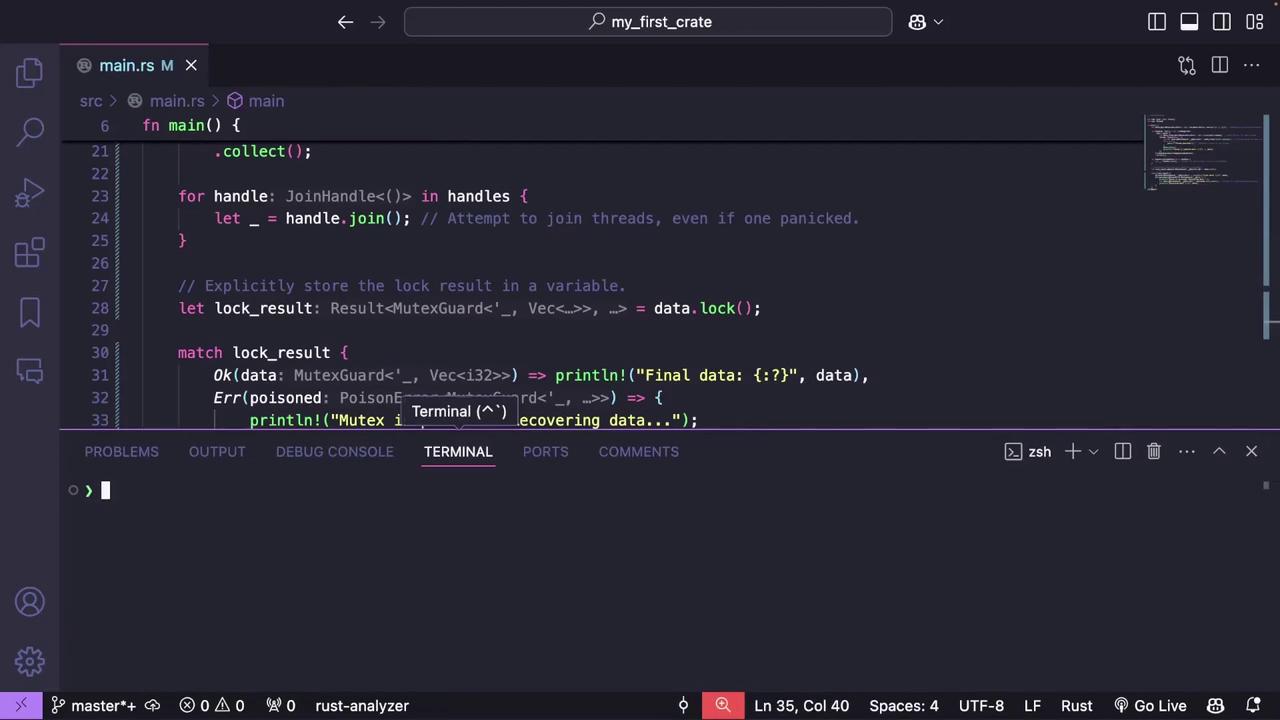
When a Mutex is poisoned, ensure your error handling logic properly recovers the data to maintain application stability.