This article explores auditing in Kubernetes, focusing on tracking activities, ensuring security, compliance, and troubleshooting through detailed audit logs.
In this lesson, we explore the concept of auditing in Kubernetes. Auditing involves recording and tracking every activity in the cluster to create a detailed history of events. This process is crucial for ensuring security, achieving compliance, and facilitating troubleshooting. With effective auditing, administrators can monitor resource access, detect potential security breaches, and verify that all actions comply with organizational policies. Audit logs capture important details including who made changes, when they were made, what was changed, and how the change was implemented.Consider this sample audit event where an admin user creates an Nginx deployment. The event details include the user’s identity, the affected resource, and timestamps that indicate when the request was received and processed.
In the example above, key details such as the API version, operation type, initiating user, and timestamps are logged. The user agent confirms that the request originated from a specific version of the kubectl command-line utility.
Auditing logs are invaluable for tracing the source of issues, ensuring that resources are secured, and validating compliance with regulations such as GDPR, HIPAA, and PCI DSS.
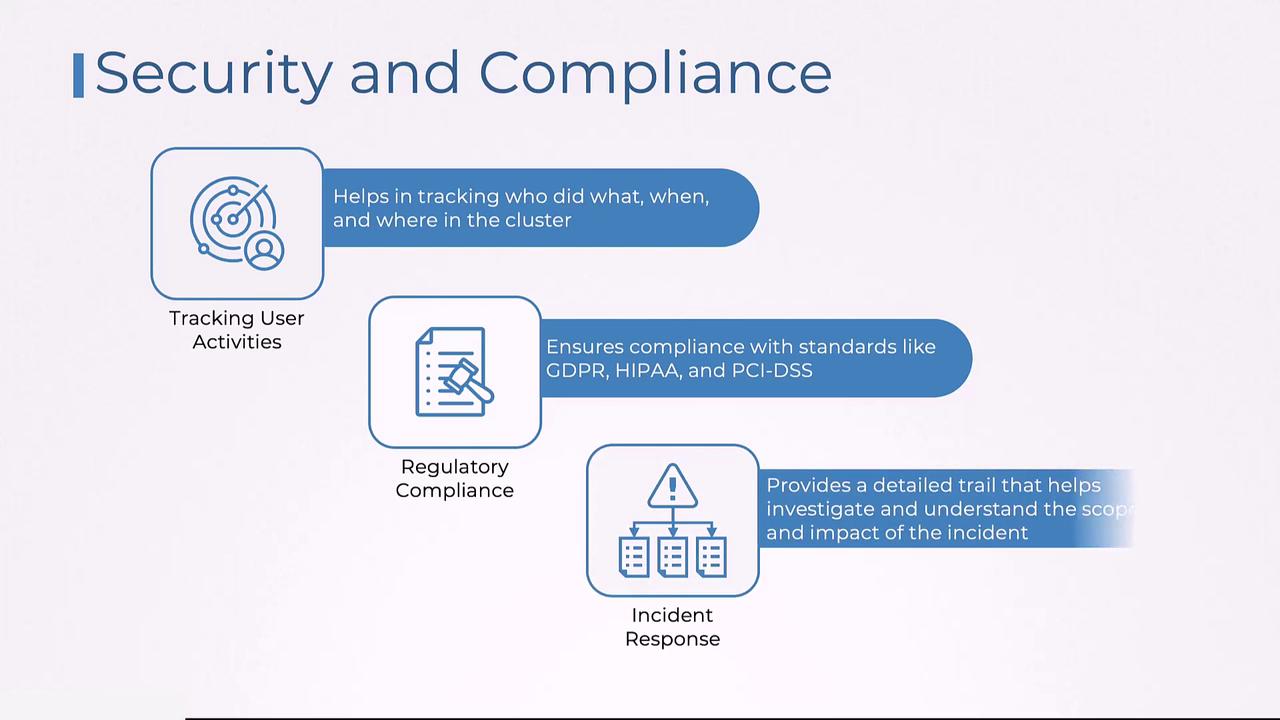
Auditing is essential for tracking who did what, when, and where within a Kubernetes cluster. It plays a pivotal role in detecting unauthorized access and ensuring that resources are managed according to organizational policies. Detailed audit logs are also crucial for compliance with industry regulations and provide a thorough audit trail in the event of security incidents.
Furthermore, auditing helps administrators monitor changes to resources and configurations, making it easier to manage and troubleshoot issues by isolating the root cause of problems.
When an event matches this policy, details such as the username, timestamp, and resource information are captured. An example audit event might look like:
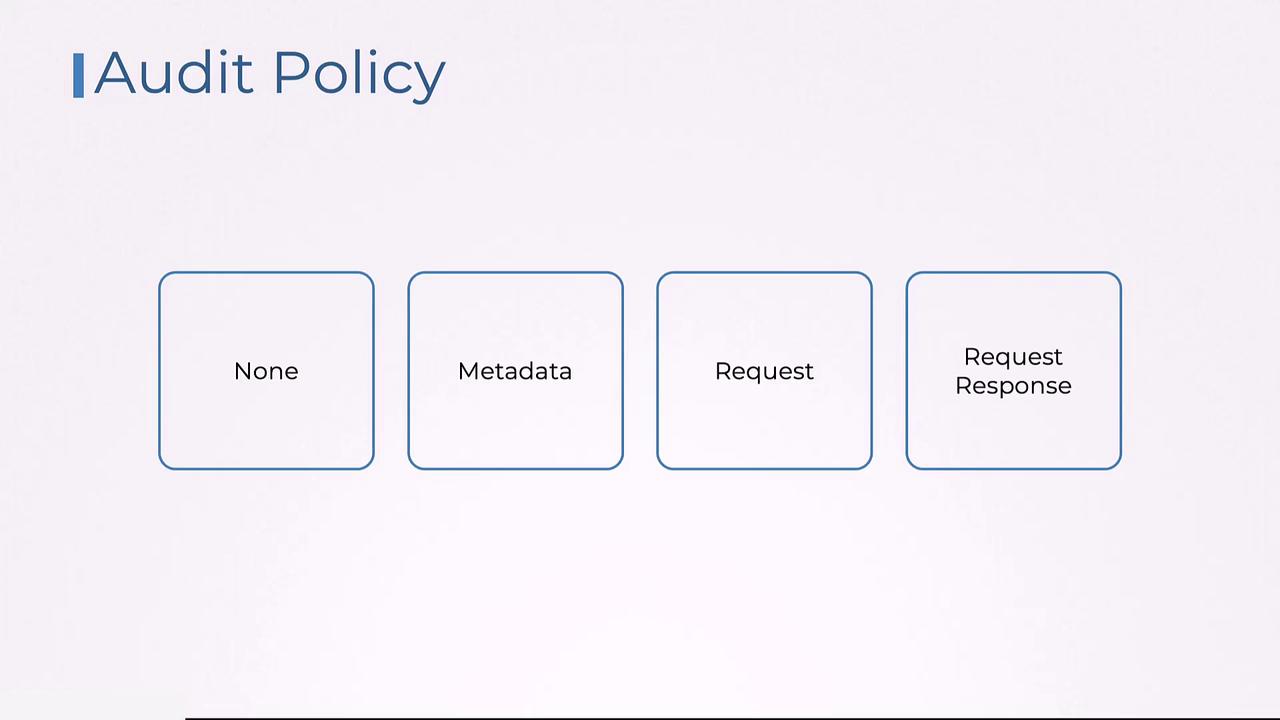
This example shows how to configure an audit policy to capture both metadata and the full request details for “create”, “delete”, and “update” operations on pods:
Kubernetes audit logs are essential for securing and managing clusters. These logs provide comprehensive details about every access request and change, making it easier to maintain compliance, detect security incidents, and troubleshoot issues. By understanding and implementing the appropriate audit policies, administrators can ensure a well-monitored and secure Kubernetes environment.That’s the end of this article.