

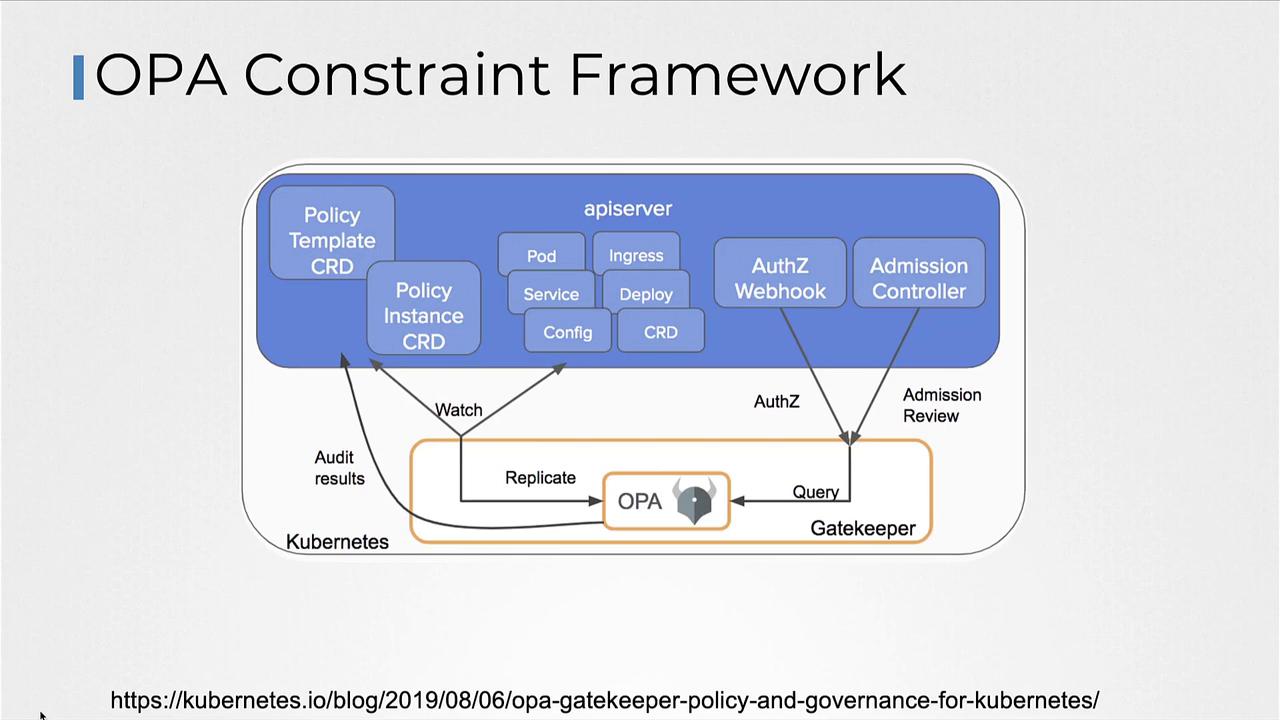
Installing OPA Gatekeeper
Deploying OPA Gatekeeper is simple. Execute the following command to apply the Gatekeeper specification files:gatekeeper-system namespace:
Ensure that you have adequate RBAC permissions before deploying Gatekeeper in your cluster.
Understanding the OPA Constraint Framework
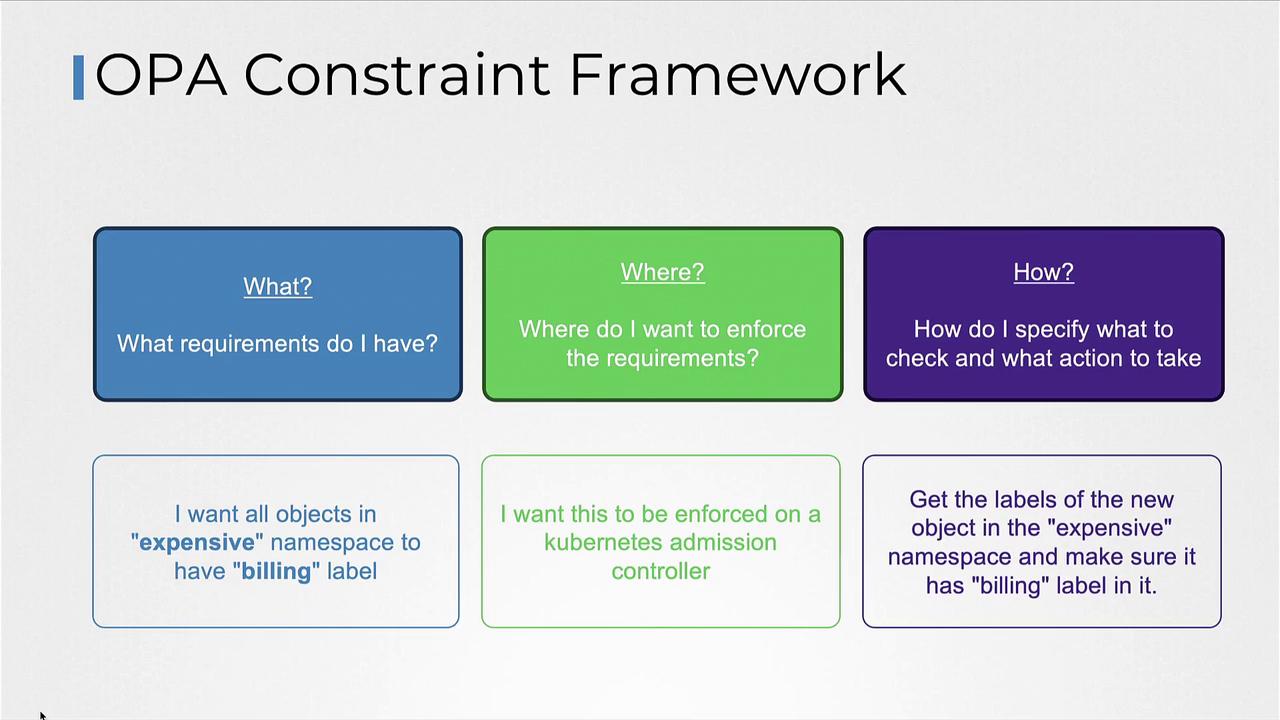
The OPA Constraint Framework allows you to declare policies that specify required conditions, enforce those conditions at the appropriate locations, and define the checks to be performed. For example, if you want all objects in a specific namespace (e.g., “example”) to include a “billing” label, the framework will enforce this rule via the Kubernetes admission controller. When a pod creation request is submitted, the admission controller follows these steps:- Retrieve the labels from the pod.
- Verify if the required label (e.g., “billing”) is present.
- Return an error if the label is missing.
Implementing Label Validation with Rego
Below is an example of Rego code that validates the presence of a required label (e.g., “billing”) on a pod. The code compares the provided labels with a hard-coded required label.Example 1
Example 2
A similar rule with a slightly different format:Example 3
An alternative format with syntactical differences:- The
providedvariable extracts labels from the incoming pod object. - The
requiredset is fixed to include “billing”. - The
missingvariable determines any labels from therequiredset that are absent. - If any required labels are missing (
count(missing) > 0), an error message is generated.
Extending the Use Case with Parameterization
To support more dynamic scenarios—such as enforcing different labels based on the namespace—you can create a Constraint Template. This enables you to pass the required label as a parameter instead of hardcoding it. Below is an example Constraint Template that encapsulates the Rego code while exposing a parameter for the required label:Constraint for Billing Label
Constraint for Tech Label
input.parameters object in Rego based on the namespace.
Summary
Below is a quick reference table summarizing the key steps for integrating OPA with Kubernetes using Gatekeeper:Any object creation that violates the defined policies will trigger an error during the admission phase, preventing non-compliant objects from being admitted into the cluster.