

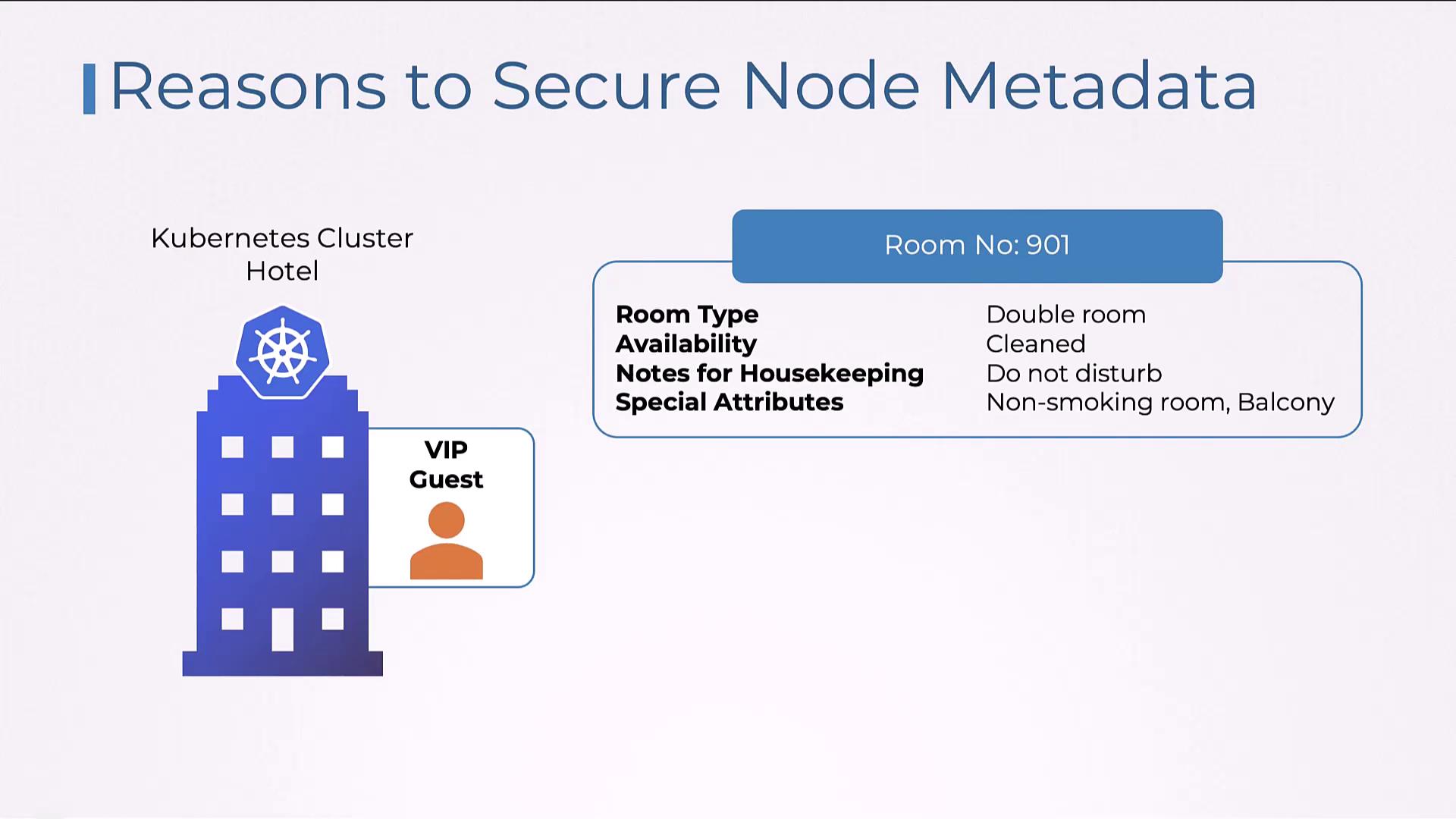
Ensuring accurate node metadata is essential for the correct scheduling of workloads, preventing misallocations that could expose sensitive applications to risk.
Risks of Insecure Node Metadata
-
Improper Workload Scheduling:
Incorrect metadata can cause non-critical workloads to receive resources intended only for high-security tasks. For example, if a critical taint is removed from a production node inadvertently, non-production workloads might be scheduled on that node, leading to resource contention or potential outages. An example of modifying node taints: -
Unauthorized Data Exposure:
If node metadata is not adequately protected, unauthorized users may access the Kubernetes API to list all nodes and gather sensitive information like the Kubelet version. This information can be used to launch targeted, version-specific exploits. To discover the Kubelet version, an attacker might run: -
Network Mapping and Attacks:
By listing IP addresses of all nodes, an attacker can construct a detailed map of the internal network. This data can be exploited for network-based attacks, such as Distributed Denial of Service (DDoS) attacks. For instance, to list internal IP addresses: -
Compliance Violations:
Unauthorized access to node details, such as kernel versions, could result in breaches of regulations like GDPR or HIPAA. Maintaining tight control over node metadata helps ensure compliance with these regulatory standards. To view kernel versions, one could execute:
Improper handling of node metadata can expose your Kubernetes environment to critical vulnerabilities. Always enforce strict access controls and regularly audit metadata for unauthorized changes.
Summary
Ensuring the security of node metadata is fundamental for:- Correctly scheduling sensitive workloads.
- Preventing unauthorized access to critical cluster information.
- Maintaining overall system integrity.
- Complying with important regulatory and industry standards.