

Overview
- The course is structured to grow your SRE capabilities from fundamentals to advanced, production-ready practices.
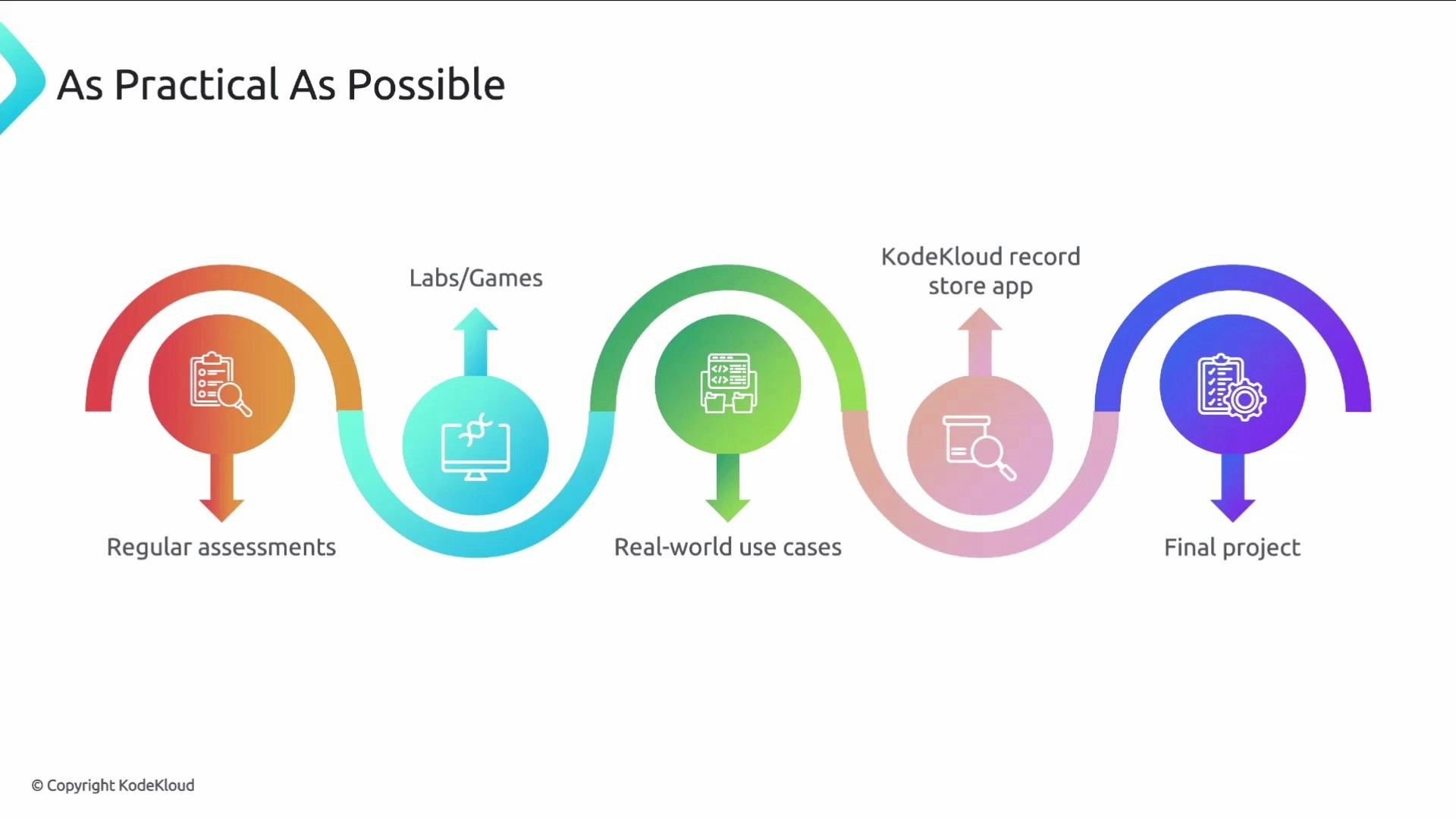
- Modules begin with core theory and then emphasize practical application using real-world scenarios.
- The KodeKloud Record Store app is used throughout as a hands-on playground to apply concepts in labs and the final project.
Course module sequence
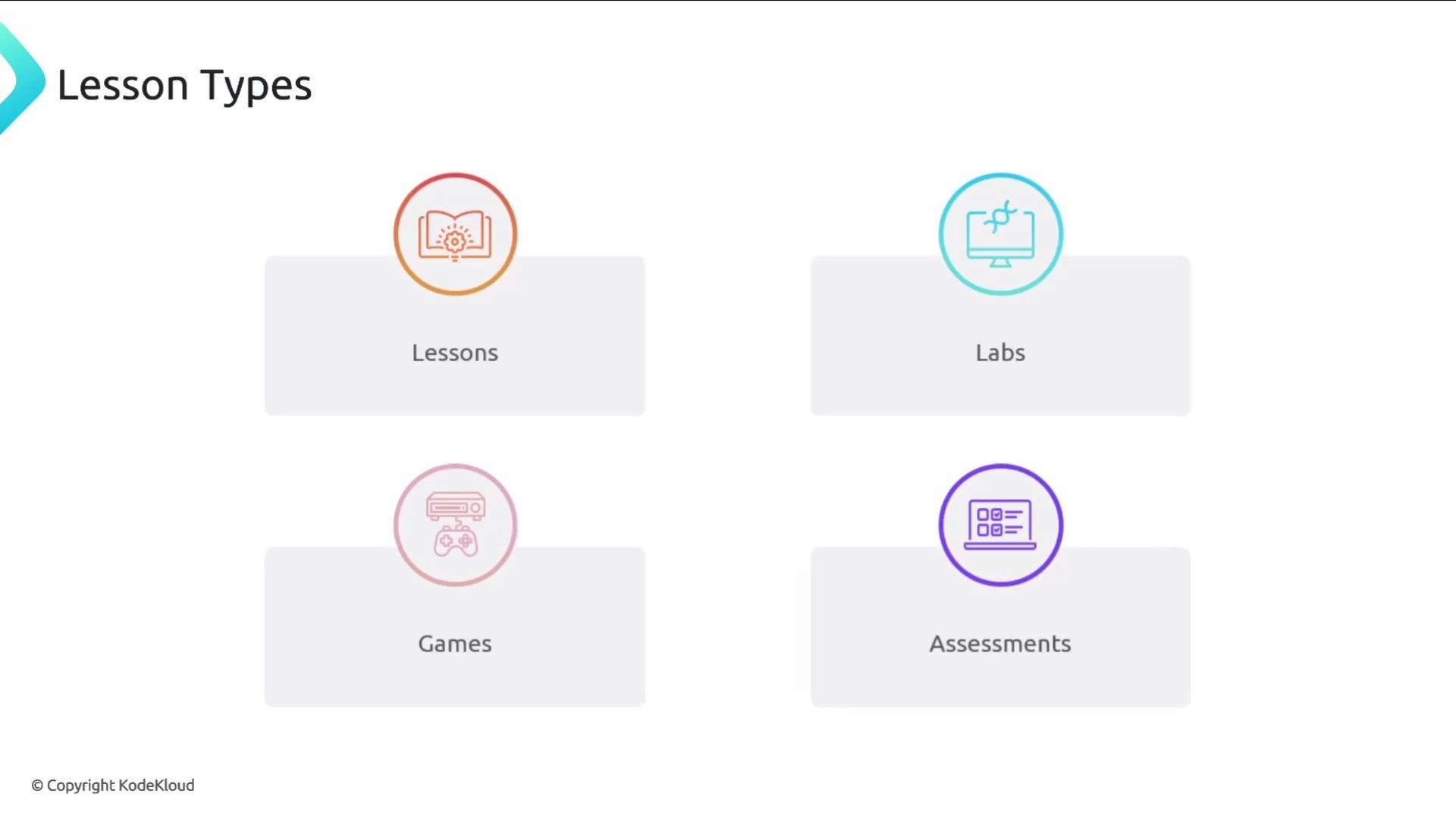
Lesson types and how they’re used
You’ll learn through a blend of formats so you can grasp theory and apply it immediately:- Lessons — conceptual and theoretical foundations.
- Labs — guided, hands-on exercises in realistic environments.
- Games — interactive challenges to reinforce skills and retention.
- Assessments — module-end checks to validate understanding.
Learning flow
The course follows a logical progression:- Foundations: Learn SRE core concepts and principles to form a solid theoretical base.
- Core skills: Master SLOs, measurement techniques, and incident response practices.
- Implementation: Build reliable release pipelines and observability systems in labs.
- Advanced topics: Synthesize knowledge into production-ready patterns and strategies.
Prerequisites and recommended background
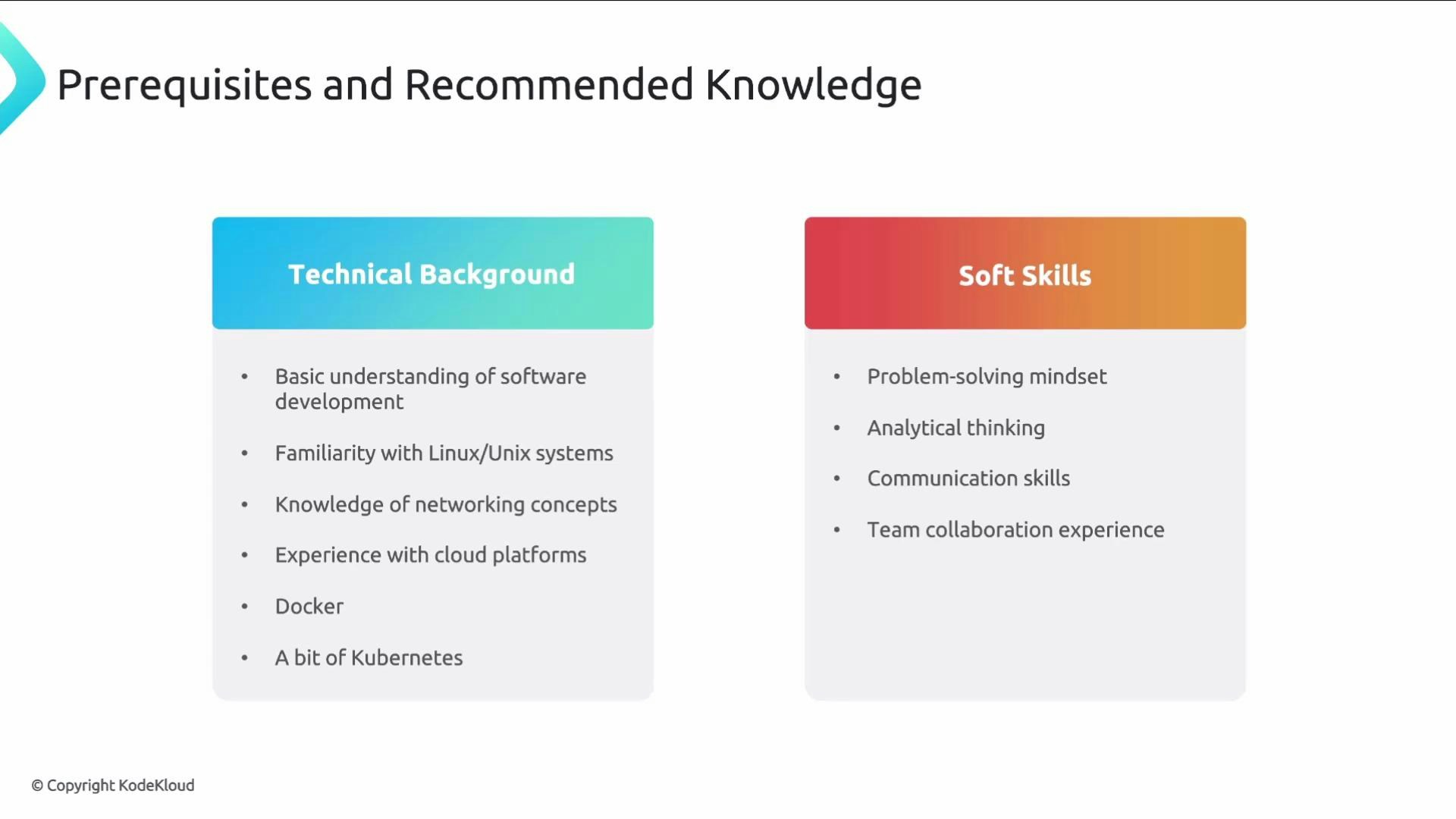
You do not need to be an expert to start. Recommended background:- Basic software development experience
- Familiarity with Linux/Unix
- Basic networking concepts
- Some exposure to cloud platforms, Docker, or Kubernetes
- Soft skills: problem solving, analytical thinking, communication, teamwork
If you lack some of the technical prerequisites, that’s okay — this is a fundamentals course. Consider the recommended preparatory courses below if you want a stronger head start.
Suggested preparatory courses
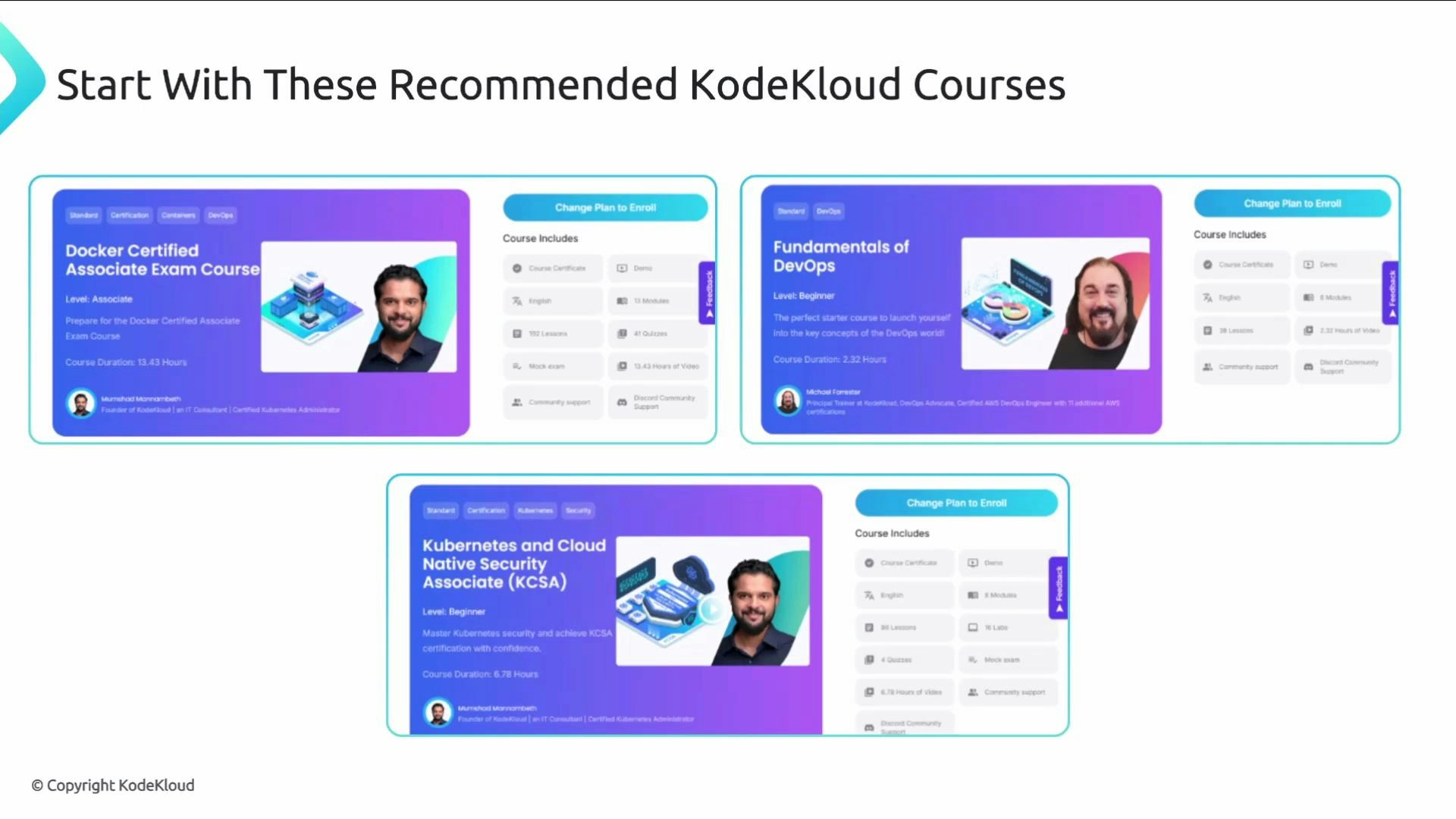
If you want to strengthen your background before or alongside this course, consider these KodeKloud offerings:- Docker Certified Associate Exam Course
- Fundamentals of DevOps
- Kubernetes and Cloud Native Security Associate (KCSA)
Final project and practical application
Throughout the course, the KodeKloud Record Store app serves as a companion application for labs and the capstone. You’ll:- Fork and experiment with the app
- Complete tasks that apply SRE concepts (SLOs, monitoring, incident response, release engineering)
- Deliver a final project demonstrating practical, production-oriented SRE skills
Additional resources and references
- Kubernetes Basics
- KodeKloud Learning Catalog
- Consider reading SRE foundational materials and blogs to deepen understanding as you progress through the course.