The KodeKloud SRE Playground is a hands-on learning environment designed to help you apply Site Reliability Engineering (SRE) concepts in realistic scenarios. Throughout the course you’ll work through review exercises, quizzes, drag-and-drop challenges, and many full hands-on labs that emulate real-world reliability engineering workflows.
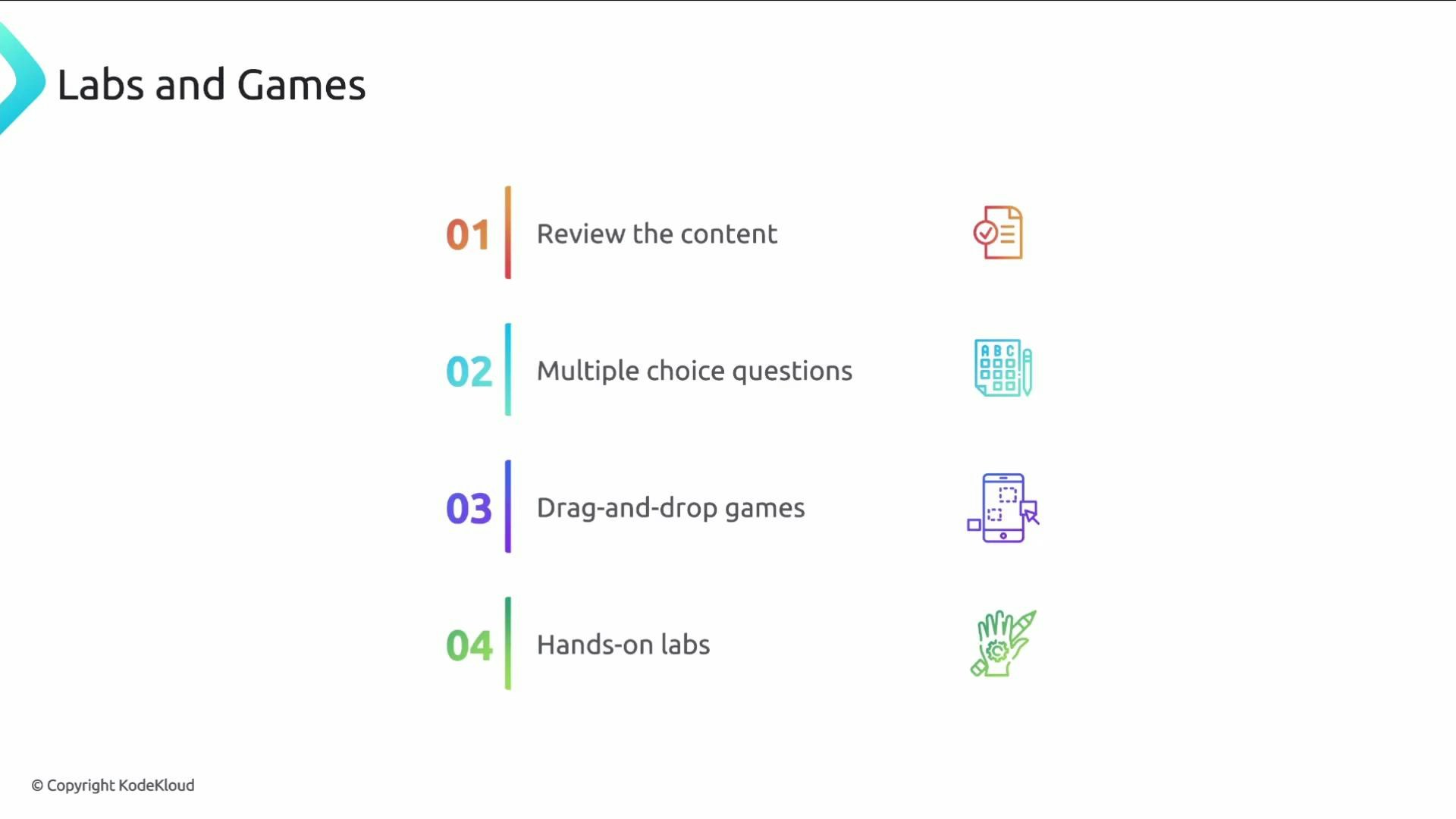
A slide titled "Labs and Games" showing four numbered items—01 Review the content, 02 Multiple choice questions, 03 Drag-and-drop games, and 04 Hands-on labs—each with a colorful icon. The slide also shows a © Copyright KodeKloud notice.
Key interactive activity types you’ll encounter:
  • Review exercises to reinforce concepts.
  • Multiple-choice quizzes for quick knowledge checks.
  • Drag-and-drop games to practice system design and troubleshooting steps.
  • Hands-on labs that require debugging, instrumentation, and applying SRE practices to a running system.
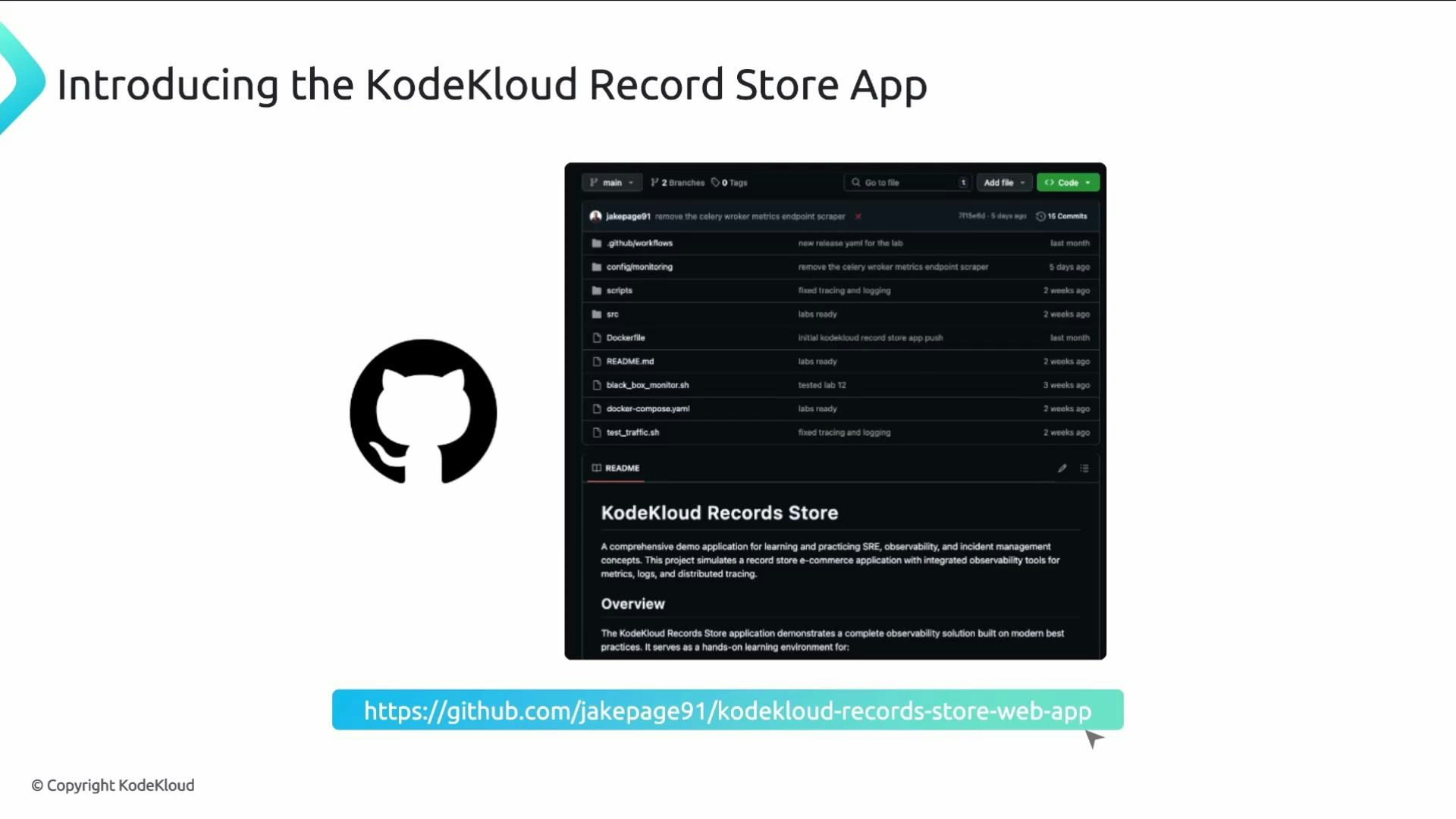
At the center of the playground is the KodeKloud Record Store app — a purpose-built sample application used across labs to demonstrate common SRE challenges and techniques. You can inspect and run the app locally from the GitHub repository:
A presentation slide introducing the KodeKloud Record Store App, featuring a GitHub logo and a screenshot of the app's repository page. The slide also shows a highlighted repo URL: github.com/jakepage91/kodekloud-records-store-web-app.
Before running the app locally, read the repository README for prerequisites and setup steps (Python, Docker, Docker Compose, or other services). Follow the documented instructions to reproduce the lab environment used in the course.
Quick start (example commands)
# Clone the Record Store app repository
git clone https://github.com/jakepage91/kodekloud-records-store-web-app.git

# Clone the Terraform infrastructure repository (optional: for IaC labs)
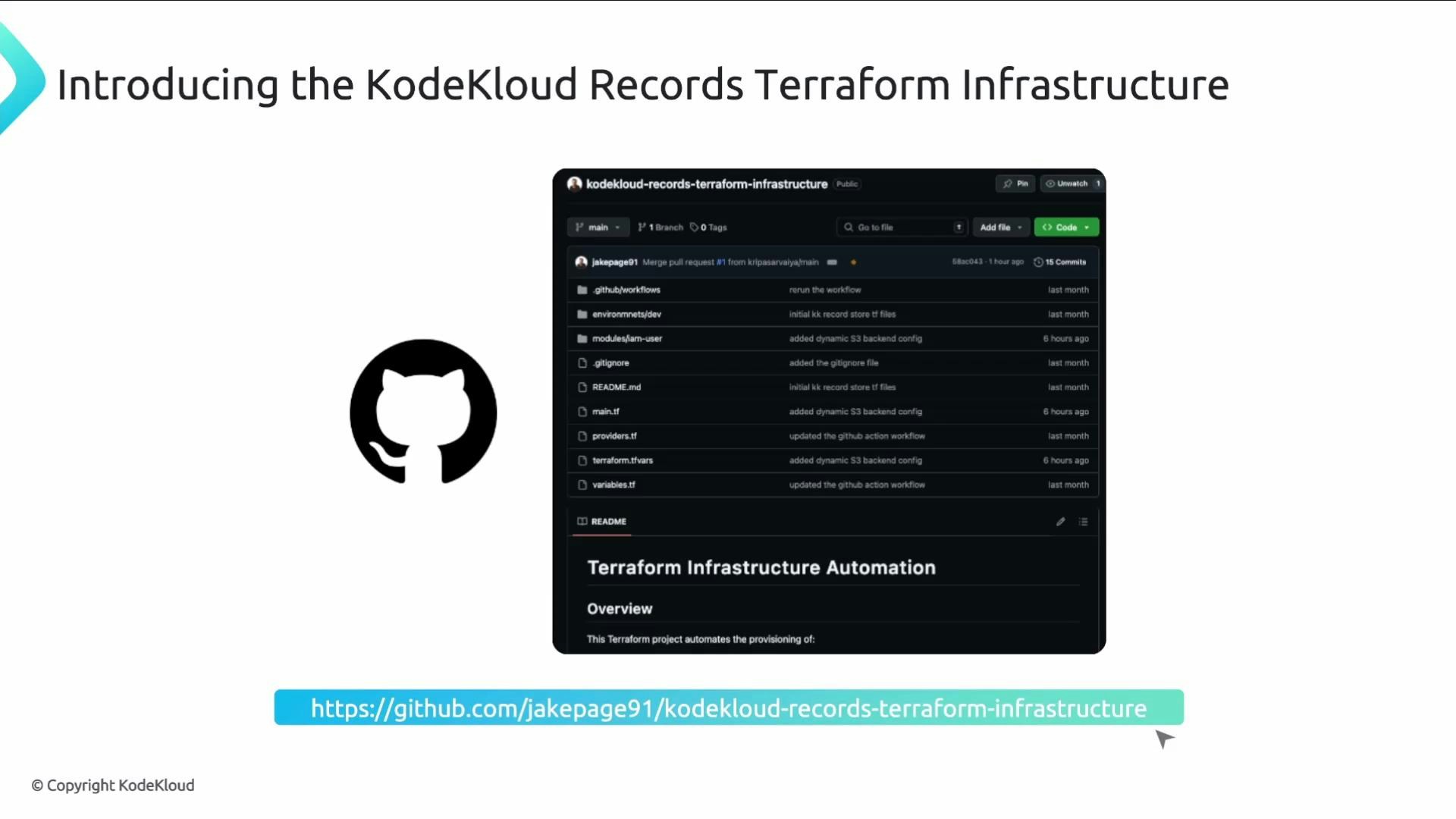
git clone https://github.com/jakepage91/kodekloud-records-terraform-infrastructure.git
Why this sample app is effective for SRE practice
  • It models a realistic microservice-style application with synchronous endpoints and asynchronous background processing.
  • Labs target operational concerns: performance, reliability, monitoring, alerting, scaling, and incident response.
  • Source code + infra examples let you practice development, deployment, and infrastructure-as-code workflows end-to-end.
Core architecture components and learning opportunities:
ComponentPurposeSRE-focused examples
Core AppRoutes for products, orders, and processing triggersFunctional testing, endpoint-level observability, load-testing
Async ProcessingBackground workers and message broker for long-running tasksQueueing behavior, worker autoscaling, backpressure handling
Persistent StorageRelational DB for product/order dataBackups, migrations, storage tuning, consistency concerns
Observability StackMonitoring, logging, and tracing tools integrated with the appDashboards, alerting rules, distributed traces for root-cause analysis
Below is a visual summary of the Record Store architecture used across the labs.
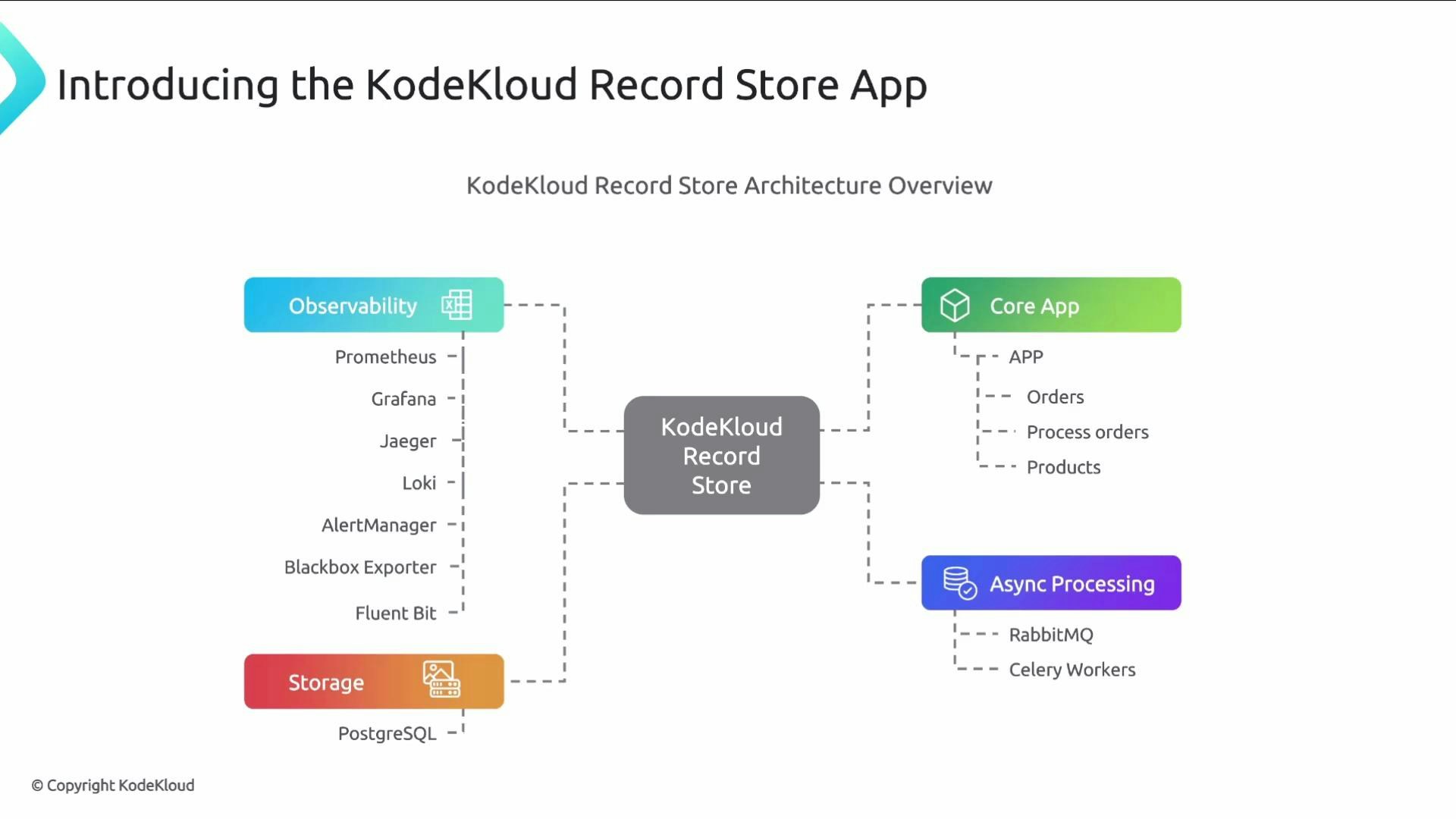
A system architecture diagram titled "Introducing the KodeKloud Record Store App" with a central "KodeKloud Record Store" box connected to four modules. The modules are Observability (Prometheus, Grafana, Jaeger, Loki, etc.), Storage (PostgreSQL), Core App (orders, process orders, products) and Async Processing (RabbitMQ, Celery workers).
The course also includes a Terraform-based infrastructure repository that demonstrates provisioning cloud resources for this app — an essential skill for reproducible environments and reliable release pipelines:
A presentation slide titled "Introducing the KodeKloud Records Terraform Infrastructure" showing a GitHub repository screenshot and the GitHub cat logo. A URL to the repo (https://github.com/jakepage91/kodekloud-records-terraform-infrastructure) is displayed at the bottom.
Running Terraform or cloud-deploying the example infrastructure may create billable cloud resources. Review the Terraform README and your cloud provider’s free-tier or cost controls before applying changes.
Welcome to the KodeKloud Record Store app SRE team — consider this course your onboarding from development to operations. By completing the labs and exercises you’ll gain practical SRE skills, including:
  • Creating SLIs and SLOs and calculating error budgets
  • Building observability dashboards and defining alerts
  • Provisioning infrastructure using Terraform (IaC)
  • Designing and testing reliable release pipelines
  • Performing incident investigation using logs and distributed traces
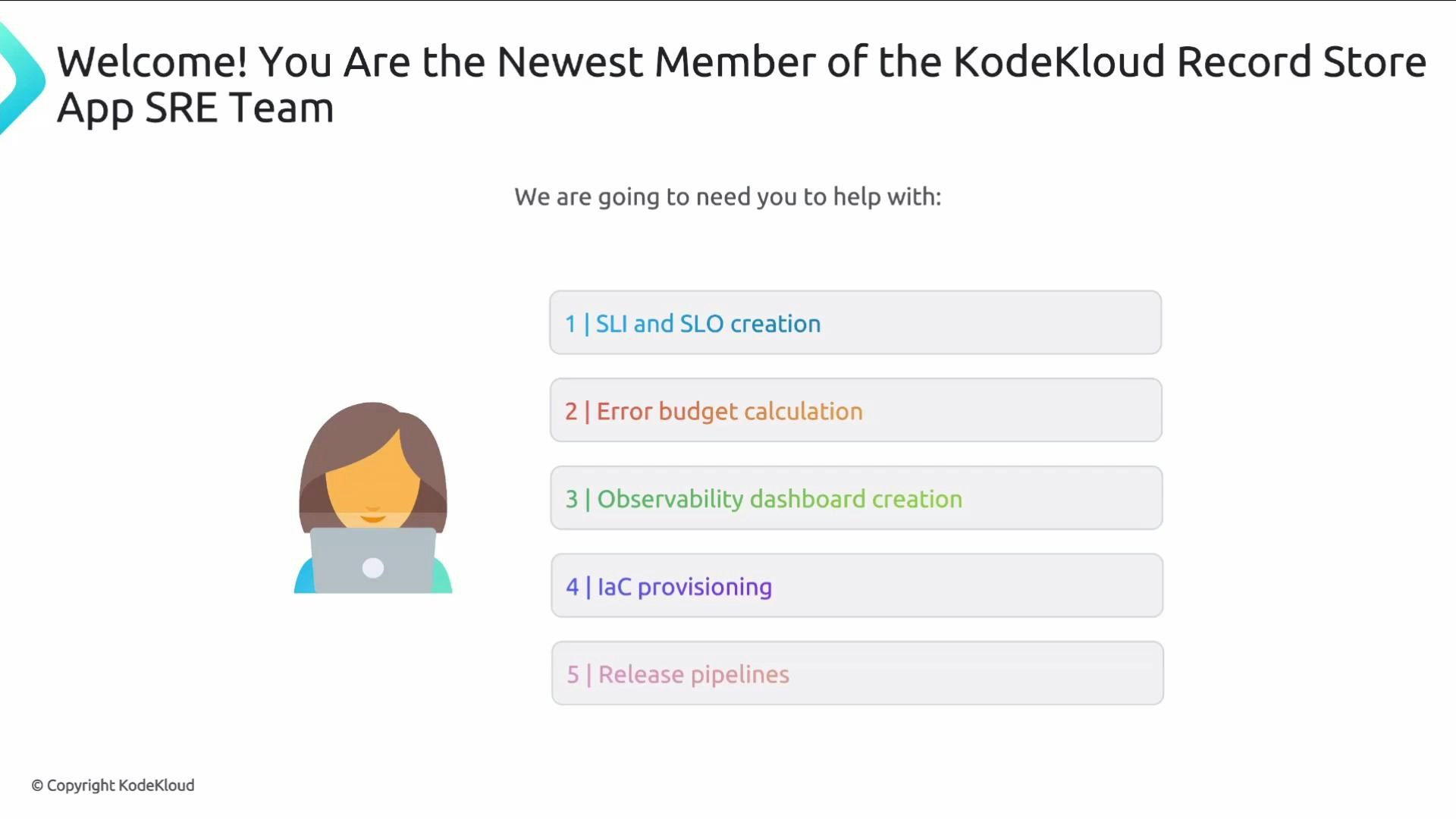
A welcome slide titled "You Are the Newest Member of the KodeKloud Record Store App SRE Team" listing five tasks: SLI and SLO creation, error budget calculation, observability dashboard creation, IaC provisioning, and release pipelines. A small illustration of a person using a laptop appears at the left.
Next steps
  • Clone the repositories and follow the README setup to start the labs.
  • Begin with basic observability labs (metrics, logging, tracing) before moving to scaling and incident simulation exercises.
  • Use the app and infra code as a sandbox to experiment with SRE practices in a controlled environment.
Further reading and references Get ready to dive in, experiment, and gain hands-on SRE experience through the course playgrounds and labs.