

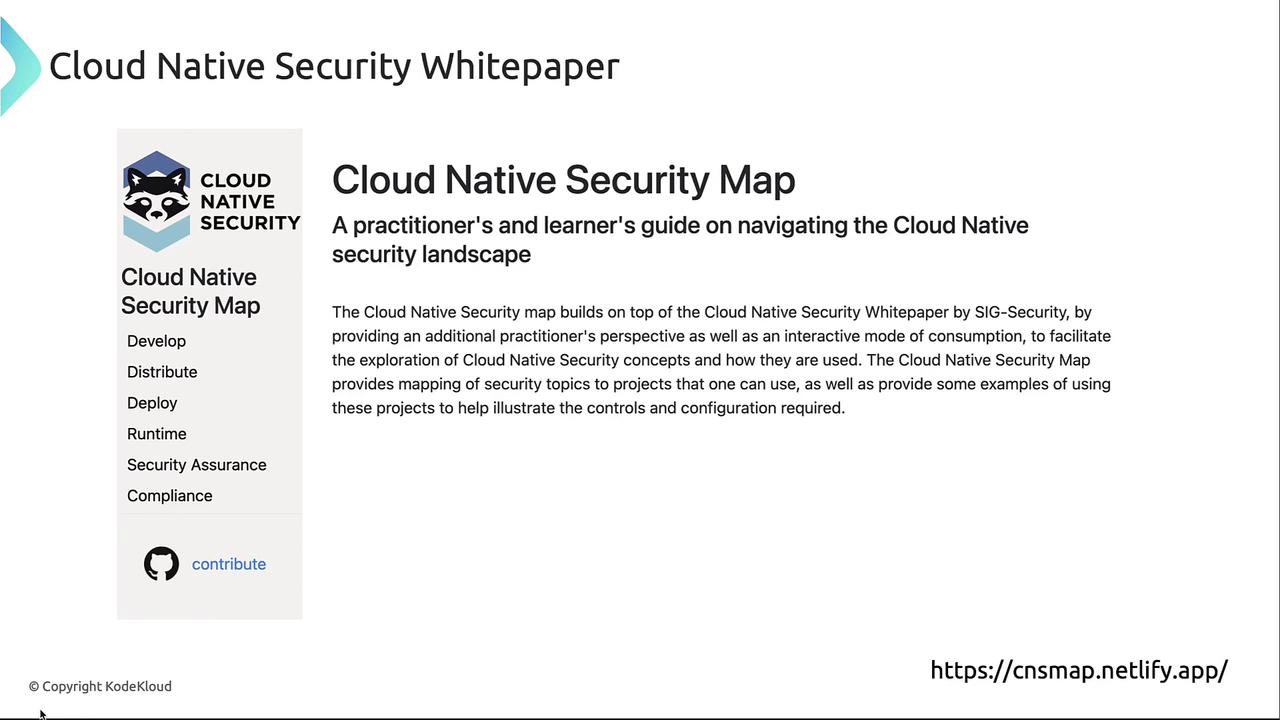
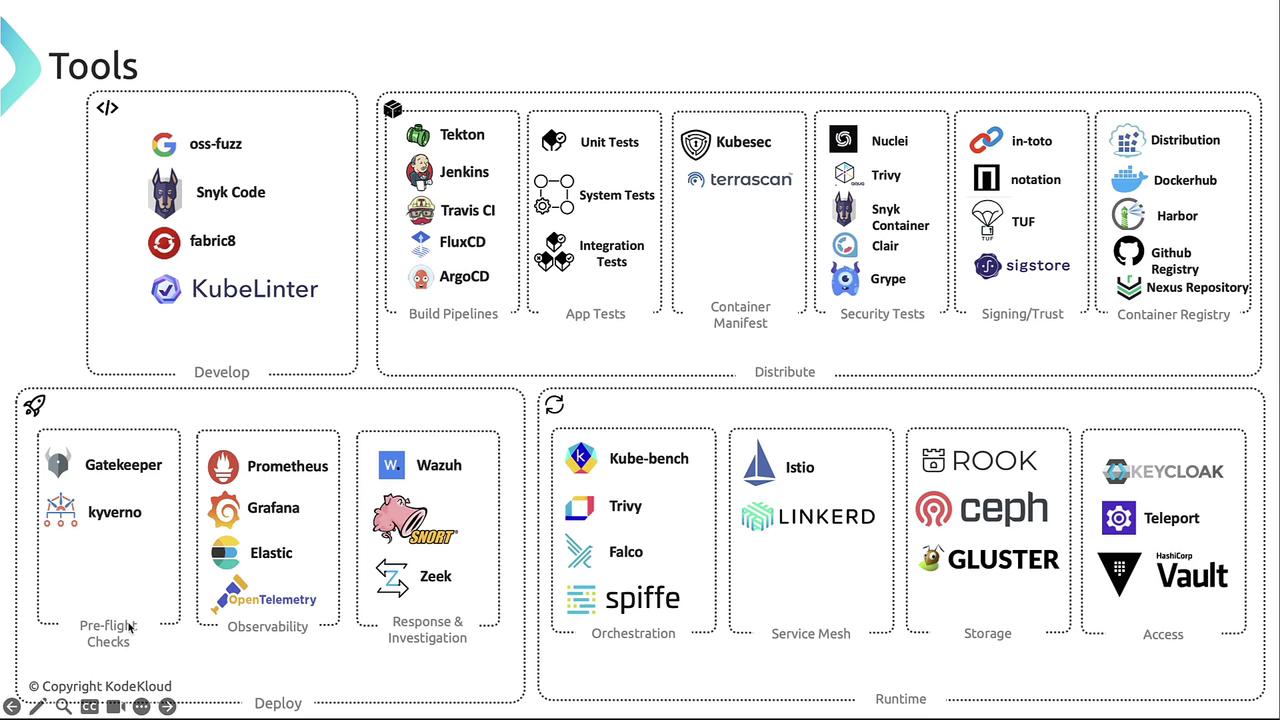
Explore the interactive map at
cnsmap.netlify.app to discover security tools
and best practices organized by Develop, Distribute, Deploy, and
Runtime phases.
Development Phase
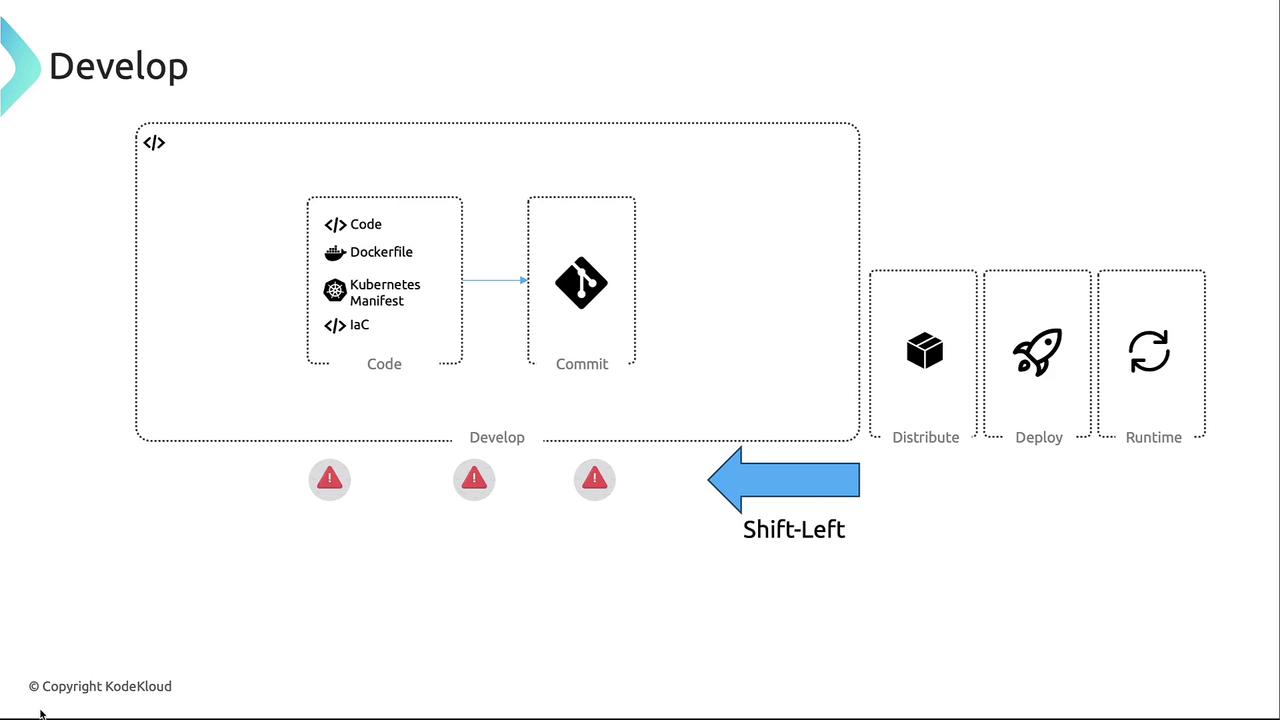
The Develop phase emphasizes “shift-left” testing by integrating security early in code, Dockerfile, and infrastructure-as-code creation. Commit artifacts to repositories (GitHub, GitLab, etc.) with automated checks to:- Block high-severity vulnerabilities when fixes exist
- Enforce non-root container execution
- Restrict allowed base images
Fuzz Testing with OSS-Fuzz
Google’s [OSS-Fuzz][oss-fuzz] automates fuzz testing of open source projects to discover crashes and undefined behavior.parse_integer:
IDE & CLI Security Extensions
- [Snyk VS Code Extension][snyk-vscode]
- Fabricate by Red Hat (VS Code plugin)
- [kube-linter][kube-linter] – Scan Kubernetes YAML:
Distribution Phase
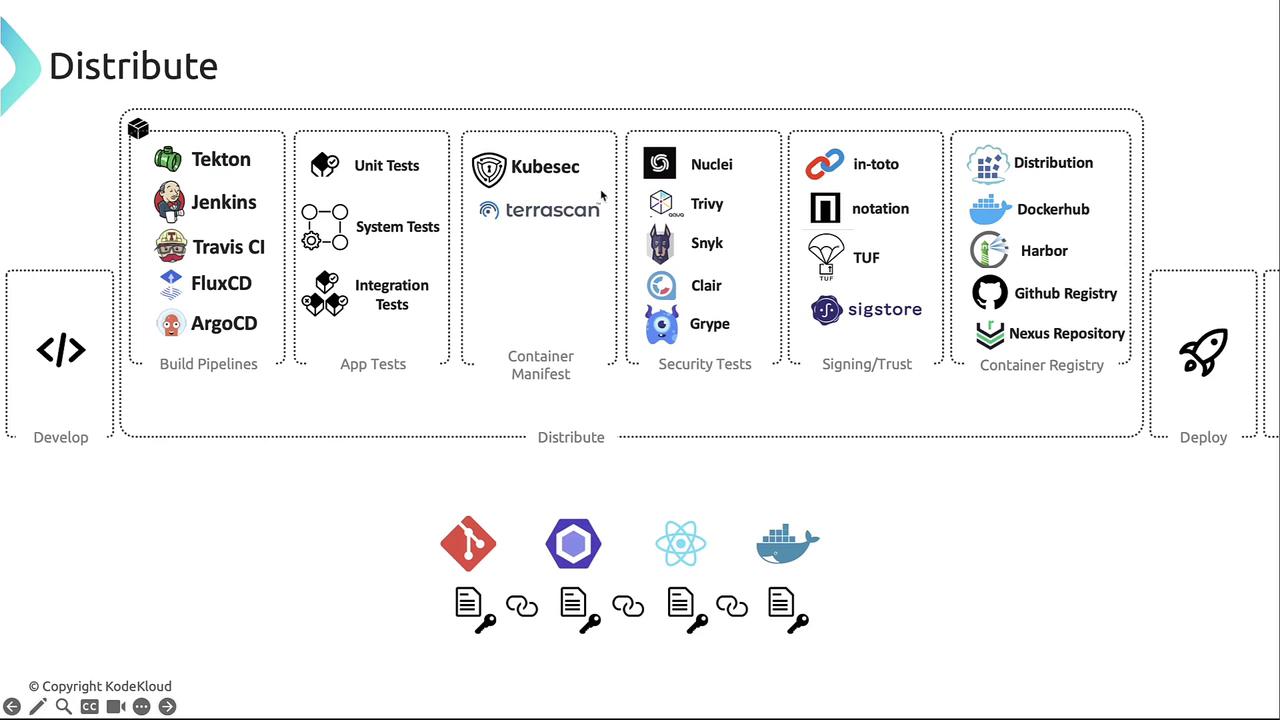
In the Distribute phase, CI/CD pipelines build, test, and push container images to registries. Common tools include:
Before building images, enforce policy compliance on manifests:
- [KubeSec][kubesec] scans Kubernetes YAML for misconfigurations.
- TeraScan validates IaC (Terraform, Dockerfile, Helm, CloudFormation) against CIS, NIST, GDPR, HIPAA.
Always validate manifests before image builds to prevent deployment of
insecure configurations.
To secure the software supply chain, use signing frameworks:
- [in-toto][in-toto] – End-to-end supply chain security
- [Notary][notary], [TUF][tuf], [Sigstore][sigstore]
Deployment Phase
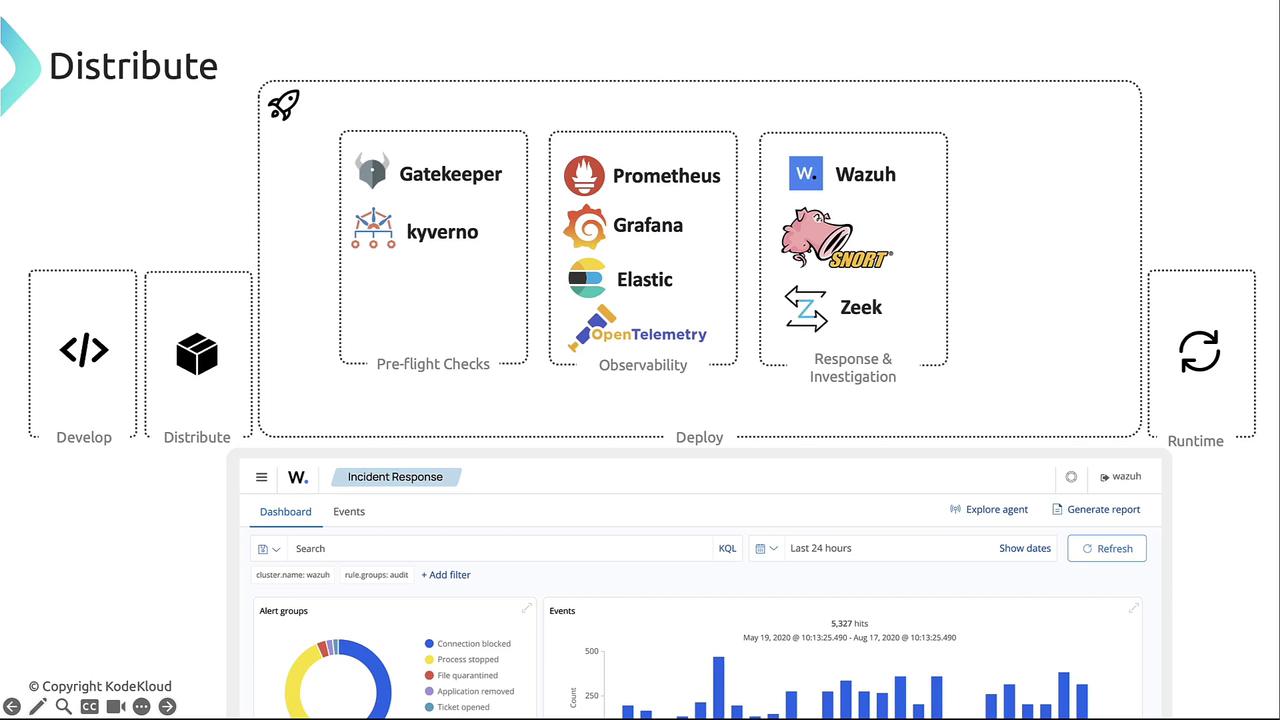
The Deploy phase covers pre-flight checks, observability, and incident response:-
Pre-flight Checks
- [OPA Gatekeeper][gatekeeper] – Policies in Rego
- [Kyverno][kyverno] – YAML-based policy management
-
Observability
- [Prometheus][prometheus] + [Grafana][grafana]
- [Elasticsearch][elasticsearch] + [Kibana][kibana]
- [OpenTelemetry][otel]
-
Response & Investigation
- [Wazuh][wazuh]
- [Snort][snort]
- [Zeek][zeek]
Runtime Phase
Once applications are live, enforce continuous security and reliability:- CIS Benchmarking
- [kube-bench][kube-bench] – CIS checks for Kubernetes clusters:
-
Runtime Security
- Falco – System call monitoring
- Trivy – Continuous workload scanning
- SPIFFE – Workload identity via certificates
-
Service Mesh
- Istio, Linkerd
-
Storage Orchestration
- Rook, Ceph, Gluster
-
Access Management
- Keycloak, Teleport, HashiCorp Vault
Summary
Map these tools to your cloud-native lifecycle for improved security and efficiency:- Develop: Shift-left scanners & IDE plugins
- Distribute: CI/CD pipelines, manifest & image scanners, signing frameworks
- Deploy: Policy enforcement, observability, incident response
- Runtime: Continuous monitoring, service mesh, access & storage management
Links and References
- OSS-Fuzz: https://github.com/google/oss-fuzz
- Snyk VS Code Extension: https://marketplace.visualstudio.com/items?itemName=snyk-security.snyk-vulnerability-scanner
- kube-linter: https://github.com/stackrox/kube-linter
- KubeSec: https://github.com/controlplaneio/kubesec
- in-toto: https://github.com/in-toto/in-toto
- Notary: https://github.com/theupdateframework/notary
- The Update Framework (TUF): https://theupdateframework.io/
- Sigstore: https://sigstore.dev/
- OPA Gatekeeper: https://github.com/open-policy-agent/gatekeeper
- Kyverno: https://kyverno.io/
- Prometheus: https://prometheus.io/
- Grafana: https://grafana.com/
- Elasticsearch: https://www.elastic.co/elasticsearch
- Kibana: https://www.elastic.co/kibana
- OpenTelemetry: https://opentelemetry.io/
- Wazuh: https://wazuh.com/
- Snort: https://www.snort.org/
- Zeek: https://zeek.org/
- kube-bench: https://github.com/aquasecurity/kube-bench
- Tekton: https://tekton.dev/
- Jenkins: https://www.jenkins.io/
- Travis CI: https://travis-ci.org/
- CircleCI: https://circleci.com/
- Flux CD: https://fluxcd.io/
- Argo CD: https://argo-cd.readthedocs.io/
- Docker Hub: https://hub.docker.com/
- Harbor: https://goharbor.io/
- GitHub Container Registry: https://github.com/features/packages
- Nexus Repository: https://www.sonatype.com/product-nexus-repository