kubectl, client libraries, or direct REST calls—route through this component. As the first line of defense, you must tightly control who can communicate with the API server and what operations they can perform.
Key Access-Control Decisions
- Authentication: Verify the identity of users or processes.
- Authorization: Determine which actions authenticated subjects can execute.
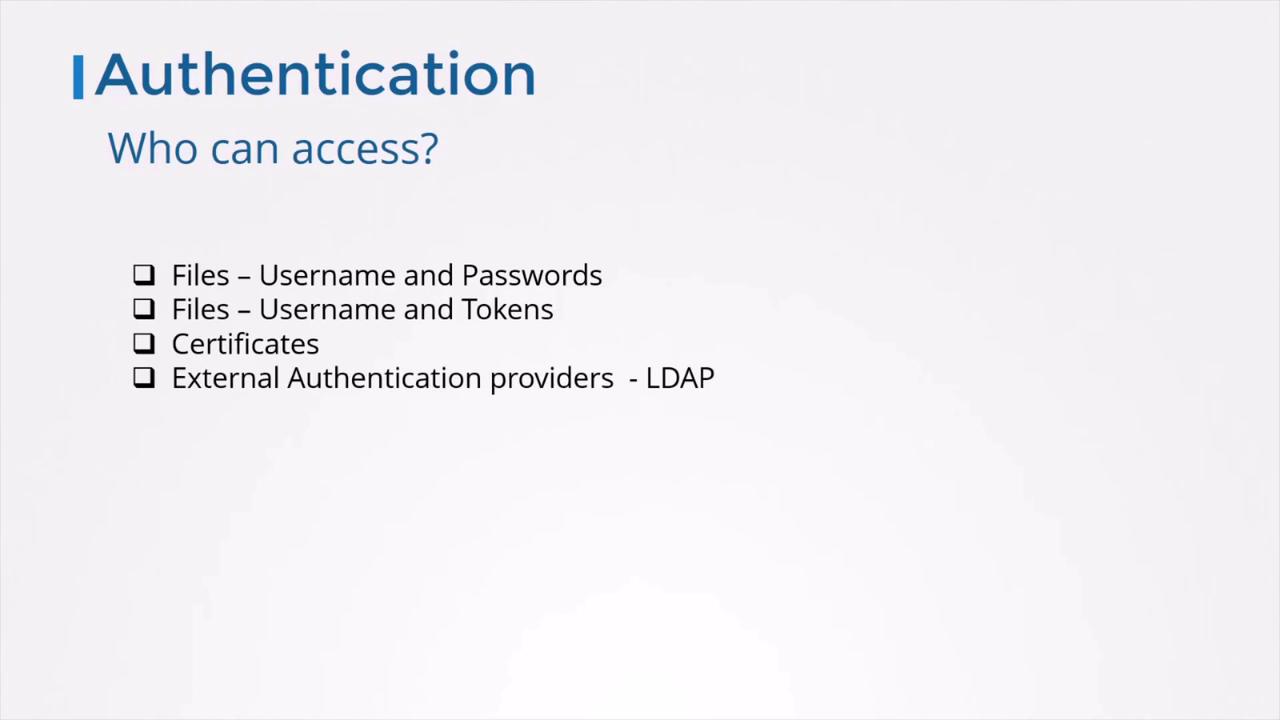
Authentication
Kubernetes supports multiple authentication mechanisms. Choose methods based on your environment’s security requirements:Service accounts are the default identity for workloads inside a cluster. Always assign the minimal set of permissions.
Authorization
After a user or process is authenticated, Kubernetes must decide which API operations they can perform. The most common authorization module is Role-Based Access Control (RBAC), but other options exist:
Misconfigured RBAC rules can inadvertently grant excessive privileges. Always follow the principle of least privilege.
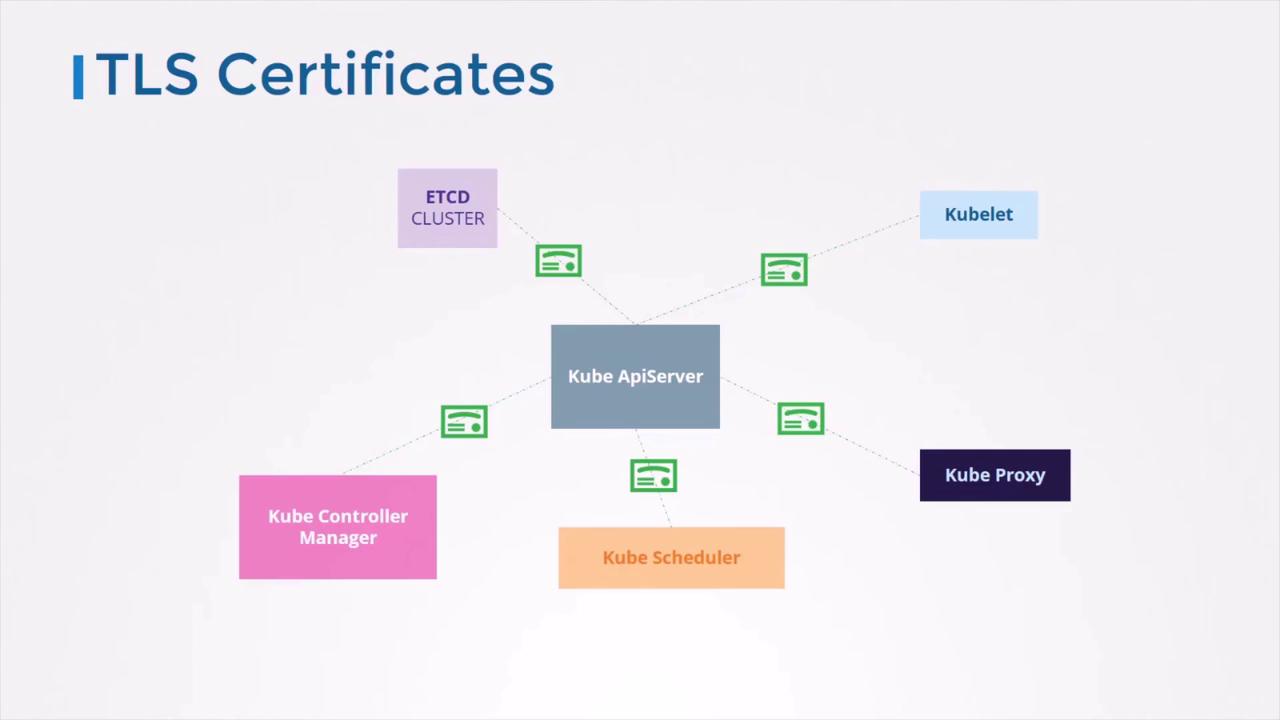
TLS Encryption Between Components
All communication between the API server and other cluster components is encrypted via TLS. This includes:- etcd cluster
- kube-controller-manager
- kube-scheduler
- kubelet and kube-proxy on worker nodes