

Evolution of Software Development
The Agile Revolution
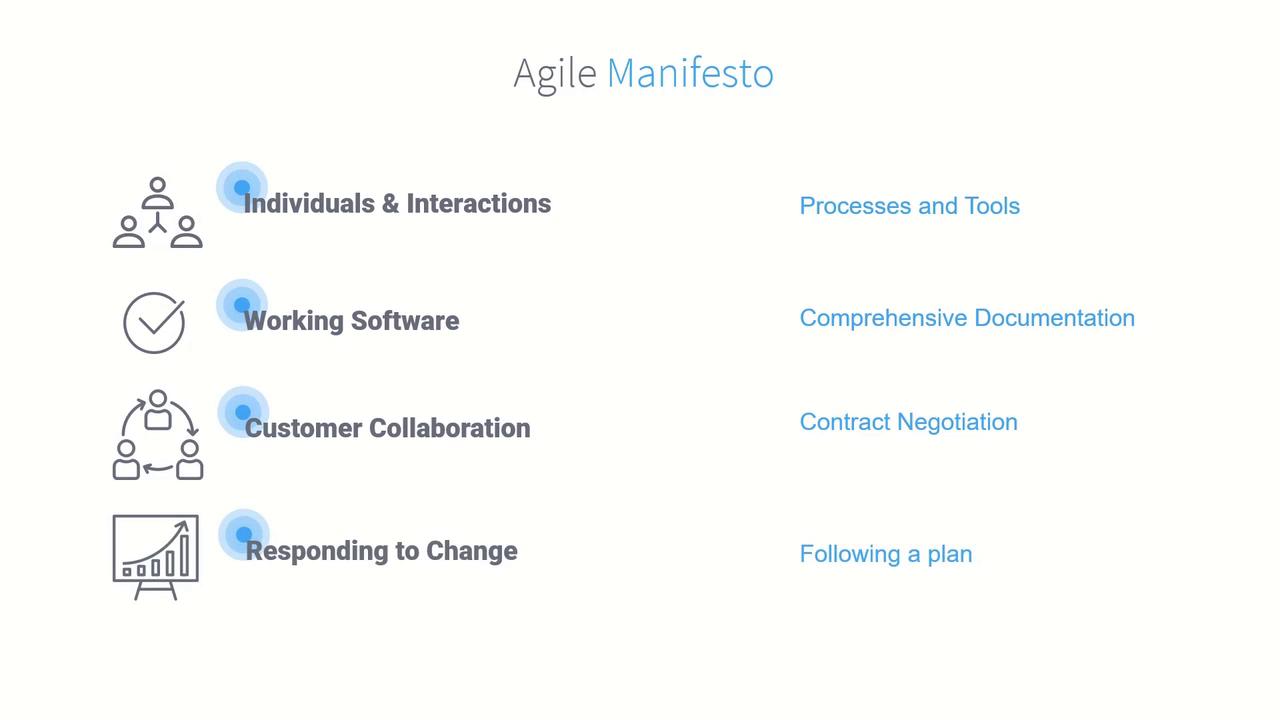
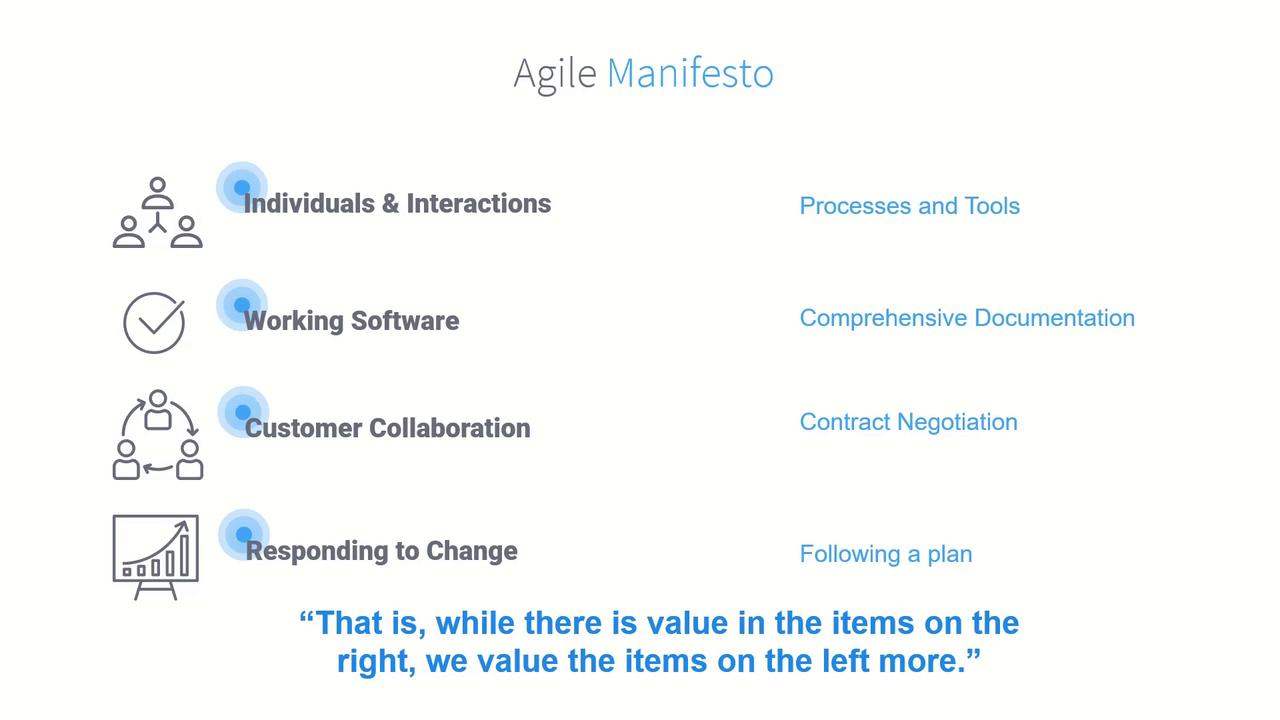
In the early 2000s, lengthy, rigid development cycles often meant that delivered software no longer matched business needs. The publication of the Agile Manifesto in 2001 ushered in a new era:We value Individuals & Interactions over processes and tools
Working Software over comprehensive documentation
Customer Collaboration over contract negotiation
Responding to Change over following a plan
Why Break Up Monoliths?
Monolithic applications bundle all features—presentation, business logic, data access—into a single deployable unit. While simple at first, they become bottlenecks for scaling, team autonomy, and innovation.Monolithic Architecture
A monolith shares one codebase, one process, and typically a single database. Any update, no matter how small, requires redeploying the entire system.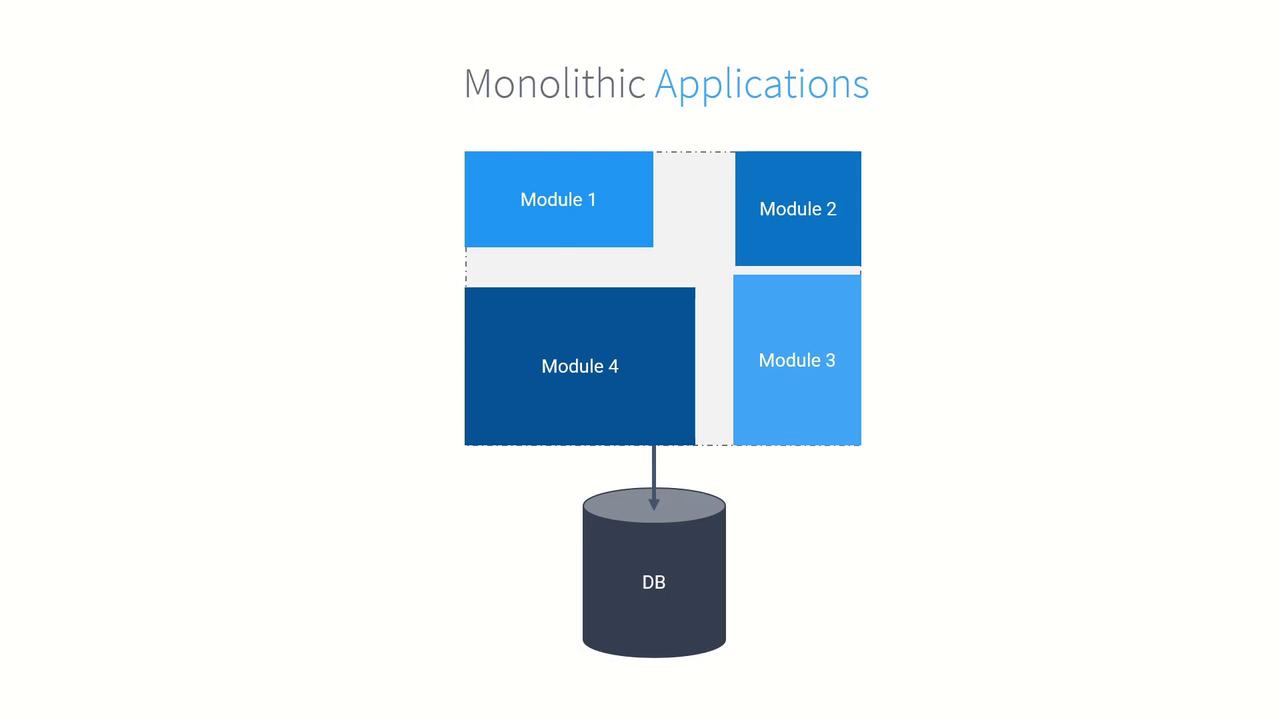
Example: Book Info Monolith
Imagine a Book Info application in Java containing:- Details
- Reviews
- Ratings
- Product Page

- Any change requires a full redeploy.
- You scale all modules together, even if only one needs it.
- Introducing new languages or modules means reworking the entire app.
- A single failure can bring down the whole system.
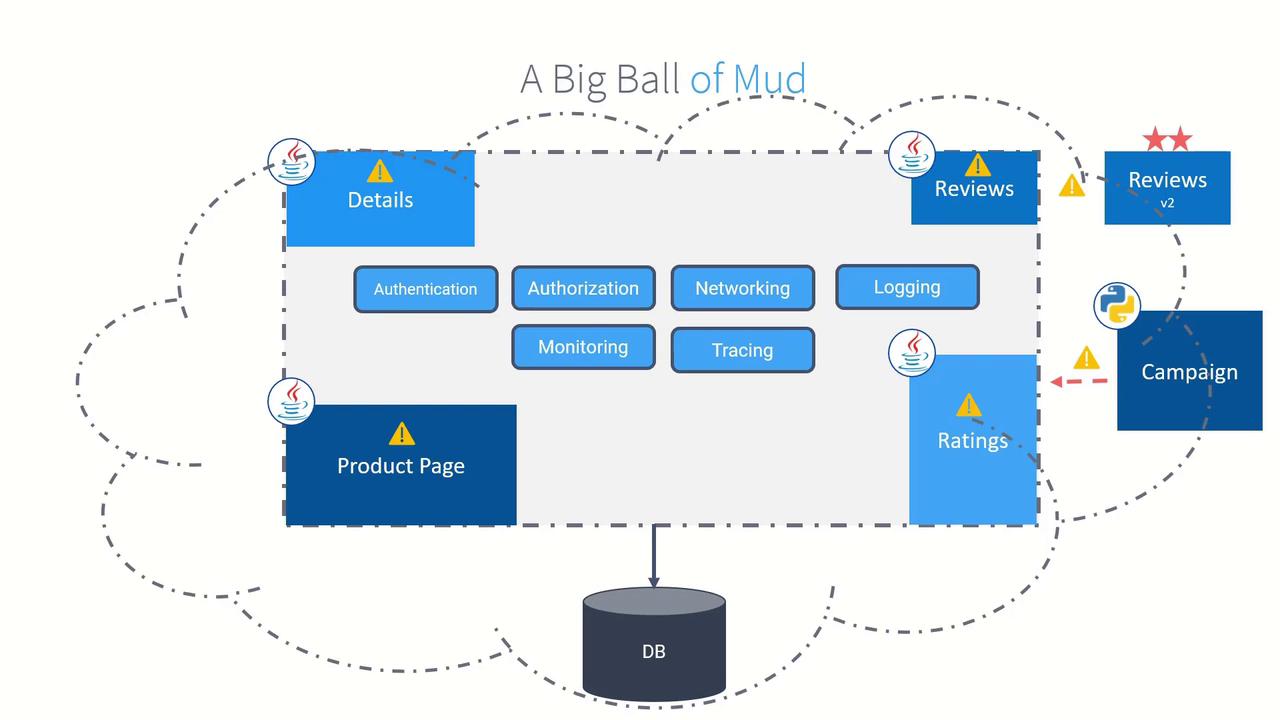
Refactoring a large monolith into services is a complex journey—both technically and culturally.
Transition to Microservices
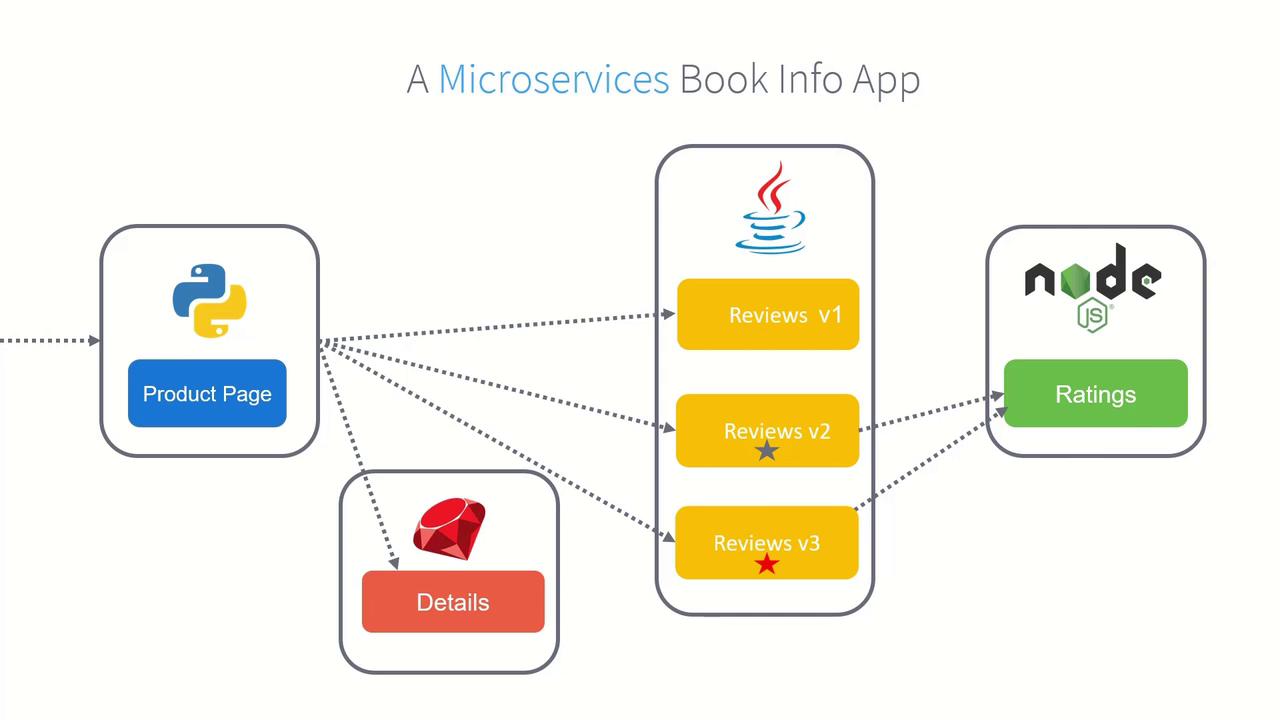
Breaking your application into independently deployable services addresses many monolithic drawbacks. In our Book Info example:- Product Page → Python service
- Details → Ruby app
- Reviews → Java service (now with A/B versions: no stars, black stars, red stars)
- Ratings → Node.js microservice
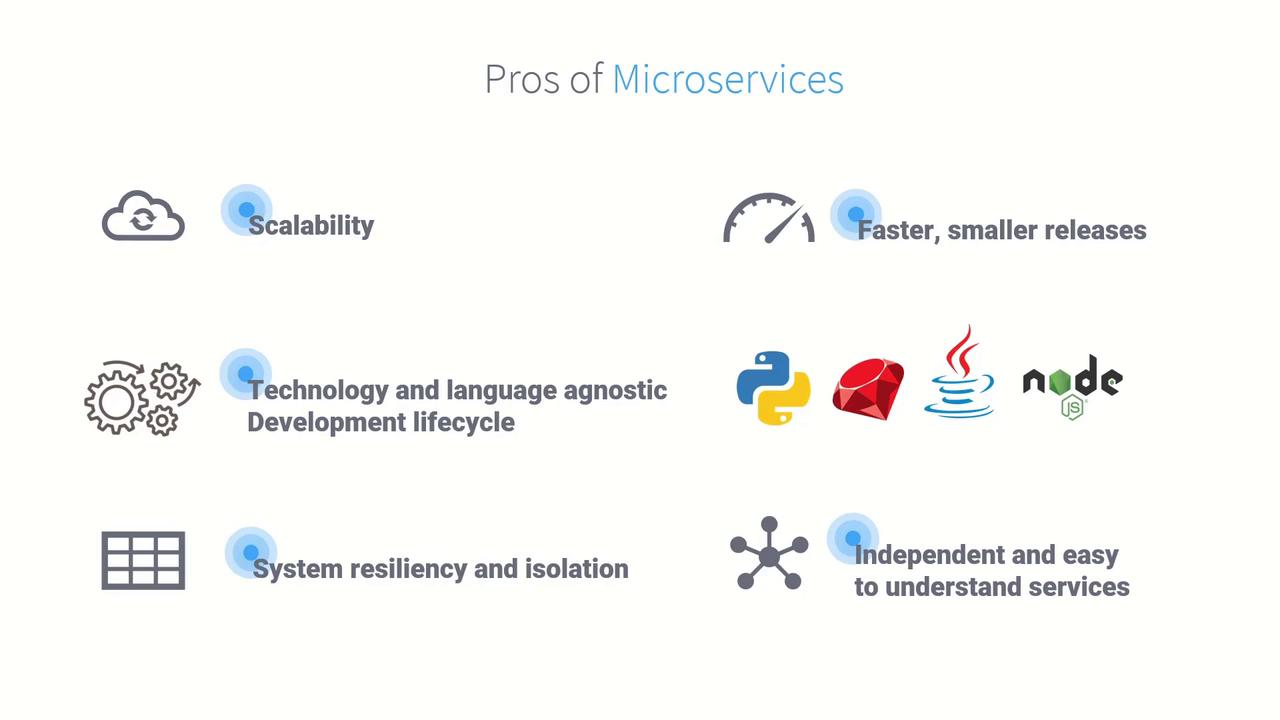
Benefits of Microservices
New Challenges with Microservices
While microservices solve many monolithic issues, they introduce cross-cutting concerns: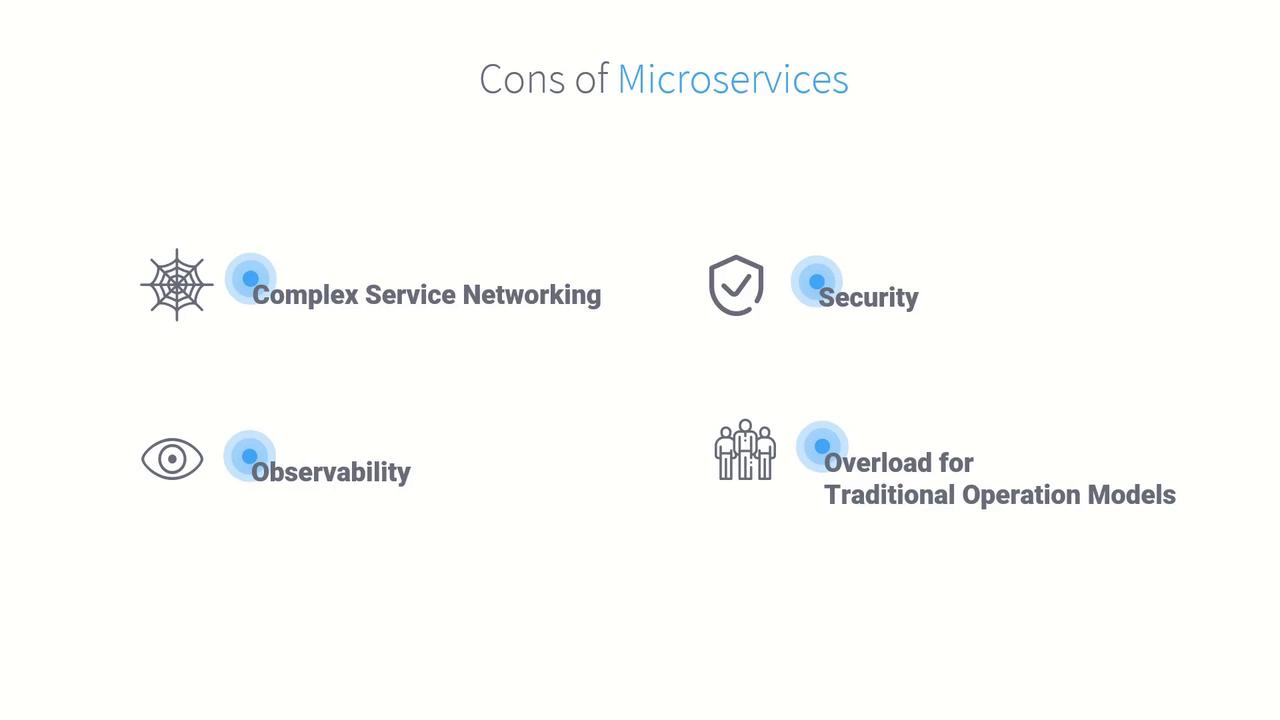
Without a consistent platform for networking, security, and telemetry, microservices can become as difficult to manage as monoliths.
In upcoming sections, we’ll explore how Service Meshes simplify networking, security, and observability across microservices.