

1. Preventing SQL Injection
SQL injection remains one of the most prevalent vulnerabilities. Malicious input can tamper with your database queries, leading to data leakage or unauthorized access.Vulnerable Query Example
'' OR '1'='1' as the username and bypass authentication entirely:
Secure Mitigation
Always use parameterized queries or prepared statements:Static Analysis Tools
Automated scanners detect unsafe patterns like raw SQL concatenation before code merges into main: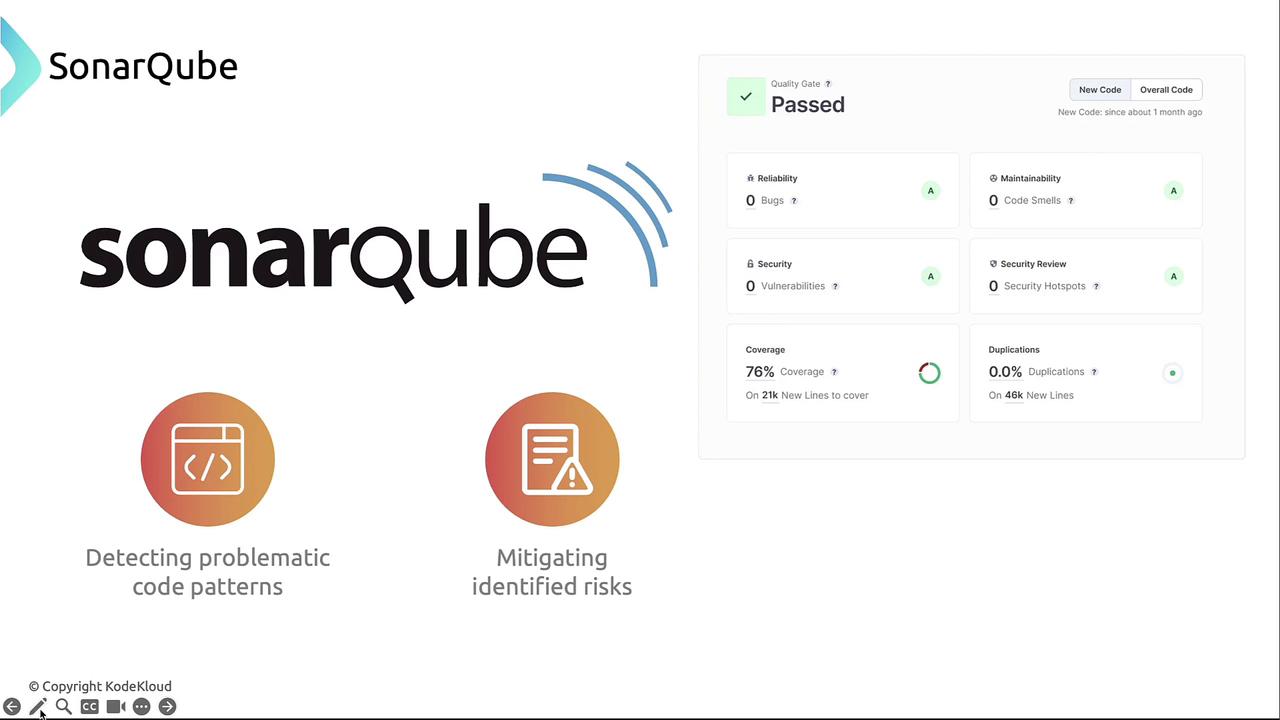
Incorporate static analysis into your CI/CD pipeline to catch vulnerabilities early and maintain code quality over time.
2. Scanning Third-Party Dependencies
Your application often relies on external libraries that may harbor known vulnerabilities. Regularly auditing these dependencies is vital.Sample Flask Application
Dependency Scanners
Outdated dependencies can quickly become attack vectors. Schedule automated scans (e.g., daily or on pull requests) to remediate vulnerabilities promptly.
3. Log4j and Application Security Monitoring
The Log4Shell incident demonstrated that even trusted logging frameworks can introduce critical RCE vulnerabilities.Real-Time Detection
Integrate runtime protection tools to catch anomalies, even for zero-day exploits:- Datadog Application Security Monitoring
- AWS WAF with custom rules
- Azure Application Gateway Web Application Firewall
4. Observability in Containerized Environments
Monitoring your application’s resource usage and behavior in real time is essential for both performance tuning and security forensic.
Key Observability Features
Correlate logs, metrics, and traces to quickly pinpoint root causes—whether it’s a memory leak, cryptojacking, or container escape.
Next Steps
- Adopt secure coding standards across all languages and frameworks.
- Automate dependency scanning and static analysis in your CI/CD workflows.
- Deploy runtime security agents and observability platforms to detect and respond to threats.
References
- OWASP Dependency-Check
- Datadog Application Security Monitoring
- Sysdig Secure
- SonarQube Documentation