Why Migrate from Docker?
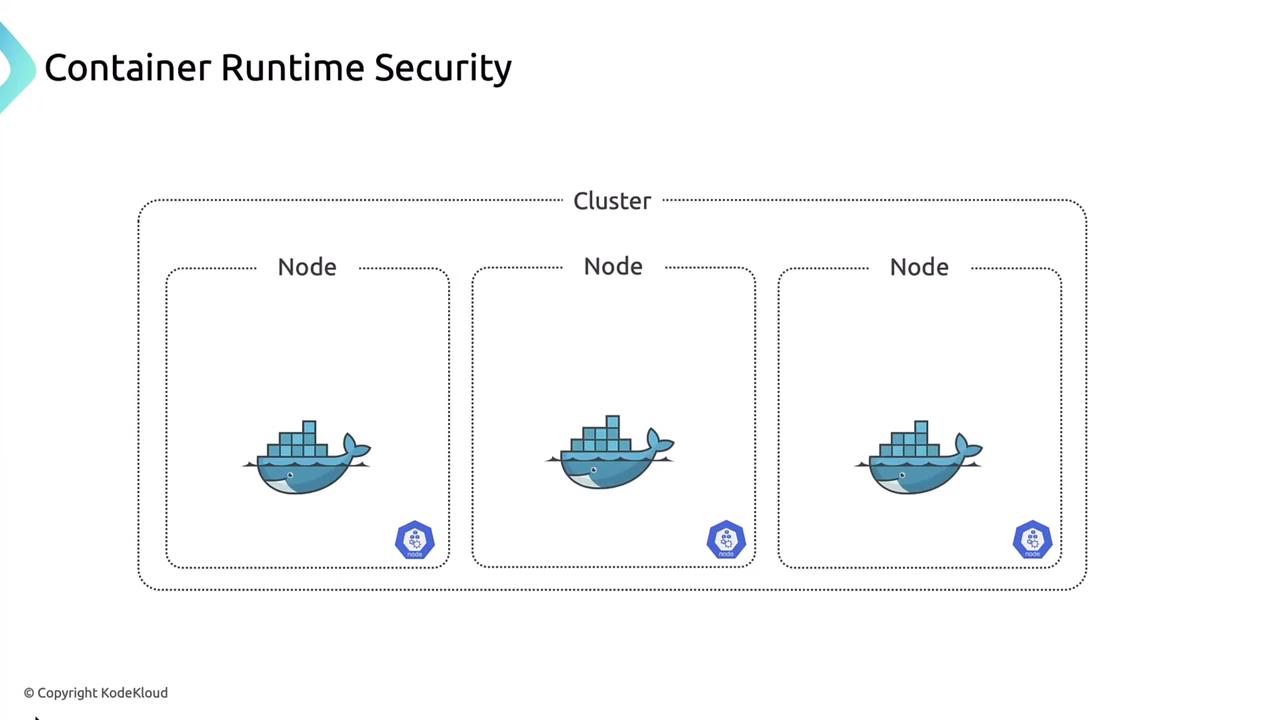
Docker’s early releases suffered from a critical vulnerability that allowed containers to execute with root privileges on the host. Modern container runtimes mitigate this risk by adhering to the Container Runtime Interface (CRI).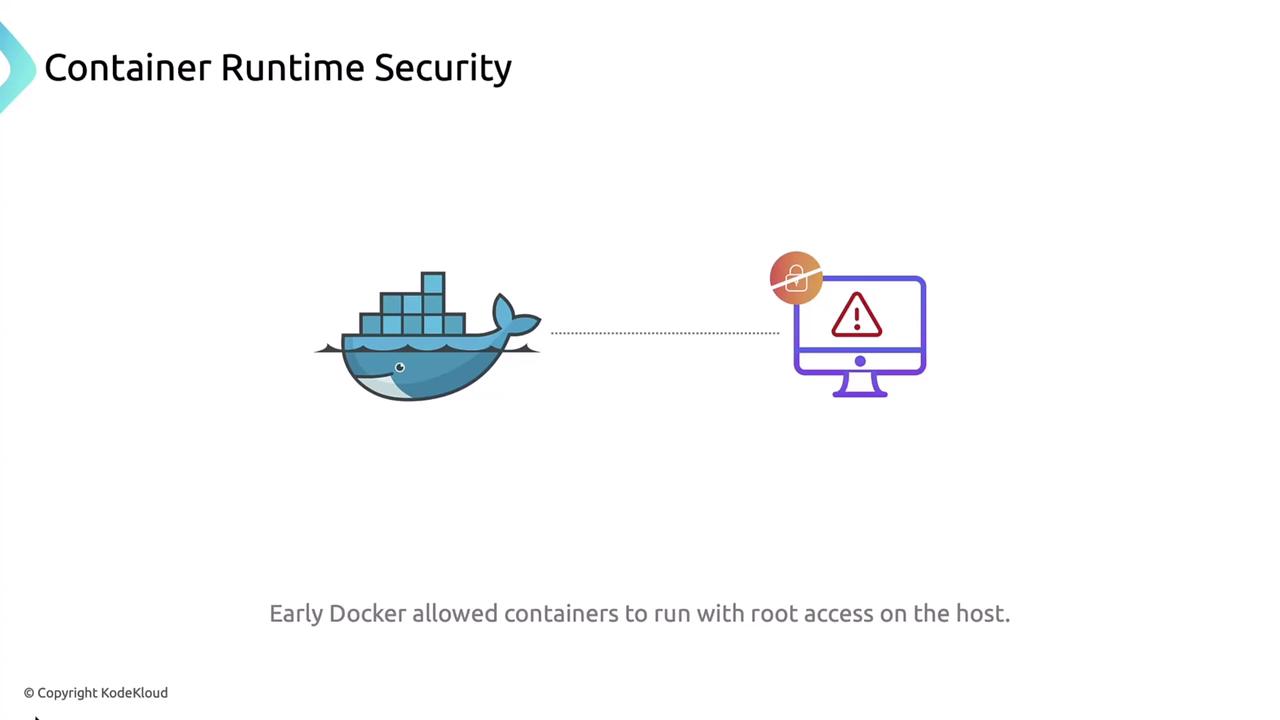
Common Container Runtime Vulnerabilities
Several high-profile CVEs have underscored the need for a secure runtime: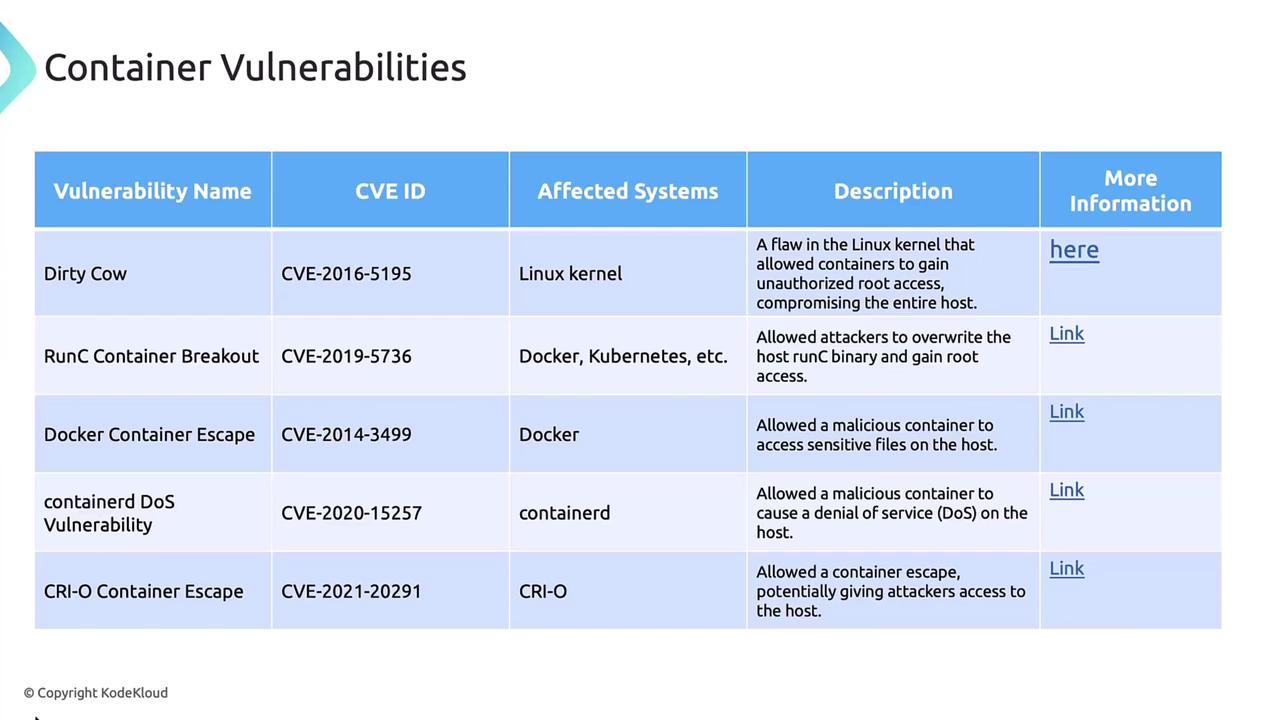
For a complete list of CVEs and mitigation steps, refer to your runtime’s security advisories.
1. Regular Updates and Patching
Keeping containerd, CRI-O or Docker packages up to date is a straightforward way to close known security gaps.
Always consult the official Kubernetes container runtimes guide for platform-specific instructions.
2. Least-Privilege Execution
Avoid running containers asroot. Assign non-root UIDs/GIDs to limit blast radius:
Failing to specify
runAsUser can expose your host to privilege escalation if a container is compromised.3. Enforce a Read-Only Filesystem
Prevent on-disk tampering by mounting the root filesystem as read-only:4. Resource Limits
Define CPU and memory limits to protect the node from denial-of-service attacks:5. Mandatory Access Control (SELinux & AppArmor)
SELinux
AppArmor
6. Transition to containerd or CRI-O
Docker support is deprecated in newer Kubernetes releases. Migrate to containerd or CRI-O for enhanced security, performance, and forward compatibility.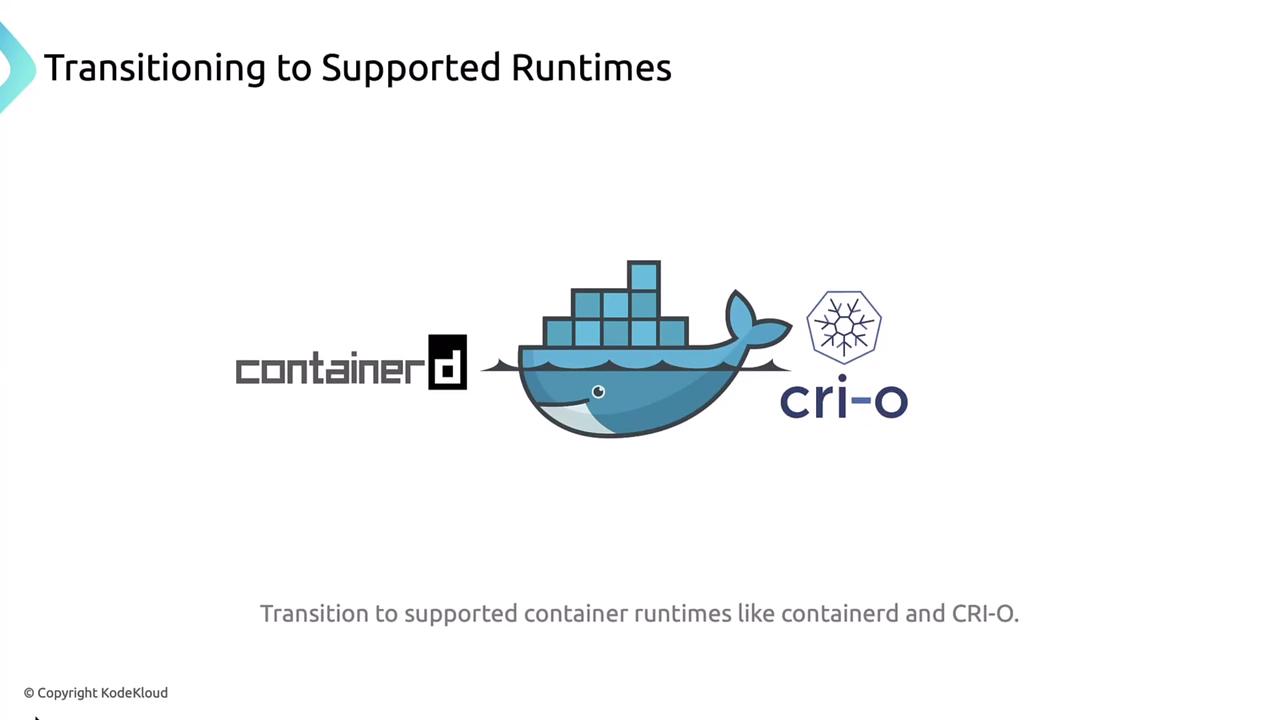
/run/containerd/containerd.sock or /var/run/crio/crio.sock).
7. Monitoring, Logging & Auditing
Centralize logs and metrics to detect runtime anomalies:- Fluentd, Logstash, Elasticsearch for log aggregation
- Prometheus & Grafana for metrics
- Kubernetes Audit Logs for API event tracking