

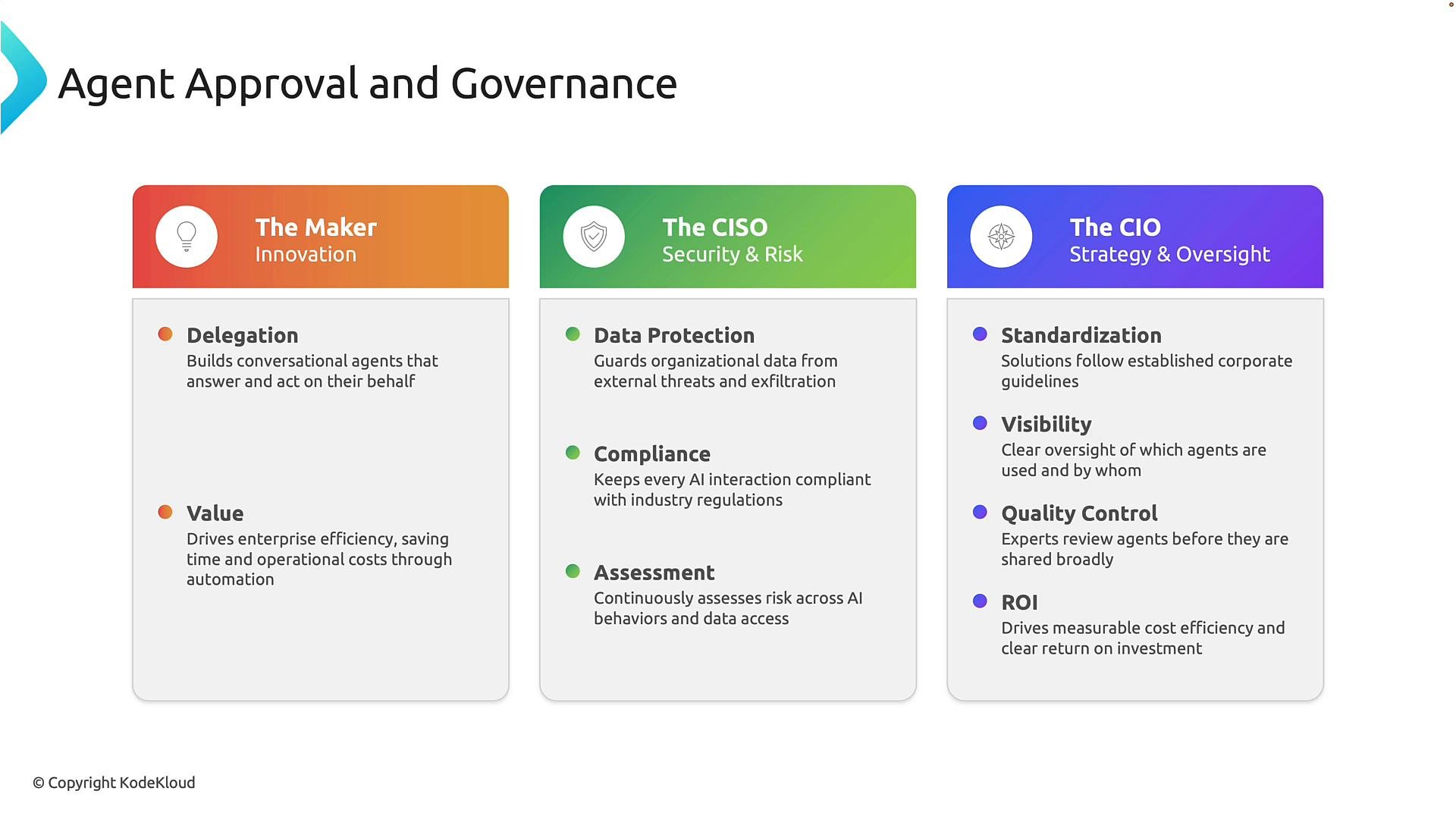
- The maker: Typically a business user, developer, or solution creator who builds the agent. Makers prioritize innovation and productivity — automating tasks, answering questions faster, and improving efficiency. For example, a support team might create an agent to answer common employee IT questions.
- The CISO (Chief Information Security Officer): Responsible for protecting organizational data. While makers ask “can we build this?”, the CISO asks “should this agent have access to this information?” and “what risk does that create?”. CISOs evaluate data protection, compliance, and security implications.
- The CIO (Chief Information Officer): Focuses on enterprise-wide strategy and governance. The CIO’s concerns include standardization, visibility, quality control, and return on investment. They want to ensure agents solve real business problems, follow corporate standards, and deliver measurable value.
Effective governance balances innovation from the maker, security from the CISO, and strategic oversight from the CIO.
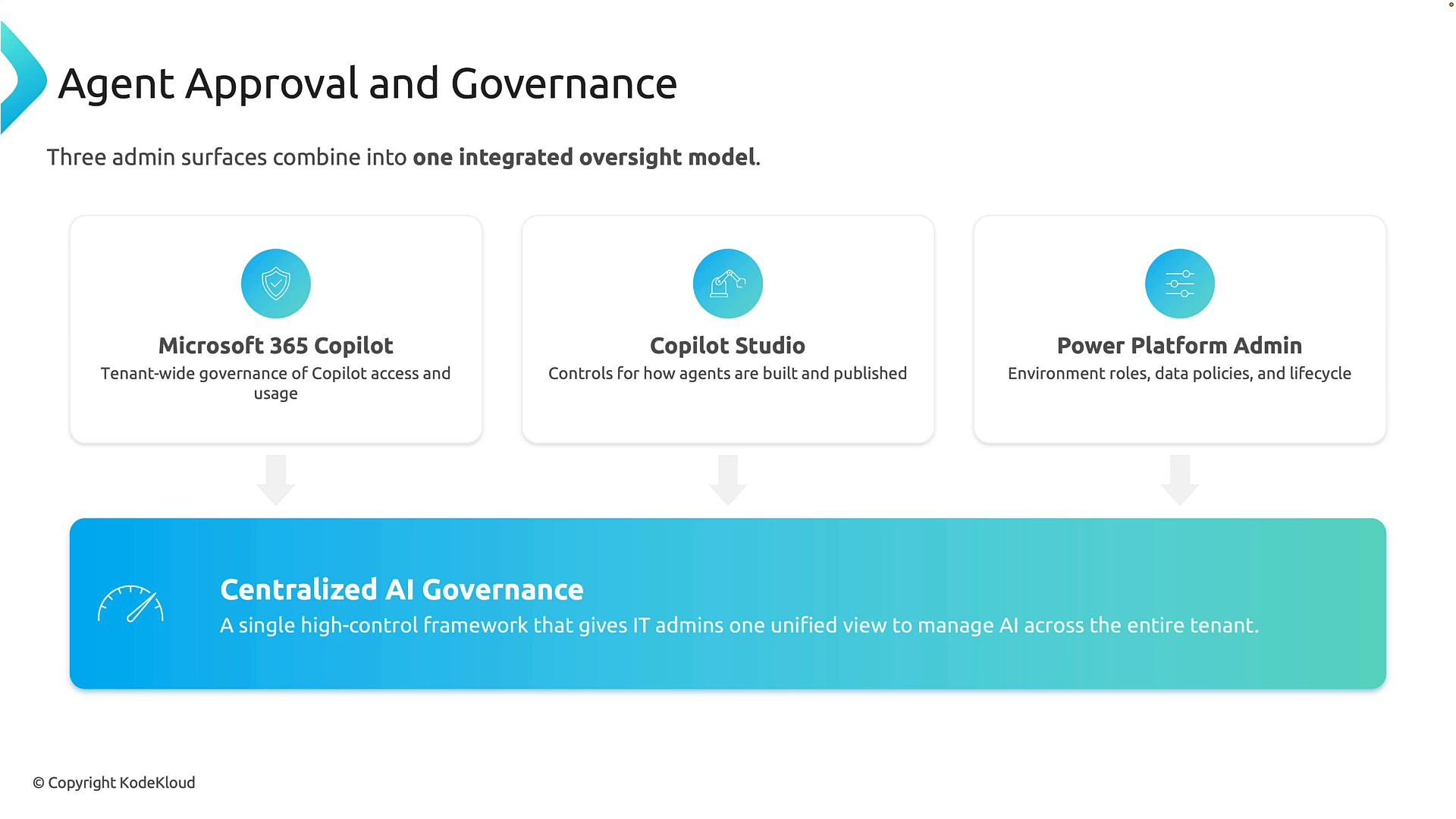
How the Microsoft stack maps to governance
Governance can feel confusing because it spans several Microsoft platforms. Think of these platforms as layers that combine into a single governance framework:- Microsoft 365 Copilot administrators manage tenant-level Copilot access and usage.
- Copilot Studio administrators control how agents are built, configured, tested, and published.
- Power Platform administrators manage environments, security roles, data policies, and lifecycle controls.
Useful documentation:
- Copilot for Microsoft 365 admin guide
- Copilot Studio and agent authoring resources
- Power Platform admin documentation
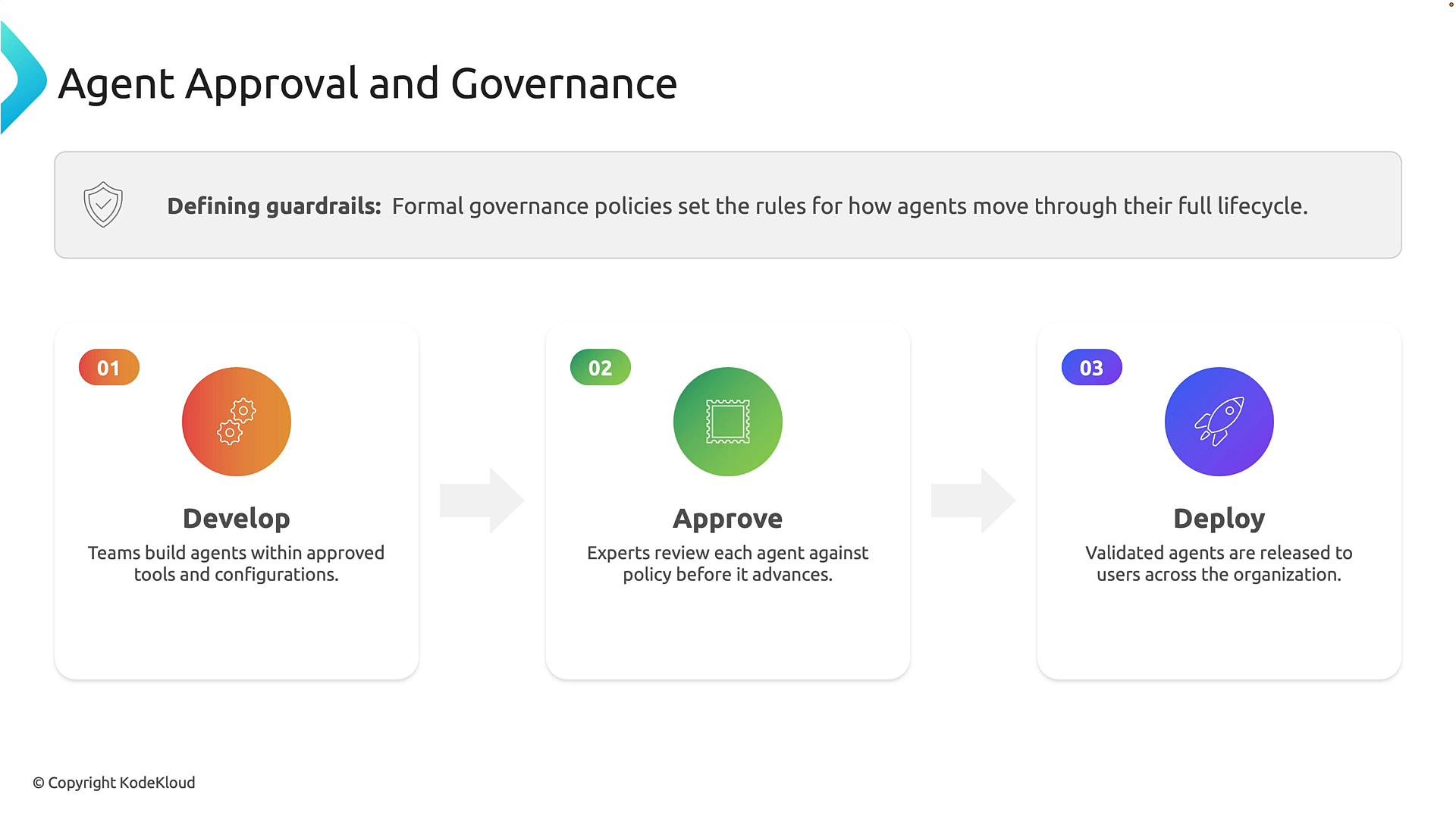
Governance as a lifecycle
Governance is easiest to understand when framed as a lifecycle. Agents typically move through three major stages:- Development — Teams create agents using approved tools, environments, and data sources. Use standardized templates, test datasets, and developer sandboxes.
- Approval — Reviewers evaluate agents against organizational policies: data permissions, security, compliance, accuracy, and business justification. Approval workflows and evidence are recorded.
- Deployment — Approved agents are published and made available to users across a department or the entire organization. Post-deployment monitoring and periodic reviews continue.
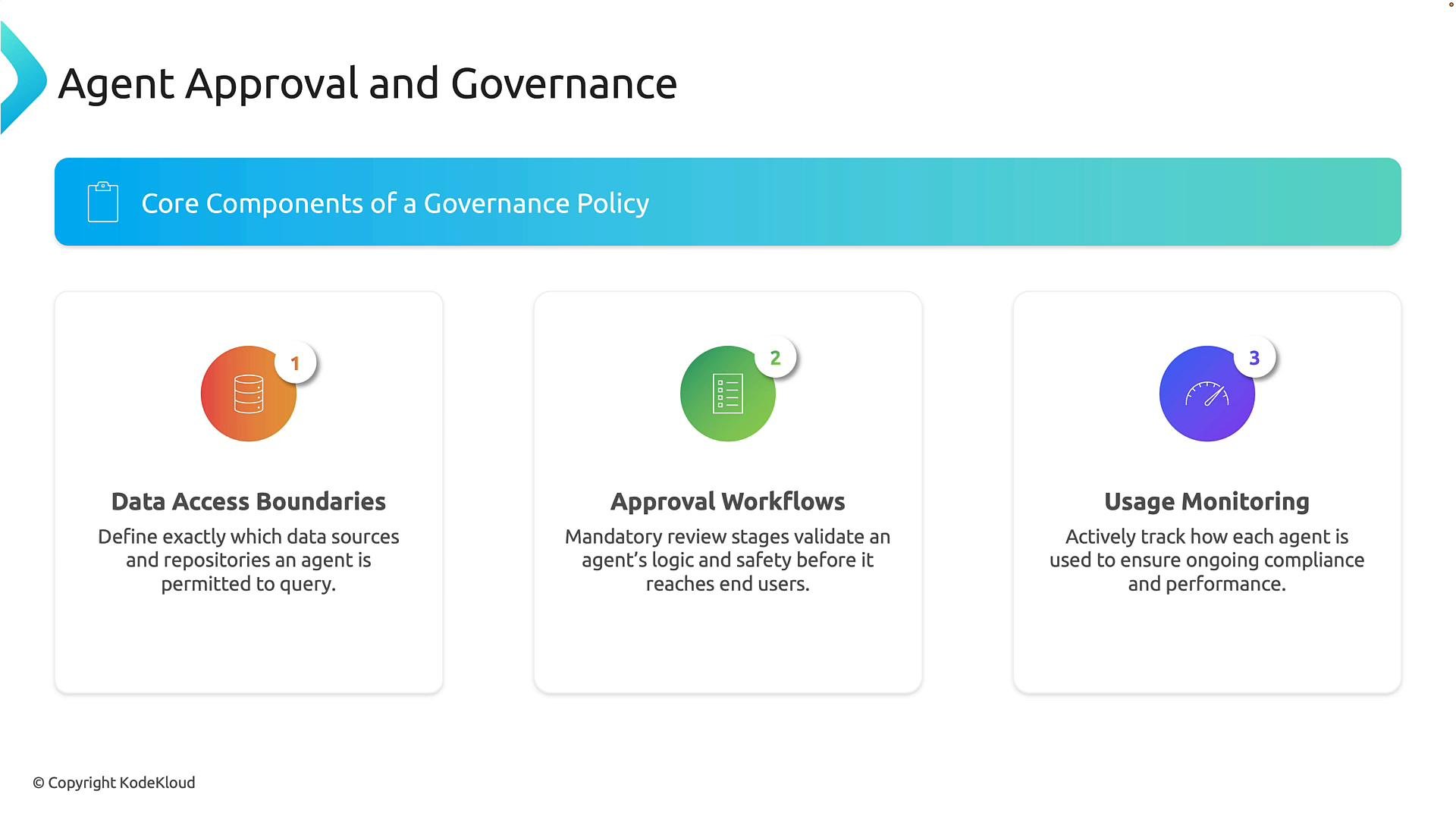
Core components of an approval policy
To operationalize the approval process, organizations typically define governance policies that cover three components:- Data access boundaries: Precisely define what information an agent may access. For example, an HR agent may access employee policies but must not access financial planning documents.
- Approval workflows: Specify who must review and approve an agent before deployment. Depending on the organization, this can include business owners, security teams, compliance teams, and IT administrators.
- Usage monitoring: Governance continues after deployment. Organizations monitor agent usage, track the types of questions asked, and look for unexpected behavior. Ongoing monitoring maintains compliance and preserves quality.
- Volume and pattern of queries
- Unexpected or sensitive data access attempts
- Performance and accuracy metrics
- User feedback and escalation counts
Centralized administrative model: Copilot Control System
Bringing these governance concepts together leads to a centralized administrative model. Consider the Copilot Control System as a command center for enterprise AI governance. Administrators use it to manage agents through their lifecycle: create and retire agents, apply governance policies, enforce security controls, and monitor adoption across the tenant. At enterprise scale — with hundreds or thousands of agents across departments — centralized governance is essential. Administrators need visibility into what agents exist, what data they access, and who owns them so they can enforce consistent policies and ensure the agents deliver safe, measurable value.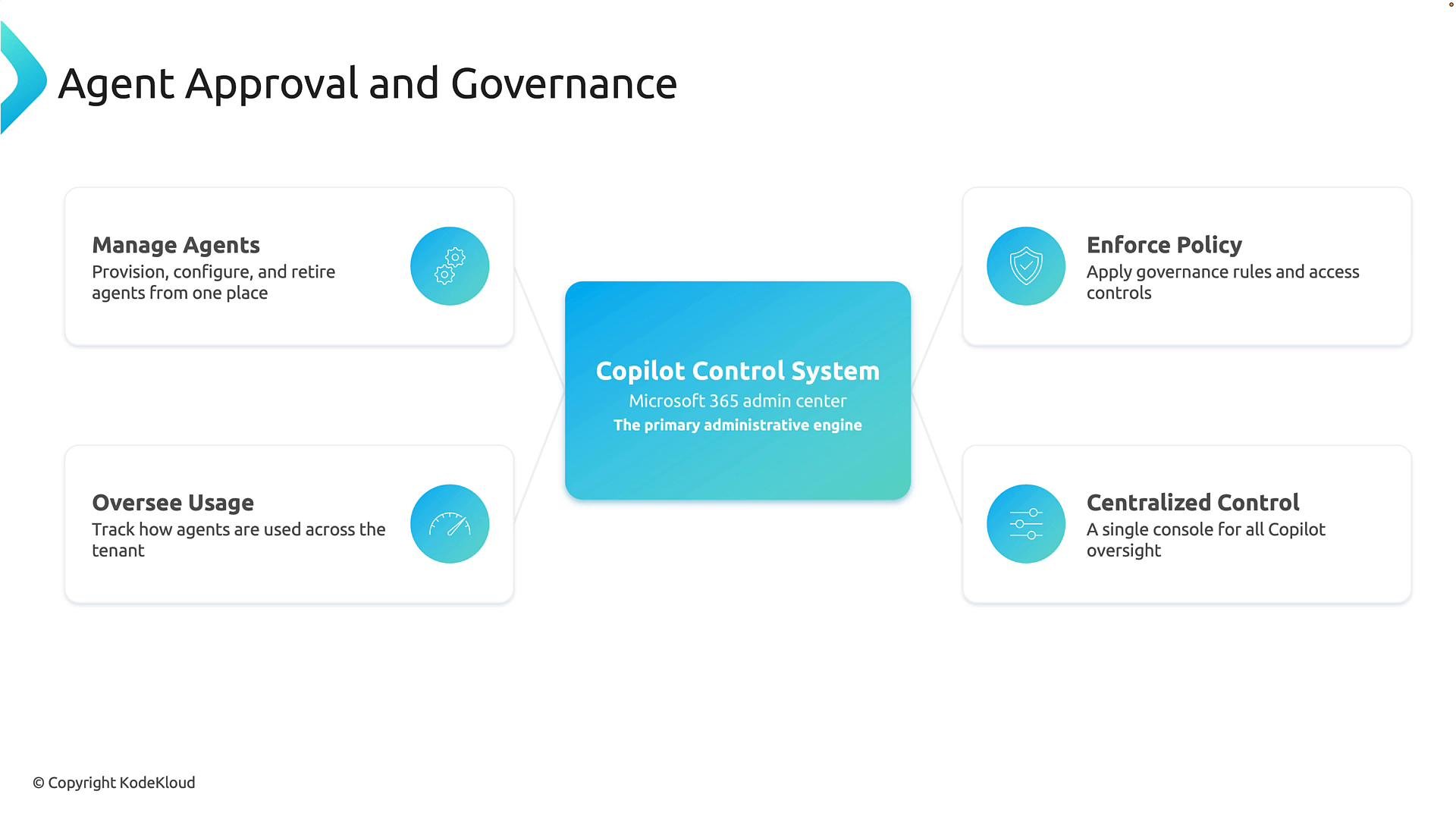
Practical next steps
- Document an approval workflow that includes the maker, security reviewer, and business owner.
- Create a catalog of agent owners and the data sources each agent can access.
- Define monitoring KPIs (queries/day, error rates, sensitive access attempts).
- Automate enforcement where possible using Power Platform DLP and Copilot admin controls.