

Zero Trust is summarized by the principle “Never trust, always verify.” Access decisions are made continuously based on identity, device health, location, and risk signals — not just network location.
Why Zero Trust?
The fundamental objective of any security framework is to protect valuable assets from attackers. These assets include user identities, business data, applications, devices, and cloud resources. Historically, protection relied on a strong perimeter — like guarding a vault — but modern work patterns and cloud adoption require a more dynamic, identity-centric approach.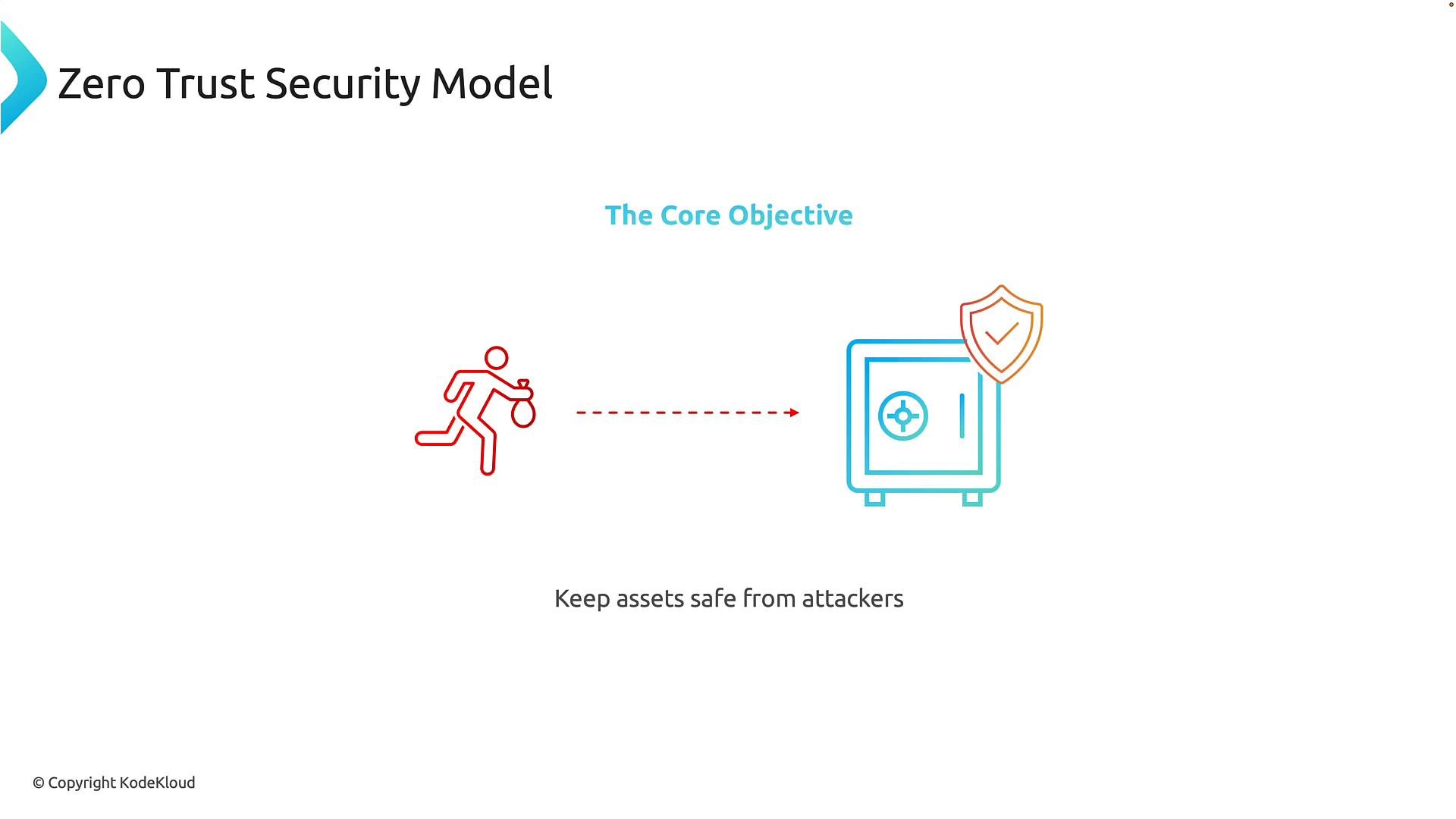
What assets do you protect?
Use the table below to quickly map asset categories to common examples and relevant protections.Drivers for Zero Trust adoption
Organizations adopt Zero Trust largely because of increasing IT complexity. Years ago, most users worked on corporate-managed machines inside a predictable network. Today’s environment includes thousands of users, personal devices, remote workers, cloud services, and third-party partners — each increasing the attack surface.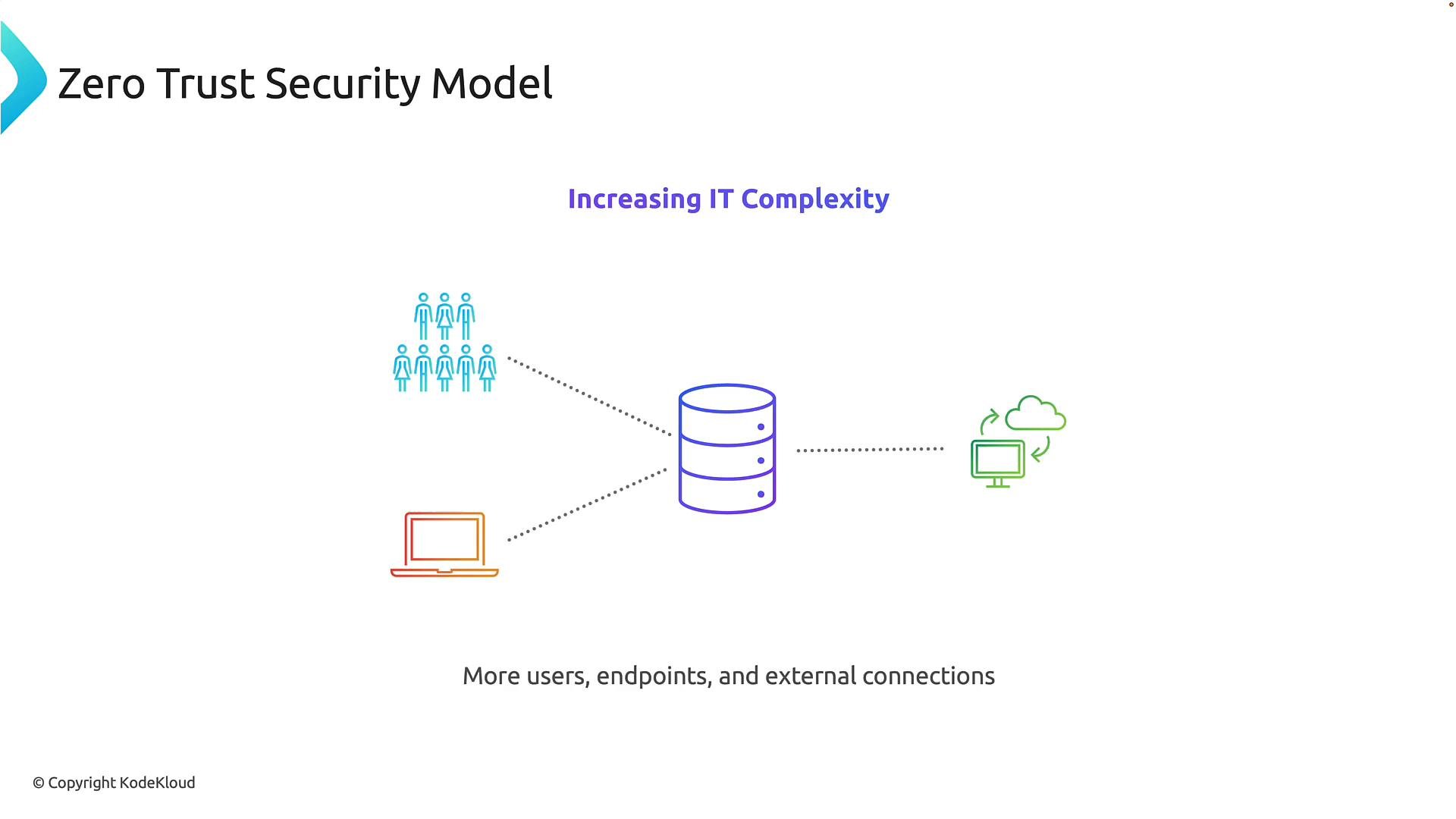
Limitations of the perimeter-based model
The older perimeter model assumed that being inside the corporate network implied trust. Firewalls and VPNs formed a defensive ring; once inside, users and devices were often implicitly trusted.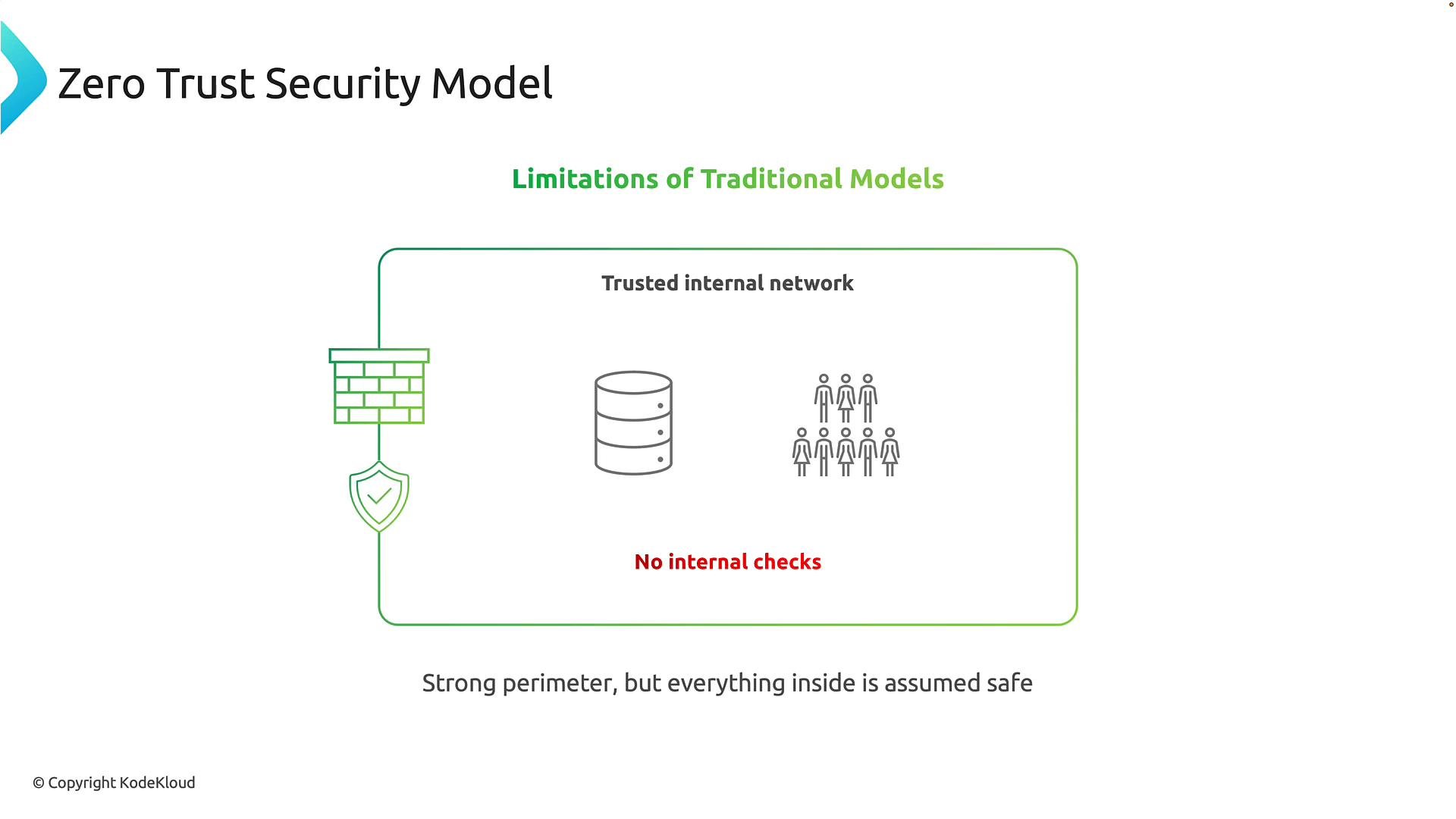
The perimeter has disappeared
As organizations move applications to Azure and SaaS platforms, and users work from home or on mobile devices, the traditional network boundary vanishes. Assets and users now exist everywhere.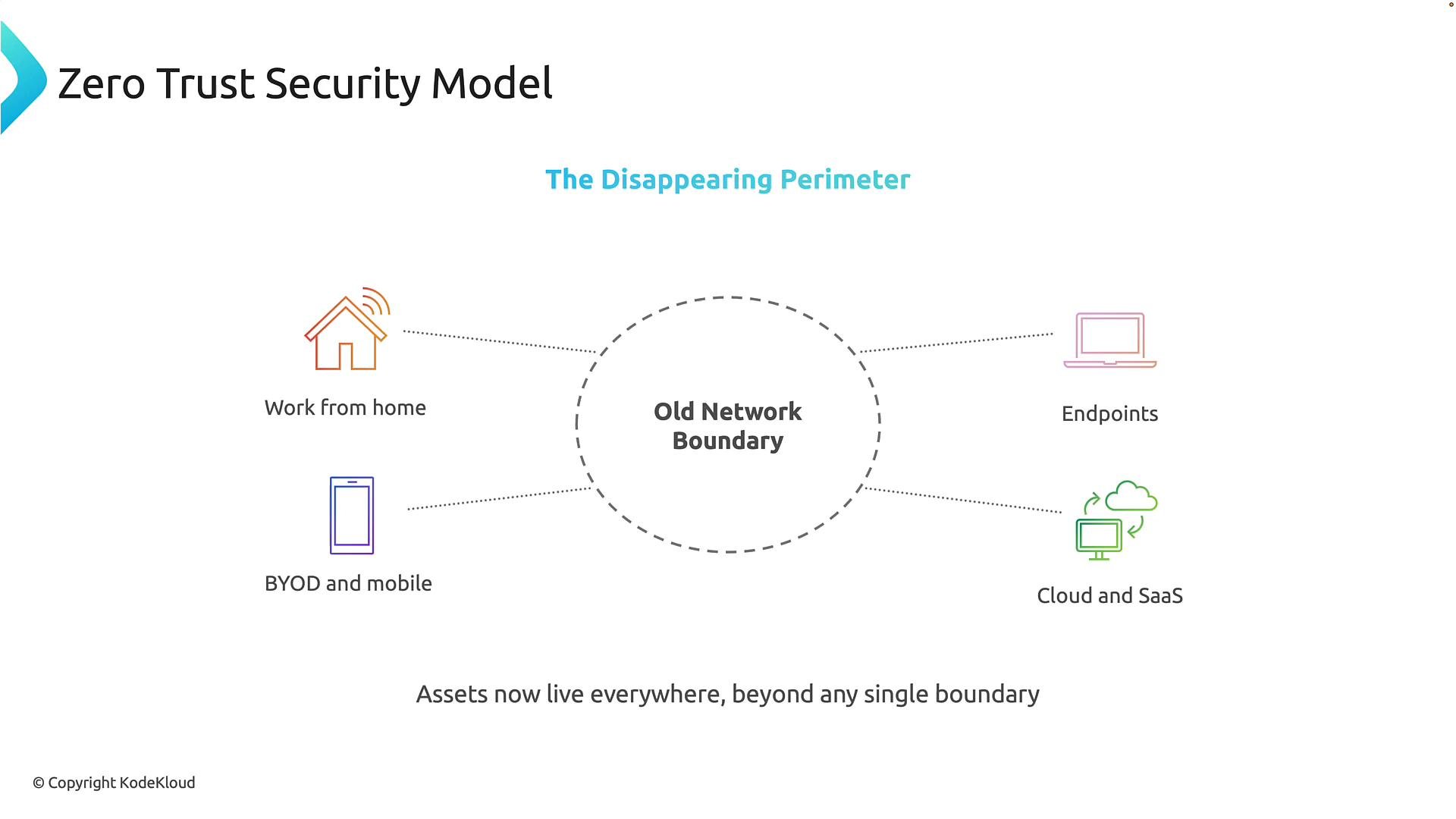
Attackers focus on identity
Modern attackers favor identity-based techniques — phishing, credential theft, and account takeover — because stolen credentials can bypass perimeter defenses and appear as legitimate users.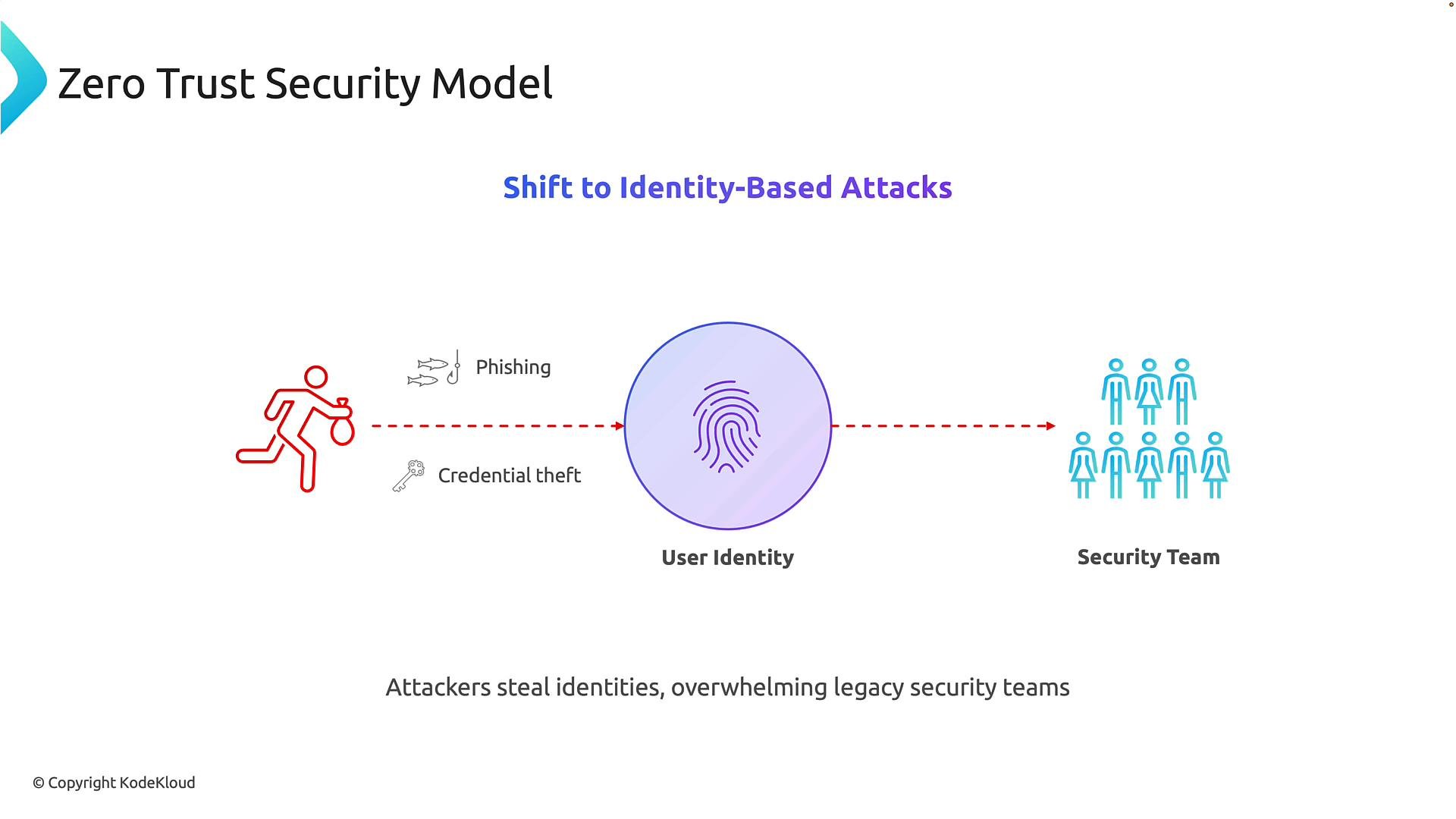
Identity compromise is a primary vector for modern breaches. Implement MFA and conditional access policies to reduce the risk of stolen credentials being used to access sensitive resources.
Microsoft’s identity-first Zero Trust approach
Microsoft centers its Zero Trust implementation on identity and device posture. Key Entra and Microsoft 365 features include:- Microsoft Entra ID (Azure AD) for identity and access management.
- Multi-factor Authentication (MFA) to block simple credential theft.
- Conditional Access policies to grant or refuse access based on identity, device compliance, location, and risk.
- Identity Protection and risk-based policies to detect suspicious sign-ins and compromise signals.
- Intune for device management and compliance assessments.
- Defender and Purview to provide threat detection, response, and data governance.
Next steps
To implement Zero Trust in your environment, start with these actions:- Enforce MFA across all users.
- Deploy Conditional Access policies that require device compliance and enforce step-up authentication for risky sessions.
- Enroll devices in Intune and check compliance before granting access.
- Enable Identity Protection to detect risky sign-ins and automate remediation.
- Classify and protect sensitive data with Purview and DLP policies.
Links and references
- Microsoft Zero Trust guidance
- Microsoft Entra documentation
- Conditional Access overview
- Microsoft Intune documentation
- Microsoft Defender for Identity