This article explores combining taints, tolerations, and node affinity in Kubernetes for exclusive pod scheduling on designated nodes.
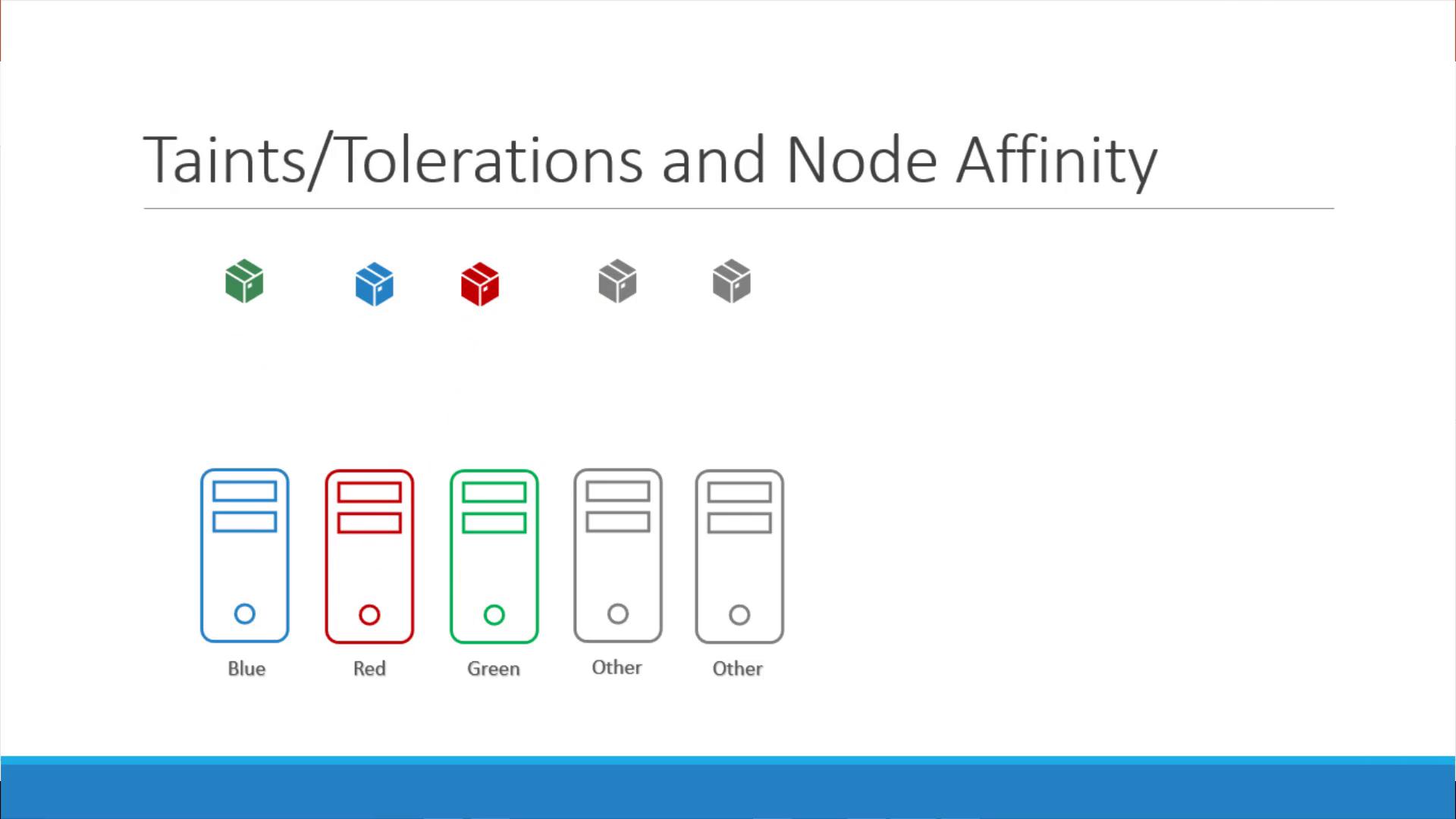
Hello, and welcome to this comprehensive lesson. In this guide, we will explore how to combine taints and tolerations with node affinity in Kubernetes to ensure that specific pods run exclusively on designated nodes. In our example, we consider a Kubernetes cluster with three nodes and three pods, each associated with one of three colors: blue, red, and green. The objective is to schedule the blue pod on the blue node, the red pod on the red node, and the green pod on the green node, even when the cluster is shared with other teams running different pods on various nodes.
In this method, each node is tainted with its respective color (blue, red, or green). Correspondingly, each pod is given a toleration that matches the node’s taint. This ensures that:
Only pods with the appropriate toleration can be scheduled on the tainted node.
For example, the green pod will only be scheduled on the green node, and the blue pod on the blue node. However, while taints and tolerations can prevent pods lacking the correct toleration from being scheduled on these nodes, they do not guarantee that the pods will preferentially use the dedicated nodes. Consequently, there might be cases where the red pod is scheduled on a node without the corresponding taint and toleration, resulting in undesired pod placement.
Node affinity offers another strategy by allowing you to:
Label nodes with their respective colors (blue, red, and green).
Define node affinity rules or selectors on pods to match these labels.
This method directs pods to the correct nodes based on labels. Although node affinity helps achieve the desired pod distribution, it does not prevent other pods from being scheduled on the same nodes, which could lead to conflicts with other teams’ deployments.
To fully dedicate nodes exclusively for specific pods, you can harness the strengths of both approaches by combining them:
First, apply taints on your nodes
First, apply taints on your nodes. This ensures that pods without the matching toleration are not scheduled on these nodes.
Next, implement node affinity rules on your pods
Next, implement node affinity rules on your pods. This guarantees that the pods are scheduled only on the nodes with the corresponding color labels.
By using both strategies together, you achieve strict node allocation. This method ensures that only your dedicated pods run on their targeted nodes, thereby preventing any unintended pod placements from other teams.
This lesson has demonstrated the effective combination of taints, tolerations, and node affinity to achieve precise pod placement in a shared Kubernetes cluster. You are encouraged to experiment with these configurations in your own cluster environment to deepen your understanding of Kubernetes scheduling policies and improve your cluster management practices.Happy Kubernetes configuring!