

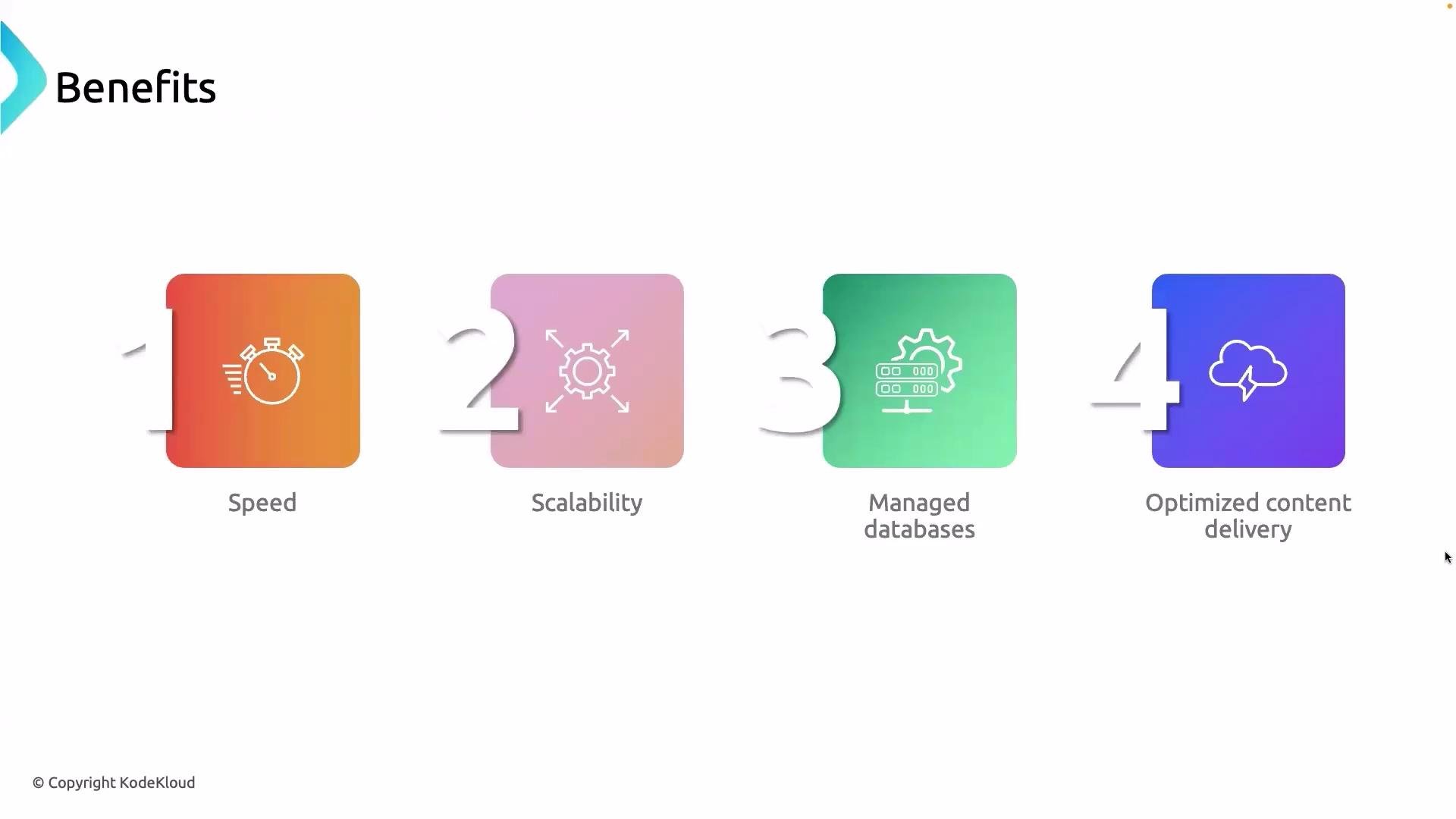
Why choose AWS? It provides managed services and automation that speed development, offer built-in scalability (Auto Scaling, serverless), and optimize delivery through managed storage and global CDNs.
- Rapid, iterative testing via staging environments, feature branches, and ephemeral preview environments for pull requests.
- A reliable, automated CI/CD pipeline that supports frequent releases, health checks, rollbacks, and deployment strategies (blue/green, canary).
- Predictable autoscaling and cost-awareness to handle traffic spikes without overspending.
- Clear separation of concerns between the static front end and the API back end (single-page app served from S3/CloudFront vs. containerized or serverless API).
Design for environments: implement at least
development, staging, and production pipelines. Use ephemeral preview environments for PR validation and automated integration tests to catch regressions before merge.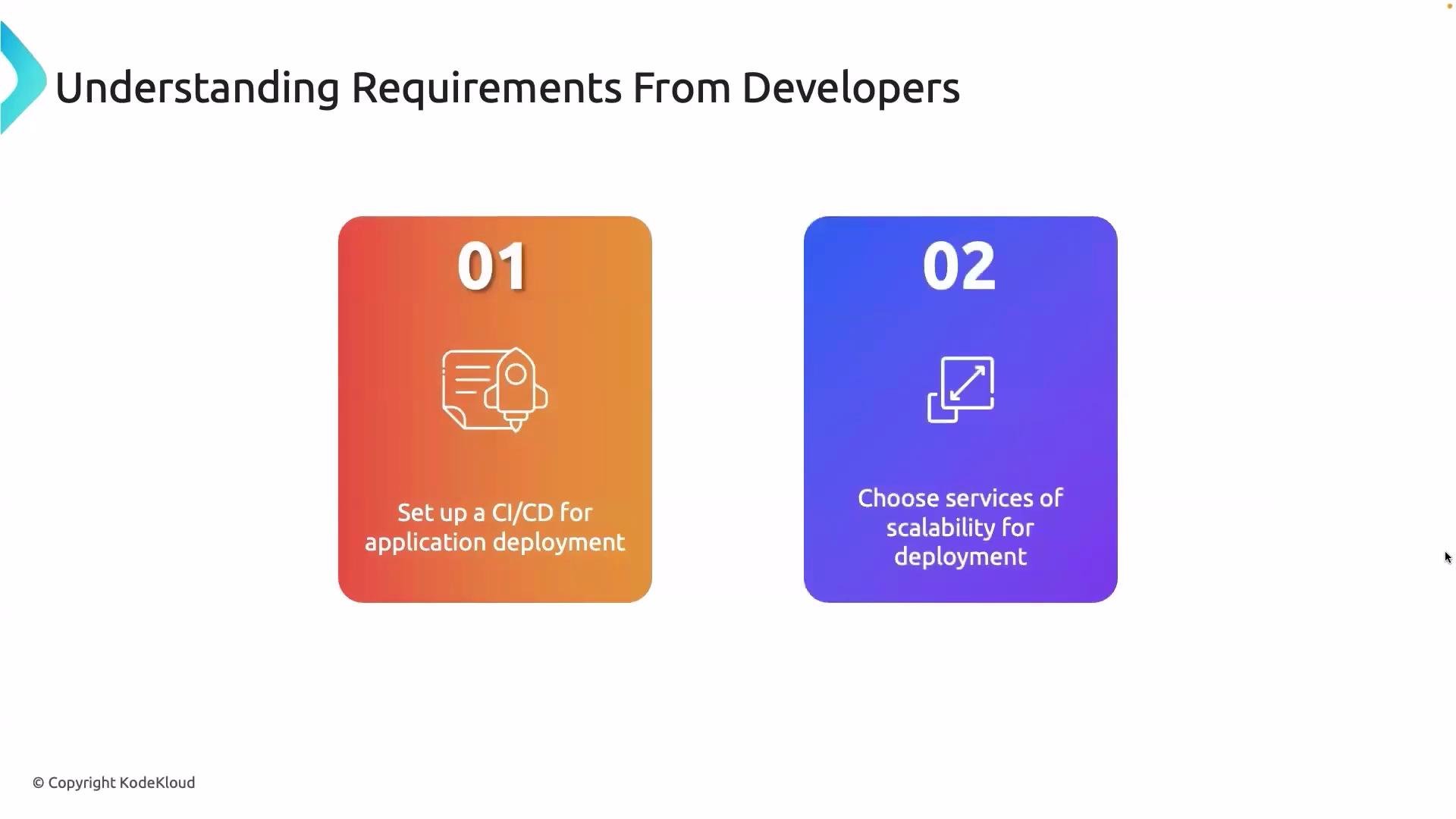
- Observability: centralized logging, metrics, distributed tracing, and alerts.
- Security: least-privilege IAM roles, secrets management (AWS Secrets Manager or Parameter Store), TLS everywhere, and secure CI/CD credentials.
- Cost optimization: right-size instances, use on-demand vs. spot where appropriate, and set up budgets and alerts.
- Resilience: multi-AZ deployments, database backups/replication, and health-check-driven automated recovery.
Beware of runaway costs: aggressive autoscaling without proper scaling policies or missing resource cleanup for ephemeral environments can lead to unexpected charges. Implement budgets, alerts, and lifecycle policies.
- Inspect the application repository to determine:
- Is the frontend a static SPA or server-rendered?
- Is the backend monolithic or split into microservices?
- Database schema and expected traffic patterns.
- Map these findings to deployment patterns:
- Static SPA → S3 + CloudFront + invalidation strategy.
- Containerized API → ECS/Fargate or EKS with ALB and Auto Scaling.
- Serverless endpoints → API Gateway + Lambda for low-management overhead.
- Define the CI/CD flow:
- Build → test → deploy to ephemeral preview → promote to staging → smoke tests → promote to production.
- Integrate automated rollback and health-check gating.
- AWS Documentation: https://docs.aws.amazon.com/
- CI/CD on AWS: https://aws.amazon.com/devops/continuous-delivery/
- Kubernetes Basics: https://kubernetes.io/docs/concepts/overview/what-is-kubernetes/
- Amazon S3 and CloudFront: https://aws.amazon.com/cloudfront/