

Benefits of Static Analysis
Static analysis offers several key benefits:- Detects bugs early in the development lifecycle, saving time and reducing the cost of fixes.
- Identifies sections of your code that may require restructuring or simplification.
- Automatically enforces project-specific coding rules to promote consistency and maintainability.
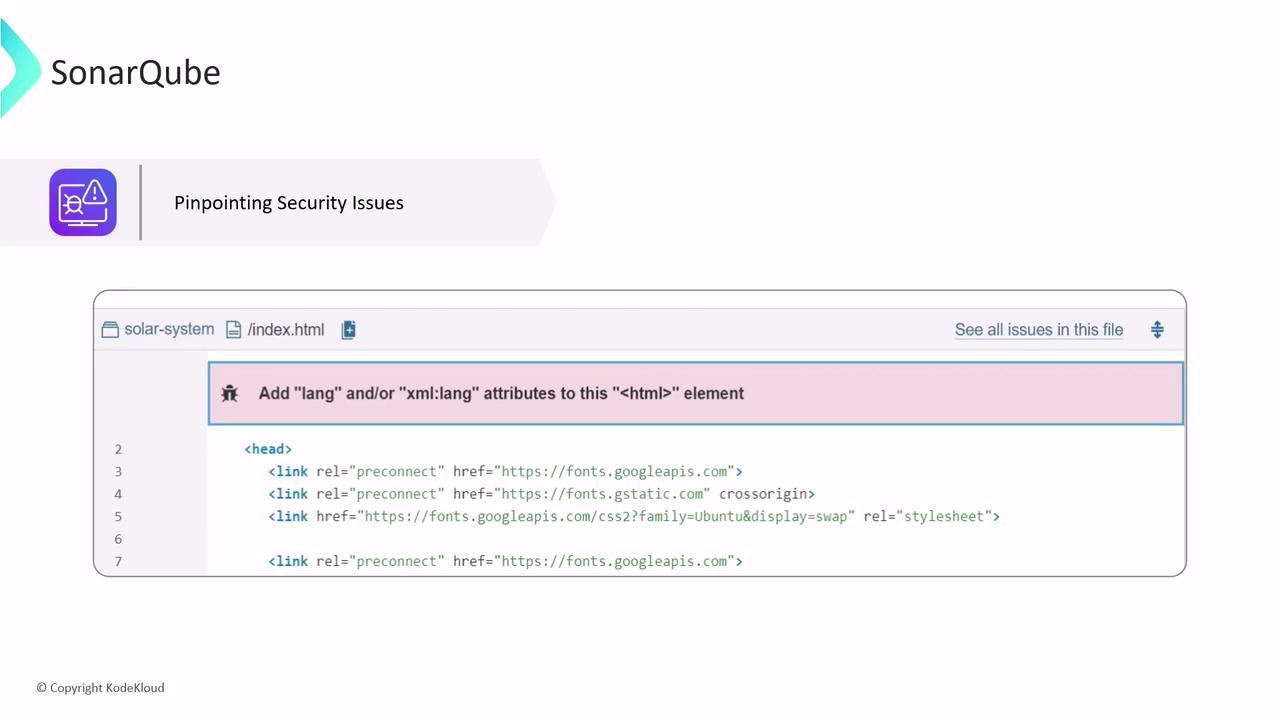
Analyzing your code is only the first step. Addressing the flagged issues using SonarQube’s detailed data is essential to improve your application’s security and performance.
Quality Gates and Code Metrics
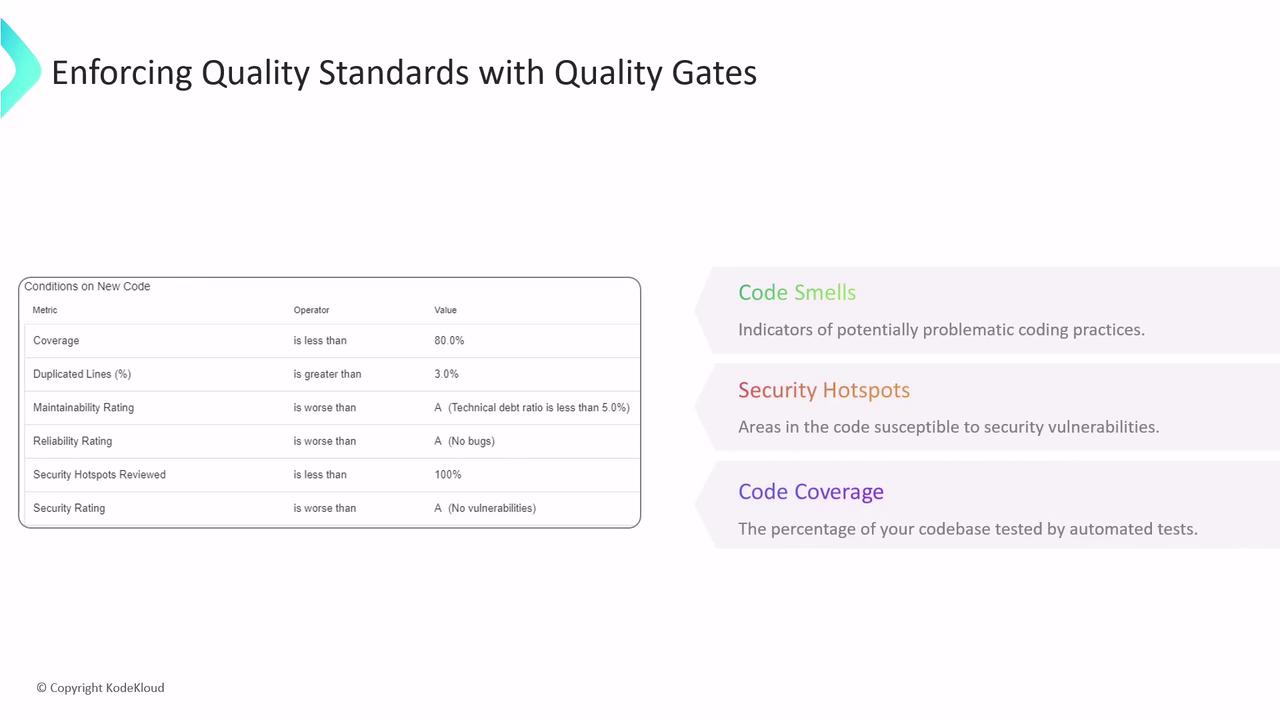
SonarQube introduces quality gates as checkpoints to ensure that your project meets predefined security and quality standards. You can set thresholds for various metrics, including:- Code Smells: Indicators of potentially problematic coding practices.
- Security Hotspots: Sections of code that might expose vulnerabilities.
- Code Coverage: The percentage of your codebase covered by automated tests.
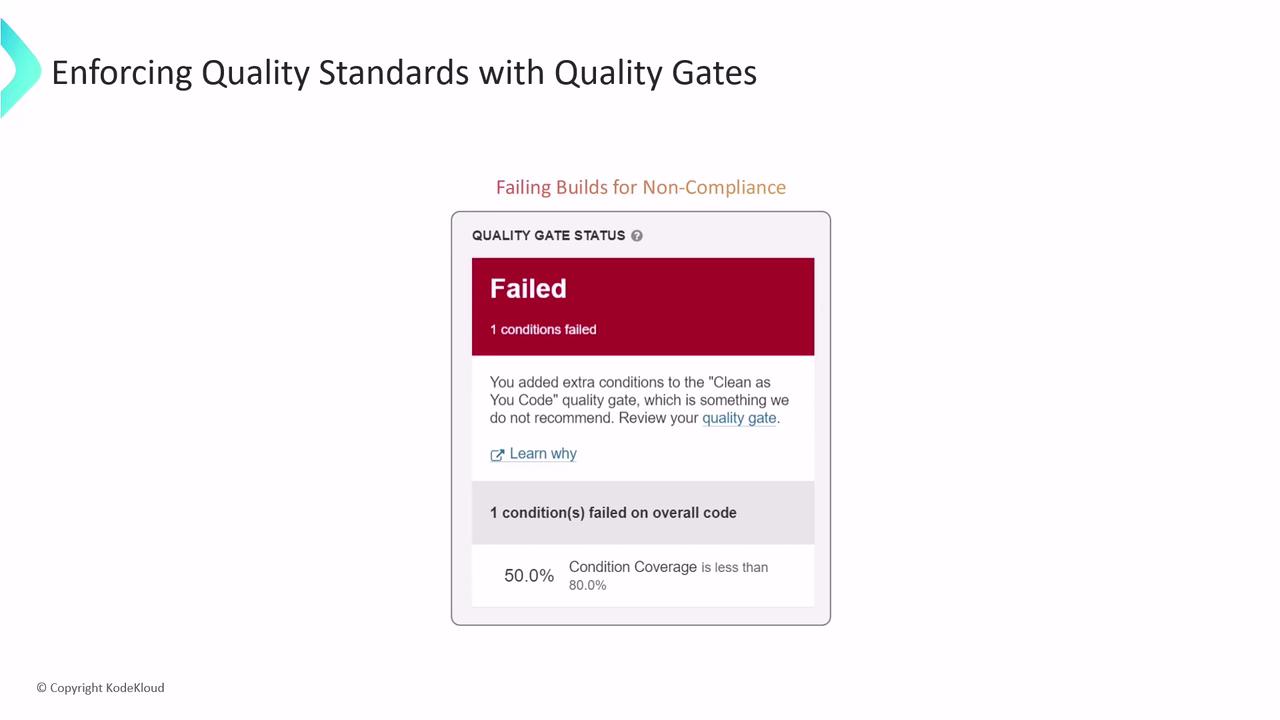
Ensure that your quality gate thresholds are properly configured to prevent substandard code from progressing into production.