

FastAPI Setup and Basic Imports
Below is an initial code snippet showing the essential imports and setup for the FastAPI application:Remember that the Pydantic model is primarily used for request/response data validation, while the SQLAlchemy model is used to define the persistent data structure of your database.
Differentiating Between Pydantic and SQLAlchemy Models
Pydantic Model (Schema)
The Pydantic model serves to:- Define Data Structure: Outline the expected structure of the request body.
- Validate Incoming Data: Ensure that the data received adheres to the specified types and constraints.
- Shape Response Data: Optionally filter and format data before sending a response.
SQLAlchemy Model (ORM)
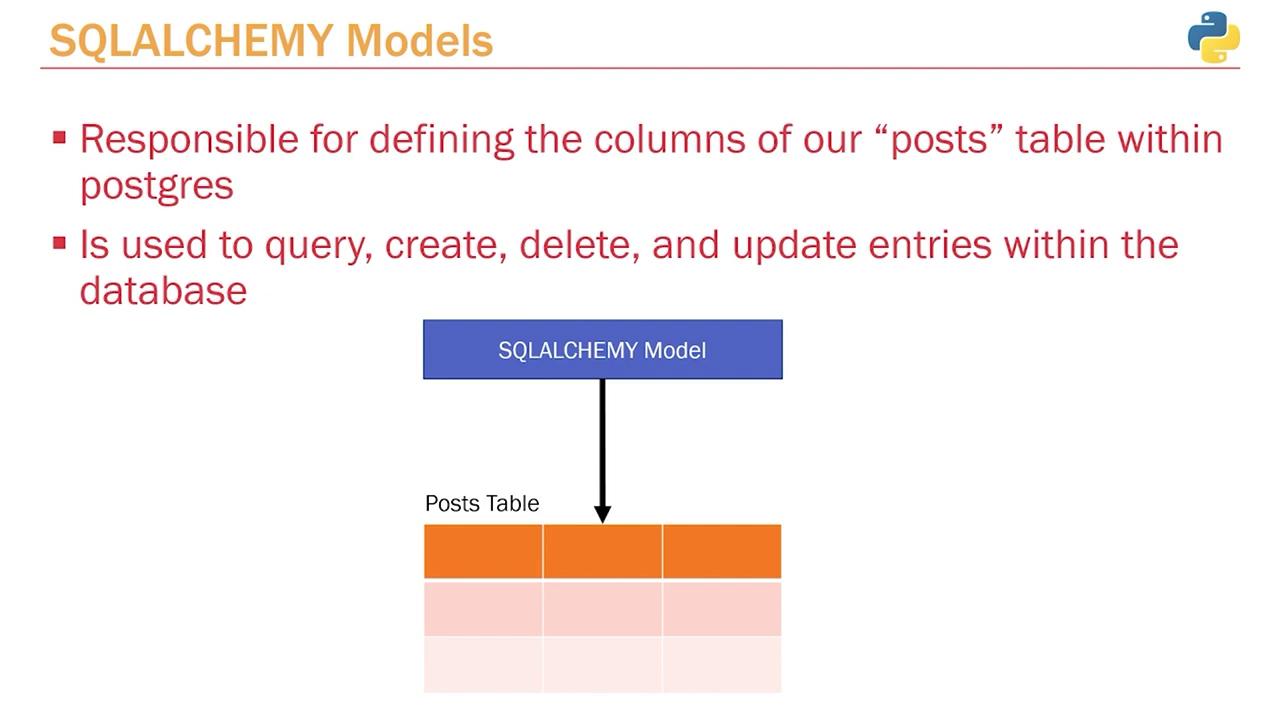
The SQLAlchemy model is dedicated to defining the database table structure. It includes:- Column Definitions: Attributes such as post ID, title, content, published status, and creation timestamps.
- Database Interaction Methods: Functions to query, create, delete, and update database entries.
Connecting to the Database
Enhance your understanding with the following code snippet that illustrates how to connect to a PostgreSQL database using psycopg2:Path Operations and Request Validation
The following code snippet demonstrates how path operations use the Pydantic model to validate incoming data for fetching and creating posts:SQLAlchemy Model Definition
The SQLAlchemy model is defined in themodels.py file. It represents the actual structure of the “posts” table in the PostgreSQL database:
Summary
In summary, the Pydantic model (schema) ensures that both requests and responses comply with the expected data structures, while the SQLAlchemy model provides a detailed blueprint of the database table structure. Although adopting Pydantic models is technically optional, it is a best practice for building robust and secure APIs by enforcing strict data validation.By carefully separating concerns—using Pydantic for data validation and SQLAlchemy for database interactions—developers can build maintainable and secure APIs that efficiently manage data flow between clients and servers.