

- Architectural parity (consistency) across environments
- Isolation between environment tiers
- Distinct resource policies and access controls for development vs production
Non-production environments still require service-level expectations. If a test or staging environment is down, developers can’t verify features and releases — causing real business impact. Treat non-prod availability, access, and observability as operational responsibilities.
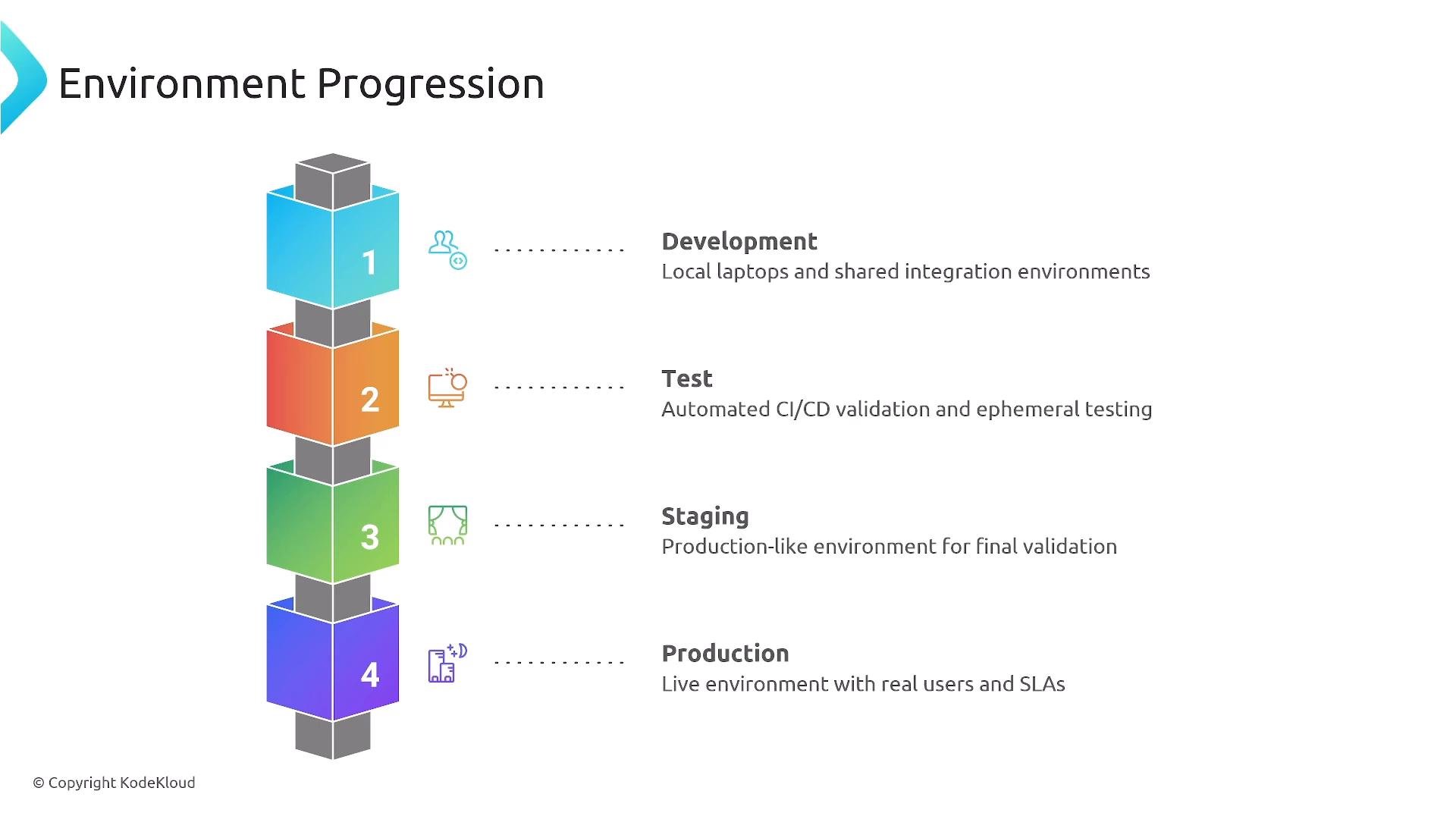
Environment tiers and recommended practices
Below is a concise reference of common environment tiers, their purpose, and typical practices platform teams apply to each.
Development
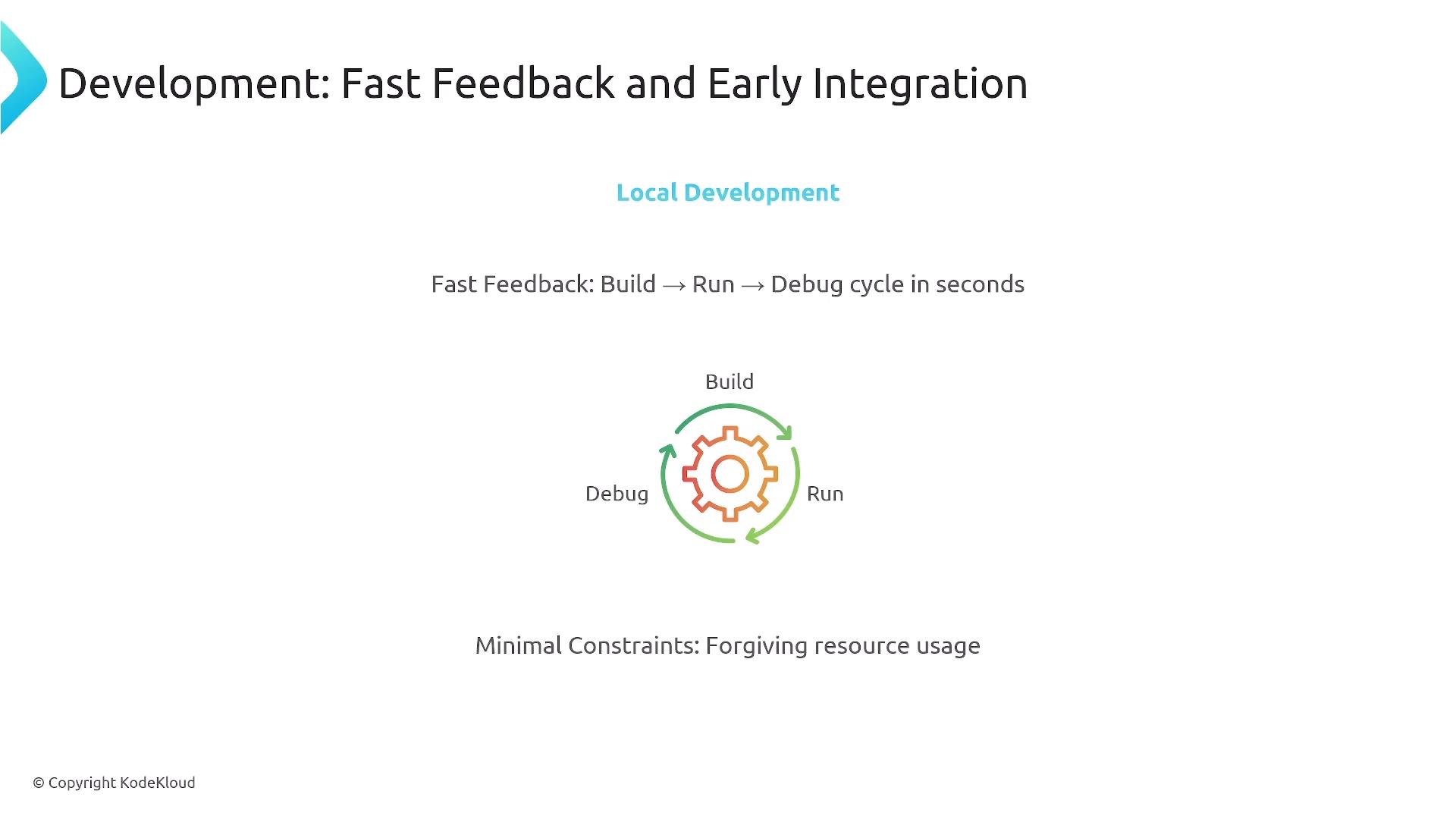
Development typically begins on developer workstations. Common workflows use lightweight Kubernetes distributions or container engines for local parity with production. Developers iterate rapidly through build → run → debug cycles, and teams often maintain shared development environments for early integration.
Shared development environments should:
- Match production architecture where practical (not necessarily capacity)
- Be periodically reset to prevent configuration drift
- Enforce resource quotas to contain costs and noisy neighbors
- Prioritize short feedback cycles over full-scale testing
Test / QA
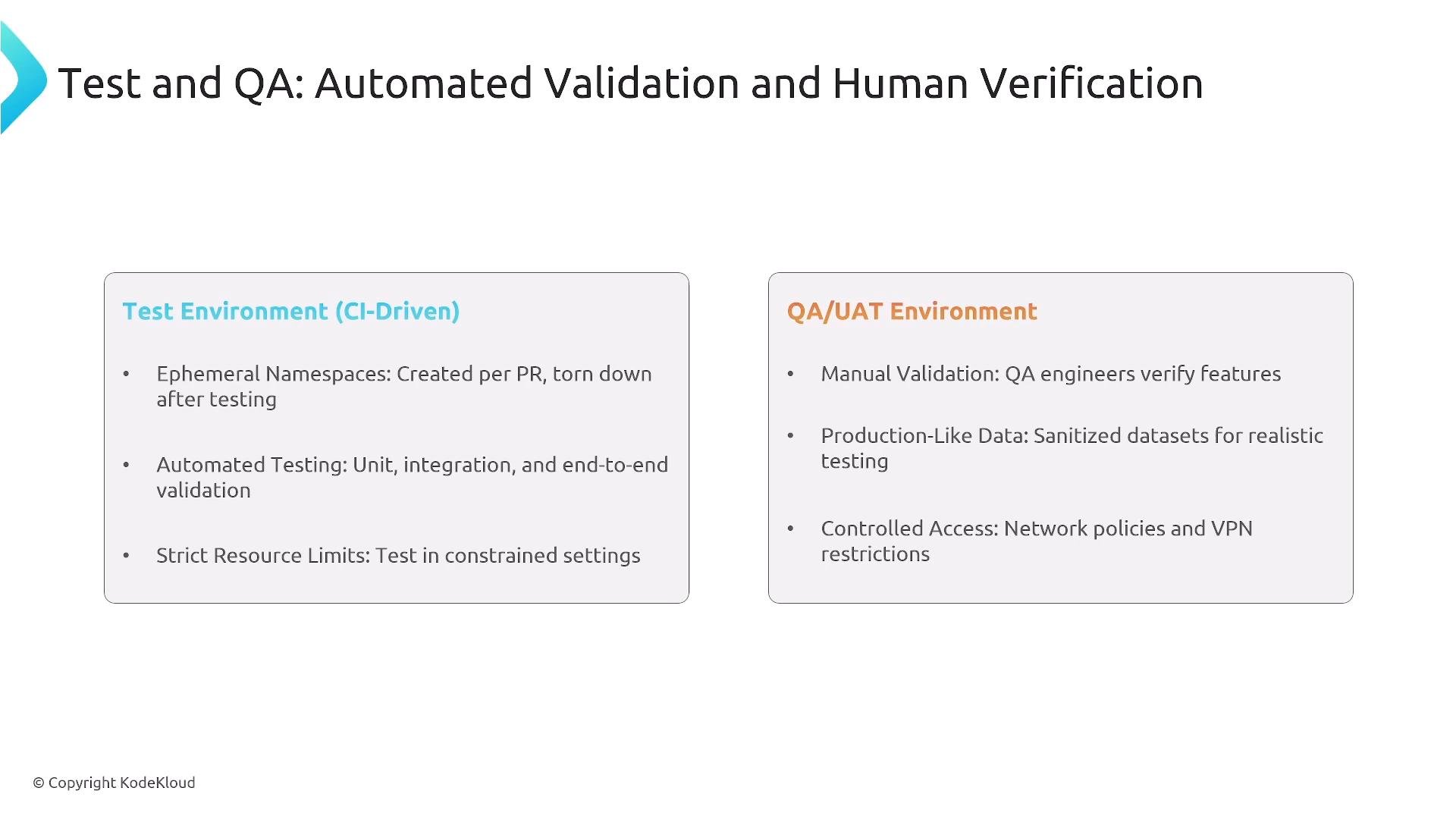
CI/CD pipelines promote artifacts into test environments where automated unit, integration, and end-to-end tests run. This stage also runs static analysis, linting, dependency checks, and security scans. Test/QA environments should be as production-like as practical in architecture but are often scaled down in capacity. For QA/UAT:- Use sanitized or redacted production-like data when required
- Limit access (network/VPN controls and role-based permissions)
- Reset or resynchronize state regularly to keep tests representative
Manual testing still has value, but over-reliance on manual QA for core validation reduces scalability and reproducibility. Automate CI-driven validation where possible and reserve manual testing for human workflows, accessibility checks, or final UAT sign-off.
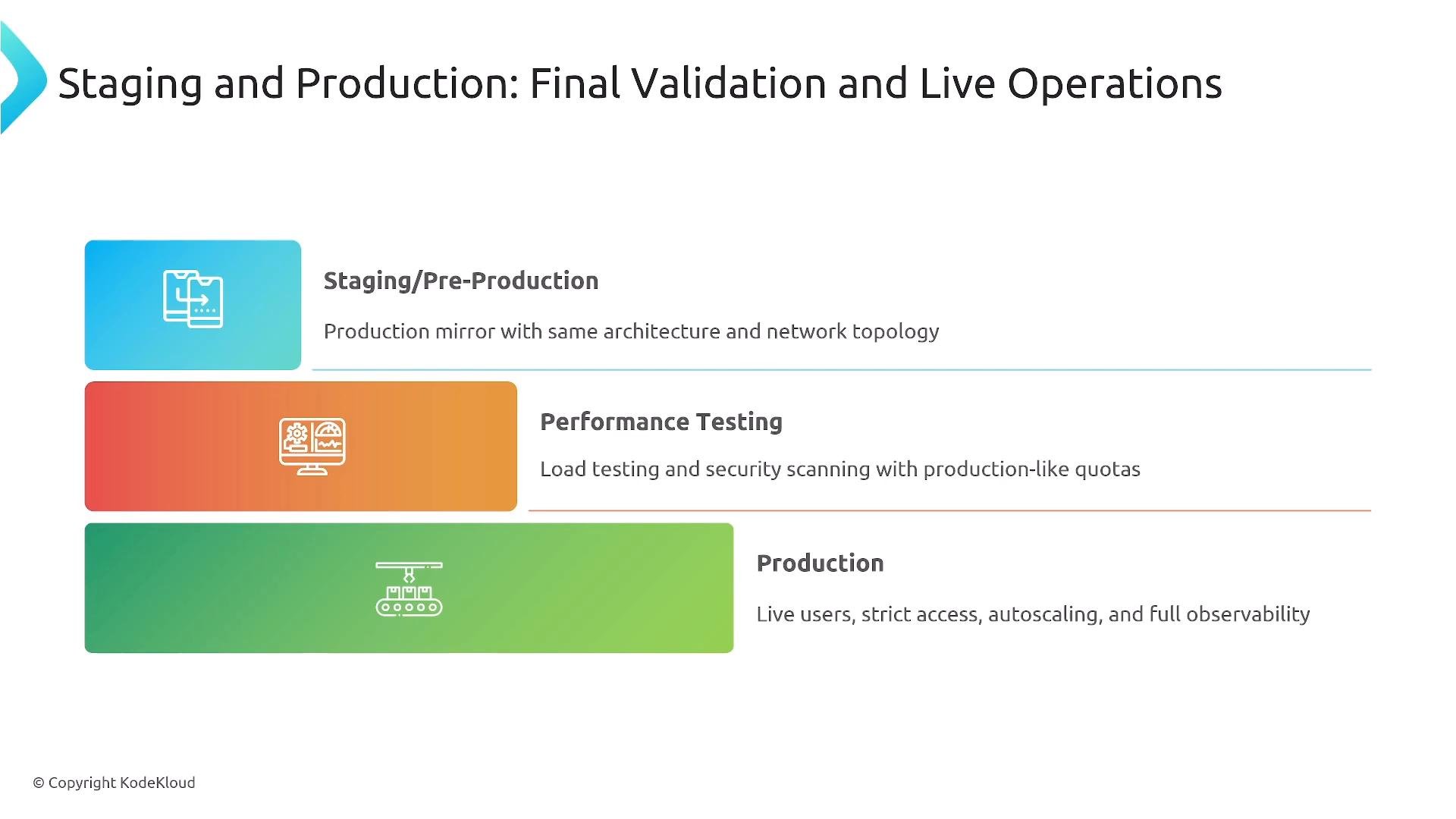
- Run production-like capacity for meaningful performance tests
- Use production or appropriately sanitized production data
- Validate deployment strategies (canary, blue/green, rolling)
- Prefer ephemeral, on-demand provisioning in cloud environments to optimize costs
Pipelines may provision ephemeral test or staging environments on demand, run tests against them, then tear them down to reduce cost and drift.
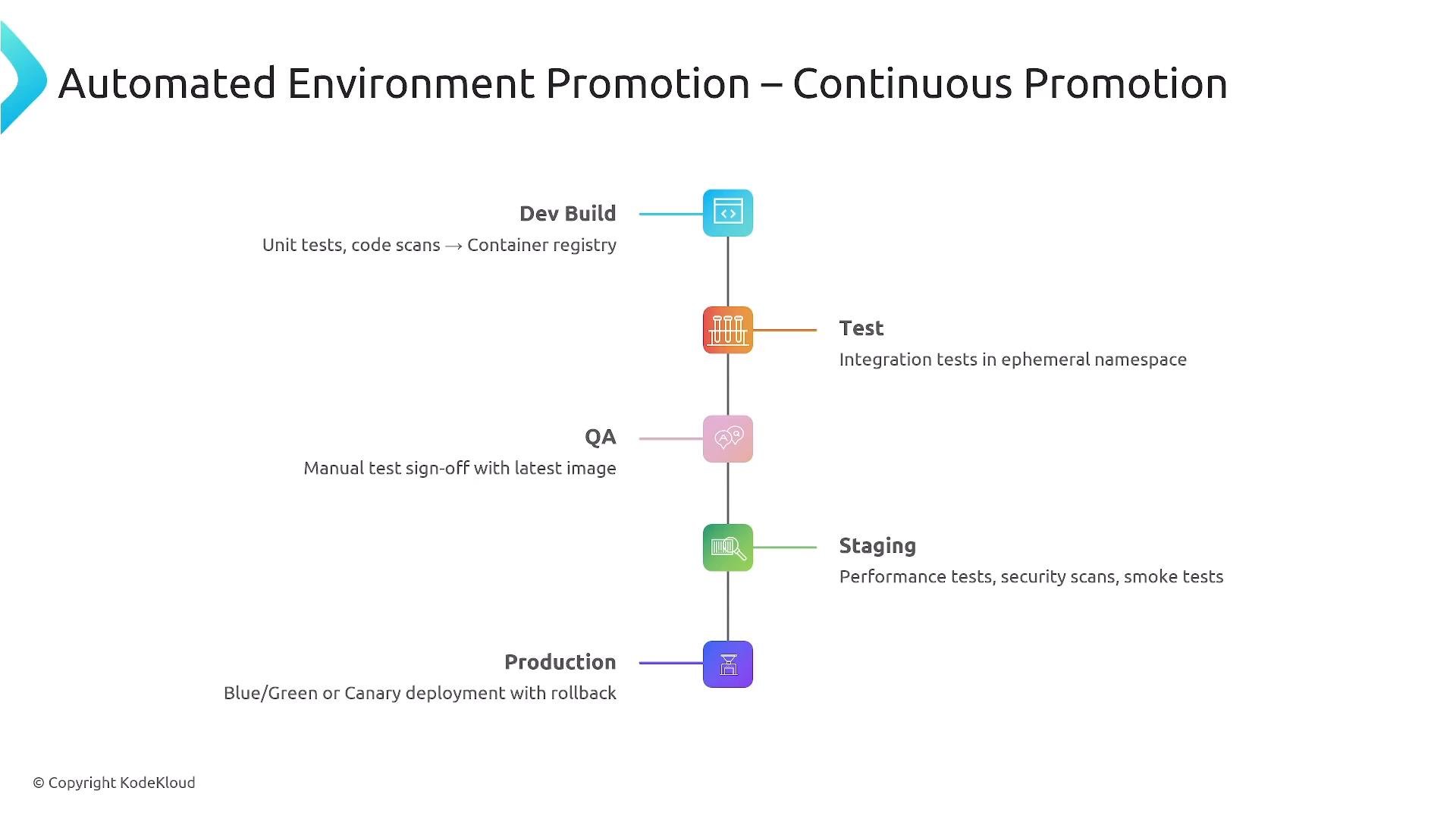
- Infrastructure as Code (IaC): declarative, version-controlled templates (e.g., Terraform, AWS CloudFormation) so environments are reproducible
- Automated provisioning and teardown of ephemeral environments via CI/CD
- Capacity monitoring, quotas, and cost governance across all tiers (including development)
- Autoscaling, intelligent resource policies, and horizontal/vertical scaling strategies
- Observability and access controls tailored to each environment tier
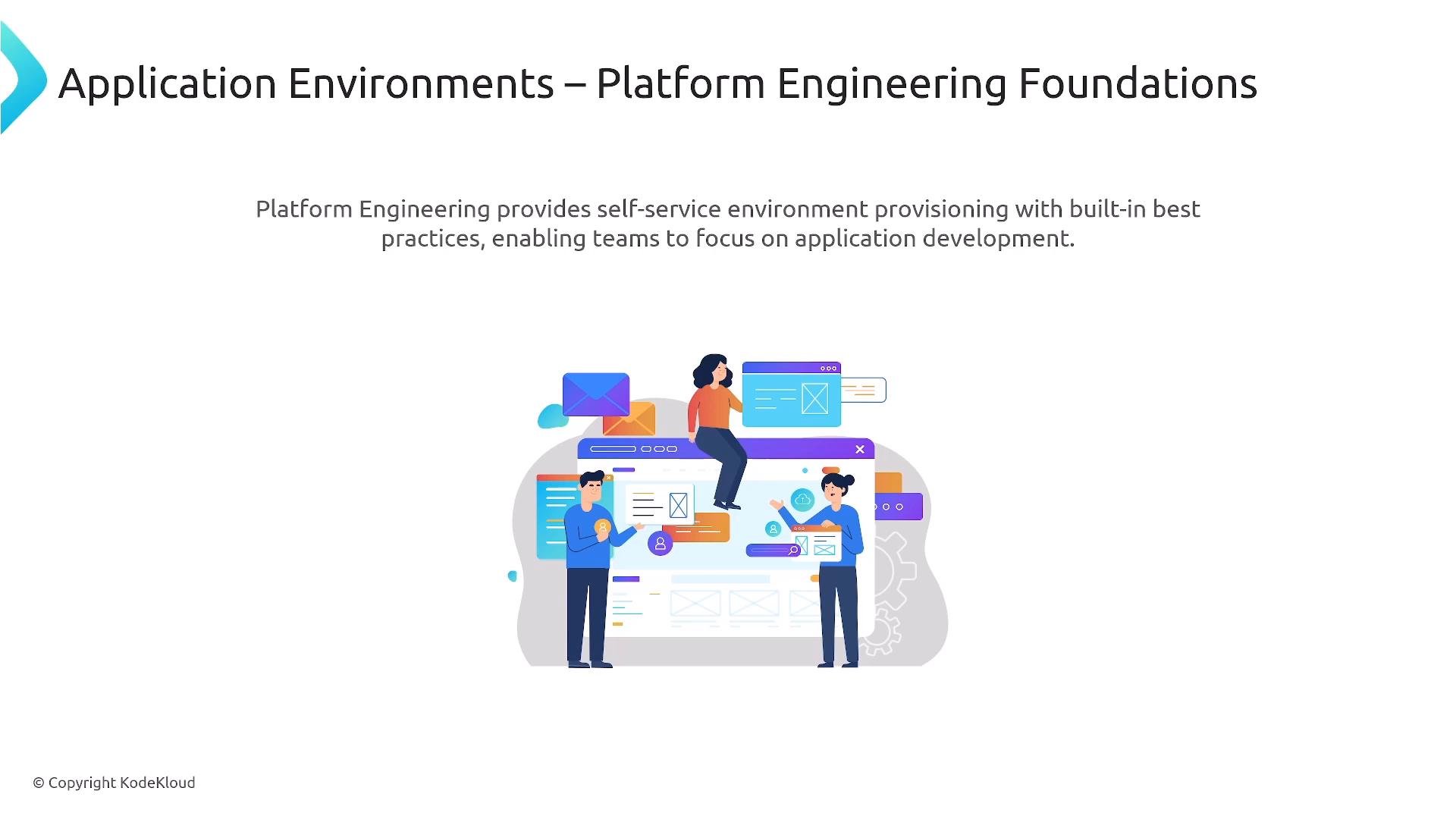
Quick reference: tools & examples
Summary
Environment progression (dev → test/QA → staging → production), infrastructure as code, automated promotion pipelines, capacity governance, and environment parity are foundational platform engineering concepts. When implemented together they let teams deliver production-quality features safely and efficiently while retaining operational control and cost discipline.
Links and references
- Kubernetes Concepts — Official Docs
- Terraform — Infrastructure as Code
- CI/CD Patterns and Practices (Argo CD, GitHub Actions, GitLab CI)
- Site Reliability Engineering (Google SRE)