

Plan for roughly 2 minutes per question on average. Allocate extra time to higher-weighted domains and skip or flag harder items to revisit later for efficient time management.
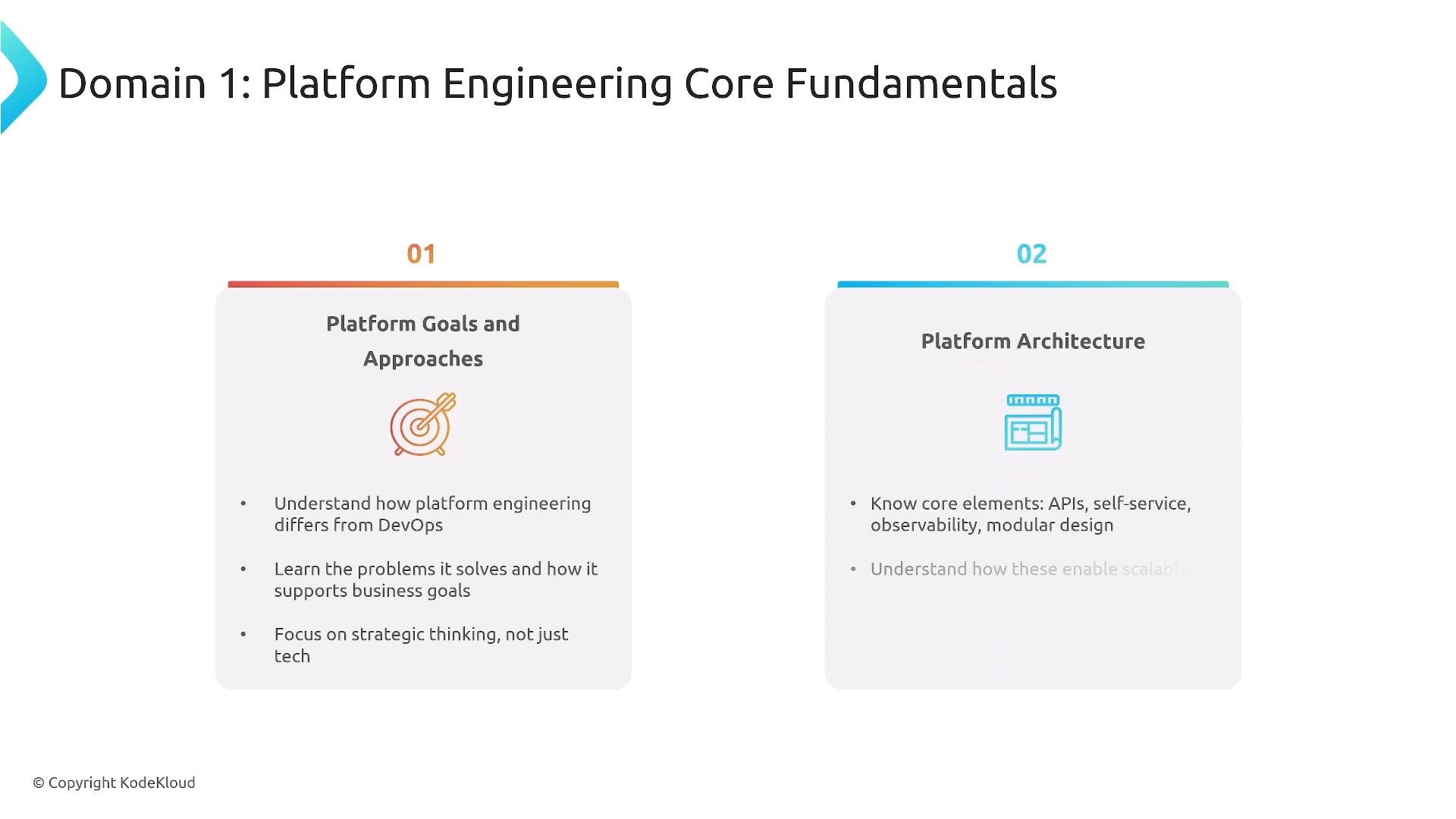
- Platform goals and approaches: developer velocity, standardization, self‑service, reliability, and trade-offs.
- Platform architecture: scalable patterns, responsibilities split between platform and application teams.
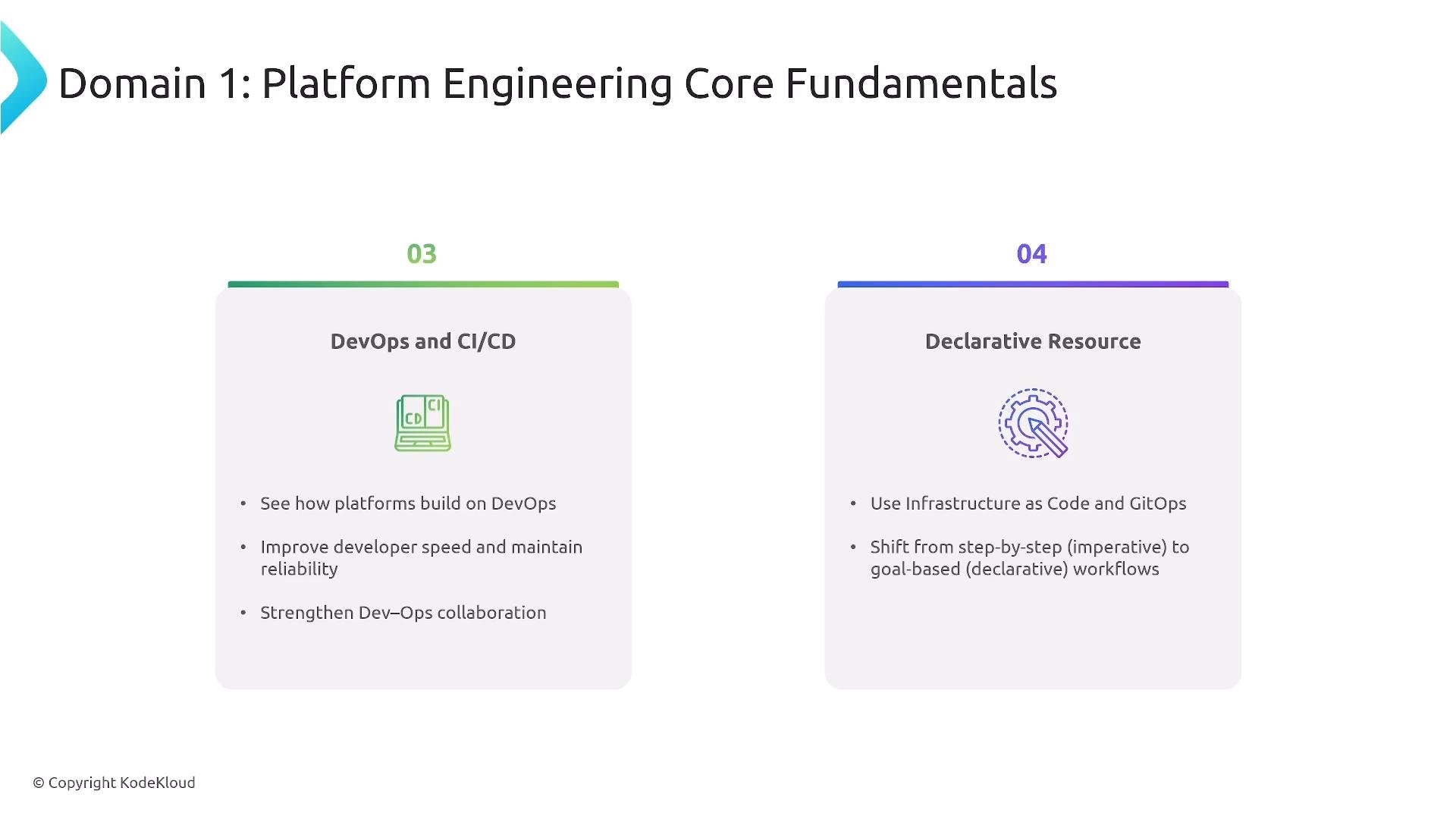
- DevOps and CI/CD concepts: cultural and technical foundations that enable platform engineering.
- Declarative vs. imperative workflows: role of Infrastructure as Code and GitOps for versioned, auditable control.
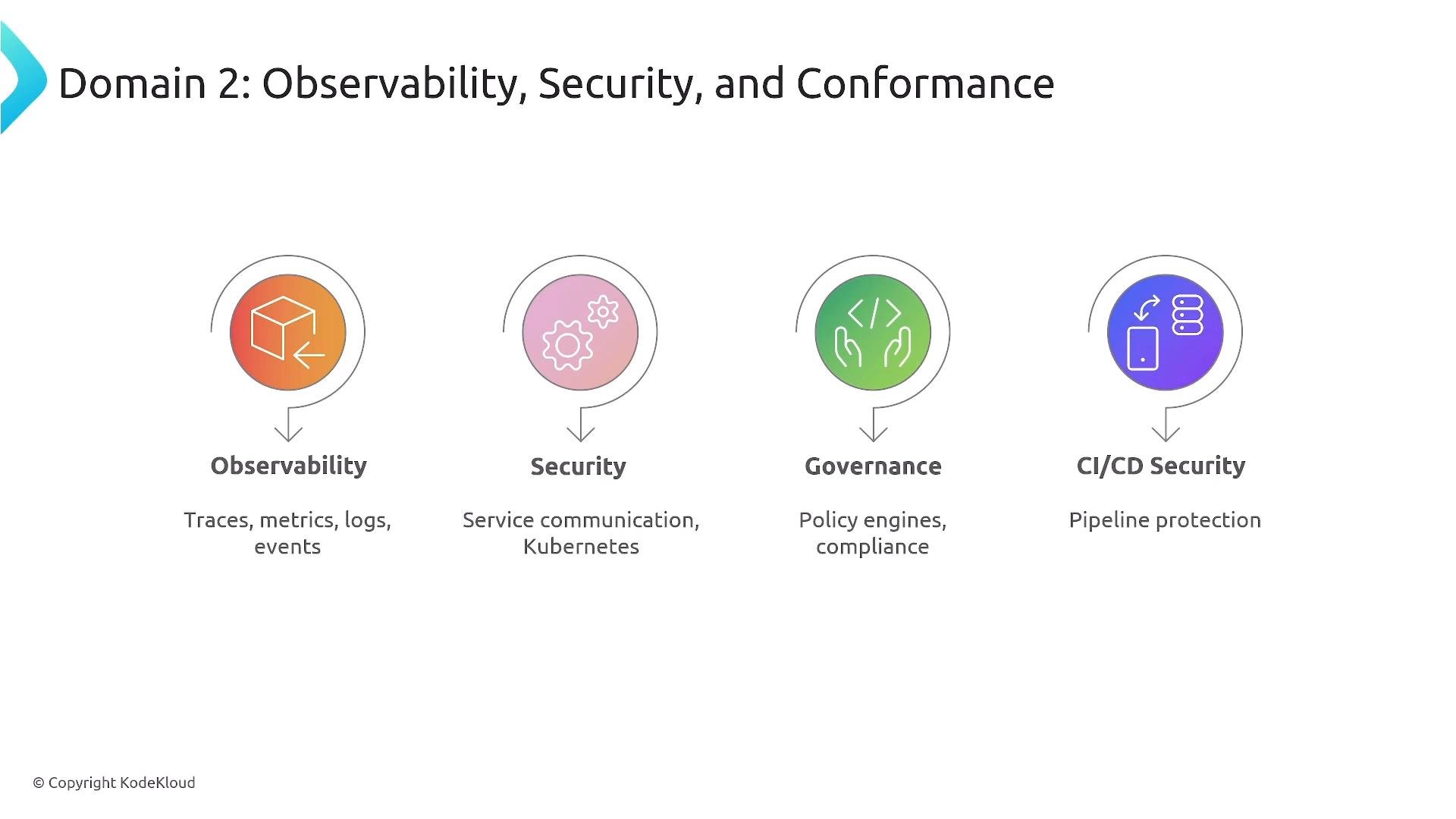
- Observability: traces, metrics, logs, and events—how to interpret signals for troubleshooting and performance tuning.
- Security: service-to-service security, authentication/authorization, secrets management, and CI/CD pipeline security.
- Governance and conformance: policy engines, compliance checks, and integrating governance into platform workflows.
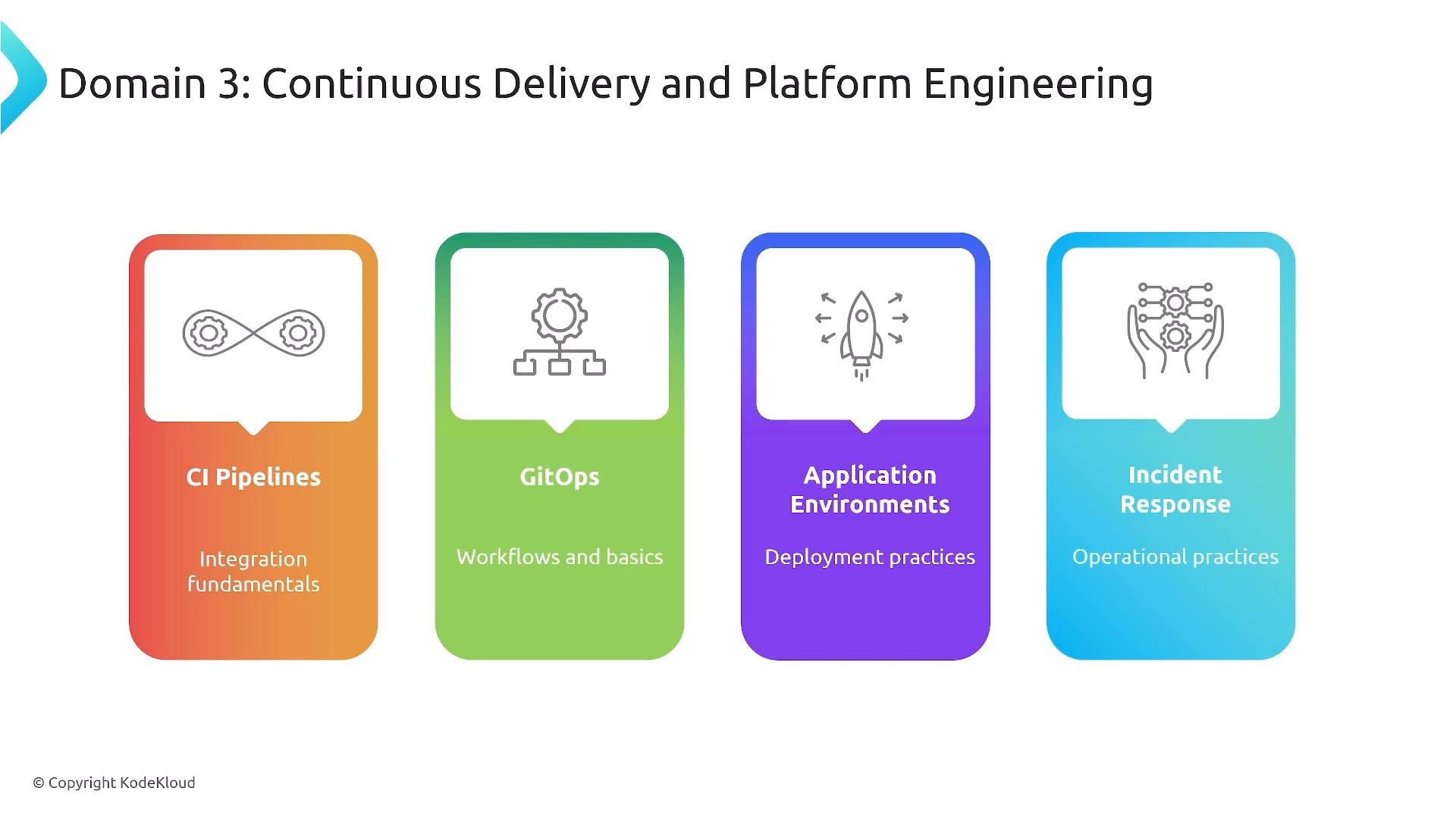
- CI pipelines and best practices: build, test, artifact storage, promotion strategies.
- GitOps: treating Git as the source of truth, reconciliation loops, and how GitOps contrasts with imperative automation.
- Environments and promotion: dev, QA, staging, UAT, production workflows.
- Incident response and operations: runbooks, alert design, and post‑mortem processes.
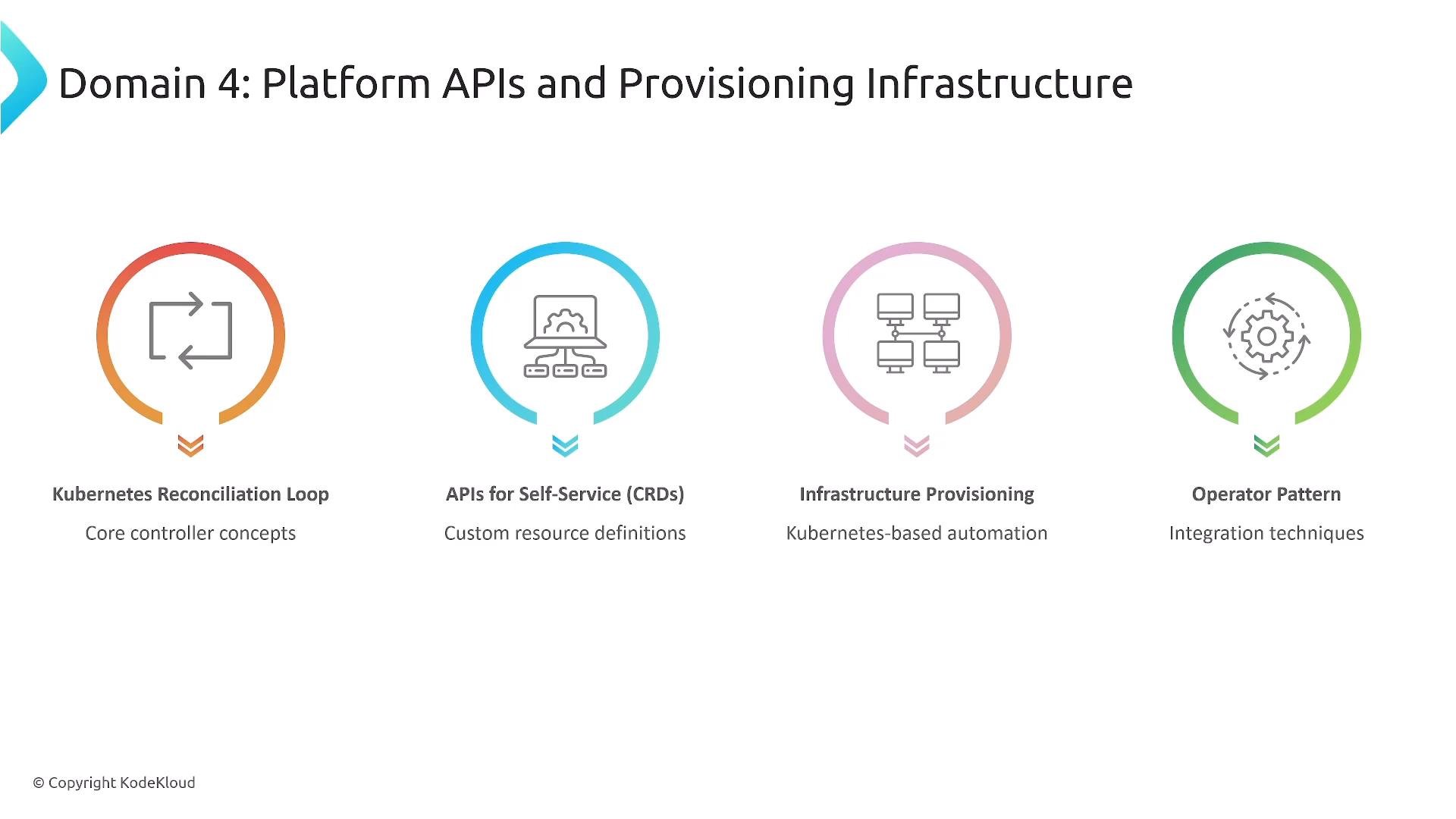
- Kubernetes reconciliation loops and controller fundamentals.
- Custom Resource Definitions (CRDs) and operator patterns.
- Infrastructure provisioning tools and integrations (e.g., Crossplane, Terraform, operators).
- Self‑service APIs and lifecycle automation for platform consumers.
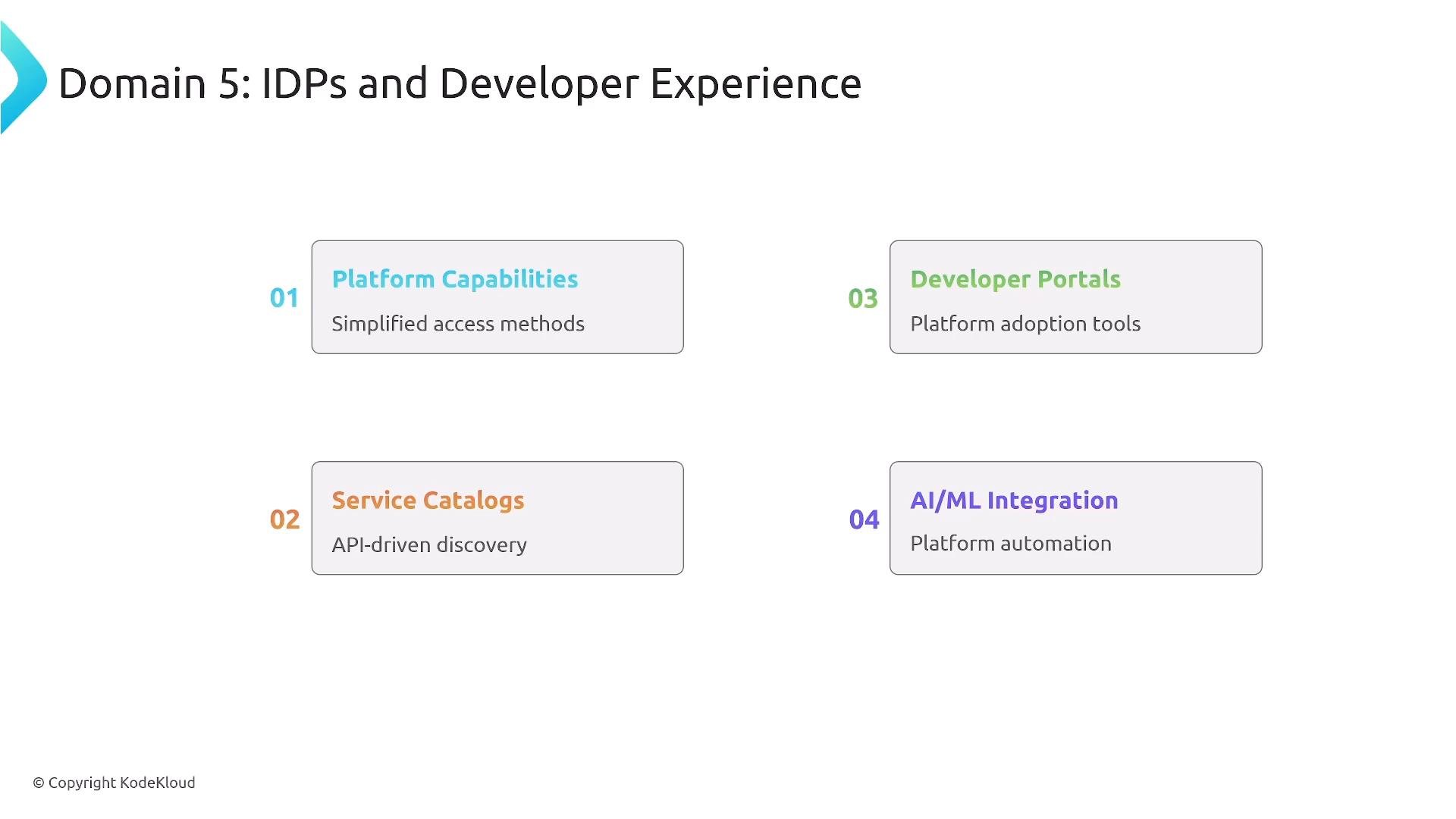
- Platform capabilities: simplified access methods, common services, and abstractions to reduce cognitive load.
- Service catalogs: API-driven discovery, consumption patterns, and lifecycle.
- Developer portals and onboarding: adoption tooling, documentation, and workflows.
- AI/ML integration: high-level roles for AI in platform automation and developer workflows.
- DORA metrics: deployment frequency, lead time for changes, change failure rate, time to restore service.
- Adoption and efficiency: tracking platform adoption, cost-effectiveness, and developer productivity.
- Business indicators: developer satisfaction, SLAs/SLIs, and measurable business impact.
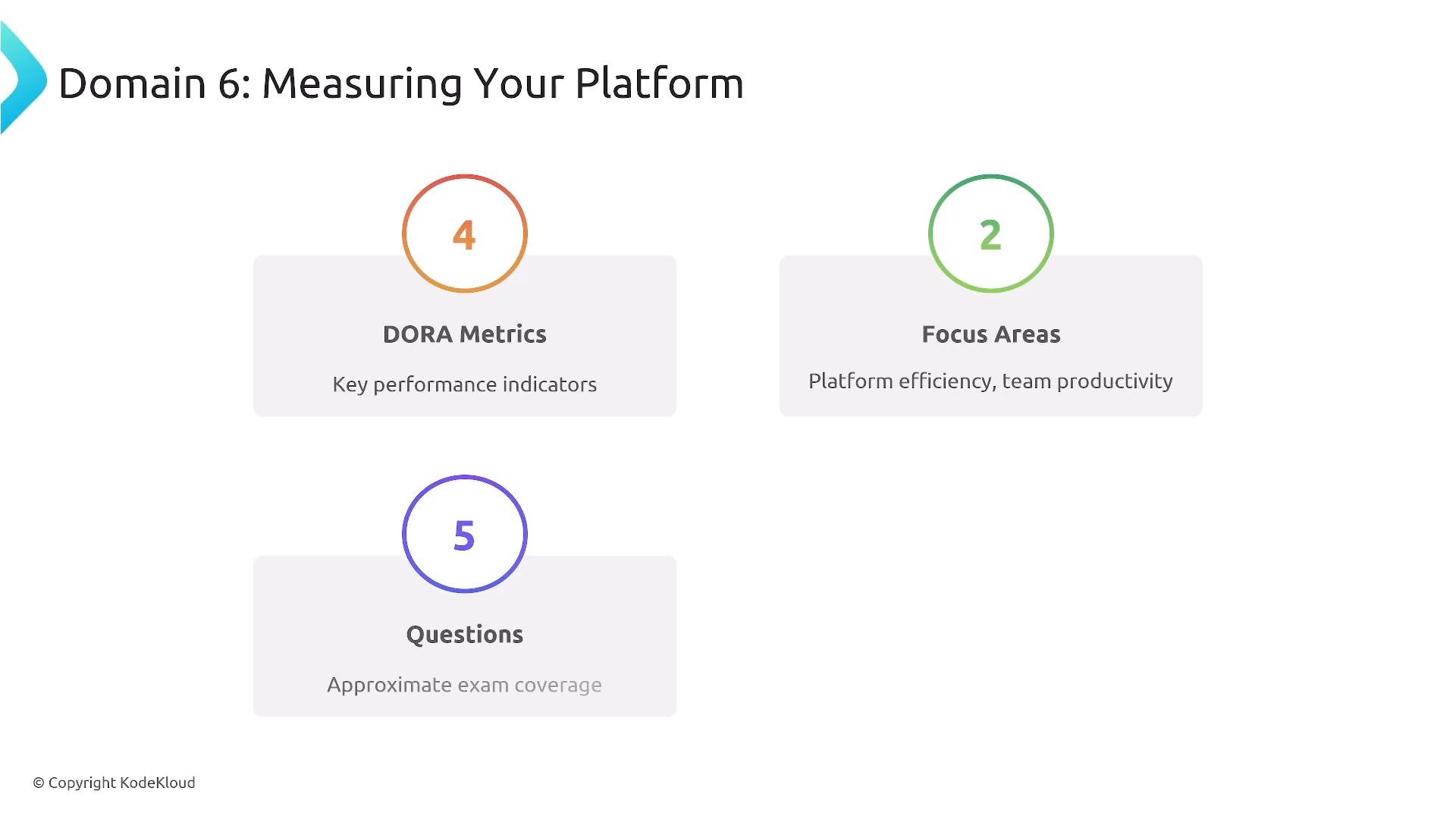
Question counts are approximate and rounded; the summed total may differ from 60 by ±1. Use percentage weights to allocate study time proportionally across domains.
About the exam questions
- Format: multiple choice (typically four or five options).
- Style: scenario-based and largely conceptual; questions emphasize reasoning and trade-off decisions.
- Common pitfalls when answering:
- Insufficient domain knowledge or context.
- Making incorrect assumptions not supported by the scenario.
- Misreading qualifiers (e.g., “not”, “least”, or scope restrictions).
- Confusing tool-specific details with platform-agnostic principles.
- Time management: aim for ~2 minutes per question, but spend more time on higher-weight domains (Domain 1 > Domains 2 & 3).
- Study strategy: focus on concepts and scenario reasoning rather than memorizing tool-specific commands.
- Practice: work through scenario questions about architecture trade-offs, GitOps workflows, observability choices, and governance decisions.
- Prioritize: use the percentage weights in this blueprint to allocate study time effectively.
The exam is proctored. Ensure you meet proctor requirements (valid ID, environment rules) and understand the testing platform before your exam appointment.
- Kubernetes Concepts — Official Docs
- OpenTelemetry — Observability tooling and standards
- GitOps Principles (gitops.tech)
- DORA Four Key Metrics (overview)