

- Many teams still rely on manual, procedural operations (imperative), which can cause drift and poor auditability.
- Modern platform strategies emphasize GitOps, versioned automation, and self-service to improve reproducibility.
- Using step-by-step commands as the long-term source of truth increases risk, reduces reusability, and makes auditing harder.
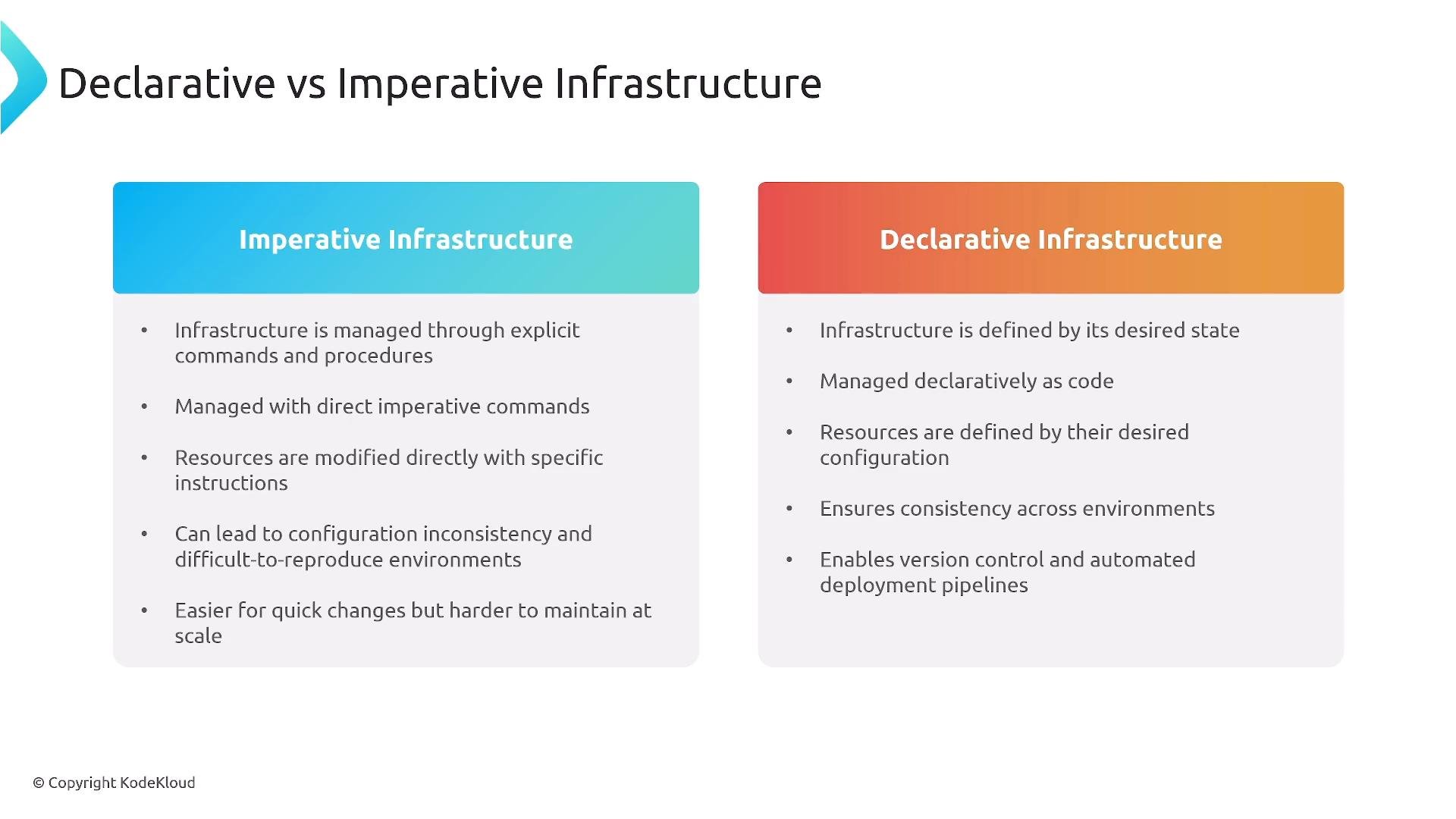
Imperative: Tell the system how
Imperative operations are procedural: you issue explicit commands that execute steps in sequence. This gives direct control and immediacy, but you must manage idempotency, state checks, and guards to avoid duplicates when re-running commands. Imperative workflows are useful for quick intervention and debugging, but they do not scale well for repeatable platform operations.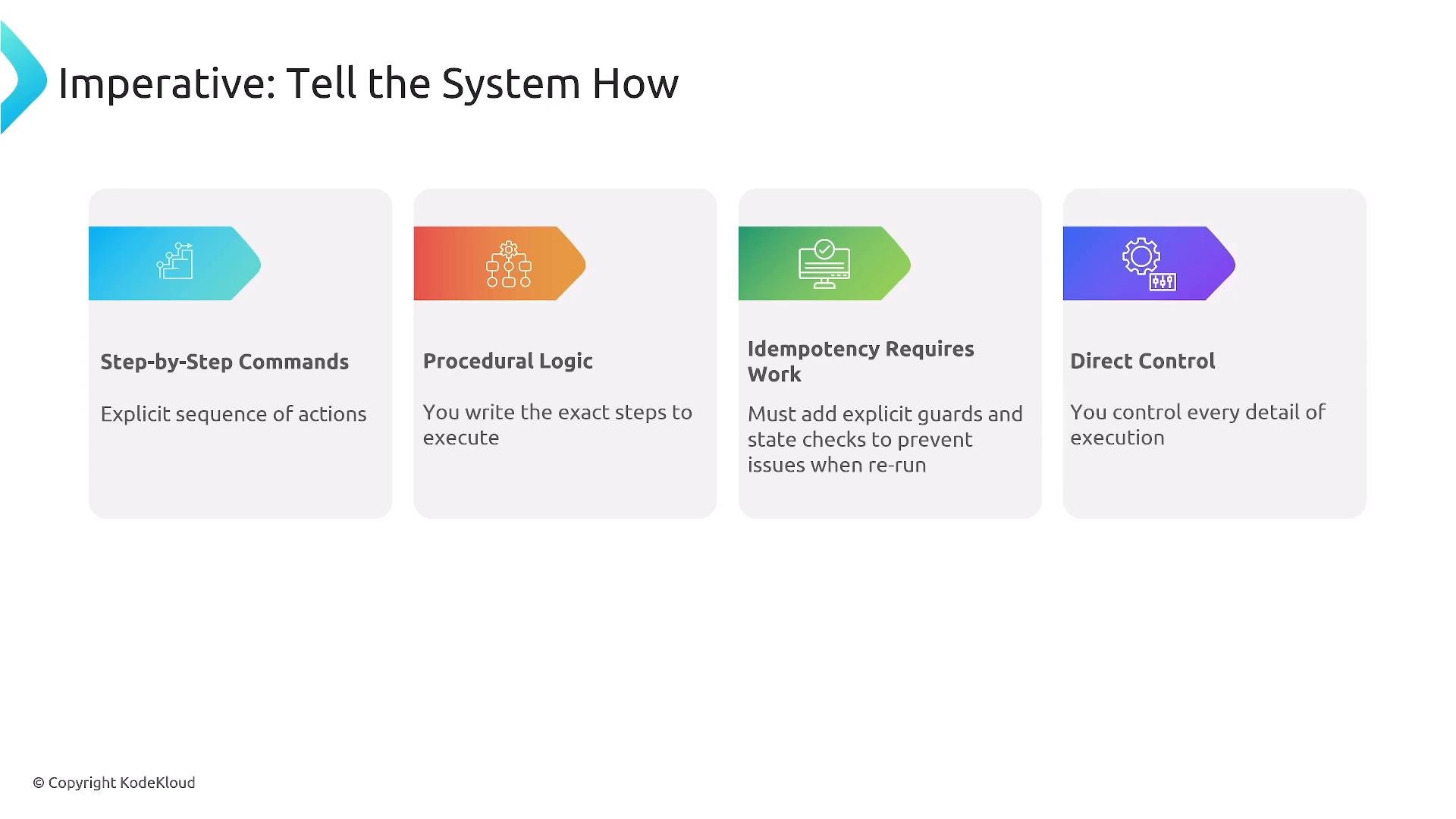
- Running cloud provider CLI commands (for example:
aws ec2 run-instances). - Creating resources ad hoc with
kubectl createcommands. - Clicking through a cloud console to configure a VM or security group.
- Not inherently repeatable unless you capture and version the commands.
- Limited auditability compared to version-controlled manifests.
- Higher risk of configuration drift when changes are made manually.
Declarative: Tell the system what you want
Declarative workflows express the desired state: you describe the end goal and a reconciler (control loop) ensures the system reaches and maintains that state. Re-applying the same manifest is idempotent — it will not create duplicates if the desired state already exists. Declarative approaches are the backbone of GitOps and platform-as-a-product.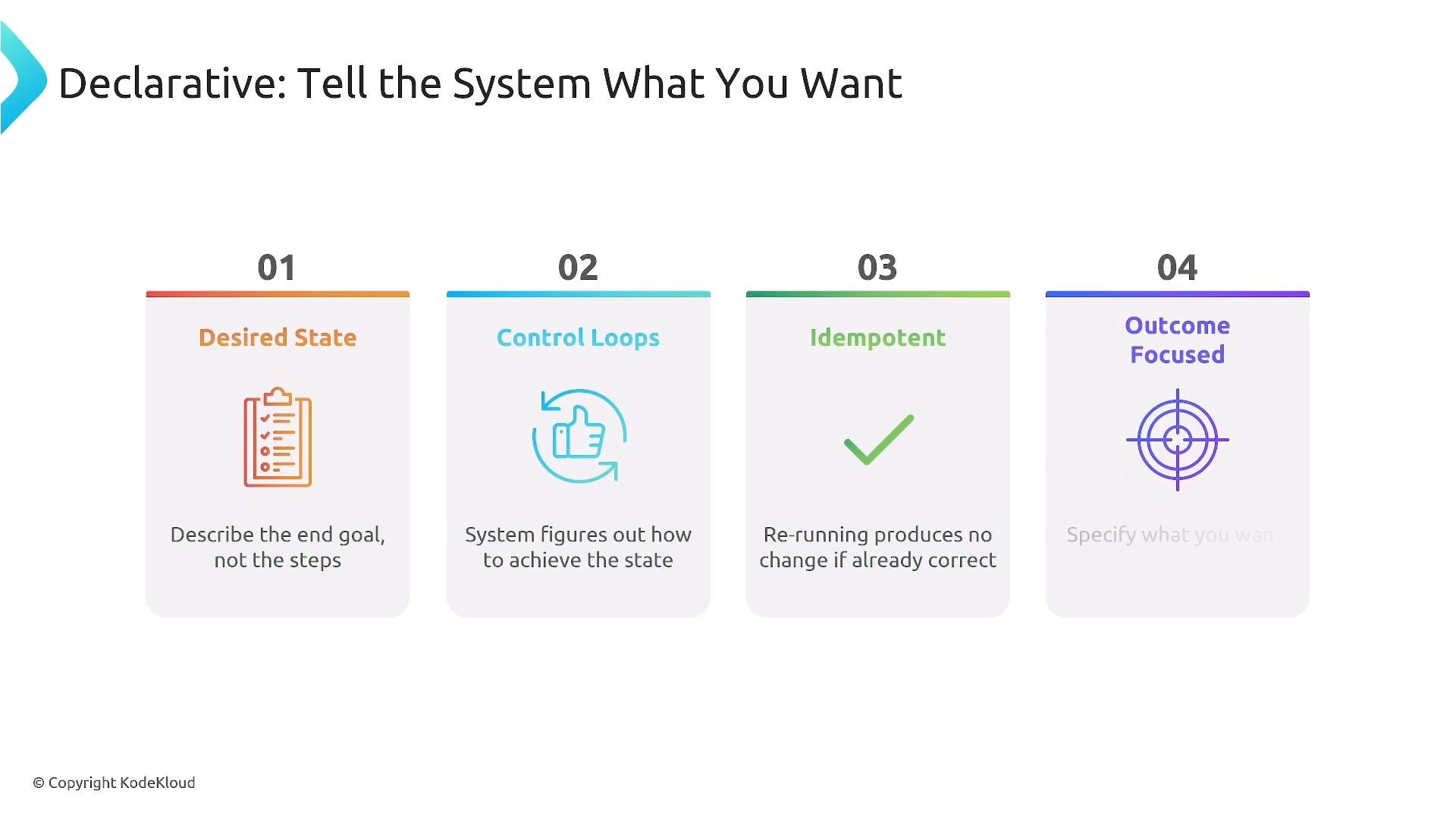
- Kubernetes YAML manifests
- HashiCorp HCL (Terraform) — a popular declarative tool for cloud resources
- CloudFormation / ARM templates
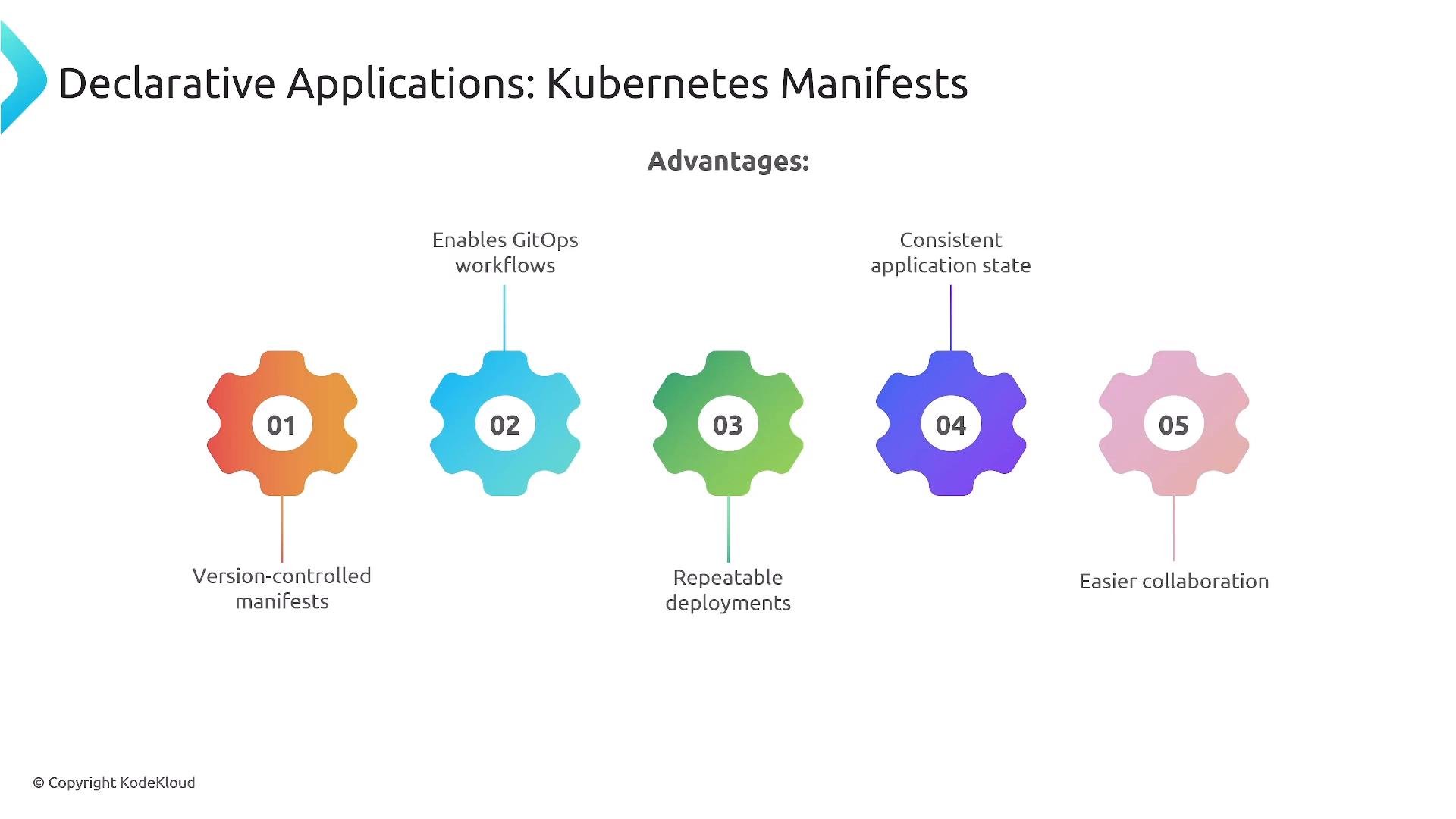
- Version-controlled, repeatable, and auditable.
- Easy to roll back to previous revisions.
- Prevents ad-hoc manual steps that can be forgotten or misapplied.
replicas and reapplying the manifest causes the cluster reconciler to converge to the desired scale.
replicas: 5 will cause Kubernetes to scale the Deployment to five replicas. These manifests are easily reviewed, shared, and integrated into GitOps workflows.
Quick comparison
Platform engineering best practices (favor declarative)
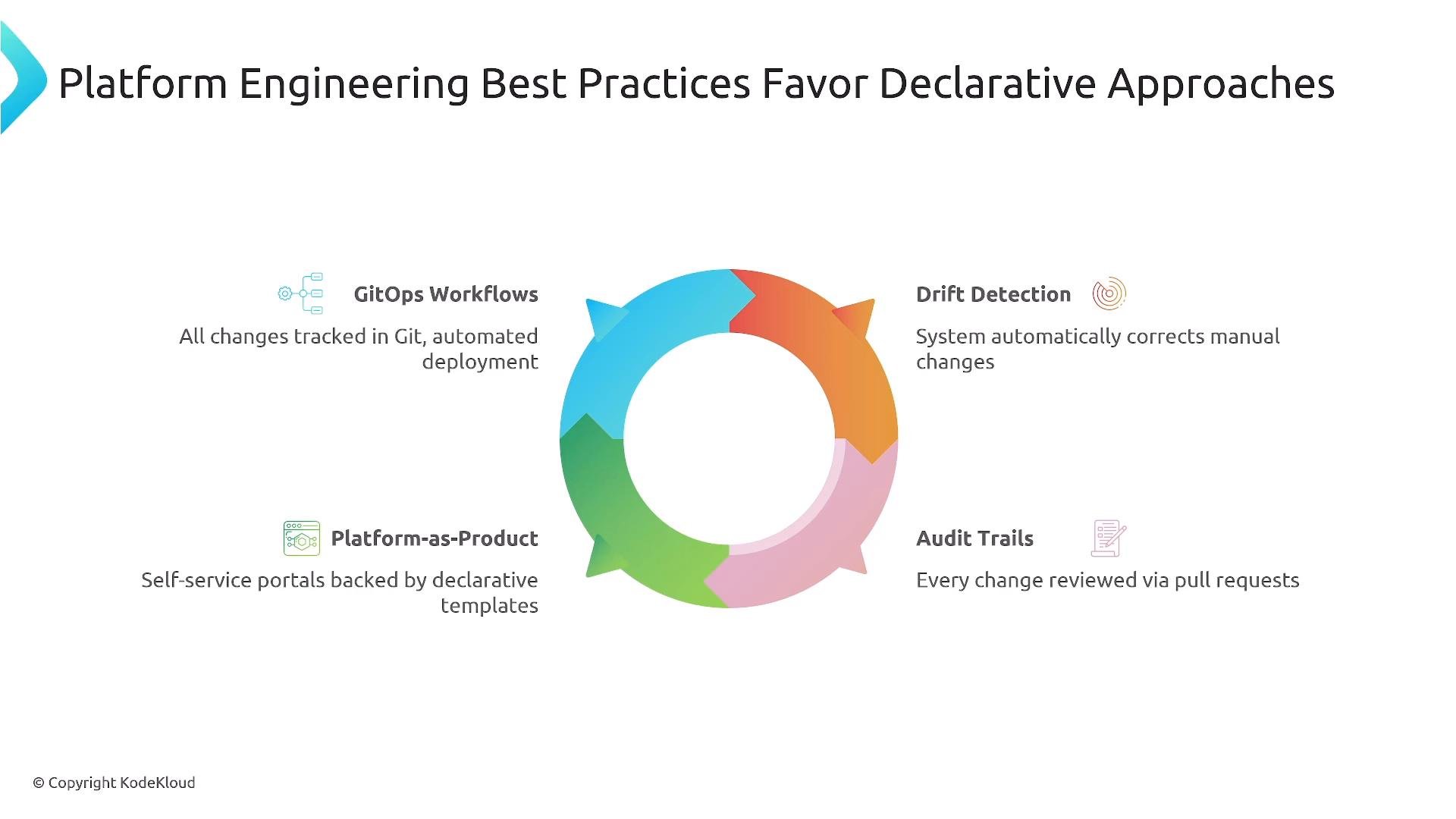
- Store manifests in Git for versioning, code review, and history.
- Use continuous reconciliation (GitOps) to detect and correct drift between Git and live systems.
- Maintain audit trails for repository changes and observed cluster state.
- Treat the platform as a product: expose self-service APIs and portals so teams can deploy safely.
When to use imperative
Imperative commands remain valuable in specific scenarios:- Debugging and incident response (quick fixes, live troubleshooting).
- Emergency hotfixes or emergency scaling when immediate intervention is required.
- Experimenting interactively before codifying a change as a manifest.
Use imperative commands for short-term intervention and troubleshooting. Any permanent or repeatable change should be captured back into the declarative repo so Git remains the source of truth.
Strategic use of imperative within a declarative platform
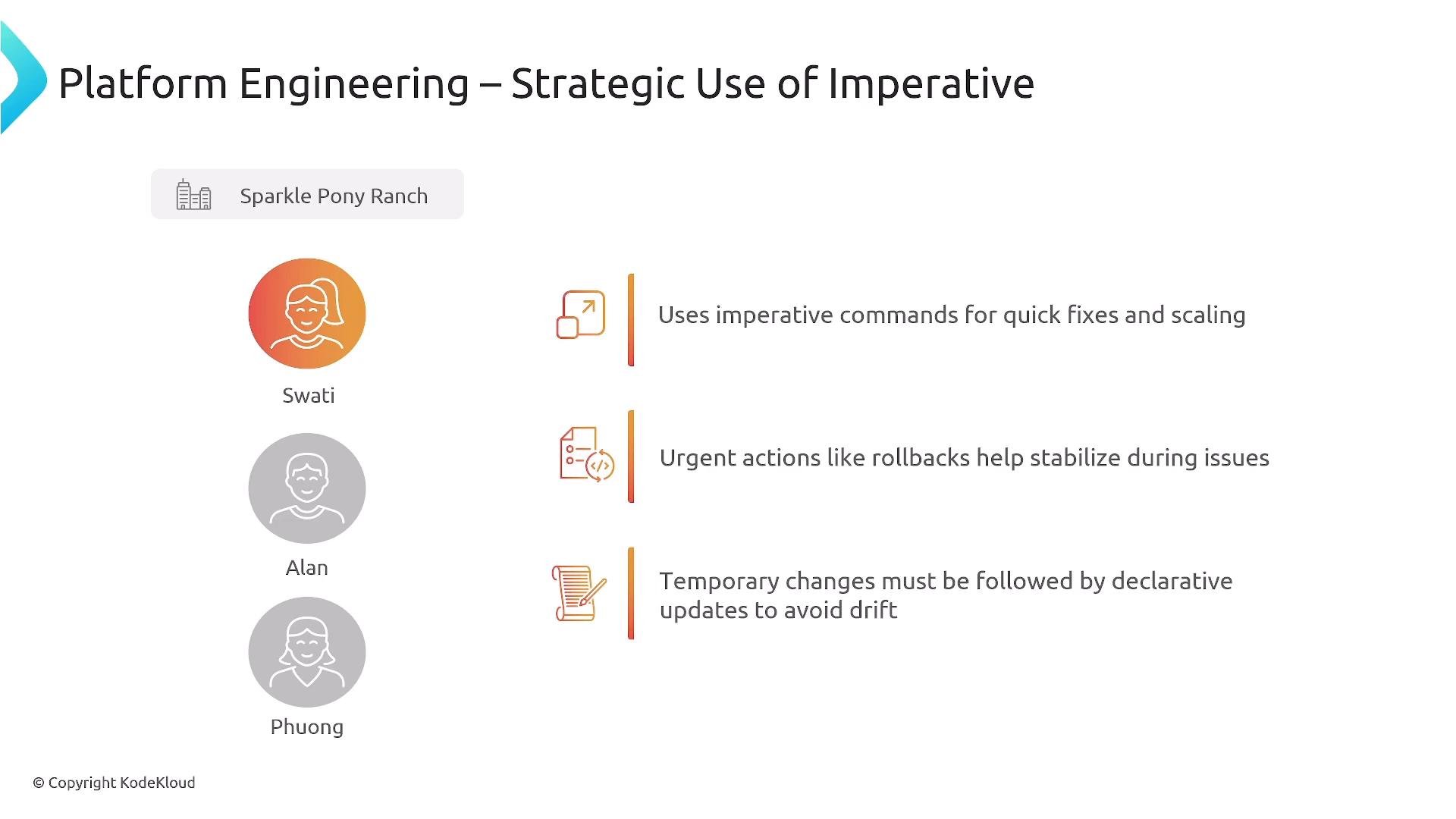
Teams should let the platform hide complexity and favor automation via declarative manifests and GitOps. For example, within a platform team (e.g., Sparkle Pony Ranch), developers and platform engineers should:- Use declarative, version-controlled manifests for day-to-day deployments.
- Rely on automated reconciliation to ensure consistency and fix drift.
- Use imperative commands sparingly for emergency changes, rollbacks, or experiments — and then record those changes back in Git to avoid long-term drift.
Summary
- Declarative approaches (desired-state manifests, GitOps) are preferred for platform engineering because they provide repeatability, auditability, and automated drift correction.
- Imperative approaches are useful for immediate control and troubleshooting but should be used sparingly and reconciled back into the declarative workflow.
- Choose the right tool: declarative for long-term, repeatable platform management; imperative for short-term diagnostics and emergency response.
- GitOps and reconciliation patterns — see Argo CD and Flux for practical implementations.
- Kubernetes documentation: https://kubernetes.io/docs/
- Terraform documentation: https://www.terraform.io/docs/
- CloudFormation overview: https://docs.aws.amazon.com/AWSCloudFormation/latest/UserGuide/Welcome.html