

- Aligns engineering investments to business goals (time-to-market, cost efficiency, reliability).
- Reduces developer friction and accelerates delivery.
- Creates measurable outcomes that justify ongoing investment.
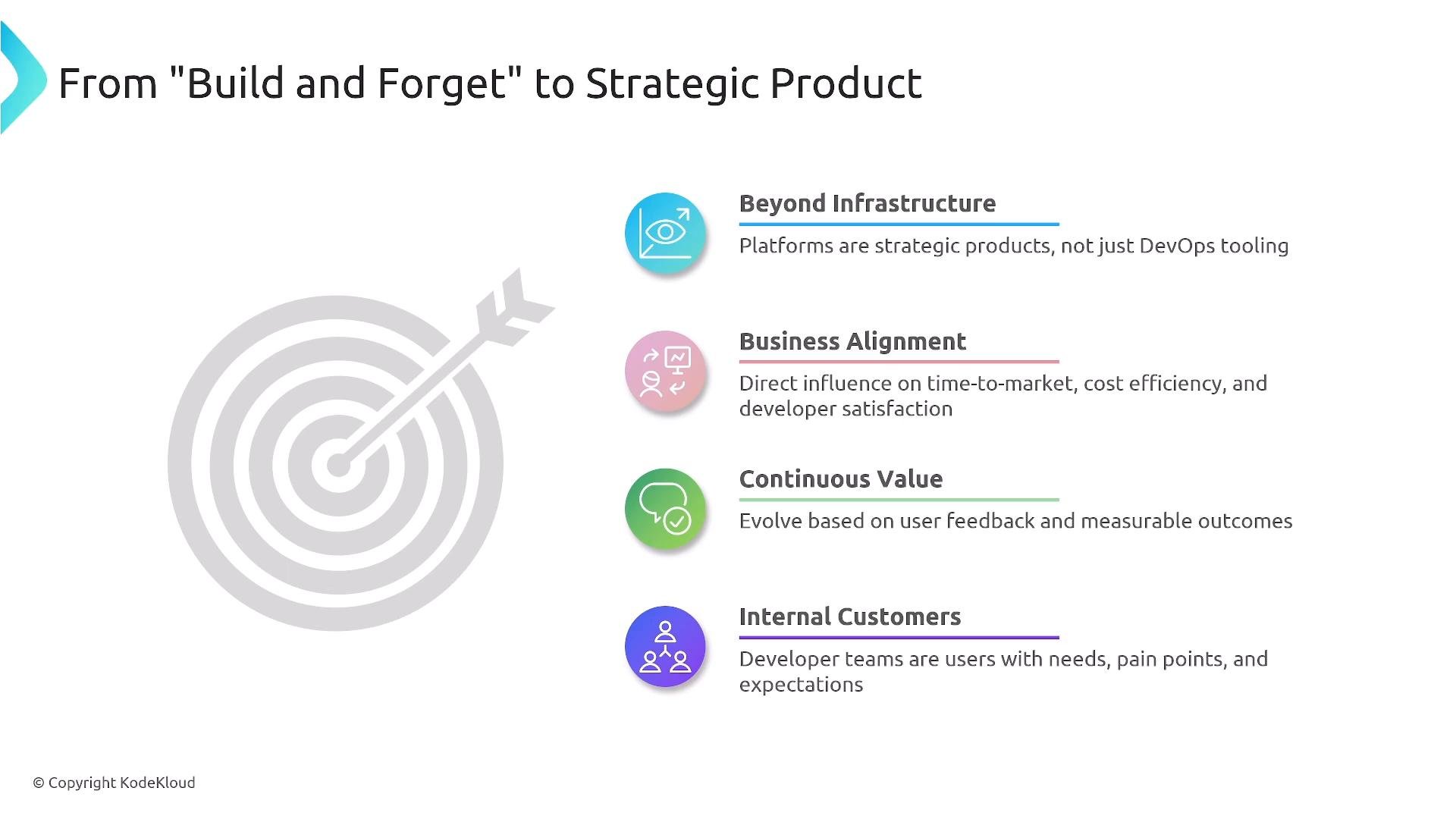
- A clear vision and strategy: Why does the platform exist? What problems is it solving?
- A prioritized roadmap informed by validated user feedback.
- Well-defined user personas to know who you are serving.
- Key performance indicators (KPIs) to guide investment and measure impact.
- Reduce mean time to production (e.g., from 48 hours to 2 hours).
- Improve platform reliability (e.g., 95% → 99.9%).
- Reduce costs by a target percentage.
- Enable on-demand environment provisioning (start in minutes vs. run continuously).
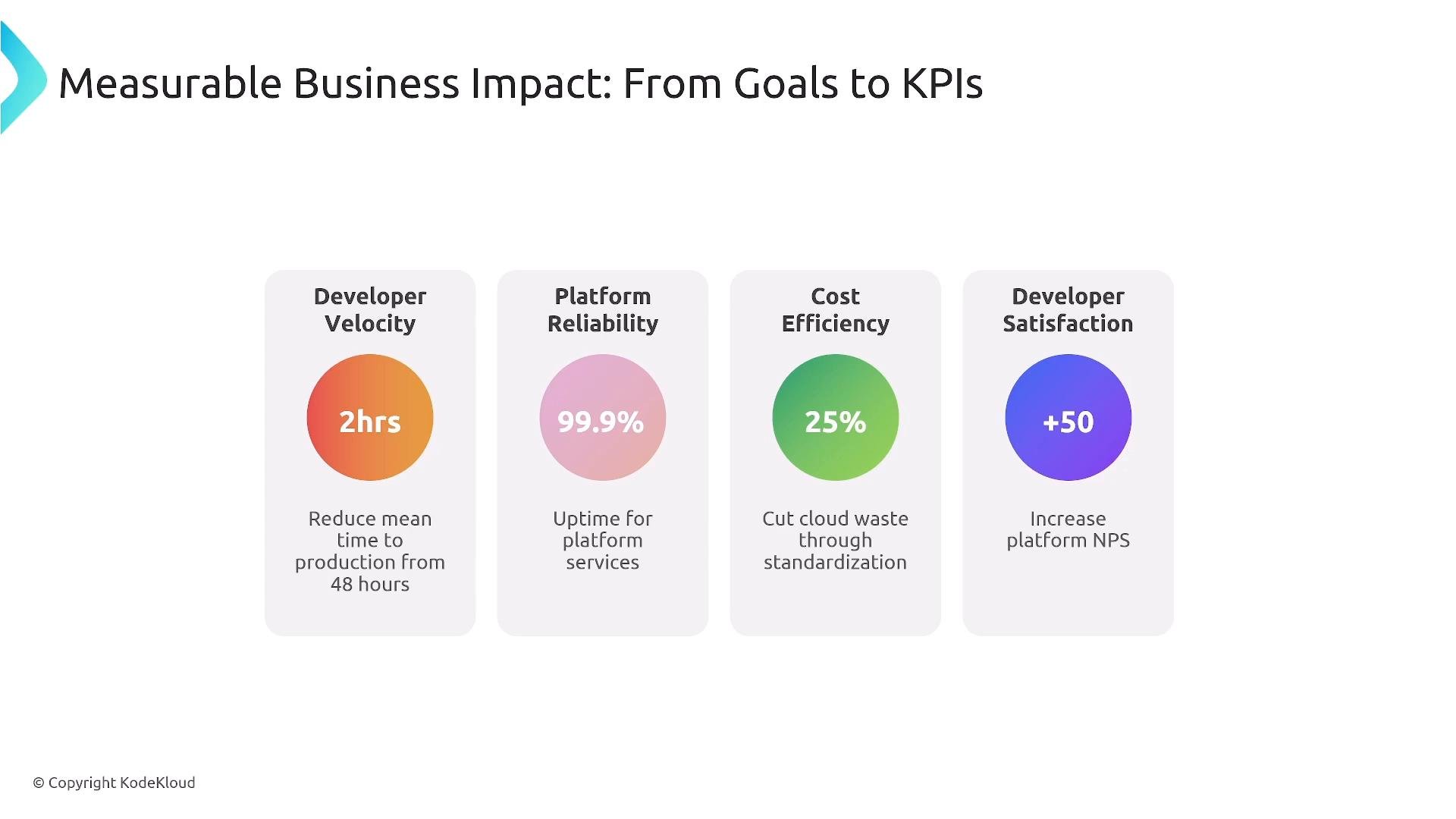
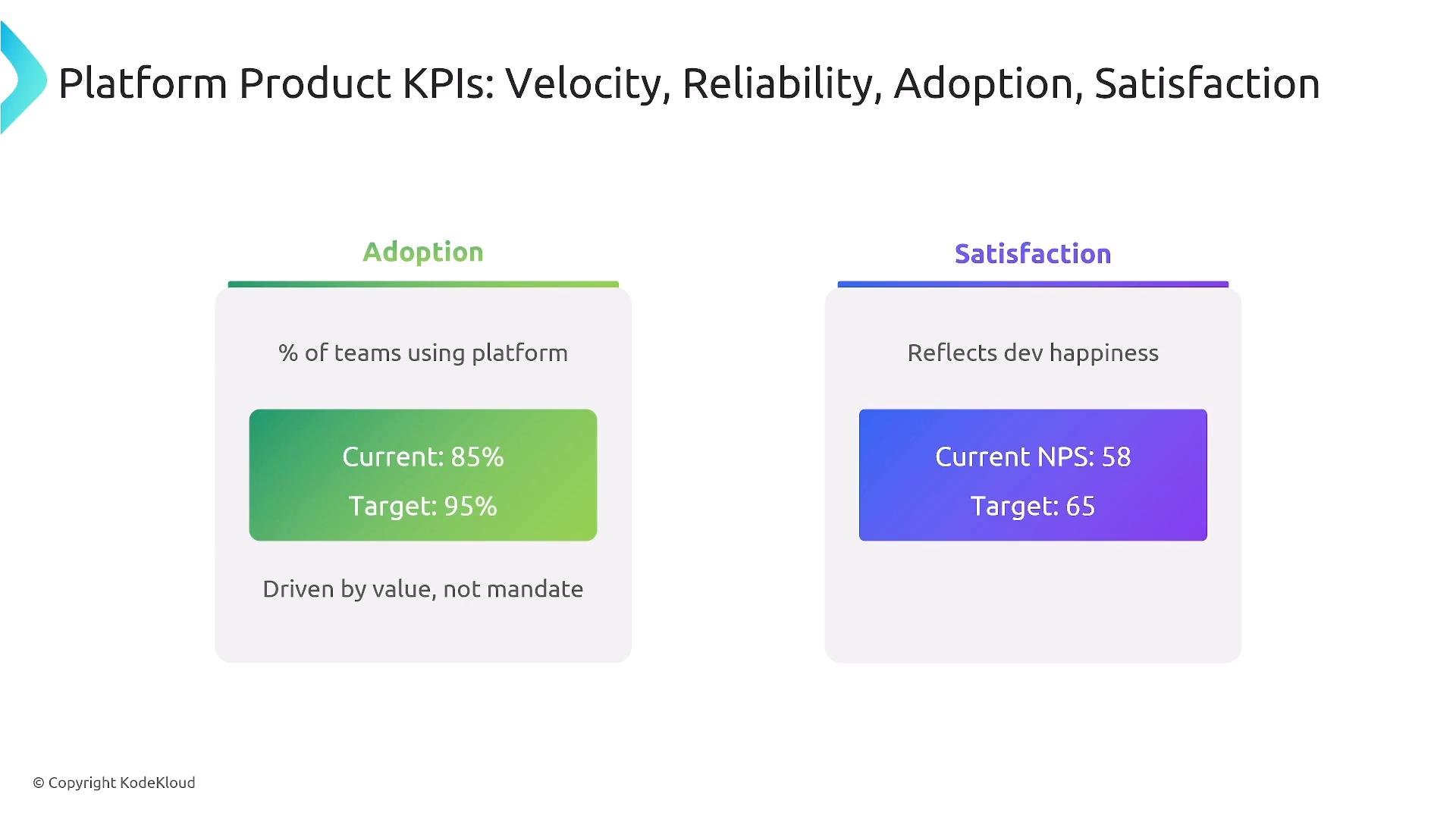
Track KPIs that directly reflect platform value: velocity (deployment speed), reliability (uptime and SLOs), adoption (percent of teams using the platform), and satisfaction (NPS). Use these metrics to prioritize work and demonstrate impact.
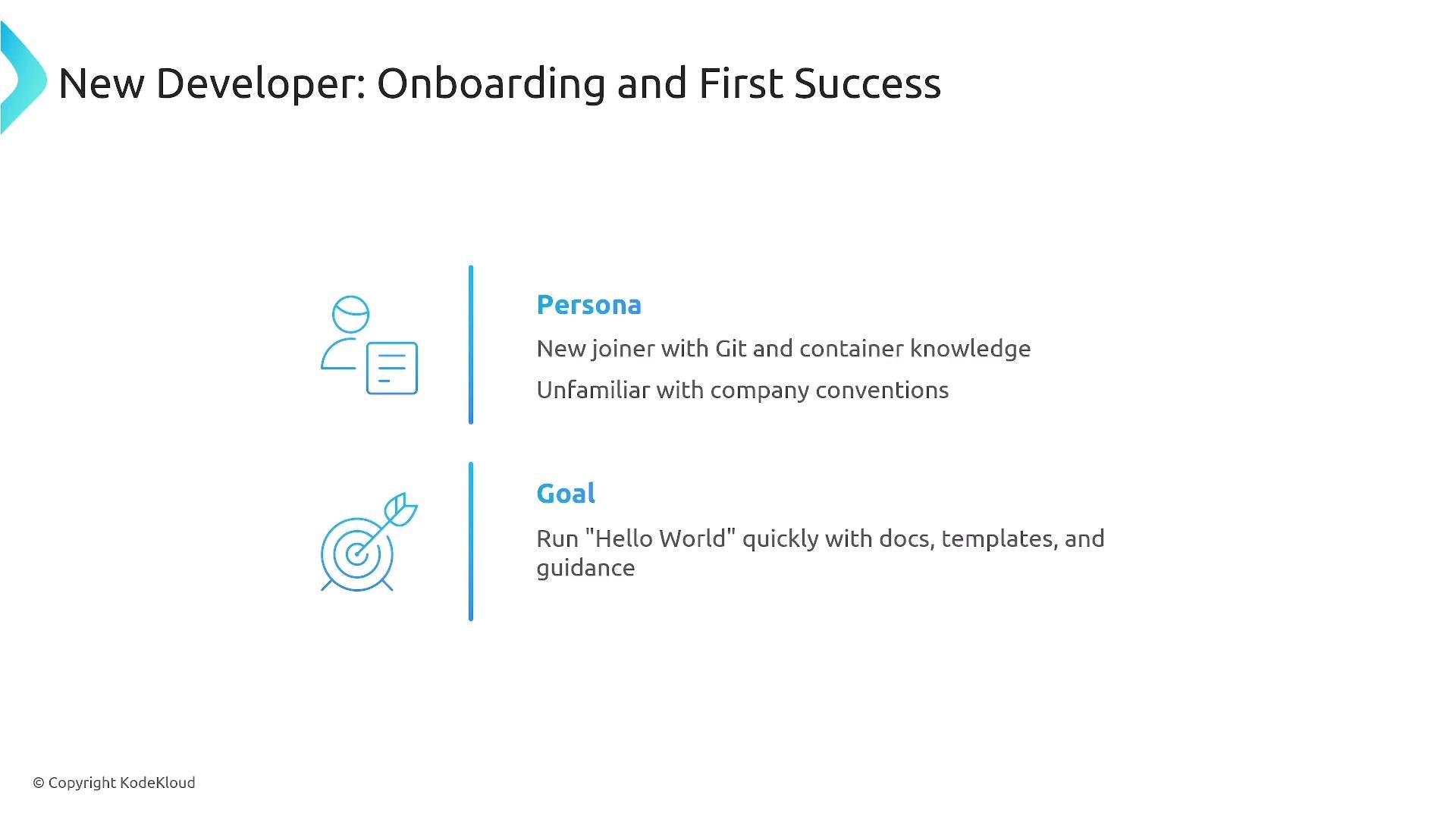
- New developers: need simplicity, examples, and automation to reach first success fast.
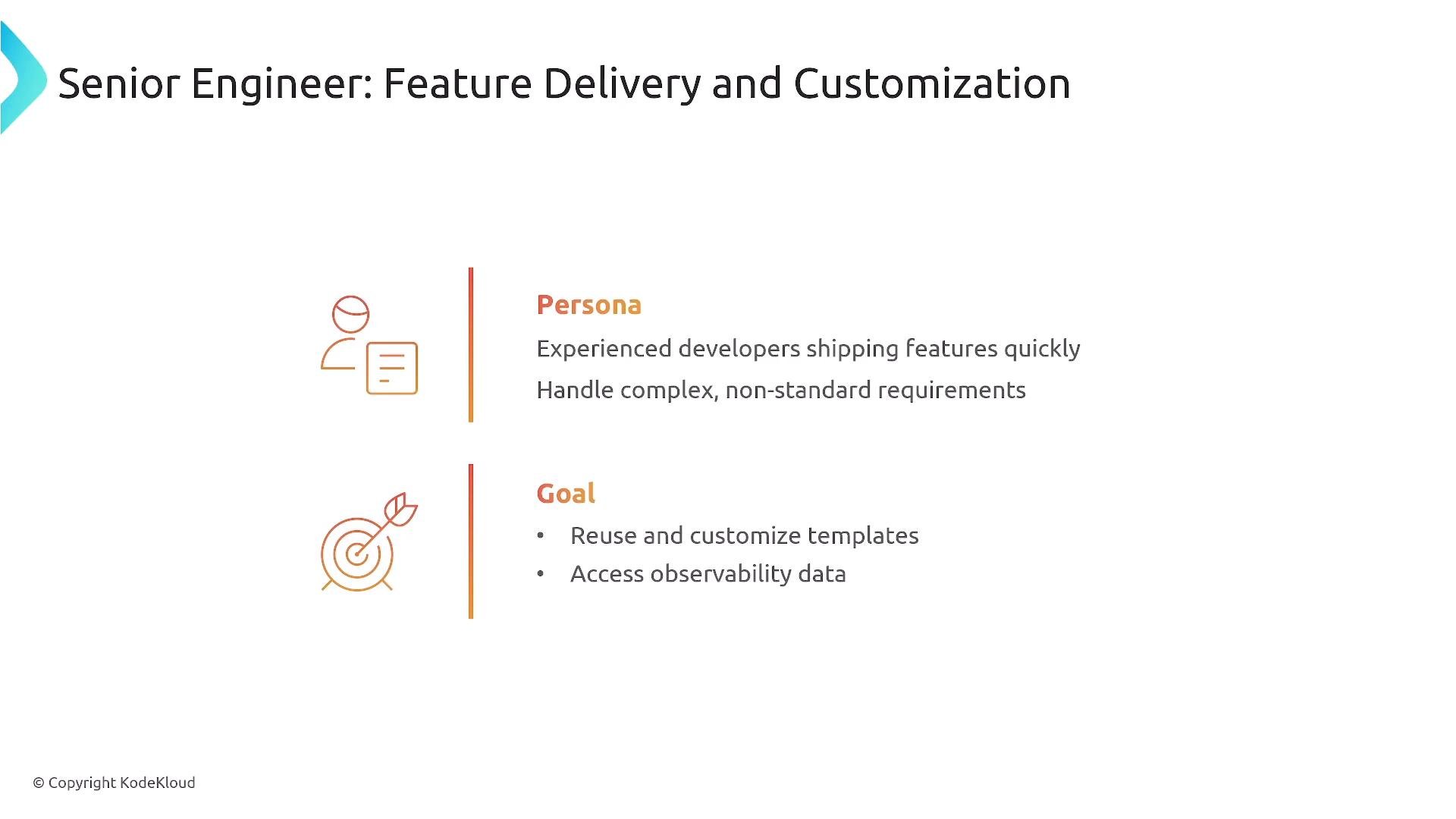
- Senior engineers: require flexibility, customization of templates, and direct access to observability and configuration for non-standard workloads.
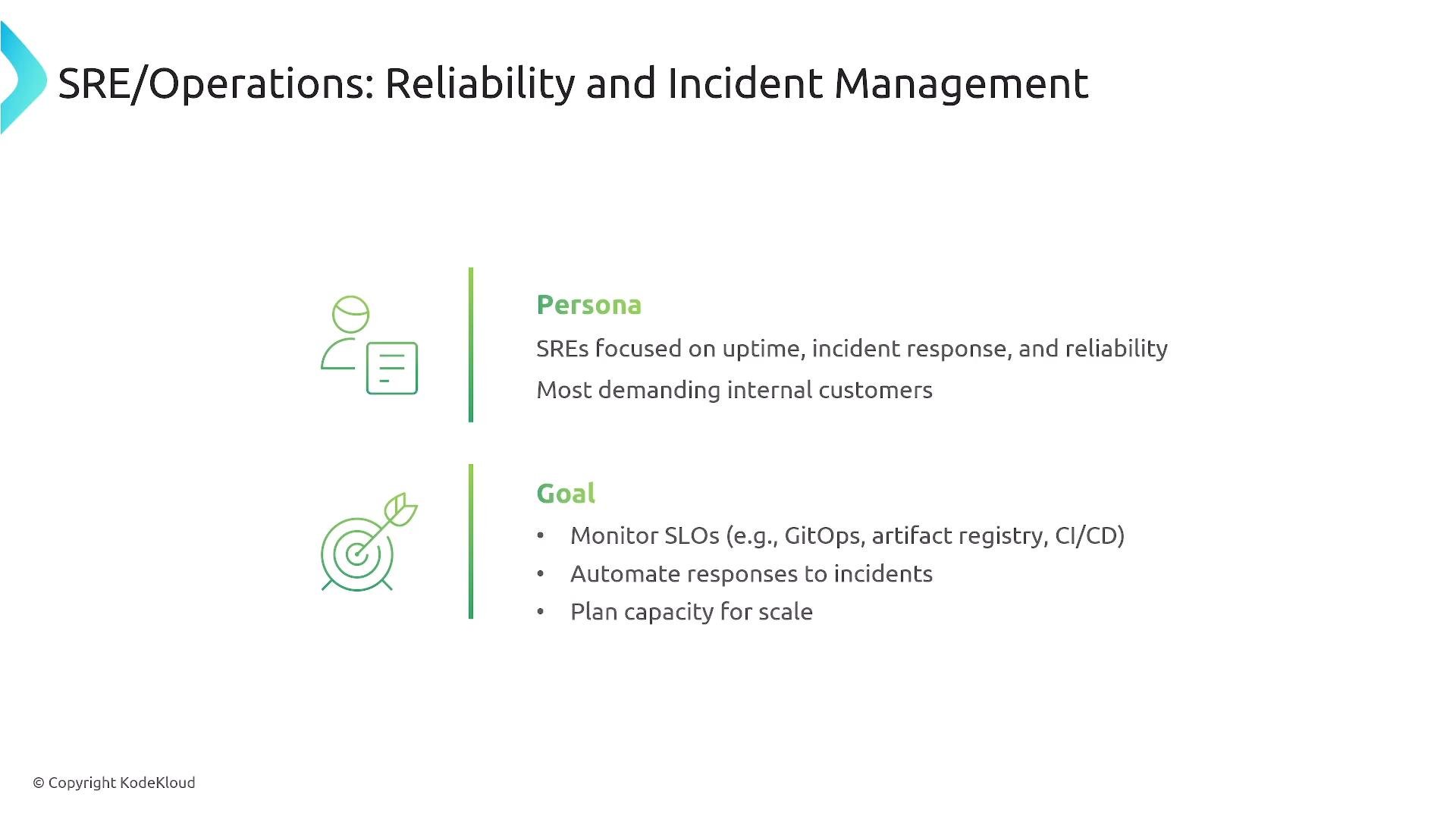
- SRE/Operations: focus on uptime, incident management, automation for runbooks, and capacity planning.
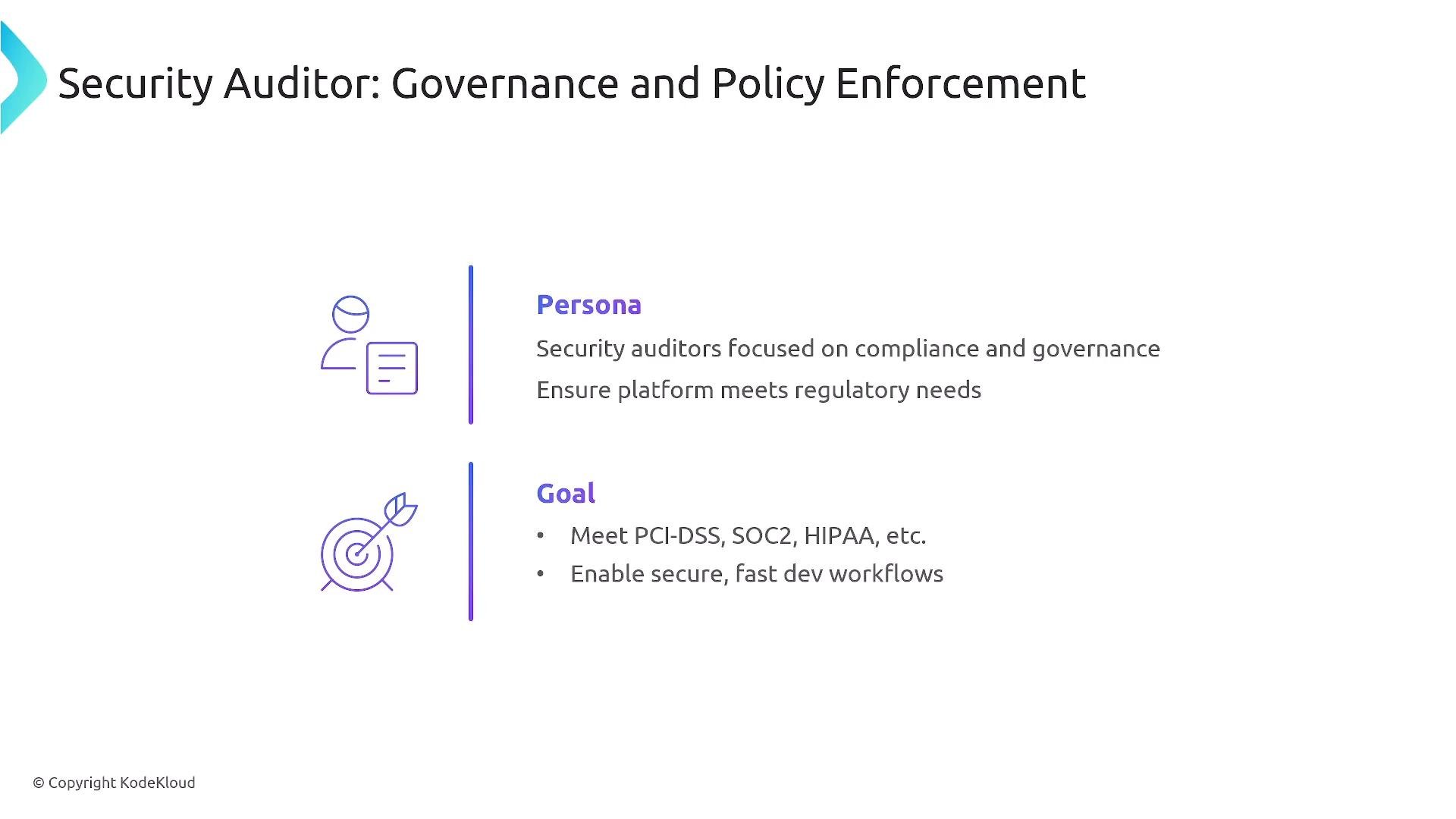
- Security/Audit: need transparency, controls, logs, and evidence for compliance (PCI‑DSS, SOC 2, HIPAA, ISO 27001).
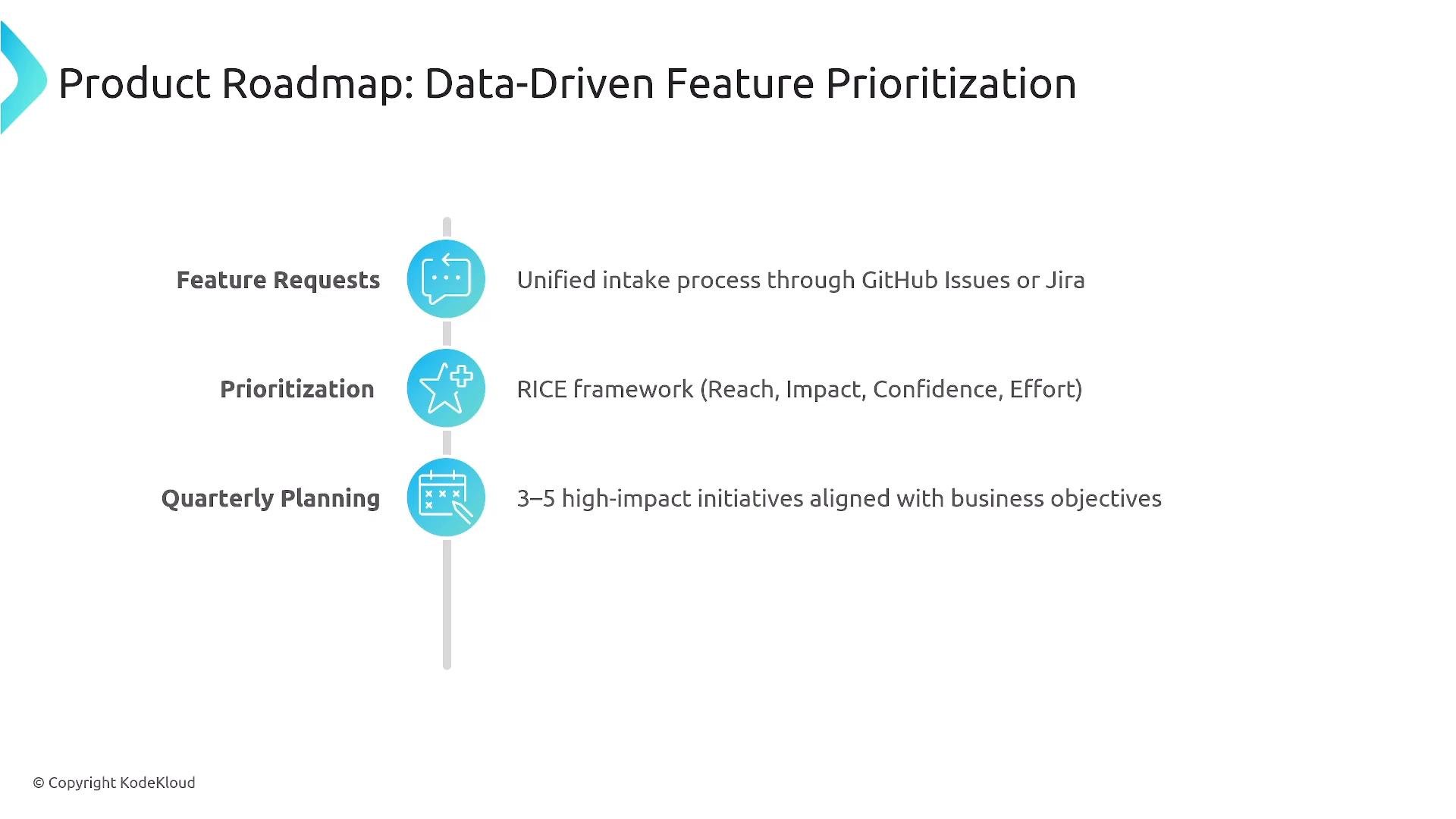
- Use a unified intake for requests and incidents (e.g., GitHub Issues, Jira).
- Prioritize via a decision framework like RICE (Reach, Impact, Confidence, Effort).
- Consider both who requests a feature and its expected business impact.
- Run quarterly planning cycles and select 3–5 high-impact initiatives or OKRs aligned to business objectives.
- Deployment speed and lead time to production
- Platform reliability and SLOs
- Adoption (percentage of teams using platform features)
- Developer satisfaction (NPS, qualitative feedback)
- Onboarding pipelines and “Hello World” templates
- Managed data services (Postgres, data lakes, object storage) with sane defaults, backups, and observability
- Auto-instrumentation: metrics and default alerts; optional logs and traces
- Self-service provisioning with guardrails for compliance and cost control
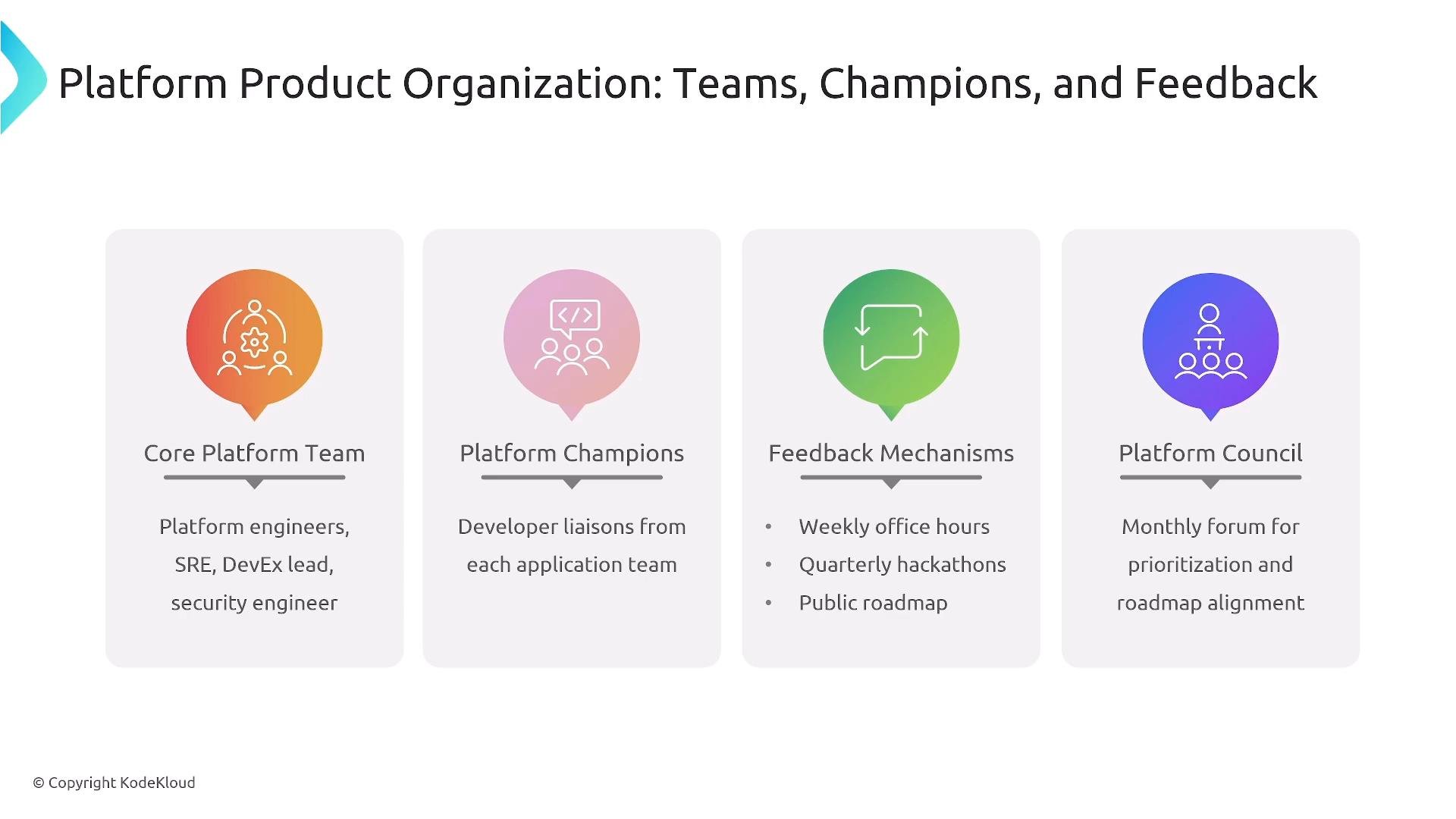
- Core platform team: builds and operates the platform components.
- Platform champions: 1–2 advocates embedded in development teams to evangelize and gather feedback.
- Feedback mechanisms: office hours, hackathons, unified tickets, and a public roadmap.
- (Optional) Platform council or architecture council to align standards and priorities.
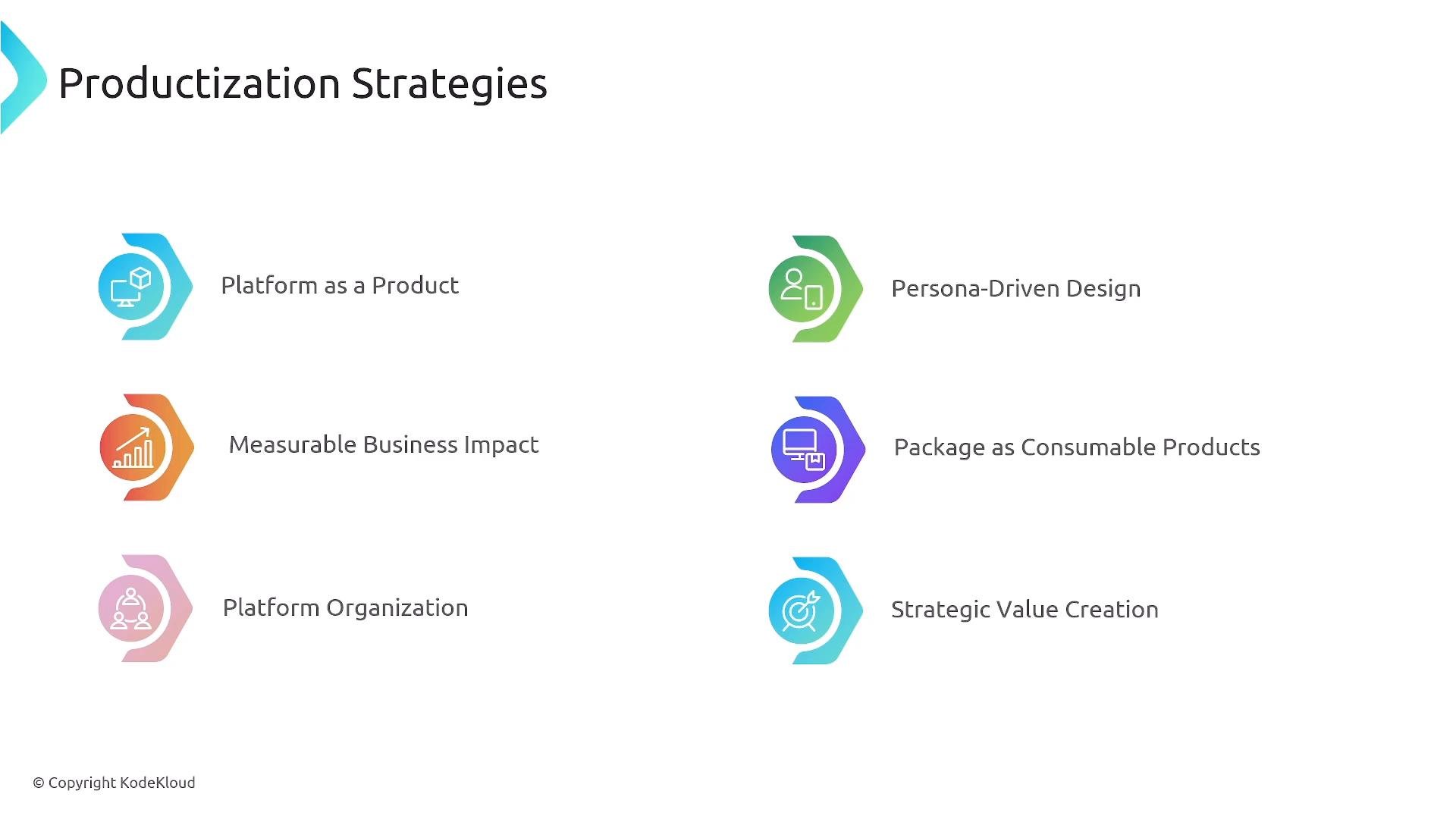
Focus on four strategic objectives: velocity, reliability, adoption, and satisfaction. Build productized, consumable capabilities and measure their impact with clear KPIs. Use data-driven prioritization and close feedback loops to evolve the platform.
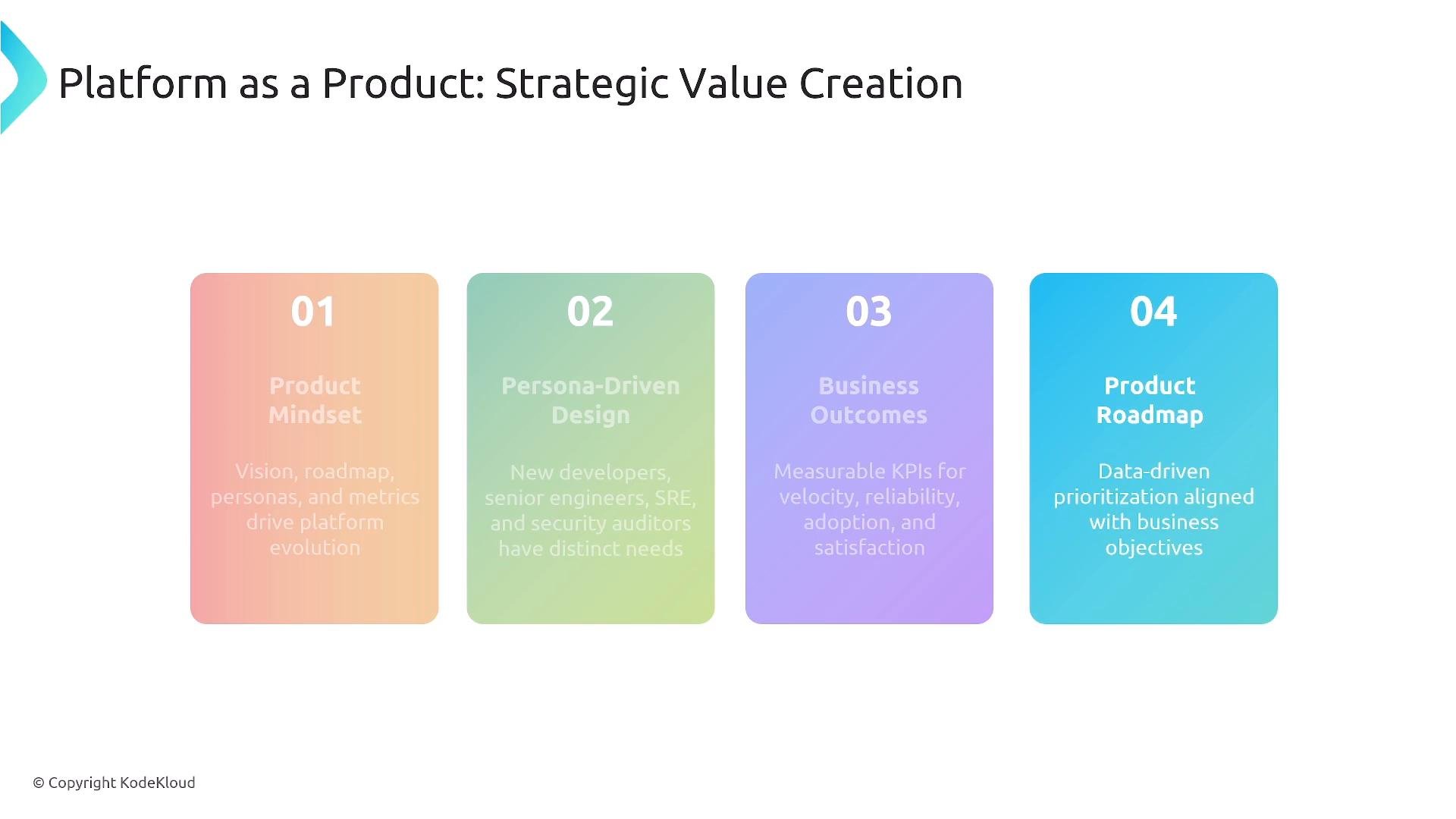
- Define a concise vision and roadmap tied to measurable business outcomes.
- Drive prioritization by persona and impact (RICE or similar frameworks).
- Package features as consumable products (databases, onboarding flows, monitoring).
- Create feedback loops and organizational roles to maintain momentum.
- RICE prioritization: https://www.productplan.com/glossary/rice-prioritization/
- GitHub Issues: https://docs.github.com/en/issues
- Jira: https://www.atlassian.com/software/jira
- Kubernetes Concepts: https://kubernetes.io/docs/concepts/