This is a high-level refresher intended to rebuild confidence. It is not a complete deep dive — take the dedicated Kubernetes for the Absolute Beginners - Hands-on Tutorial or GIT for Beginners courses if you need more detail.
Containerization basics: containers vs virtual machines
Virtual machines use hypervisor-based OS virtualization: each VM boots a full operating system with its own kernel and userland. That provides strong isolation but increases resource overhead and startup time.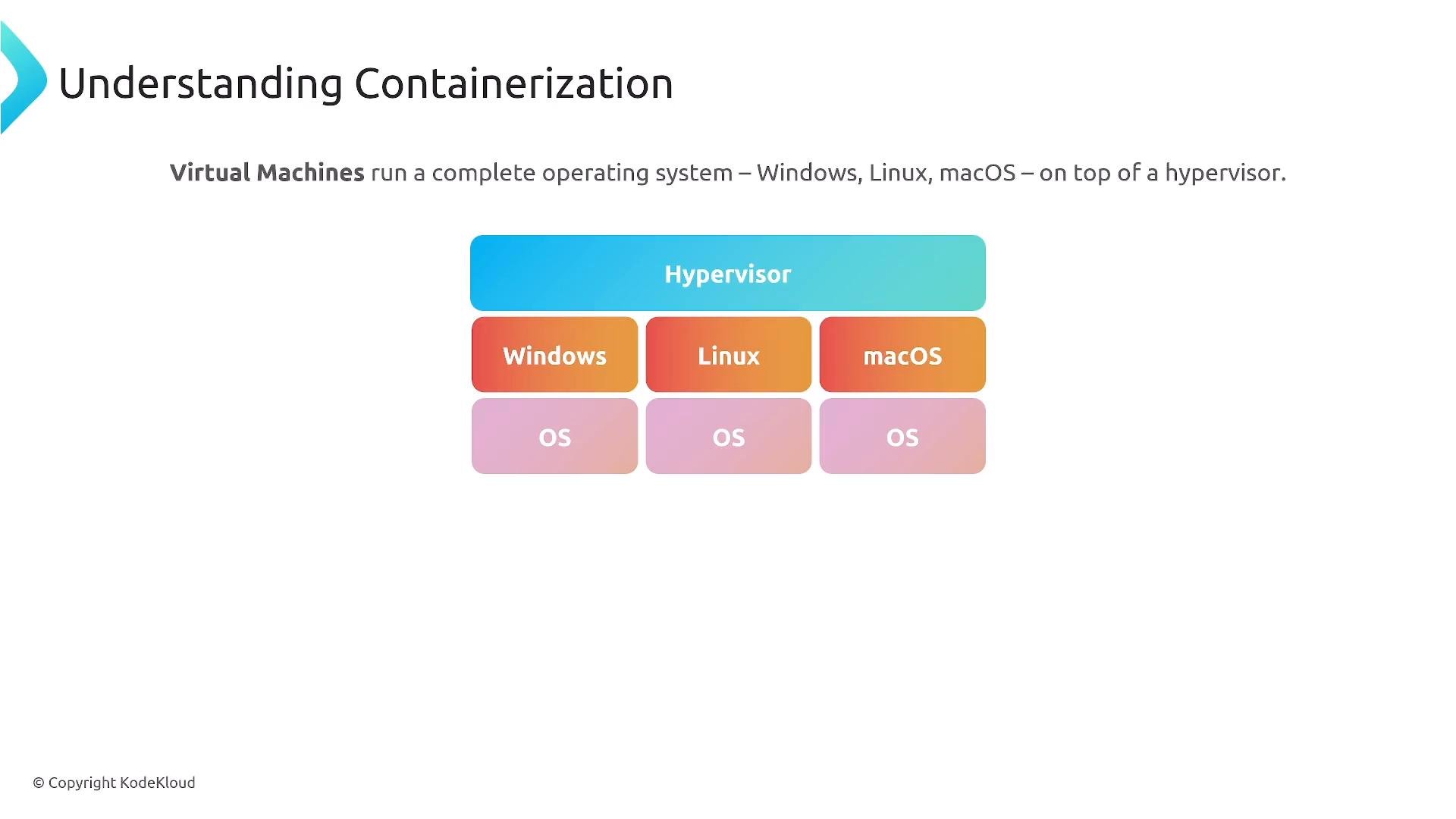
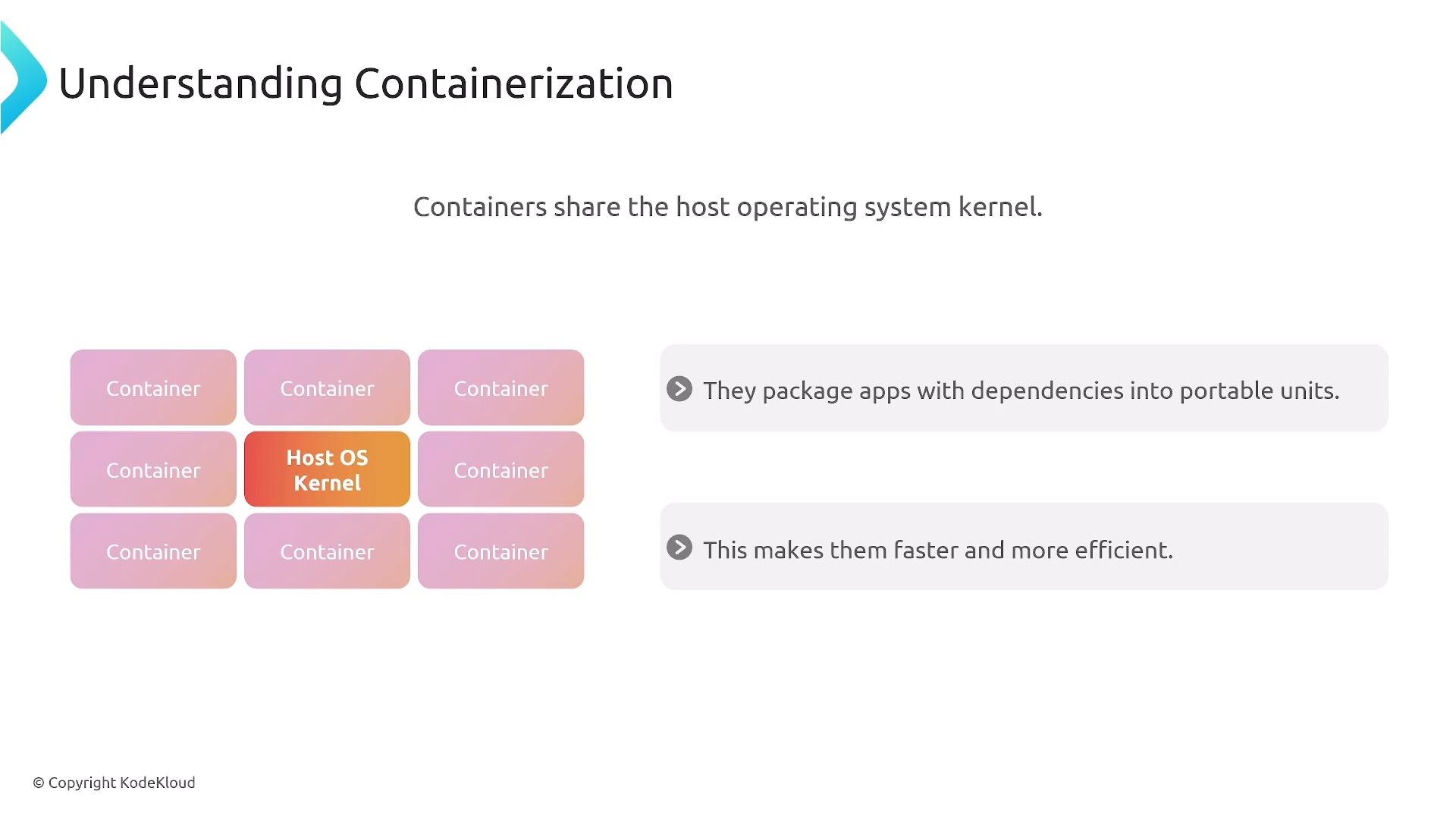
- Containers share the host kernel: Linux containers need a Linux kernel; Windows containers need a Windows kernel.
- CPU architecture matters: images built for
x86_64won’t run on ARM hosts without cross-building or emulation.
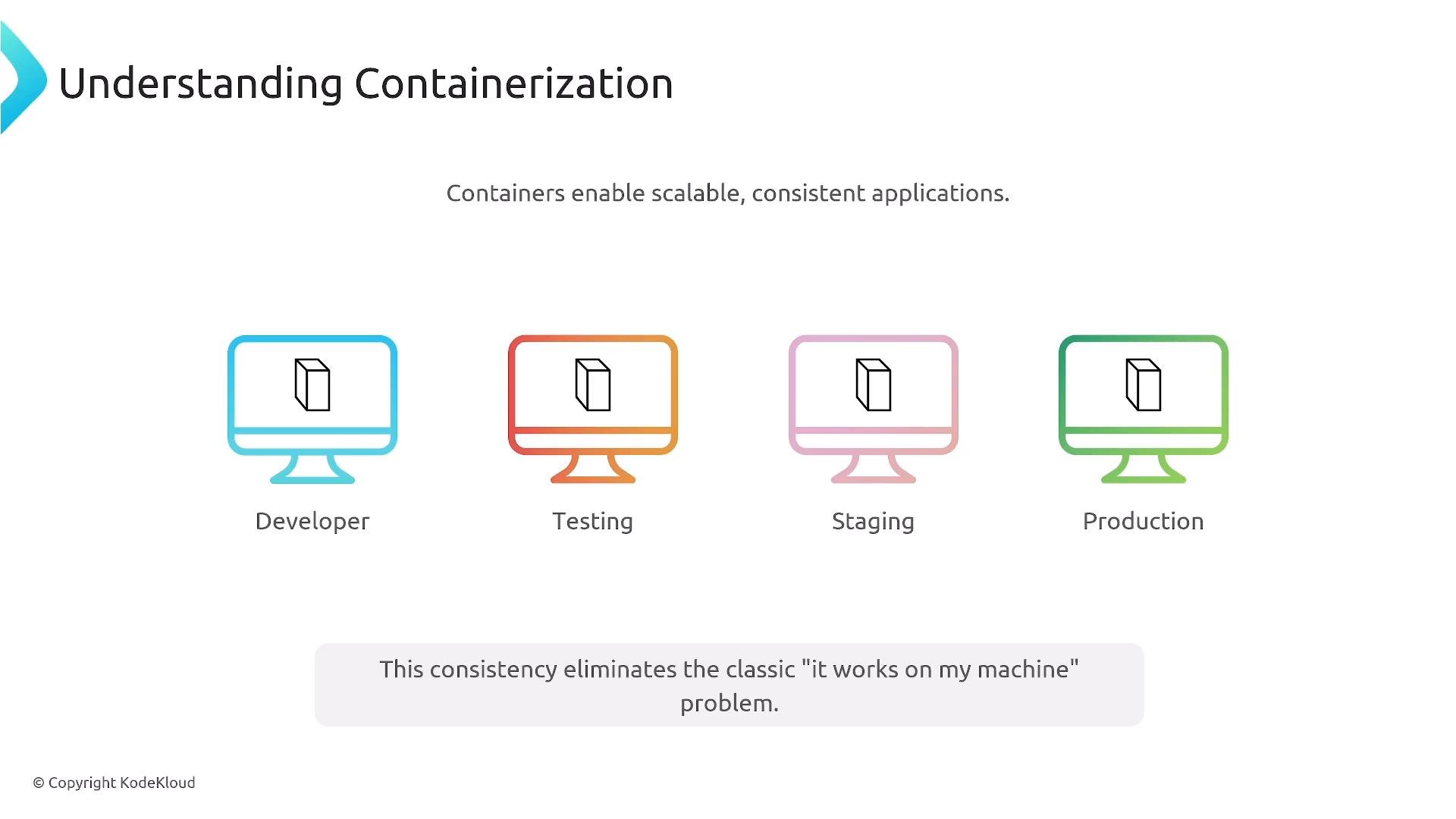
Containers are portable across similar OS and architecture families but are not OS-agnostic. Always match your container image OS/architecture to the target host.
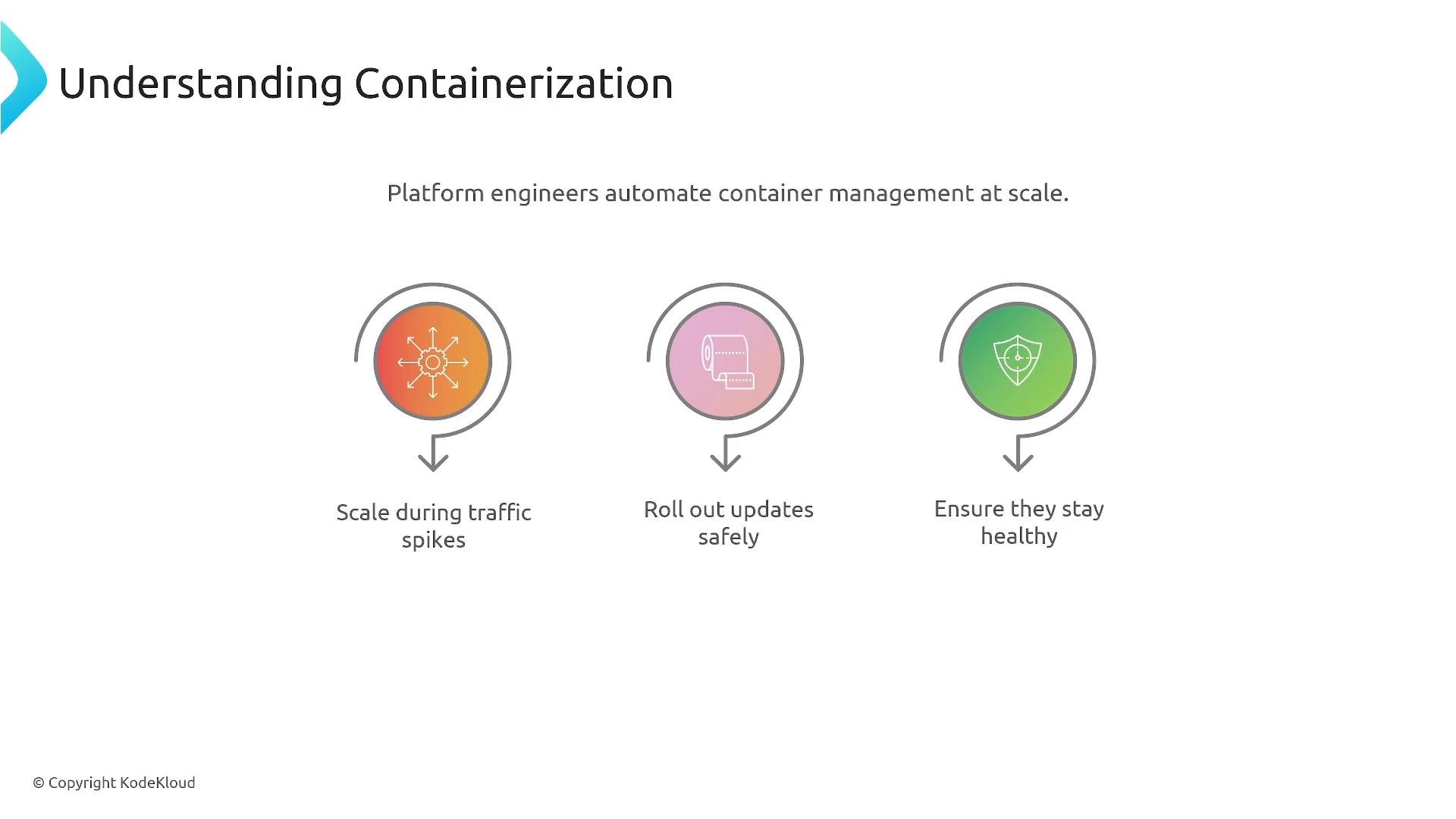
- Autoscaling and capacity planning
- Safe rollouts and rollbacks
- Continuous health monitoring and observability
What is Kubernetes? — orchestration for containerized apps
Kubernetes is the leading open-source system for automating deployment, scaling, and management of containerized applications. It orchestrates containers across a cluster, providing features such as self-healing, rolling updates, horizontal autoscaling, and resource scheduling. For platform engineering, Kubernetes is often the runtime layer that enables self-service and operational controls.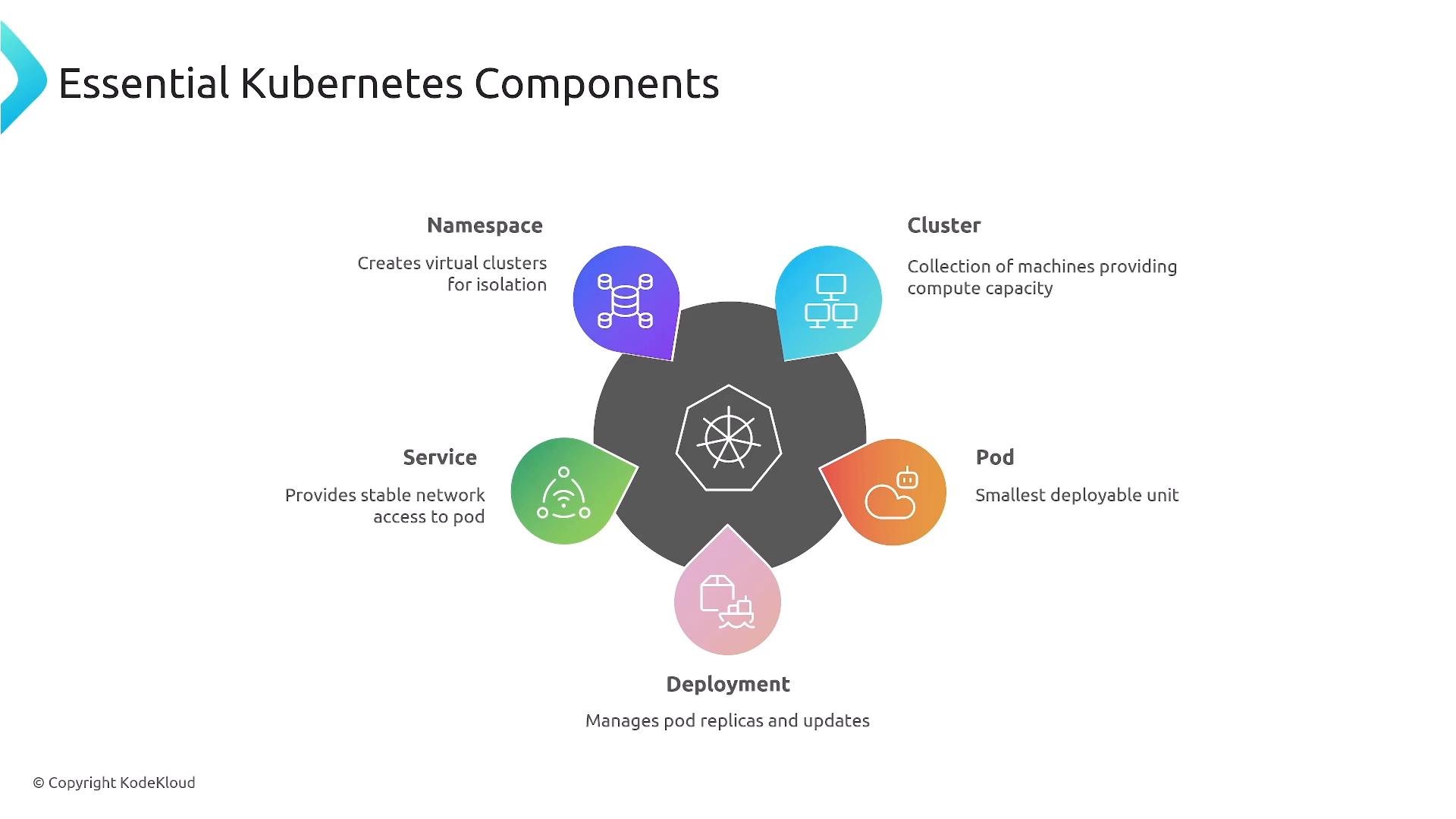
Common operational commands used in platform engineering:
Git fundamentals and Infrastructure as Code (IaC)
Git is a distributed version control system used to track changes, collaborate, and store history. Platform engineering relies on Git to version-control deployment manifests, configuration, and infrastructure-as-code templates so changes are auditable, reversible, and automatable. Typical Git workflow (concise):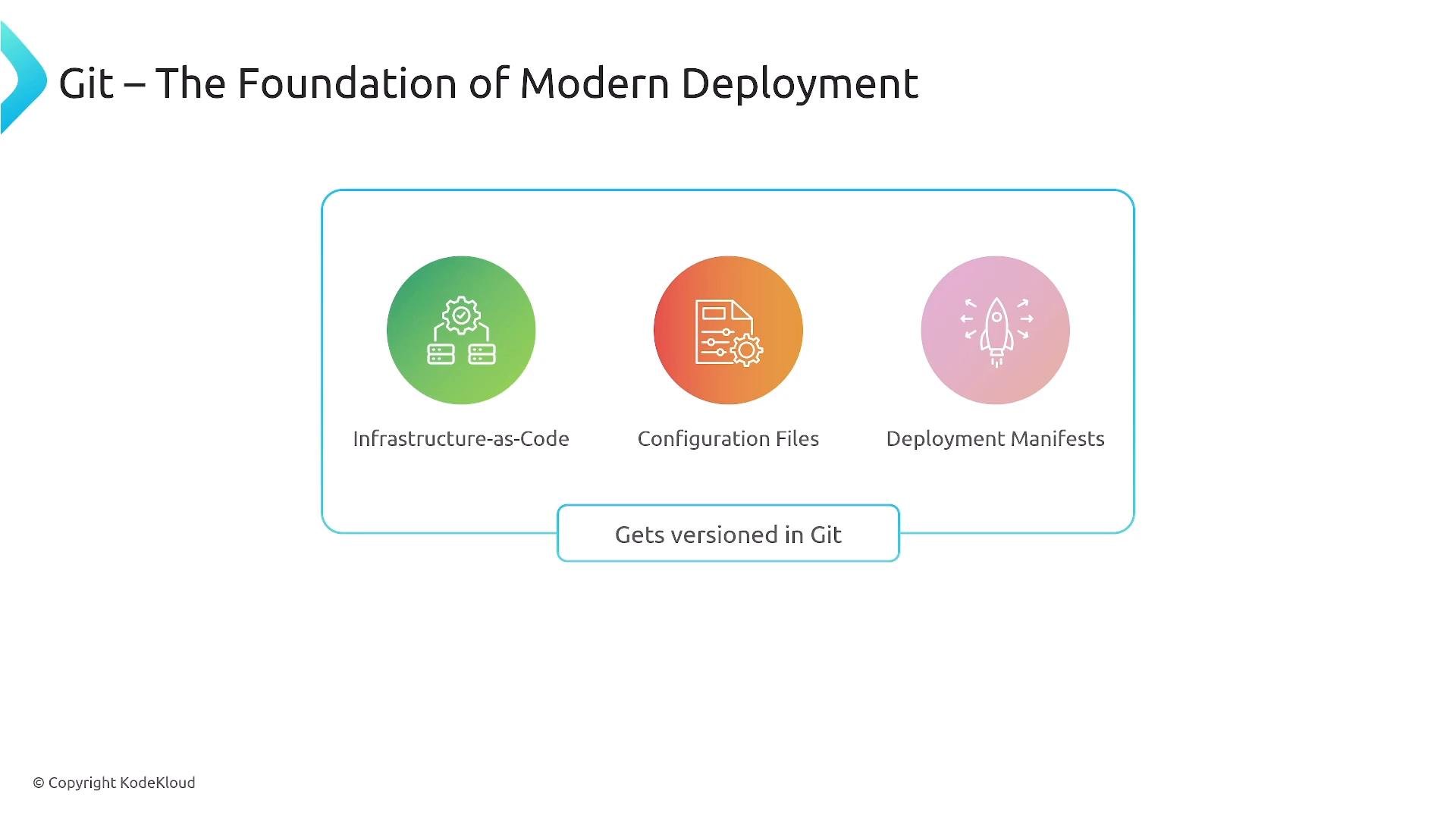
- Git documentation: https://git-scm.com/doc
- Guides on branching strategies and pull requests for collaboration
GitOps: Git as the single source of truth
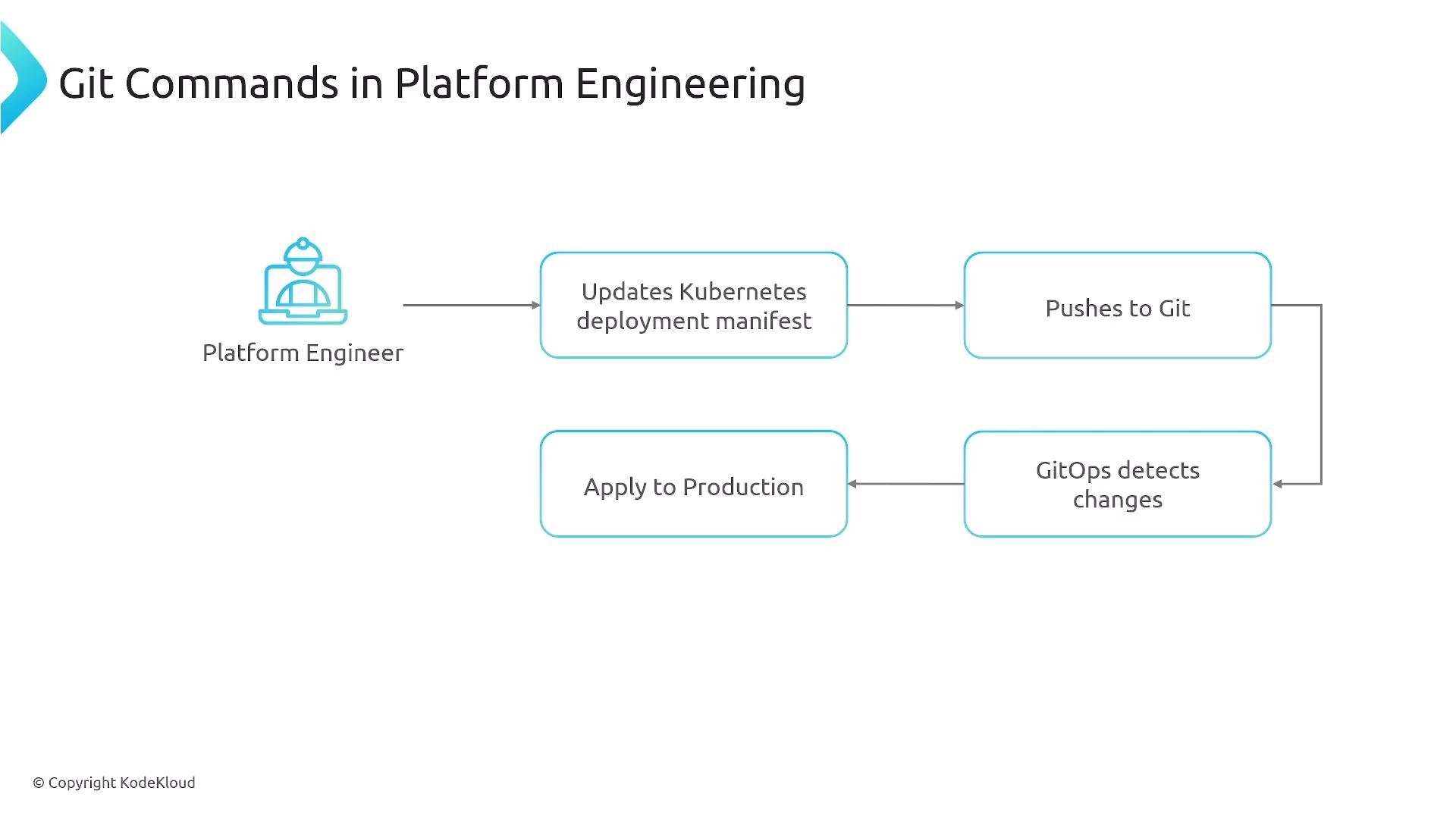
GitOps is an operational model where Git repositories hold the declarative desired state for infrastructure and applications. Automated controllers (GitOps agents) observe Git and reconcile the cluster’s actual state to match the desired state stored in Git. This makes deployments auditable, reproducible, and observable. Key benefits:- Declarative deployments and rollbacks
- Clear audit trail (who changed what and when)
- Faster recovery via reverting commits
- Argo CD: https://argoproj.github.io/argo-cd/
- Flux: https://fluxcd.io/
- GitOps overview (Weaveworks): https://www.weave.works/technologies/gitops/
Core tools that power platform engineering
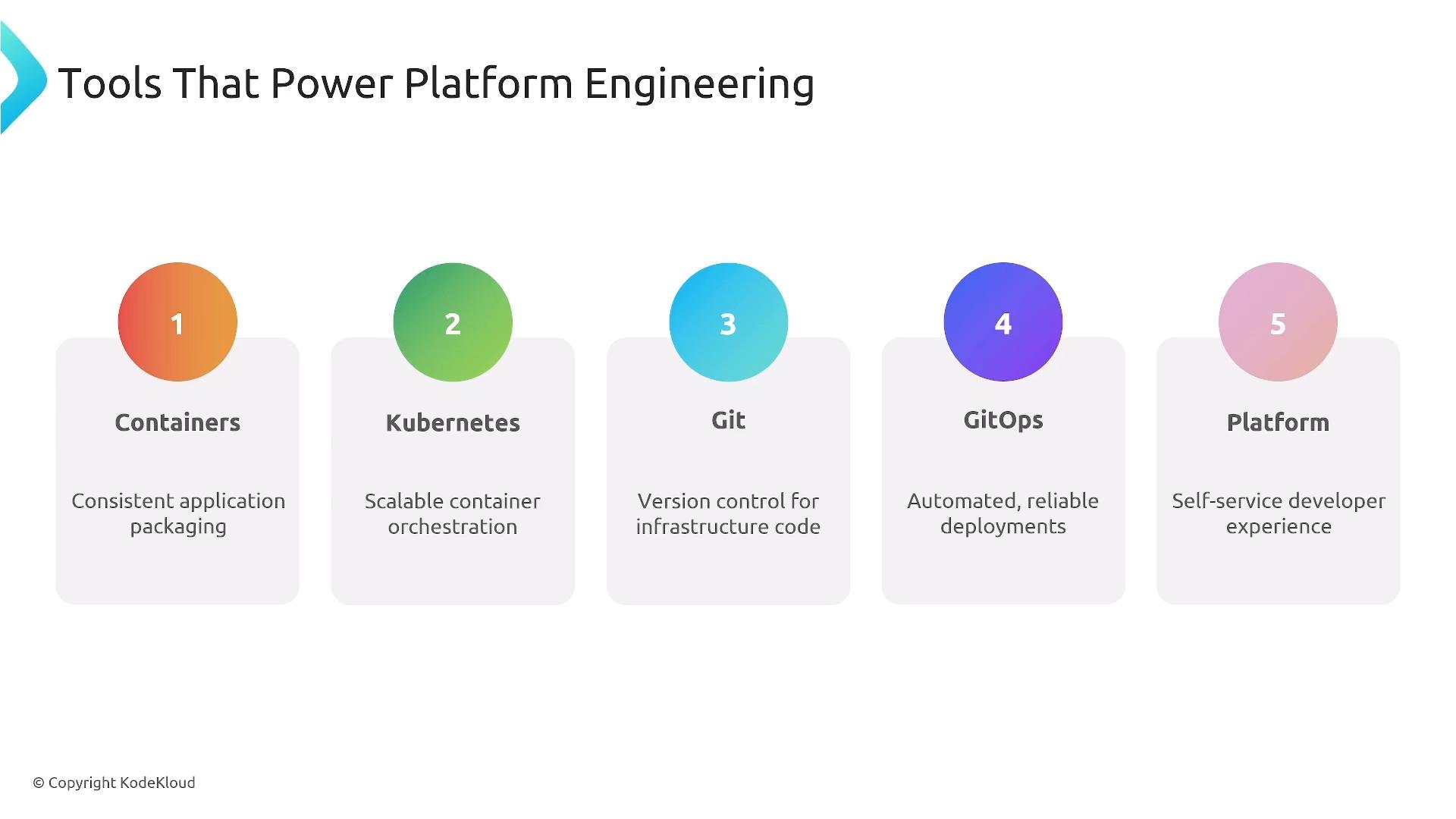
Containers, Kubernetes, Git, and GitOps are the backbone of many platform engineering initiatives. Around them, platform teams integrate supporting capabilities to create a reliable, self-service developer platform:- Service catalogs and platform APIs
- Observability (metrics, traces, logs)
- Security: vulnerability scanning, runtime protection
- Cost management and autoscaling controls
- CI/CD pipelines and image registries