

Certification validity and renewal
- CNPA certification is typically valid for two years.
- CNCF usually sends reminders ahead of expiry (commonly a 90‑day reminder and occasionally an earlier six‑month notification). Timing can vary.
- To renew, you will generally need to pass the then-current CNPA exam — follow CNCF guidance at renewal time for exact requirements.
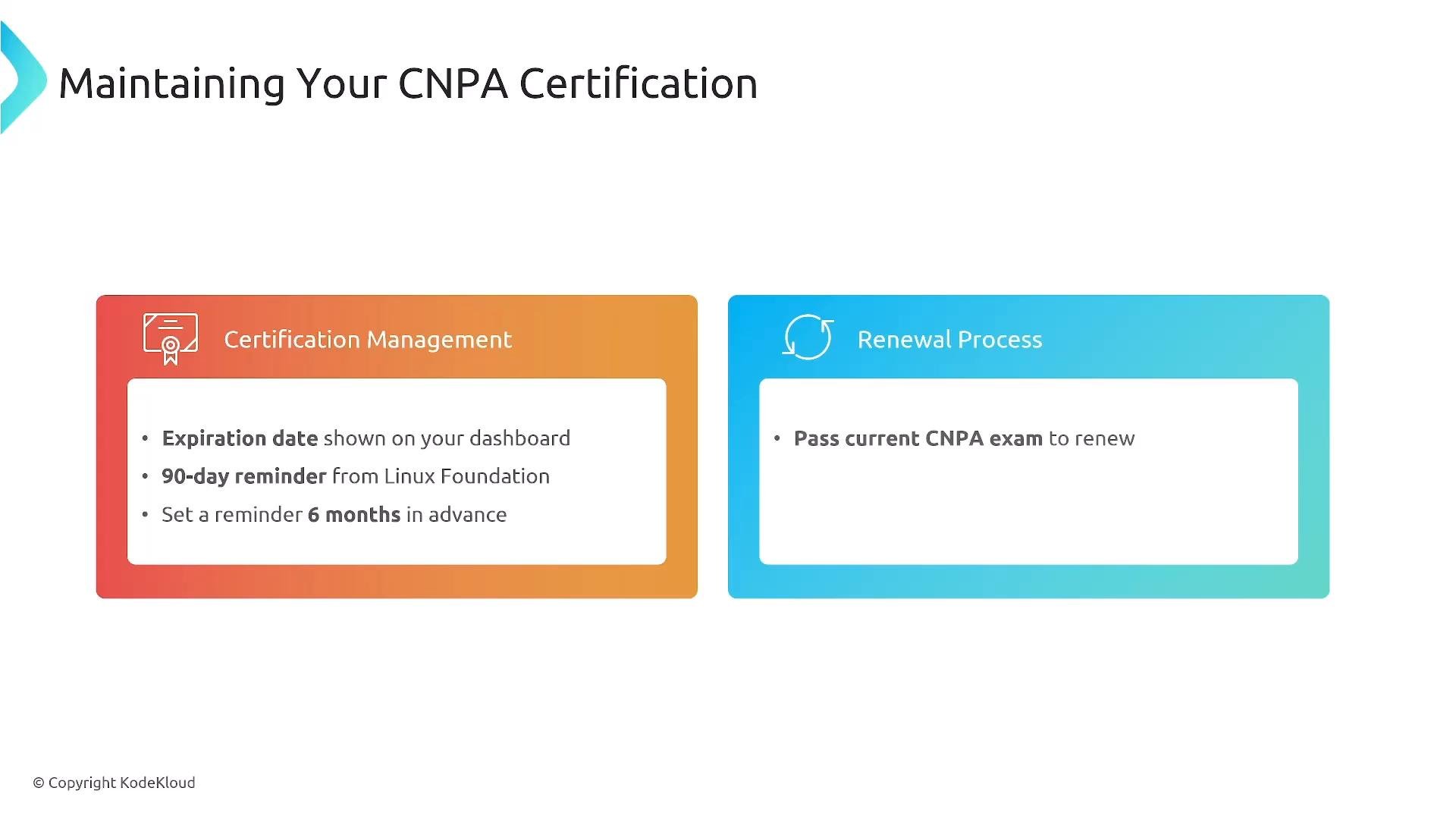
Reminder: Keep your contact and profile information current with CNCF so you receive renewal notices. Renewal requirements can change — check the official CNCF certification pages before the expiry window: CNCF Certification.
Advanced certifications — options and how to choose
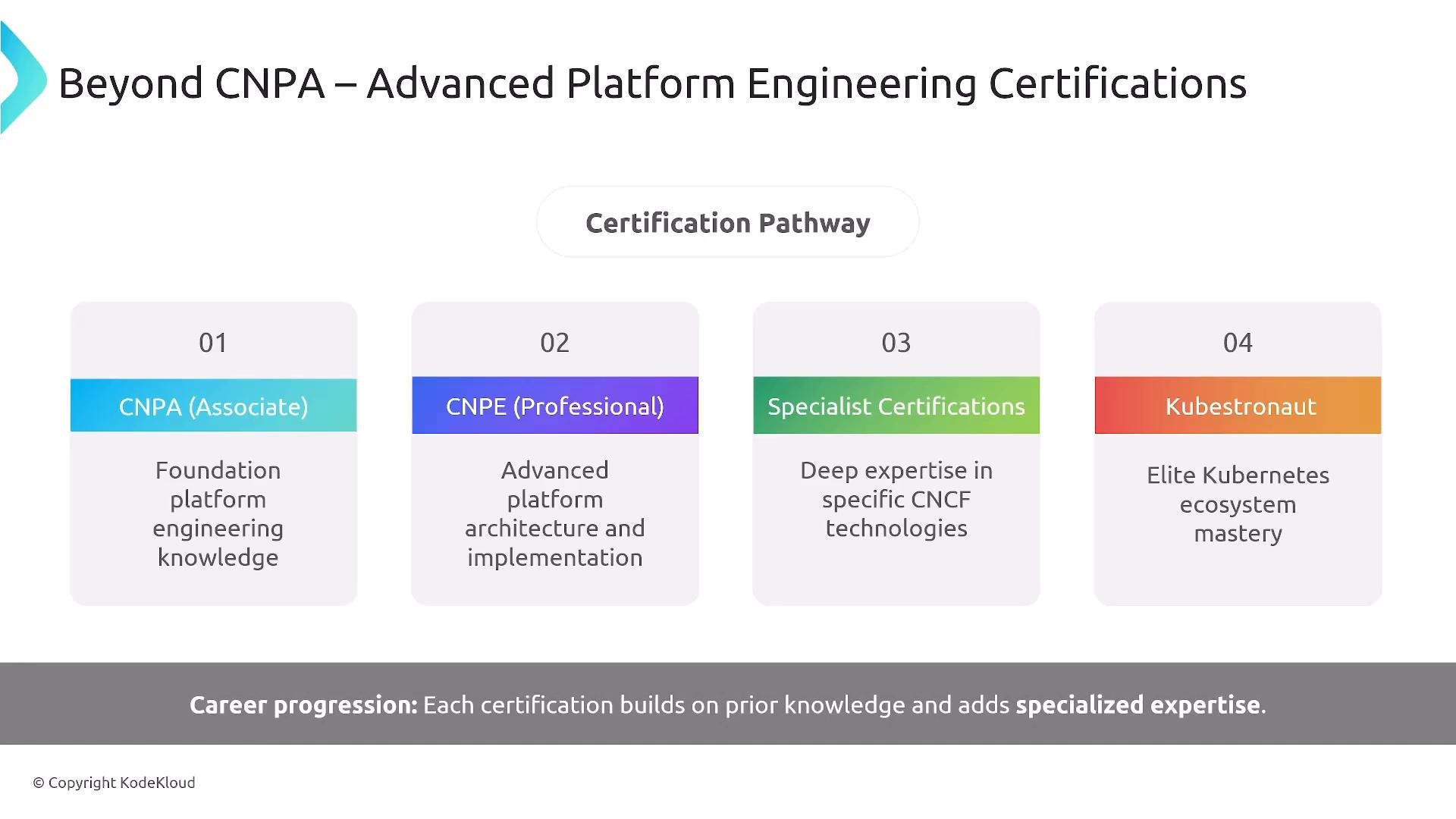
After CNPA, consider certifications that deepen your platform engineering skills or broaden into specialist areas:- Professional-level platform engineering (CNPE or equivalent): builds on the associate-level foundation and focuses on design, scalability, and operational excellence.
- Specialist certifications: domain-focused credentials in networking, observability, or security. Examples include Istio Service Mesh, Prometheus (PCA), and Cilium (CCA).
- Combined programs: multi-certification tracks that demonstrate cross-domain expertise across Kubernetes, observability, networking, and security.
- Istio Service Mesh (example training)
- Prometheus Certified Associate (PCA)
- Cilium Certified Associate (CCA)
About the next-level platform engineering certification: timeline & candidate profile
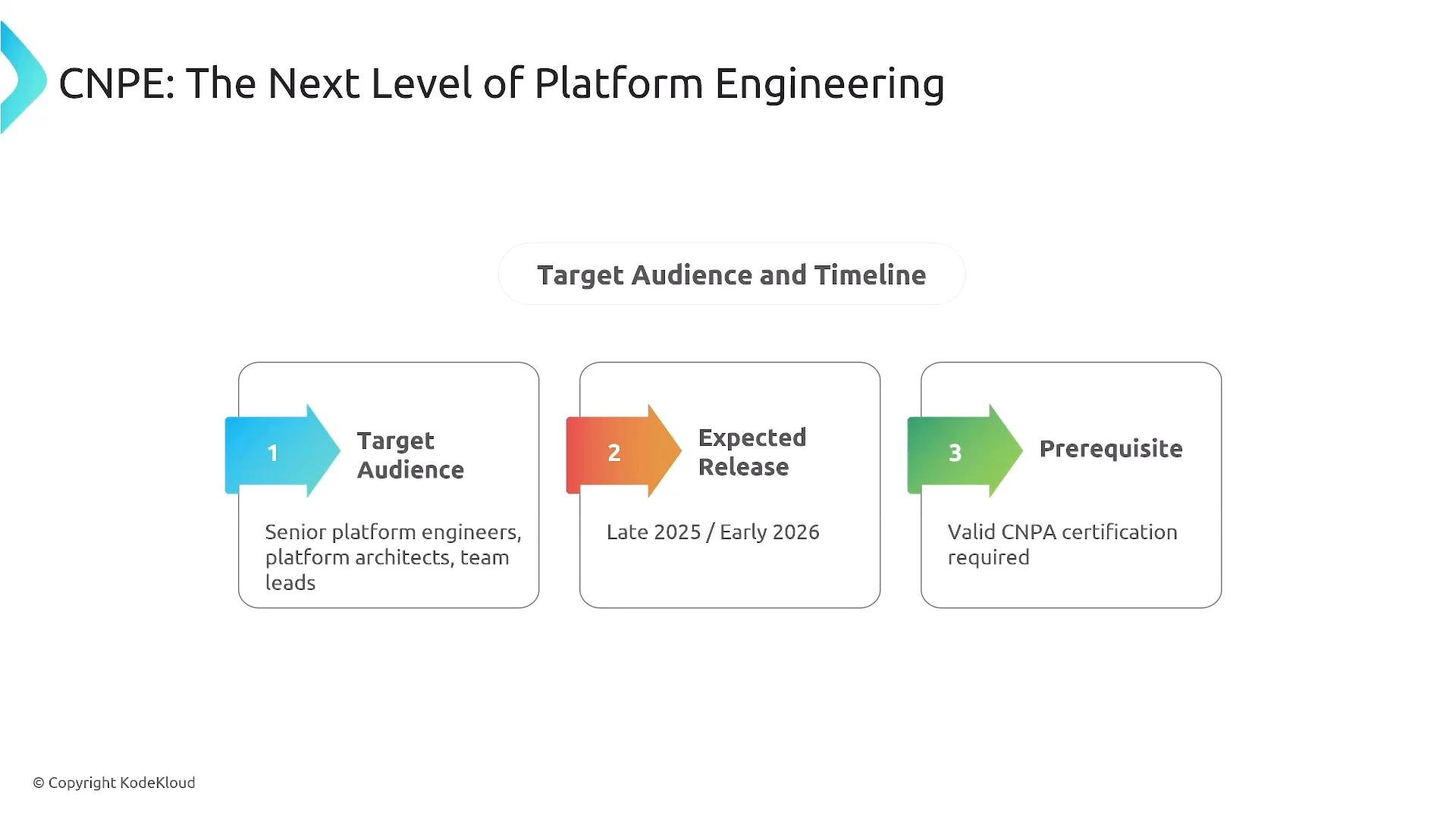
- Target audience: senior platform engineers, platform architects, and team leads responsible for designing, operating, and scaling platform capabilities.
- Expected timeline: CNCF sets announcement and launch dates. Check official channels for confirmed dates and details.
- Prerequisite: CNPA or the equivalent associate-level certification is likely to be required.
Career paths opened by CNPA
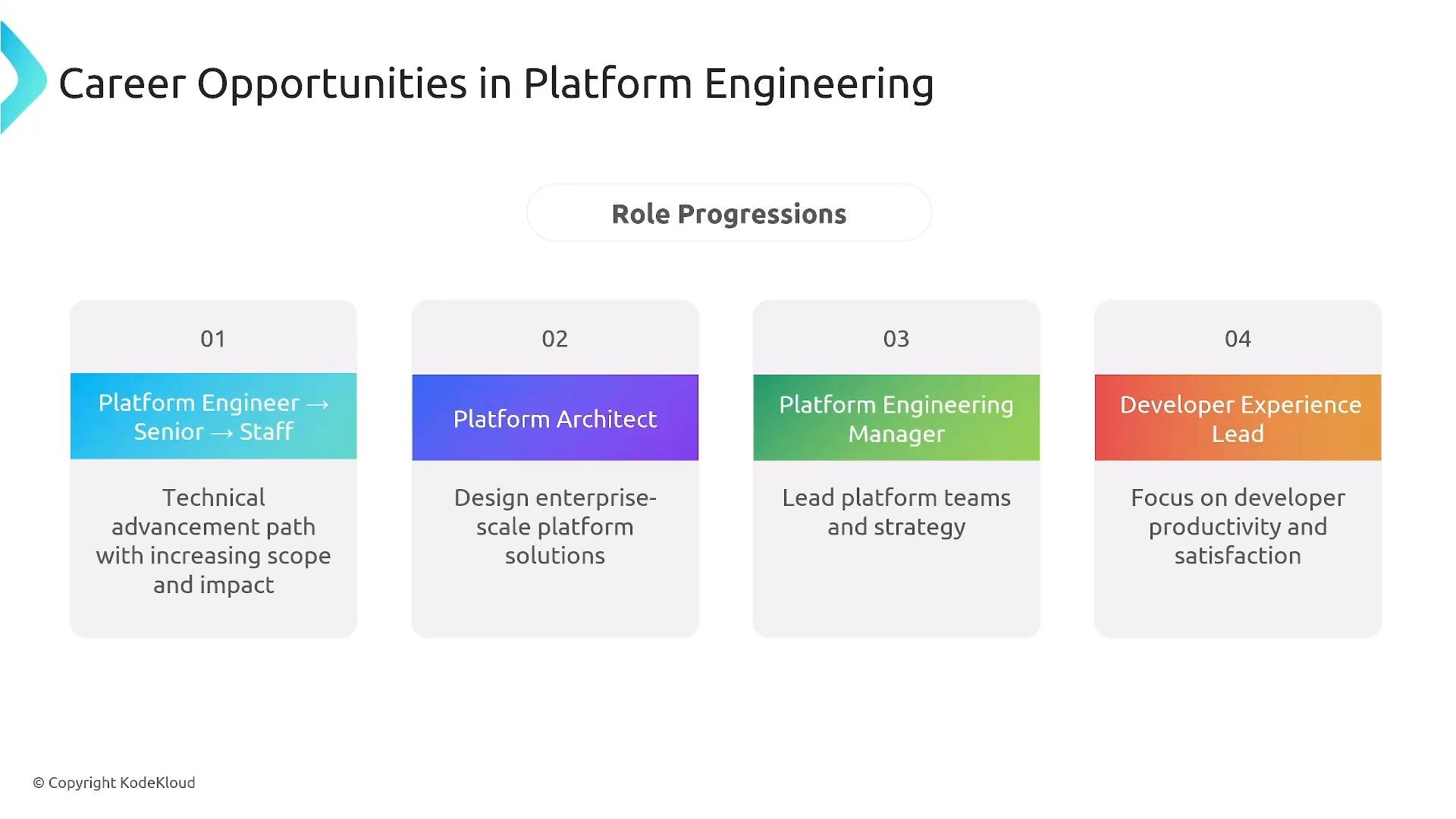
CNPA provides a foundation for many platform engineering roles. Common progressions include:- Platform Engineer → Senior / Staff Platform Engineer: hands-on implementation and feature delivery.
- Platform Architect: design and specification of enterprise-scale platform solutions.
- Platform Engineering Manager: leading platform teams, strategy, and delivery.
- Developer Experience Lead: improving developer workflows, tooling, and productivity on the platform.
Staying current — community, learning resources, and events
Maintain momentum by combining learning, practice, and community involvement:- CNCF resources: explore CNCF project pages, white papers, and the official blog for best practices and ecosystem updates (CNCF Blog).
- Podcasts and newsletters: subscribe to platform-engineering and DevOps podcasts and curated newsletters to receive weekly or monthly updates.
- Events and conferences: attend industry events such as KubeCon + CloudNativeCon, PlatformCon, and DevOps Enterprise Summit for talks, workshops, and networking: KubeCon + CloudNativeCon.
- Community contributions: participate in SIGs, Slack channels, GitHub projects, and local meetups. Contributing to open-source projects or sharing blog posts raises visibility and sharpens skills.
Practical tip: Build a study plan that mixes hands-on labs, reading, and community engagement. Real-world practice — labs, open-source contributions, or implementing platform components at work — accelerates learning and retention.
Key takeaways
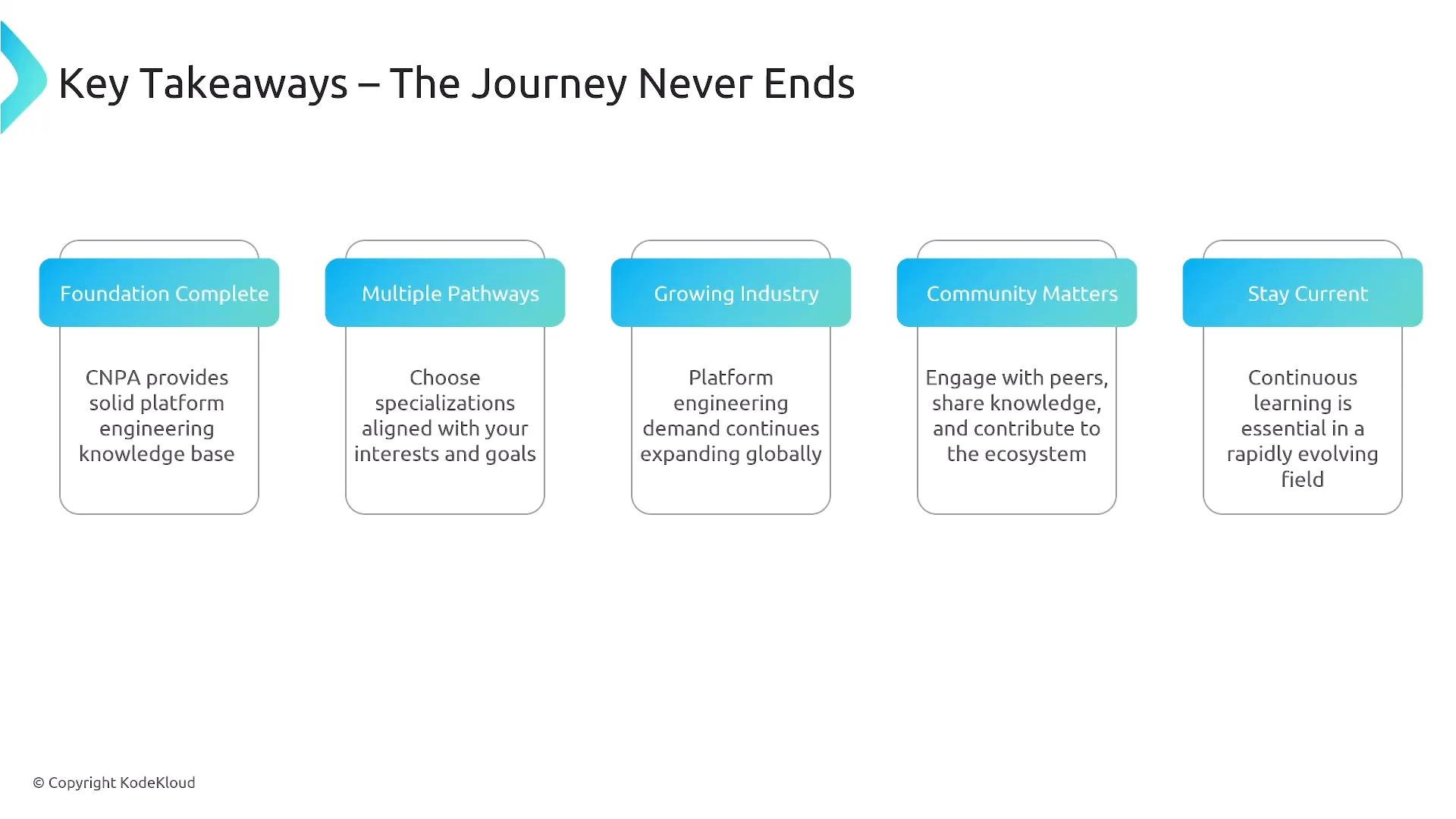
- CNPA is a strong foundation for platform engineering careers.
- Certification typically lasts two years; monitor CNCF communications for renewal steps.
- Consider professional-level platform engineering certification (CNPE or equivalent) and specialist credentials to deepen and broaden expertise — always verify prerequisites and program details before planning.
- Platform engineering evolves quickly — continuous learning, community involvement, and hands-on practice are essential for career growth.
- The journey continues: advancing your skills improves both your career and the way software is built and delivered across organizations.
Links and references
- CNCF Certification: https://www.cncf.io/certification/
- CNCF Blog: https://www.cncf.io/blog/
- KubeCon + CloudNativeCon: https://events.linuxfoundation.org/kubecon-cloudnativecon/