

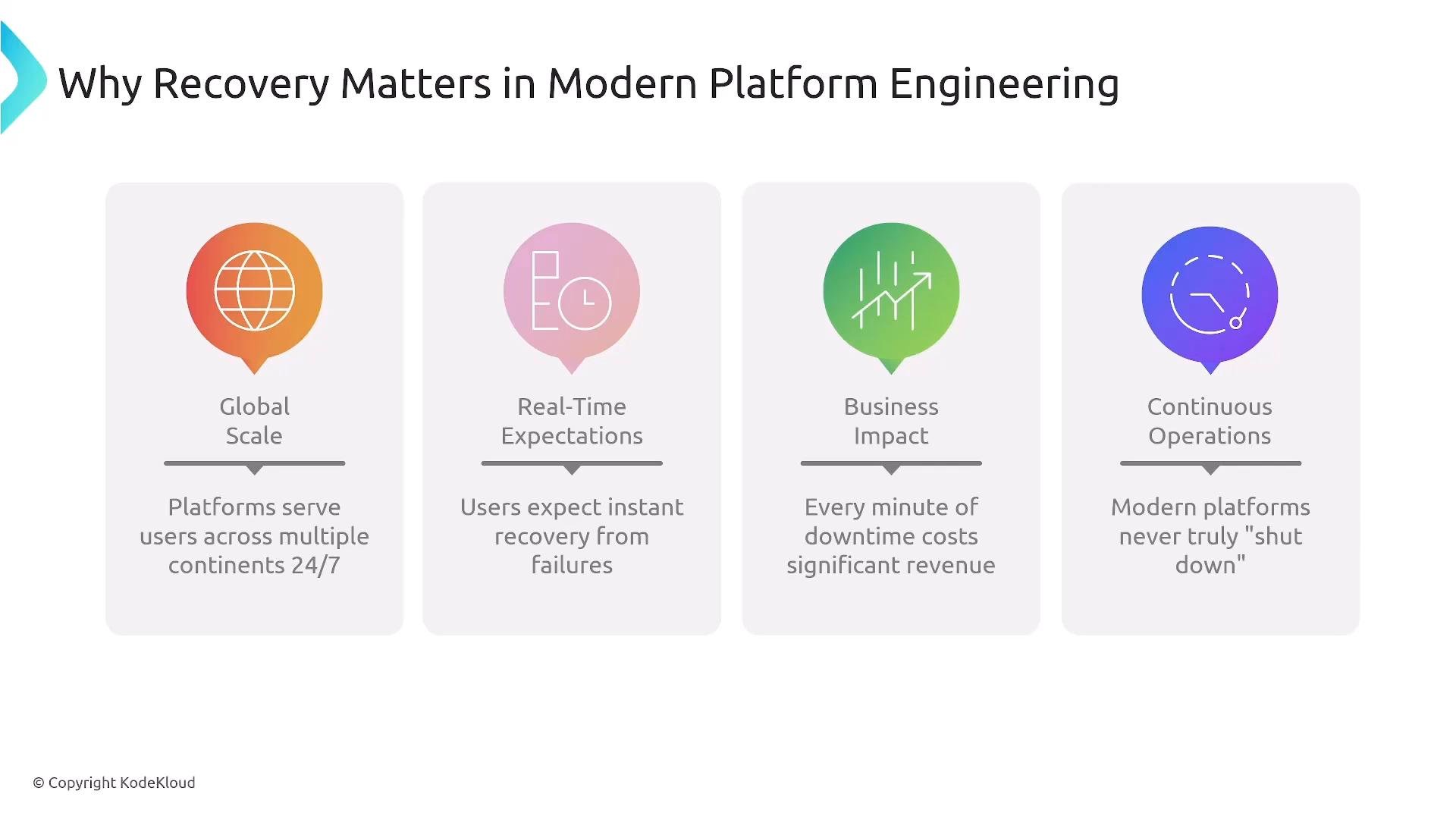
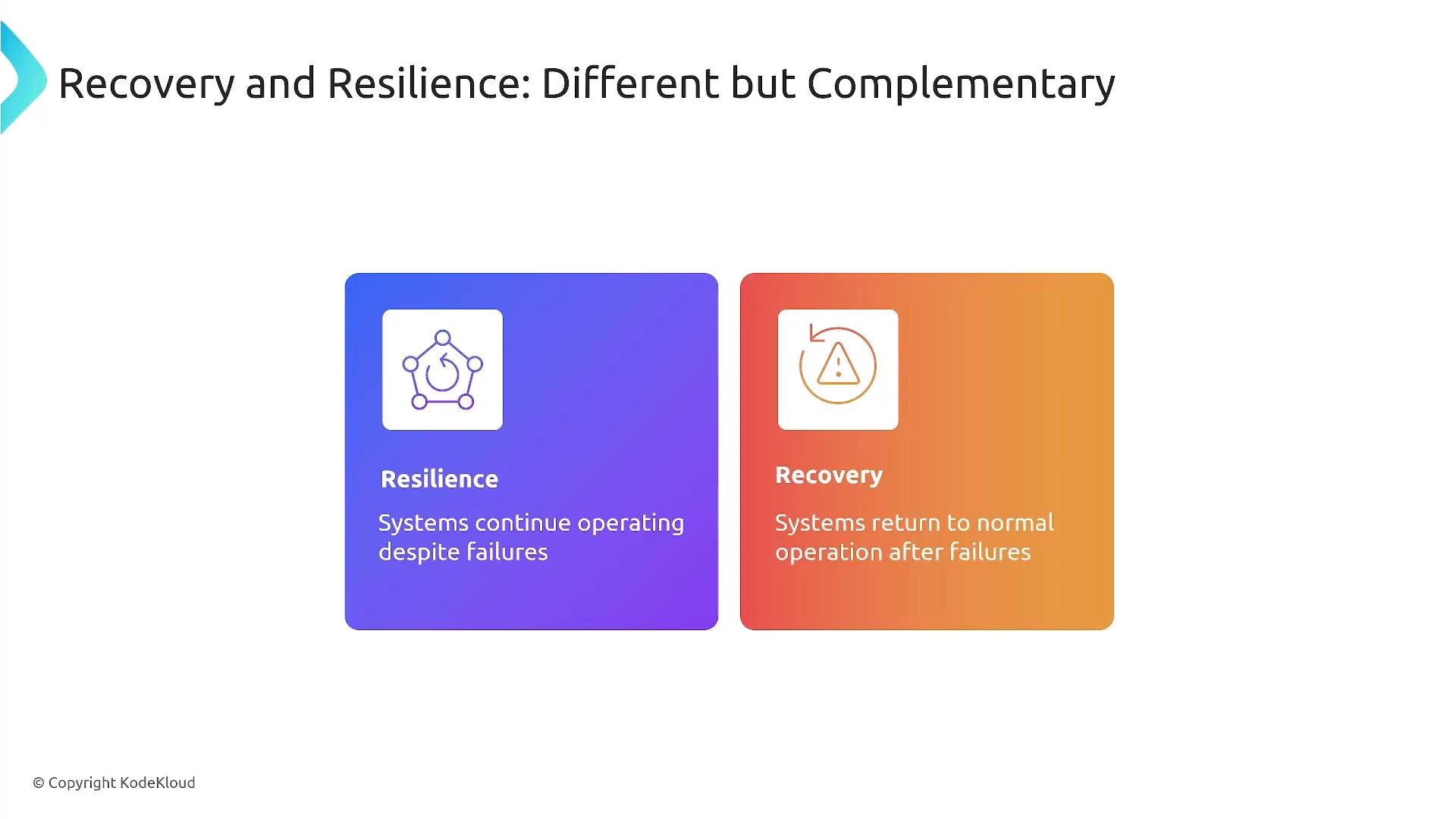
Resilience vs. Recovery
Resilience and recovery are related but distinct concepts:- Resilience: the system continues operating despite failures (for example, Kubernetes restarting pods, or redundant load balancers routing around a failed node).
- Recovery: returning the system to its normal state after a failure (for example, restoring from backups after a data center outage).
Measuring Recovery: MTTR and Performance Tiers
A key recovery metric is MTTR (mean time to recovery). MTTR measures the time from incident start until the service is fully restored. It directly affects user experience, developer velocity, and revenue.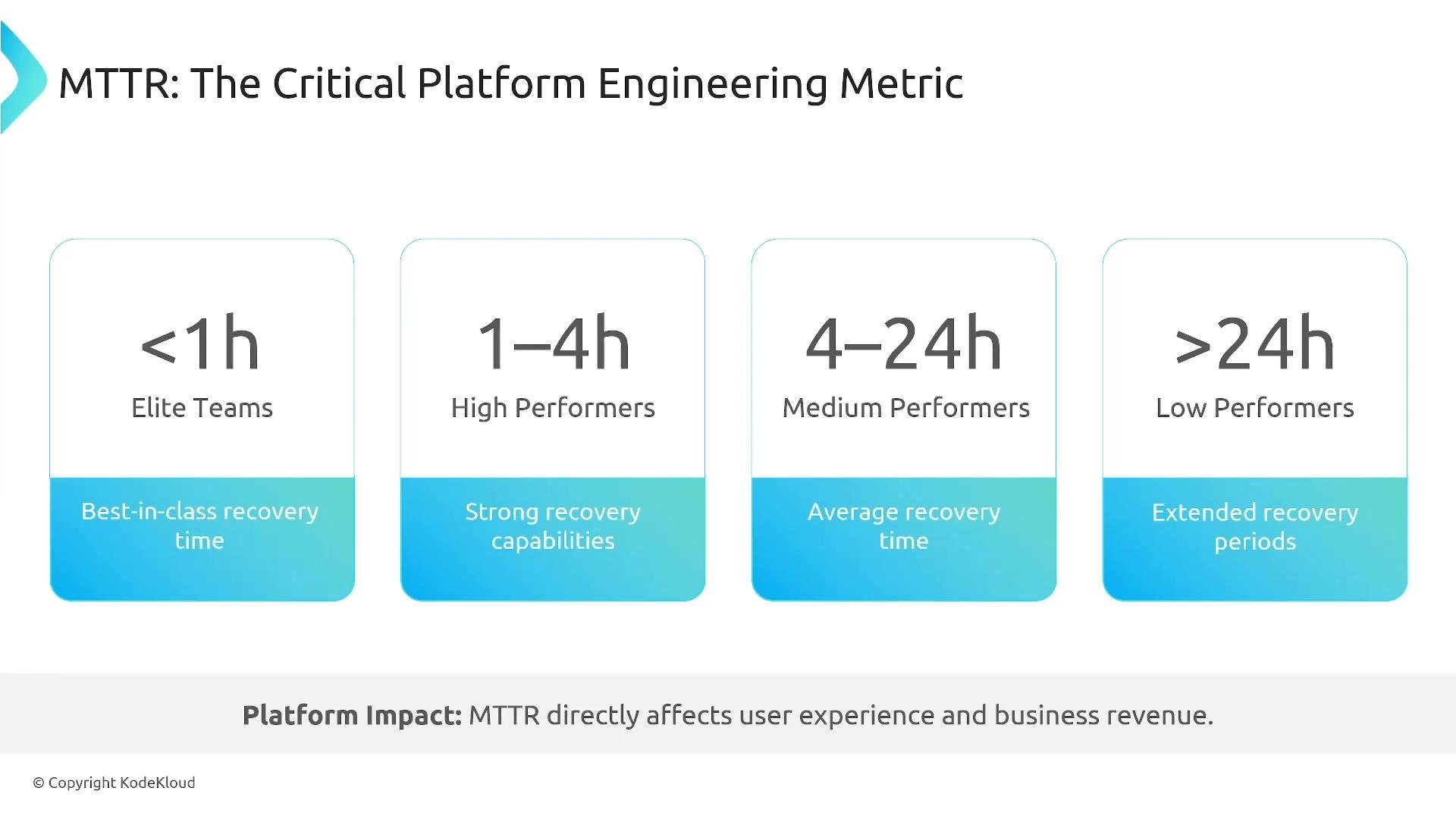
Classifying Incidents (Severity Levels)
Classify incidents to set response priorities and ensure the right people and processes are engaged.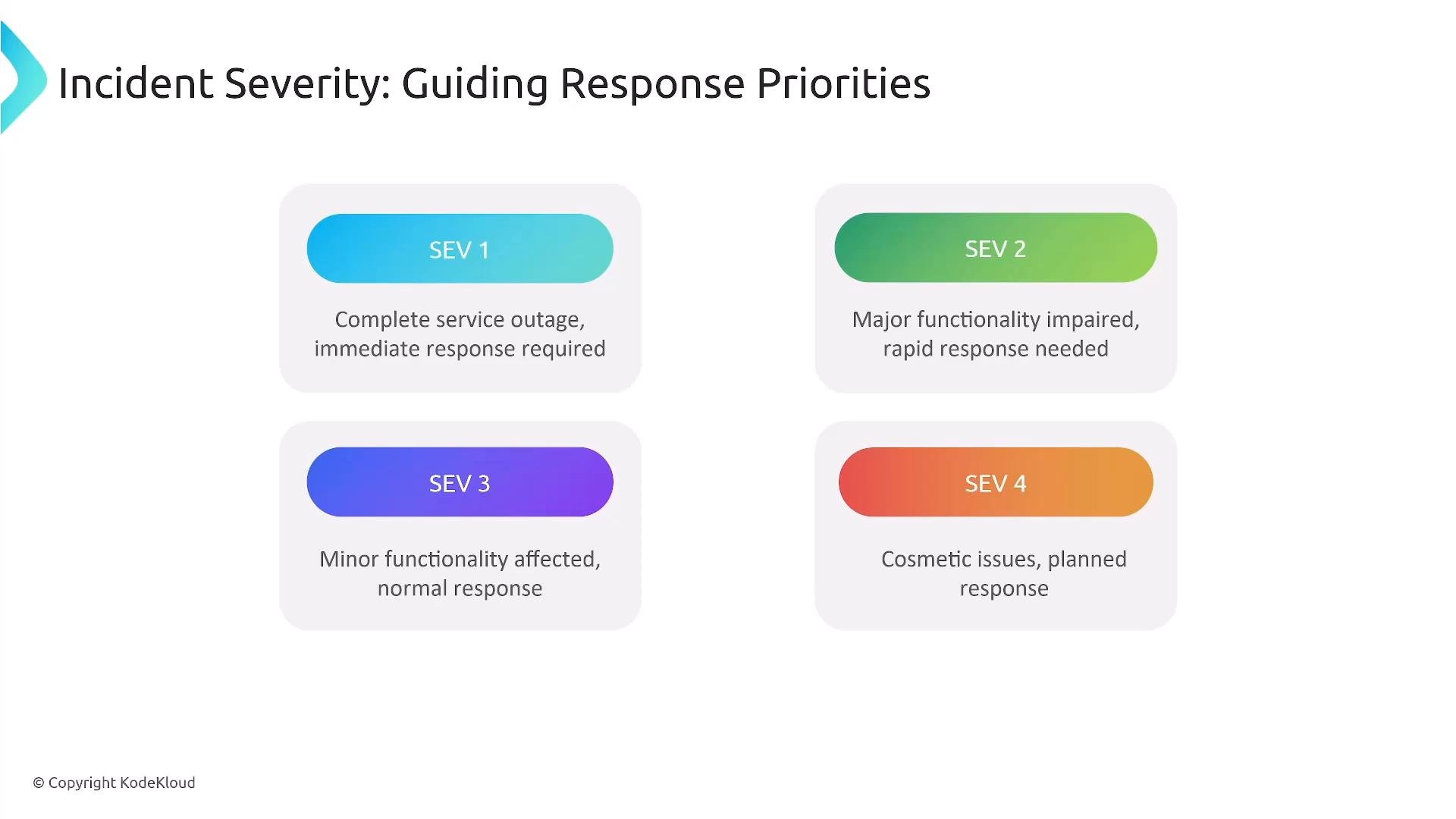
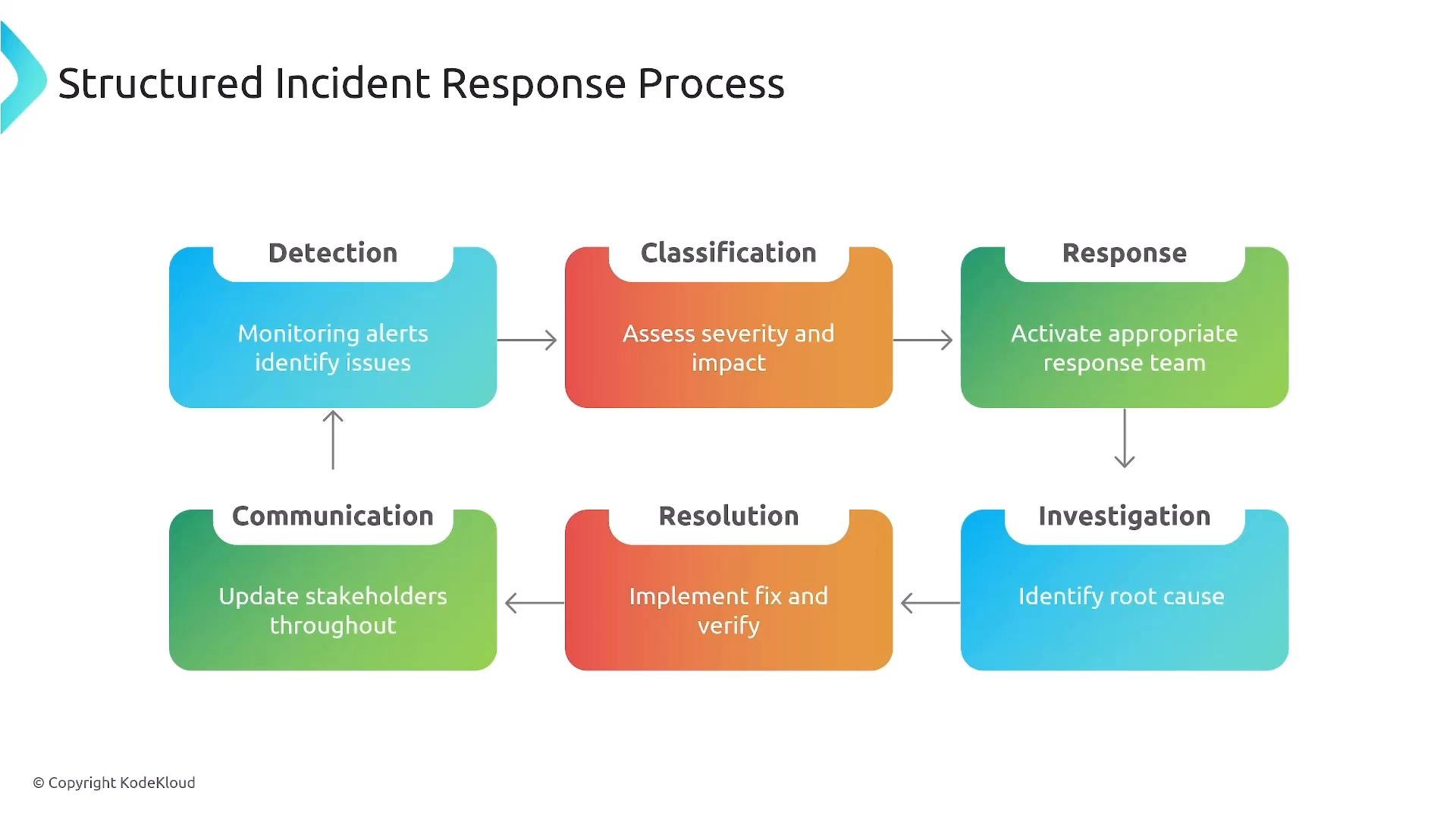
Structured Incident Response Process
A repeatable incident response flow reduces confusion and shortens MTTR. Common stages:- Detection
- Classification / Evaluation
- Response (including decisions to defer or escalate)
- Investigation
- Resolution (implement fix)
- Communication
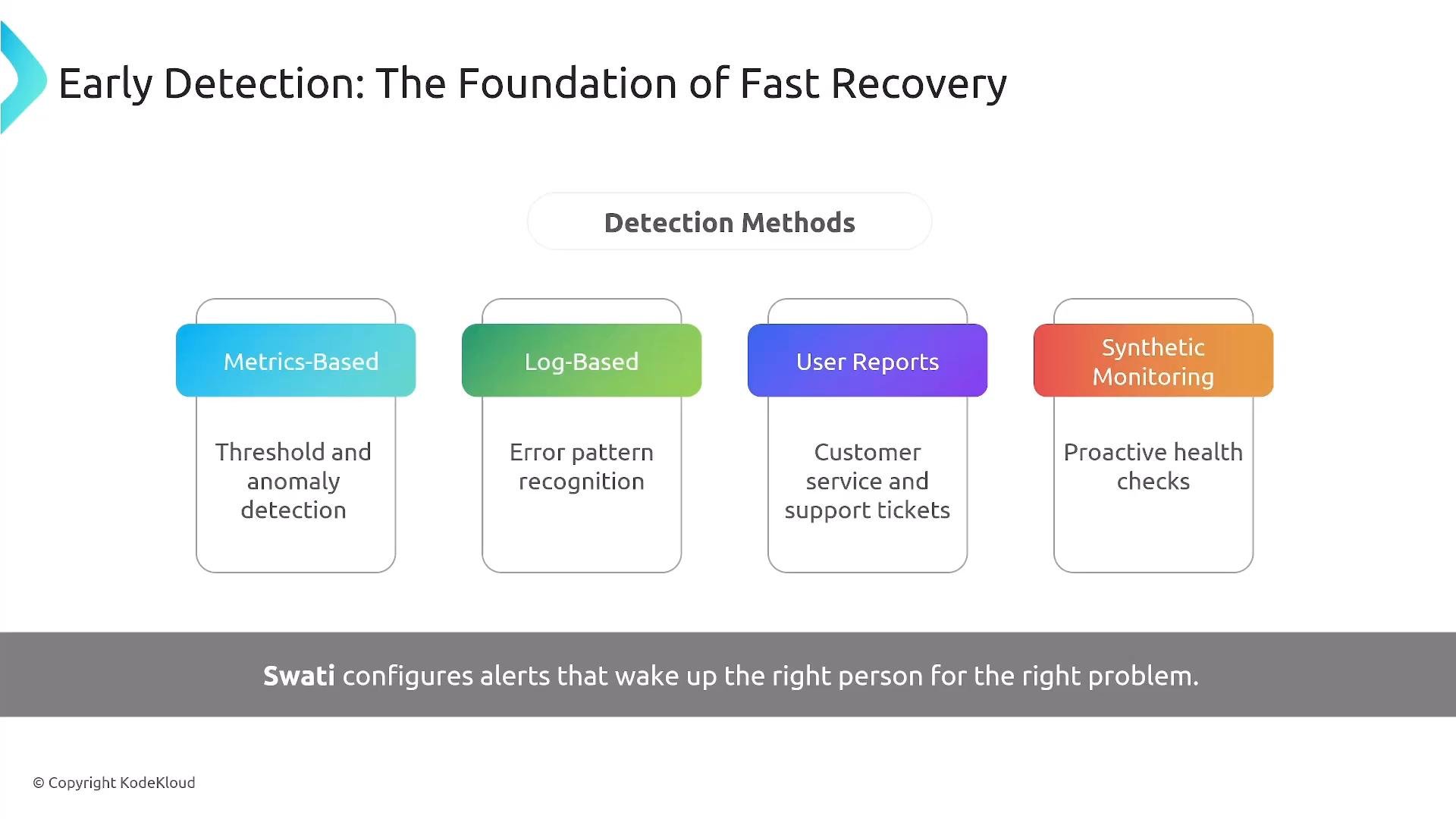
Early Detection: Sources and Best Practices
Early detection is essential for fast recovery. Typical sources:- Metrics-based alerts (thresholds, anomaly detection)
- Log-based alerts (error rates, state changes)
- User reports (support tickets, social channels)
- Synthetic checks (automated probes and health checks)
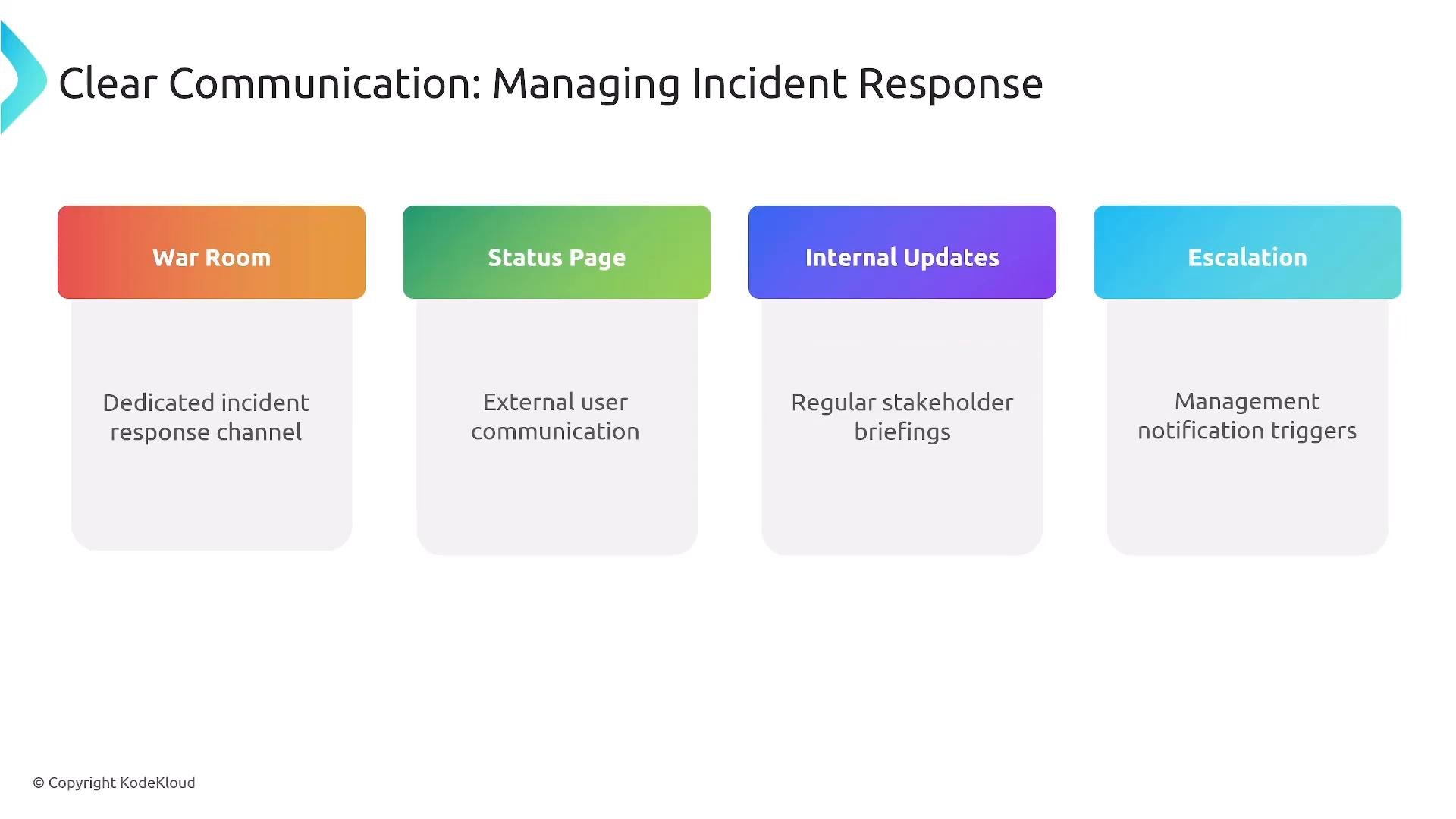
Communication During Incidents
Define channels and policies ahead of time so communication is clear and consistent:- War room: a dedicated incident response channel (Slack, Teams, Discord)
- Status page: public updates for users
- Internal updates: scheduled stakeholder briefings
- Escalation rules: automated triggers for management notification
When communicating externally, provide an estimated recovery time and update cadence. SPR should notify users when Sparkle Pony Ranch is impacted and include an estimated recovery timeframe and next update ETA.
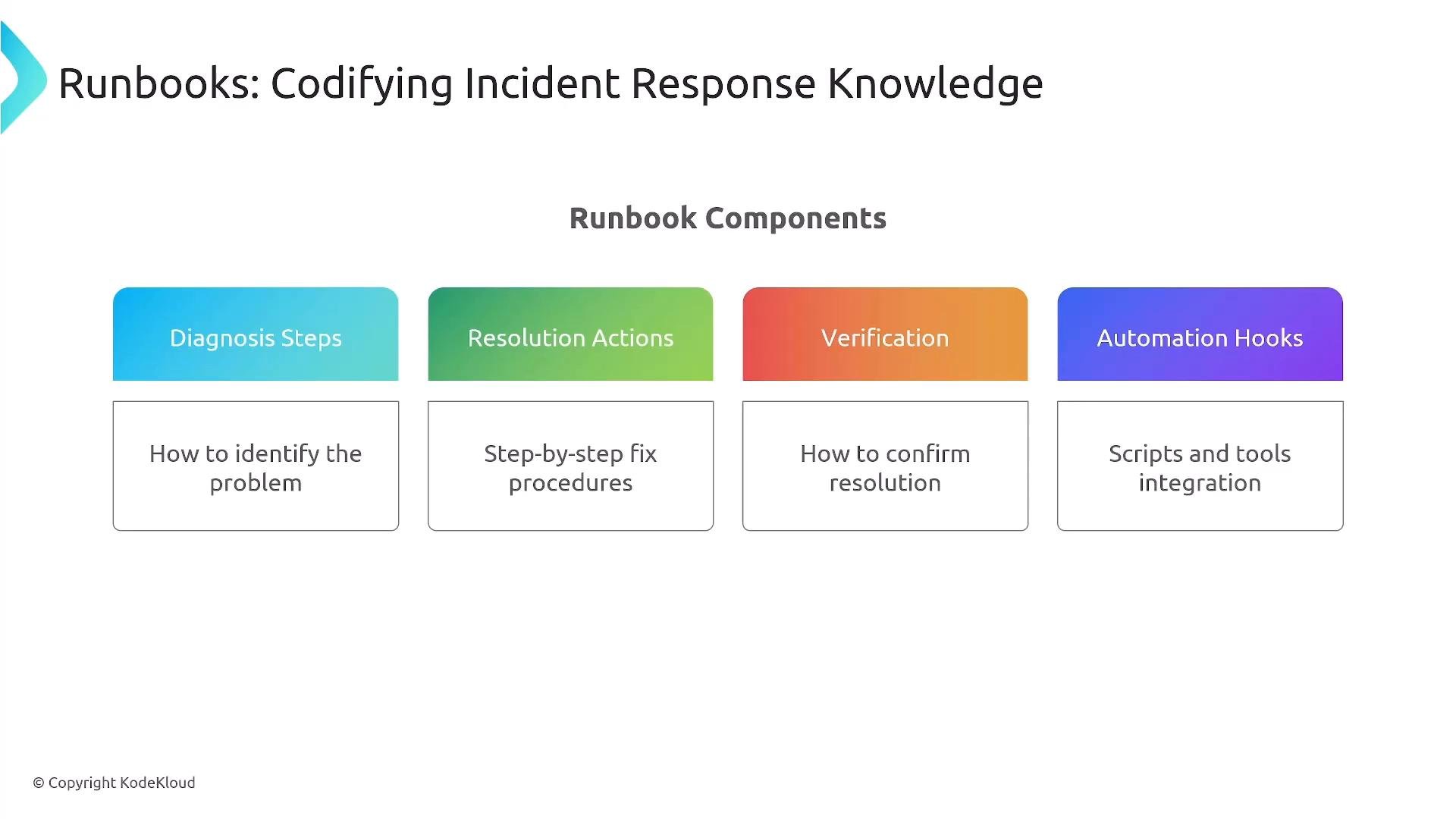
Runbooks: Codify Diagnosis and Resolution
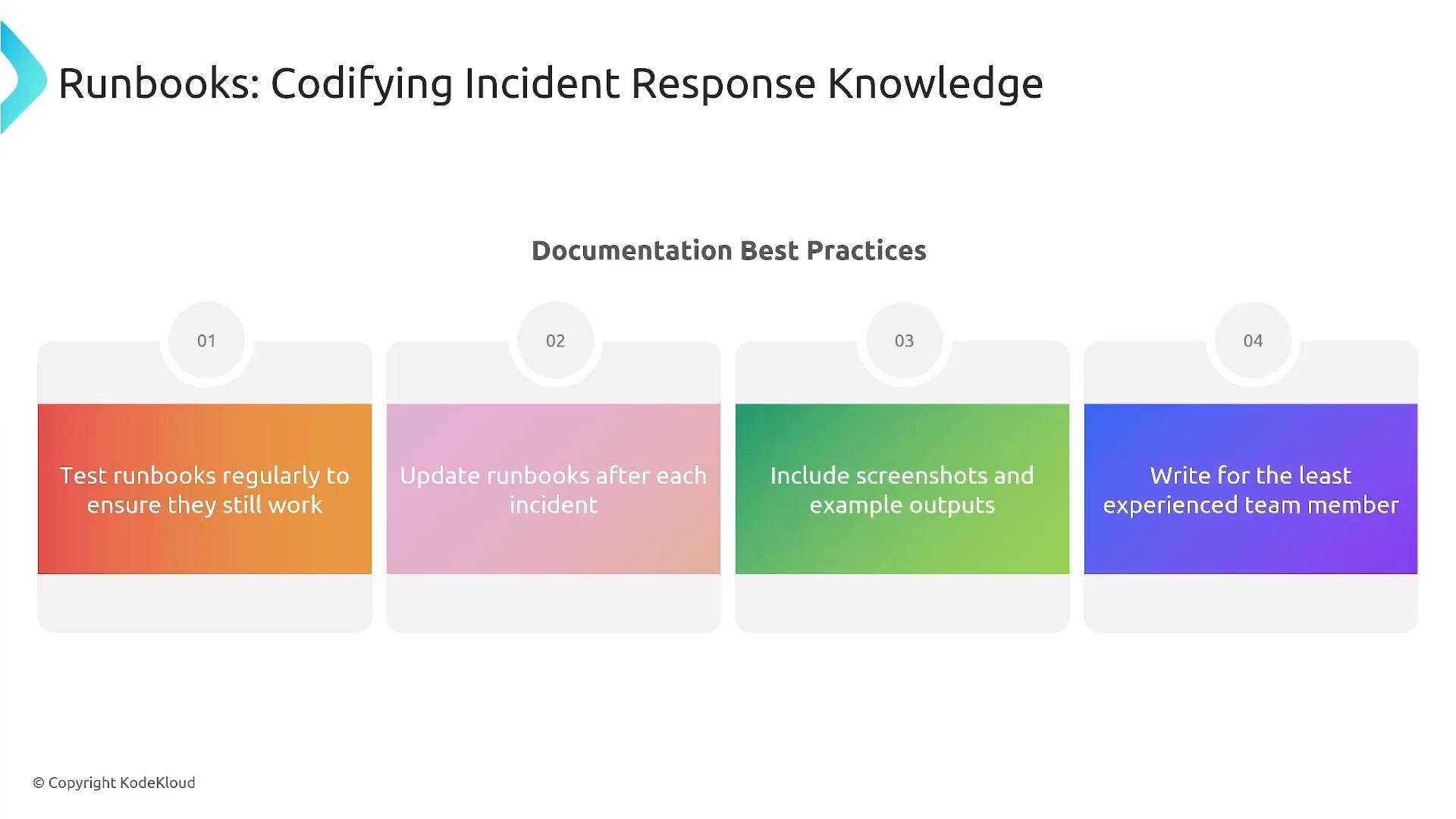
Runbooks capture the step-by-step knowledge needed to diagnose and resolve incidents. Typical components:- Diagnosis steps (how to identify the problem)
- Resolution actions (ordered, explicit fixes)
- Verification (how to confirm the service is recovered)
- Automation hooks (scripts/playbooks to run)
- Test runbooks regularly
- Update them after every incident
- Include screenshots, example outputs, and media where useful
- Write for the least-experienced person who might execute them
Automate only after runbook steps are validated through manual practice and testing. Automation without practice can create hidden failure modes and increase MTTR.
Chaos Engineering: Validate Recovery Under Real Conditions
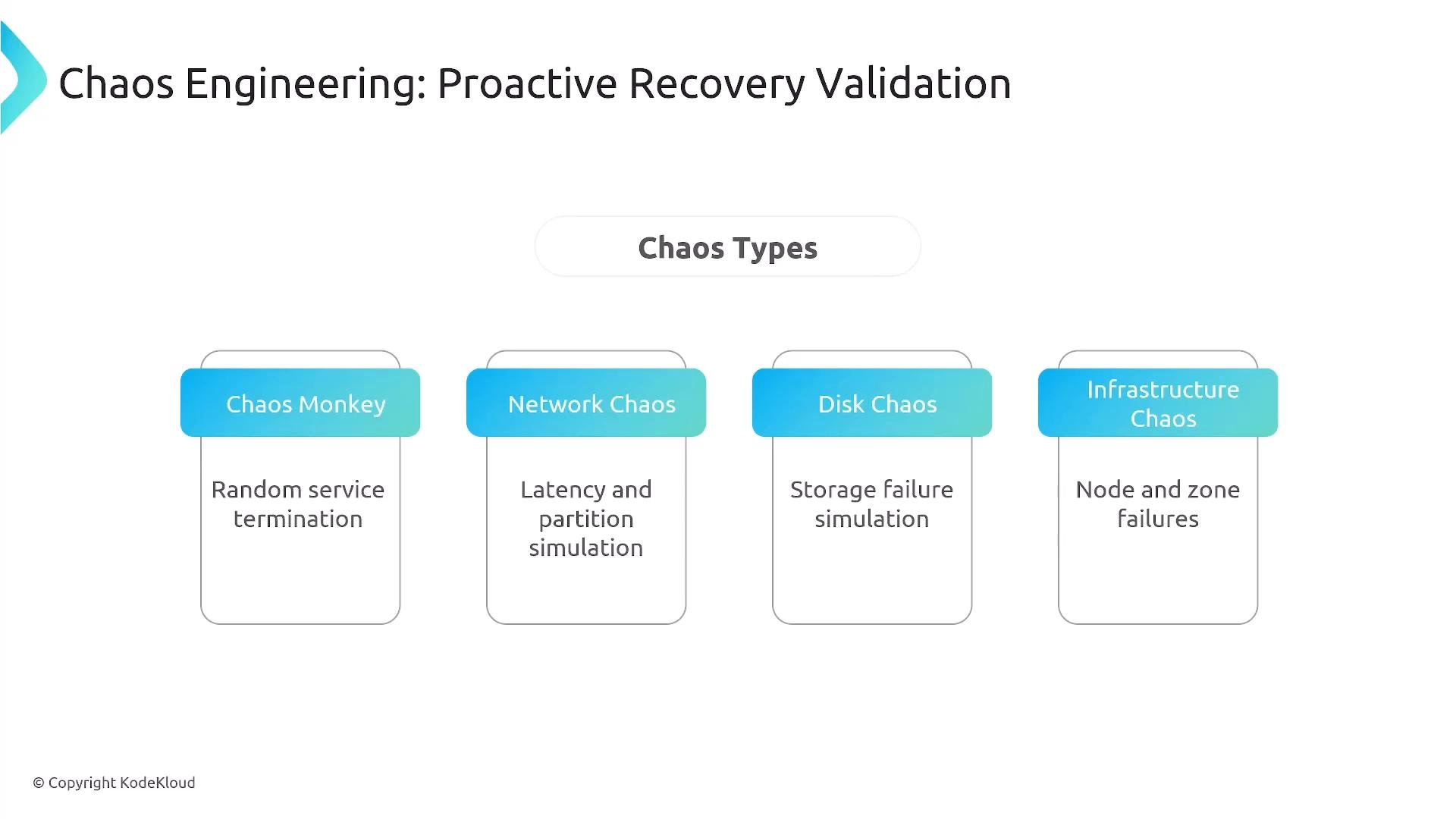
Use controlled chaos engineering experiments to validate resiliency and recovery procedures. Common types:- Chaos Monkey: random service termination
- Network chaos: latency, packet loss, partitioning
- Disk chaos: storage failure simulation
- Infrastructure chaos: node/zone/data-center failures
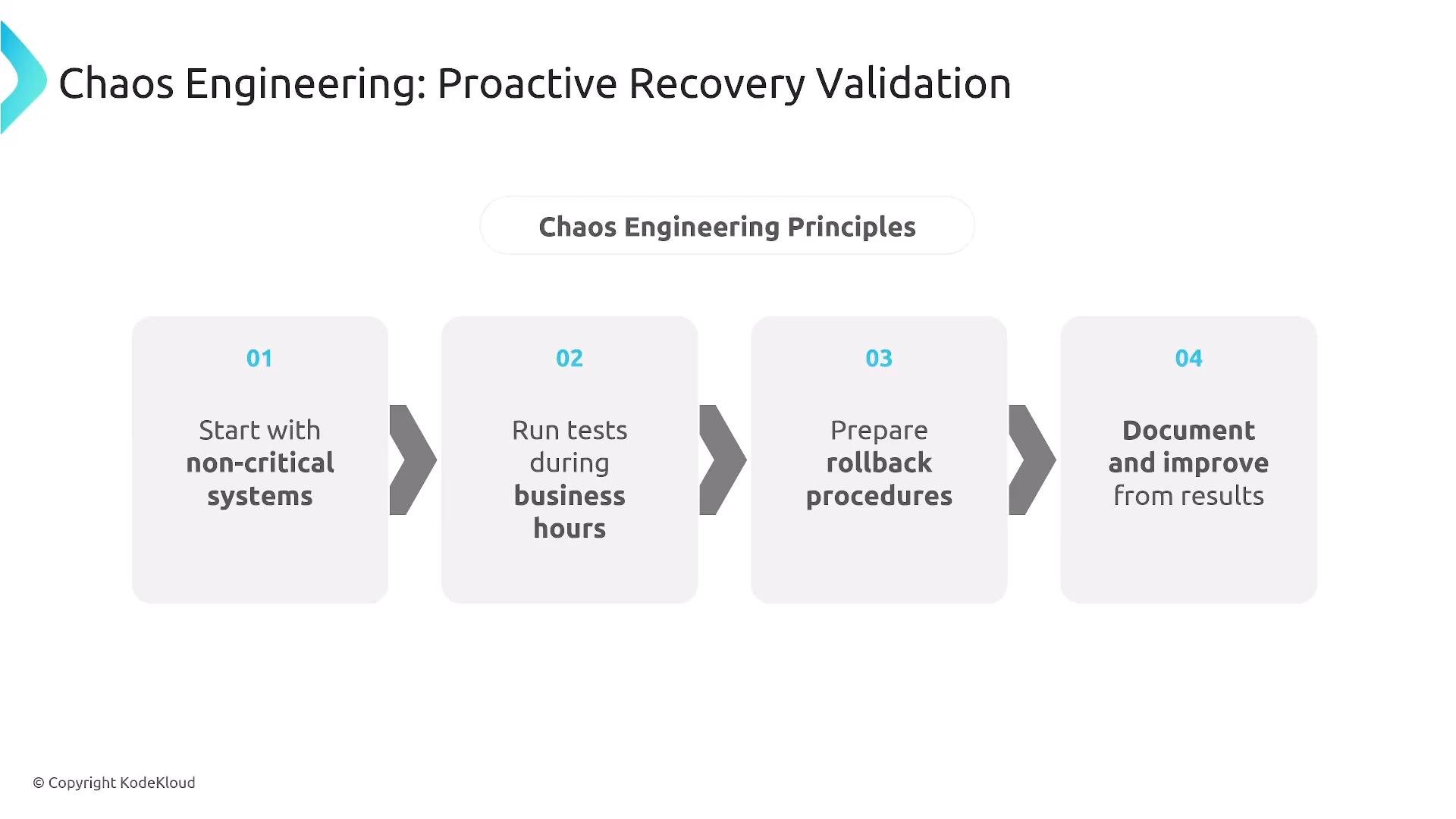
- Start small and non-critical (usually non-production)
- Run tests during business hours initially so teams can respond
- Prepare rollback and mitigation procedures before you start
- Document results and iterate to improve resiliency
Recovery Objectives, SLAs, and Cost Tradeoffs
Understand and document recovery commitments with the business:
SPR might commit to
99.9% uptime with a 4-hour maximum recovery time—explicit RPO and MTTR definitions are essential.
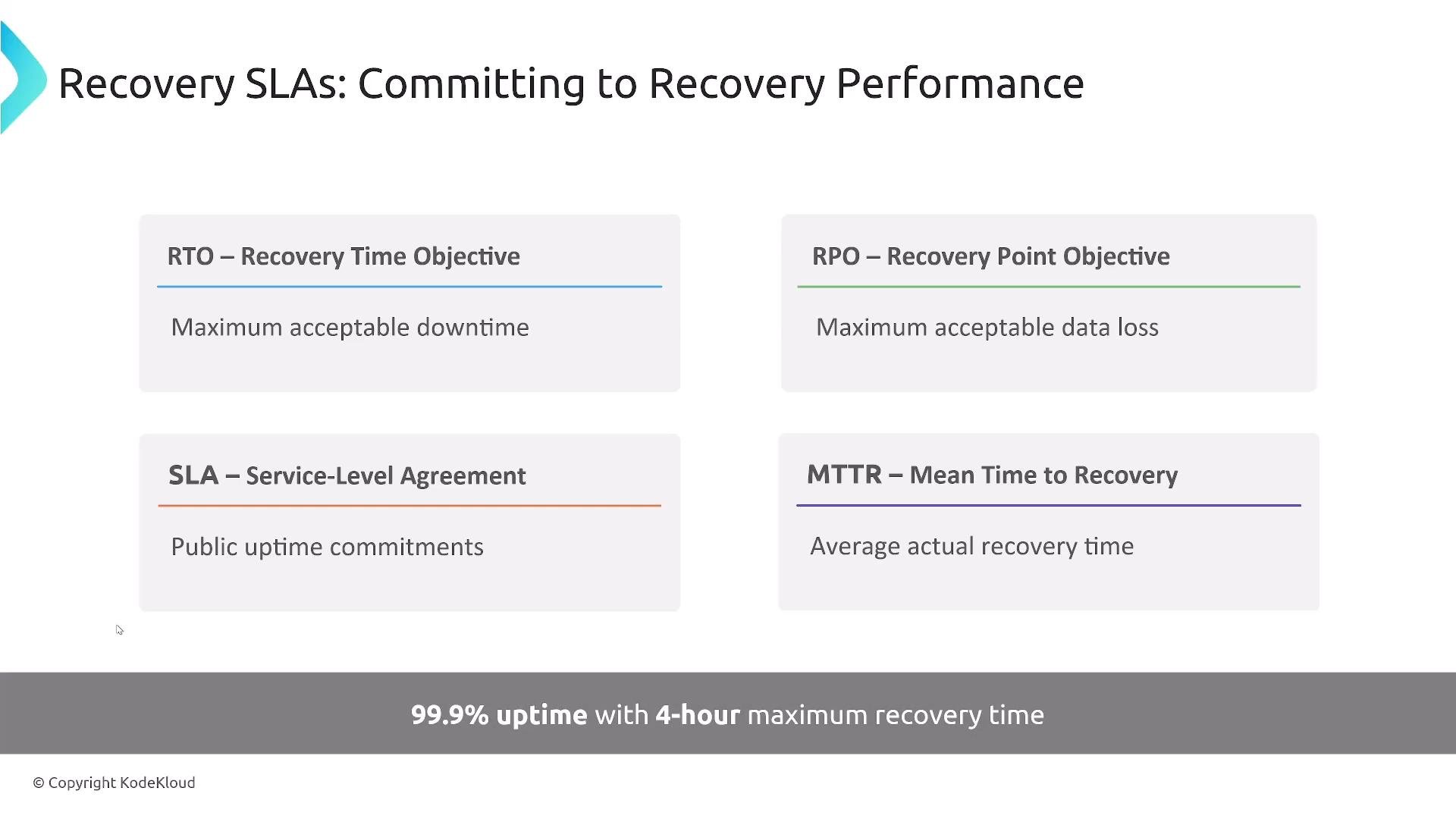
Decide with the business what level of availability is justified and affordable—each additional nine usually requires disproportionate investment.
Blameless Postmortems: Learn and Improve
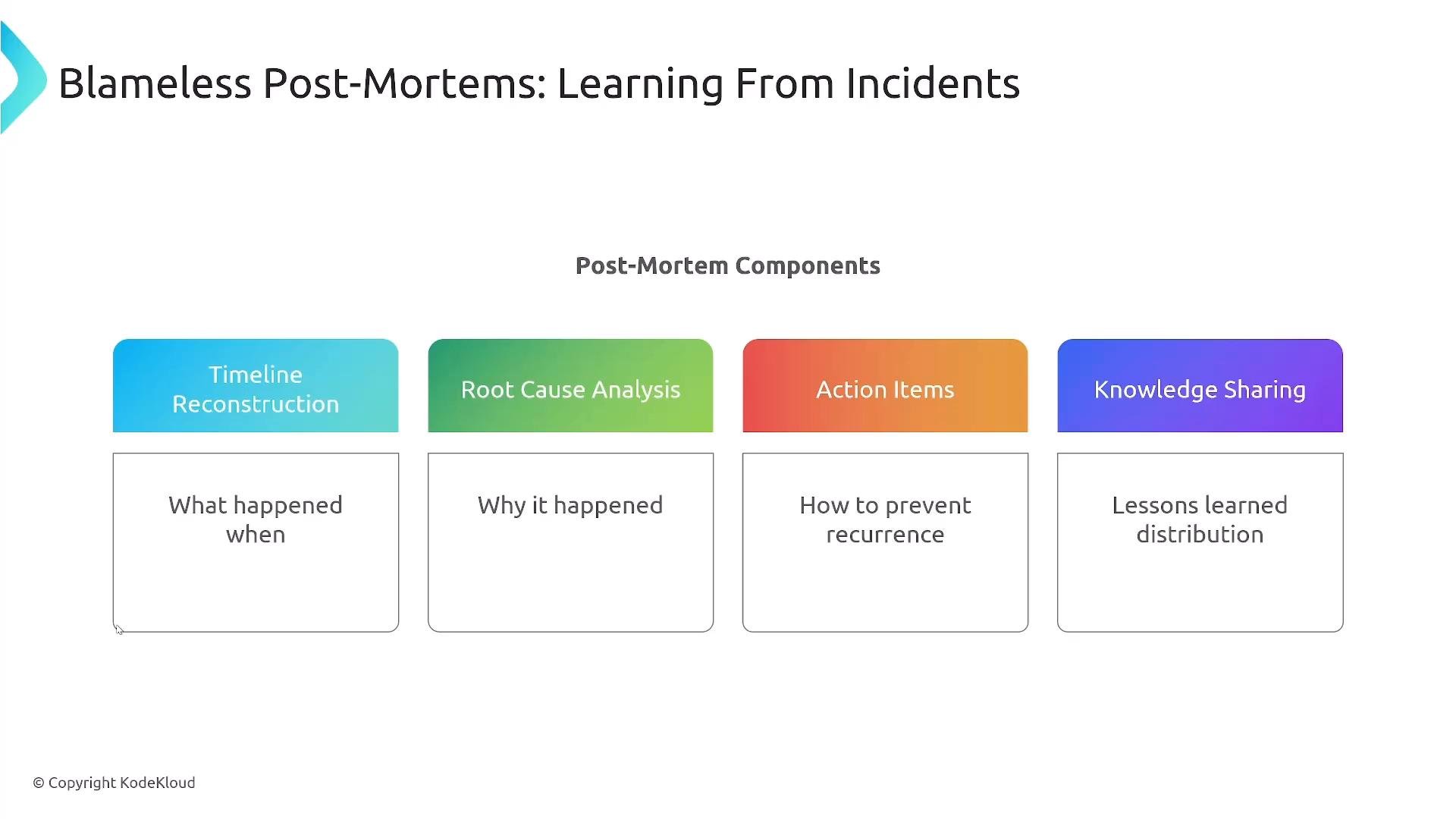
Blameless postmortems reconstruct incident timelines, identify root causes, and define action items. Core principles:- Assume good intent—people acted with the information they had
- Focus on improving systems, not punishing individuals
- Treat incidents as learning opportunities and share findings
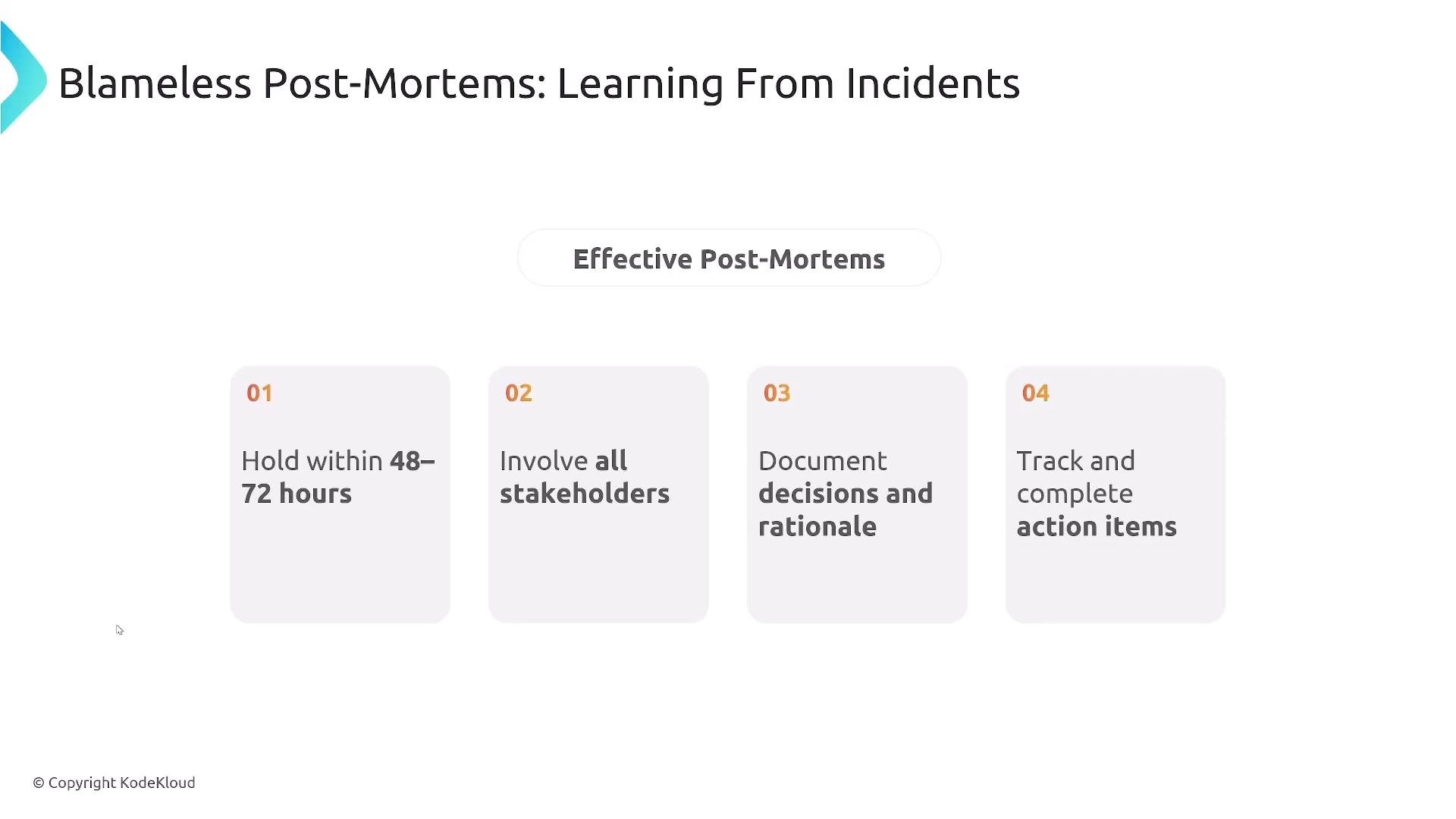
- Hold the postmortem within 48–72 hours of incident stabilization
- Include all relevant stakeholders (SRE, product, support, management)
- Document decisions, rationale, and a complete timeline
- Track action items to completion and verify fixes
Key Takeaways
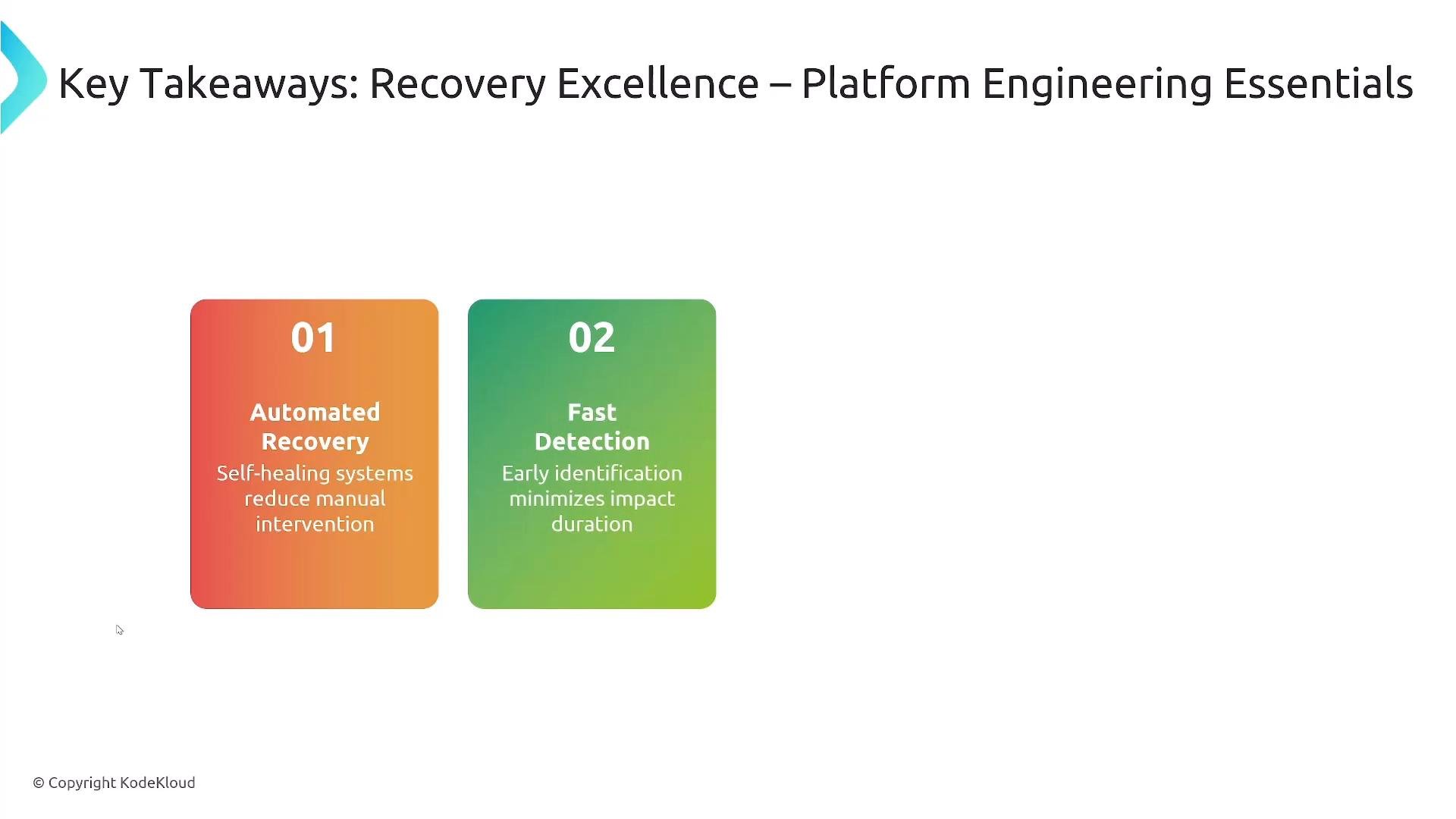
- Automate recovery where safe to reduce manual intervention and MTTR.
- Fast detection (metrics, logs, synthetic checks, user reports) minimizes impact.
- Keep runbooks current, testable, and integrated with monitoring and alerting.
- Practice chaos engineering in controlled ways to validate recovery and rollback procedures.
- Define RTO, RPO, SLA, and MTTR clearly with the business; understand the cost of extra “nines.”
- Use blameless postmortems to learn, improve systems, and prevent repeat failures.
Links and References
- Chaos Engineering course (KodeKloud): https://learn.kodekloud.com/user/courses/chaos-engineering
- Kubernetes Concepts: https://kubernetes.io/docs/concepts/overview/what-is-kubernetes/
- SRE and incident response best practices: search for “Google SRE book” and “Incident Management playbooks” for additional reading.