

- The Three Ways of DevOps: flow, feedback, and experimentation
- Key SRE principles: reduction of toil, incident management, SLOs/SLIs, observability
- Building a collaborative platform culture
- How infrastructure teams transform into platform product teams
- Shared mission across teams — align on developer experience and reliability goals.
- Break down silos — enable cross-functional collaboration (dev, ops, QA, security).
- Scale through automation — treat repetitive work as code and automate it.
- Drive self-service success — enable internal consumers to do more without asking.
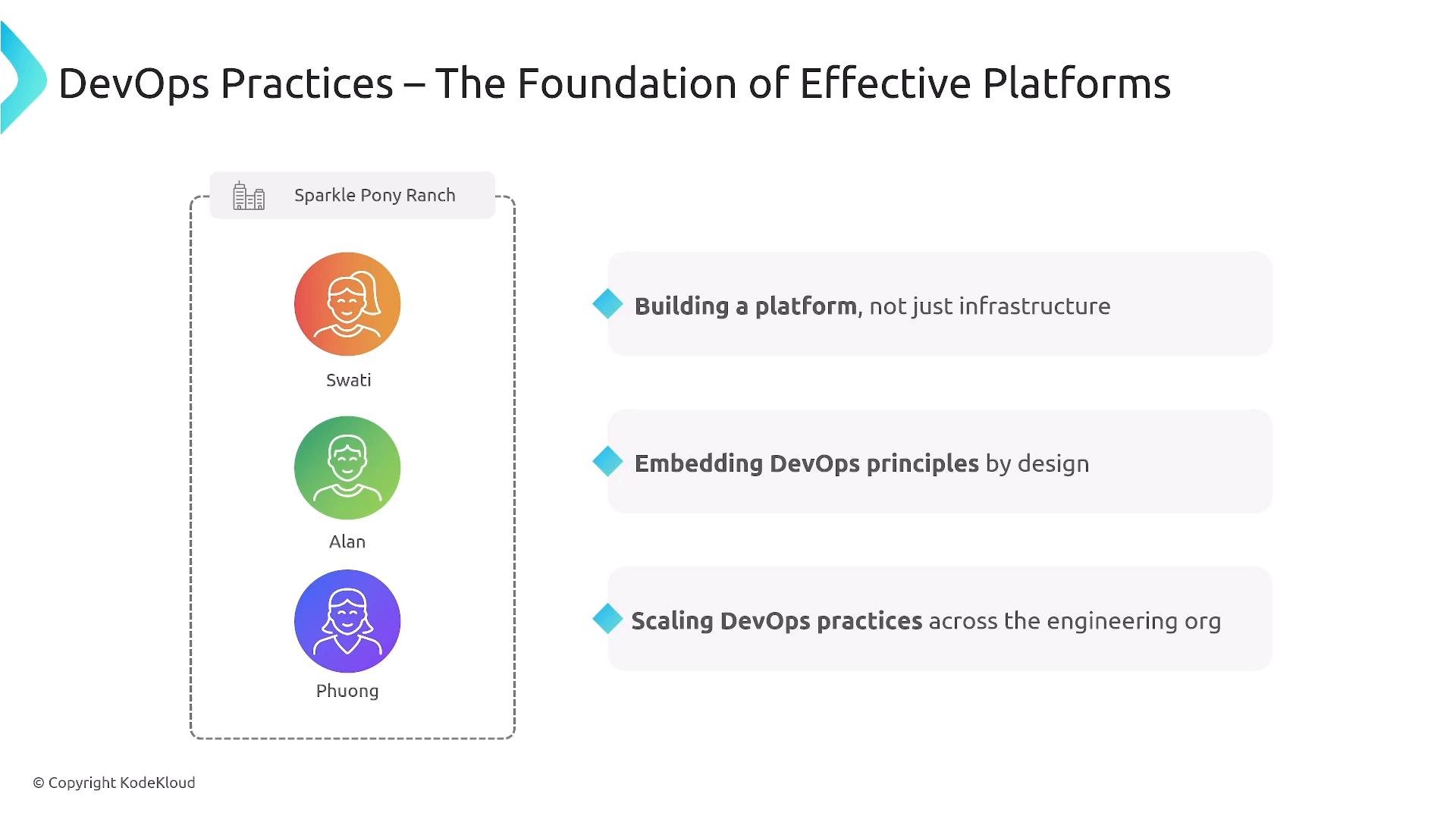
- Swati: deep DevOps and CI/CD automation
- Alan: infrastructure and IaC (infrastructure-as-code)
- Phuong: developer workflows and cloud-native platform integration
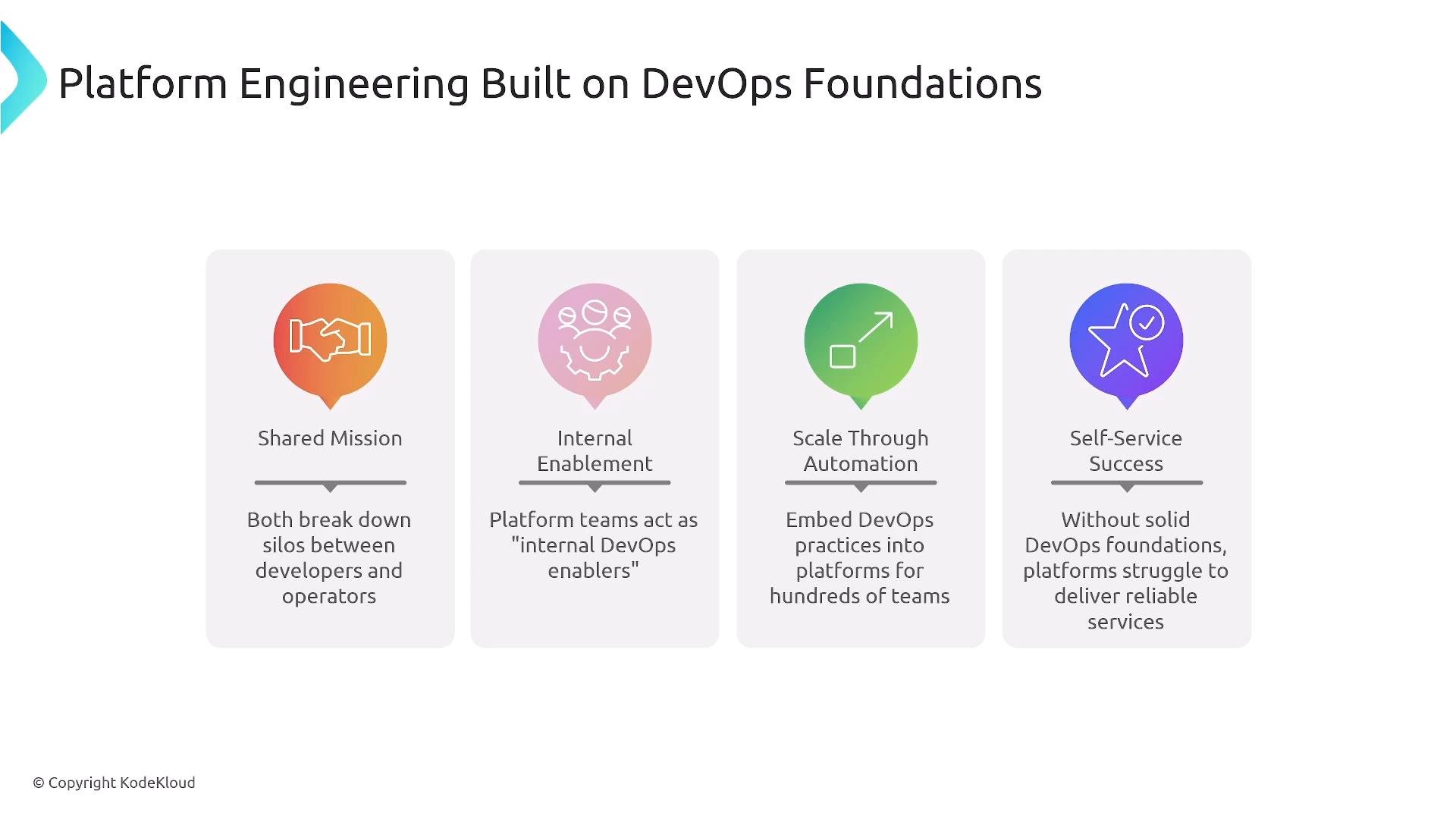
Platform teams succeed when they treat the platform as a product: define key user journeys, instrument reliability targets, and continuously measure developer experience.
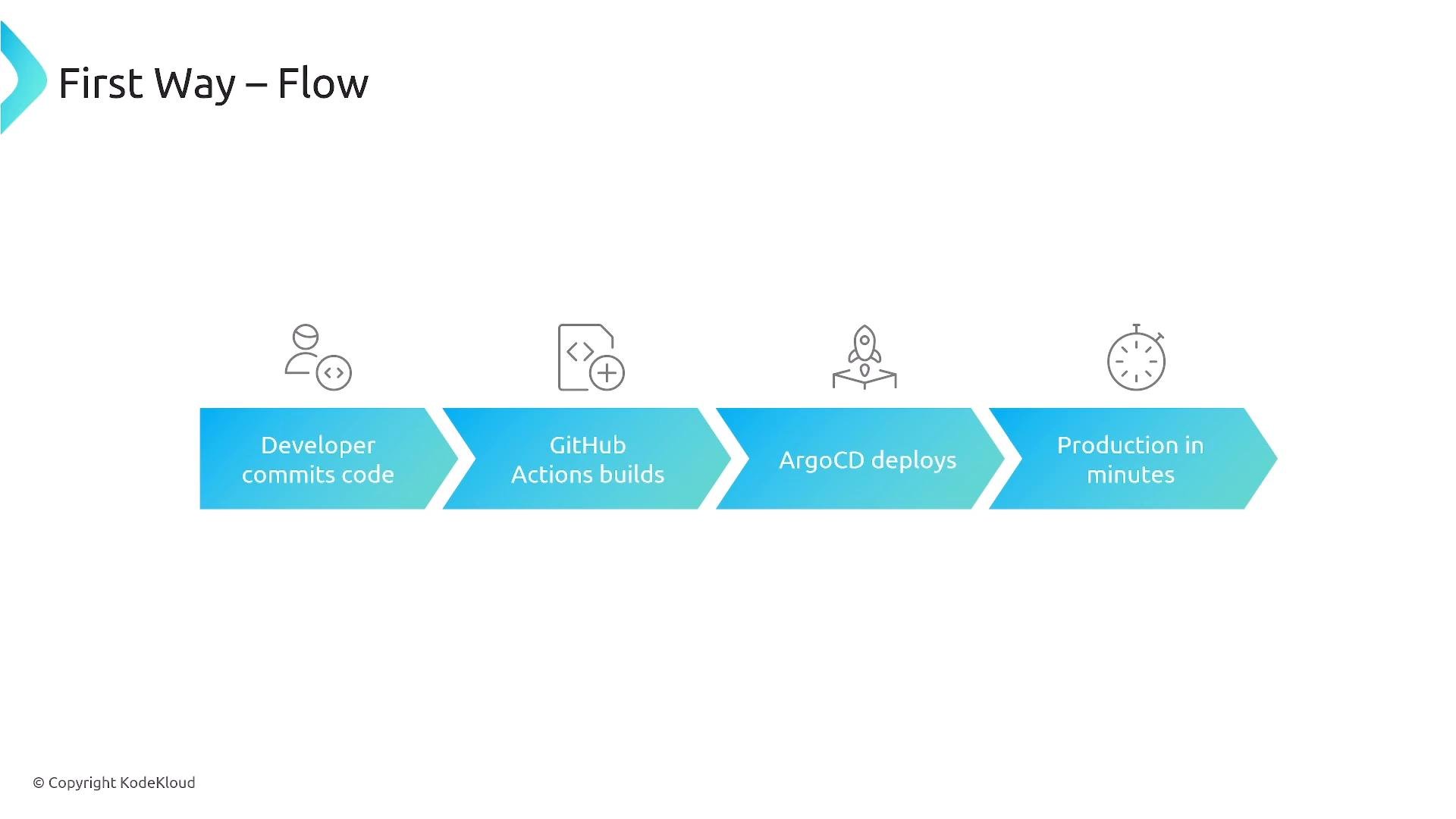
- First Way — Flow
- Goal: optimize frictionless workflows from code to production.
- Approach: automate verification, CI/CD, and promote continuous delivery so commits move rapidly through build, test, and deployment.
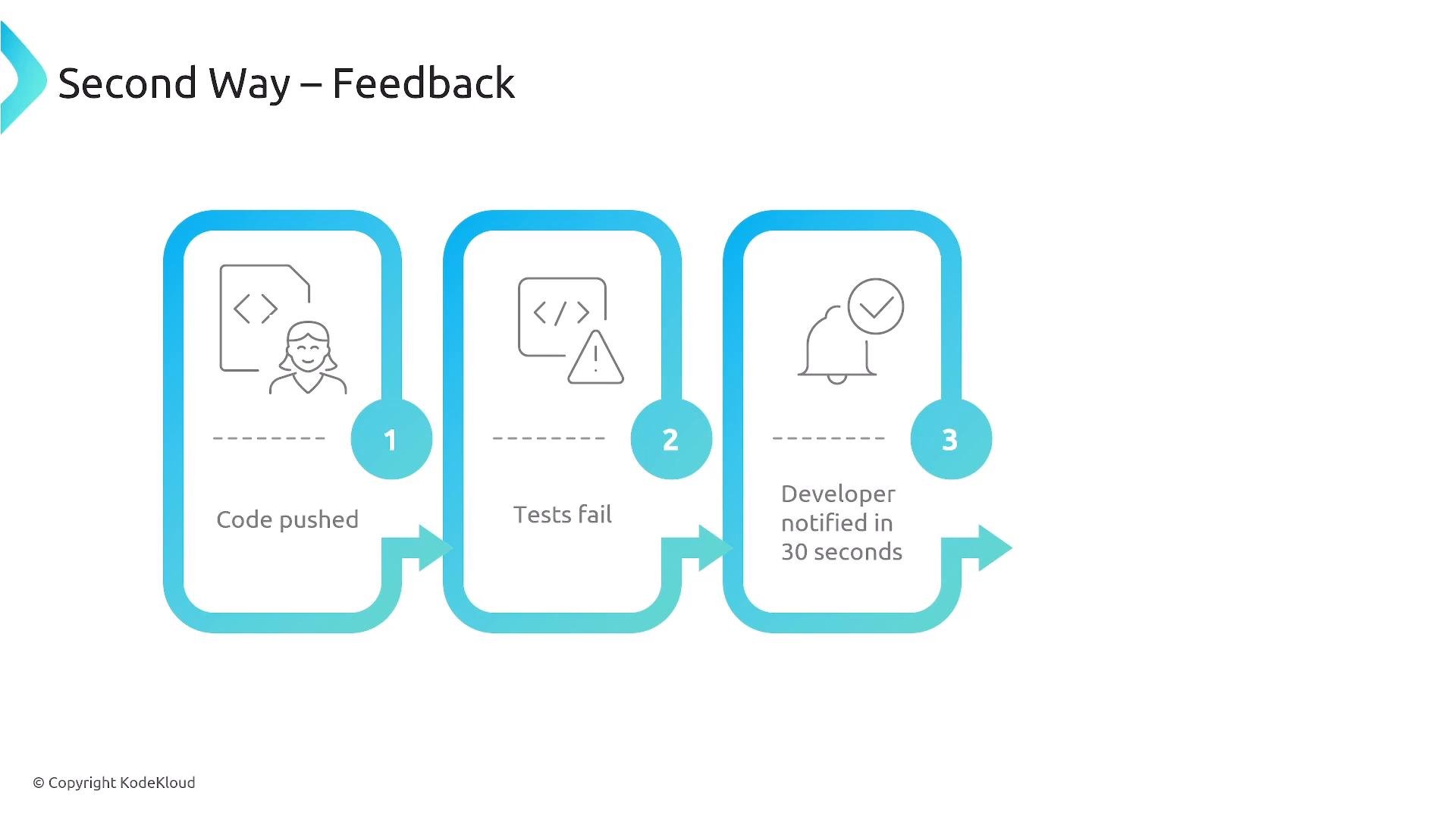
- Second Way — Feedback
- Goal: provide rapid, continuous feedback at every stage of the delivery pipeline.
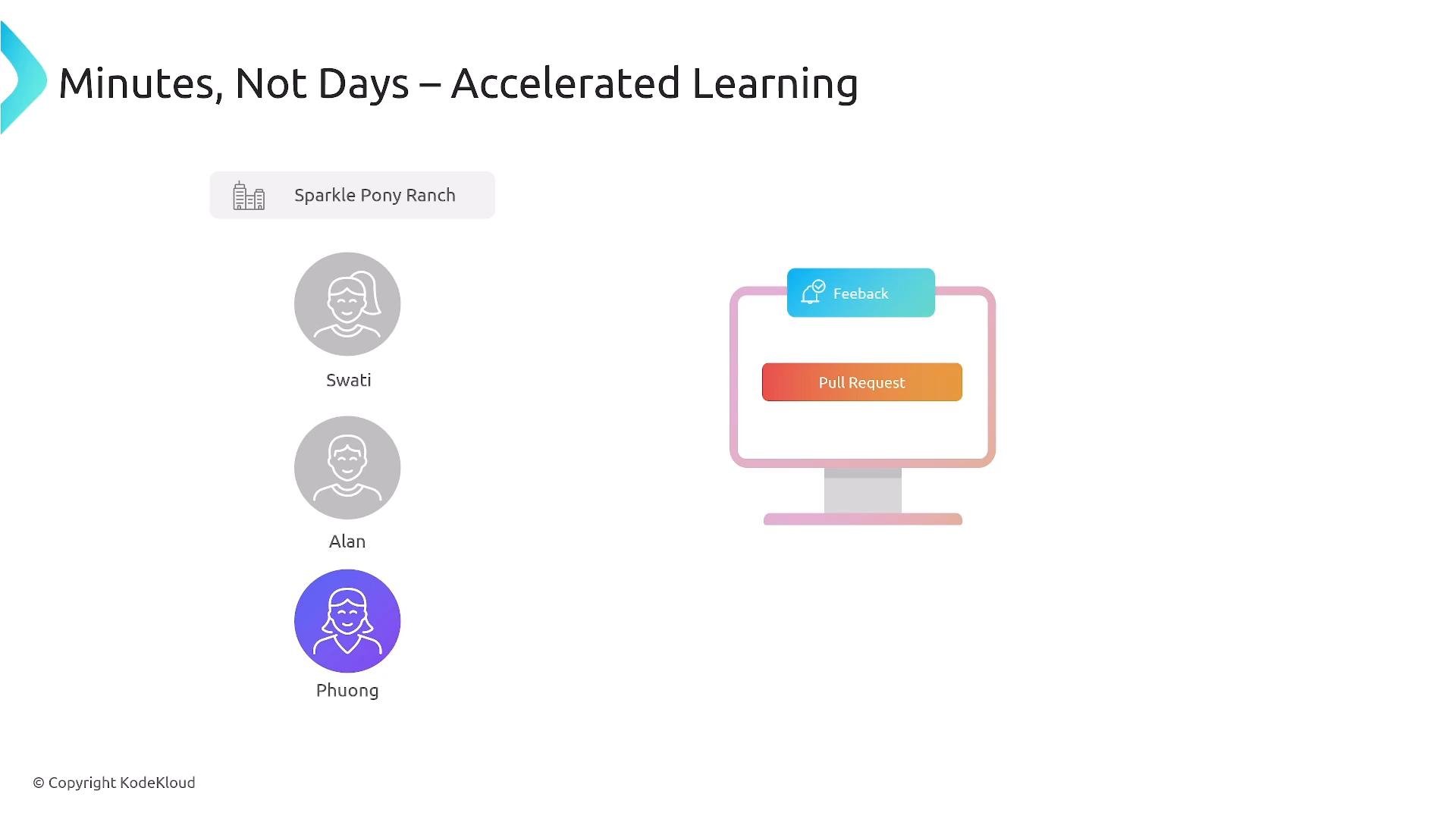
- Approach: shorten the time from change to verification and notification so engineers quickly know success or failure and can iterate.
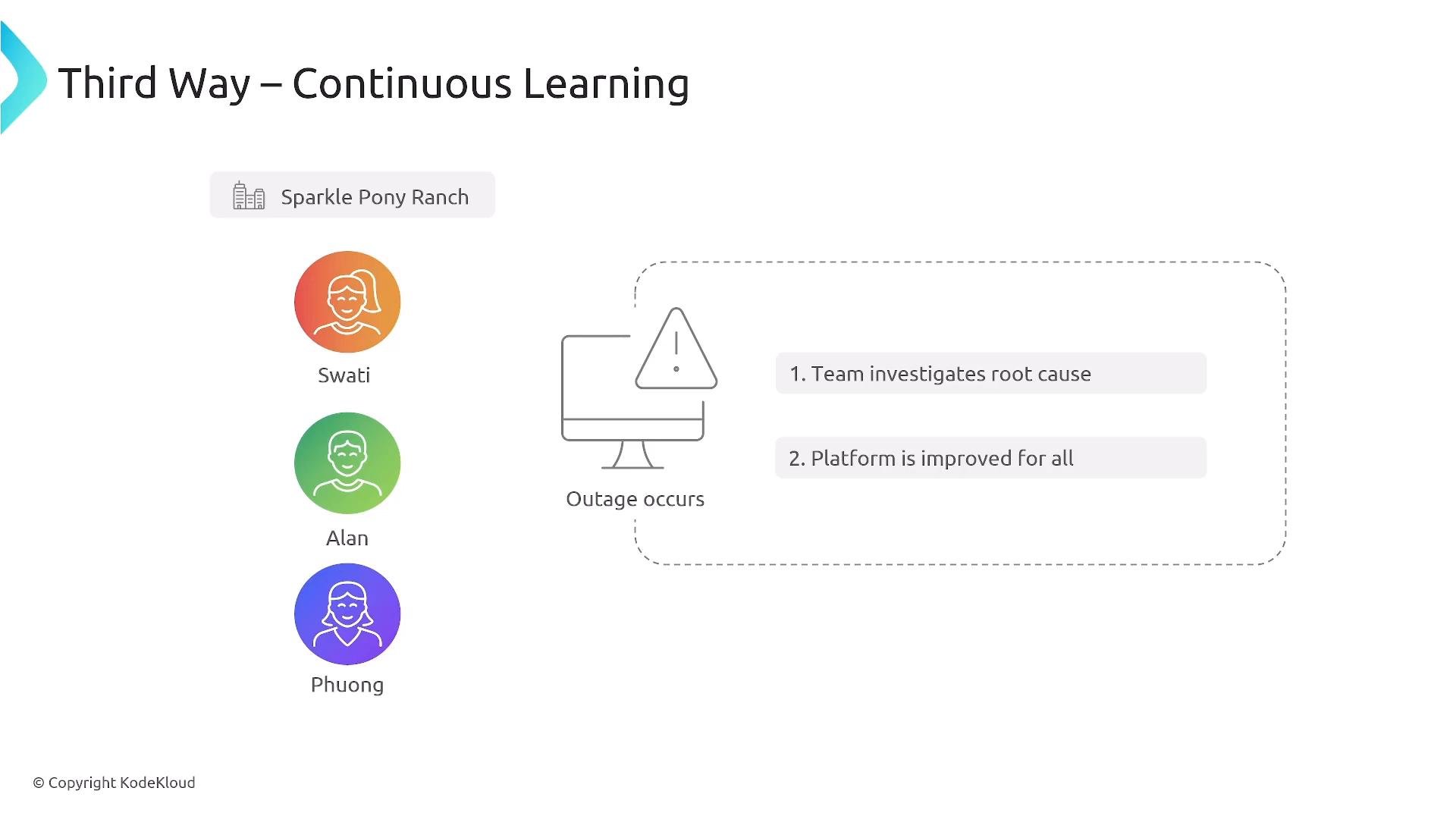
- Third Way — Continuous Learning and Experimentation
- Goal: create a culture of experimentation and learning from failures.
- Approach: run blameless postmortems, capture root causes, and harden the platform to reduce repeat incidents.
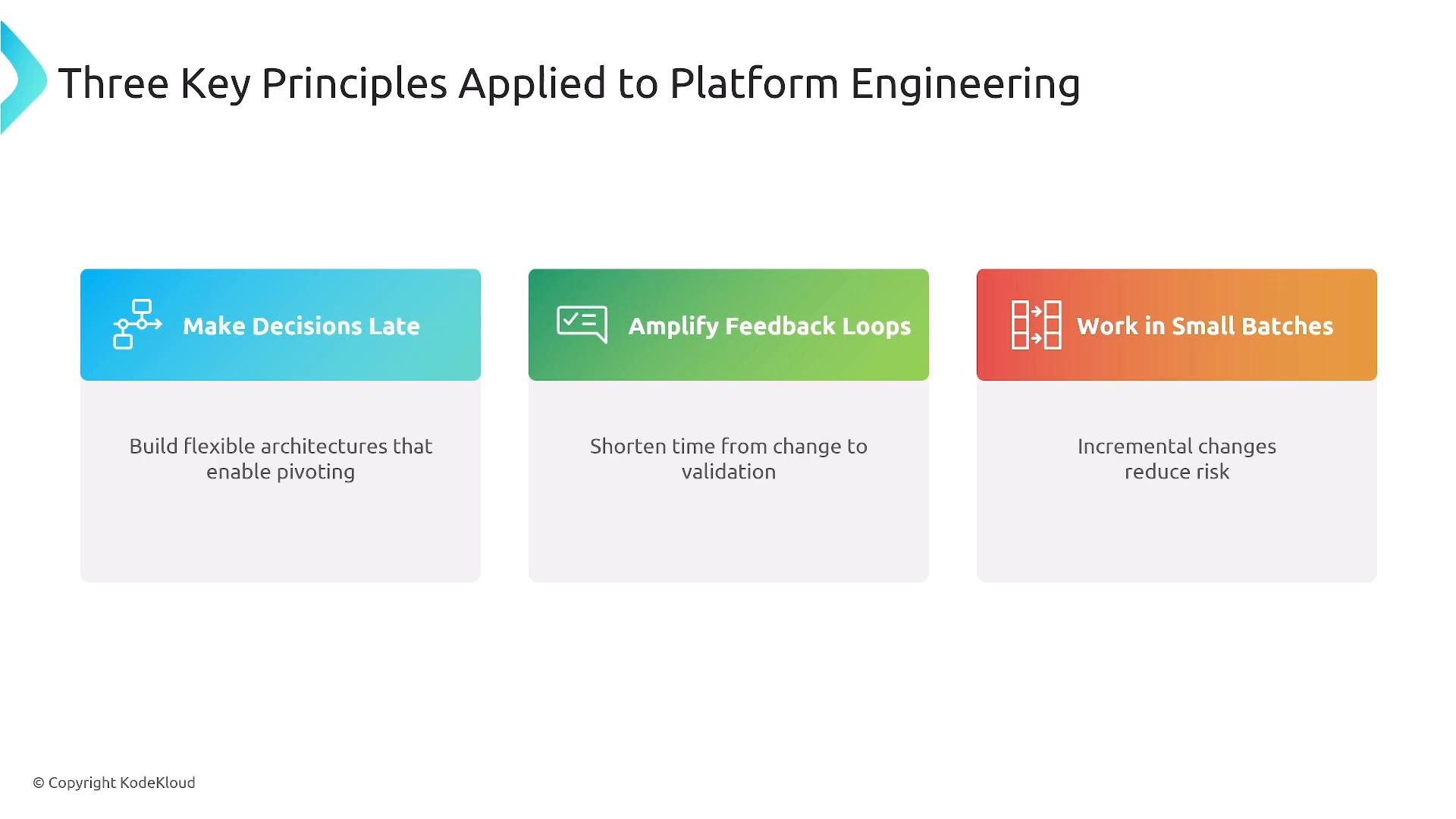
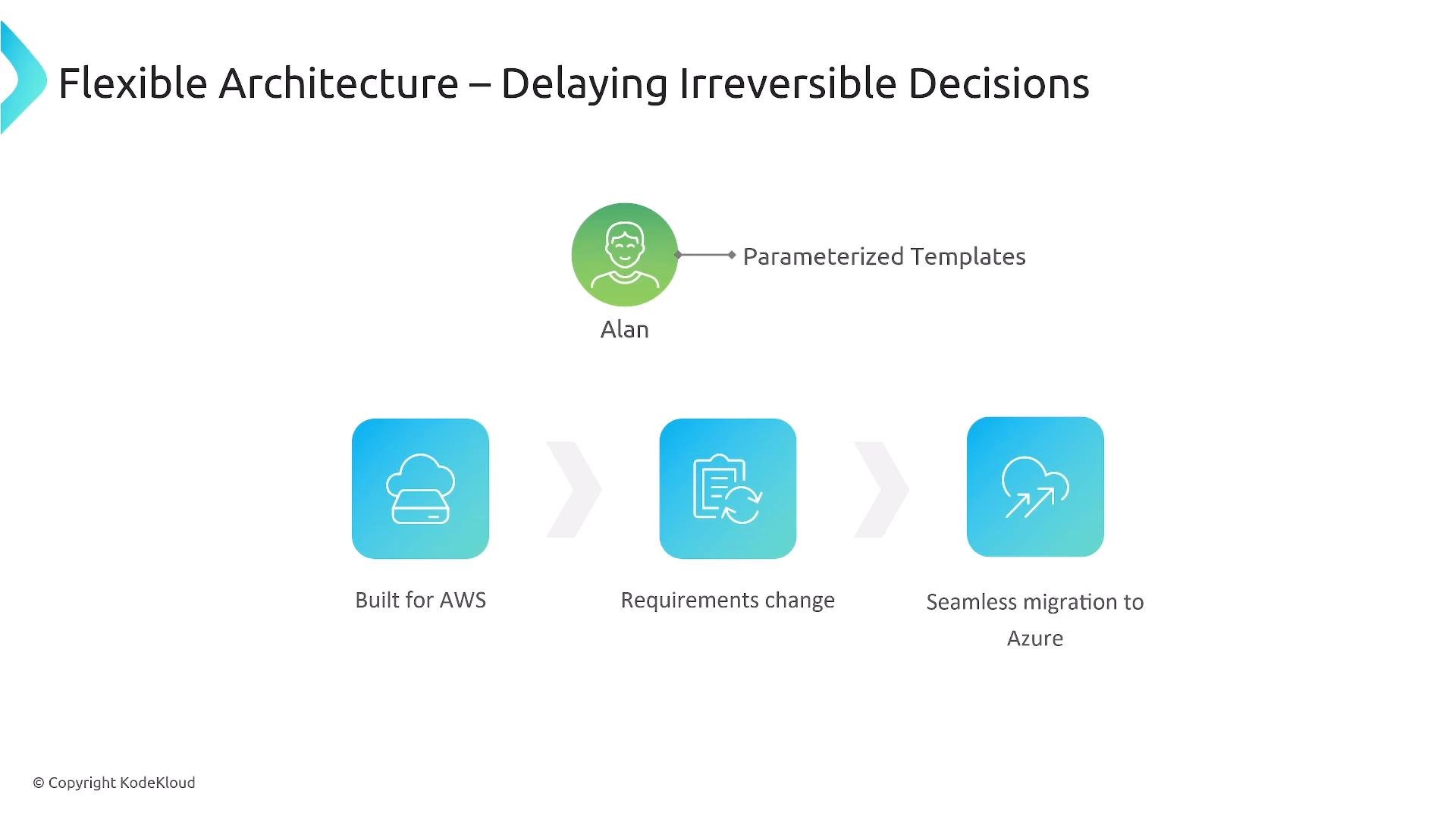
- Defer irreversible decisions: only commit to provider-specific or heavyweight capabilities when they solve a real need.
- Amplify feedback loops: instrument and automate checks so verification is fast and reliable.
- Work in small batches: keep changes small and frequent to reduce risk and simplify rollbacks.
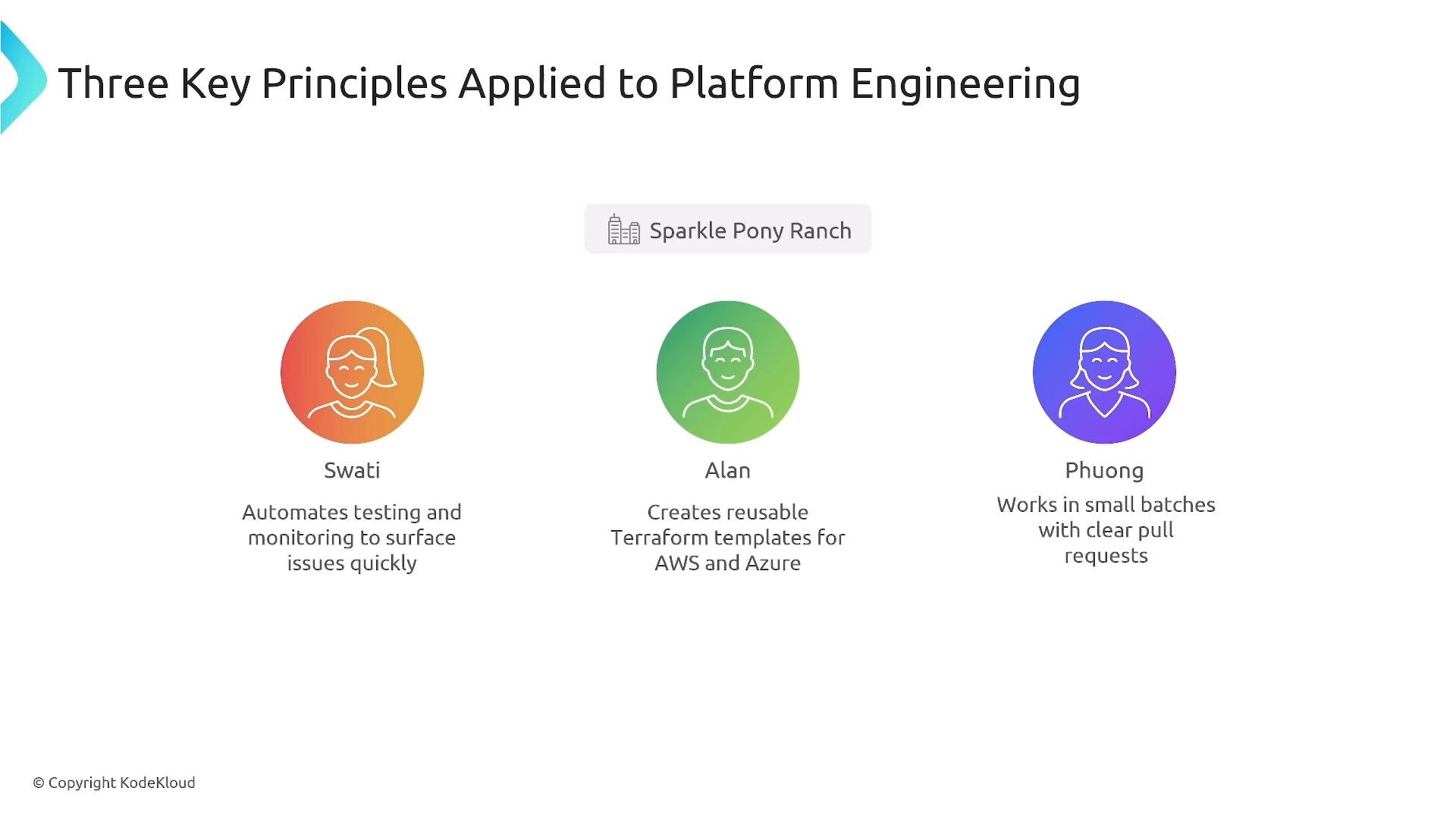
- Alan: builds declarative, reusable Terraform modules to provision cloud infrastructure.
- Swati: automates CI/CD tests and reliability checks, integrating quick feedback into pipelines.
- Phuong: delivers small feature increments to developer-facing tools (for example, a developer portal like Backstage) through frequent, well-scoped pull requests.
Sparkle Pony Ranch sets SLOs for CI/CD throughput and platform availability; when an SLO is breached, the team treats incidents as product gaps and iterates.
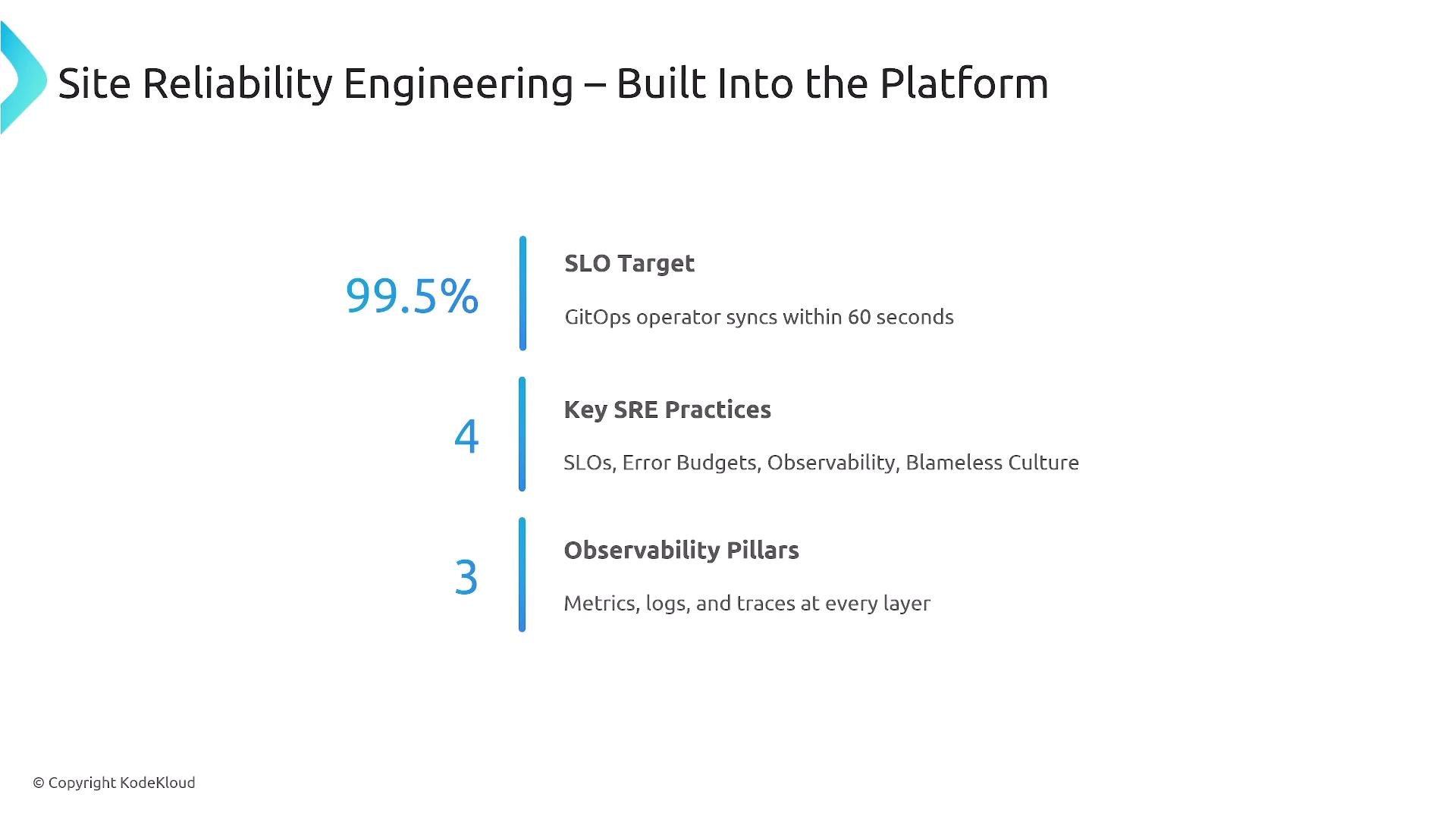
SLOs are tools, not targets to game. Use them to guide trade-offs between velocity and stability, and adjust error budgets responsibly to protect users and developer productivity.
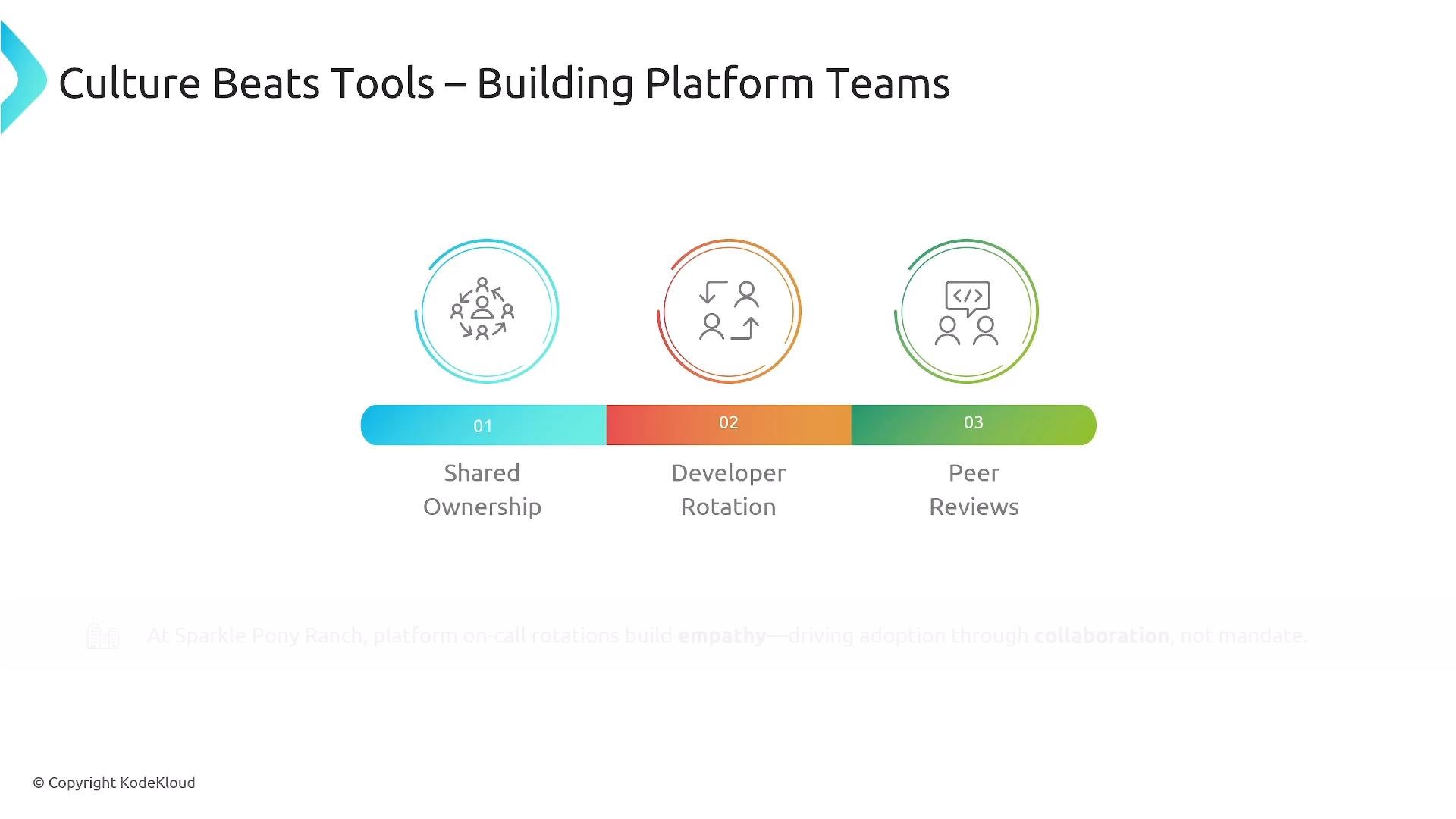
- Shared ownership — developers, operators, QA, DBAs, and architects collaborate on platform outcomes.
- Developer rotation through platform on-call — increases empathy for running services in production.
- Peer reviews and automation — senior engineers maintain quality through design reviews and automated checks.
- Adoption through collaboration — demonstrate value and enable teams rather than enforce usage.
- Design for flow: automate CI/CD and GitOps for repeatable deployments.
- Build fast feedback loops: tests, observability, and notifications that surface failures quickly.
- Embrace continuous experimentation: blameless postmortems and platform hardening after incidents.
- Use parameterized templates: delay irreversible choices and keep migration options open.
- Embed SRE: define SLOs/SLIs, manage error budgets, and instrument metrics/logs/traces.
- Foster shared ownership and developer empathy through rotations and collaboration.
- The Phoenix Project overview: https://en.wikipedia.org/wiki/The_Phoenix_Project
- GitOps with Argo CD: https://learn.kodekloud.com/user/courses/gitops-with-argocd
- Terraform basics course: https://learn.kodekloud.com/user/courses/terraform-basics-training-course
- Backstage developer portal: https://learn.kodekloud.com/user/courses/certified-backstage-associate-cba