

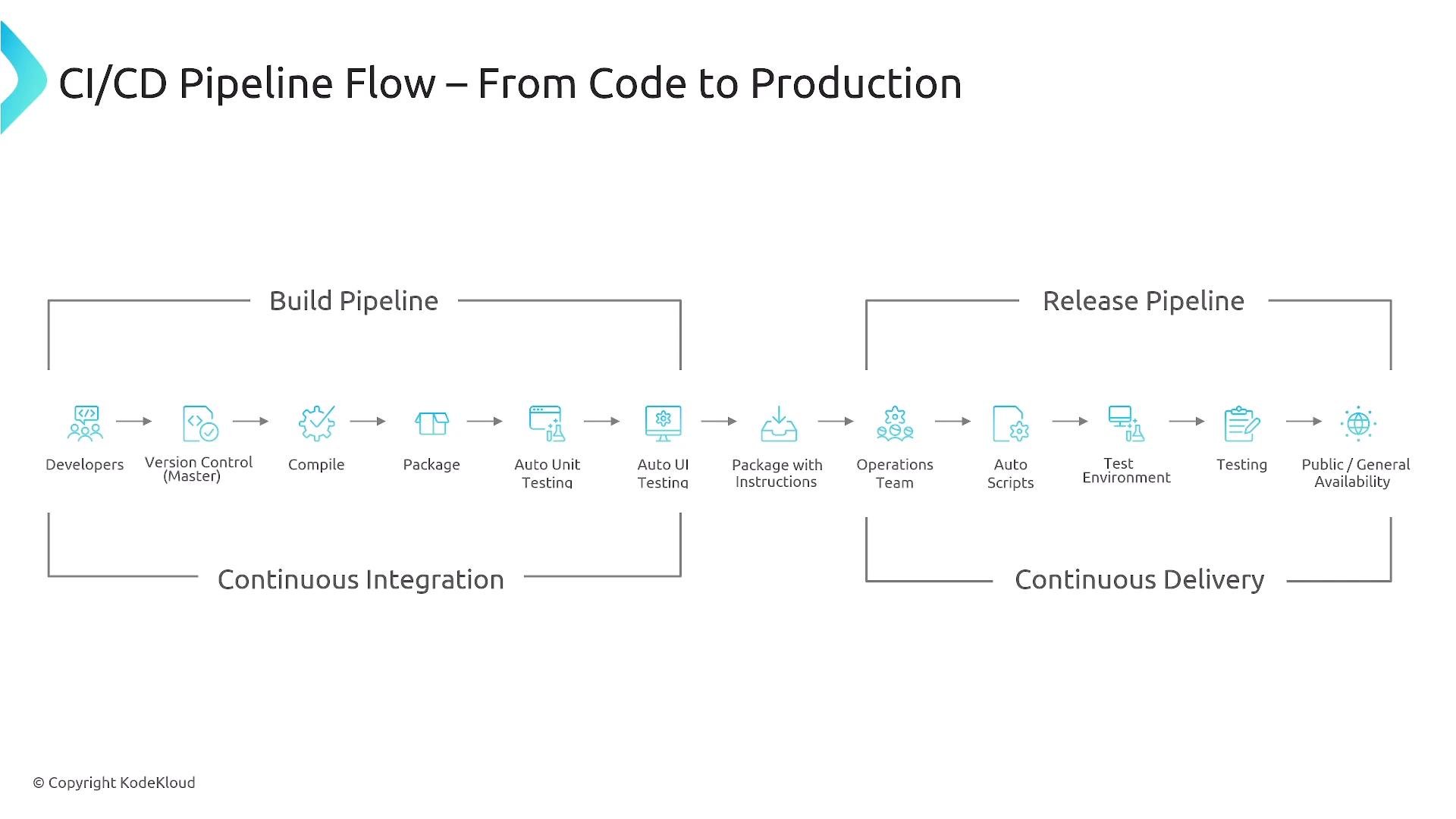
- Fetch the exact code snapshot (commit SHA or tag) to ensure reproducible builds.
- Resolve and pin dependencies (lockfiles) to prevent version drift.
- Build/compile and package the application into a deployable artifact.
- Run automated static analysis, unit and integration tests, and lightweight security scans.
- Publish a versioned artifact only if it passes quality and security gates.
Aim for quick, deterministic feedback loops: optimize for build times under 5 minutes for most commits, keep tests isolated and parallelizable, and enforce strict dependency pinning (
lockfiles) to avoid “works on my machine” issues.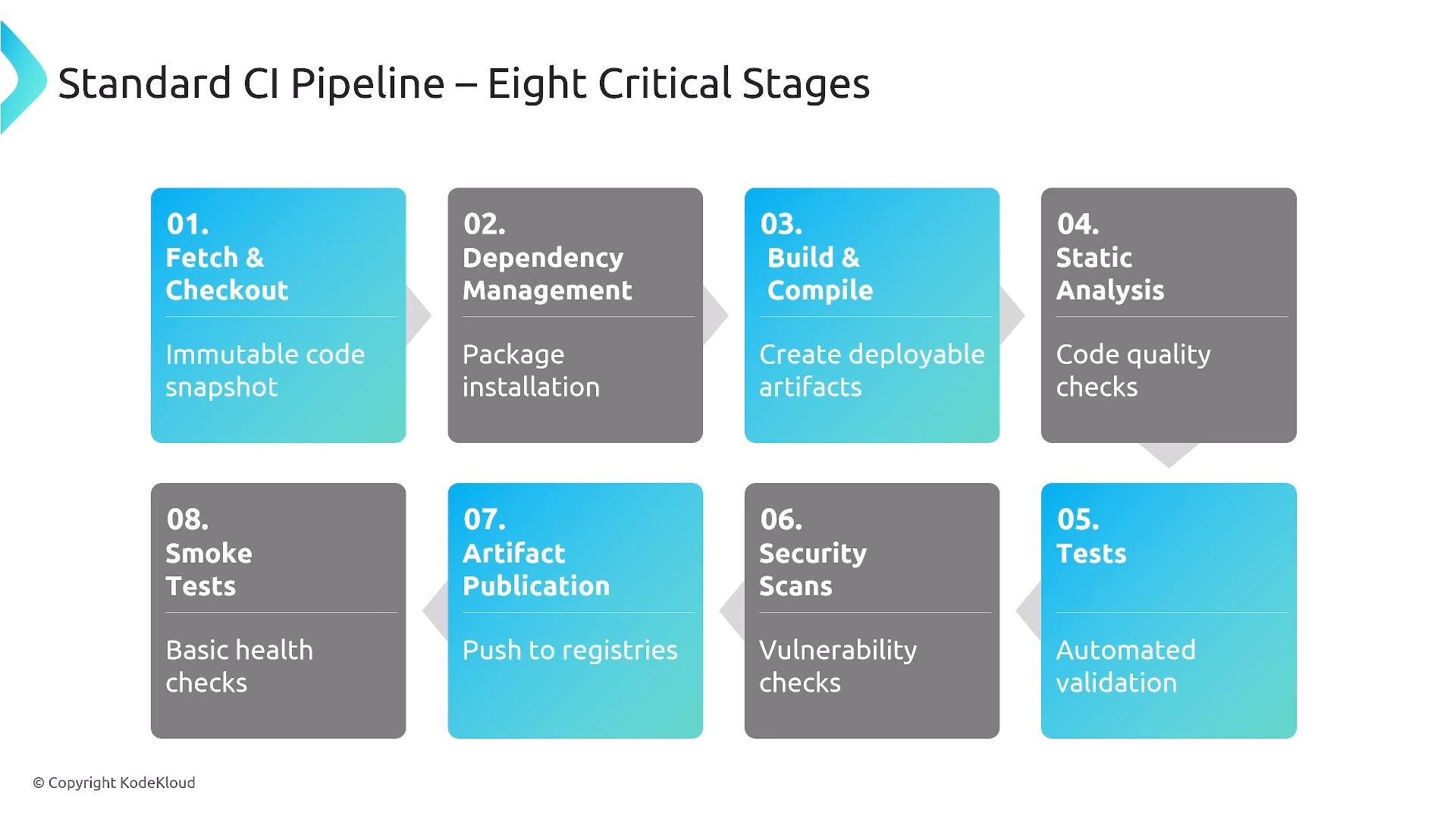
Foundation stages (1–3): producing an immutable artifact
Stages 1–3 focus on creating a deterministic artifact from source. Key practices include:
- Always build from an immutable code snapshot (
commit SHAor tag). - Use lockfiles (
package-lock.json,go.sum,Pipfile.lock, etc.) to pin dependencies. - Use deterministic build tools and reproducible build flags so identical inputs produce identical outputs.
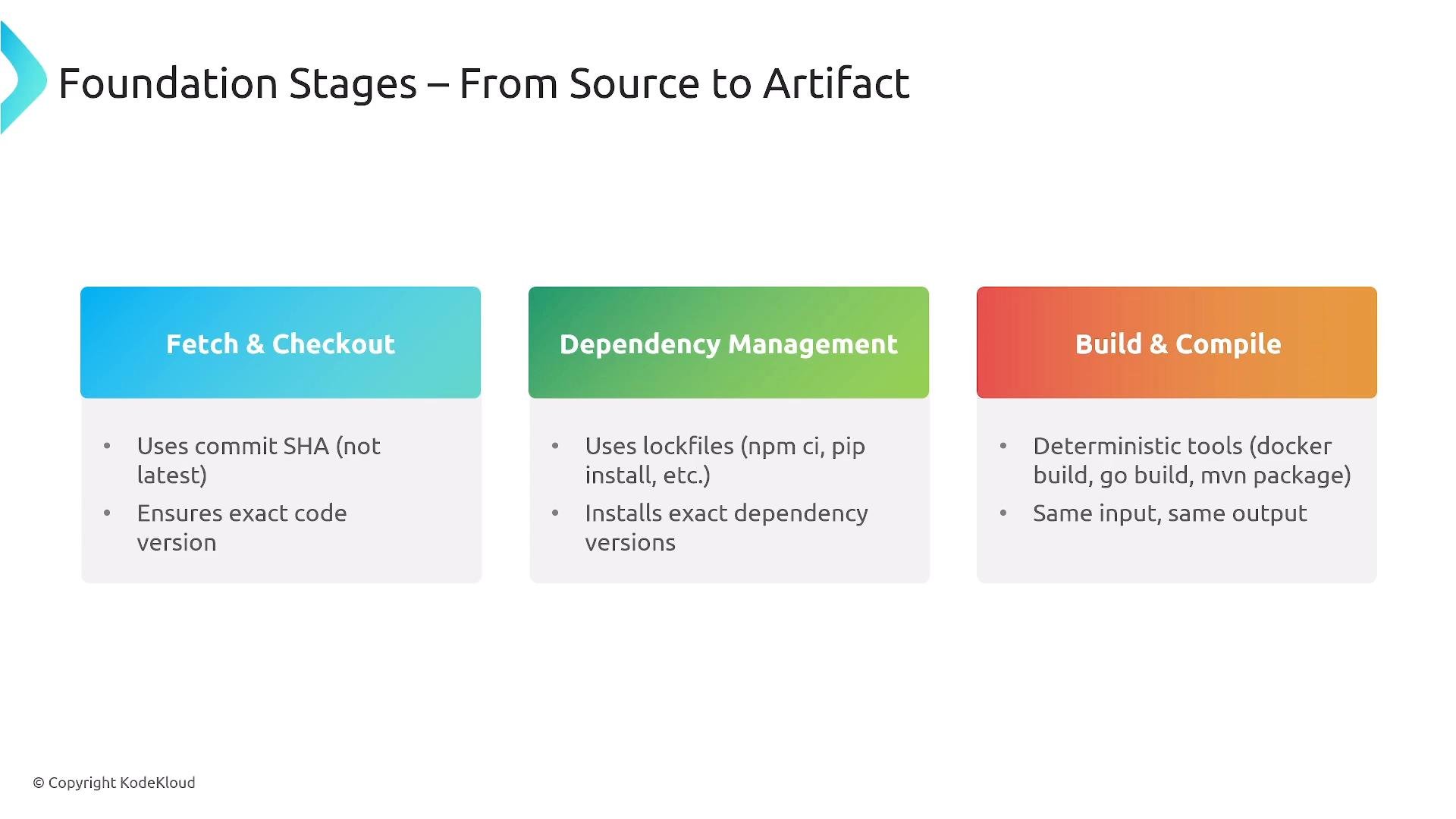
- Static analysis: linting, code-style checks, and basic SAST.
- Unit and integration tests: run unit tests first; parallelize tests where possible for speed.
- Security scans: dependency vulnerability scans, IaC scanning tools (e.g., for Terraform or CloudFormation).
- Fail-fast behavior: stop early on critical failures to save compute and surface issues quickly.
- Ephemeral test environments: create temporary environments for integration or end-to-end tests when needed.
- SAST to detect code-level vulnerabilities early.
- Dependency scanning to identify known CVEs and supply-chain risks.
- Infrastructure-as-Code (IaC) scanning to catch misconfigurations before deployment.
- DAST or runtime checks when artifacts are exercised in ephemeral environments (often part of CD).
- Policy-as-code to automatically block or flag high-severity findings.
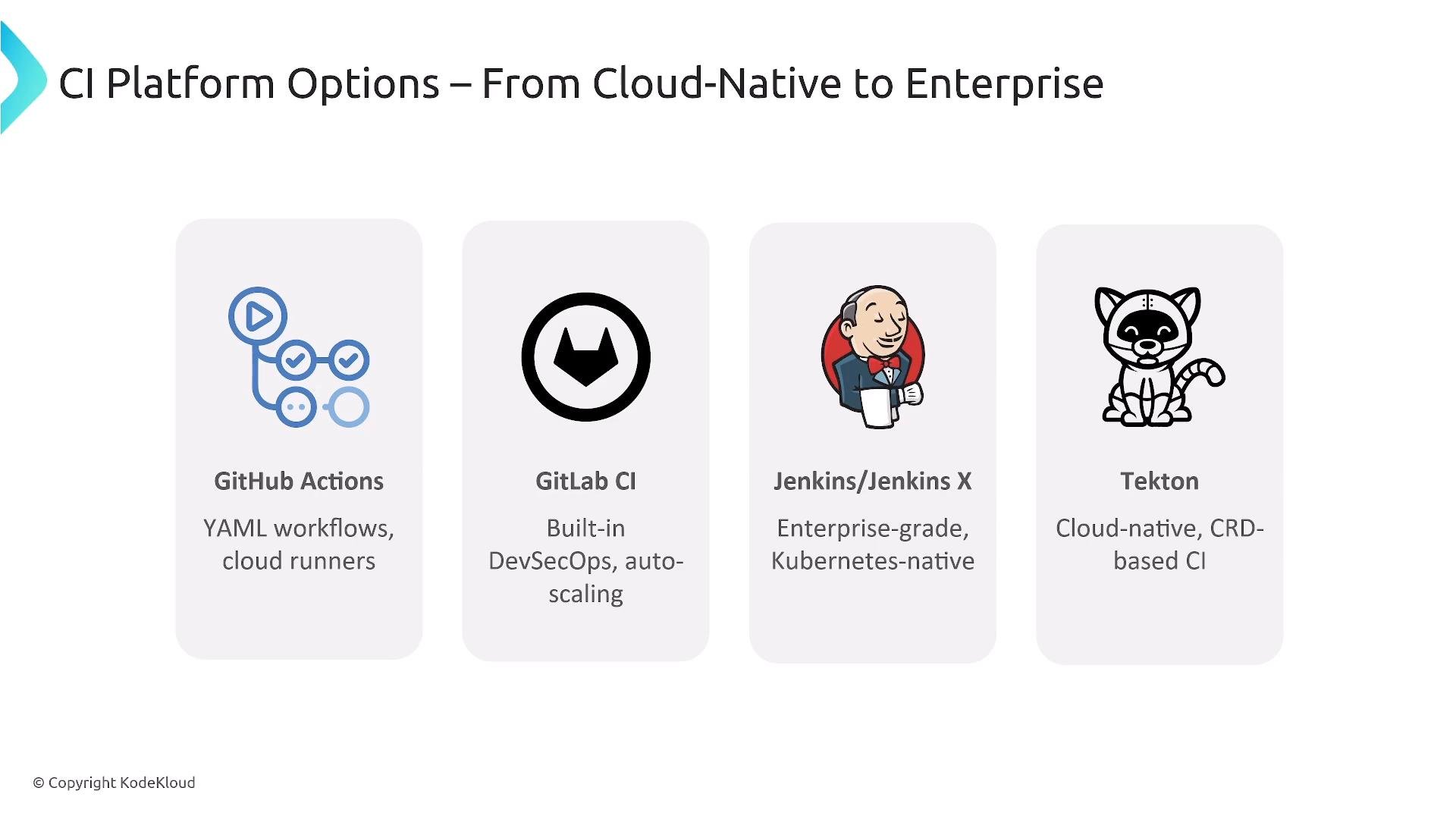
Tekton is particularly appealing for platform engineering teams adopting GitOps because pipelines are treated as declarative resources (CRDs), enabling pipeline lifecycle management with the same GitOps patterns used for application configuration.
Measuring CI effectiveness — KPIs
Track a focused set of KPIs to drive improvements in CI performance and developer experience:
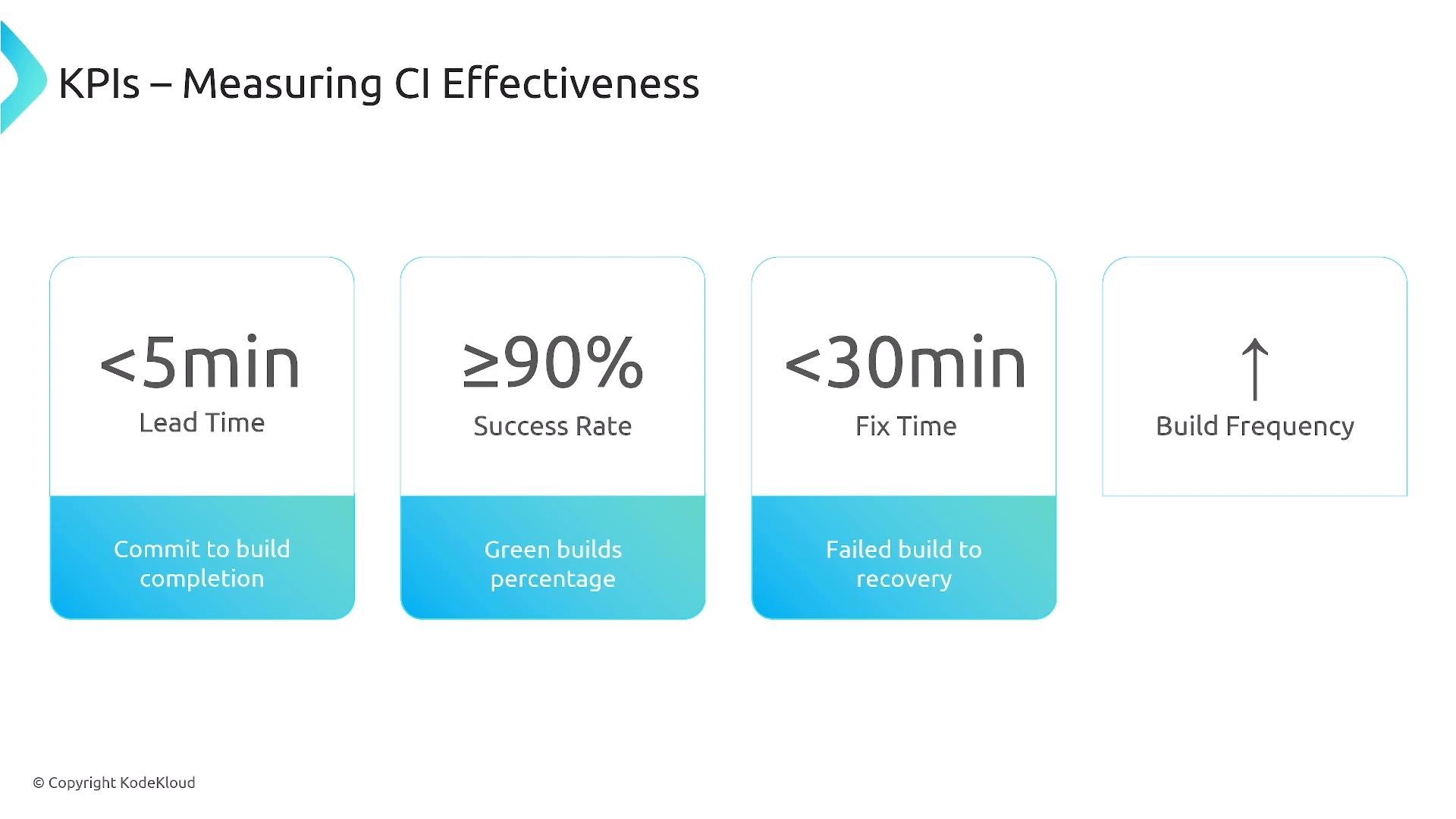
Optimize slow builds by splitting work, parallelizing tests, caching dependencies, and fixing flaky tests. Platform teams often surface these KPIs on dashboards (e.g., Grafana) to prioritize pipeline and test improvements.
Operational and platform best practices
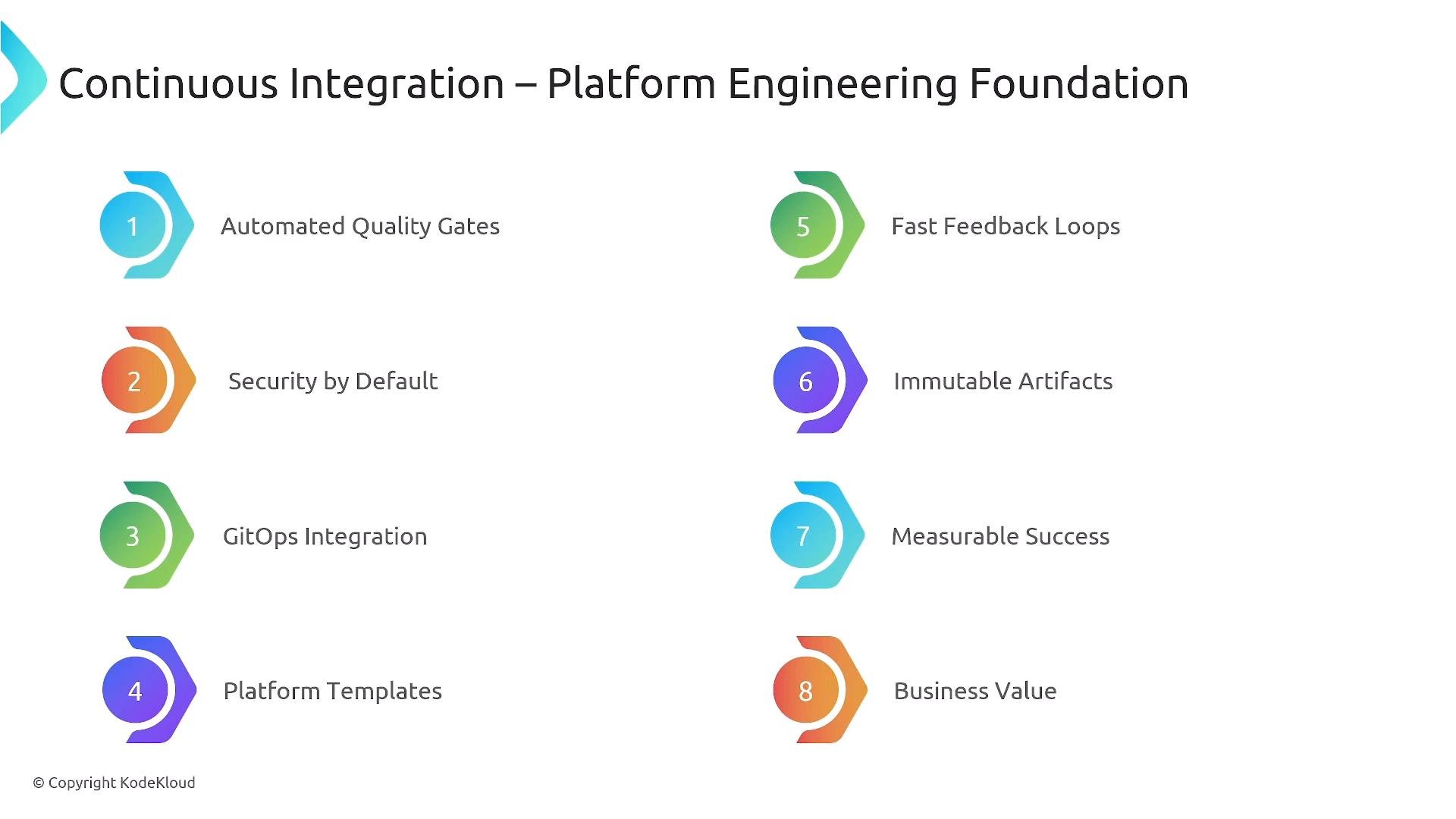
- Automate quality gates: linting, tests, and scans must be enforced by the CI pipeline.
- Security by default: embed policy-as-code and automated scanning into CI.
- GitOps-driven pipeline management: store pipeline definitions and templates in Git for auditability.
- Provide reusable templates: deliver application, infrastructure, and database templates to developer teams.
- Use immutable artifacts for traceability and reproducibility.
- Measure and iterate on KPIs to align CI with business outcomes.
Guard secrets and credentials in CI: use the platform’s secret-store features, rotate credentials regularly, and never hard-code secrets in pipeline definitions or repository files.
- Study Continuous Delivery and GitOps fundamentals to learn how CI-produced artifacts are promoted and deployed across environments.
- Evaluate CI platforms against your team’s operational model (hosted vs self-managed, Kubernetes-native, GitOps support).
- Start measuring the KPIs above and iterate to reduce lead time and improve reliability.
- Continuous Integration (Wikipedia)
- GitHub Actions documentation
- GitLab CI documentation
- Tekton Pipelines
- Jenkins project