

- Why DX matters and the forces driving it in 2025
- Common developer pain points
- Platform goals and core design principles
- CLI patterns and examples
- Template systems and parameter validation
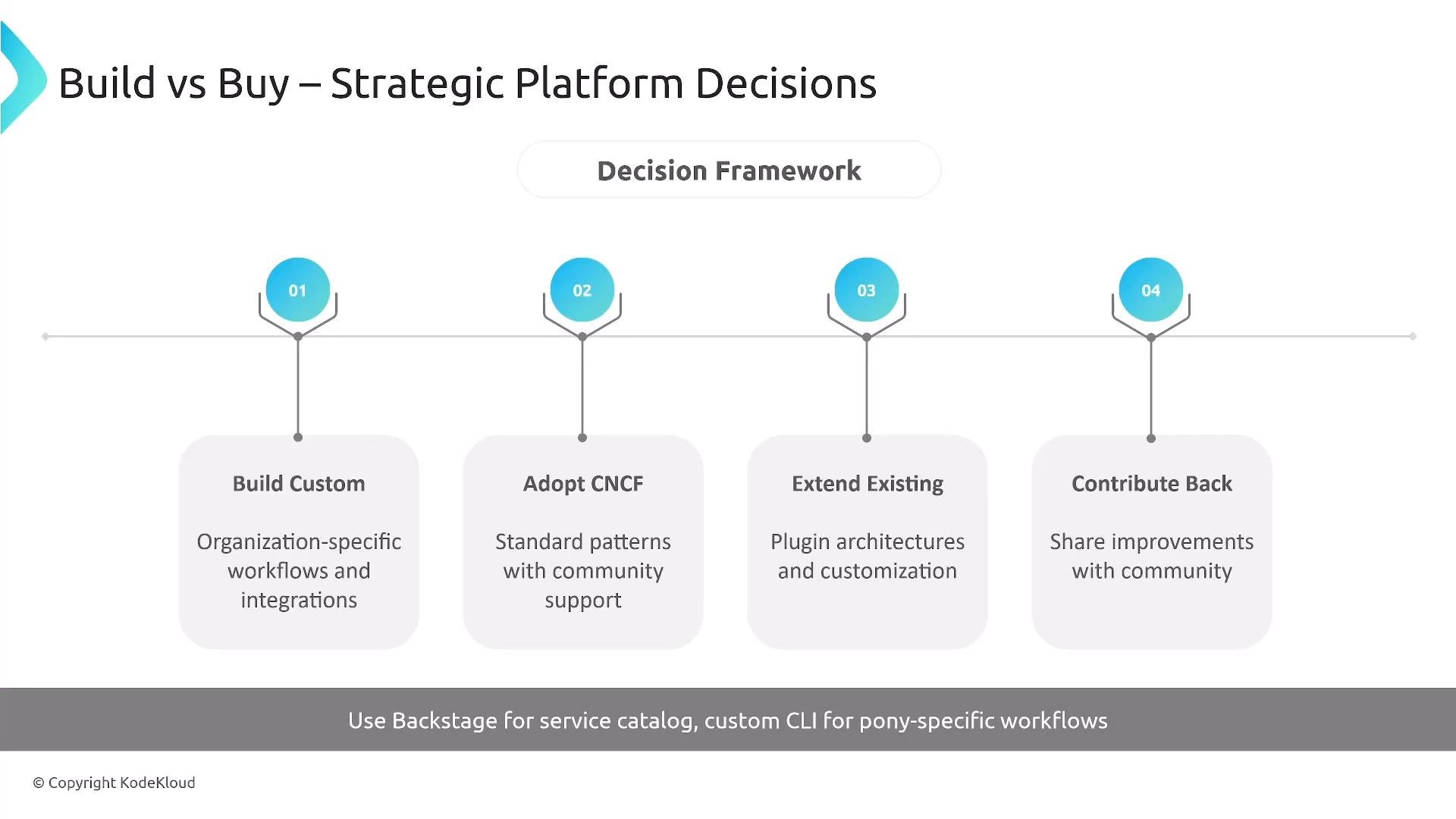
- Ecosystem tooling and strategic decisions
- Error handling, observability, and measuring success
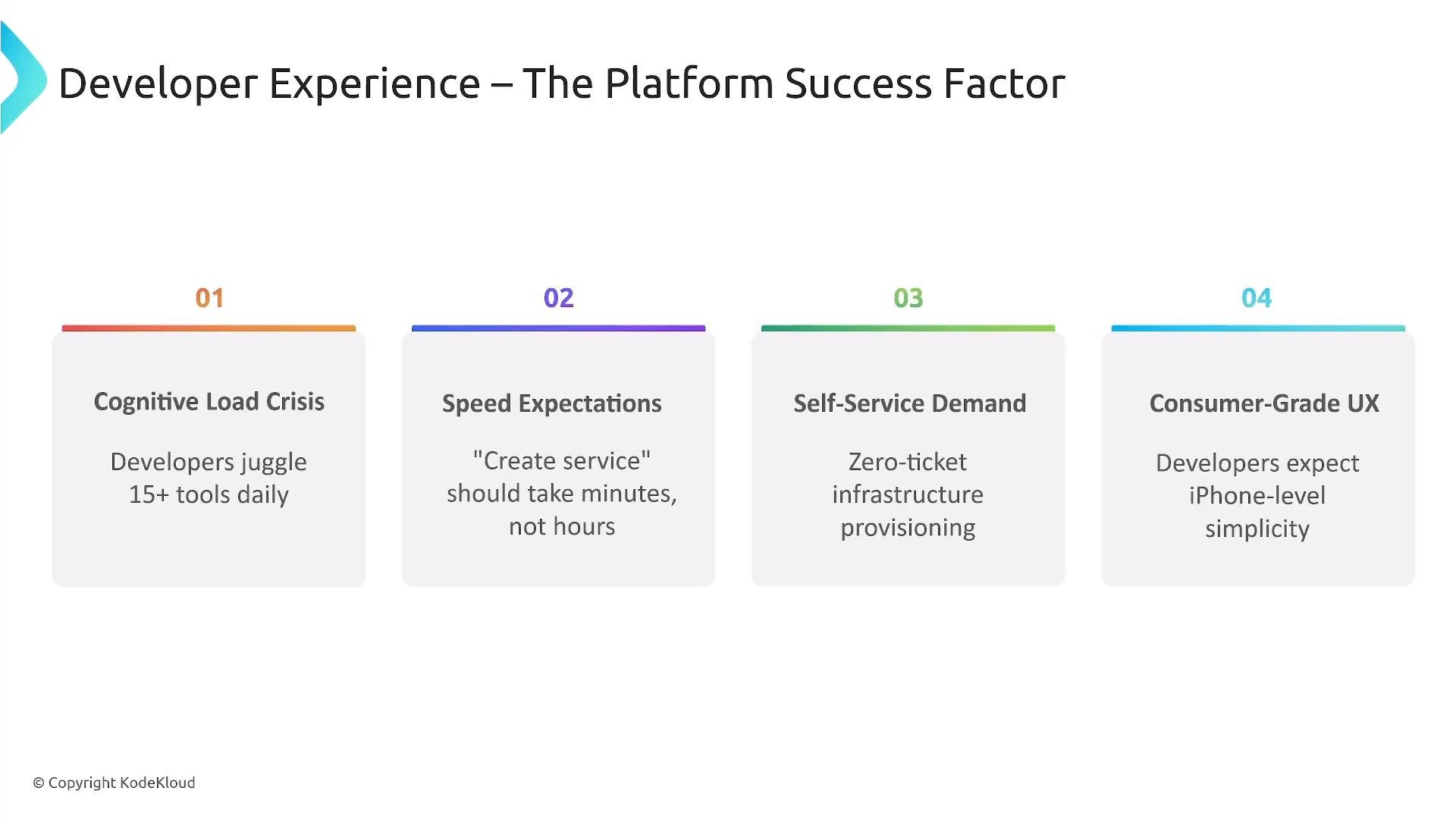
- Cognitive load crisis — developers juggle many tools and contexts.
- Speed expectations — teams expect services created in minutes.
- Self-service demand — infrastructure provisioning without tickets.
- Consumer-grade UX — intuitive, mobile-like simplicity.
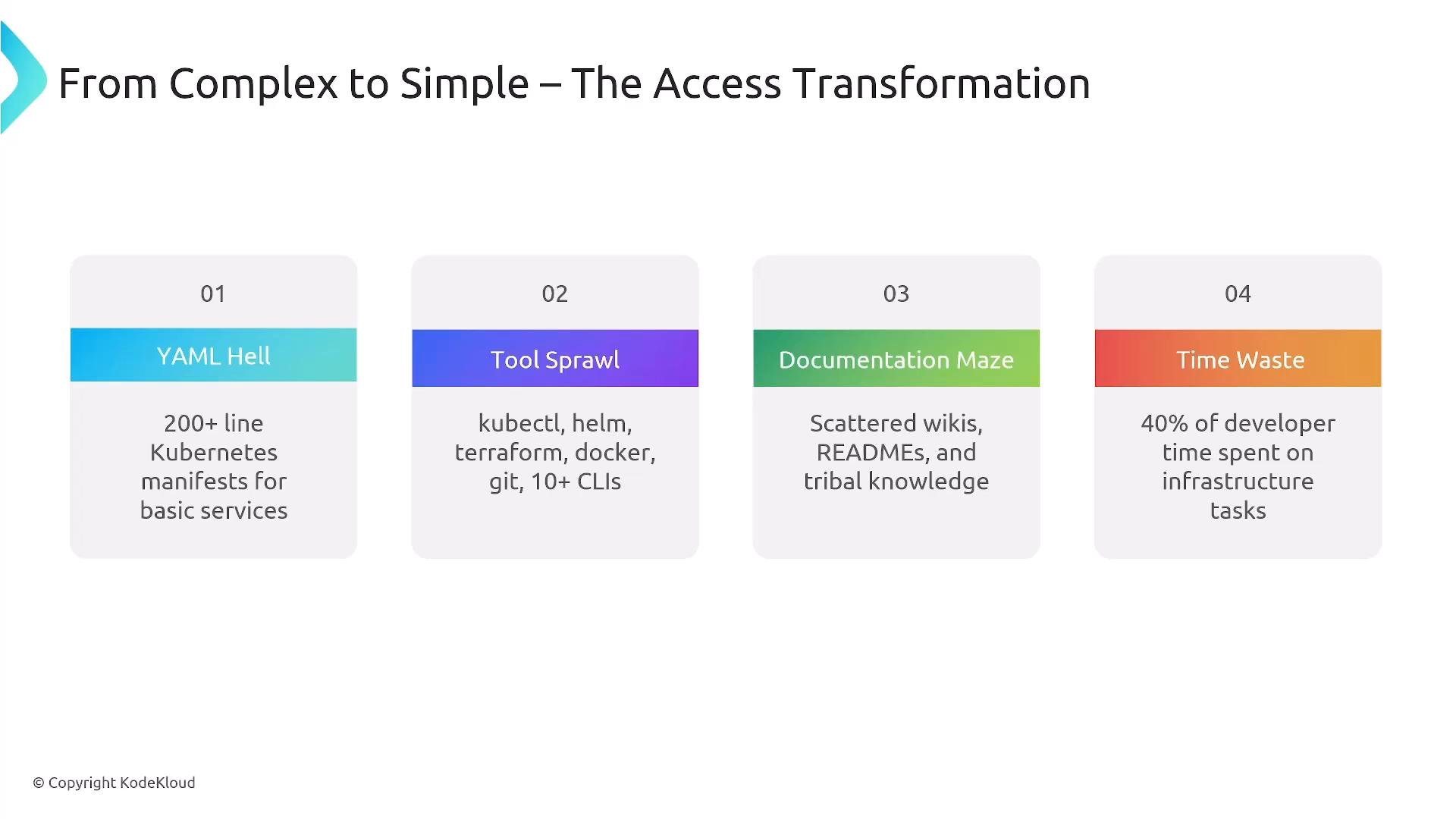
- YAML complexity — long manifests and multi-step thought processes deter productivity.
- Tool sprawl — many CLIs and CLIs + GUIs elevate cognitive load.
- Documentation maze — scattered READMEs and wikis slow onboarding.
- Time wasted — developers spend significant time on infra rather than features.
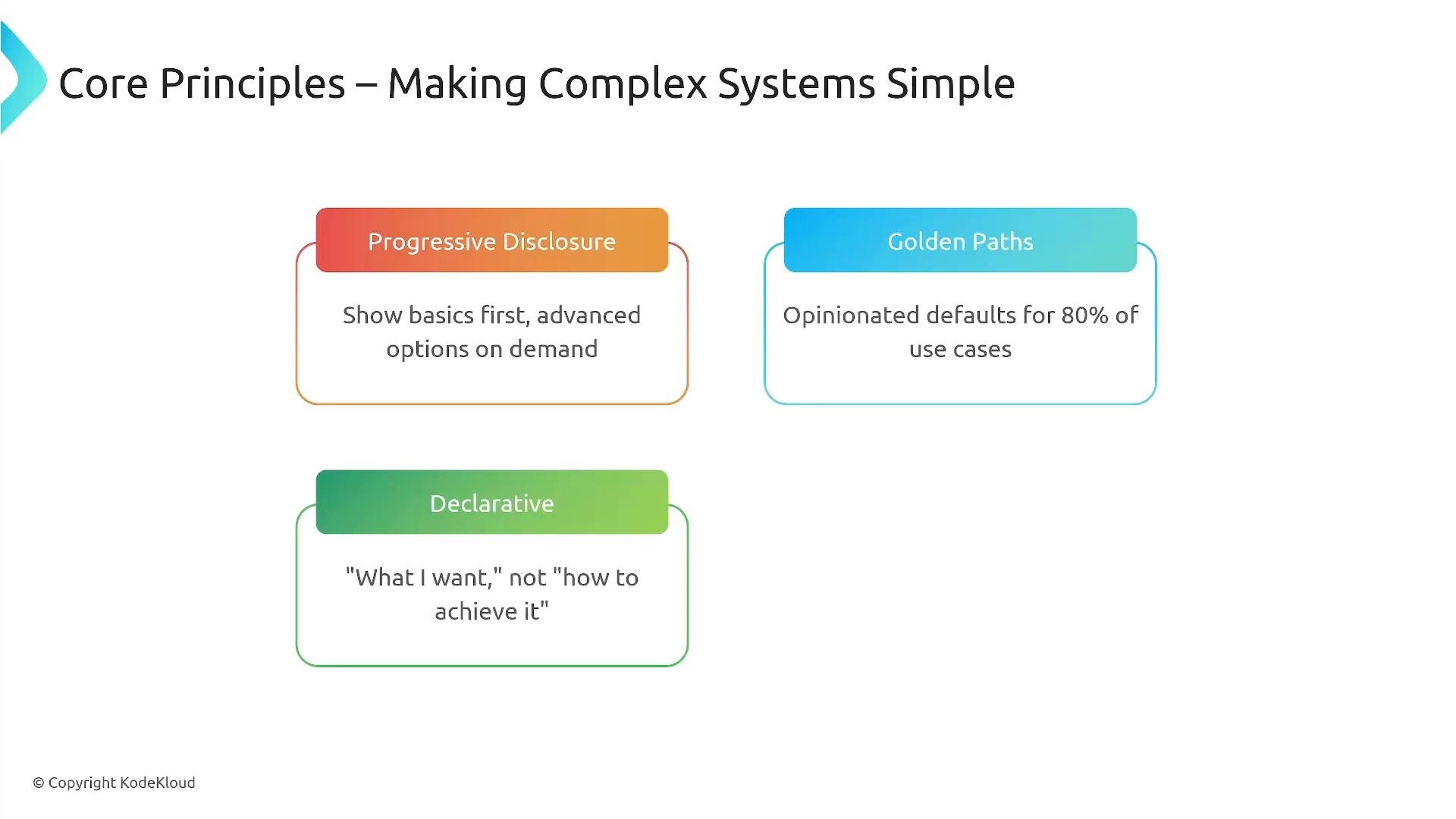
- Make infrastructure simple, discoverable, and opinionated.
- Show basics first and reveal advanced options on demand (progressive disclosure).
- Provide “golden paths”: opinionated defaults for the most common use cases.
- Embrace declarative interfaces so developers declare what they want, not how to achieve it.
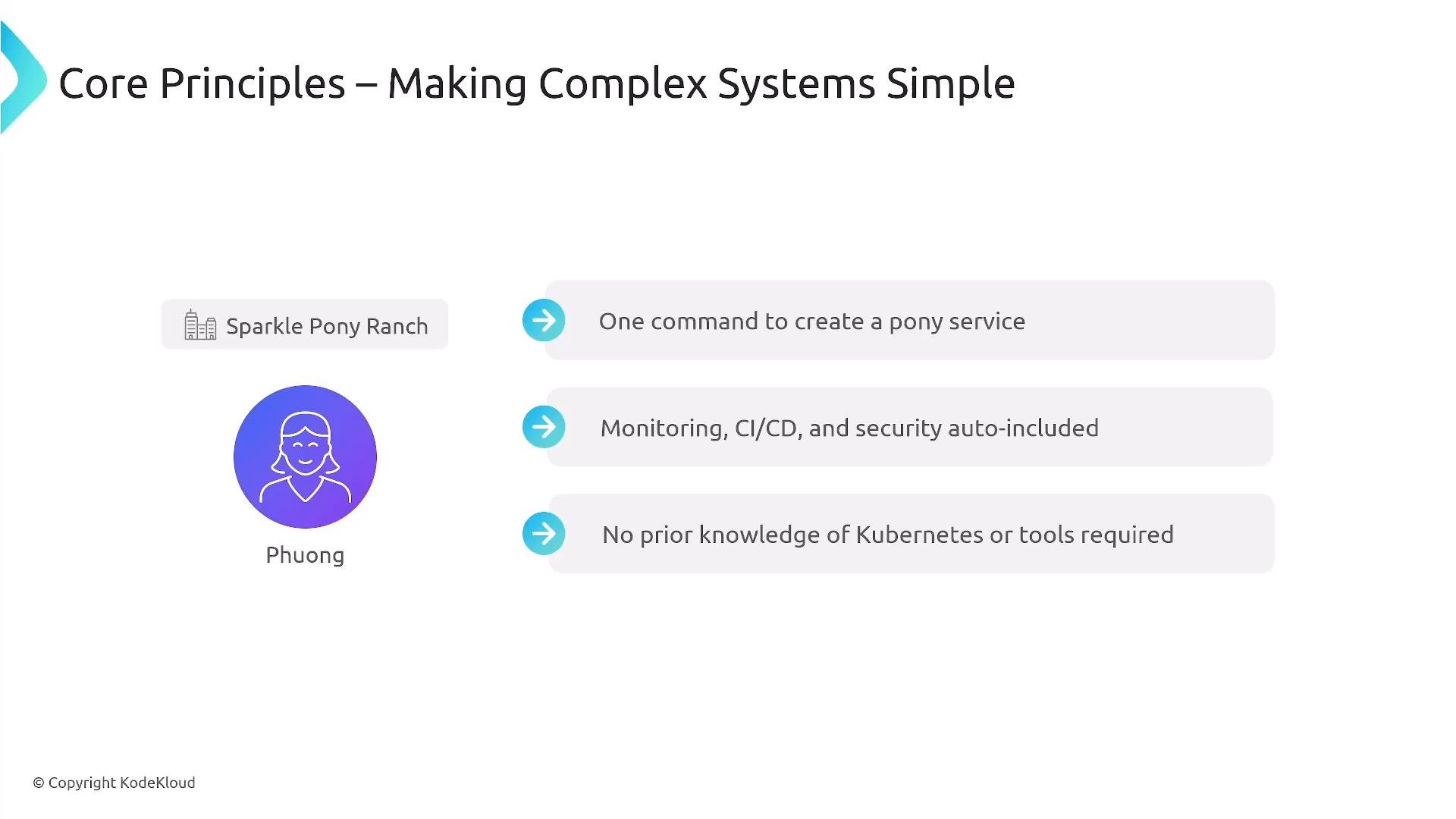
Design “CLI-first” and API-first flows. A well-crafted CLI complements the UI and APIs: it is fast, scriptable, and works inside terminals, CI pipelines, and IDEs. Prioritize consistency across CLI, web UI, and programmatic APIs so templates and operations behave the same regardless of how they’re invoked.
- Speed and precision for power users.
- Automation-friendly for scripts and pipelines.
- Works in low-bandwidth or remote SSH sessions.
- Complements GUIs and underlying APIs.
- Subcommand structure (verb object), e.g.
platformctl create service - Rich, structured output (colors, progress bars, JSON output)
- Built-in help and shell auto-completion
- Support for structured config input (YAML/JSON)
- Orchestrated flows and examples for frequent tasks
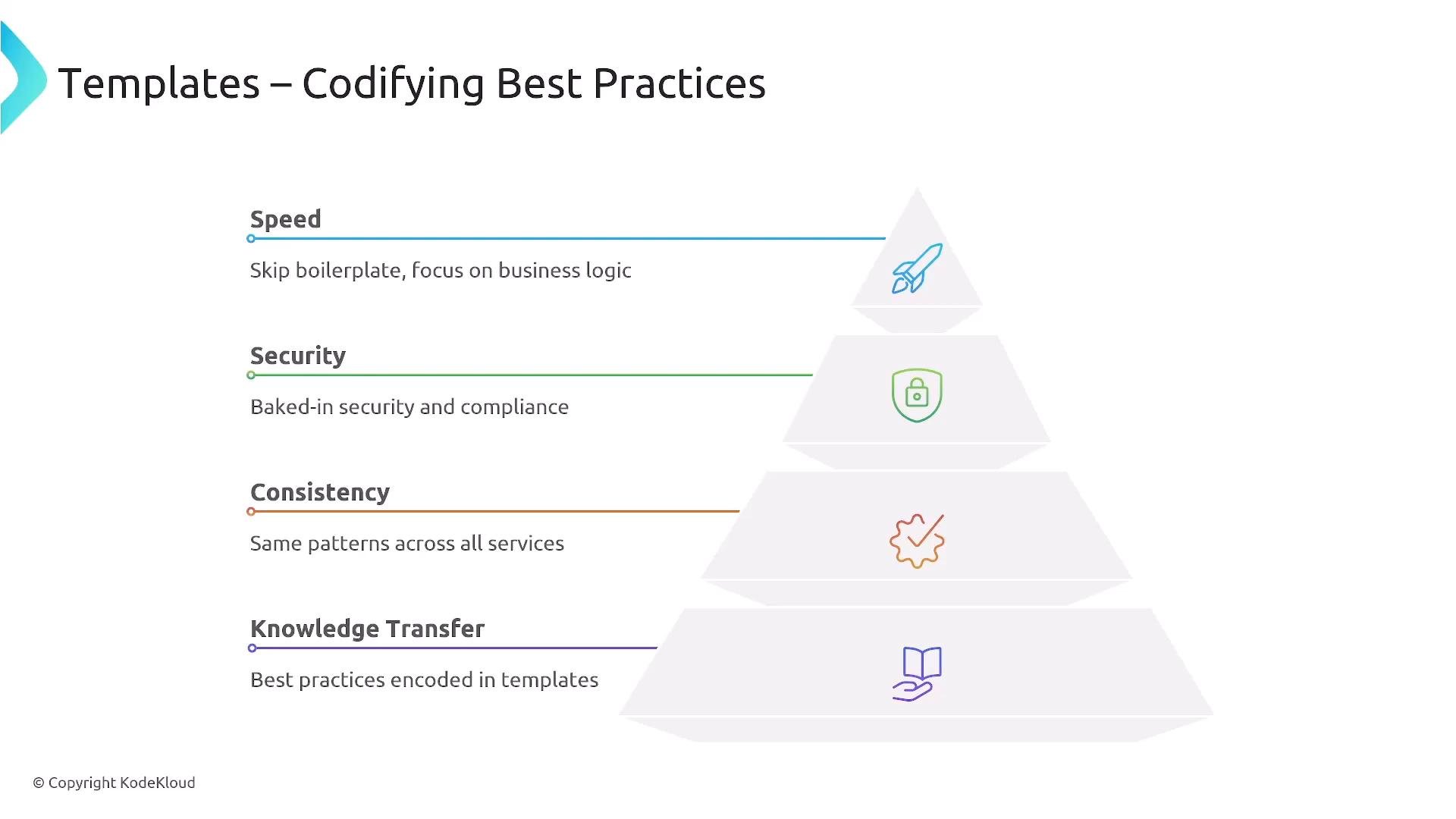
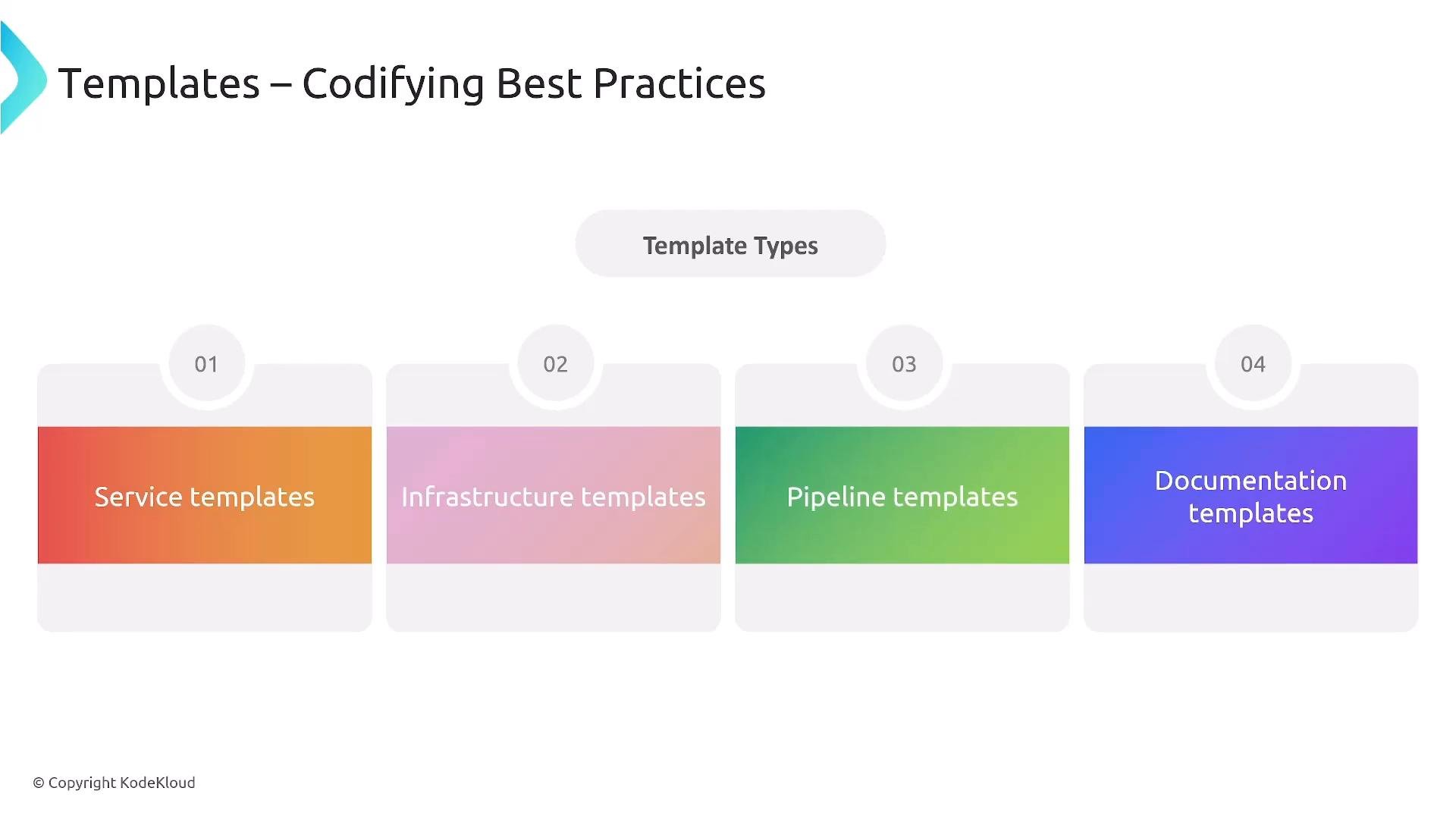
These templates should chain together: a service template can reference an infra template and a pipeline template to bootstrap code, deployment, and runbooks in a single flow.
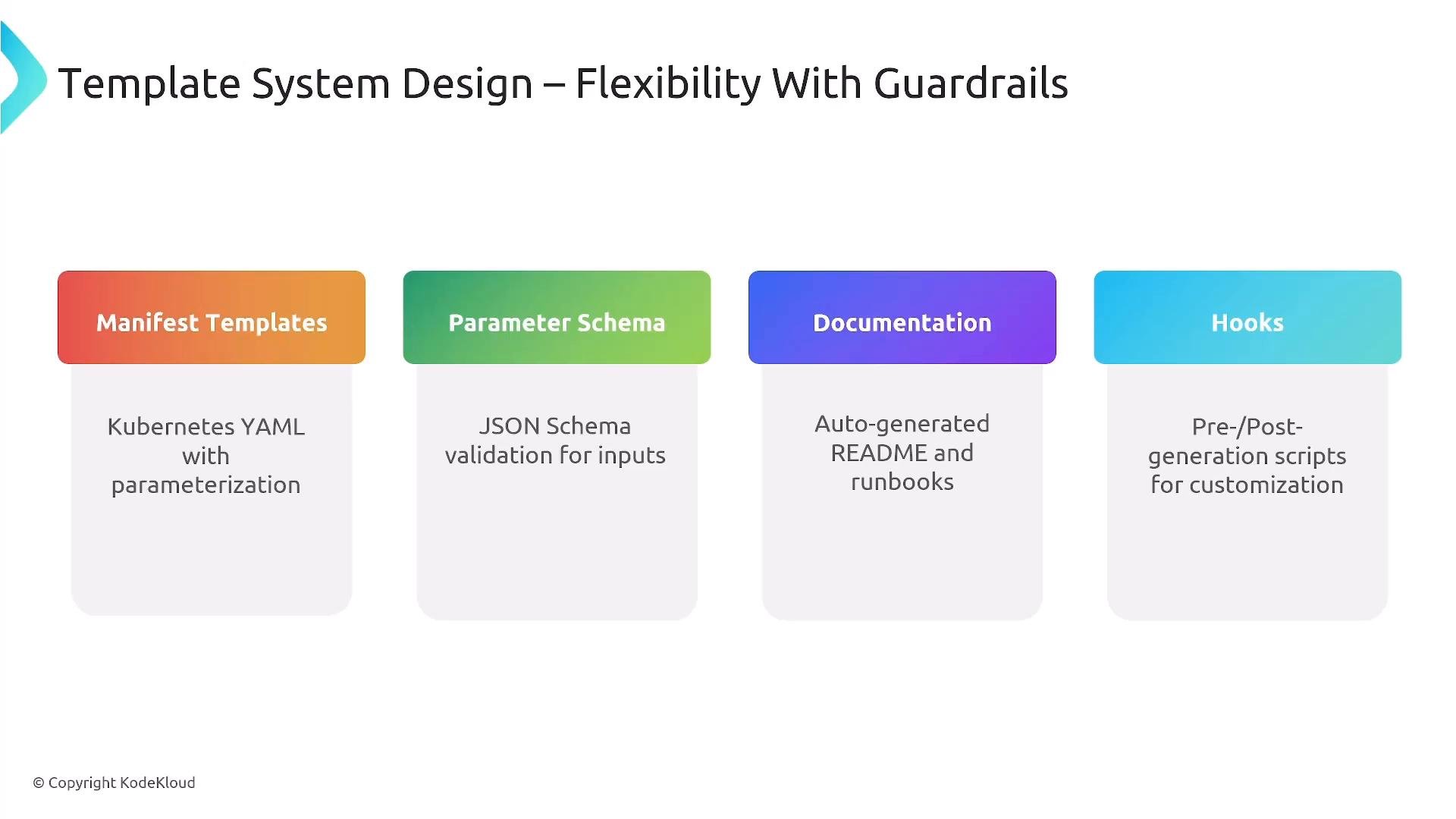
- Manifest templates — parameterized Kubernetes YAML or Helm charts
- Parameter schema — JSON Schema for validation and UI generation
- Auto-generated docs — README and runbooks generated automatically
- Hooks — pre/post generation scripts for side effects or scaffolding
Policy note: For highly available workloads, set
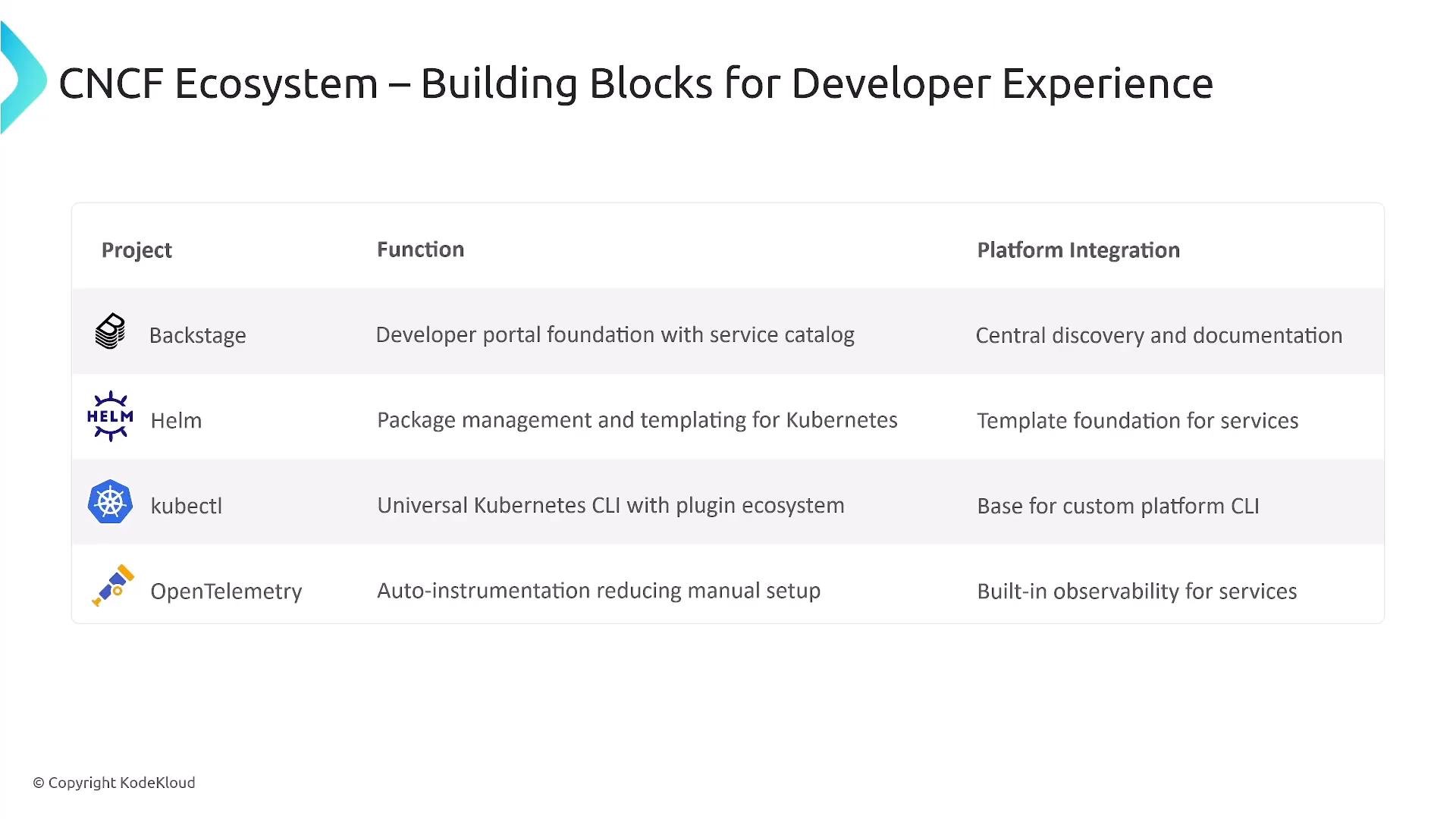
minimum to 2 for replicas. Ensure parameter schemas reflect organizational constraints (quotas, allowed regions, instance sizes) and map to enforcement checks in CI or admission controllers.- Backstage — service catalog and TechDocs for discovery
- Helm — packaging and templating for Kubernetes
- kubectl — a canonical cluster CLI example
- OpenTelemetry — observability for traces, metrics, and logs
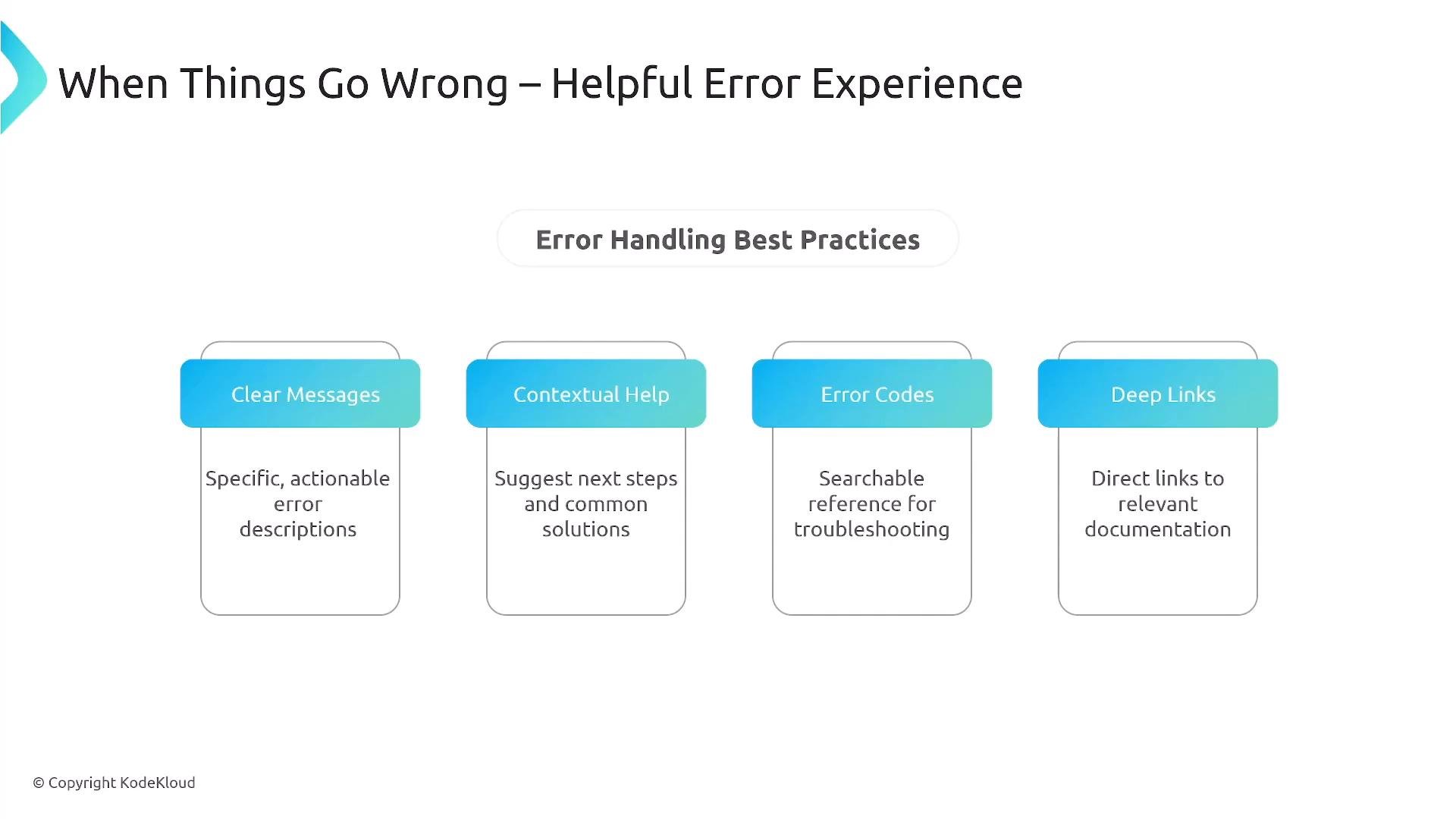
- Clear, concise messages with context
- Suggested next steps and links to runbooks
- Meaningful error codes for automation and analytics
- Deep links to docs or escalation paths
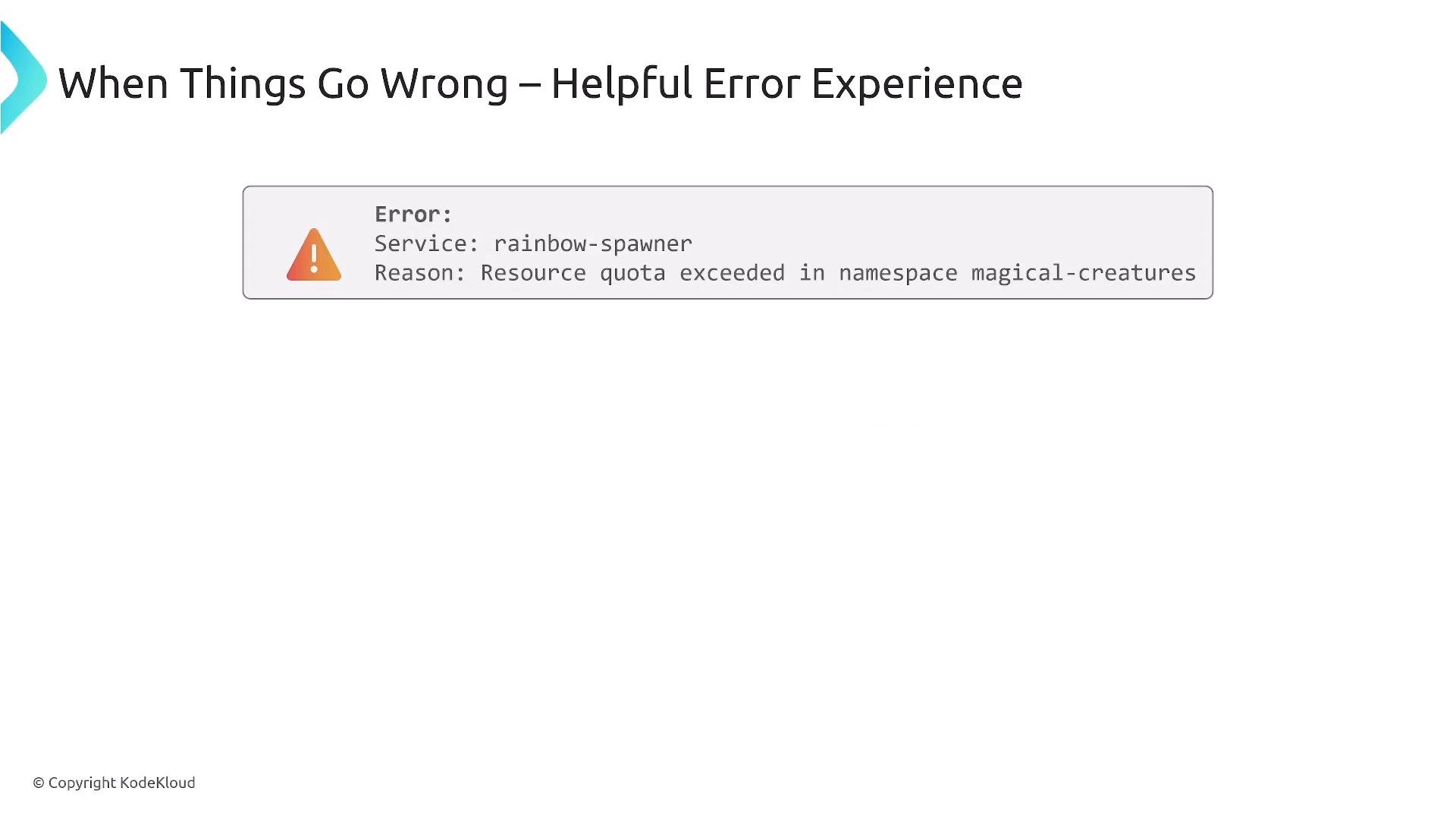
- Error: Resource quota exceeded for
rainbow-spawnerin namespacemagical-creatures. - Suggested next steps: check quota status (
kubectl get resourcequotasor portal), request an increase, or follow the quota runbook. - Indicate whether small temporary increases may be auto-approved (when policy allows) and provide a link to the policy.
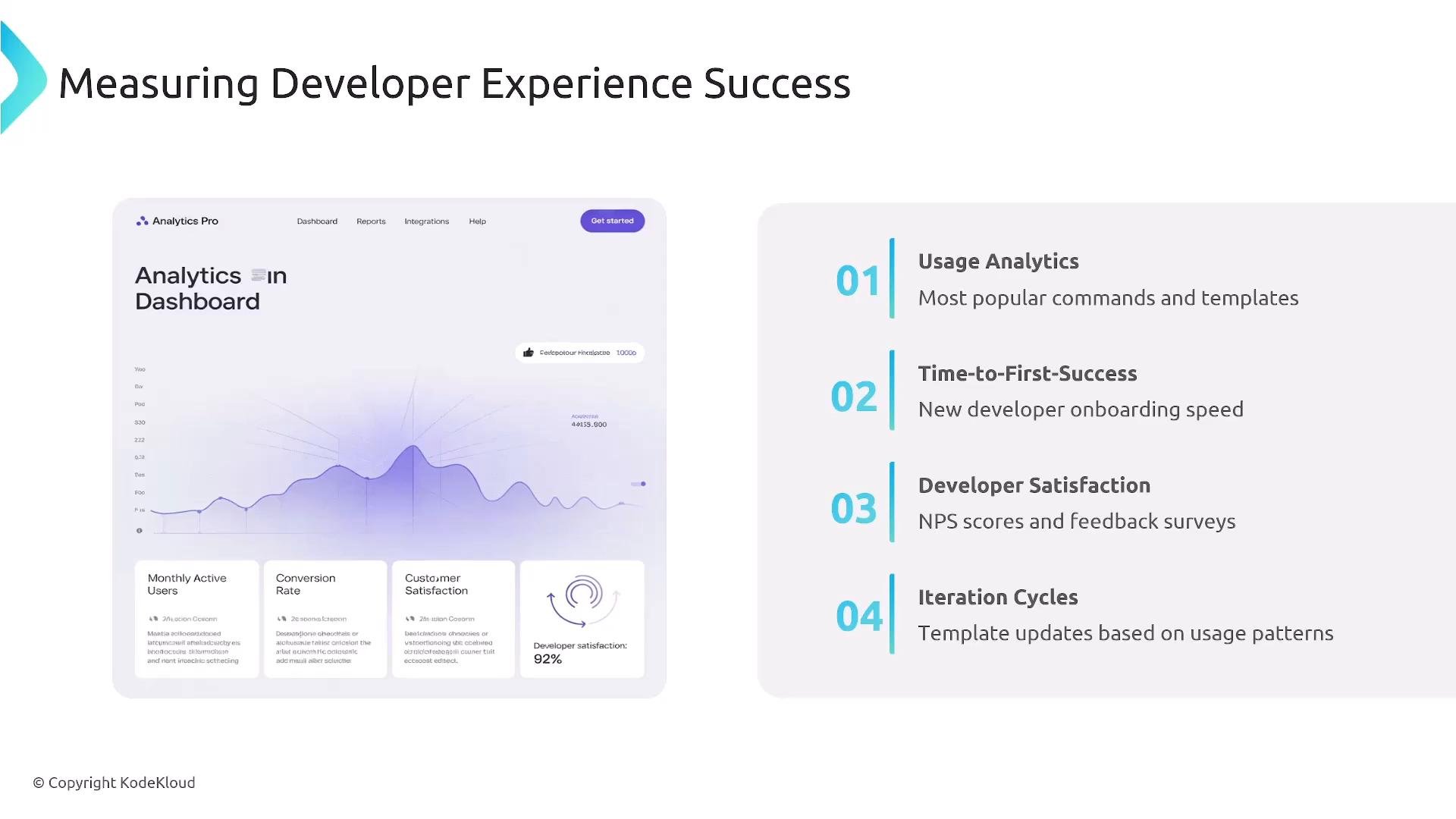
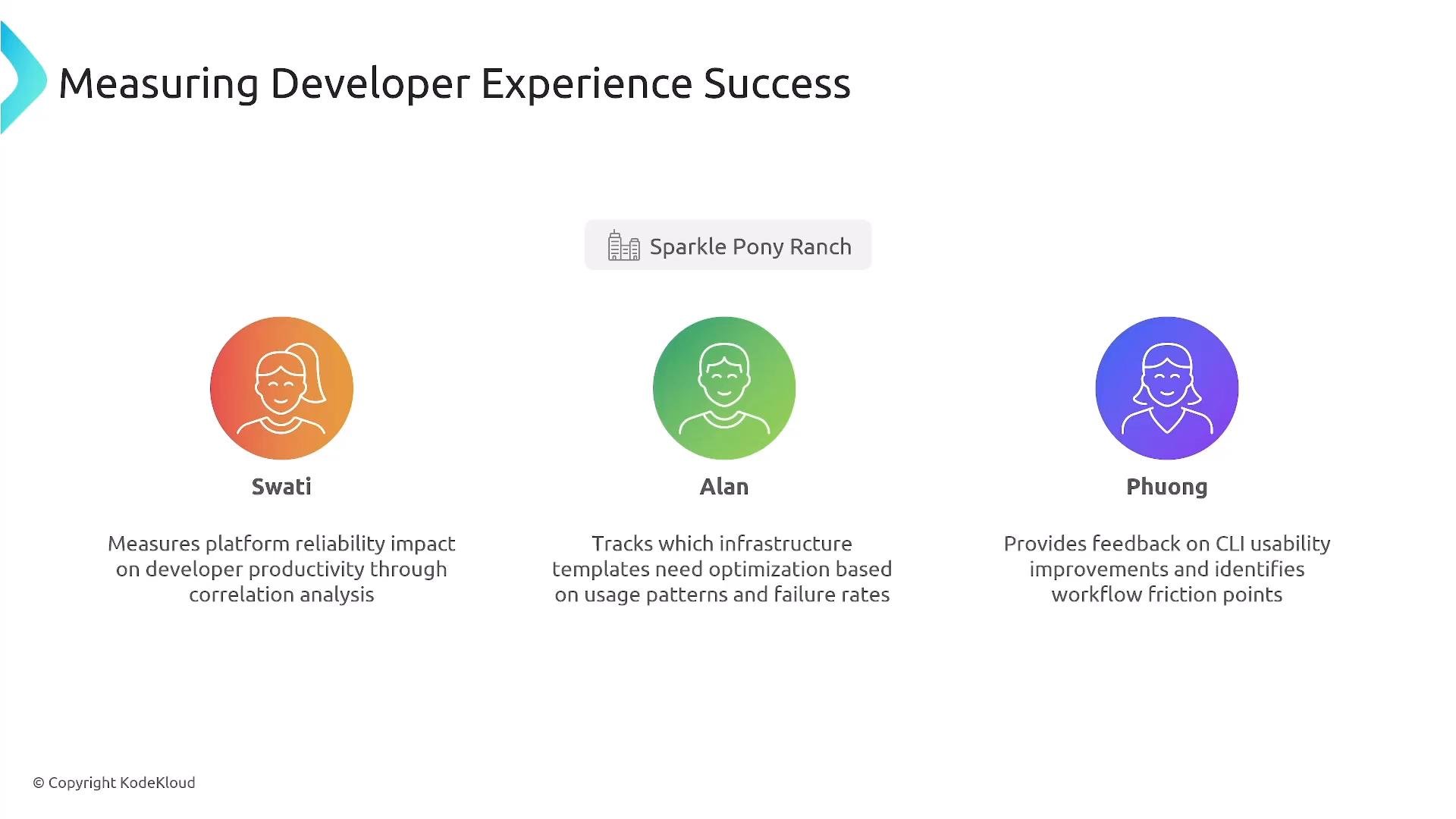
Collect adoption metrics, failure rates, and correlate platform usage with developer productivity. Product-oriented platform teams should run experiments, collect feedback, and iterate with real users.
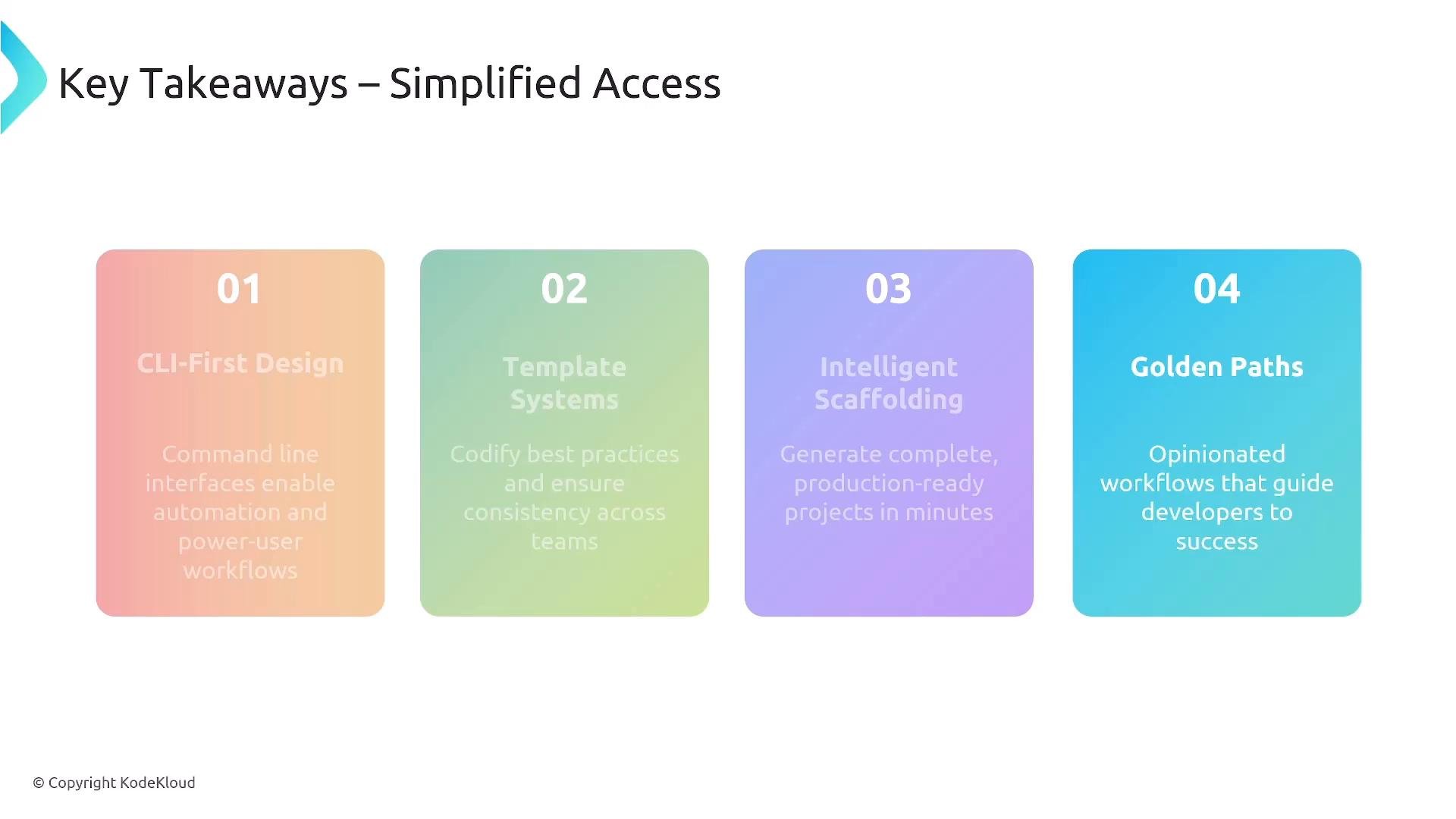
- CLI-first design with consistent APIs and a polished UI is indispensable.
- Template systems reduce friction, enforce best practices, and capture institutional knowledge.
- Intelligent scaffolding (code + infra + pipeline templates) accelerates time-to-value.
- Golden paths and progressive disclosure deliver predictable, low-cognitive outcomes for common tasks.
- Offer a portal, a robust CLI, and a well-documented API.
- Use CNCF projects when they fit your needs (Backstage for catalogs, Helm for packaging).
- Bake operational and security controls into self-service flows.
- Continuously gather real usage data and developer feedback; iterate relentlessly.