

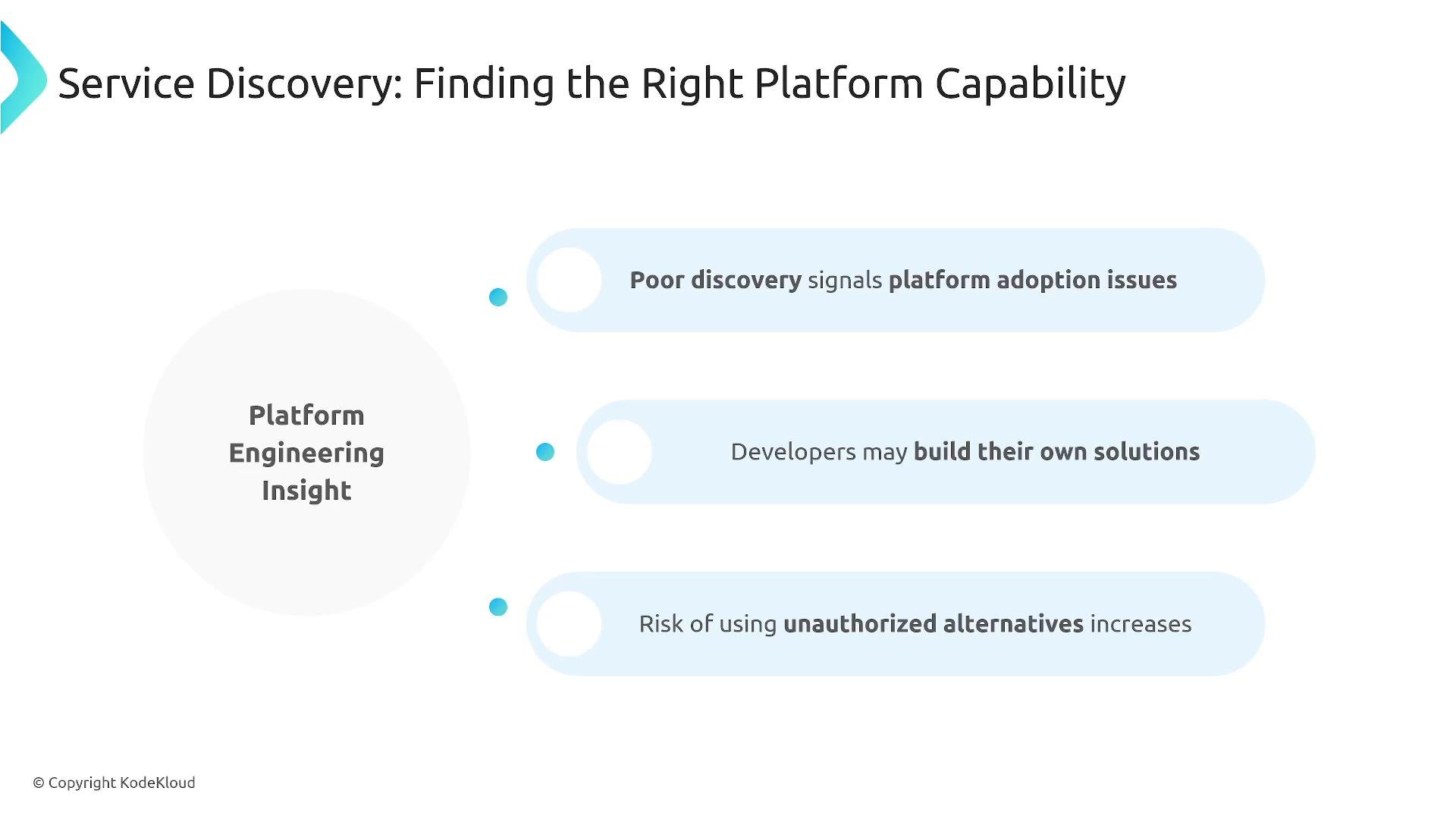
- Discoverability: Where is the service I need?
- Documentation: Hard to keep current across teams.
- Access: Manual approvals and ticketing slow delivery.
- Governance: Enforcing quotas, budgets, and security constraints.
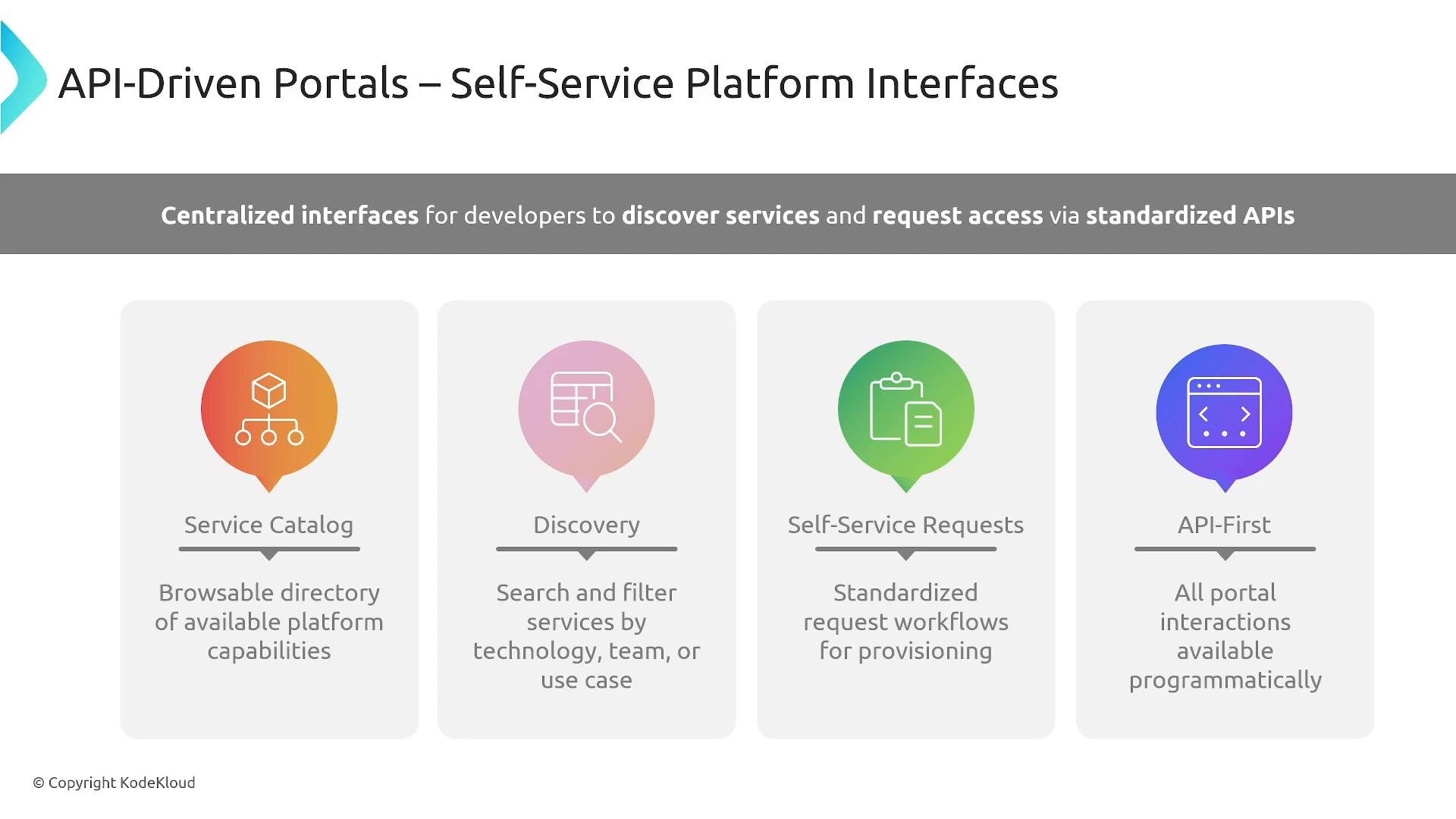
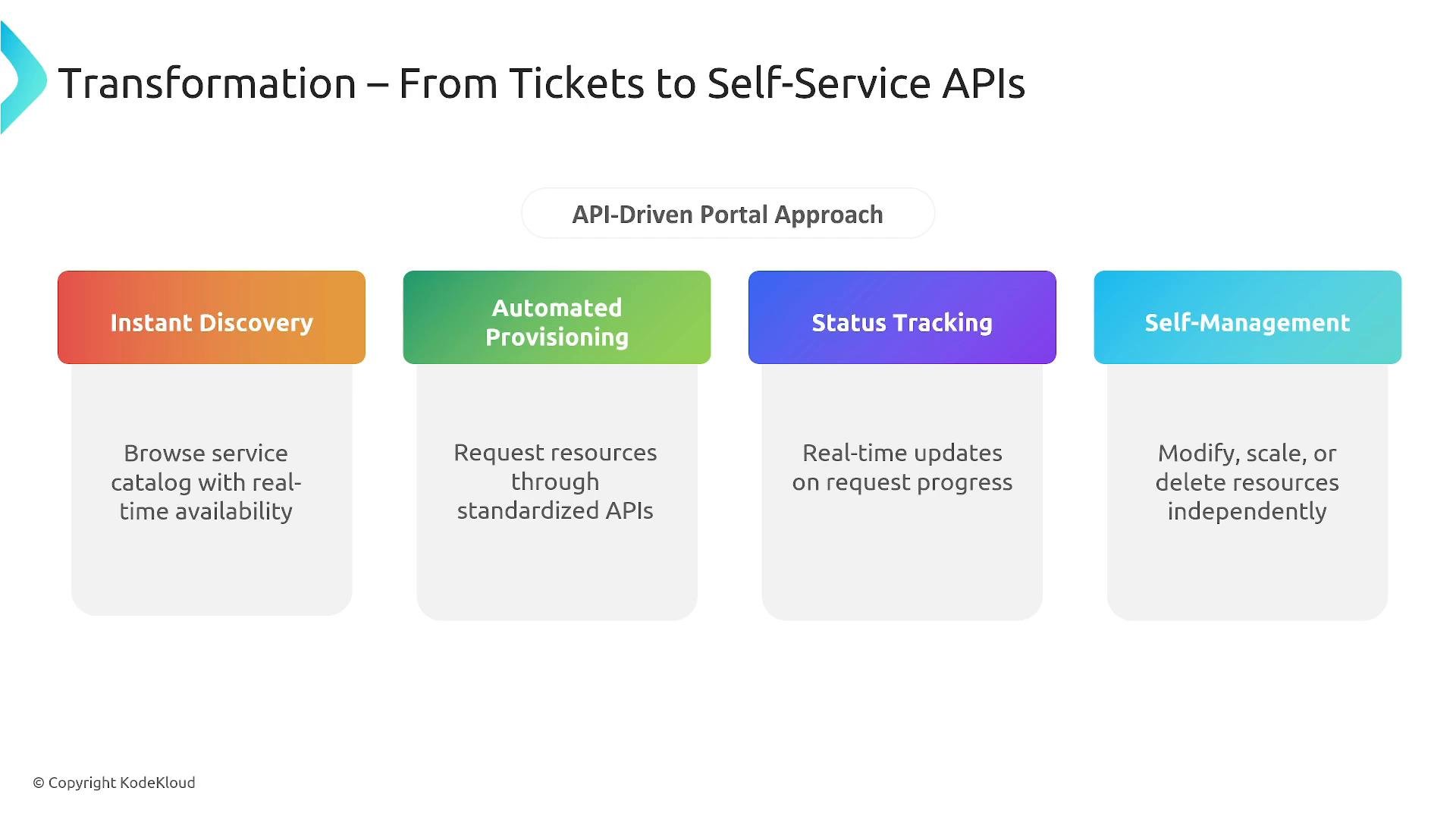
- Instant discovery of available capabilities
- Automated provisioning for routine, approved requests
- Status tracking, notifications, and credential delivery
- Self-management within policy and security boundaries
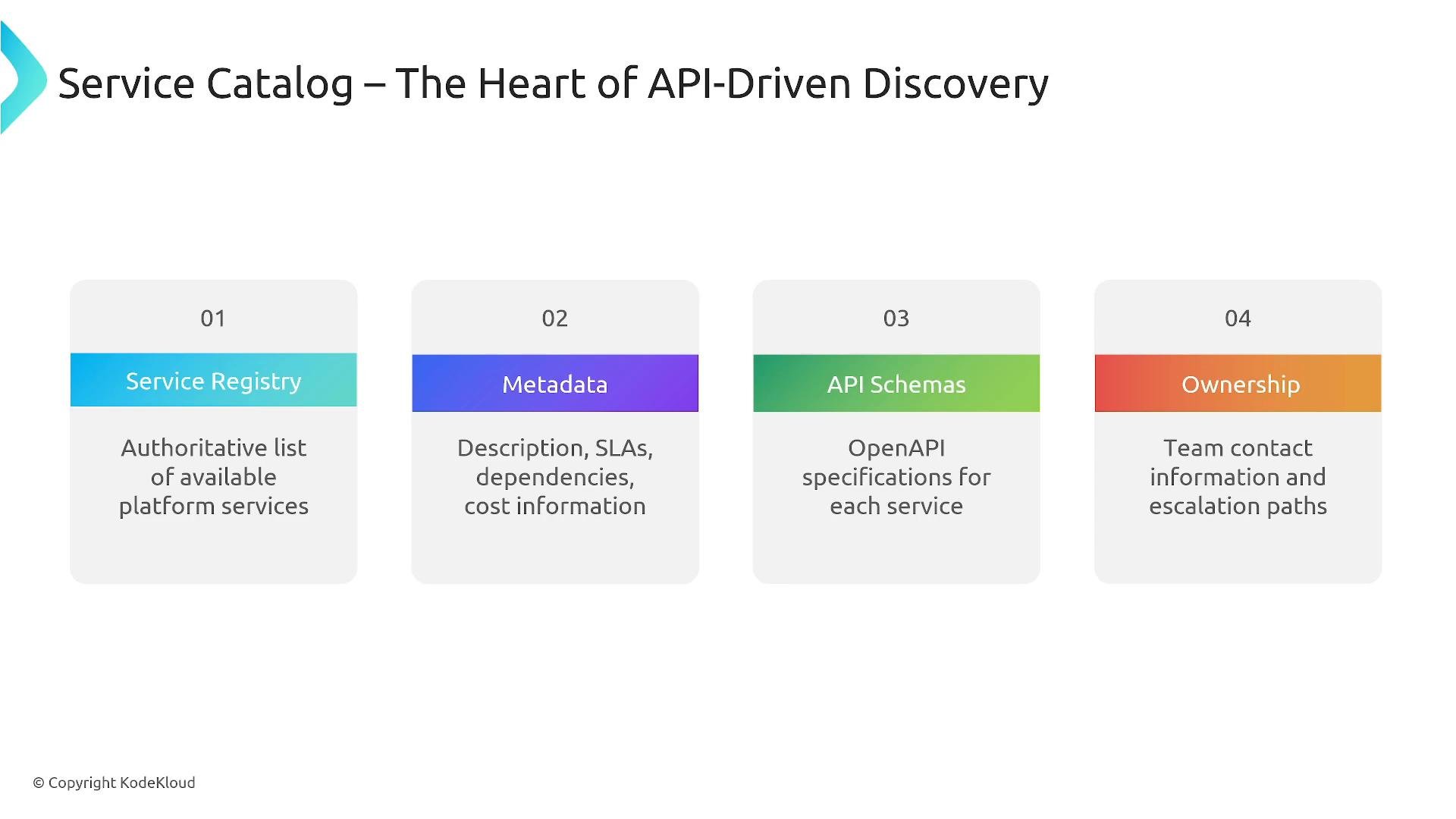
A well-modeled service catalog with OpenAPI schemas and clear ownership makes automation and integration — e.g., generating SDKs, validating configs, or scaffolding templates — far easier across teams.
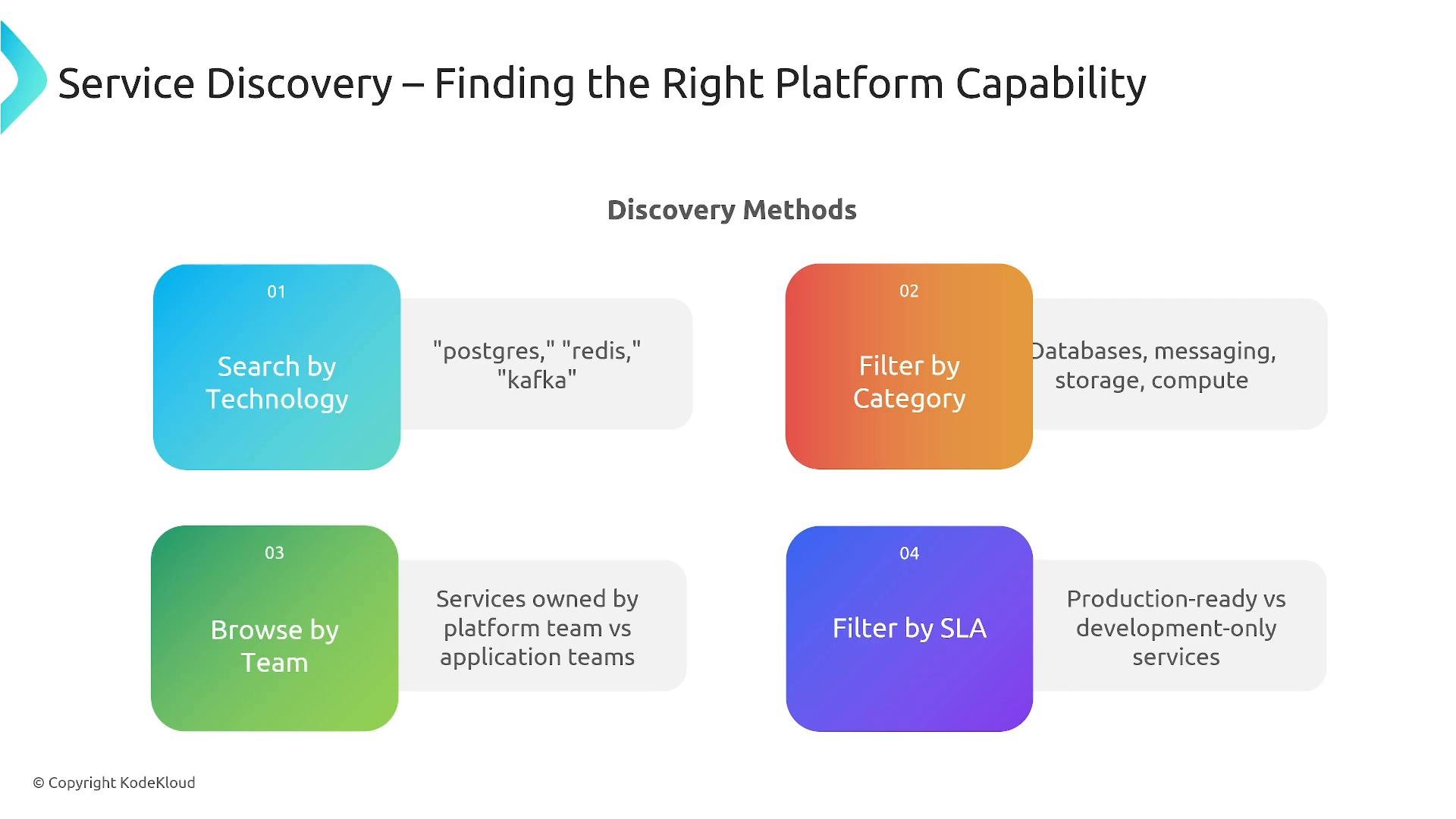
- Search by technology keywords (e.g.,
postgres,redis,kafka) - Faceted filters by category (databases, messaging), SLA, or environment (dev/staging/prod)
- Browse by owning team or team contact
- Version selection and favoriting for commonly used services
- Combined constraints (e.g., production-grade Postgres + backups + HA)
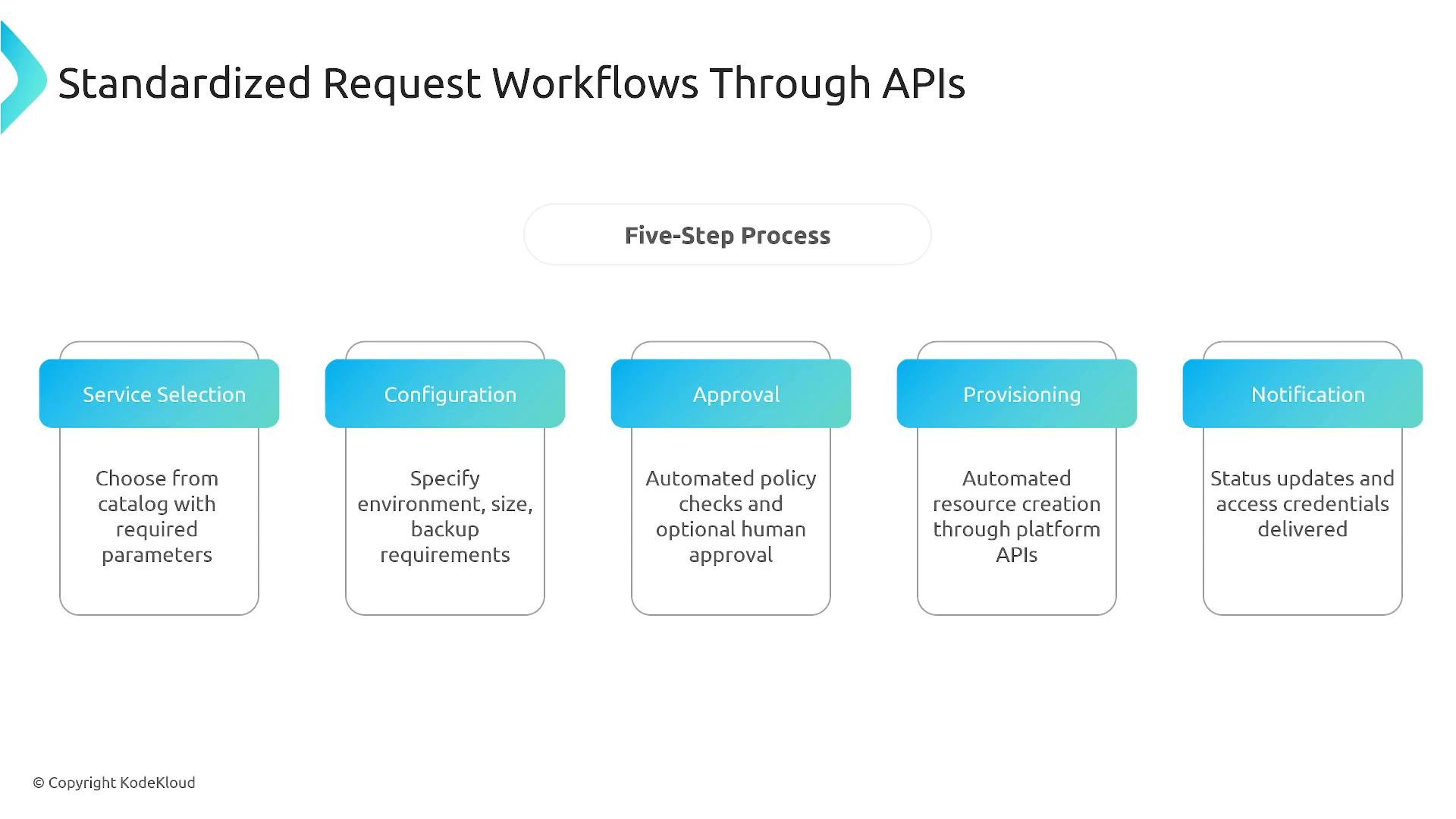
- Service selection (choose from catalog)
- Configuration (environment, size, backups, version)
- Policy and approval checks (billing code, quotas)
- Automated provisioning (invoke cloud or infra APIs)
- Notification and delivery of credentials/endpoints
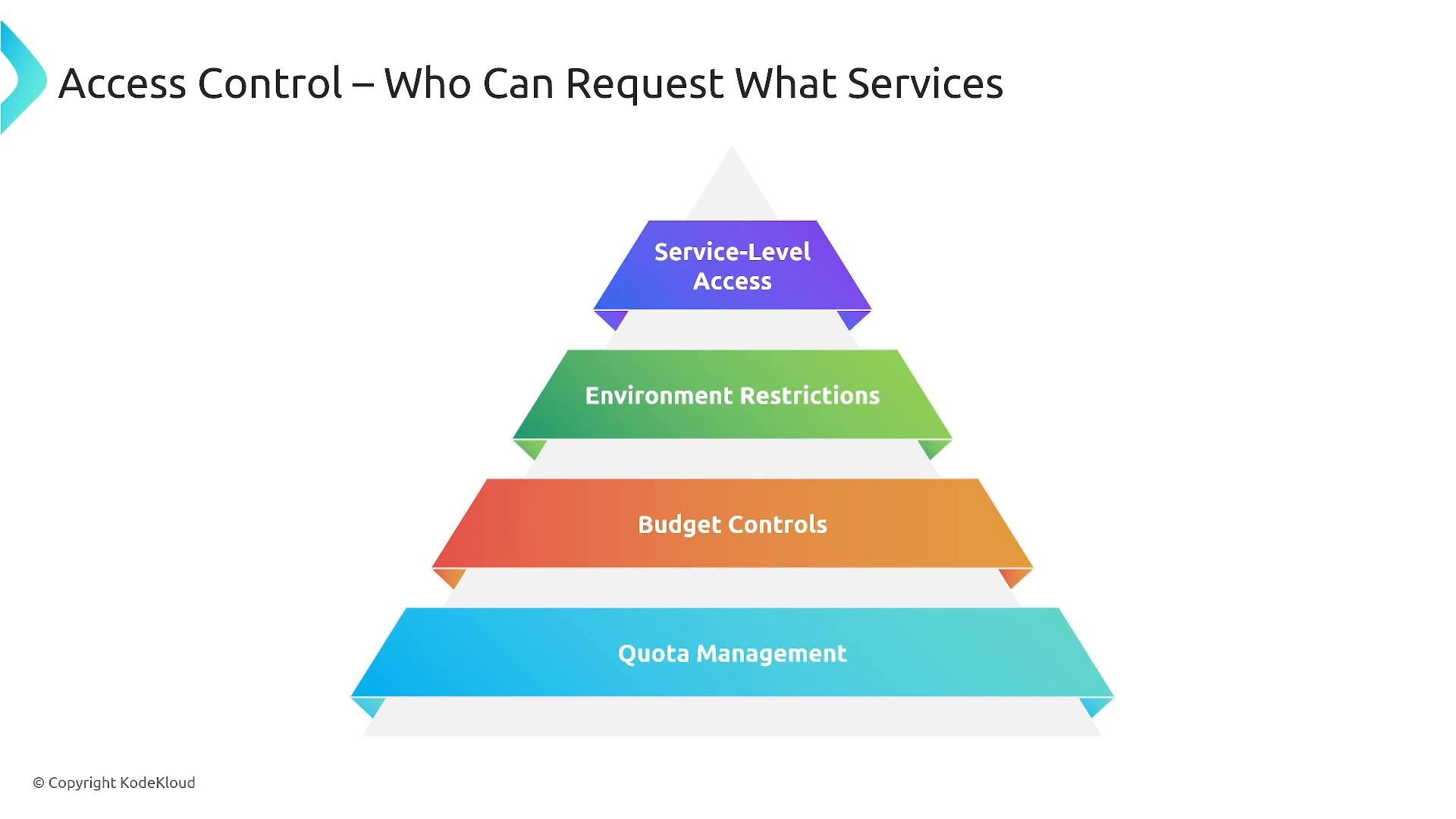
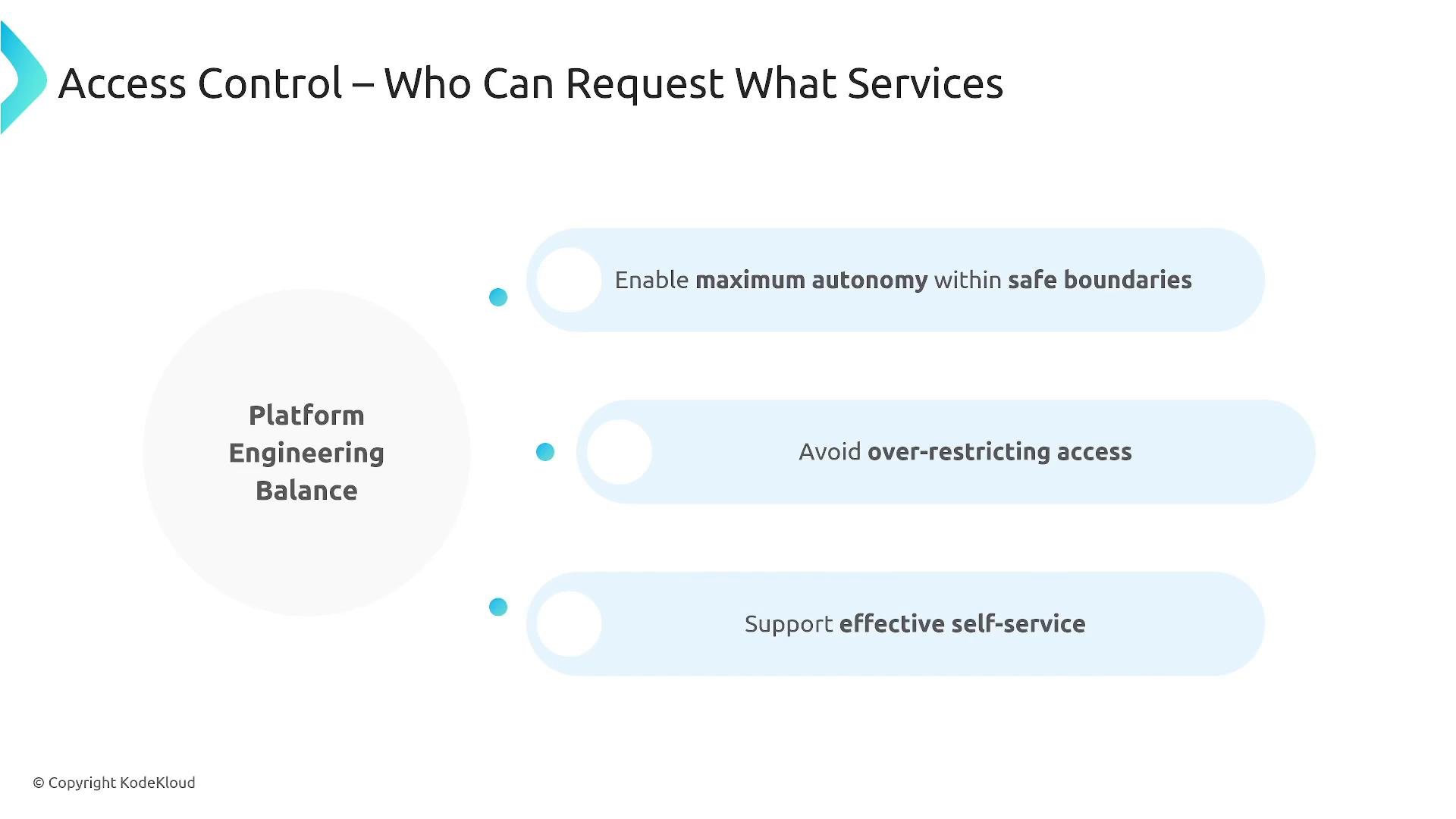
- RBAC and team-based ownership
- Environment restrictions (dev vs. prod)
- Budget and billing checks
- Quotas and rate limits
- Approval workflows for exceptions or elevated requests
If many users request the same exceptions, consider making that capability a supported offering — frequent exceptions indicate the policy boundaries need revisiting.
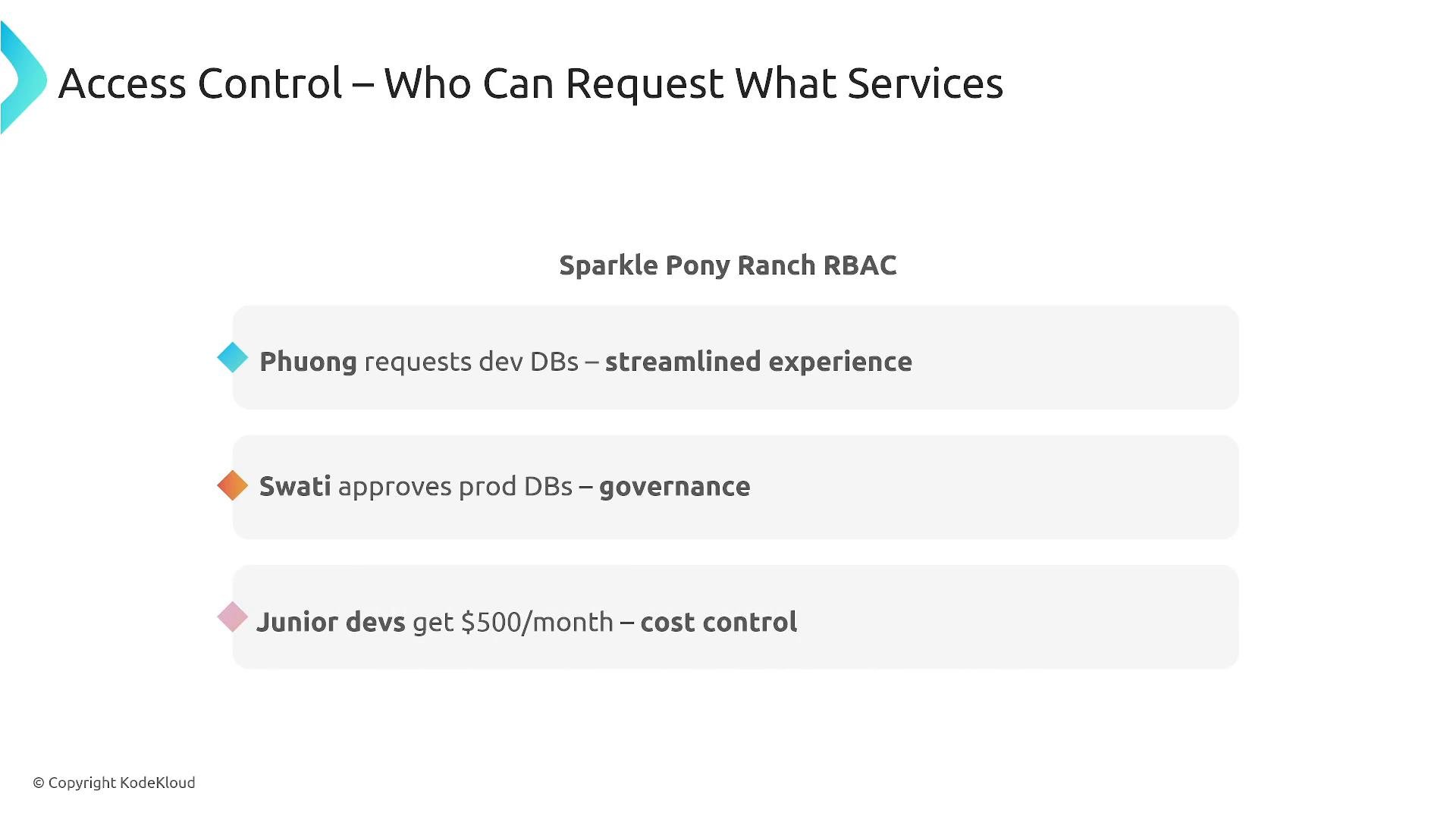
Avoid granting broad privileges to reduce blast radius. Prefer least privilege, scoped quotas, and short-lived credentials generated by the portal to limit risk.
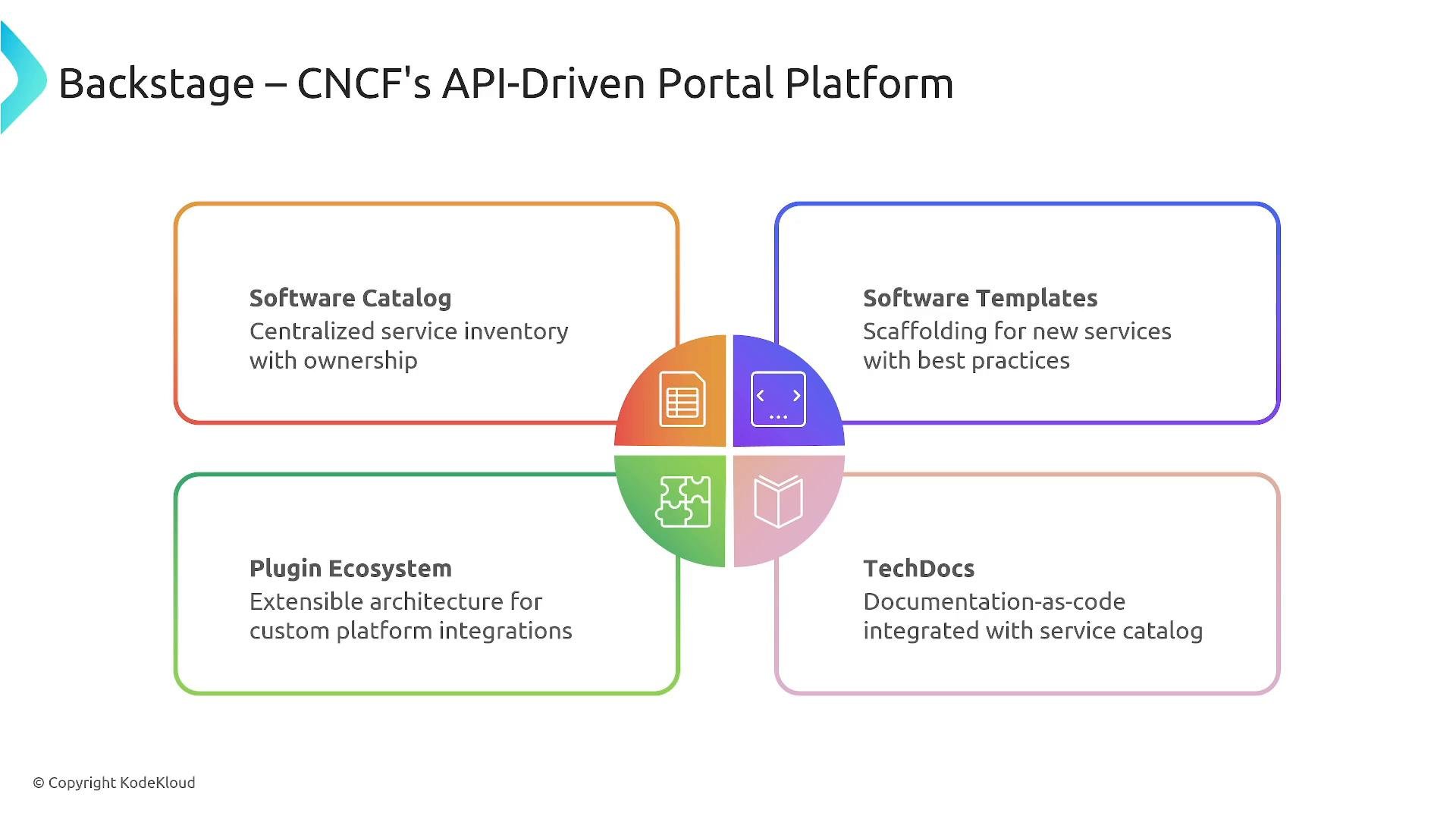
- A software catalog for services and components
- Software templates (scaffolding) to standardize new services
- TechDocs (documentation-as-code)
- A plugin ecosystem for CI/CD, monitoring, and cloud integrations
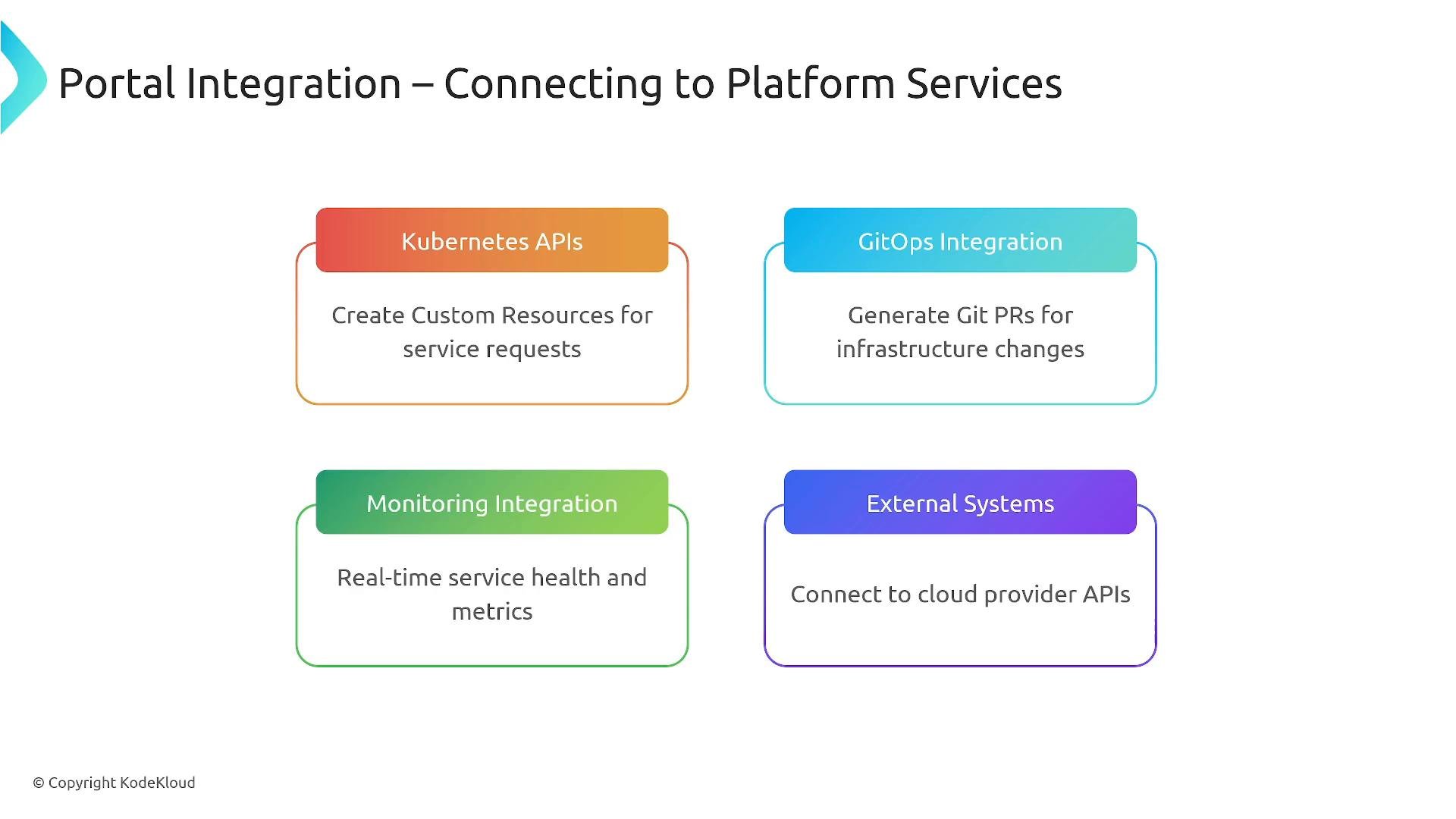
- GitOps controllers (Argo CD) for declarative deployments
- Crossplane for cloud-agnostic provisioning
- Kubernetes operators/controllers for in-cluster resources
- Secrets management and vault integrations
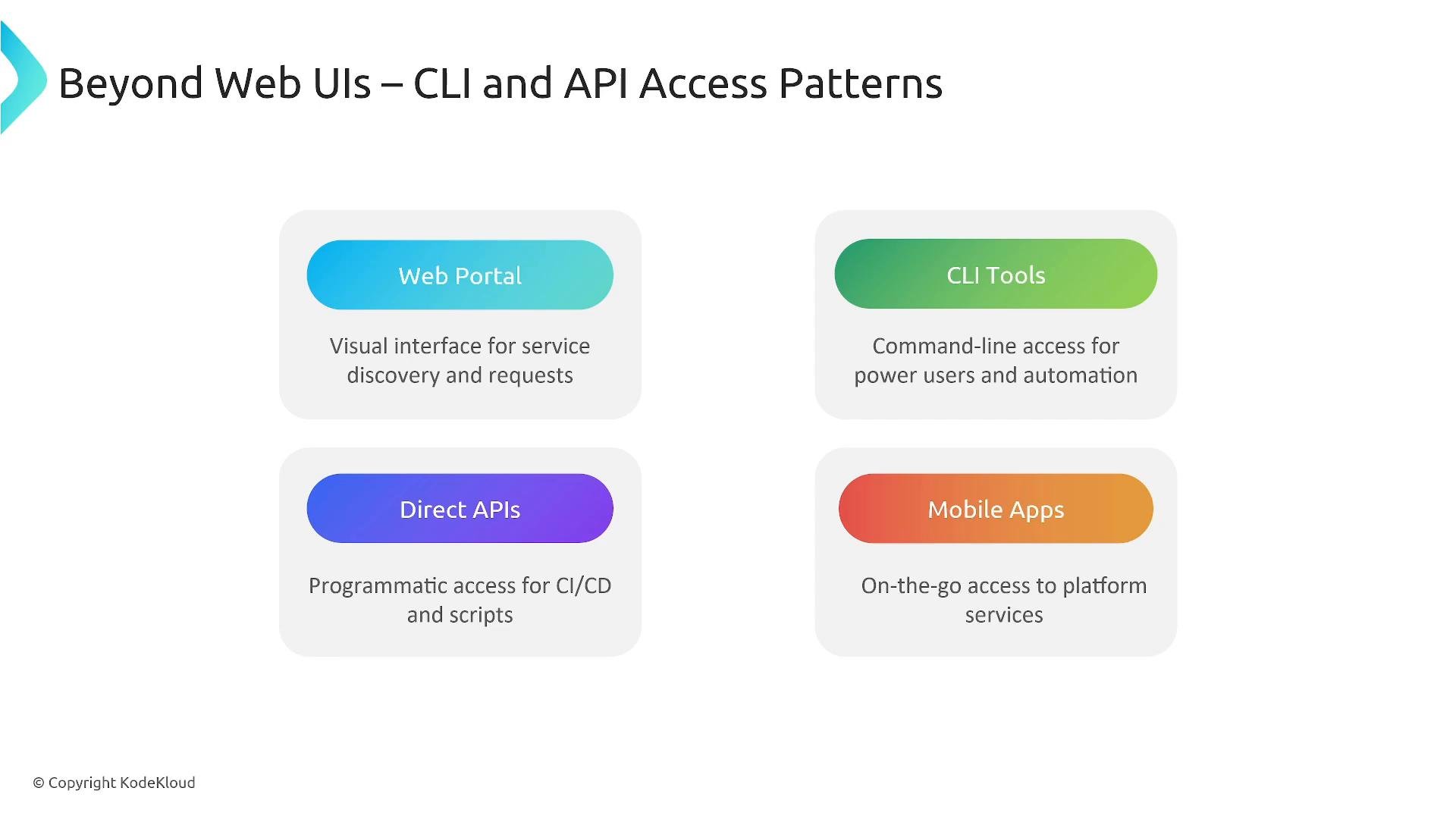
- Web UI (Backstage or custom)
- CLI (e.g.,
platctl,platformctl) that calls the same APIs - Direct API access for CI/CD pipelines and automation
- Mobile or lightweight workflows for notifications and approvals
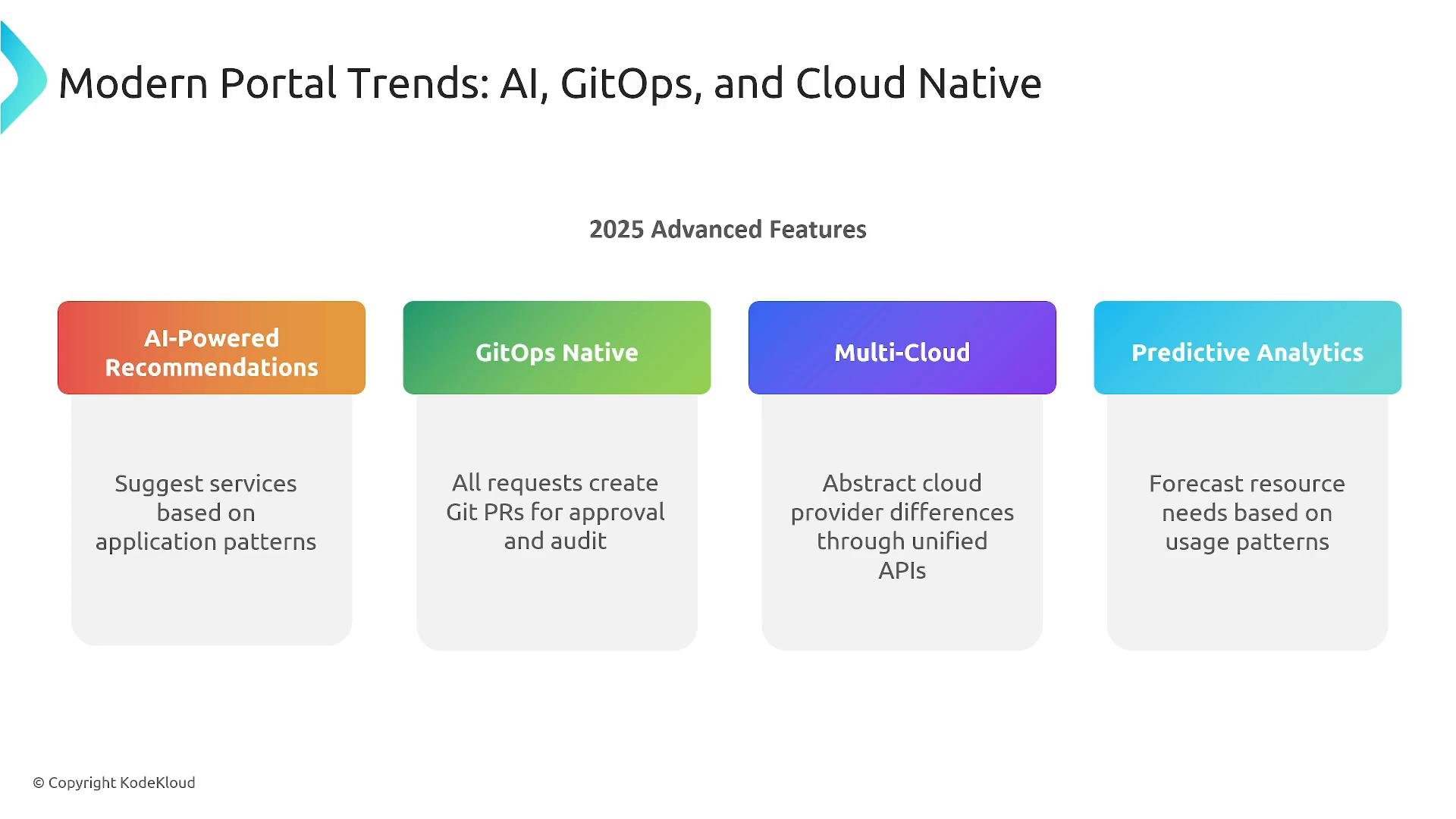
- AI and AIOps: anomaly detection, predictive alerts, and intelligent recommendations
- GitOps-native workflows: PR-driven environment configuration as the source of truth
- Multi-cloud and cloud-agnostic provisioning: templatize offerings per cloud
- Predictive analytics and richer observability using distributed tracing and metrics
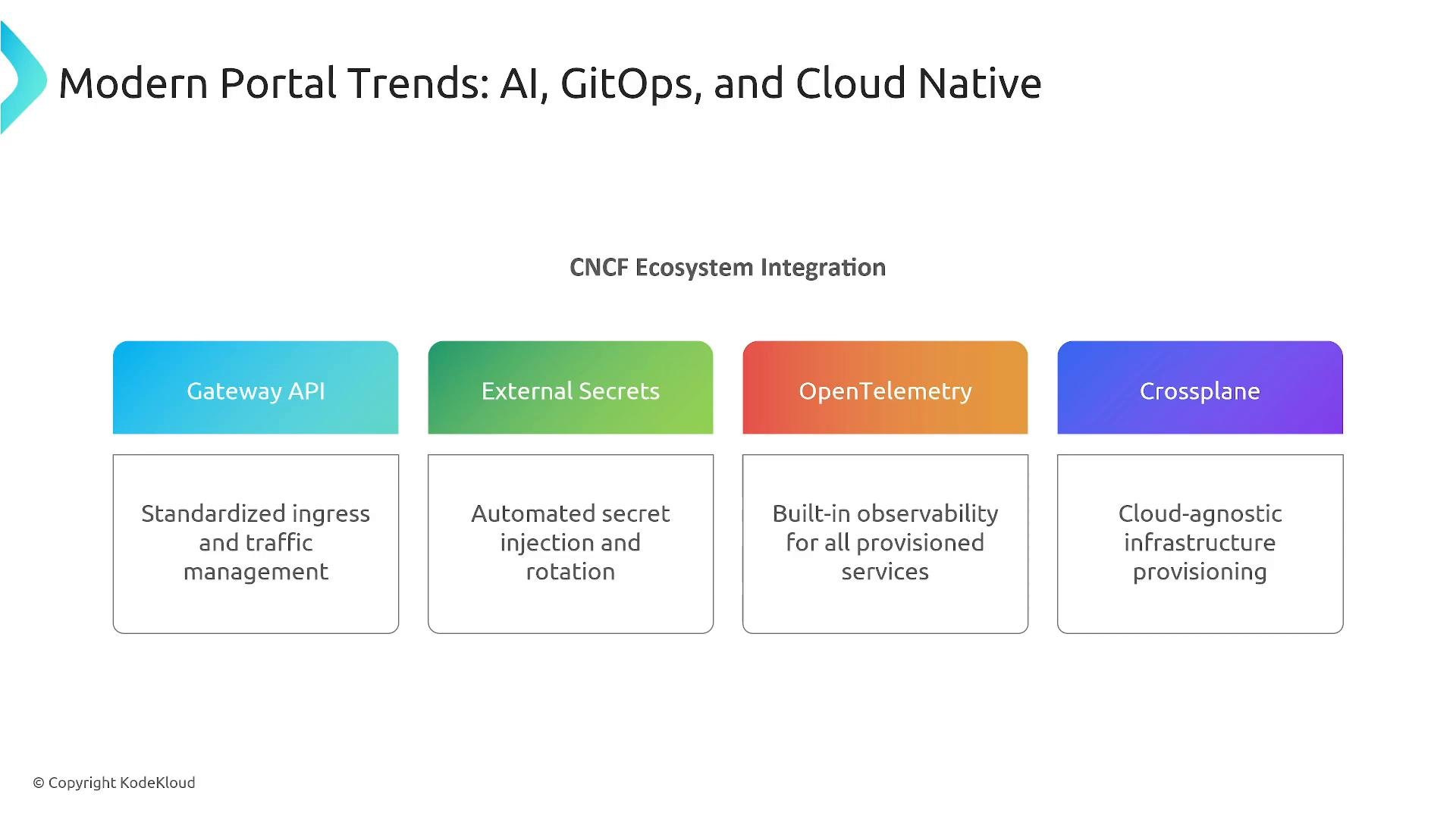
- Gateway API — standardized ingress and traffic management on Kubernetes
- External Secrets — secure injection of provider secrets
- OpenTelemetry — observability and distributed tracing
- Crossplane — cloud-agnostic provisioning through APIs
- Service discovery is essential — make it easy for developers to find what they need.
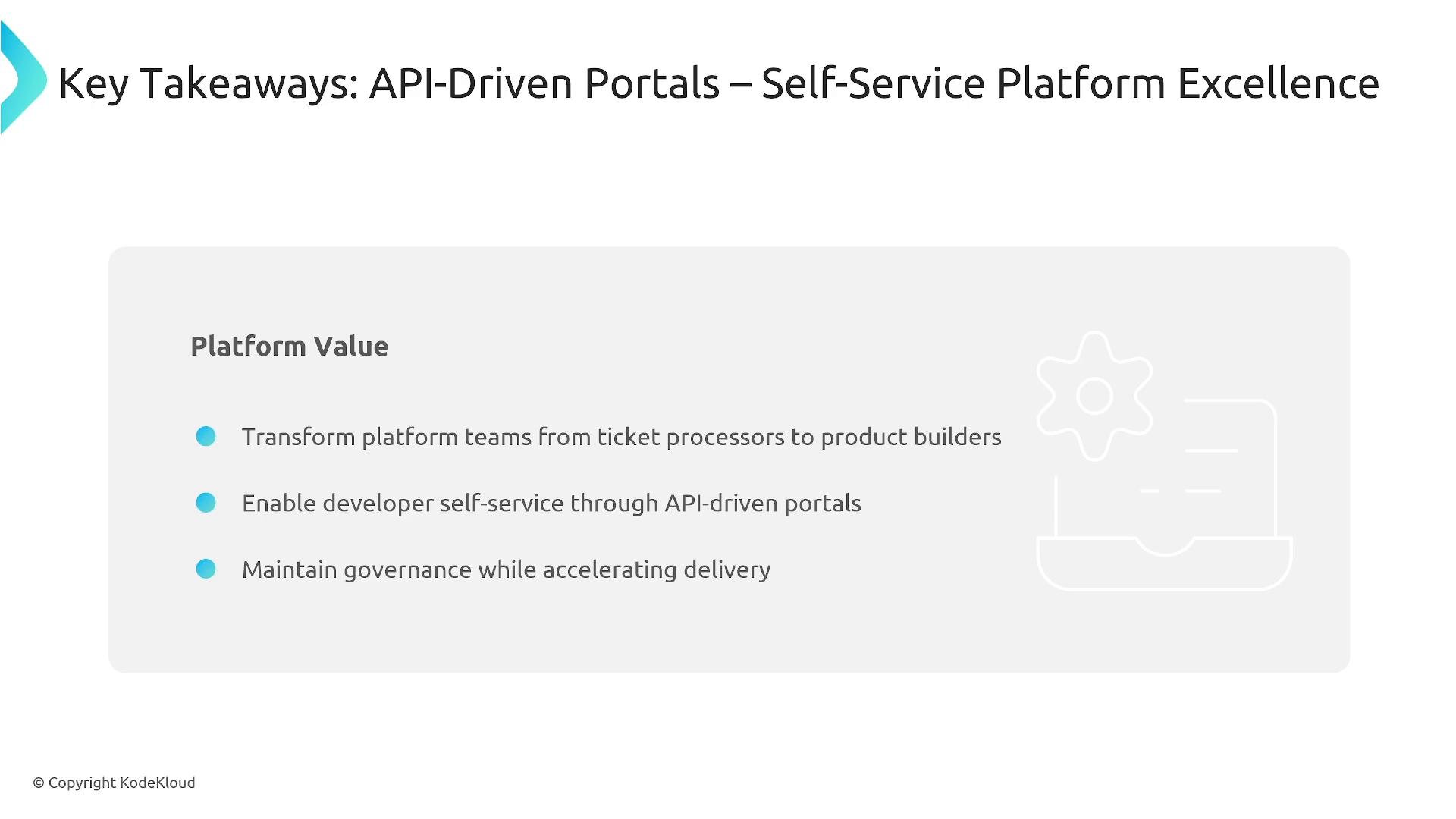
- Offer self-service APIs with RBAC, quotas, and lifecycle management (request → provision → decommission).
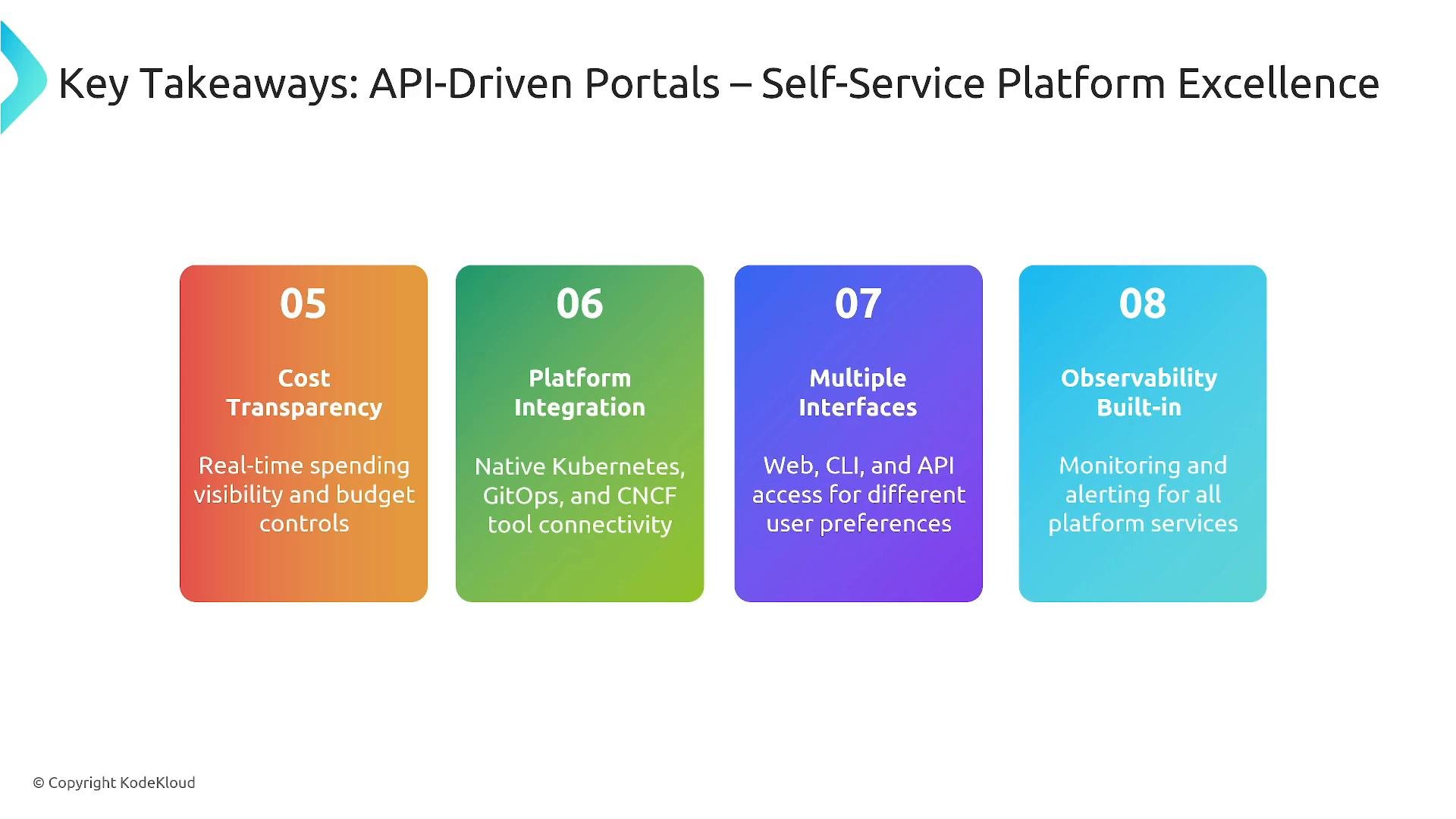
- Make cost attribution and budget transparency visible to drive adoption.
- Integrate the portal with GitOps, cloud provider APIs, and observability systems.
- Support multiple interfaces (web, CLI, APIs, mobile) and design observability into every action.
- Backstage (CNCF) — developer portal framework
- Crossplane — cloud-agnostic control plane
- Argo CD / GitOps — GitOps continuous delivery
- Gateway API — Kubernetes ingress/traffic standard
- OpenTelemetry — observability and tracing
- External Secrets — secret management integrations