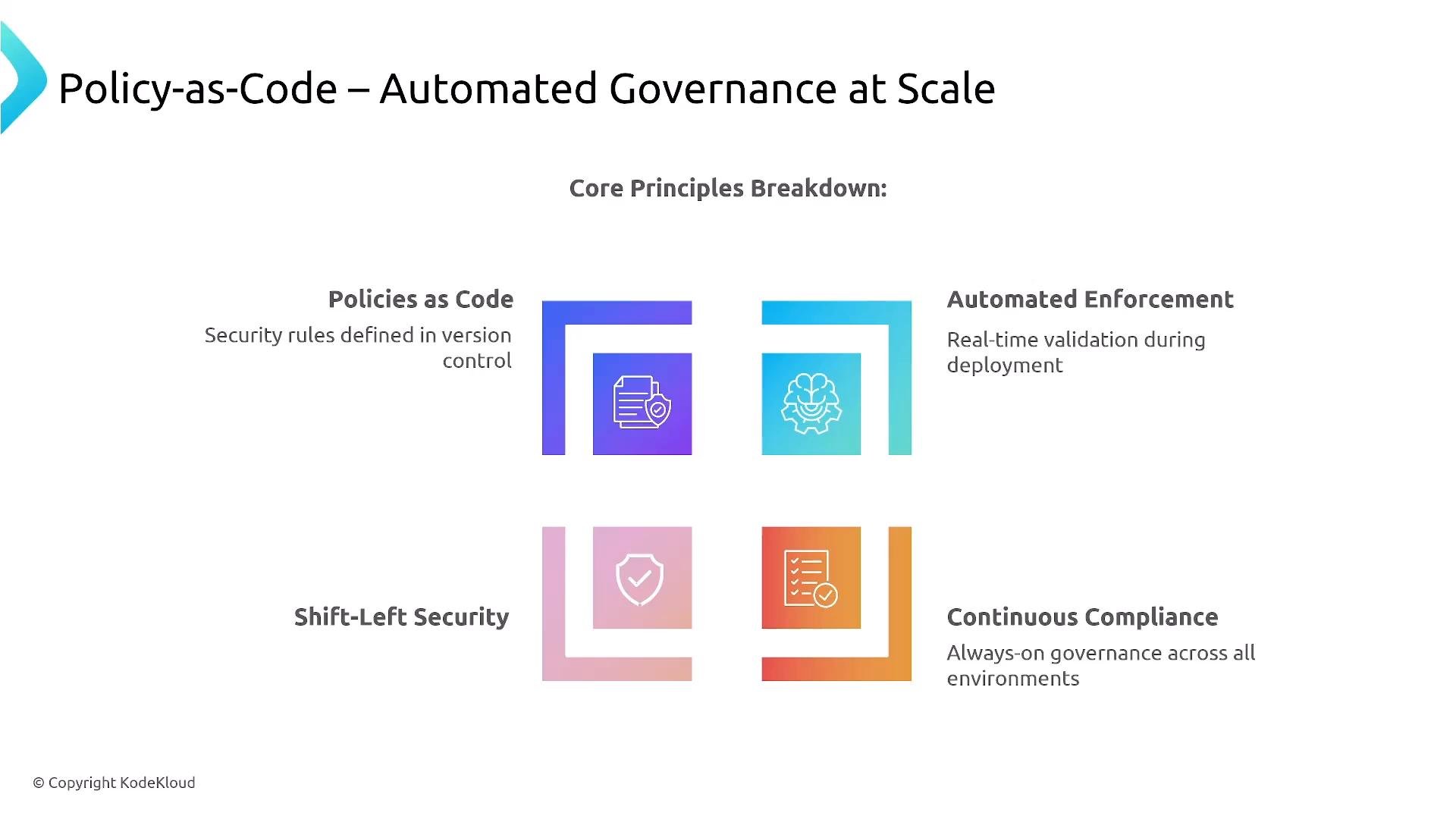
- Policies as code: rules are written, reviewed, and versioned like any other code.
- Automated enforcement: checks run continuously, often at admission-time.
- Shift-left security: catch defects early in the lifecycle (design/CI) instead of reacting later in production.
- Continuous compliance: maintain an auditable trail of enforcement and violations.
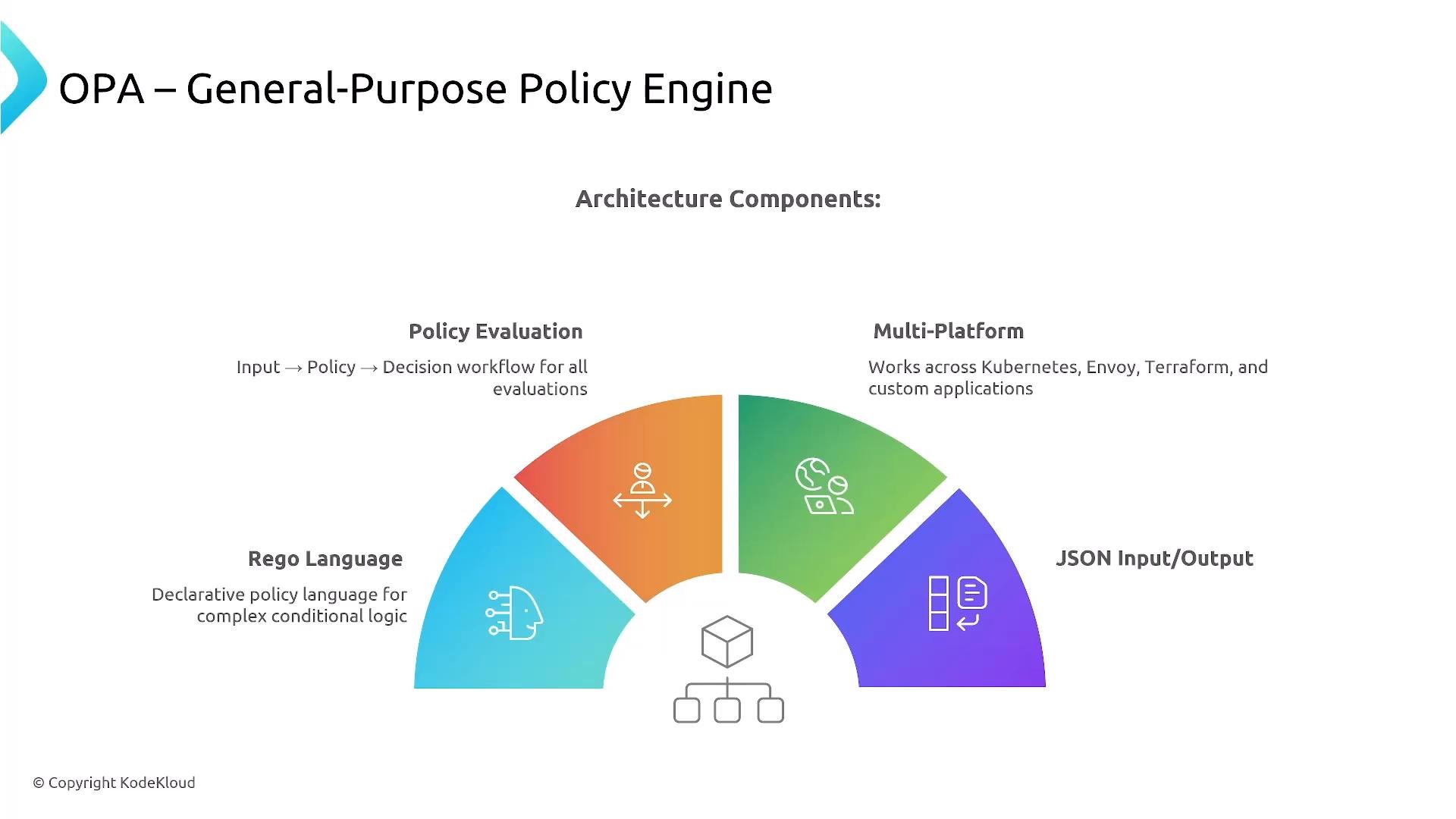
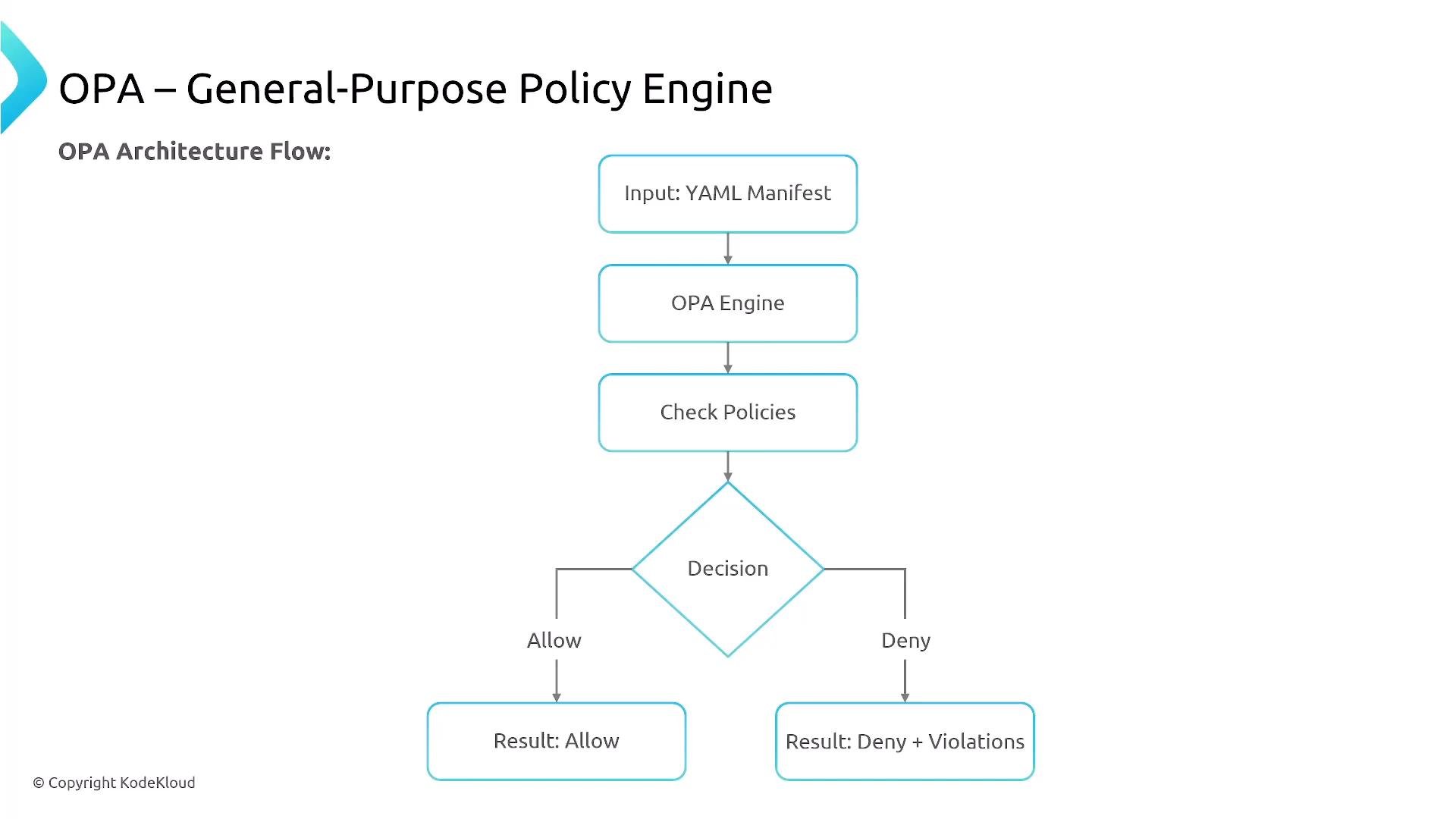
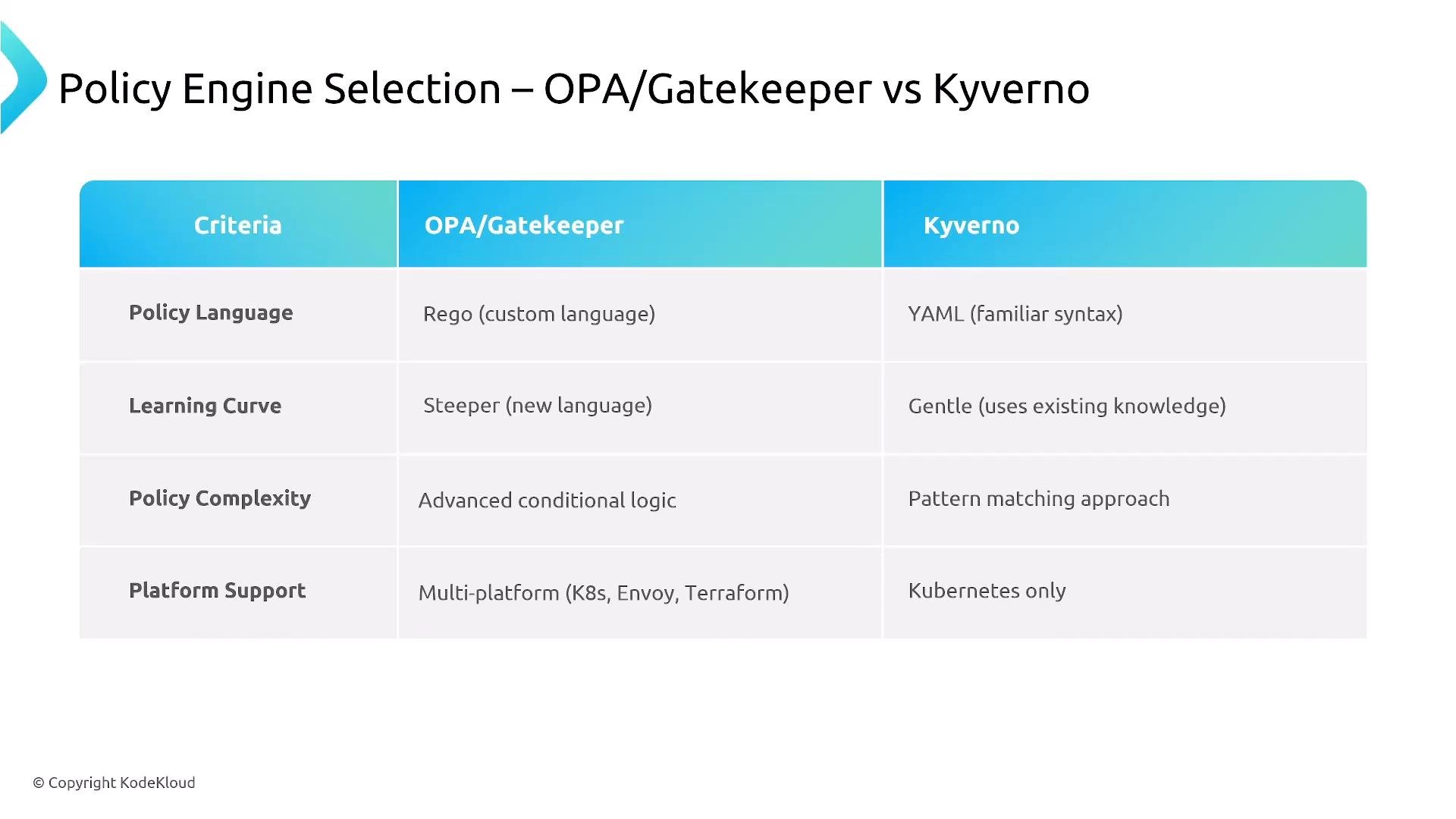
- Open Policy Agent (OPA): a general-purpose, multi-platform policy engine. Rego is OPA’s policy language. OPA takes JSON input and evaluates policies across systems.
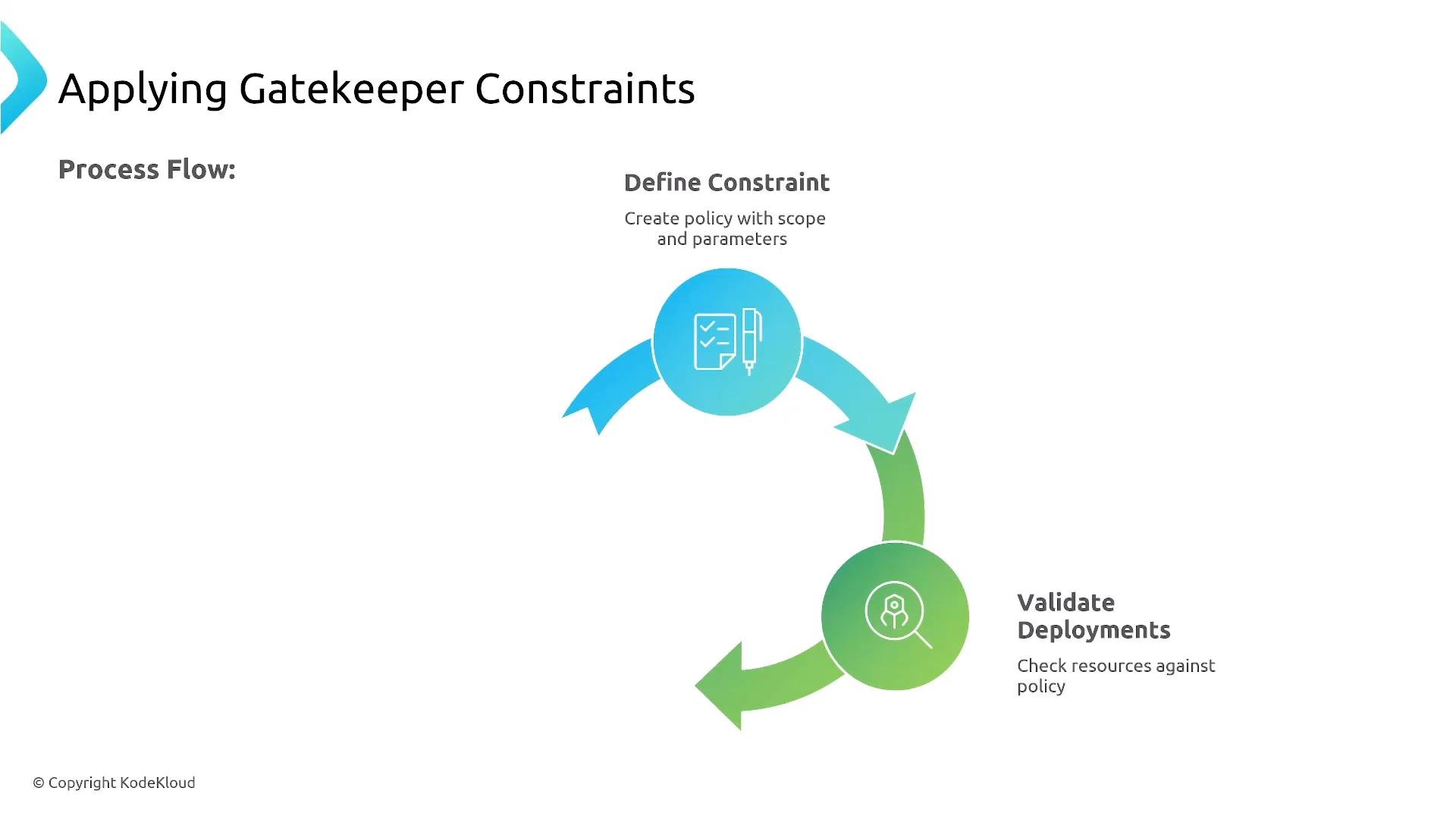
- Gatekeeper: a Kubernetes-native integration that runs OPA as an admission controller. Gatekeeper introduces ConstraintTemplates (policy definitions) and Constraints (instances) to enforce policies in-cluster.
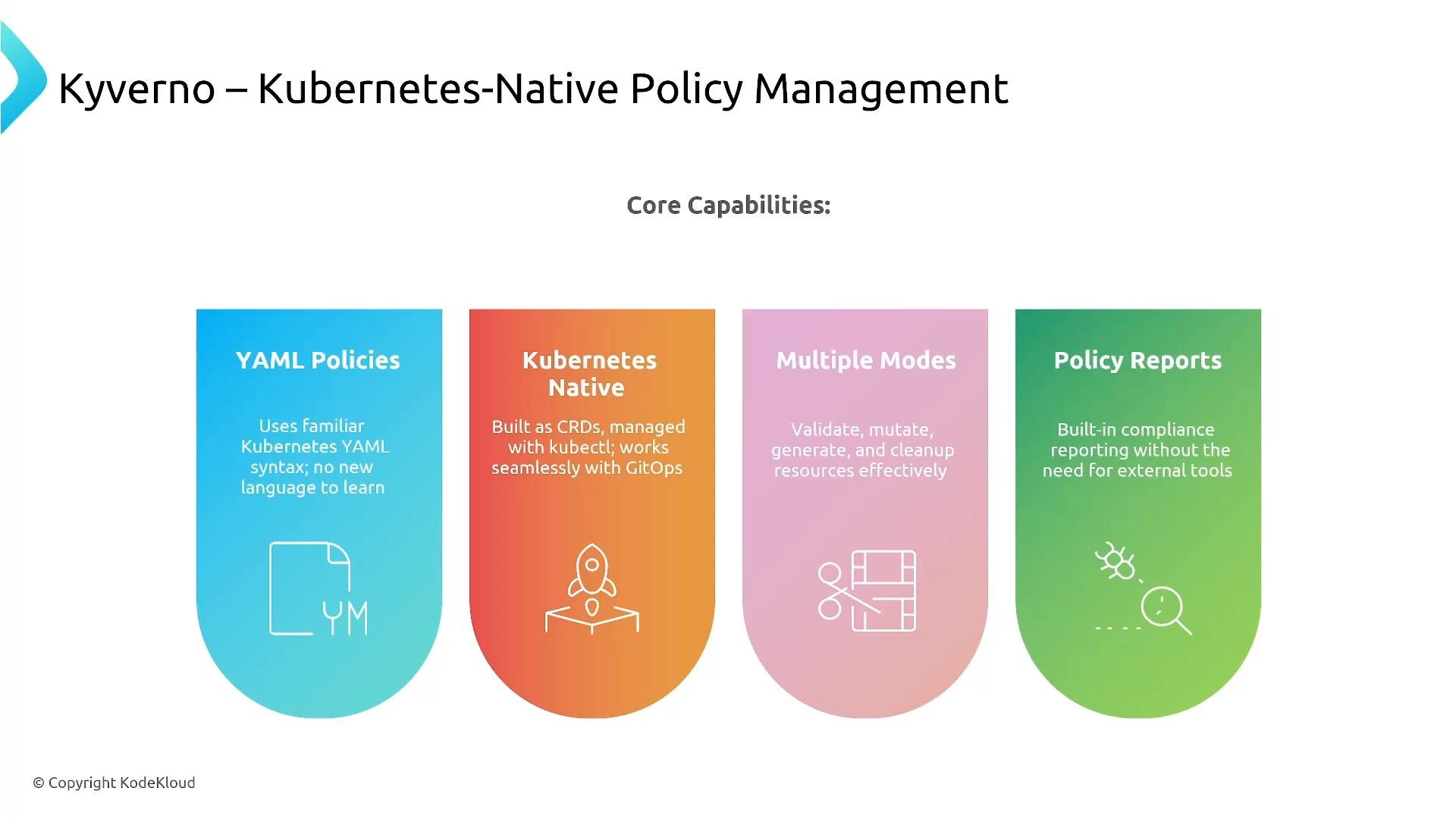
- Kyverno: a Kubernetes-native policy engine that uses YAML policies (no new language). Kyverno supports validate, mutate, generate, and cleanup modes and integrates naturally with kubectl and GitOps workflows.
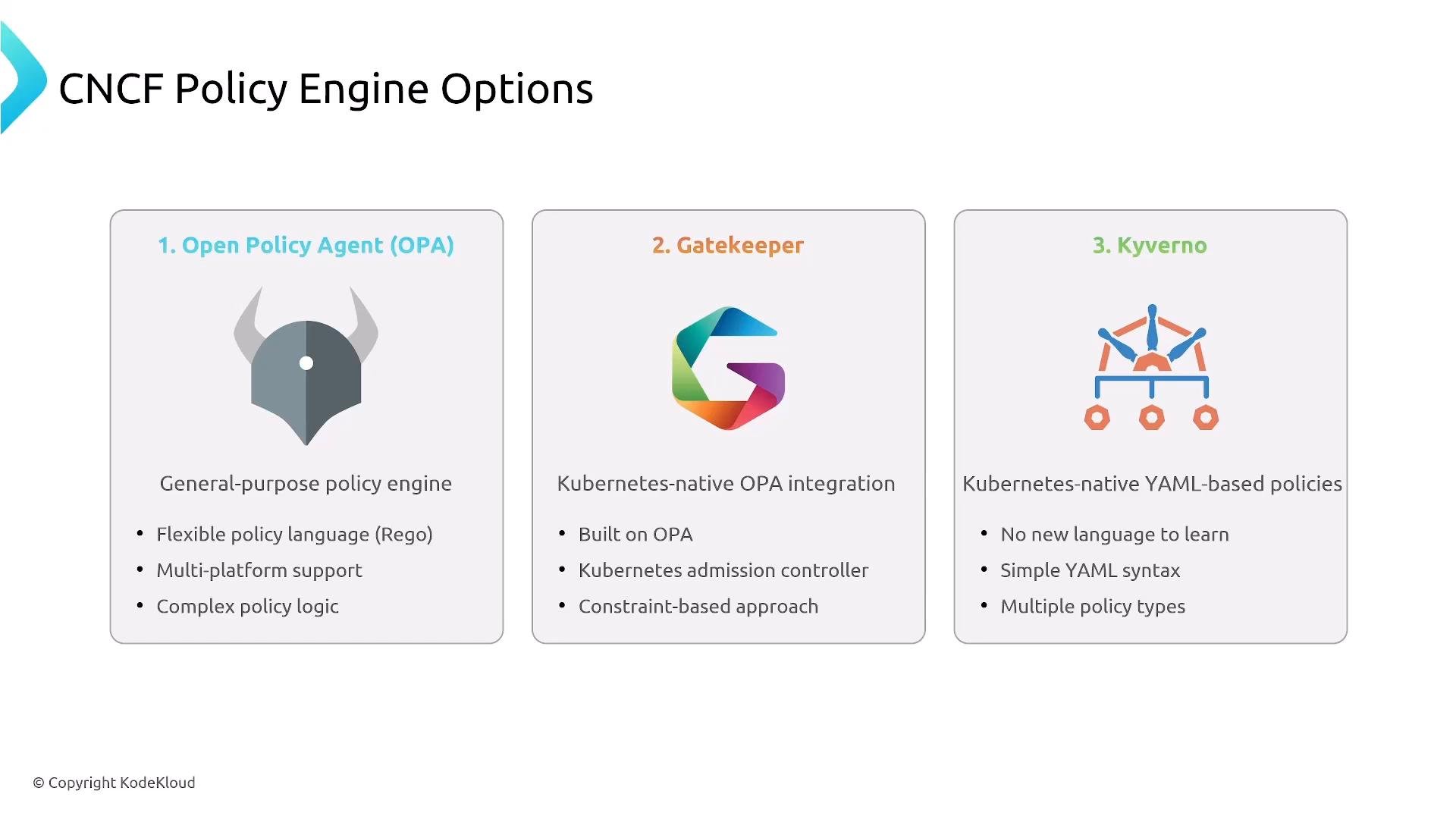
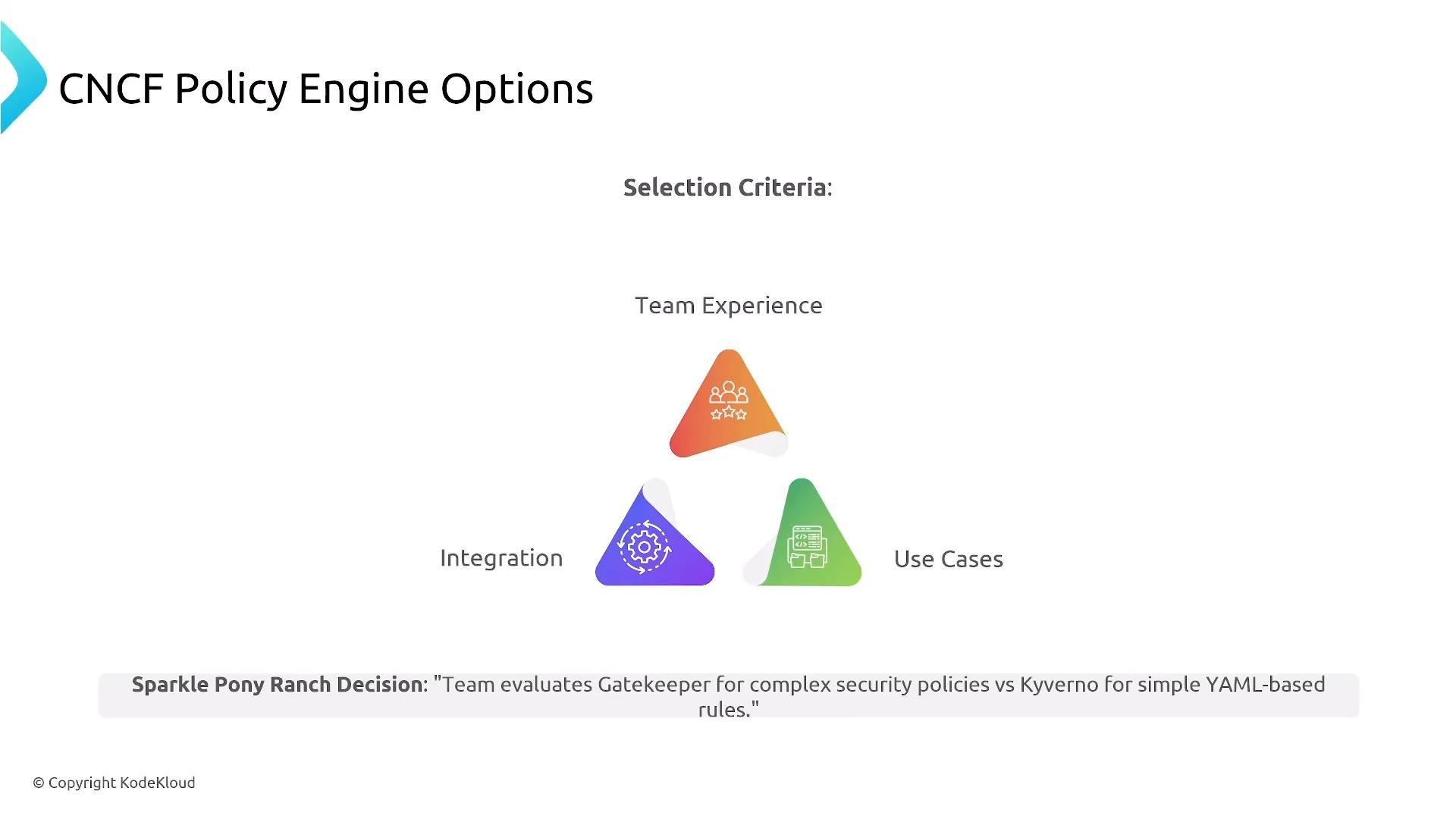
- Teams that need advanced, cross-platform, conditional policies often choose OPA (Rego).
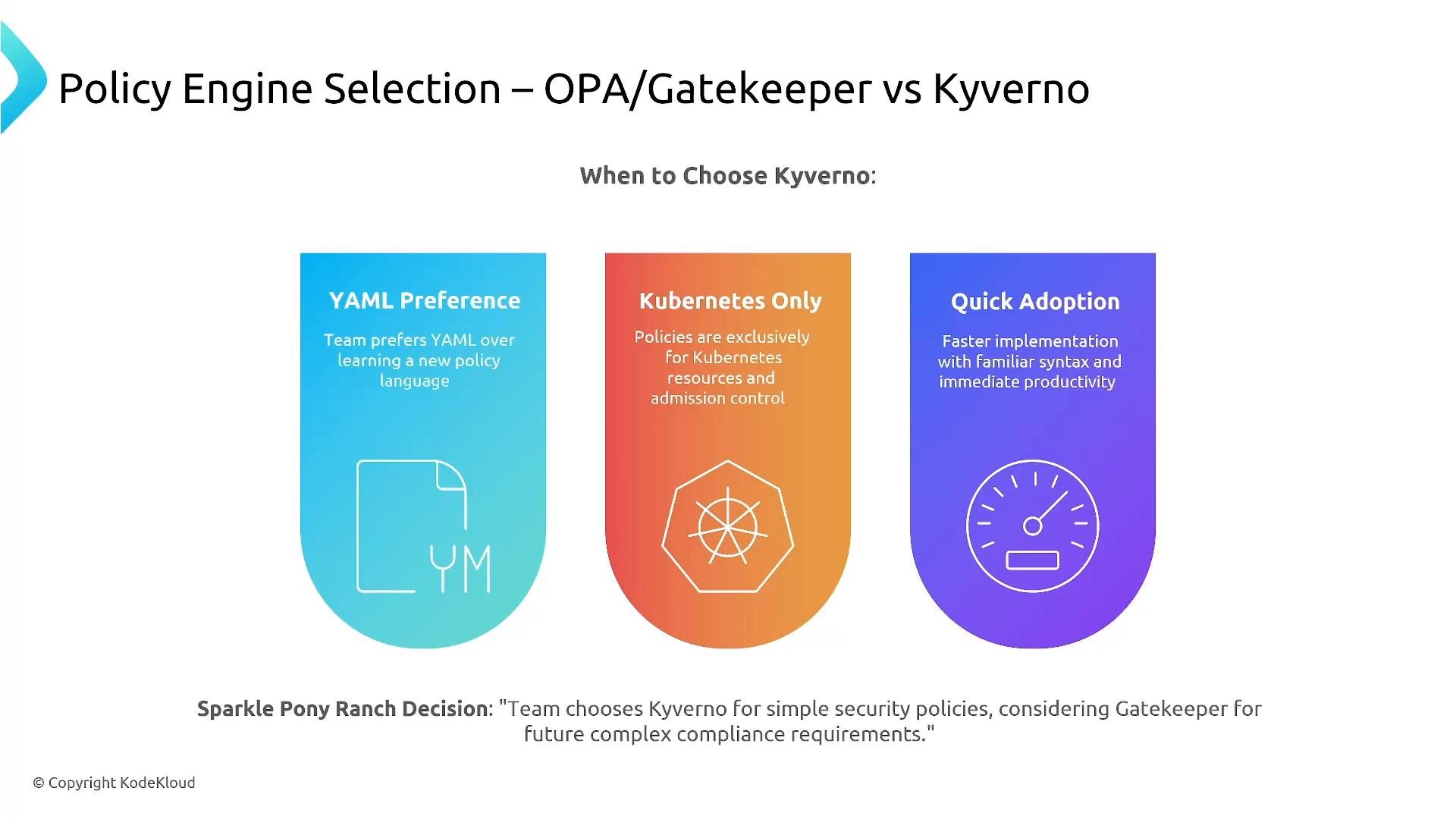
- Teams that prefer native Kubernetes CRDs and YAML-based policies often prefer Kyverno for faster adoption.
- Gatekeeper is a common OPA-based option when you want OPA’s power with a Kubernetes admission controller.
- ConstraintTemplate: reusable policy definition (template that contains Rego code).
- Constraint: an instance of that template with parameters (scoped to namespaces, labels, etc.).
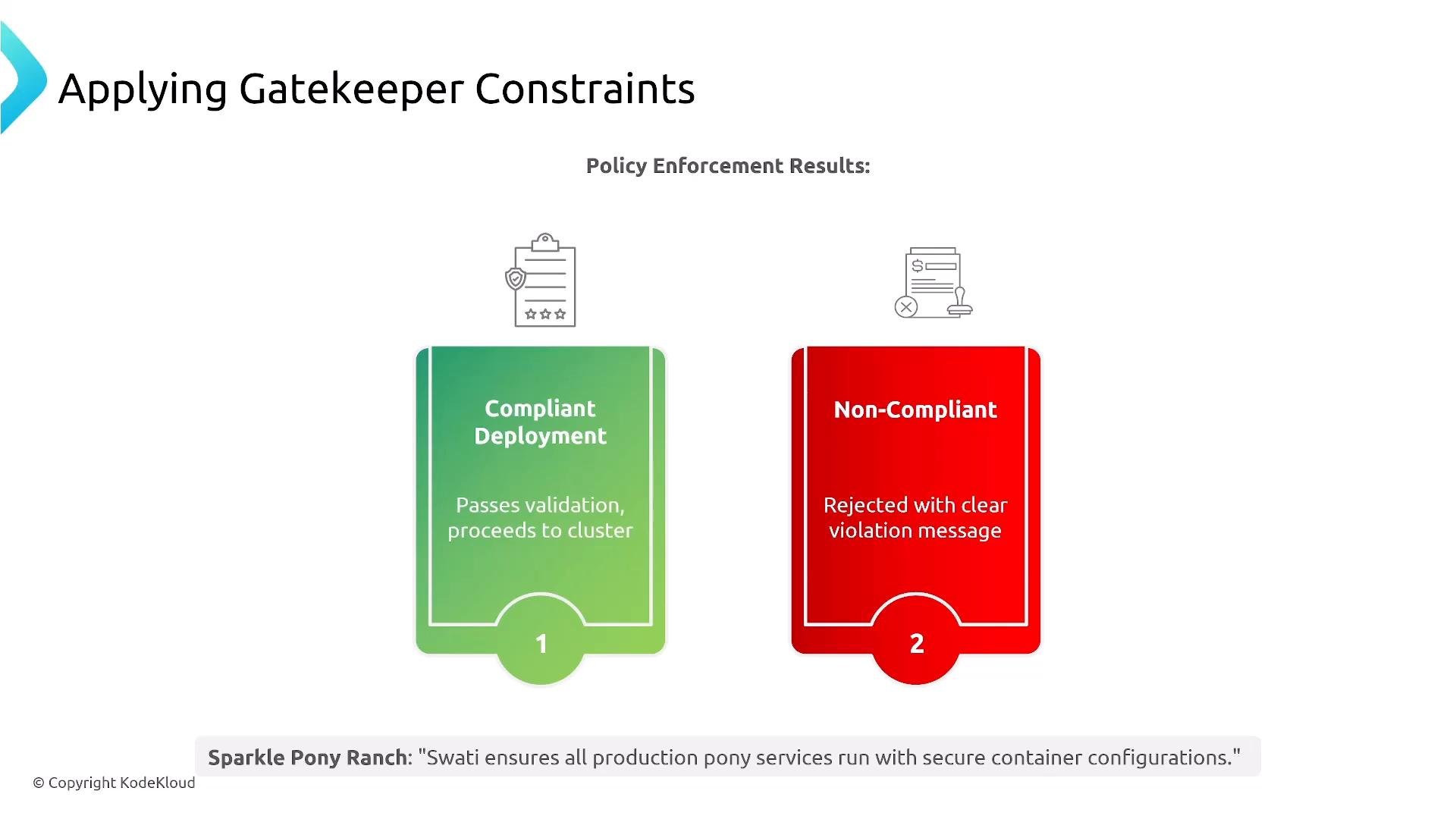
- Admission controller: Gatekeeper enforces constraints at admission time (e.g., kubectl apply), rejecting or allowing resources.
- Violation reporting: Gatekeeper can report and list violations.
- Policies are Kubernetes CRs using YAML (no new policy language).
- Modes: validate, mutate, generate, cleanup.
- Integrates with kubectl and GitOps workflows.
- Produces policy reports that can be collected and queried.
pony-production namespace. This is a validation policy (it will accept or reject a resource) and demonstrates Kyverno’s YAML-based pattern matching:
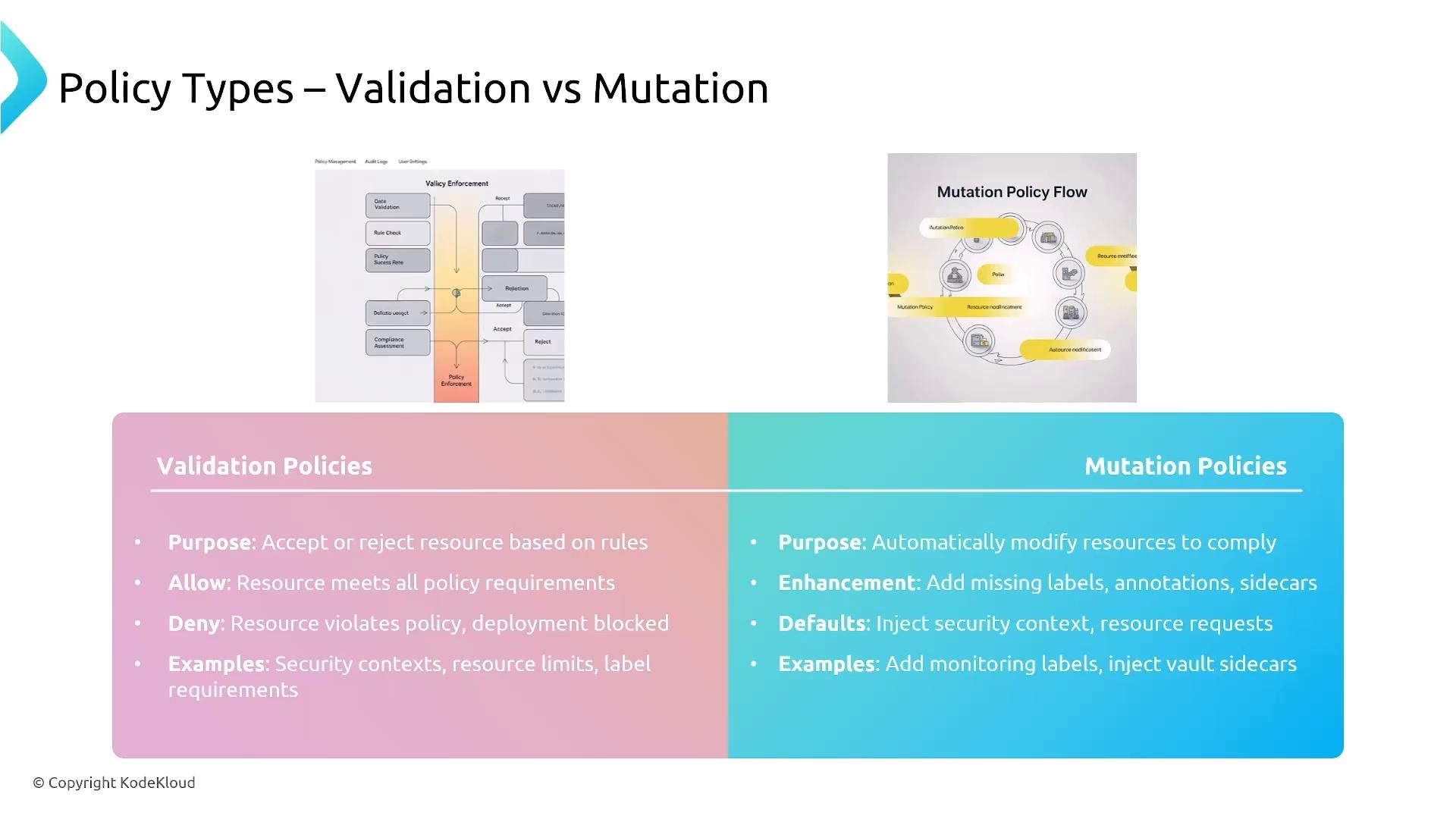
- Validation policies accept or reject resources based on rules (e.g., securityContext, resource limits, labels).
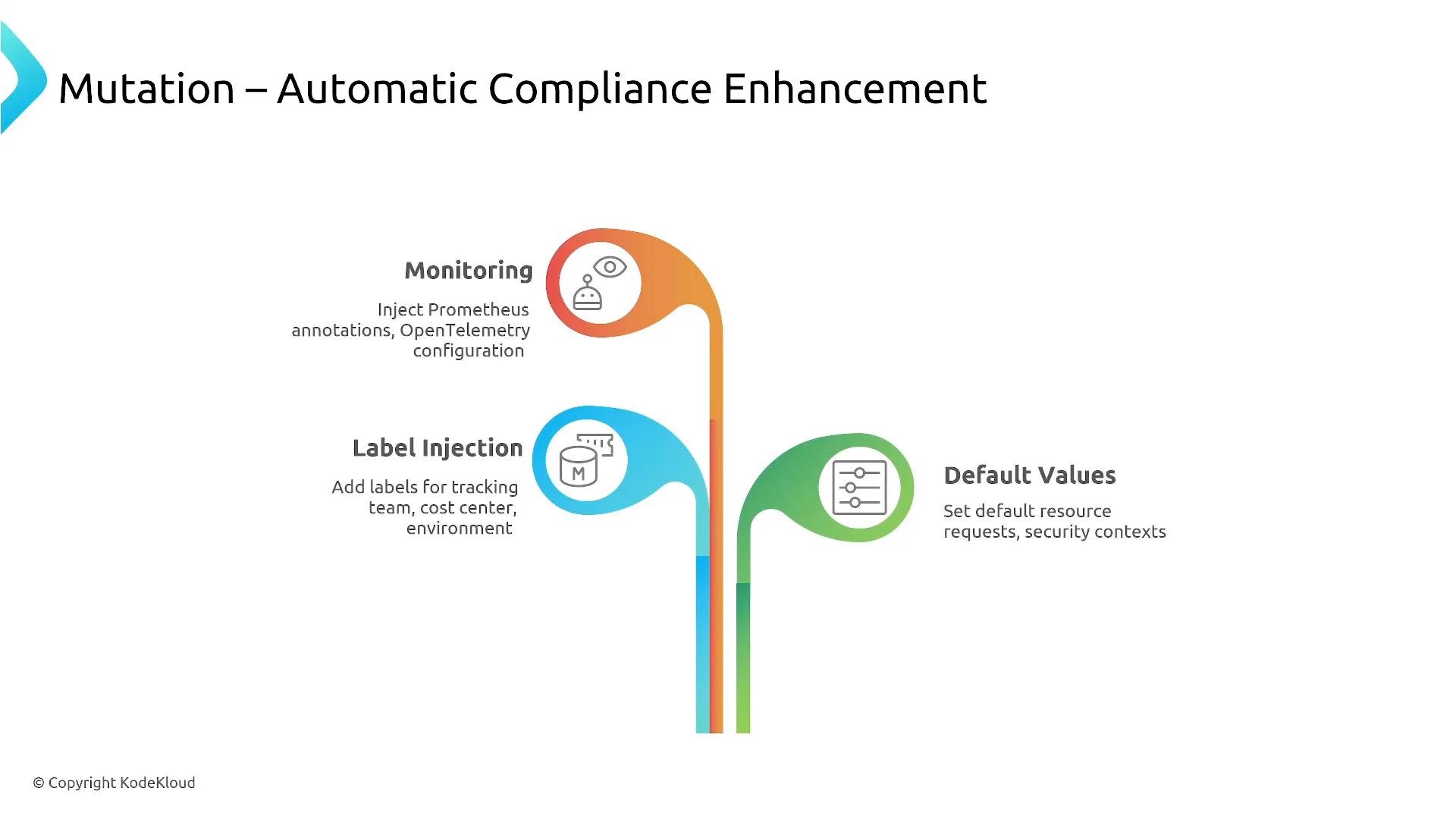
- Mutation policies modify resources at admission time to bring them into compliance (e.g., inject default resource requests/limits, add required labels, inject sidecars or monitoring annotations).
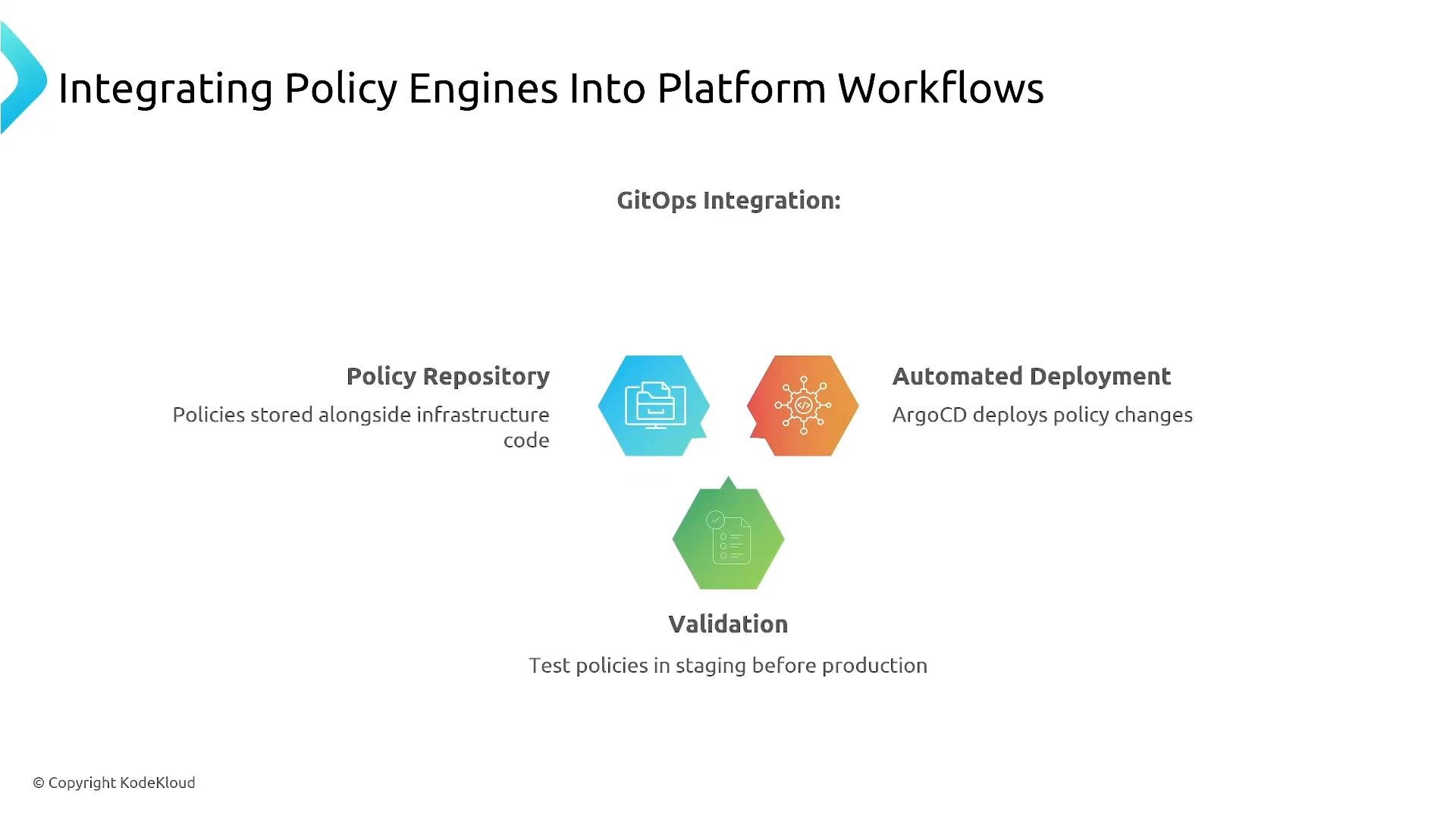
- Policies stored in a repository (same repo as infra or a separate one).
- CI pipelines lint, test, and promote policy changes.
- GitOps tools (e.g., ArgoCD) deploy policies to clusters.
- Admission controllers (Gatekeeper/Kyverno) validate/mutate resources at deployment time.
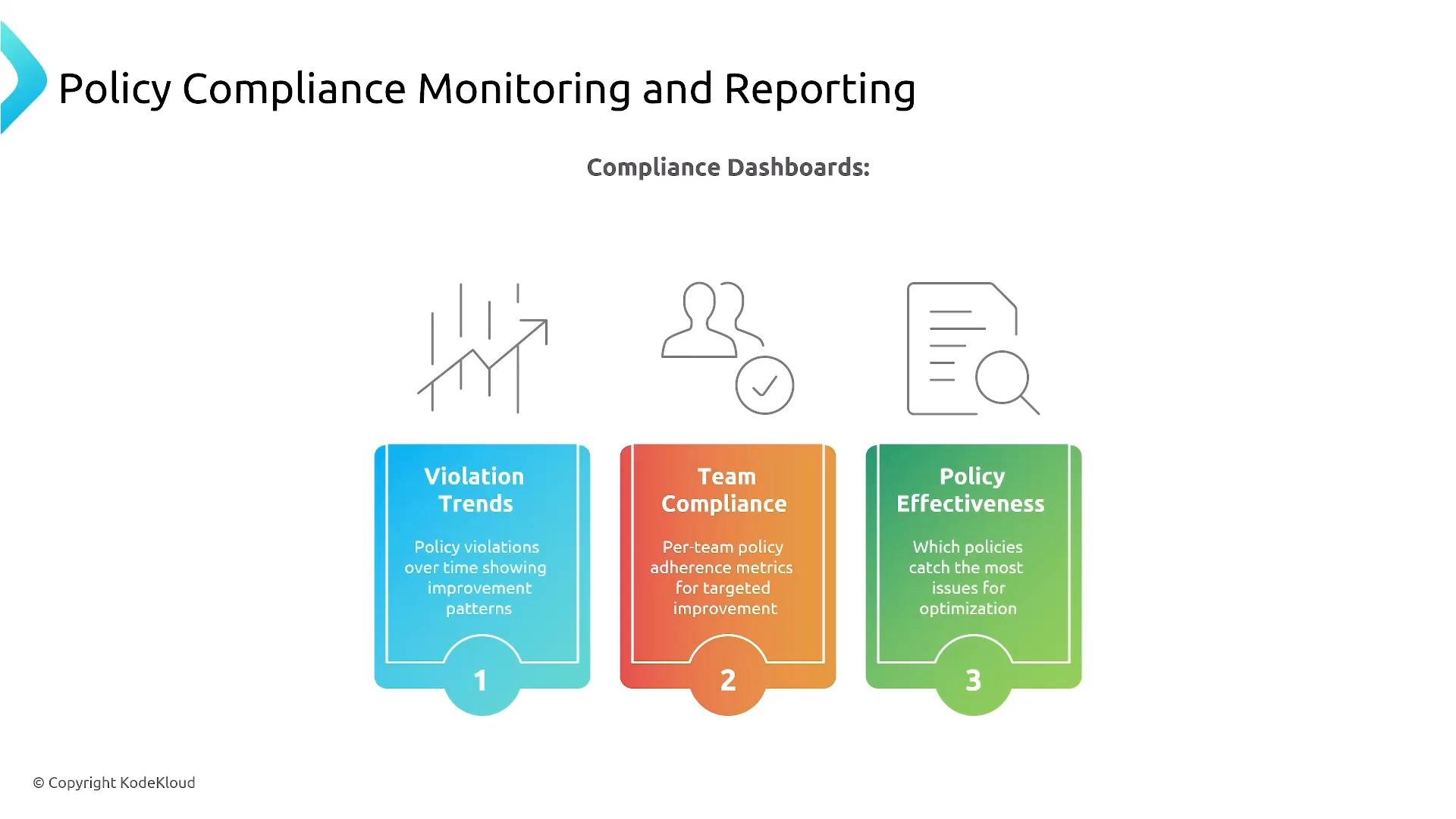
- Audit and reporting collect violations for visibility.
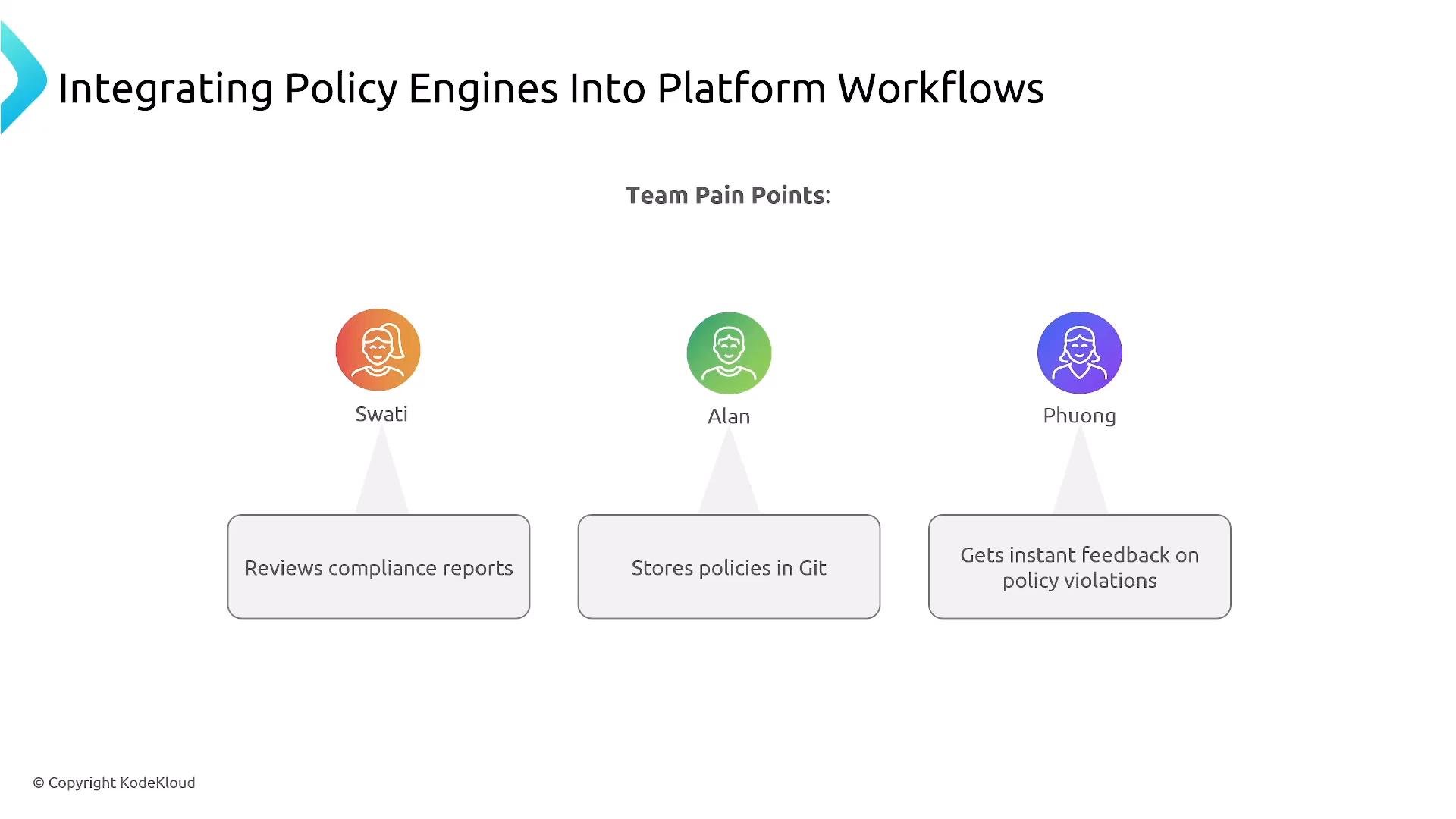
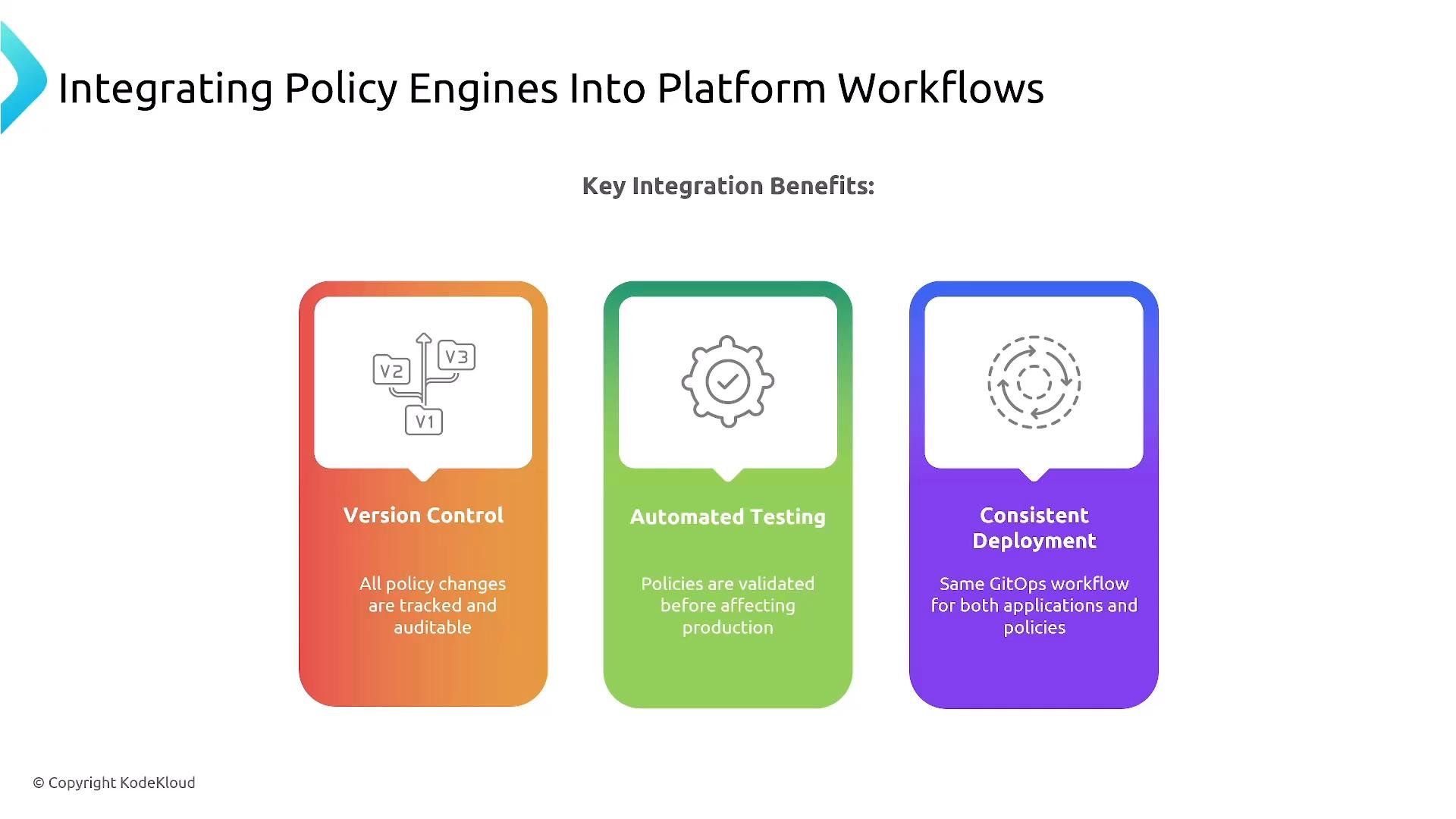
- Version control enables peer review and traceability.
- Automated testing lets you validate policy changes before production.
- Declarative policies provide consistent enforcement across environments.
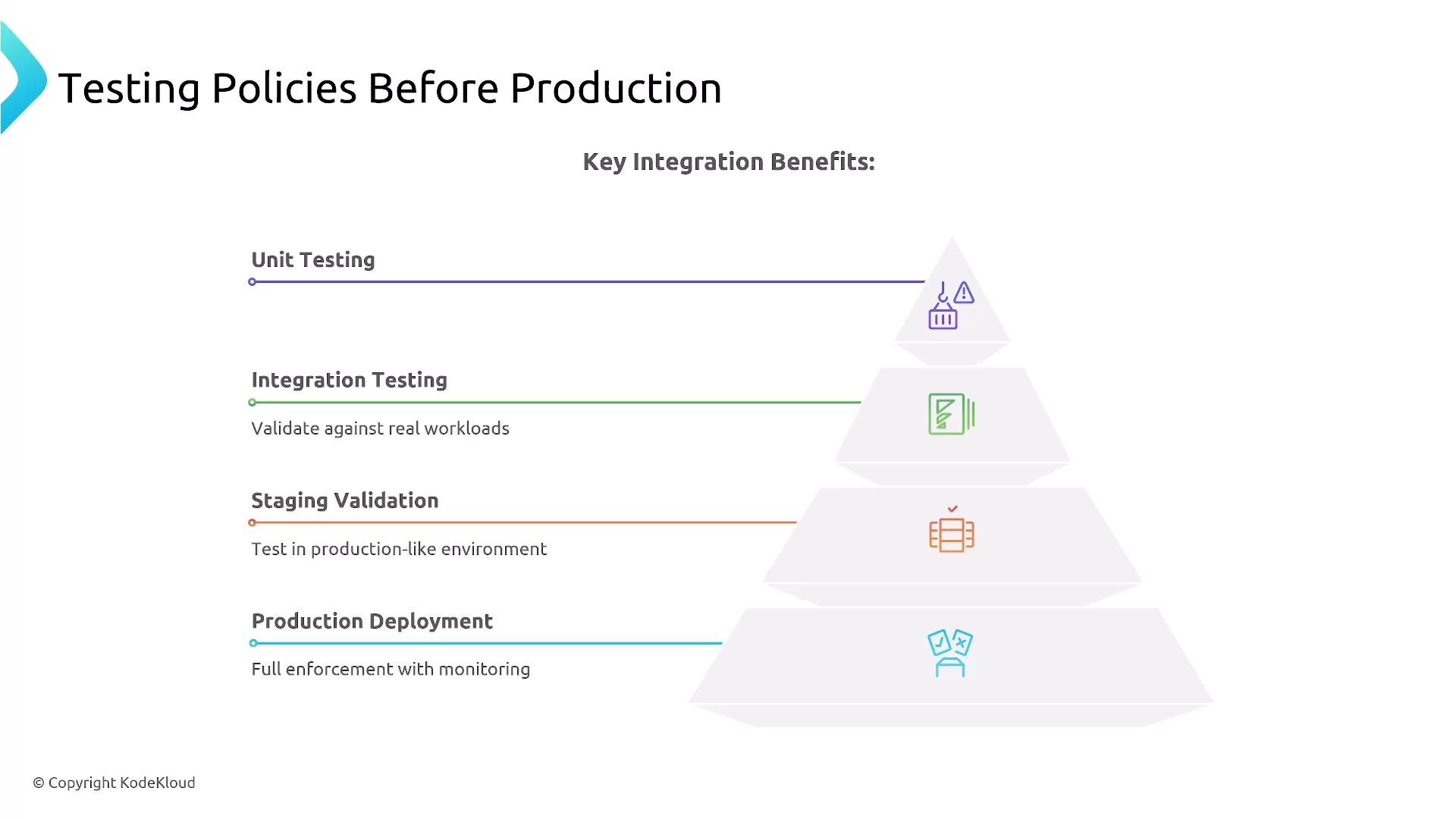
- Unit tests: small, focused policy checks.
- Integration tests: validate policies against representative workloads or manifests.
- Staging validation: run policies in production-like environments.
- Production deployment: enforce policies with monitoring.
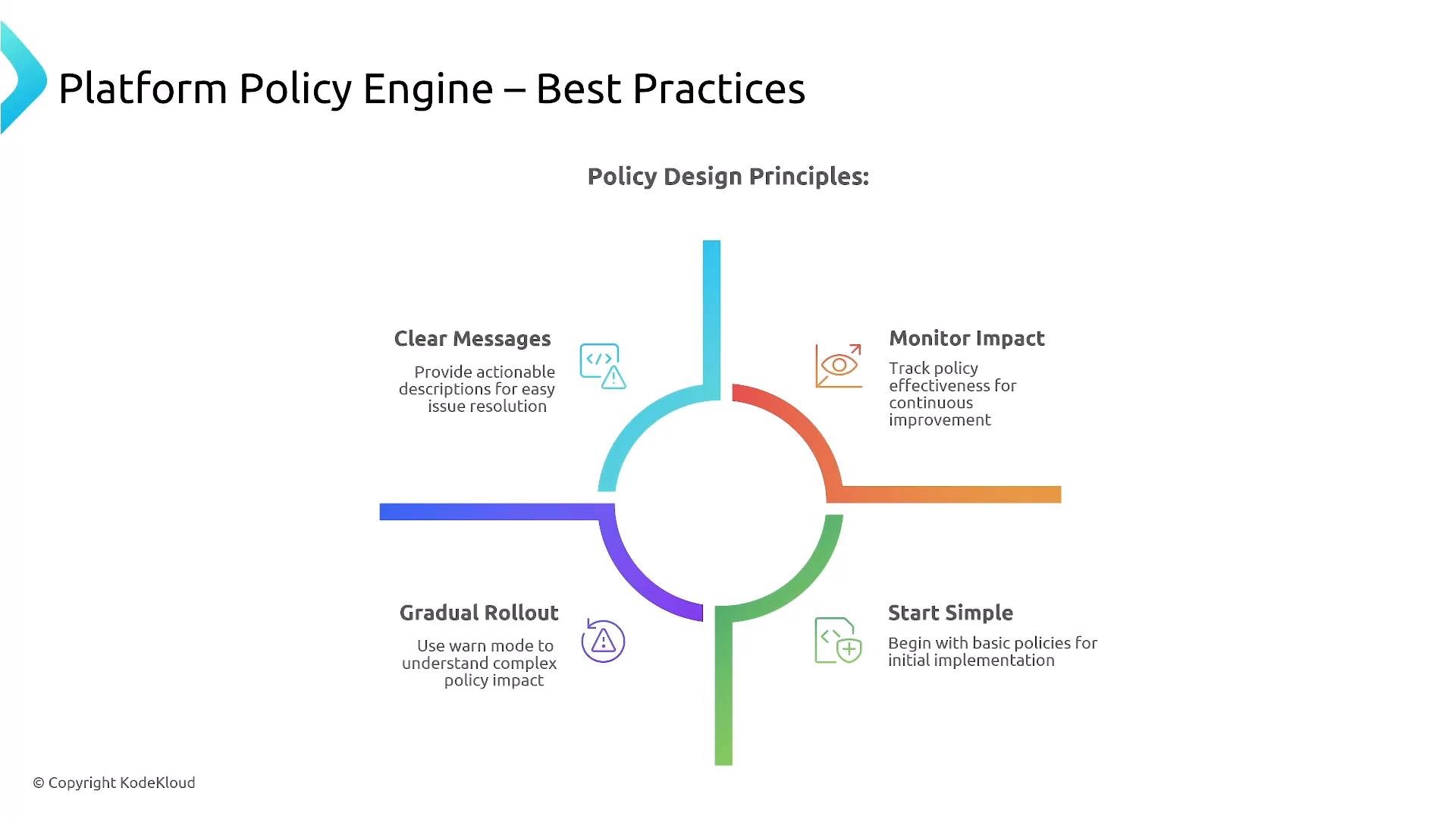
- Start simple and expand rules iteratively.
- Roll out policies gradually (audit/warn → enforce).
- Provide clear violation messages so developers know how to fix issues.
- Version-control policies and include them in CI pipelines.
- Define exception and error-handling workflows (living runbooks).
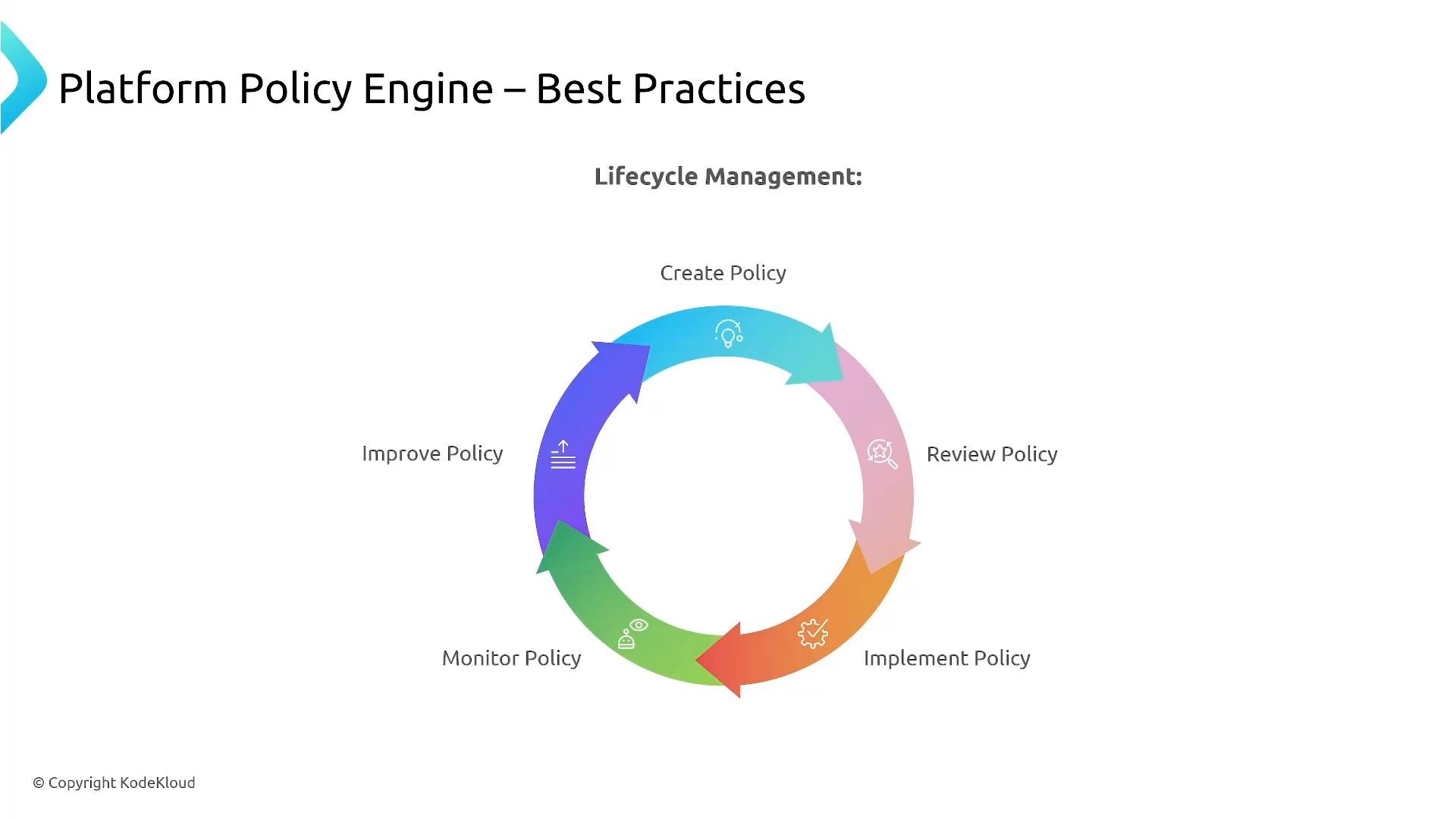
- Apply full lifecycle management: create → review → implement → test → monitor → improve.
- Kyverno: YAML-first, Kubernetes-native, quick adoption — a great starting point for many teams.
- OPA/Gatekeeper: Rego-based, steeper learning curve, greater flexibility and cross-platform support — suitable when your policies become more complex or must apply to multiple systems.
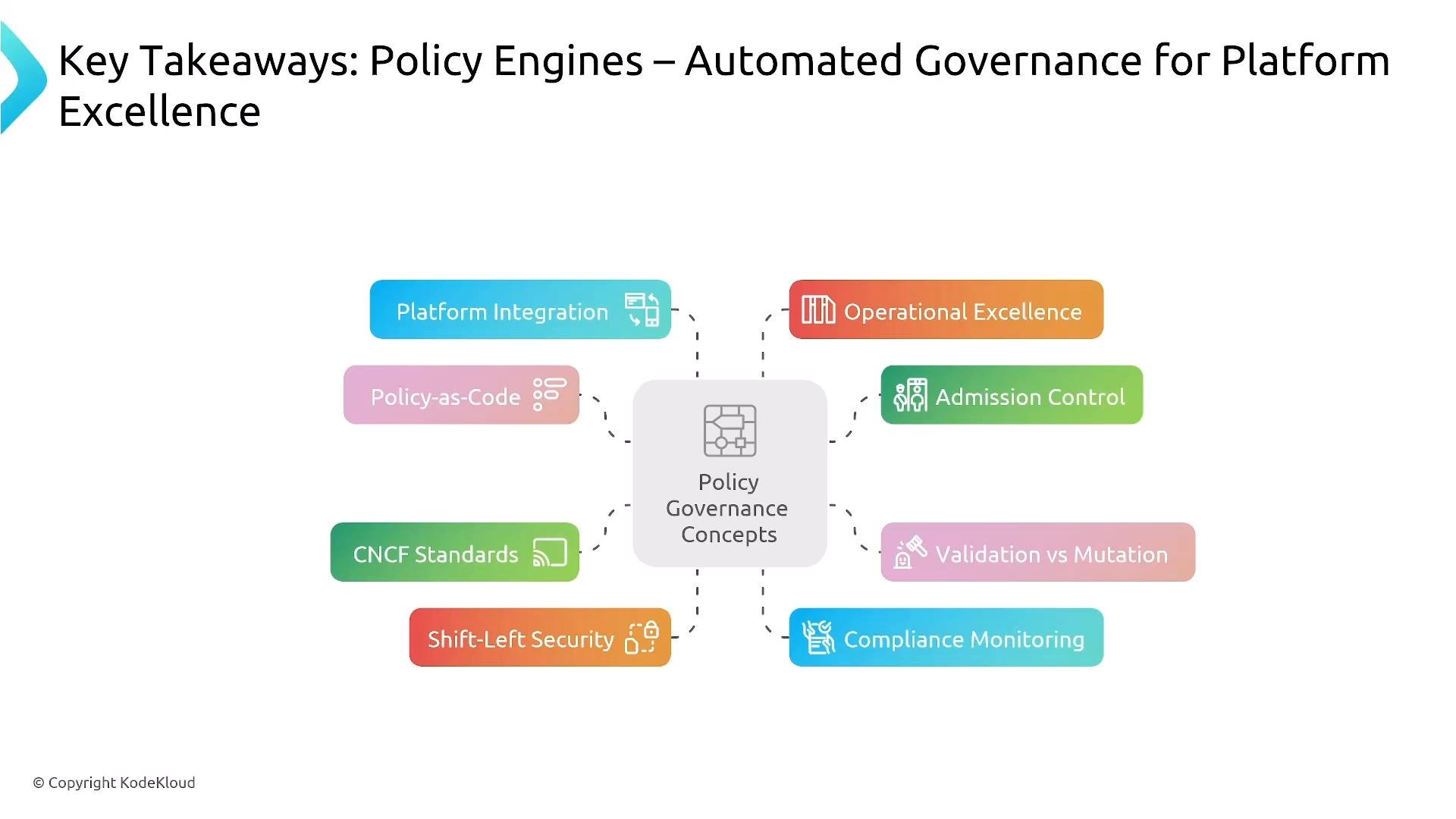
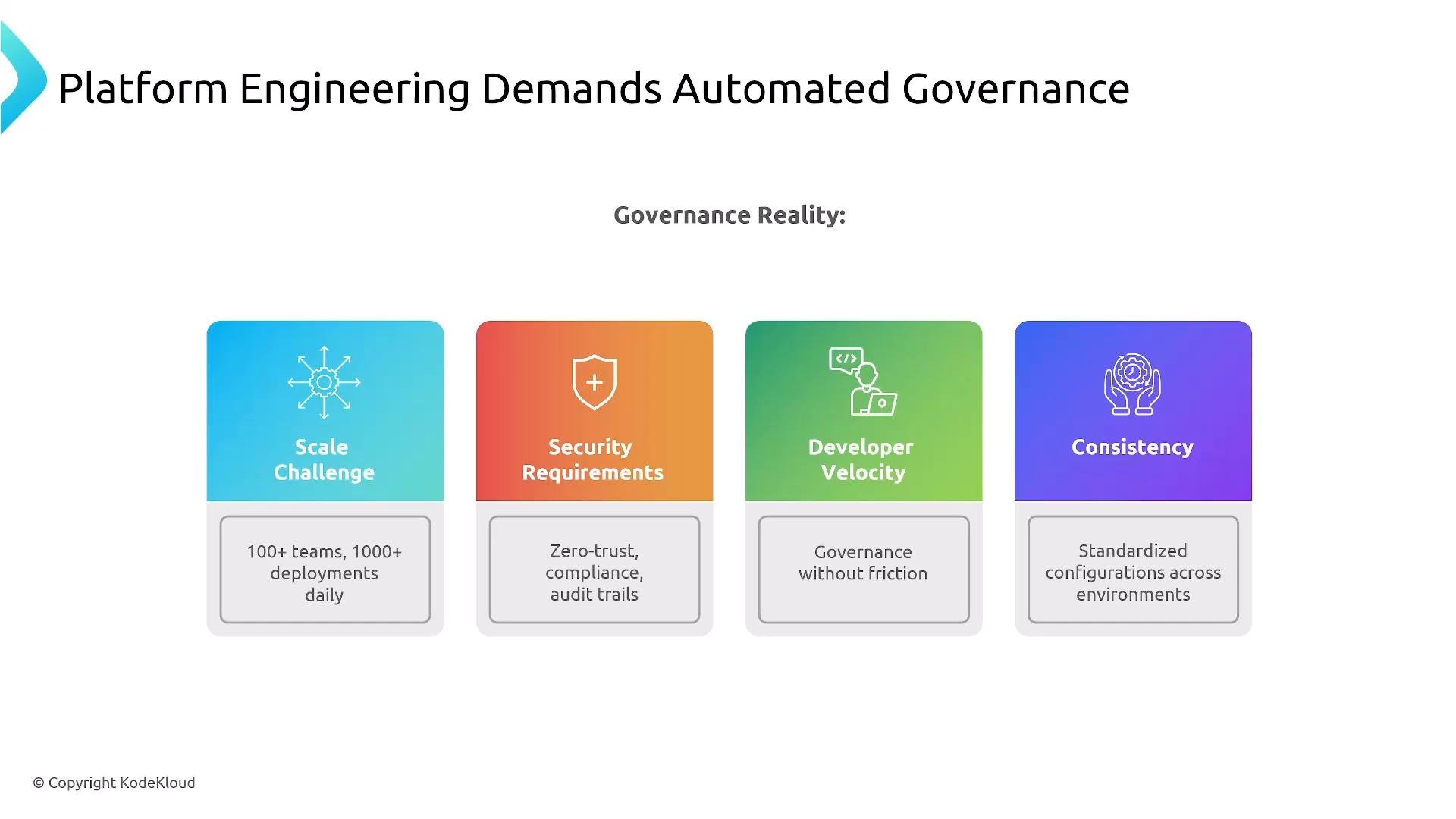
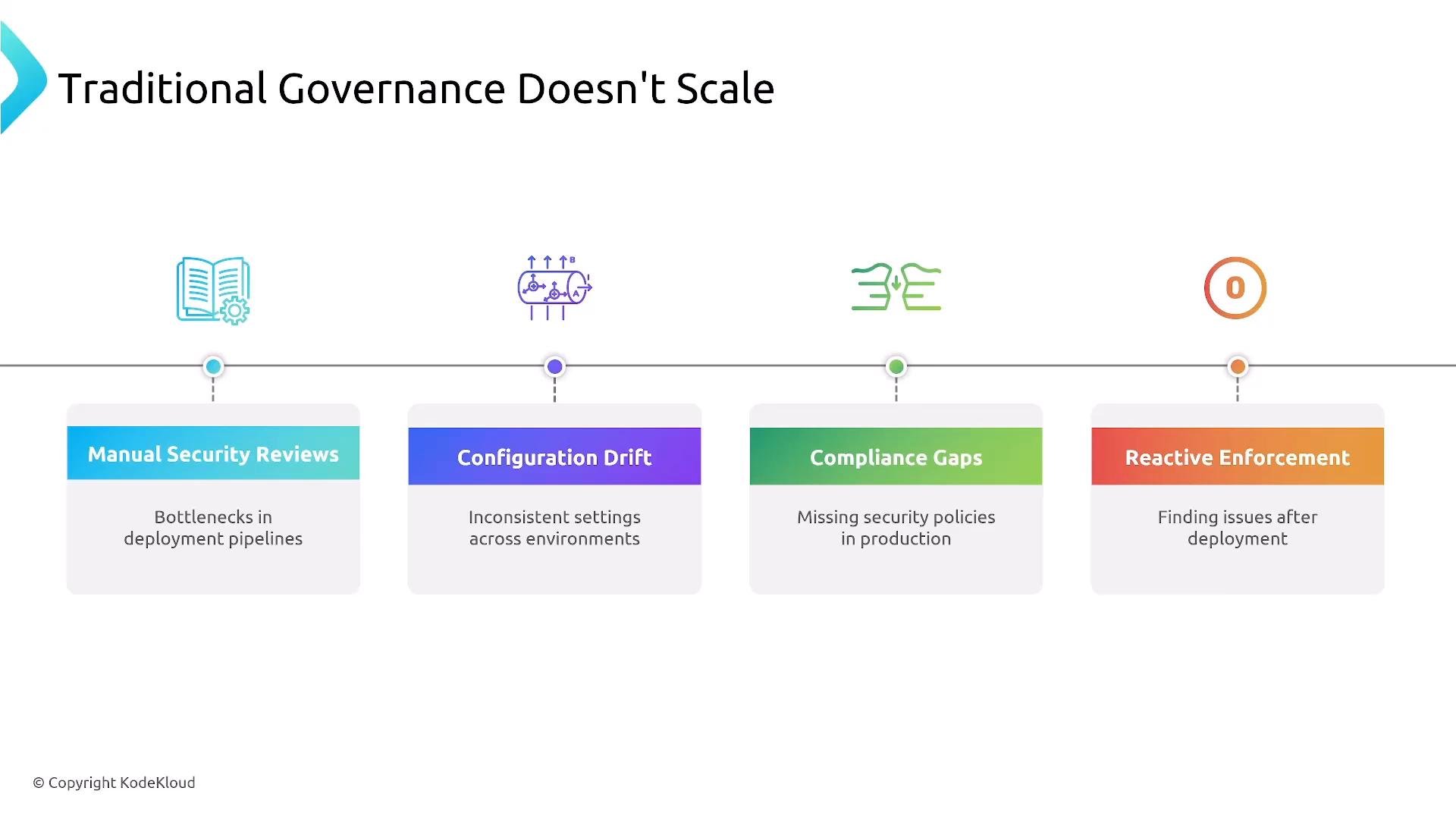
- Policy-as-code and admission controllers enable automated governance at scale.
- Validation policies enforce rules; mutation policies can automatically remediate resources to bring them into compliance.
- Kyverno offers YAML-first policies and fast adoption for Kubernetes-only use cases.
- OPA/Gatekeeper provides Rego-based flexibility and multi-platform policy evaluation for advanced scenarios.
- Integration with GitOps, CI/CD, testing, and monitoring closes the loop for safe, auditable governance.
- Start simple, test thoroughly, roll out gradually, and iterate on policies as part of a lifecycle process.