

kubectl. This is where Kyverno becomes valuable.
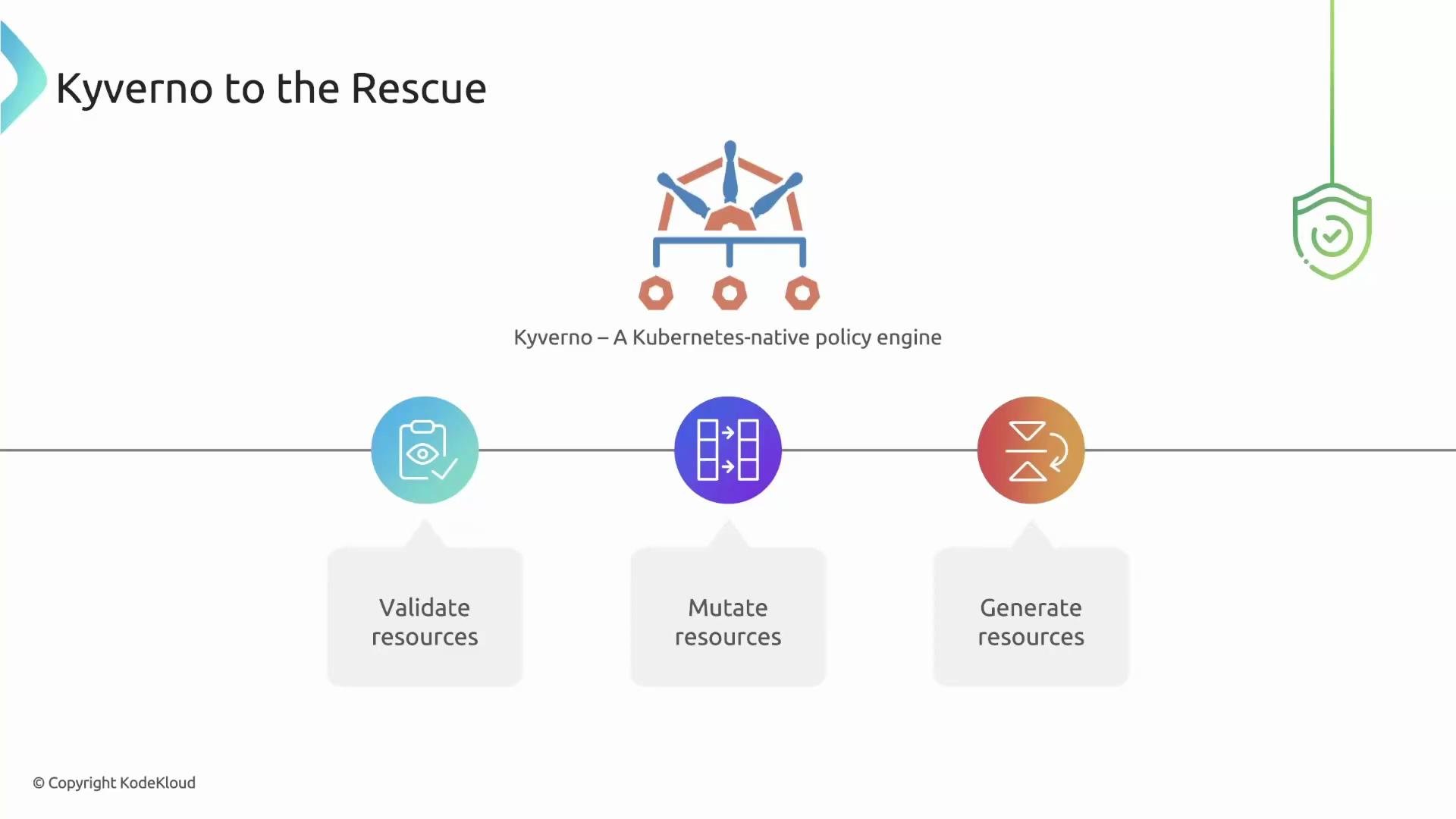
Kyverno is a Kubernetes-native policy engine that uses admission webhooks to intercept create and update requests. It evaluates resources before they are persisted and provides three core capabilities:
- Validate — block or allow requests based on rules.
- Mutate — modify incoming resources to conform to standards (for example, add labels or set
securityContext). - Generate — create new resources automatically (for example, create a ConfigMap or Role when a namespace is created).
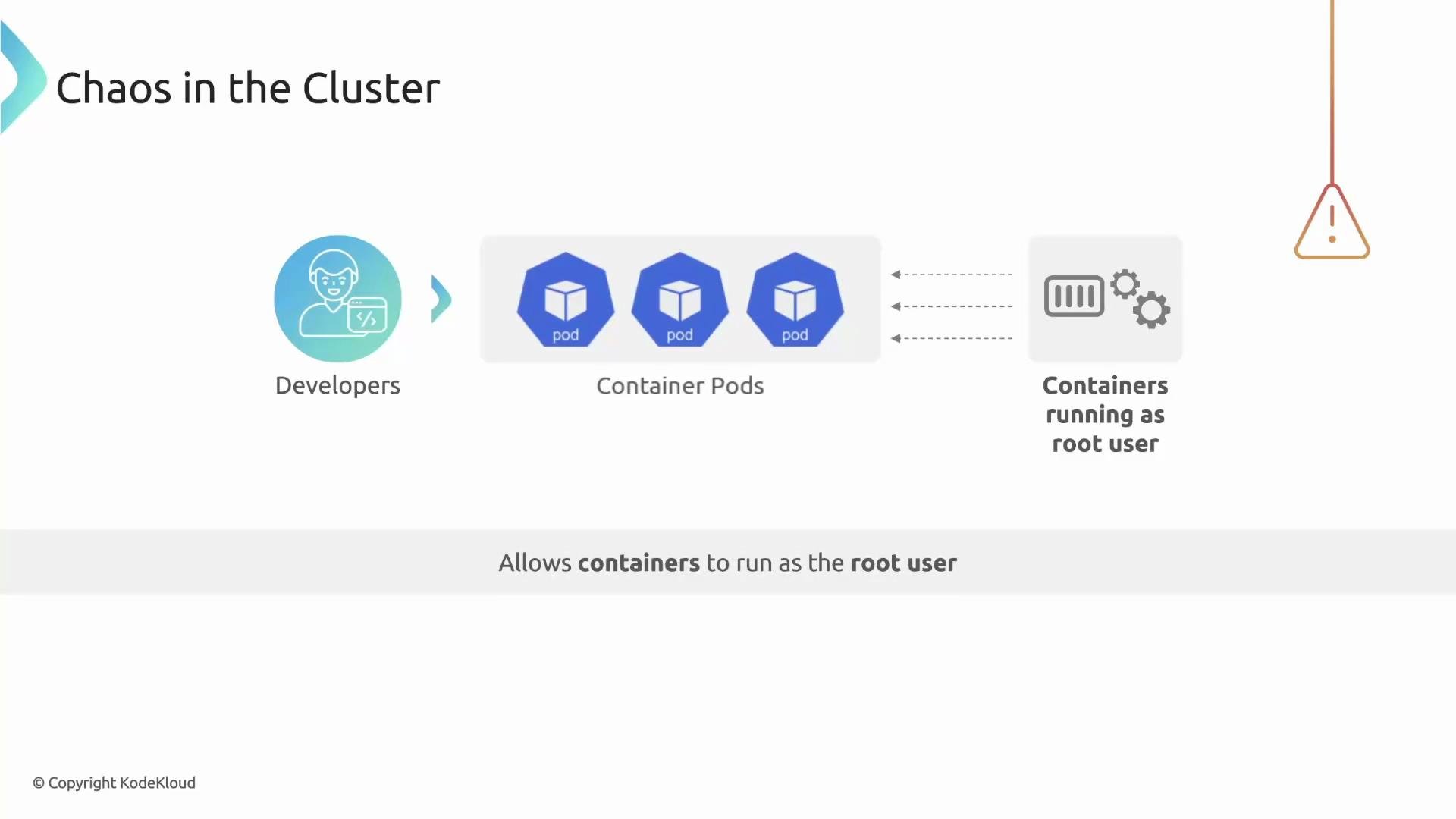
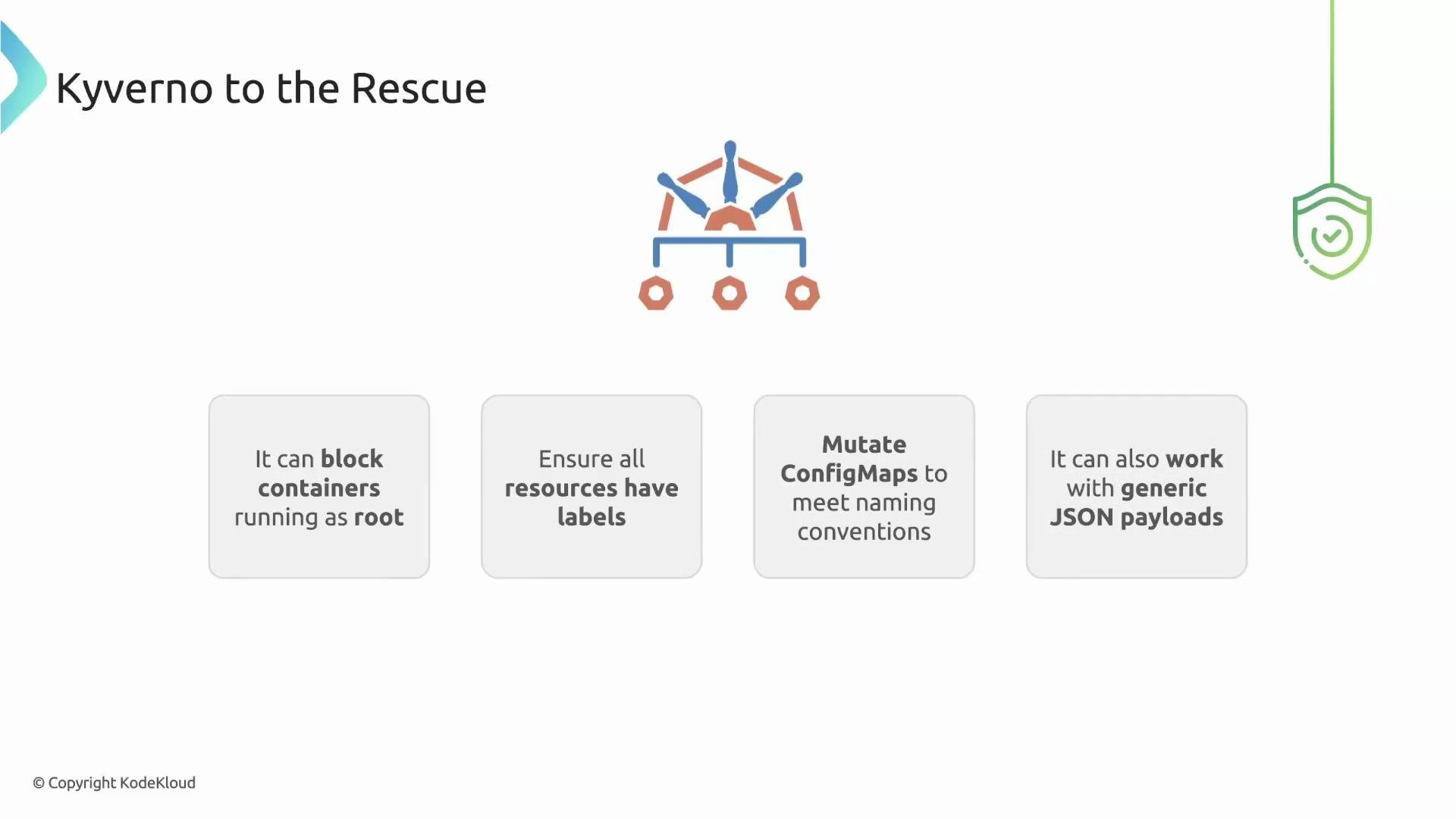
- Block containers that run as root.
- Require labels on resources.
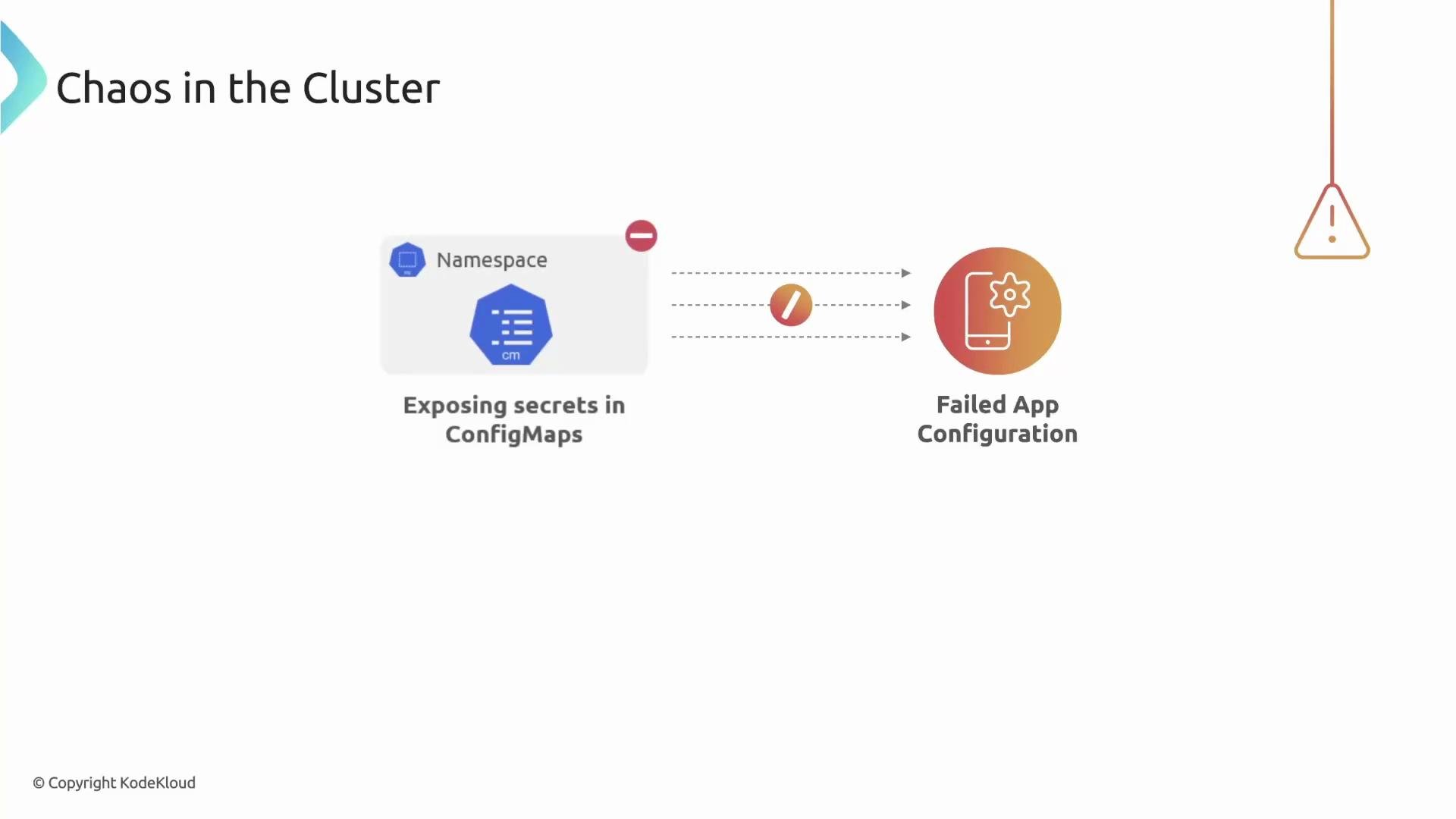
- Mutate ConfigMaps to meet naming conventions.
Kyverno policies are plain Kubernetes YAML (no new DSL). They follow familiar
apiVersion, kind, metadata, and spec structures, so teams can adopt policies quickly and integrate them into existing GitOps pipelines.- Validation: enforce security and compliance by rejecting nonconforming resources.
- Mutation: auto-remediate resources to meet cluster conventions.
- Generation: provision helper resources automatically to reduce manual steps.
Policies enforced cluster-wide can block legitimate workloads if misconfigured. Start in
audit mode (validationFailureAction: audit) to observe changes before switching to enforce.
Links and references
- Kyverno official docs: https://kyverno.io/
- Kyverno GitHub: https://github.com/kyverno/kyverno
- Kubernetes
kubectlreference: https://kubernetes.io/docs/reference/kubectl/overview/ - JMESPath: https://jmespath.org/
- Try a simple validation policy in audit mode to see violations without blocking deployments.
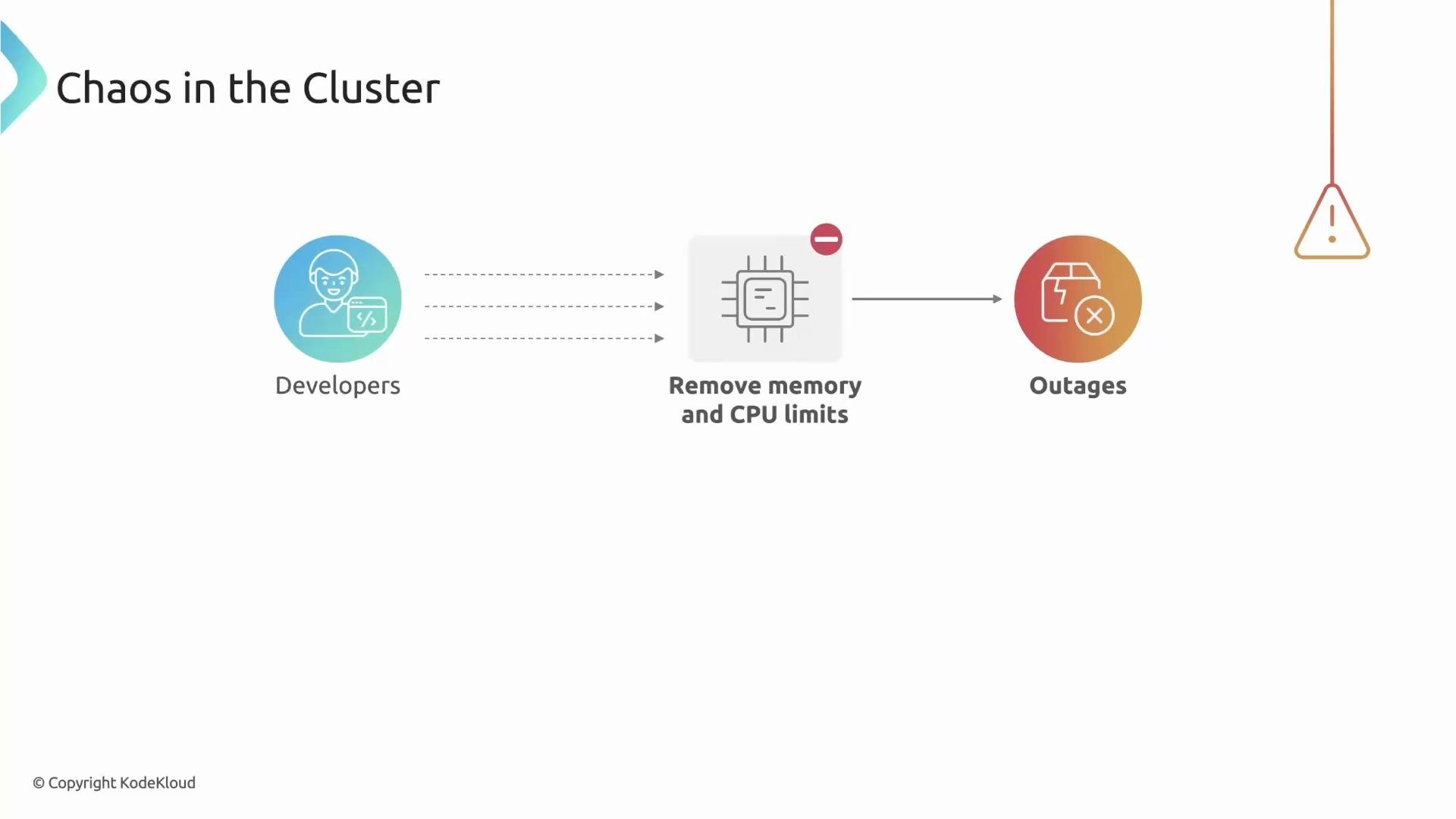
- Add safe mutation policies (labels, resource requests/limits) to enforce standards.
- Use generation to automate standard ConfigMaps, Roles, or Secrets when namespaces are created.