

Use this checklist to solidify your understanding of Vault’s authentication methods before the HashiCorp Certified Vault Associate exam.
1. Core Purpose of Auth Methods
- Validate a client’s identity before granting access.
- Issue Vault tokens that are bound to specific policies.
- Remember: Auth Methods handle authentication, while policies handle authorization.
- Your end goal in any Auth Method flow is to obtain a valid Vault token (unless you already have one).
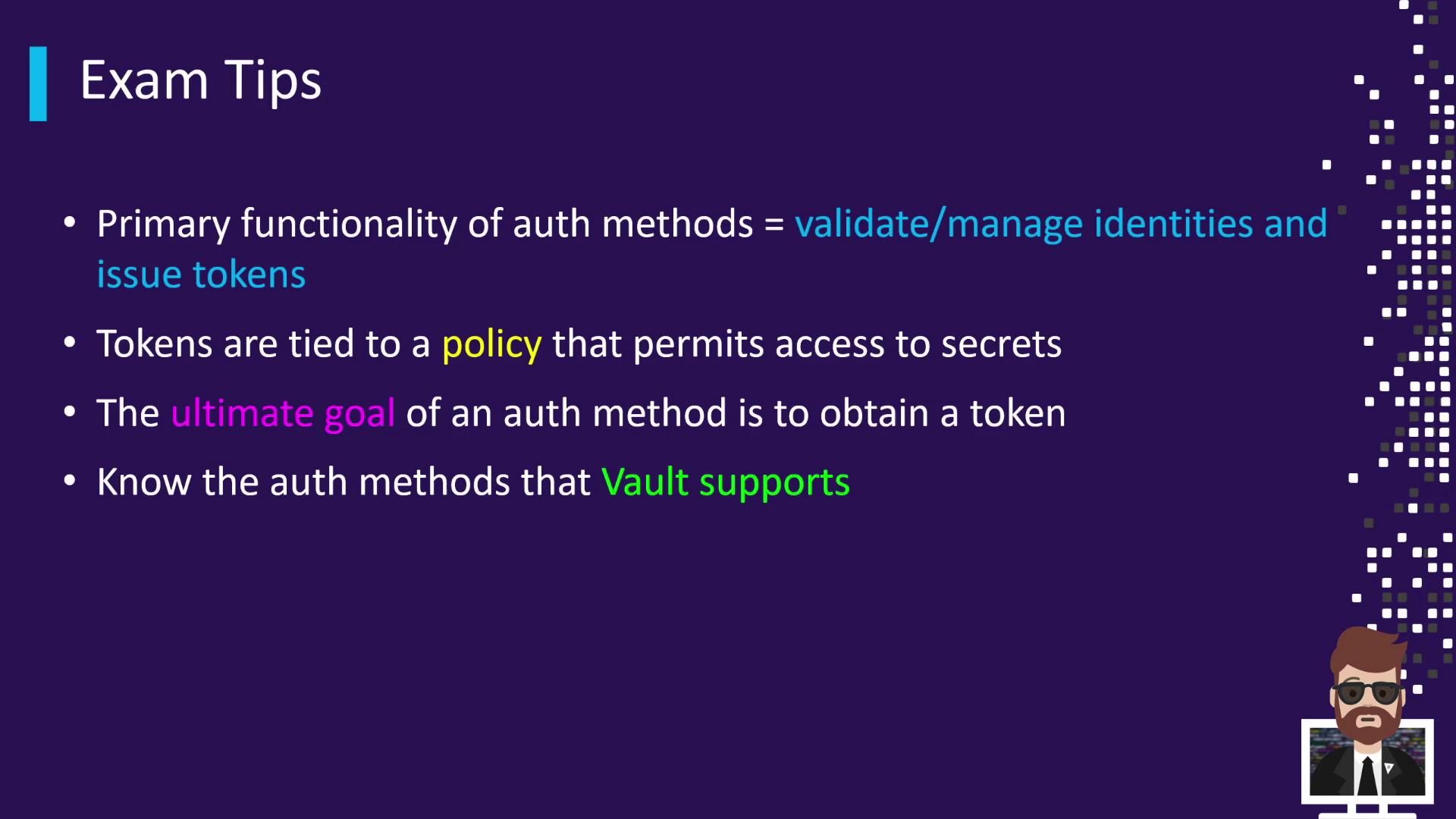
2. Know What Vault Supports
No matter which method you pick—LDAP, OIDC, GitHub, AWS, or a custom plugin—the result is always a Vault token. Be ready to answer questions like “Does Vault support X provider?” by understanding every Auth Method at a high level.3. Understand High-Level Workflows
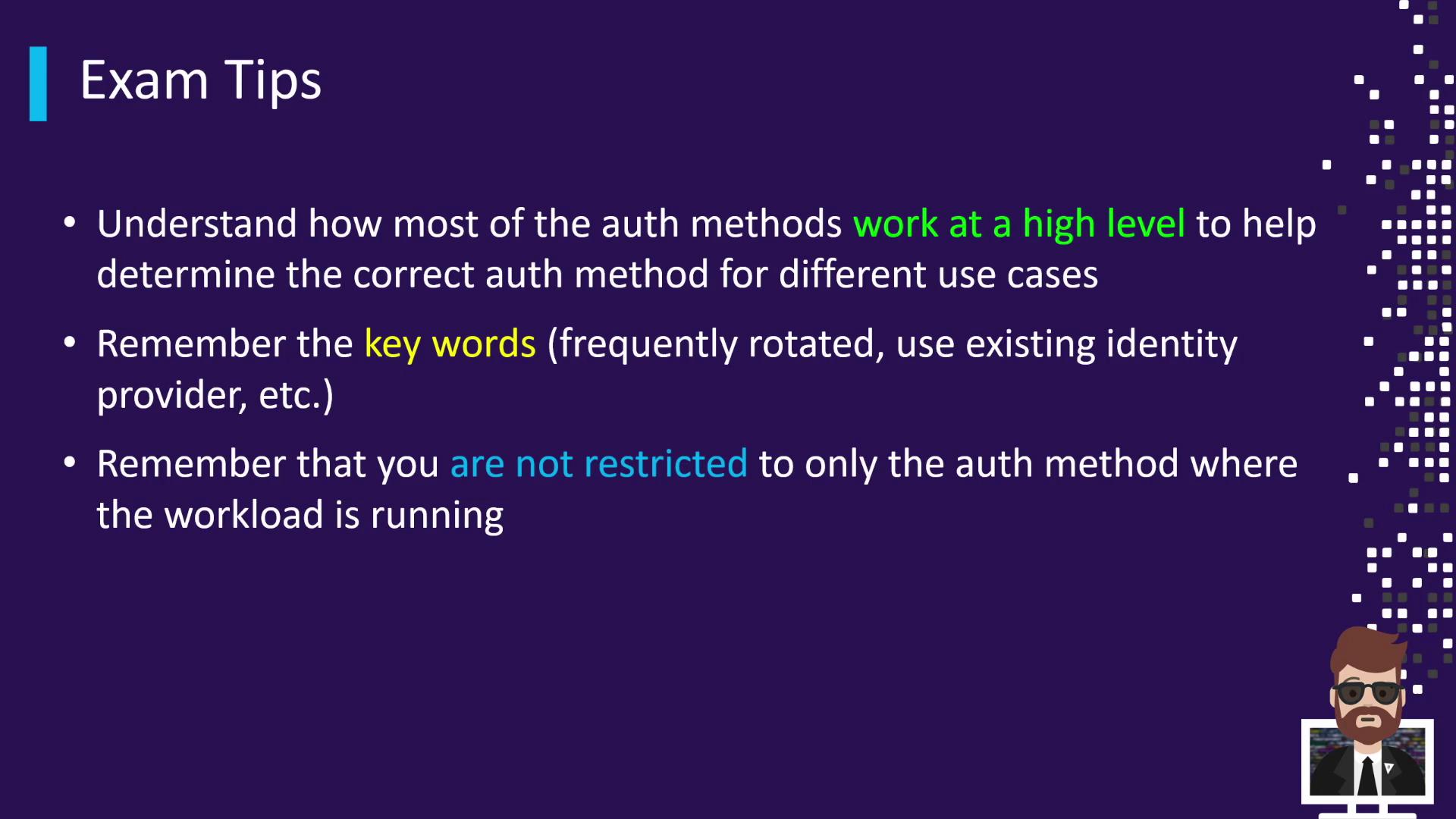
- Skim each Auth Method’s flow: how credentials are exchanged, how tokens are returned.
- Watch for exam keywords like “frequently rotated”, “existing provider”, or “no static secrets”—these hint at specific methods.
- You’re not restricted to a provider’s native method. For example, an Azure VM could use AppRole, OIDC, TLS certificates, or the Azure method itself.
4. Human-Based vs. System-Based Methods
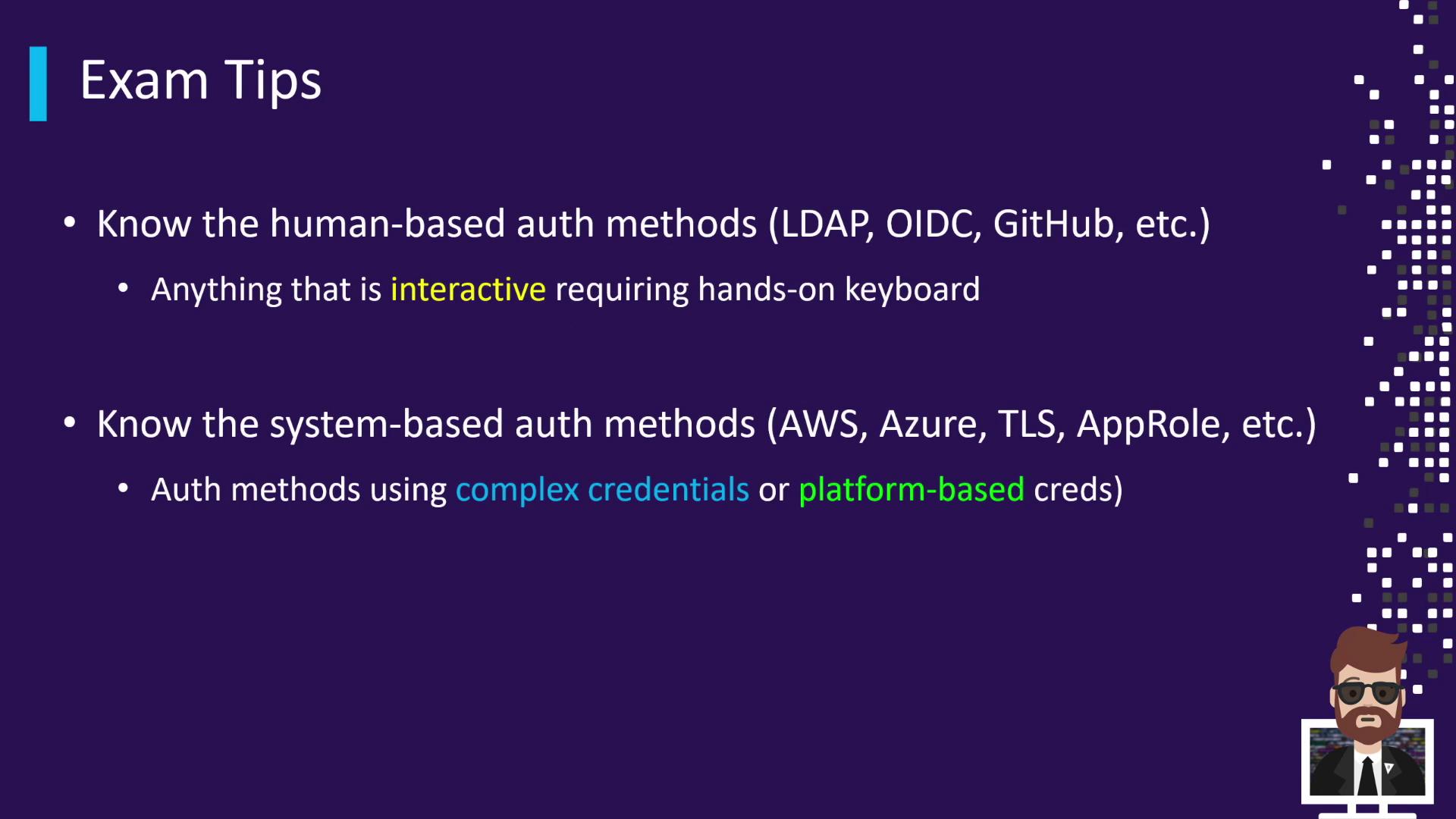
- Human-based (interactive): require user input (LDAP, OIDC, GitHub).
- System-based (non-interactive): use platform or machine credentials (AWS, Azure, GCP, AppRole, TLS).
Master these concepts, and you’ll be prepared to answer any Vault Associate exam questions on authentication methods.
Links and References
- Vault Authentication Documentation
- HashiCorp Certified: Vault Associate Exam Guide
- Vault Policies Overview