

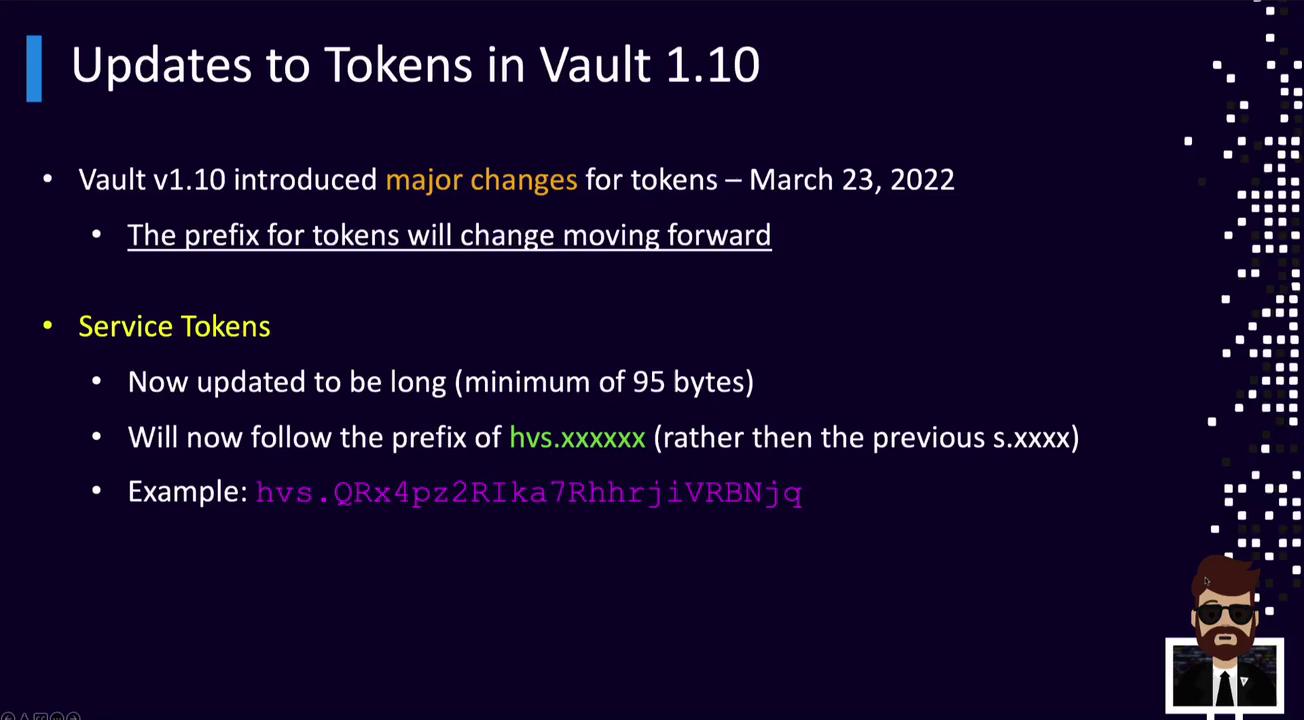
Existing tokens created before the upgrade keep their original prefixes (
S., B., R.). Only tokens generated after upgrading to Vault 1.10 receive the new three-letter prefixes.Token Prefix Changes in Vault 1.10
Vault 1.10 replaces the previous one-letter prefixes with more descriptive three-letter identifiers. The new mapping is:Service Tokens
Service tokens are the most common token type. In Vault 1.10, they now start withhvs. followed by at least 95 random bytes:
hvs.indicates a HashiCorp Vault Service token.- The random string that follows provides the required entropy.
Service tokens with insufficient length will be rejected. Always verify token length when automating creation.
Batch and Recovery Tokens
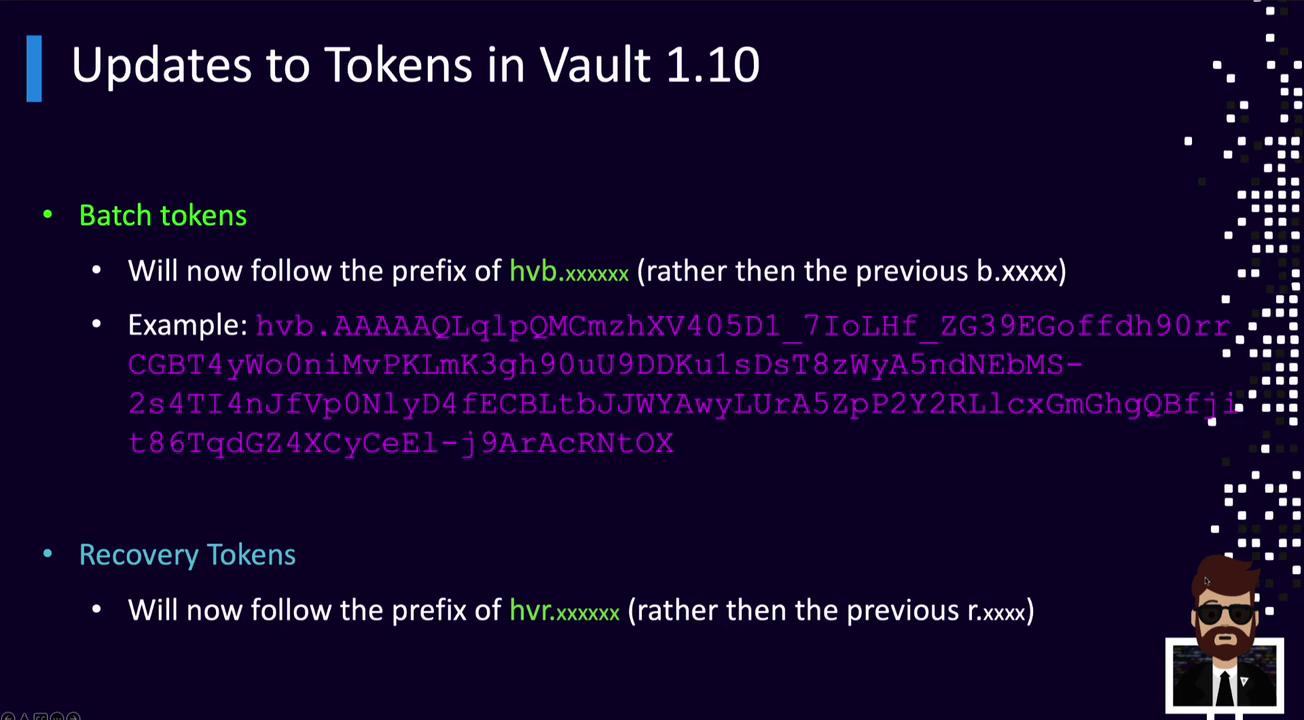
hvb.marks a Batch token used for one-time API operations.hvr.marks a Recovery token used for root recovery workflows.
Summary
When working with Vault 1.10 or later, newly generated tokens will use:hvs.→ Service tokenhvb.→ Batch tokenhvr.→ Recovery token
vault token create, vault token revoke, or policy checks—remain unchanged under the new prefix scheme.