

In modern infrastructure, managing credentials securely is critical. Static secrets—credentials created manually and long-lived—pose several risks. Vault’s dynamic secrets provide an automated, secure alternative that minimizes human error and reduces attack surface.Documentation Index
Fetch the complete documentation index at: https://notes.kodekloud.com/llms.txt
Use this file to discover all available pages before exploring further.
Challenges with Static Secrets
Static secrets are credentials you create manually (e.g., a “password never expires” service account in Active Directory, an on-prem or RDS database user, or a long-lived vendor API key). While common, they introduce significant security and operational drawbacks:| Issue | Impact |
|---|---|
| Expiration | Often never expire by design, increasing exposure if compromised. |
| Secrecy & Sharing | Replicated across servers or shared among teams—effectively non-secret. |
| Accountability | Impossible to audit usage when multiple users share the same credential. |
| Always Valid | Valid 24/7, even when not needed—prime target for automated scanners and attackers. |
| Rare Rotation | Manual and infrequent rotation increases the window of vulnerability. |
| Long-Lived Secrets | Linger indefinitely and often go unrevoked when staff or applications retire. |
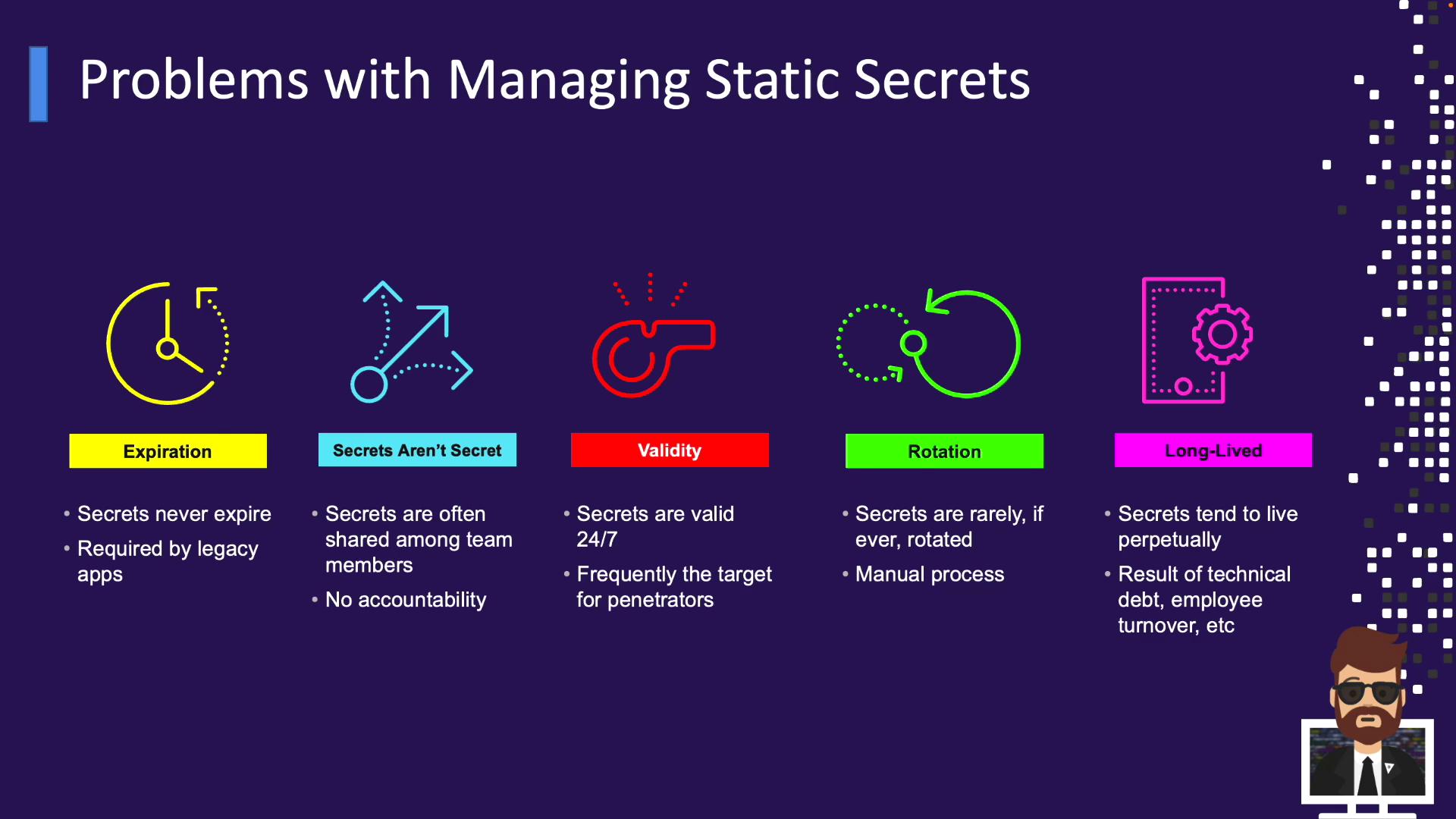
Using static credentials at scale without strict rotation policies can lead to compliance violations and increased breach risk.
Benefits of Dynamic Secrets
Dynamic secrets are generated on-demand by Vault and tied to a configurable lease (TTL). They solve the drawbacks of static credentials:- On-Demand Generation
Secrets only exist when needed (e.g., a Terraform run requests API keys at execution time). - Configurable Leases
Each secret has a TTL. Once expired, Vault revokes the credential at the source (e.g., drops the database user). - Defined Validity
Set initial and maximum TTLs to enforce strict lifespan limits. - Automatic Revocation
Vault automatically cleans up unused or orphaned credentials, preventing “technical debt.” - Fine-Grained Renewal
Control which secrets can be renewed and for how long—supporting both short-lived jobs and long-running services.
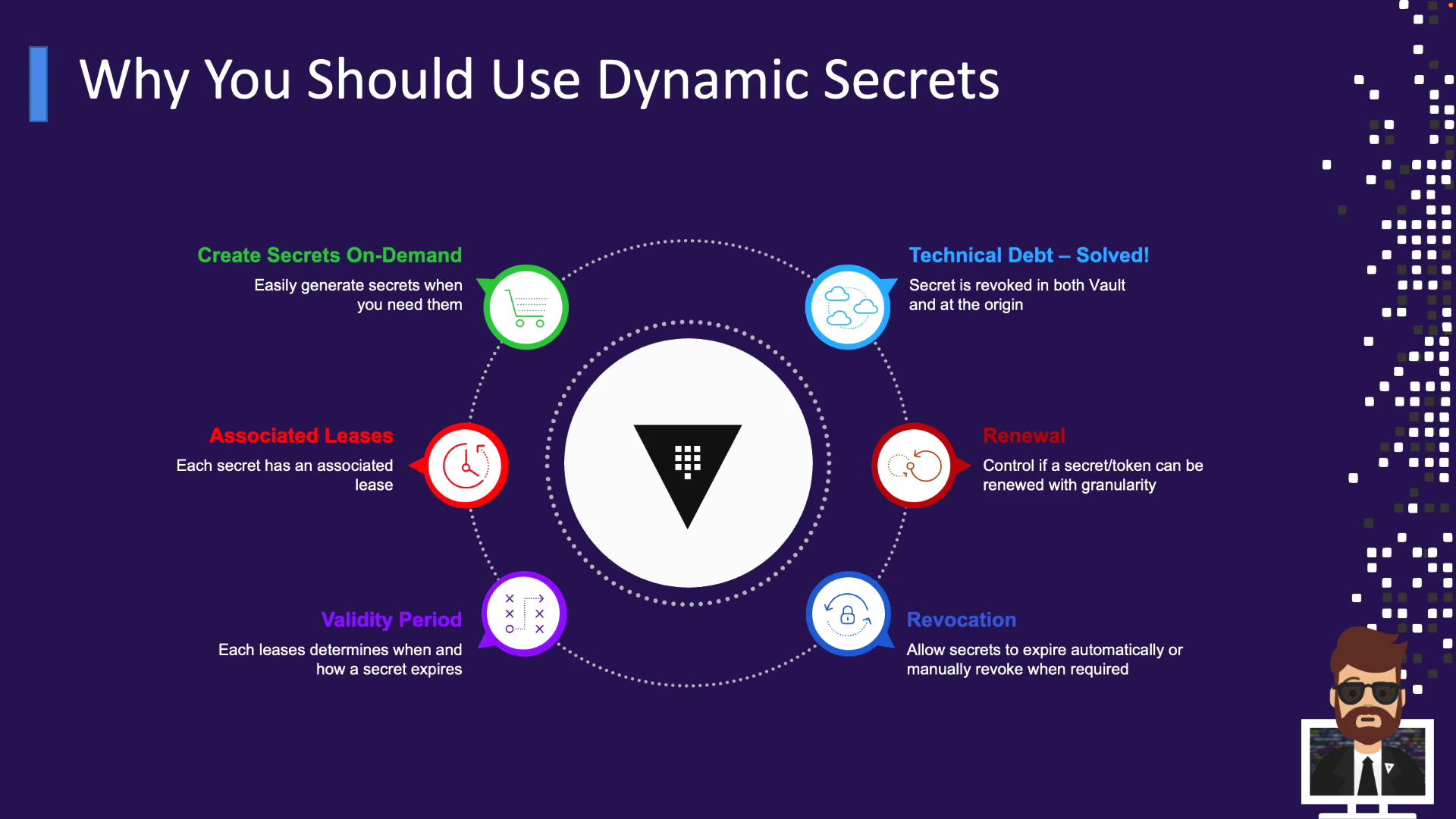
Dynamic secrets enhance security posture by minimizing manual intervention and reducing the lifetime of exposed credentials.
Dynamic Secrets Use Cases
Vault’s dynamic secrets support a wide range of production workflows:- CI/CD Pipelines
Short-lived credentials for provisioning AWS, Azure, GCP, or on-prem resources. - Vulnerability Scanning
Temporary elevated accounts for tools like Rapid7 or Nessus, revoked post-scan. - Administrative Access
Time-bound privileged accounts for ops teams, auto-rotated and revoked daily. - Application Database Access
Apps fetch dynamic DB credentials at startup and release them when done.
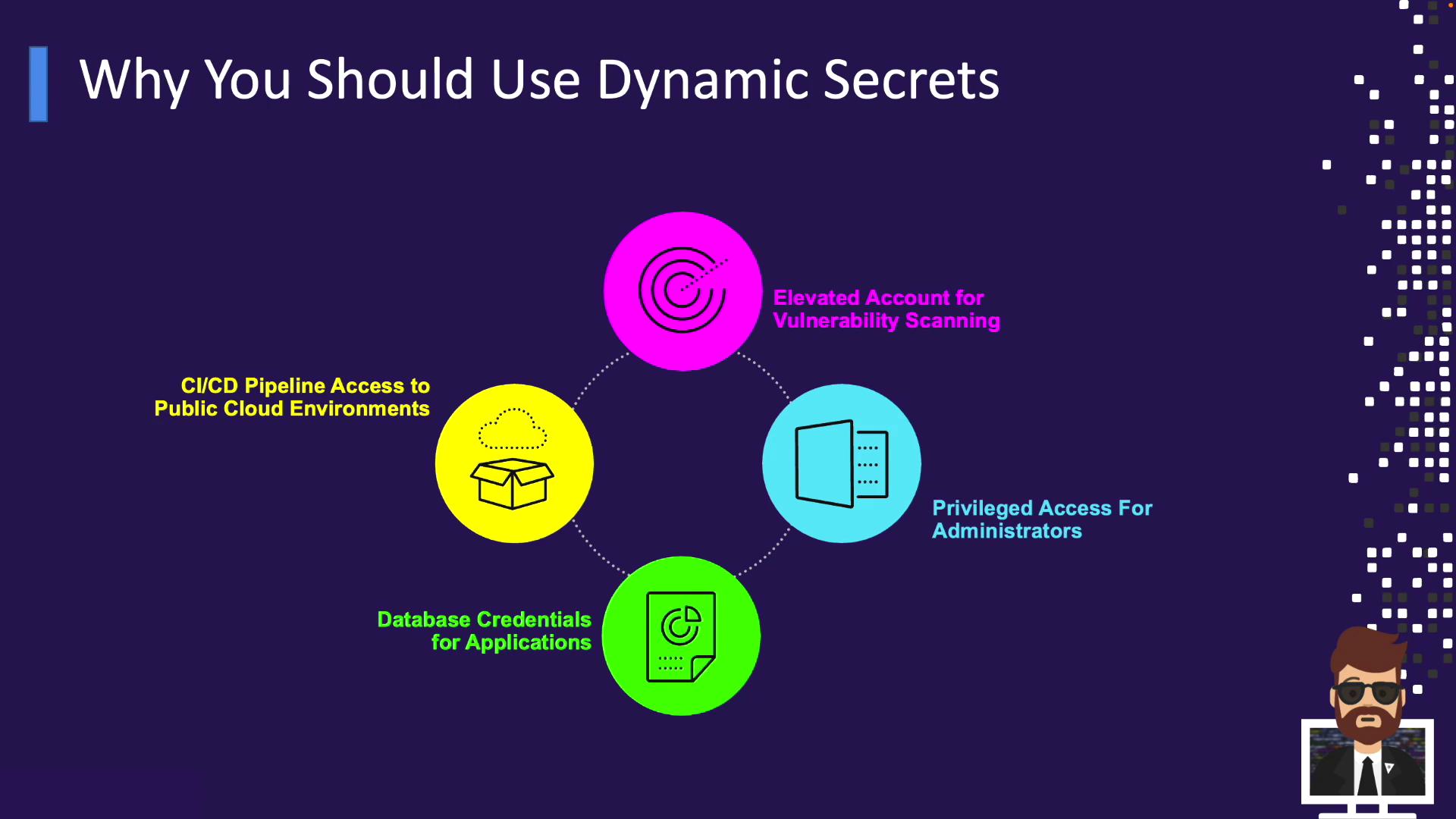
Example: Application Integration with Vault
A typical flow for an application retrieving secrets at startup:- Application launches.
- It authenticates to Vault (AppRole, Kubernetes, AWS, Azure, or GCP auth methods).
- Vault issues a short-lived token.
- The app uses the token to read required secrets (static or dynamic).
- It connects to the database or service.
- Token or lease expires—access is revoked automatically.
- Optionally, the application renews the lease or requests a new token.
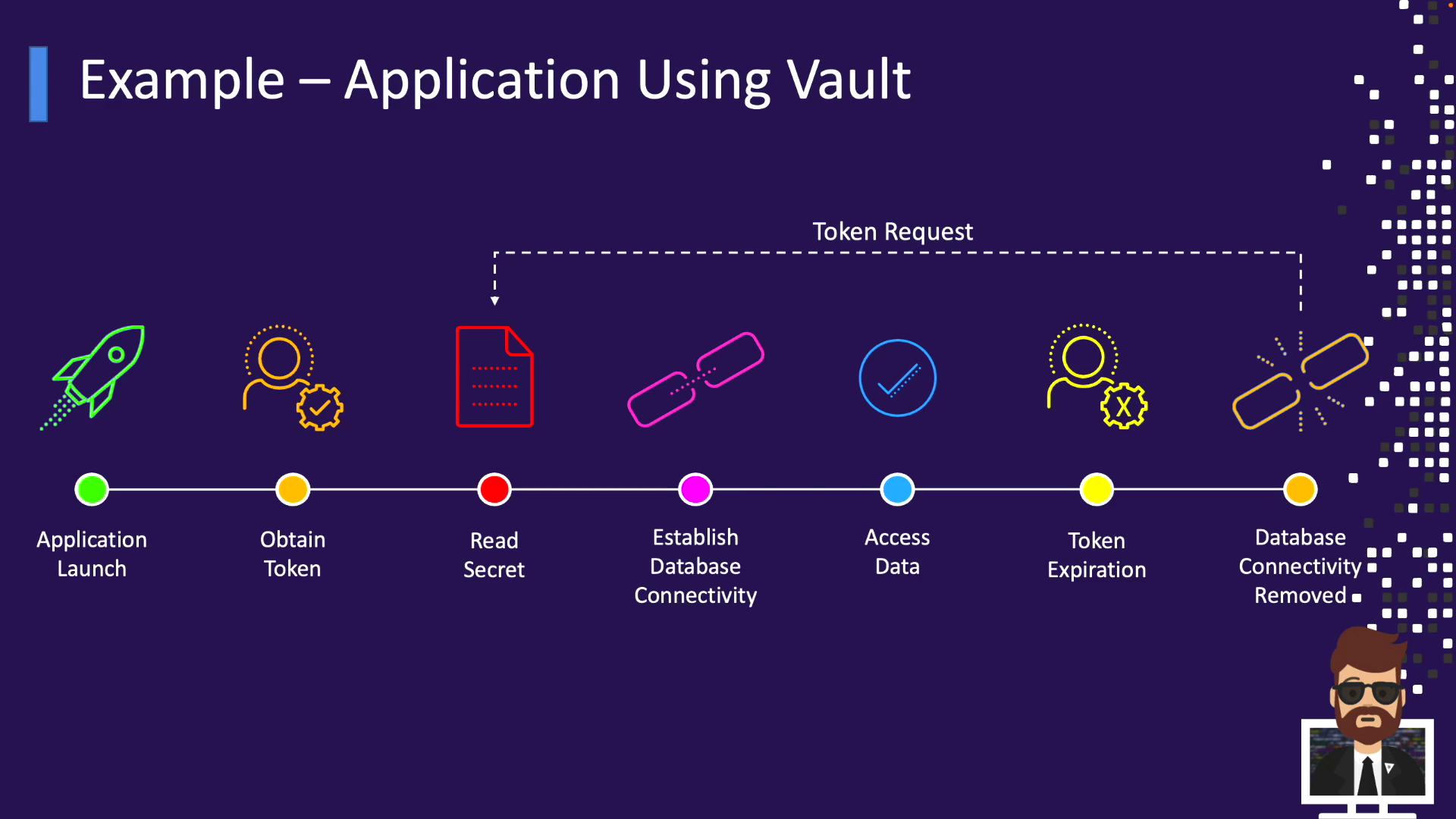
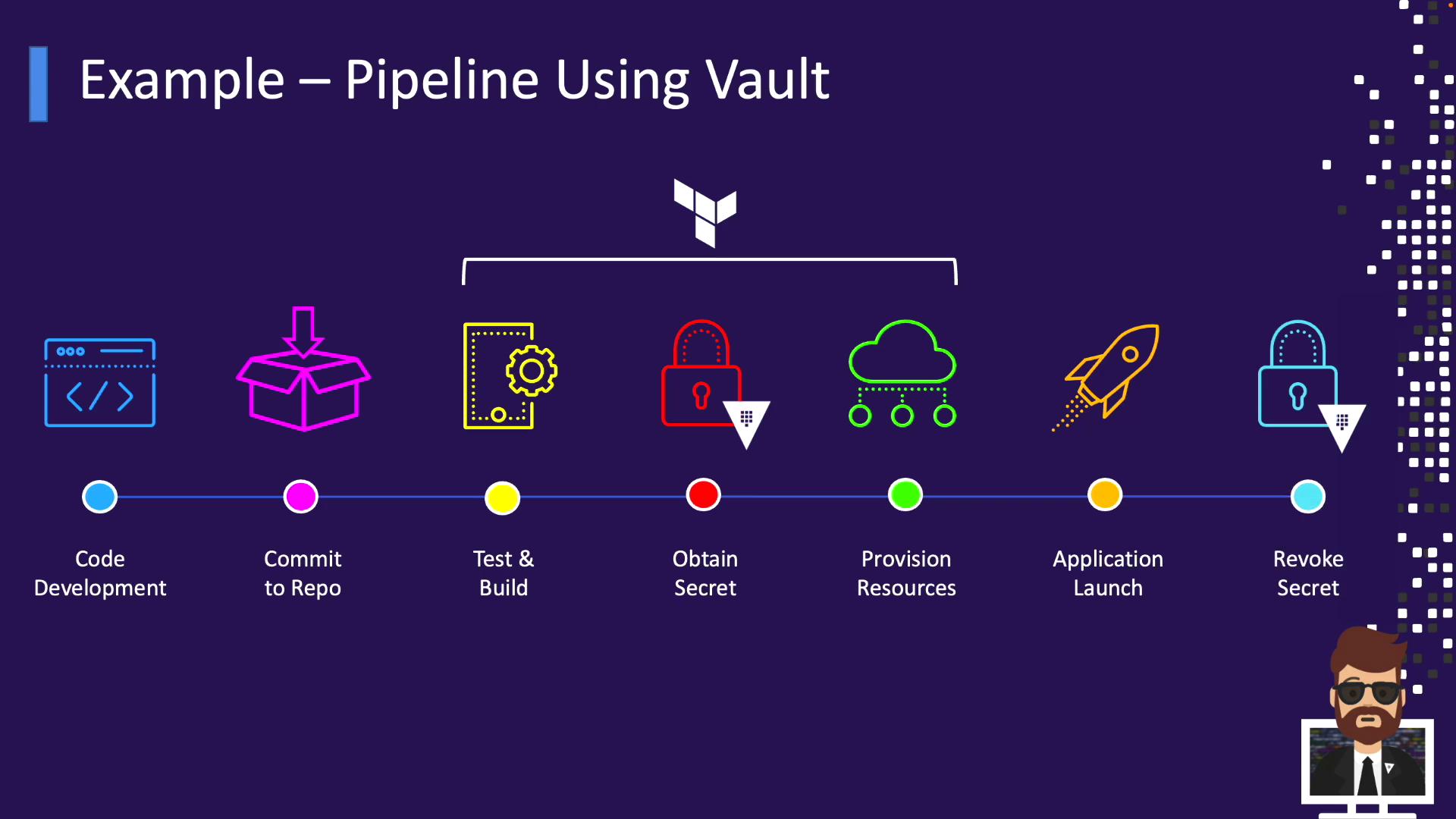
Example: CI/CD Pipeline with Vault
In a CI/CD workflow, Vault provides secure, temporary credentials for provisioning:- Developer pushes code to the repository.
- Automated build and tests run.
- Pipeline authenticates to Vault and obtains a dynamic secret.
- Terraform (or similar) uses this secret to create infrastructure.
- Applications are deployed.
- Pipeline revokes the secret at job completion.
By shifting from static credentials to Vault’s dynamic secrets, you automate secret lifecycle management, tighten access controls, and boost overall security.
Links and References
- HashiCorp Vault Overview
- Dynamic Secrets Engine Documentation
- Vault AppRole Auth Method
- Kubernetes Auth Method