Kubeflow sits at the intersection of machine learning, software engineering, platform engineering, and MLOps. This course is designed to help practitioners from any of those backgrounds understand how ML systems are built, deployed, and operated in production using Kubeflow and Kubernetes-native patterns. Who will benefit:
  • Machine learning engineers
    • Learn how to automate training, run scalable experiments, and manage model lifecycle (training → deployment → monitoring) with Kubeflow.
  • Software engineers moving into AI
    • Discover how ML systems differ from typical applications, and how to integrate models into reproducible, production-ready pipelines and CI/CD workflows.
  • Data scientists
    • Move models beyond standalone notebooks into reproducible workflows, collaborate with engineering teams, and productionize models for real users.
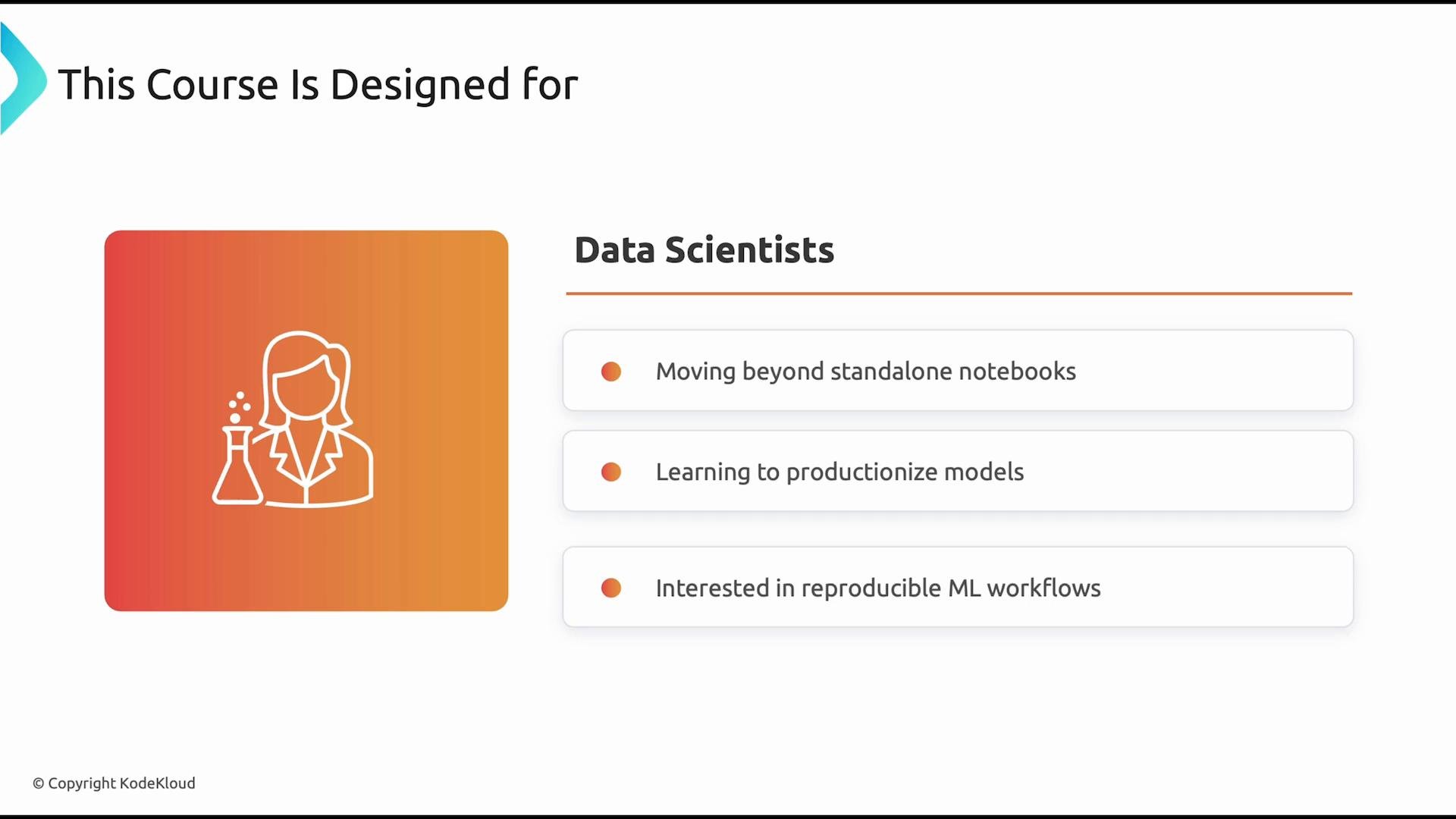
A presentation slide titled "This Course Is Designed for" highlighting "Data Scientists" with bullet points like moving beyond standalone notebooks, productionizing models, and reproducible ML workflows. On the left is an orange icon of a scientist holding a flask.
  • Platform and DevOps engineers
    • Gain practical insight into running AI workloads on Kubernetes, building shared Kubeflow environments, and enabling collaboration between data teams and platform teams.
Recommended prerequisites are intentionally light: you should be comfortable with basic Python and have a general understanding of core machine learning concepts. Familiarity with Docker and Kubernetes is helpful but not required — we introduce the Kubernetes concepts you need to use Kubeflow as part of this course.
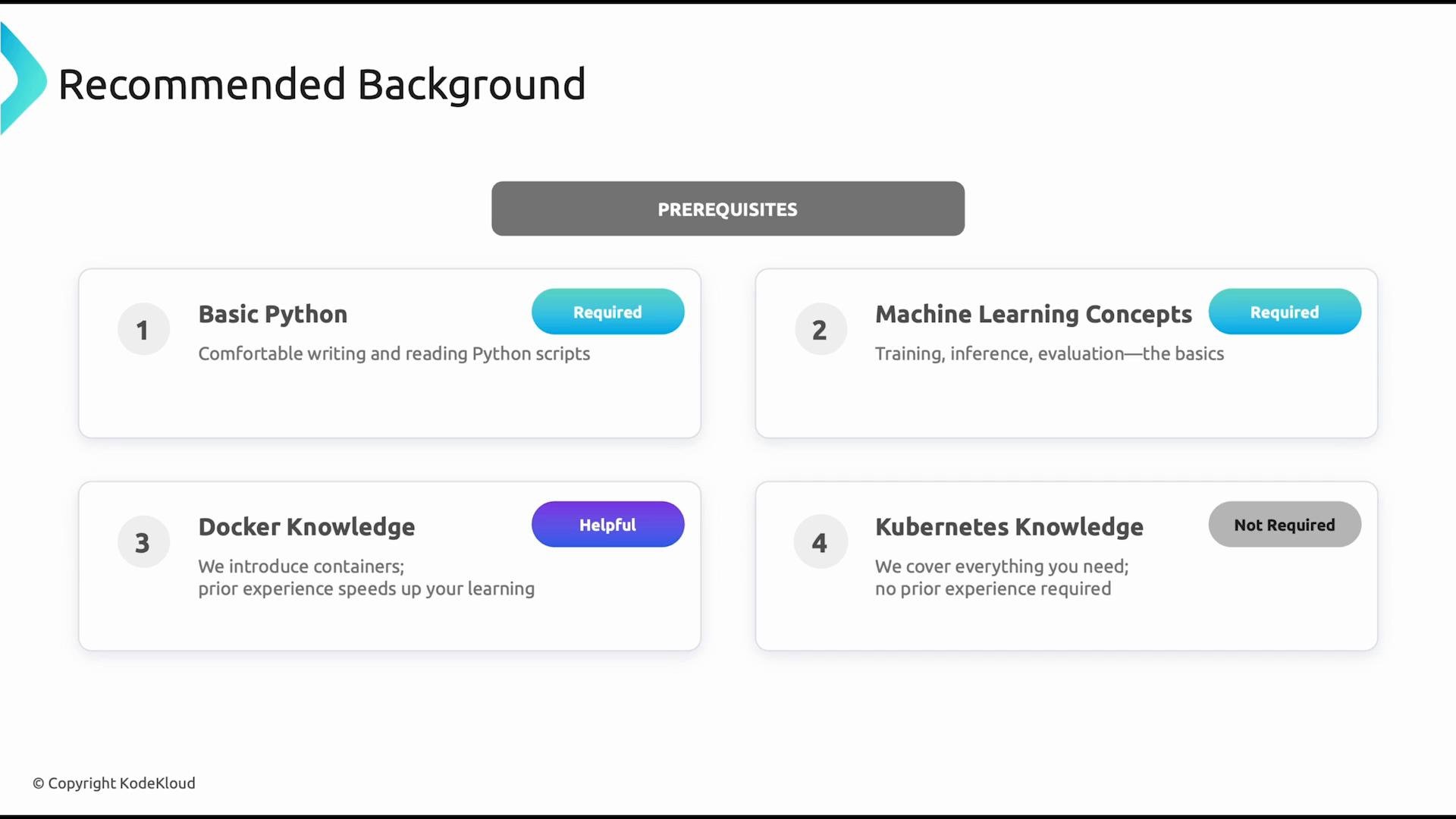
Recommended prerequisites:
A slide titled "Recommended Background" listing four prerequisites: Basic Python (Required), Machine Learning Concepts (Required), Docker Knowledge (Helpful), and Kubernetes Knowledge (Not Required). The items are shown in numbered cards with short descriptions.
By the end of this lesson, you will understand not only how to use Kubeflow, but also where it fits within the broader ML and engineering ecosystem: how to build reproducible workflows, deploy models at scale, and operate ML systems in production. For further reading and platform references, consider the official Kubeflow documentation and these foundational resources:

Watch Video